
How to Develop Next-Gen Harmonic Drives for Future Needs
APR 27, 20269 MIN READ
Generate Your Research Report Instantly with AI Agent
Patsnap Eureka helps you evaluate technical feasibility & market potential.
Harmonic Drive Technology Background and Future Goals
Harmonic drives, also known as strain wave gears, represent a revolutionary mechanical transmission technology that emerged in the 1950s through the pioneering work of C.W. Musser at United Shoe Machinery Corporation. This innovative gear system fundamentally transformed precision motion control by achieving exceptionally high reduction ratios in compact configurations while maintaining zero backlash characteristics. The technology operates on the principle of elastic deformation, utilizing a flexible spline that meshes with a rigid circular spline through controlled wave motion generated by an elliptical wave generator.
The evolution of harmonic drive technology has been marked by continuous refinement in materials science, manufacturing precision, and design optimization. Early implementations focused primarily on aerospace applications where weight reduction and precision were paramount. Over subsequent decades, the technology expanded into robotics, semiconductor manufacturing equipment, and industrial automation systems. Key developmental milestones include the introduction of advanced steel alloys for flexsplines, precision machining techniques for tooth profiles, and sophisticated bearing systems for wave generators.
Current technological trajectories indicate a shift toward addressing emerging challenges in next-generation applications. The proliferation of collaborative robots, electric vehicle drivetrains, and renewable energy systems demands harmonic drives with enhanced performance characteristics. These applications require improved torque density, extended operational lifespans, reduced acoustic emissions, and enhanced thermal management capabilities. Additionally, the integration of smart manufacturing concepts necessitates harmonic drives with embedded sensing capabilities and predictive maintenance features.
Future development goals encompass several critical dimensions that will define the next generation of harmonic drive technology. Primary objectives include achieving higher torque-to-weight ratios through advanced materials and optimized geometries, extending service life beyond current limitations through improved fatigue resistance, and developing integrated sensor systems for real-time performance monitoring. Environmental sustainability considerations are driving research into recyclable materials and energy-efficient manufacturing processes.
The convergence of artificial intelligence, advanced materials science, and precision manufacturing technologies presents unprecedented opportunities for harmonic drive innovation. Future systems are expected to incorporate self-adaptive control mechanisms, predictive failure analysis, and autonomous performance optimization. These capabilities will enable harmonic drives to meet the demanding requirements of autonomous systems, space exploration missions, and next-generation manufacturing equipment while maintaining the fundamental advantages that have established their prominence in precision motion control applications.
The evolution of harmonic drive technology has been marked by continuous refinement in materials science, manufacturing precision, and design optimization. Early implementations focused primarily on aerospace applications where weight reduction and precision were paramount. Over subsequent decades, the technology expanded into robotics, semiconductor manufacturing equipment, and industrial automation systems. Key developmental milestones include the introduction of advanced steel alloys for flexsplines, precision machining techniques for tooth profiles, and sophisticated bearing systems for wave generators.
Current technological trajectories indicate a shift toward addressing emerging challenges in next-generation applications. The proliferation of collaborative robots, electric vehicle drivetrains, and renewable energy systems demands harmonic drives with enhanced performance characteristics. These applications require improved torque density, extended operational lifespans, reduced acoustic emissions, and enhanced thermal management capabilities. Additionally, the integration of smart manufacturing concepts necessitates harmonic drives with embedded sensing capabilities and predictive maintenance features.
Future development goals encompass several critical dimensions that will define the next generation of harmonic drive technology. Primary objectives include achieving higher torque-to-weight ratios through advanced materials and optimized geometries, extending service life beyond current limitations through improved fatigue resistance, and developing integrated sensor systems for real-time performance monitoring. Environmental sustainability considerations are driving research into recyclable materials and energy-efficient manufacturing processes.
The convergence of artificial intelligence, advanced materials science, and precision manufacturing technologies presents unprecedented opportunities for harmonic drive innovation. Future systems are expected to incorporate self-adaptive control mechanisms, predictive failure analysis, and autonomous performance optimization. These capabilities will enable harmonic drives to meet the demanding requirements of autonomous systems, space exploration missions, and next-generation manufacturing equipment while maintaining the fundamental advantages that have established their prominence in precision motion control applications.
Market Demand Analysis for Next-Gen Harmonic Drives
The global harmonic drive market is experiencing unprecedented growth driven by the accelerating adoption of industrial automation and robotics across manufacturing sectors. Traditional industries such as automotive, aerospace, and electronics manufacturing are increasingly implementing robotic solutions to enhance precision, reduce labor costs, and improve production efficiency. This transformation has created substantial demand for high-precision gear reduction systems that can deliver exceptional accuracy and reliability in demanding operational environments.
Collaborative robotics represents one of the most significant growth drivers for next-generation harmonic drives. As cobots become more prevalent in manufacturing environments, the need for lightweight, compact, and highly precise actuators has intensified. These applications require harmonic drives that can operate safely alongside human workers while maintaining the precision necessary for delicate assembly tasks and quality control processes.
The aerospace and defense sectors are generating increasing demand for advanced harmonic drive solutions capable of operating in extreme environments. Space applications, satellite positioning systems, and unmanned aerial vehicles require gear systems that can function reliably under severe temperature variations, radiation exposure, and vacuum conditions. These specialized requirements are pushing the boundaries of traditional harmonic drive design and materials science.
Medical robotics and surgical automation represent emerging high-value market segments with stringent performance requirements. Surgical robots demand harmonic drives with zero backlash, exceptional smoothness, and the ability to provide precise haptic feedback. The aging global population and increasing adoption of minimally invasive surgical procedures are expected to drive sustained growth in this sector.
Renewable energy infrastructure, particularly wind turbine systems, presents substantial market opportunities for large-scale harmonic drive applications. Wind turbine pitch control systems require robust, maintenance-free gear solutions capable of operating continuously in harsh environmental conditions while providing precise blade angle adjustments for optimal energy capture.
The semiconductor manufacturing industry demands ultra-high precision positioning systems for wafer handling and lithography equipment. As semiconductor feature sizes continue to shrink, the precision requirements for manufacturing equipment are becoming increasingly stringent, creating demand for harmonic drives with nanometer-level accuracy and exceptional repeatability.
Market analysis indicates strong growth potential in emerging economies where industrial automation adoption is accelerating. Countries investing heavily in manufacturing infrastructure are creating new demand centers for advanced motion control solutions, including next-generation harmonic drives designed for high-volume production environments.
Collaborative robotics represents one of the most significant growth drivers for next-generation harmonic drives. As cobots become more prevalent in manufacturing environments, the need for lightweight, compact, and highly precise actuators has intensified. These applications require harmonic drives that can operate safely alongside human workers while maintaining the precision necessary for delicate assembly tasks and quality control processes.
The aerospace and defense sectors are generating increasing demand for advanced harmonic drive solutions capable of operating in extreme environments. Space applications, satellite positioning systems, and unmanned aerial vehicles require gear systems that can function reliably under severe temperature variations, radiation exposure, and vacuum conditions. These specialized requirements are pushing the boundaries of traditional harmonic drive design and materials science.
Medical robotics and surgical automation represent emerging high-value market segments with stringent performance requirements. Surgical robots demand harmonic drives with zero backlash, exceptional smoothness, and the ability to provide precise haptic feedback. The aging global population and increasing adoption of minimally invasive surgical procedures are expected to drive sustained growth in this sector.
Renewable energy infrastructure, particularly wind turbine systems, presents substantial market opportunities for large-scale harmonic drive applications. Wind turbine pitch control systems require robust, maintenance-free gear solutions capable of operating continuously in harsh environmental conditions while providing precise blade angle adjustments for optimal energy capture.
The semiconductor manufacturing industry demands ultra-high precision positioning systems for wafer handling and lithography equipment. As semiconductor feature sizes continue to shrink, the precision requirements for manufacturing equipment are becoming increasingly stringent, creating demand for harmonic drives with nanometer-level accuracy and exceptional repeatability.
Market analysis indicates strong growth potential in emerging economies where industrial automation adoption is accelerating. Countries investing heavily in manufacturing infrastructure are creating new demand centers for advanced motion control solutions, including next-generation harmonic drives designed for high-volume production environments.
Current State and Challenges in Harmonic Drive Development
Harmonic drives have established themselves as critical components in precision motion control applications, particularly in robotics, aerospace, and industrial automation. Current technology primarily relies on traditional steel-based flexsplines and wave generators, achieving gear ratios ranging from 50:1 to 320:1 with positioning accuracies within arc-minutes. Leading manufacturers have optimized conventional designs to deliver backlash-free operation and high torque density, making harmonic drives indispensable for applications requiring precise angular positioning.
The global harmonic drive market demonstrates strong growth momentum, driven by increasing automation demands and the expansion of collaborative robotics. However, existing solutions face significant performance limitations that constrain their application in next-generation systems. Traditional harmonic drives typically exhibit limited fatigue life, with flexsplines experiencing material degradation after 10^6 to 10^7 cycles under high-stress conditions. This limitation becomes particularly problematic in continuous-operation scenarios where reliability and maintenance costs are critical factors.
Manufacturing precision represents another substantial challenge in current harmonic drive development. Achieving consistent tooth profiles and maintaining tight tolerances across the flexspline, circular spline, and wave generator requires sophisticated manufacturing processes. Variations in manufacturing quality directly impact transmission accuracy, efficiency, and operational lifespan. The complexity of these precision manufacturing requirements contributes to higher production costs and longer lead times.
Temperature sensitivity poses additional constraints on harmonic drive performance. Current designs experience significant efficiency degradation and accuracy loss under extreme temperature conditions, limiting their deployment in aerospace and outdoor industrial applications. The thermal expansion characteristics of different materials within the drive assembly create additional challenges for maintaining consistent performance across varying operating environments.
Emerging application requirements in space exploration, medical robotics, and high-speed automation demand harmonic drives with enhanced capabilities beyond current technological boundaries. These applications require improved power-to-weight ratios, extended operational life, reduced maintenance requirements, and enhanced environmental resistance. The integration of smart sensing capabilities and real-time condition monitoring represents another evolving requirement that current harmonic drive designs struggle to accommodate effectively.
Material science limitations continue to constrain the development of more advanced harmonic drive solutions. While advanced alloys and composite materials offer potential improvements, their integration into harmonic drive designs requires fundamental redesigns of manufacturing processes and quality control systems.
The global harmonic drive market demonstrates strong growth momentum, driven by increasing automation demands and the expansion of collaborative robotics. However, existing solutions face significant performance limitations that constrain their application in next-generation systems. Traditional harmonic drives typically exhibit limited fatigue life, with flexsplines experiencing material degradation after 10^6 to 10^7 cycles under high-stress conditions. This limitation becomes particularly problematic in continuous-operation scenarios where reliability and maintenance costs are critical factors.
Manufacturing precision represents another substantial challenge in current harmonic drive development. Achieving consistent tooth profiles and maintaining tight tolerances across the flexspline, circular spline, and wave generator requires sophisticated manufacturing processes. Variations in manufacturing quality directly impact transmission accuracy, efficiency, and operational lifespan. The complexity of these precision manufacturing requirements contributes to higher production costs and longer lead times.
Temperature sensitivity poses additional constraints on harmonic drive performance. Current designs experience significant efficiency degradation and accuracy loss under extreme temperature conditions, limiting their deployment in aerospace and outdoor industrial applications. The thermal expansion characteristics of different materials within the drive assembly create additional challenges for maintaining consistent performance across varying operating environments.
Emerging application requirements in space exploration, medical robotics, and high-speed automation demand harmonic drives with enhanced capabilities beyond current technological boundaries. These applications require improved power-to-weight ratios, extended operational life, reduced maintenance requirements, and enhanced environmental resistance. The integration of smart sensing capabilities and real-time condition monitoring represents another evolving requirement that current harmonic drive designs struggle to accommodate effectively.
Material science limitations continue to constrain the development of more advanced harmonic drive solutions. While advanced alloys and composite materials offer potential improvements, their integration into harmonic drive designs requires fundamental redesigns of manufacturing processes and quality control systems.
Current Harmonic Drive Design Solutions
01 Harmonic drive gear reduction mechanisms
Harmonic drives utilize a flexible spline, circular spline, and wave generator to achieve high gear reduction ratios in a compact design. The wave generator deforms the flexible spline to engage with the circular spline at specific points, creating smooth rotational motion with precise control. These mechanisms are particularly effective for applications requiring high precision and compact form factors.- Harmonic drive gear reduction mechanisms: Fundamental harmonic drive systems that utilize wave generators, flexsplines, and circular splines to achieve high gear reduction ratios. These mechanisms provide precise motion control through the elastic deformation of flexible components, enabling compact designs with high torque transmission capabilities.
- Bearing and support structures for harmonic drives: Specialized bearing systems and support structures designed to handle the unique loading conditions in harmonic drives. These components manage radial and axial forces while accommodating the elliptical motion of the flexspline, ensuring smooth operation and extended service life.
- Flexspline design and manufacturing improvements: Advanced flexspline configurations and manufacturing techniques that enhance performance characteristics such as fatigue resistance, precision, and load capacity. These improvements focus on material selection, geometric optimization, and surface treatments to maximize operational reliability.
- Wave generator and cam mechanisms: Innovative wave generator designs including elliptical cams and multi-lobe configurations that create controlled deformation patterns in the flexspline. These mechanisms optimize the engagement characteristics and reduce stress concentrations while maintaining precise positioning accuracy.
- Integration and application-specific adaptations: Customized harmonic drive implementations for specific applications including robotics, aerospace, and industrial automation. These adaptations involve modifications to standard designs to meet particular performance requirements, environmental conditions, and integration constraints.
02 Strain wave gearing systems with enhanced flexibility
Advanced strain wave gearing incorporates improved flexible cup designs and optimized tooth profiles to enhance performance and durability. The flexible elements are engineered to withstand repeated deformation cycles while maintaining precise engagement patterns. These systems offer superior torque transmission capabilities and reduced backlash compared to conventional gear systems.Expand Specific Solutions03 Harmonic drive applications in robotics and automation
Harmonic drives are extensively used in robotic joints, automated manufacturing equipment, and precision positioning systems. Their ability to provide high reduction ratios with minimal backlash makes them ideal for applications requiring accurate motion control. The compact design allows integration into space-constrained robotic assemblies while maintaining high torque output capabilities.Expand Specific Solutions04 Manufacturing and assembly techniques for harmonic drives
Specialized manufacturing processes are employed to produce the precise components required for harmonic drive systems. Assembly techniques focus on maintaining proper tolerances and alignment between the flexible spline, circular spline, and wave generator components. Quality control measures ensure consistent performance and longevity of the finished harmonic drive units.Expand Specific Solutions05 Control systems and electronic integration
Modern harmonic drives incorporate advanced control electronics and feedback systems to optimize performance and enable precise motion control. Integration with servo motors and position encoders allows for closed-loop control systems that can achieve extremely accurate positioning. These electronic systems also provide diagnostic capabilities and adaptive control features for enhanced reliability.Expand Specific Solutions
Major Players in Harmonic Drive Industry
The next-generation harmonic drive market is experiencing rapid growth driven by increasing automation demands across robotics, aerospace, and industrial applications. The industry is transitioning from a mature phase to an innovation-driven expansion, with market size projected to reach significant growth as humanoid robotics and precision automation gain momentum. Technology maturity varies considerably among key players: established companies like Schaeffler Technologies, ZF Friedrichshafen, and HIWIN Technologies demonstrate advanced manufacturing capabilities, while specialized firms such as Leader Harmonious Drive Systems, Zhejiang Laifu Harmonic Drive, and Wuxi JuXie Intelligent Drive Technology are pioneering next-generation solutions with enhanced precision and integration. Research institutions including Harbin Institute of Technology and California Institute of Technology are advancing fundamental technologies, while automotive giants like Mercedes-Benz, BMW, and Honda are driving application-specific innovations for autonomous systems and electric vehicles.
Schaeffler Technologies AG & Co. KG
Technical Solution: Schaeffler has developed advanced harmonic drive solutions focusing on precision bearing integration and enhanced durability for next-generation applications. Their approach combines high-precision crossed roller bearings with optimized flexspline designs to achieve superior positioning accuracy and extended service life. The company's harmonic drives feature improved torque density through advanced materials and heat treatment processes, enabling compact designs for robotics and aerospace applications. Their modular design philosophy allows for customizable gear ratios and mounting configurations, supporting diverse industrial automation needs. Schaeffler's predictive maintenance capabilities integrate IoT sensors for real-time monitoring of drive performance and health status.
Strengths: Excellent bearing expertise and precision manufacturing capabilities, strong integration with existing automation systems. Weaknesses: Higher cost compared to standard solutions, complex maintenance requirements for advanced sensor systems.
Leader Harmonious Drive Systems Co., Ltd.
Technical Solution: Leader Harmonious specializes in developing lightweight harmonic drives with enhanced power-to-weight ratios for emerging applications. Their next-generation designs incorporate carbon fiber reinforced flexsplines and advanced tooth profile optimization to reduce backlash below 1 arcminute while maintaining high torque transmission capabilities. The company focuses on modular harmonic drive systems that can be easily integrated into collaborative robots and precision manufacturing equipment. Their proprietary lubrication systems extend operational life by 40% compared to conventional designs. Leader Harmonious also develops custom harmonic drives for specific applications, including medical devices and semiconductor manufacturing equipment, with cleanroom-compatible materials and coatings.
Strengths: Specialized focus on harmonic drives with innovative materials, competitive pricing for custom solutions. Weaknesses: Limited global market presence, smaller scale compared to major industrial automation suppliers.
Core Innovations in Advanced Harmonic Drive Systems
Optimized harmonic drive
PatentInactiveEP3537003A1
Innovation
- An optimized harmonic drive design featuring a wave generator contour that minimizes velocity profiles during high load conditions, with flex and rigid spline teeth contours matching the wave generator contour to reduce frictional losses, utilizing a non-linear involute curve generation process to optimize tooth profiles.


Multiple contact-point flexible bearing applicable to a harmonic drive
PatentInactiveUS20200040981A1
Innovation
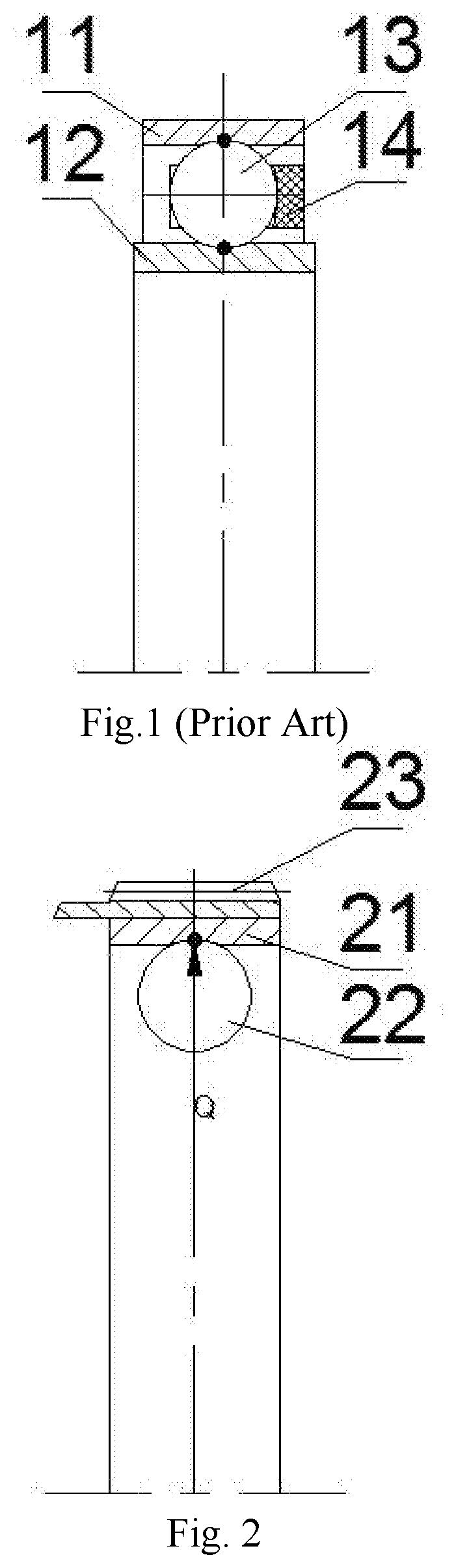
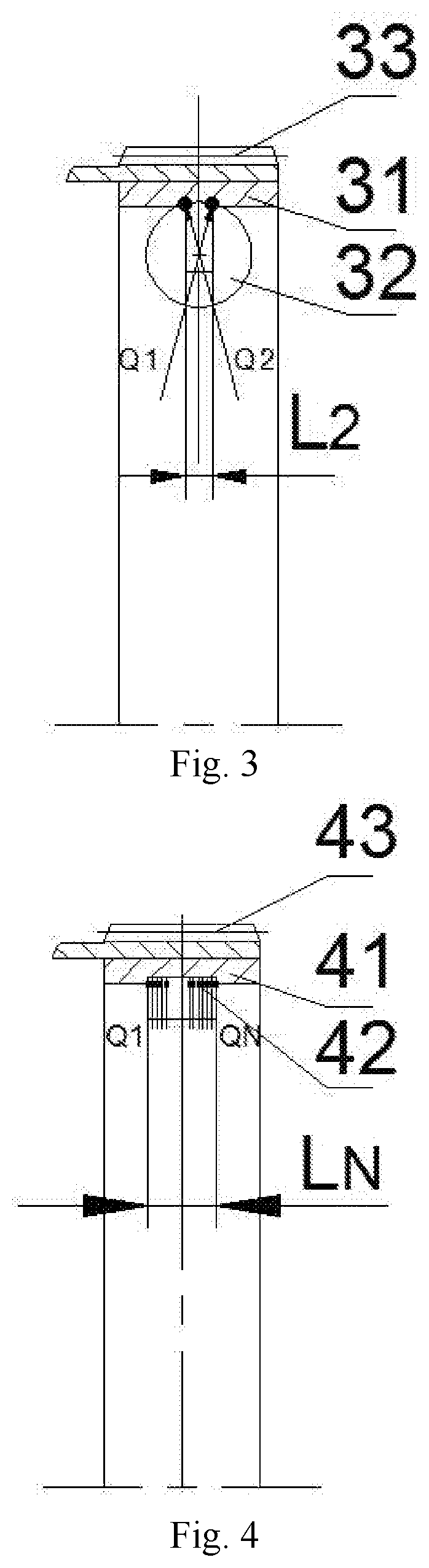
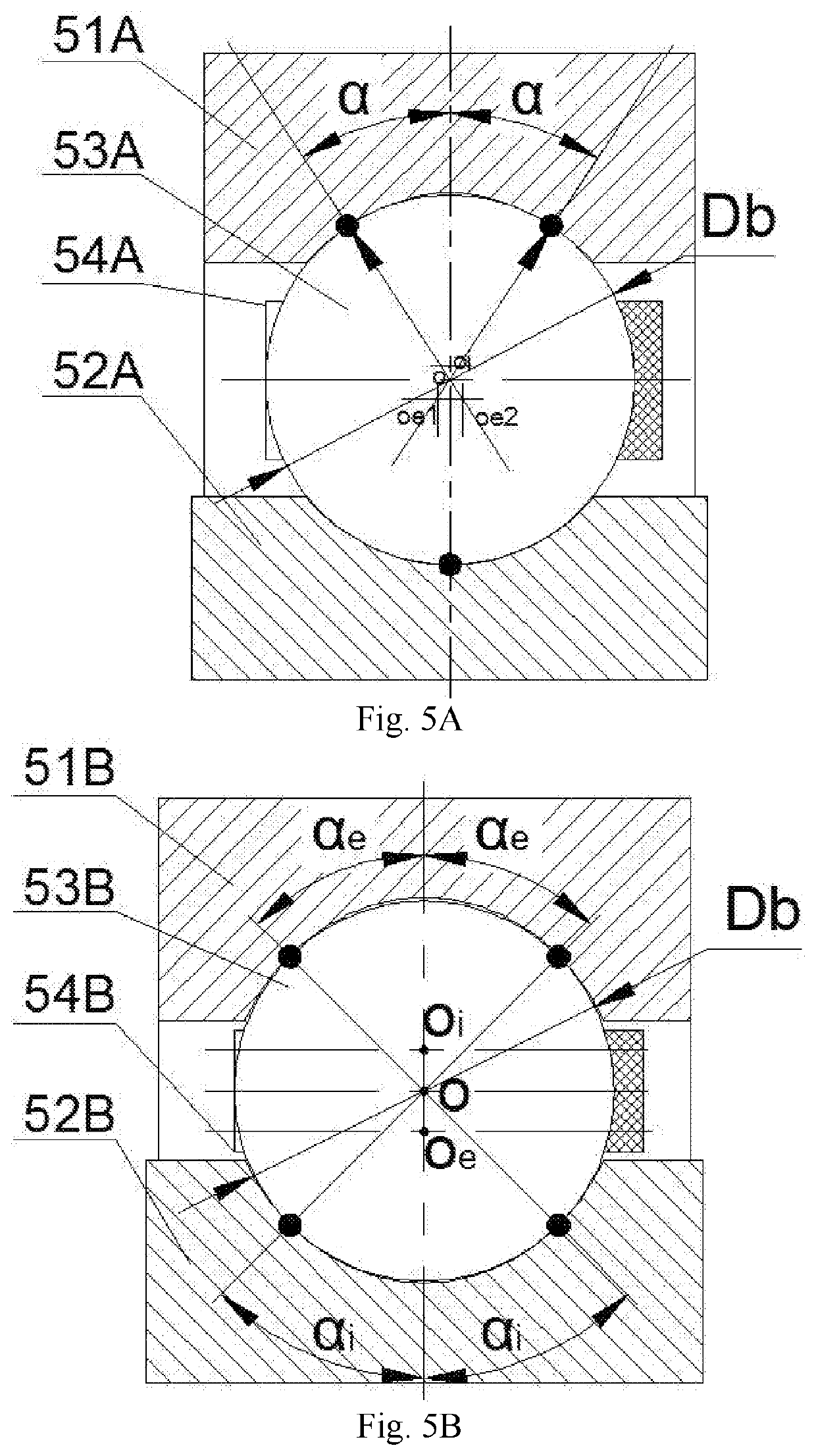
- A multiple contact-point flexible bearing design with peach-shaped or elliptical arc groove raceways and rolling elements that have two or more contact points with the raceways, reducing bending and distortion deformations by distributing contact forces, and employing line contact with rollers for enhanced stiffness.

Manufacturing Standards for Precision Gear Systems
Manufacturing standards for precision gear systems represent a critical foundation for developing next-generation harmonic drives that meet increasingly demanding performance requirements. Current international standards such as ISO 1328, AGMA 2000, and DIN 3962 establish fundamental guidelines for gear accuracy, surface finish, and dimensional tolerances, yet these frameworks require significant evolution to address the unique challenges posed by harmonic drive applications.
The precision requirements for harmonic drives substantially exceed those of conventional gear systems, necessitating specialized manufacturing standards that account for the flexible spline's dynamic deformation characteristics. Traditional gear manufacturing tolerances, typically ranging from IT6 to IT8, prove insufficient for harmonic drives where IT4 to IT5 precision levels are often required to achieve optimal performance and minimize backlash.
Surface finish specifications represent another critical aspect where existing standards require enhancement. While conventional gear systems operate effectively with surface roughness values of Ra 0.8-1.6 μm, harmonic drives demand significantly smoother surfaces, typically Ra 0.2-0.4 μm, to reduce friction and wear during the continuous flexing motion of the flexible spline.
Material specifications within current manufacturing standards also need refinement for next-generation harmonic drives. The cyclic stress patterns experienced by flexible splines require materials with exceptional fatigue resistance and specific heat treatment protocols that extend beyond conventional gear steel specifications. Standards must incorporate guidelines for advanced materials such as precipitation-hardened stainless steels and specialized surface treatments.
Quality control methodologies present another area requiring standardization enhancement. Traditional gear inspection techniques, while adequate for rigid gear systems, cannot fully capture the complex geometric relationships and stress distributions inherent in harmonic drive components. New standards must integrate advanced metrology techniques including coordinate measuring machines with specialized fixtures and non-contact optical measurement systems.
The manufacturing process standardization for harmonic drives must also address the unique assembly requirements and the critical relationship between wave generator geometry and flexible spline performance. This includes establishing protocols for controlled assembly environments, precise torque specifications, and comprehensive testing procedures that validate both individual component performance and complete assembly functionality under various operating conditions.
The precision requirements for harmonic drives substantially exceed those of conventional gear systems, necessitating specialized manufacturing standards that account for the flexible spline's dynamic deformation characteristics. Traditional gear manufacturing tolerances, typically ranging from IT6 to IT8, prove insufficient for harmonic drives where IT4 to IT5 precision levels are often required to achieve optimal performance and minimize backlash.
Surface finish specifications represent another critical aspect where existing standards require enhancement. While conventional gear systems operate effectively with surface roughness values of Ra 0.8-1.6 μm, harmonic drives demand significantly smoother surfaces, typically Ra 0.2-0.4 μm, to reduce friction and wear during the continuous flexing motion of the flexible spline.
Material specifications within current manufacturing standards also need refinement for next-generation harmonic drives. The cyclic stress patterns experienced by flexible splines require materials with exceptional fatigue resistance and specific heat treatment protocols that extend beyond conventional gear steel specifications. Standards must incorporate guidelines for advanced materials such as precipitation-hardened stainless steels and specialized surface treatments.
Quality control methodologies present another area requiring standardization enhancement. Traditional gear inspection techniques, while adequate for rigid gear systems, cannot fully capture the complex geometric relationships and stress distributions inherent in harmonic drive components. New standards must integrate advanced metrology techniques including coordinate measuring machines with specialized fixtures and non-contact optical measurement systems.
The manufacturing process standardization for harmonic drives must also address the unique assembly requirements and the critical relationship between wave generator geometry and flexible spline performance. This includes establishing protocols for controlled assembly environments, precise torque specifications, and comprehensive testing procedures that validate both individual component performance and complete assembly functionality under various operating conditions.
Sustainability in Next-Gen Drive System Design
Sustainability has emerged as a fundamental design principle for next-generation harmonic drive systems, driven by increasing environmental regulations and corporate responsibility initiatives. Modern drive system development must integrate circular economy principles from the conceptual stage, emphasizing material selection, energy efficiency, and end-of-life considerations. This paradigm shift requires engineers to balance performance requirements with environmental impact, creating systems that meet both operational excellence and sustainability targets.
Material sustainability represents a critical focus area in next-generation harmonic drives. Advanced bio-based polymers and recycled metal alloys are being evaluated as alternatives to traditional materials, offering comparable mechanical properties while reducing carbon footprint. Rare earth element reduction strategies are particularly important, as these materials face supply chain vulnerabilities and environmental extraction concerns. Research into alternative magnetic materials and optimized gear geometries aims to minimize dependency on scarce resources while maintaining torque density and precision characteristics.
Energy efficiency optimization extends beyond operational performance to encompass the entire product lifecycle. Next-generation designs incorporate advanced lubrication systems using biodegradable synthetic oils that reduce friction losses while supporting environmental goals. Intelligent thermal management systems minimize energy waste through adaptive cooling strategies, while precision manufacturing techniques reduce parasitic losses inherent in traditional harmonic drive assemblies.
Manufacturing sustainability involves implementing lean production processes that minimize waste generation and energy consumption. Additive manufacturing technologies enable on-demand production of complex components, reducing inventory requirements and transportation emissions. Digital twin technologies optimize manufacturing parameters to achieve first-pass quality, eliminating rework cycles and material waste. These approaches support distributed manufacturing models that reduce supply chain complexity and associated environmental impacts.
End-of-life design considerations ensure that next-generation harmonic drives support circular economy principles through design for disassembly and material recovery. Modular architectures facilitate component replacement and refurbishment, extending operational lifespans while reducing total ownership costs. Standardized interfaces and material marking systems enable efficient recycling processes, ensuring valuable materials return to the manufacturing cycle rather than becoming waste streams.
Material sustainability represents a critical focus area in next-generation harmonic drives. Advanced bio-based polymers and recycled metal alloys are being evaluated as alternatives to traditional materials, offering comparable mechanical properties while reducing carbon footprint. Rare earth element reduction strategies are particularly important, as these materials face supply chain vulnerabilities and environmental extraction concerns. Research into alternative magnetic materials and optimized gear geometries aims to minimize dependency on scarce resources while maintaining torque density and precision characteristics.
Energy efficiency optimization extends beyond operational performance to encompass the entire product lifecycle. Next-generation designs incorporate advanced lubrication systems using biodegradable synthetic oils that reduce friction losses while supporting environmental goals. Intelligent thermal management systems minimize energy waste through adaptive cooling strategies, while precision manufacturing techniques reduce parasitic losses inherent in traditional harmonic drive assemblies.
Manufacturing sustainability involves implementing lean production processes that minimize waste generation and energy consumption. Additive manufacturing technologies enable on-demand production of complex components, reducing inventory requirements and transportation emissions. Digital twin technologies optimize manufacturing parameters to achieve first-pass quality, eliminating rework cycles and material waste. These approaches support distributed manufacturing models that reduce supply chain complexity and associated environmental impacts.
End-of-life design considerations ensure that next-generation harmonic drives support circular economy principles through design for disassembly and material recovery. Modular architectures facilitate component replacement and refurbishment, extending operational lifespans while reducing total ownership costs. Standardized interfaces and material marking systems enable efficient recycling processes, ensuring valuable materials return to the manufacturing cycle rather than becoming waste streams.
Unlock deeper insights with Patsnap Eureka Quick Research — get a full tech report to explore trends and direct your research. Try now!
Generate Your Research Report Instantly with AI Agent
Supercharge your innovation with Patsnap Eureka AI Agent Platform!