

Compare Ionizing Ray Interaction: Metals vs Non-metals
MAR 16, 20269 MIN READ
Generate Your Research Report Instantly with AI Agent
Patsnap Eureka helps you evaluate technical feasibility & market potential.
Ionizing Radiation Interaction Background and Research Goals
Ionizing radiation represents electromagnetic waves or particles carrying sufficient energy to remove electrons from atoms or molecules, creating ion pairs in the process. This fundamental physical phenomenon has been extensively studied since the discovery of X-rays by Wilhelm Röntgen in 1895 and radioactivity by Henri Becquerel in 1896. The interaction mechanisms between ionizing radiation and matter form the cornerstone of numerous technological applications spanning medical imaging, nuclear power generation, materials science, and radiation protection.
The historical development of radiation interaction theory began with early observations of photographic plate fogging and evolved into sophisticated quantum mechanical models. Pioneering work by Compton, Klein, Nishina, and others established the theoretical framework for understanding how photons interact with matter through photoelectric effect, Compton scattering, and pair production. Simultaneously, research into particle radiation interactions led to comprehensive models describing energy loss mechanisms for charged particles traversing different materials.
Contemporary research objectives focus on advancing our understanding of differential interaction mechanisms between metals and non-metals under ionizing radiation exposure. This comparative analysis addresses critical knowledge gaps in radiation physics, particularly regarding how electronic structure, atomic density, and crystalline organization influence radiation absorption, scattering, and secondary particle generation. The metallic versus non-metallic distinction becomes crucial when considering applications in radiation shielding, detector design, and materials degradation studies.
Primary research goals encompass quantitative characterization of interaction cross-sections, energy transfer coefficients, and dose deposition patterns across diverse material categories. Understanding these fundamental differences enables optimization of radiation detection systems, development of advanced shielding materials, and prediction of radiation-induced material property changes. Additionally, investigating the role of free electrons in metals versus bound electrons in non-metals provides insights into charge transport phenomena and radiation-induced conductivity modifications.
The technological implications extend beyond academic interest, driving innovations in medical physics, nuclear engineering, and space technology. Comparative studies between metallic and non-metallic materials under ionizing radiation exposure inform design decisions for spacecraft components, nuclear reactor materials, and medical device manufacturing, ultimately contributing to enhanced safety, performance, and reliability across radiation-sensitive applications.
The historical development of radiation interaction theory began with early observations of photographic plate fogging and evolved into sophisticated quantum mechanical models. Pioneering work by Compton, Klein, Nishina, and others established the theoretical framework for understanding how photons interact with matter through photoelectric effect, Compton scattering, and pair production. Simultaneously, research into particle radiation interactions led to comprehensive models describing energy loss mechanisms for charged particles traversing different materials.
Contemporary research objectives focus on advancing our understanding of differential interaction mechanisms between metals and non-metals under ionizing radiation exposure. This comparative analysis addresses critical knowledge gaps in radiation physics, particularly regarding how electronic structure, atomic density, and crystalline organization influence radiation absorption, scattering, and secondary particle generation. The metallic versus non-metallic distinction becomes crucial when considering applications in radiation shielding, detector design, and materials degradation studies.
Primary research goals encompass quantitative characterization of interaction cross-sections, energy transfer coefficients, and dose deposition patterns across diverse material categories. Understanding these fundamental differences enables optimization of radiation detection systems, development of advanced shielding materials, and prediction of radiation-induced material property changes. Additionally, investigating the role of free electrons in metals versus bound electrons in non-metals provides insights into charge transport phenomena and radiation-induced conductivity modifications.
The technological implications extend beyond academic interest, driving innovations in medical physics, nuclear engineering, and space technology. Comparative studies between metallic and non-metallic materials under ionizing radiation exposure inform design decisions for spacecraft components, nuclear reactor materials, and medical device manufacturing, ultimately contributing to enhanced safety, performance, and reliability across radiation-sensitive applications.
Market Demand for Radiation Shielding Materials
The global radiation shielding materials market demonstrates robust growth driven by expanding applications across nuclear power generation, medical imaging, aerospace, and industrial sectors. Nuclear power plants represent the largest demand segment, requiring comprehensive shielding solutions for reactor containment, spent fuel storage, and worker protection areas. The ongoing construction of new nuclear facilities worldwide, particularly in emerging economies, sustains steady demand for both metallic and non-metallic shielding materials.
Medical applications constitute another significant market driver, with hospitals and diagnostic centers requiring radiation protection for X-ray rooms, CT scan facilities, and radiation therapy departments. The aging global population and increased medical imaging procedures fuel continuous demand for lead-based products, concrete barriers, and specialized polymer composites. Dental clinics and veterinary facilities also contribute to market expansion through requirements for portable and permanent shielding solutions.
Aerospace and defense sectors demand lightweight yet effective radiation protection for satellites, spacecraft, and military applications. This segment particularly values advanced composite materials that combine radiation attenuation properties with weight optimization. Space exploration missions and satellite deployment programs drive innovation in hybrid shielding materials that incorporate both metallic and non-metallic components.
Industrial radiography and non-destructive testing applications require portable shielding equipment and permanent installation barriers. Oil and gas pipeline inspection, structural integrity testing, and quality control processes in manufacturing industries maintain consistent demand for flexible shielding solutions. The growth of industrial automation and quality assurance protocols expands market opportunities.
Regional demand patterns reflect infrastructure development levels and regulatory frameworks. Developed markets emphasize advanced materials with superior performance characteristics, while emerging markets focus on cost-effective traditional solutions. Regulatory compliance requirements regarding radiation safety standards significantly influence material selection and market dynamics across different geographical regions.
The market increasingly favors materials offering dual functionality, combining radiation shielding with structural support, thermal management, or electromagnetic interference protection. This trend drives demand for engineered composites and hybrid materials that optimize multiple performance parameters simultaneously.
Medical applications constitute another significant market driver, with hospitals and diagnostic centers requiring radiation protection for X-ray rooms, CT scan facilities, and radiation therapy departments. The aging global population and increased medical imaging procedures fuel continuous demand for lead-based products, concrete barriers, and specialized polymer composites. Dental clinics and veterinary facilities also contribute to market expansion through requirements for portable and permanent shielding solutions.
Aerospace and defense sectors demand lightweight yet effective radiation protection for satellites, spacecraft, and military applications. This segment particularly values advanced composite materials that combine radiation attenuation properties with weight optimization. Space exploration missions and satellite deployment programs drive innovation in hybrid shielding materials that incorporate both metallic and non-metallic components.
Industrial radiography and non-destructive testing applications require portable shielding equipment and permanent installation barriers. Oil and gas pipeline inspection, structural integrity testing, and quality control processes in manufacturing industries maintain consistent demand for flexible shielding solutions. The growth of industrial automation and quality assurance protocols expands market opportunities.
Regional demand patterns reflect infrastructure development levels and regulatory frameworks. Developed markets emphasize advanced materials with superior performance characteristics, while emerging markets focus on cost-effective traditional solutions. Regulatory compliance requirements regarding radiation safety standards significantly influence material selection and market dynamics across different geographical regions.
The market increasingly favors materials offering dual functionality, combining radiation shielding with structural support, thermal management, or electromagnetic interference protection. This trend drives demand for engineered composites and hybrid materials that optimize multiple performance parameters simultaneously.
Current State of Metal vs Non-metal Radiation Response
The fundamental differences in atomic structure between metals and non-metals create distinct radiation interaction mechanisms that have been extensively studied across multiple scientific disciplines. Metals, characterized by their delocalized electron clouds and crystalline lattice structures, exhibit significantly different radiation response patterns compared to non-metals with their localized electron configurations and diverse molecular arrangements.
Current research demonstrates that metals primarily interact with ionizing radiation through photoelectric absorption, Compton scattering, and pair production mechanisms. The high atomic numbers typical of many metals result in enhanced photoelectric cross-sections, particularly for lower energy photons. The free electron gas model in metals facilitates rapid energy dissipation through electronic excitation and subsequent thermalization processes.
Non-metallic materials display more complex radiation interaction profiles due to their varied chemical compositions and bonding structures. Organic polymers, ceramics, and semiconductor materials each exhibit unique radiation response characteristics. Polymer chains undergo scission and cross-linking reactions, while ceramic materials experience defect formation and structural modifications under radiation exposure.
Experimental studies reveal that metallic materials generally demonstrate superior radiation tolerance in terms of structural integrity maintenance. The metallic bonding allows for efficient defect annealing and self-healing mechanisms through atomic mobility. Conversely, non-metals often exhibit more pronounced degradation effects, including bond breaking, gas evolution, and property deterioration at comparable radiation doses.
Recent advances in radiation detection and measurement techniques have enabled more precise characterization of material responses. Synchrotron radiation facilities and advanced spectroscopic methods provide detailed insights into real-time radiation-induced changes at the atomic and molecular levels. These capabilities have revealed previously unknown mechanisms in both metallic and non-metallic systems.
The aerospace and nuclear industries have driven significant research investments in understanding radiation effects on various materials. Space applications require materials capable of withstanding cosmic radiation environments, while nuclear reactor components must maintain functionality under intense neutron and gamma radiation fields. These demanding applications have accelerated the development of radiation-resistant material formulations.
Contemporary research focuses on developing predictive models that can accurately forecast material behavior under specific radiation conditions. Machine learning approaches combined with extensive experimental databases are enabling more sophisticated understanding of structure-property relationships in irradiated materials, facilitating the design of next-generation radiation-tolerant systems.
Current research demonstrates that metals primarily interact with ionizing radiation through photoelectric absorption, Compton scattering, and pair production mechanisms. The high atomic numbers typical of many metals result in enhanced photoelectric cross-sections, particularly for lower energy photons. The free electron gas model in metals facilitates rapid energy dissipation through electronic excitation and subsequent thermalization processes.
Non-metallic materials display more complex radiation interaction profiles due to their varied chemical compositions and bonding structures. Organic polymers, ceramics, and semiconductor materials each exhibit unique radiation response characteristics. Polymer chains undergo scission and cross-linking reactions, while ceramic materials experience defect formation and structural modifications under radiation exposure.
Experimental studies reveal that metallic materials generally demonstrate superior radiation tolerance in terms of structural integrity maintenance. The metallic bonding allows for efficient defect annealing and self-healing mechanisms through atomic mobility. Conversely, non-metals often exhibit more pronounced degradation effects, including bond breaking, gas evolution, and property deterioration at comparable radiation doses.
Recent advances in radiation detection and measurement techniques have enabled more precise characterization of material responses. Synchrotron radiation facilities and advanced spectroscopic methods provide detailed insights into real-time radiation-induced changes at the atomic and molecular levels. These capabilities have revealed previously unknown mechanisms in both metallic and non-metallic systems.
The aerospace and nuclear industries have driven significant research investments in understanding radiation effects on various materials. Space applications require materials capable of withstanding cosmic radiation environments, while nuclear reactor components must maintain functionality under intense neutron and gamma radiation fields. These demanding applications have accelerated the development of radiation-resistant material formulations.
Contemporary research focuses on developing predictive models that can accurately forecast material behavior under specific radiation conditions. Machine learning approaches combined with extensive experimental databases are enabling more sophisticated understanding of structure-property relationships in irradiated materials, facilitating the design of next-generation radiation-tolerant systems.
Existing Metal and Non-metal Shielding Solutions
01 Ionizing radiation detection and measurement systems
Systems and devices designed to detect, measure, and analyze ionizing radiation through various detection mechanisms. These systems utilize specialized sensors and detectors to identify radiation types, measure intensity levels, and provide accurate readings of ionizing ray interactions with matter. The detection systems can be configured for different radiation types including gamma rays, X-rays, and particle radiation, enabling precise monitoring and measurement in various applications.- Ionizing radiation detection and measurement systems: Systems and devices designed to detect, measure, and analyze ionizing radiation through various detection mechanisms. These systems utilize specialized sensors and detectors to identify radiation types, measure intensity levels, and provide real-time monitoring capabilities. The technology encompasses both portable and stationary detection equipment with varying sensitivity levels and detection ranges for different radiation sources.
- Radiation shielding and protection materials: Materials and compositions specifically designed to attenuate or block ionizing radiation. These protective materials incorporate various elements and compounds that interact with ionizing rays to reduce their penetration and intensity. The shielding solutions include composite materials, layered structures, and specialized coatings that provide effective protection against different types of ionizing radiation while maintaining practical usability.
- Ionizing radiation imaging and visualization systems: Advanced imaging technologies that utilize ionizing radiation interactions to create visual representations of objects or materials. These systems employ various detection arrays and image processing algorithms to convert radiation interaction data into interpretable images. Applications include medical diagnostics, industrial inspection, and security screening, with capabilities for both two-dimensional and three-dimensional imaging.
- Radiation interaction analysis and characterization methods: Techniques and methodologies for analyzing the interaction characteristics between ionizing radiation and various materials. These methods involve studying absorption patterns, scattering effects, and energy transfer mechanisms to understand material properties and radiation behavior. The analysis approaches include spectroscopic techniques, computational modeling, and experimental measurement protocols for characterizing radiation-matter interactions.
- Ionizing radiation modulation and control devices: Devices and systems designed to control, modulate, or manipulate ionizing radiation beams and their interaction properties. These technologies enable precise adjustment of radiation parameters such as intensity, energy levels, and beam geometry. Applications include therapeutic radiation delivery, industrial processing, and research instrumentation where controlled radiation exposure is required.
02 Radiation shielding and protection materials
Materials and compositions specifically designed to interact with and attenuate ionizing radiation for protection purposes. These materials demonstrate specific interaction characteristics with ionizing rays, including absorption, scattering, and blocking capabilities. The shielding solutions incorporate various material compositions and structural configurations to effectively reduce radiation exposure and provide protective barriers against different types of ionizing radiation.Expand Specific Solutions03 Ionizing radiation imaging and visualization technologies
Technologies that utilize the interaction characteristics of ionizing rays to create images and visualizations for diagnostic or analytical purposes. These systems exploit the differential interaction of ionizing radiation with various materials and tissues to generate contrast and detailed imagery. The imaging technologies encompass methods for capturing, processing, and displaying information derived from ionizing ray interactions.Expand Specific Solutions04 Ionizing radiation modulation and control mechanisms
Mechanisms and methods for controlling and modulating ionizing radiation interactions through various technical approaches. These systems enable precise control over radiation beam characteristics, interaction parameters, and energy levels. The control mechanisms facilitate optimization of ionizing ray interactions for specific applications by adjusting parameters such as intensity, direction, and energy spectrum.Expand Specific Solutions05 Ionizing radiation interaction analysis and characterization methods
Methods and techniques for analyzing and characterizing the interaction properties of ionizing radiation with various materials and substances. These approaches involve studying interaction mechanisms, measuring interaction cross-sections, and determining material response to ionizing radiation. The characterization methods provide fundamental understanding of how ionizing rays interact with matter at different energy levels and under various conditions.Expand Specific Solutions
Key Players in Radiation Shielding Industry
The ionizing ray interaction technology field is experiencing rapid evolution across metals and non-metals applications, driven by diverse industry players spanning electronics, healthcare, and materials science. The market demonstrates significant scale with established corporations like TDK Corp., Toshiba Corp., Samsung Display, and NXP Semiconductors leading semiconductor and electronic component applications, while companies such as Novo Nordisk and Pacific Biosciences drive healthcare innovations. Technology maturity varies considerably across segments, with semiconductor applications showing high maturity through companies like FUJIFILM Corp. and ULVAC Inc., while emerging applications in materials processing remain developmental. Research institutions including MIT, Johns Hopkins University, and École Polytechnique Fédérale de Lausanne contribute foundational research, indicating strong academic-industry collaboration. The competitive landscape suggests a mature but rapidly advancing field with established players leveraging proven technologies while newer entrants explore novel applications in specialized materials and biotechnology sectors.
Toshiba Corp.
Technical Solution: Toshiba has developed advanced radiation detection technologies utilizing both metallic and non-metallic materials for ionizing radiation interaction studies. Their approach combines semiconductor-based detectors with metal oxide structures to analyze differential absorption coefficients and scattering cross-sections. The company's radiation hardened electronics incorporate comparative analysis of photoelectric effects in metals versus Compton scattering dominance in lighter non-metallic elements, enabling precise measurement of radiation interaction mechanisms across different material categories.
Strengths: Extensive experience in semiconductor radiation detection, strong R&D capabilities in materials science. Weaknesses: Limited focus on pure research applications, primarily commercial-oriented solutions.
The Johns Hopkins University
Technical Solution: Johns Hopkins has conducted comprehensive research on ionizing radiation interactions comparing metallic and non-metallic materials through their Applied Physics Laboratory and Medical Physics programs. Their studies focus on atomic number dependencies in photoelectric absorption, where metals with higher Z-values demonstrate enhanced interaction probabilities compared to organic non-metals. The research encompasses Monte Carlo simulations and experimental validation of mass attenuation coefficients, investigating how electron density variations between metals and non-metals affect radiation penetration and energy deposition patterns.
Strengths: Strong theoretical foundation, extensive research publications, advanced simulation capabilities. Weaknesses: Limited commercial application focus, primarily academic research orientation.
Core Physics of Ionizing Ray-Material Interactions
Monitoring radiation exposure and radiosensitivity using ambient ionization mass spectrometry
PatentWO2018009700A1
Innovation
- The use of surface desorption ionization mass spectrometry methods and apparatus for real-time analysis of molecular profiles to identify and quantify radiation exposure effects, allowing for personalized treatments and reducing the risk of secondary cancers by determining maximum radiation exposure and tailoring therapies based on individual sensitivity.


Method and apparatus for plasma source ion implantation in metals and non-metals
PatentInactiveUS20060060796A1
Innovation
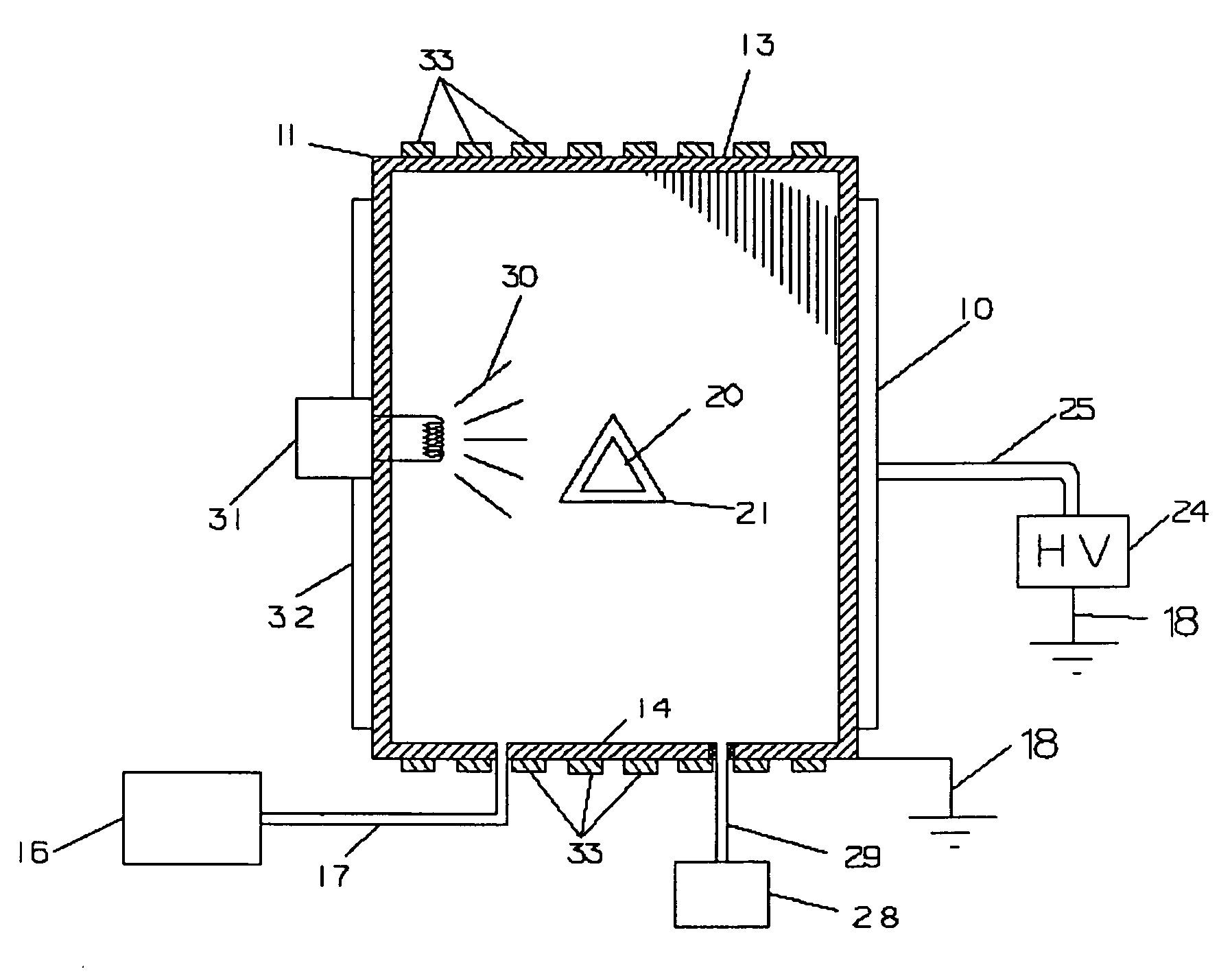
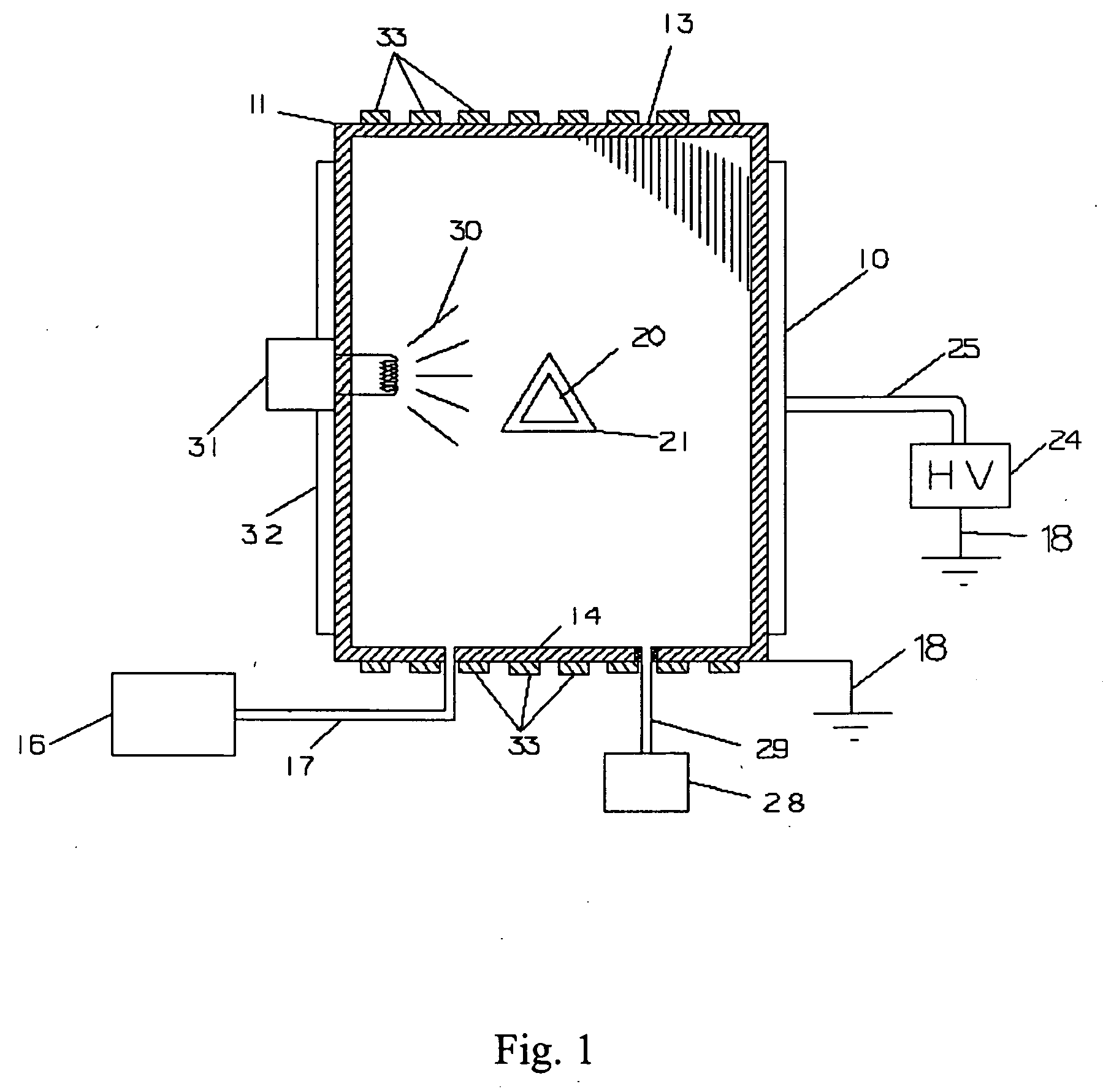
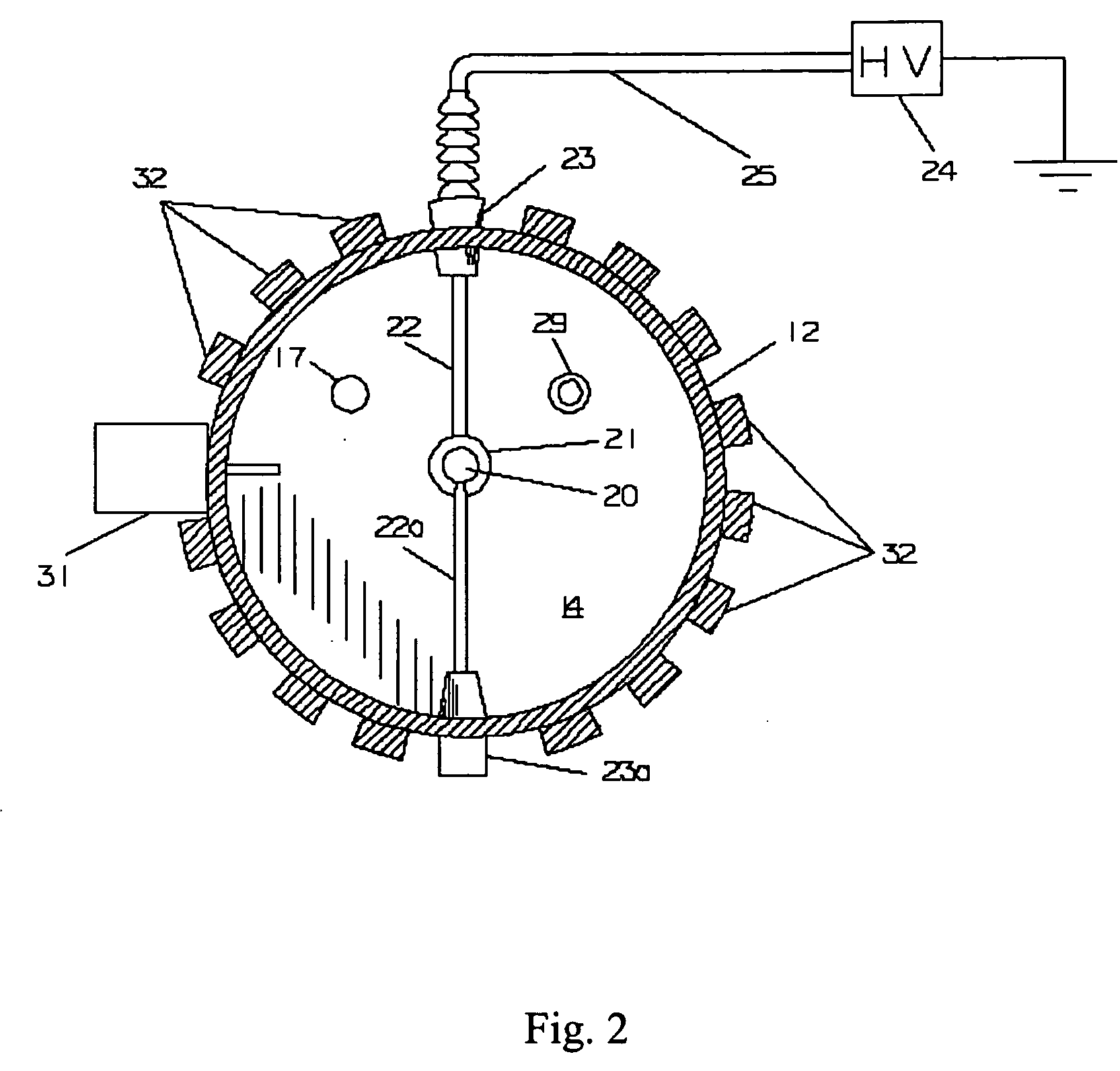
- A plasma source ion implantation method where a transparent enclosure surrounds the target within an evacuated chamber, generating plasma from various sources and applying pulses to accelerate ions from the plasma sheath towards the target from all sides, eliminating the need for internal electrodes and complex target manipulation, allowing for efficient ion implantation of complex shapes.

Radiation Safety Regulations and Standards
The regulatory landscape governing ionizing radiation safety has evolved significantly to address the distinct interaction characteristics between metals and non-metals. International frameworks established by the International Atomic Energy Agency (IAEA) and the International Commission on Radiological Protection (ICRP) provide foundational guidelines that recognize material-specific radiation responses. These standards acknowledge that metallic materials exhibit different attenuation coefficients and secondary radiation generation patterns compared to non-metallic substances.
Current safety regulations mandate specific dose limits and exposure protocols based on material composition and intended application. For metallic components in radiation environments, standards typically require enhanced monitoring due to their propensity for neutron activation and characteristic X-ray emission. The Nuclear Regulatory Commission (NRC) and equivalent international bodies have established material-specific guidelines that account for atomic number dependencies and photoelectric absorption variations between metal and non-metal systems.
Occupational safety standards differentiate between handling procedures for metallic and non-metallic radioactive materials. Workers dealing with metallic sources face stricter time limitations due to higher secondary radiation risks, while non-metallic material handling focuses more on contamination prevention and alpha particle shielding requirements. Personal protective equipment specifications vary accordingly, with lead-based shielding prioritized for metallic sources and plastic or composite materials often sufficient for certain non-metallic applications.
Environmental release standards also reflect material-specific considerations. Metallic radionuclides typically have more stringent discharge limits due to their bioaccumulation potential and longer environmental persistence. Non-metallic radioactive compounds may have different regulatory thresholds based on their chemical mobility and biological uptake pathways.
Emerging regulatory trends indicate increasing sophistication in material-specific approaches. Recent updates to international standards incorporate advanced modeling of radiation transport in different material matrices, leading to more precise safety protocols. Future regulatory developments are expected to further refine material-specific requirements as understanding of ionizing radiation interactions with various atomic structures continues to advance through ongoing research and operational experience.
Current safety regulations mandate specific dose limits and exposure protocols based on material composition and intended application. For metallic components in radiation environments, standards typically require enhanced monitoring due to their propensity for neutron activation and characteristic X-ray emission. The Nuclear Regulatory Commission (NRC) and equivalent international bodies have established material-specific guidelines that account for atomic number dependencies and photoelectric absorption variations between metal and non-metal systems.
Occupational safety standards differentiate between handling procedures for metallic and non-metallic radioactive materials. Workers dealing with metallic sources face stricter time limitations due to higher secondary radiation risks, while non-metallic material handling focuses more on contamination prevention and alpha particle shielding requirements. Personal protective equipment specifications vary accordingly, with lead-based shielding prioritized for metallic sources and plastic or composite materials often sufficient for certain non-metallic applications.
Environmental release standards also reflect material-specific considerations. Metallic radionuclides typically have more stringent discharge limits due to their bioaccumulation potential and longer environmental persistence. Non-metallic radioactive compounds may have different regulatory thresholds based on their chemical mobility and biological uptake pathways.
Emerging regulatory trends indicate increasing sophistication in material-specific approaches. Recent updates to international standards incorporate advanced modeling of radiation transport in different material matrices, leading to more precise safety protocols. Future regulatory developments are expected to further refine material-specific requirements as understanding of ionizing radiation interactions with various atomic structures continues to advance through ongoing research and operational experience.
Environmental Impact of Radiation Shielding Materials
The environmental implications of radiation shielding materials represent a critical consideration in the selection and deployment of protective systems across nuclear, medical, and industrial applications. The fundamental differences in ionizing radiation interaction between metallic and non-metallic materials directly influence their environmental footprint throughout the material lifecycle.
Heavy metals commonly used in radiation shielding, particularly lead, tungsten, and depleted uranium, pose significant environmental challenges during extraction, processing, and end-of-life disposal. Lead mining operations generate substantial soil and water contamination, while the smelting process releases toxic emissions into the atmosphere. The persistence of heavy metals in environmental systems creates long-term contamination risks, with bioaccumulation potential in food chains presenting ongoing ecological threats.
Non-metallic shielding alternatives, including concrete composites, polymer-based materials, and borated compounds, generally demonstrate more favorable environmental profiles during production phases. These materials typically require less energy-intensive manufacturing processes and generate fewer toxic byproducts. However, their environmental impact varies significantly based on constituent materials and manufacturing methods employed.
The disposal phase presents contrasting environmental challenges for different material categories. Metallic shielding materials, while potentially hazardous, often retain high recycling value and can be reprocessed for continued use in appropriate applications. Lead shielding, despite its toxicity concerns, maintains established recycling infrastructure in many regions. Conversely, composite non-metallic materials frequently present complex separation challenges, limiting recycling opportunities and potentially requiring specialized disposal methods.
Emerging bio-based and sustainable shielding materials are gaining attention as environmentally conscious alternatives. These include materials incorporating recycled content, renewable feedstocks, or designed for enhanced end-of-life recyclability. Research into nanocomposite materials and advanced polymer systems aims to achieve effective radiation attenuation while minimizing environmental impact through reduced material volumes and improved sustainability metrics.
The geographic distribution of environmental impacts varies considerably based on material selection. Regions with established heavy metal processing infrastructure may experience concentrated environmental burdens, while areas utilizing locally-sourced non-metallic alternatives may achieve reduced transportation-related emissions and enhanced supply chain sustainability.
Heavy metals commonly used in radiation shielding, particularly lead, tungsten, and depleted uranium, pose significant environmental challenges during extraction, processing, and end-of-life disposal. Lead mining operations generate substantial soil and water contamination, while the smelting process releases toxic emissions into the atmosphere. The persistence of heavy metals in environmental systems creates long-term contamination risks, with bioaccumulation potential in food chains presenting ongoing ecological threats.
Non-metallic shielding alternatives, including concrete composites, polymer-based materials, and borated compounds, generally demonstrate more favorable environmental profiles during production phases. These materials typically require less energy-intensive manufacturing processes and generate fewer toxic byproducts. However, their environmental impact varies significantly based on constituent materials and manufacturing methods employed.
The disposal phase presents contrasting environmental challenges for different material categories. Metallic shielding materials, while potentially hazardous, often retain high recycling value and can be reprocessed for continued use in appropriate applications. Lead shielding, despite its toxicity concerns, maintains established recycling infrastructure in many regions. Conversely, composite non-metallic materials frequently present complex separation challenges, limiting recycling opportunities and potentially requiring specialized disposal methods.
Emerging bio-based and sustainable shielding materials are gaining attention as environmentally conscious alternatives. These include materials incorporating recycled content, renewable feedstocks, or designed for enhanced end-of-life recyclability. Research into nanocomposite materials and advanced polymer systems aims to achieve effective radiation attenuation while minimizing environmental impact through reduced material volumes and improved sustainability metrics.
The geographic distribution of environmental impacts varies considerably based on material selection. Regions with established heavy metal processing infrastructure may experience concentrated environmental burdens, while areas utilizing locally-sourced non-metallic alternatives may achieve reduced transportation-related emissions and enhanced supply chain sustainability.
Unlock deeper insights with Patsnap Eureka Quick Research — get a full tech report to explore trends and direct your research. Try now!
Generate Your Research Report Instantly with AI Agent
Supercharge your innovation with Patsnap Eureka AI Agent Platform!