

Ionizing Rays in Nanotechnology: Utilization Efficiency
MAR 16, 20269 MIN READ
Generate Your Research Report Instantly with AI Agent
PatSnap Eureka helps you evaluate technical feasibility & market potential.
Ionizing Radiation in Nanotech: Background and Objectives
Ionizing radiation has emerged as a transformative tool in nanotechnology, fundamentally altering how researchers approach material synthesis, modification, and characterization at the nanoscale. The interaction between high-energy radiation and matter at atomic dimensions creates unique opportunities for precise manipulation of nanomaterials, enabling the development of advanced functional materials with tailored properties. This convergence of radiation physics and nanotechnology has opened new frontiers in materials science, electronics, medicine, and energy applications.
The historical development of ionizing radiation applications in nanotechnology traces back to the early 2000s when researchers first recognized the potential of electron beam lithography and ion beam processing for creating nanostructures. Initial applications focused primarily on semiconductor manufacturing, where precise patterning capabilities were essential for device miniaturization. Over the subsequent decades, the field expanded to encompass radiation-induced synthesis of nanoparticles, surface modification techniques, and the development of radiation-responsive nanomaterials.
Current technological evolution demonstrates a clear trajectory toward enhanced precision and efficiency in radiation-based nanotechnology processes. Advanced electron beam systems now achieve sub-nanometer resolution, while ion beam techniques enable three-dimensional nanostructuring with unprecedented accuracy. Synchrotron radiation sources provide intense, tunable X-ray beams for real-time characterization and modification of nanomaterials during processing.
The primary objective driving research in this field centers on maximizing utilization efficiency of ionizing radiation for nanotechnology applications. This encompasses optimizing energy transfer mechanisms, minimizing unwanted radiation damage, and developing novel radiation-responsive materials. Researchers aim to establish predictive models for radiation-matter interactions at the nanoscale, enabling rational design of radiation-based processes.
Secondary objectives include developing cost-effective radiation sources, improving spatial and temporal control of radiation exposure, and creating standardized protocols for radiation-based nanomanufacturing. The ultimate goal involves establishing ionizing radiation as a mainstream tool for scalable nanotechnology production, bridging the gap between laboratory research and industrial applications while maintaining the precision and versatility that make radiation-based techniques uniquely valuable for nanoscale manipulation.
The historical development of ionizing radiation applications in nanotechnology traces back to the early 2000s when researchers first recognized the potential of electron beam lithography and ion beam processing for creating nanostructures. Initial applications focused primarily on semiconductor manufacturing, where precise patterning capabilities were essential for device miniaturization. Over the subsequent decades, the field expanded to encompass radiation-induced synthesis of nanoparticles, surface modification techniques, and the development of radiation-responsive nanomaterials.
Current technological evolution demonstrates a clear trajectory toward enhanced precision and efficiency in radiation-based nanotechnology processes. Advanced electron beam systems now achieve sub-nanometer resolution, while ion beam techniques enable three-dimensional nanostructuring with unprecedented accuracy. Synchrotron radiation sources provide intense, tunable X-ray beams for real-time characterization and modification of nanomaterials during processing.
The primary objective driving research in this field centers on maximizing utilization efficiency of ionizing radiation for nanotechnology applications. This encompasses optimizing energy transfer mechanisms, minimizing unwanted radiation damage, and developing novel radiation-responsive materials. Researchers aim to establish predictive models for radiation-matter interactions at the nanoscale, enabling rational design of radiation-based processes.
Secondary objectives include developing cost-effective radiation sources, improving spatial and temporal control of radiation exposure, and creating standardized protocols for radiation-based nanomanufacturing. The ultimate goal involves establishing ionizing radiation as a mainstream tool for scalable nanotechnology production, bridging the gap between laboratory research and industrial applications while maintaining the precision and versatility that make radiation-based techniques uniquely valuable for nanoscale manipulation.
Market Demand for Radiation-Enhanced Nanomaterials
The global market for radiation-enhanced nanomaterials is experiencing unprecedented growth driven by expanding applications across multiple high-value industries. Healthcare sectors represent the largest demand segment, where radiation-processed nanomaterials enable advanced drug delivery systems, targeted cancer therapies, and diagnostic imaging agents. The precision offered by ionizing radiation in modifying nanomaterial properties has created substantial opportunities in personalized medicine and minimally invasive treatments.
Electronics and semiconductor industries constitute another major demand driver, particularly for radiation-enhanced nanocomposites used in flexible electronics, quantum dots for displays, and advanced memory storage devices. The ability of ionizing radiation to precisely control electrical and optical properties at the nanoscale has opened new possibilities for next-generation electronic components with superior performance characteristics.
Energy sector applications are rapidly expanding, with radiation-enhanced nanomaterials finding critical roles in advanced battery technologies, solar cell efficiency improvements, and fuel cell components. The enhanced conductivity and stability achieved through controlled radiation exposure make these materials particularly valuable for renewable energy storage and conversion systems.
Aerospace and defense markets demand radiation-enhanced nanomaterials for lightweight composites, protective coatings, and sensor applications. The extreme operating conditions in these sectors require materials with exceptional durability and performance, which radiation processing can effectively deliver through precise structural modifications.
Environmental remediation applications represent an emerging high-growth segment, where radiation-enhanced nanomaterials serve as advanced catalysts for water purification, air filtration, and waste treatment processes. The increased surface reactivity and selectivity achieved through radiation treatment significantly improve remediation efficiency.
Market dynamics indicate strong regional variations in demand patterns. North American and European markets prioritize medical and environmental applications, while Asian markets focus heavily on electronics and energy storage applications. This geographic distribution reflects different regulatory environments and industrial priorities across regions.
The premium pricing commanded by radiation-enhanced nanomaterials reflects their superior performance characteristics compared to conventional alternatives. End-users demonstrate willingness to invest in these advanced materials due to their enhanced functionality, longer service life, and improved safety profiles in critical applications.
Electronics and semiconductor industries constitute another major demand driver, particularly for radiation-enhanced nanocomposites used in flexible electronics, quantum dots for displays, and advanced memory storage devices. The ability of ionizing radiation to precisely control electrical and optical properties at the nanoscale has opened new possibilities for next-generation electronic components with superior performance characteristics.
Energy sector applications are rapidly expanding, with radiation-enhanced nanomaterials finding critical roles in advanced battery technologies, solar cell efficiency improvements, and fuel cell components. The enhanced conductivity and stability achieved through controlled radiation exposure make these materials particularly valuable for renewable energy storage and conversion systems.
Aerospace and defense markets demand radiation-enhanced nanomaterials for lightweight composites, protective coatings, and sensor applications. The extreme operating conditions in these sectors require materials with exceptional durability and performance, which radiation processing can effectively deliver through precise structural modifications.
Environmental remediation applications represent an emerging high-growth segment, where radiation-enhanced nanomaterials serve as advanced catalysts for water purification, air filtration, and waste treatment processes. The increased surface reactivity and selectivity achieved through radiation treatment significantly improve remediation efficiency.
Market dynamics indicate strong regional variations in demand patterns. North American and European markets prioritize medical and environmental applications, while Asian markets focus heavily on electronics and energy storage applications. This geographic distribution reflects different regulatory environments and industrial priorities across regions.
The premium pricing commanded by radiation-enhanced nanomaterials reflects their superior performance characteristics compared to conventional alternatives. End-users demonstrate willingness to invest in these advanced materials due to their enhanced functionality, longer service life, and improved safety profiles in critical applications.
Current State of Ionizing Ray Utilization in Nanotechnology
The current landscape of ionizing ray utilization in nanotechnology demonstrates significant progress across multiple application domains, yet faces substantial challenges in achieving optimal efficiency. Electron beam lithography remains the most mature application, with commercial systems achieving sub-10 nanometer resolution for semiconductor manufacturing. However, throughput limitations persist, with typical processing speeds of 0.1-1 square centimeters per hour, significantly constraining industrial scalability.
Ion beam techniques have established strong footholds in nanofabrication and surface modification processes. Focused ion beam systems utilizing gallium sources achieve precision milling and deposition at the nanoscale, while plasma-based ion implantation enables controlled doping of semiconductor materials. Current utilization efficiency ranges from 15-30% for most ion beam applications, with energy losses primarily attributed to beam divergence and substrate interaction inefficiencies.
X-ray lithography presents unique advantages for high-aspect-ratio nanostructure fabrication, particularly in MEMS and microfluidics applications. Synchrotron-based systems demonstrate superior pattern fidelity compared to conventional UV lithography, yet accessibility limitations and infrastructure costs restrict widespread adoption. Current X-ray utilization efficiency in nanolithography processes typically achieves 5-12% energy conversion rates.
Radiation-induced synthesis represents an emerging frontier where ionizing rays drive chemical reactions for nanomaterial production. Gamma radiation and electron beam processing enable controlled polymerization and nanoparticle formation without chemical initiators. Present efficiency metrics indicate 20-40% energy utilization in radiation synthesis processes, with significant variations depending on target materials and reaction conditions.
Major technical constraints limiting utilization efficiency include beam scattering phenomena, thermal management challenges, and substrate damage mechanisms. Coulomb interactions cause electron beam broadening in resist materials, while ion channeling effects reduce precision in crystalline substrates. Additionally, radiation damage accumulation limits processing parameters and affects final product quality.
Geographical distribution of advanced ionizing ray capabilities concentrates in developed regions, with leading facilities in North America, Europe, and East Asia. Research institutions and semiconductor manufacturers drive technological advancement, while emerging economies gradually develop indigenous capabilities. Current global capacity utilization averages 60-70% across different ionizing ray technologies, indicating substantial room for efficiency improvements and expanded applications.
Ion beam techniques have established strong footholds in nanofabrication and surface modification processes. Focused ion beam systems utilizing gallium sources achieve precision milling and deposition at the nanoscale, while plasma-based ion implantation enables controlled doping of semiconductor materials. Current utilization efficiency ranges from 15-30% for most ion beam applications, with energy losses primarily attributed to beam divergence and substrate interaction inefficiencies.
X-ray lithography presents unique advantages for high-aspect-ratio nanostructure fabrication, particularly in MEMS and microfluidics applications. Synchrotron-based systems demonstrate superior pattern fidelity compared to conventional UV lithography, yet accessibility limitations and infrastructure costs restrict widespread adoption. Current X-ray utilization efficiency in nanolithography processes typically achieves 5-12% energy conversion rates.
Radiation-induced synthesis represents an emerging frontier where ionizing rays drive chemical reactions for nanomaterial production. Gamma radiation and electron beam processing enable controlled polymerization and nanoparticle formation without chemical initiators. Present efficiency metrics indicate 20-40% energy utilization in radiation synthesis processes, with significant variations depending on target materials and reaction conditions.
Major technical constraints limiting utilization efficiency include beam scattering phenomena, thermal management challenges, and substrate damage mechanisms. Coulomb interactions cause electron beam broadening in resist materials, while ion channeling effects reduce precision in crystalline substrates. Additionally, radiation damage accumulation limits processing parameters and affects final product quality.
Geographical distribution of advanced ionizing ray capabilities concentrates in developed regions, with leading facilities in North America, Europe, and East Asia. Research institutions and semiconductor manufacturers drive technological advancement, while emerging economies gradually develop indigenous capabilities. Current global capacity utilization averages 60-70% across different ionizing ray technologies, indicating substantial room for efficiency improvements and expanded applications.
Existing Solutions for Optimizing Radiation Efficiency
01 Radiation source optimization and beam shaping
Improving ionizing ray utilization efficiency through optimized radiation source design, beam collimation, and focusing systems. This includes the use of specialized geometries, reflectors, and beam-shaping devices to concentrate radiation energy on target areas while minimizing losses. Advanced source configurations and positioning mechanisms enhance the effective delivery of ionizing radiation to the intended application zone.- Radiation source design and geometry optimization: Improving ionizing rays utilization efficiency through optimized radiation source configurations, geometric arrangements, and beam shaping techniques. This includes the design of radiation emitters, collimators, and focusing systems to maximize the effective delivery of ionizing radiation to target areas while minimizing waste and scatter. Advanced source geometries and multi-source arrangements can significantly enhance the uniformity and intensity of radiation distribution.
- Detector and measurement system enhancement: Enhancement of ionizing radiation detection and measurement systems to improve utilization efficiency. This involves the development of advanced detector materials, sensor arrays, and signal processing techniques that can more accurately capture and quantify ionizing radiation. Improved detection systems enable better monitoring, control, and optimization of radiation processes, leading to more efficient utilization of ionizing rays in various applications.
- Shielding and reflection systems: Implementation of specialized shielding materials and reflection systems to redirect and recycle ionizing radiation that would otherwise be lost. These systems use reflective surfaces, scattering materials, and strategic barrier placement to capture stray radiation and redirect it toward useful targets. This approach maximizes the utilization of generated ionizing rays by minimizing losses through absorption or escape from the treatment area.
- Dose delivery and treatment planning optimization: Advanced computational methods and control systems for optimizing dose delivery and treatment planning in ionizing radiation applications. This includes algorithms for calculating optimal exposure parameters, real-time monitoring and adjustment systems, and adaptive techniques that respond to changing conditions. These methods ensure that ionizing radiation is delivered precisely where needed, improving overall utilization efficiency while reducing unnecessary exposure.
- Energy conversion and power management systems: Technologies focused on improving the conversion efficiency of electrical or other energy sources into ionizing radiation, and managing power distribution within radiation systems. This includes high-efficiency power supplies, pulse modulation techniques, and energy recovery systems that capture and reuse energy that would otherwise be dissipated as heat. These innovations reduce the overall energy input required to generate useful ionizing radiation.
02 Detection and measurement systems for radiation efficiency
Technologies for monitoring and measuring ionizing radiation utilization through advanced detection systems, sensors, and dosimetry methods. These systems enable real-time assessment of radiation distribution, absorption rates, and energy transfer efficiency. The measurement apparatus helps optimize operational parameters and ensures maximum utilization of ionizing rays in various applications.Expand Specific Solutions03 Material and target composition for enhanced absorption
Development of specialized materials, coatings, and target compositions that maximize the absorption and utilization of ionizing radiation. This includes the selection of specific elements, compounds, or composite materials with optimal interaction cross-sections for different types of ionizing rays. The materials are designed to convert radiation energy efficiently for intended purposes while reducing waste and scatter.Expand Specific Solutions04 Shielding and scatter reduction techniques
Methods for improving ionizing ray utilization efficiency by minimizing unwanted scatter and optimizing shielding configurations. These techniques involve strategic placement of absorbing materials, collimators, and barriers that direct radiation toward useful pathways while preventing energy loss through scattering. The approaches enhance the proportion of radiation that contributes to the desired effect.Expand Specific Solutions05 Process control and exposure optimization
Systems and methods for controlling exposure parameters, timing, and intensity to maximize the effective utilization of ionizing radiation. This includes automated control systems, feedback mechanisms, and algorithmic optimization of radiation delivery protocols. The technologies ensure that ionizing rays are applied with optimal duration, intensity, and frequency to achieve maximum efficiency in various industrial, medical, or research applications.Expand Specific Solutions
Key Players in Radiation-Based Nanotechnology Industry
The ionizing rays in nanotechnology sector represents an emerging field at the intersection of radiation physics and nanoscale engineering, currently in early-to-mid development stages with significant growth potential. The market encompasses diverse applications from medical therapeutics to advanced materials processing, driven by increasing demand for precision radiation delivery systems. Technology maturity varies considerably across different applications, with companies like Nanobiotix SA pioneering nanoparticle-enhanced radiotherapy and Koninklijke Philips NV developing sophisticated diagnostic imaging systems. Research institutions including MIT, Johns Hopkins University, and Memorial Sloan Kettering Cancer Center are advancing fundamental science, while industrial players such as Hitachi Ltd. and Samsung Display Co. are exploring commercial applications. The competitive landscape features a mix of specialized biotechnology firms, established technology giants, and leading academic institutions, indicating both the interdisciplinary nature of the field and its potential for breakthrough innovations in healthcare and materials science applications.
Nanobiotix SA
Technical Solution: Nanobiotix has developed NBTXR3, a hafnium oxide-based radioenhancer nanoparticle technology that significantly improves ionizing radiation utilization efficiency in cancer treatment. The nanoparticles are designed to be preferentially activated by ionizing radiation when injected into tumors, amplifying the radiation dose deposited in cancer cells while sparing healthy tissues. Their technology demonstrates up to 9-fold increase in physical dose enhancement compared to conventional radiotherapy. The company's approach focuses on optimizing the interaction between high-Z nanoparticles and ionizing rays through precise control of particle size, surface chemistry, and targeting mechanisms. Clinical trials have shown improved local tumor control rates with reduced systemic toxicity, making radiotherapy more effective at lower radiation doses.
Strengths: Proven clinical efficacy with FDA breakthrough device designation, strong IP portfolio in radioenhancement. Weaknesses: Limited to oncology applications, requires specialized injection procedures.
Koninklijke Philips NV
Technical Solution: Philips has developed advanced X-ray imaging systems that incorporate nanotechnology-enhanced detectors to improve ionizing radiation utilization efficiency. Their digital radiography solutions use cesium iodide and gadolinium oxysulfide nanostructured scintillators that convert X-rays to visible light with enhanced quantum detection efficiency exceeding 70%. The company's MicroDose mammography system utilizes photon-counting technology combined with nanostructured detector materials to reduce radiation dose by up to 40% while maintaining diagnostic image quality. Their approach includes optimizing the crystalline structure of scintillator materials at the nanoscale to minimize light scattering and maximize photon capture efficiency. Additionally, Philips integrates AI-powered dose optimization algorithms that work in conjunction with their nanoenhanced detectors.
Strengths: Market-leading imaging technology, extensive clinical validation, global distribution network. Weaknesses: High system costs, primarily focused on diagnostic rather than therapeutic applications.
Core Innovations in Ionizing Ray Utilization Patents
Geometry enhancement of nanoscale energy deposition by x-rays
PatentActiveUS20150083579A1
Innovation
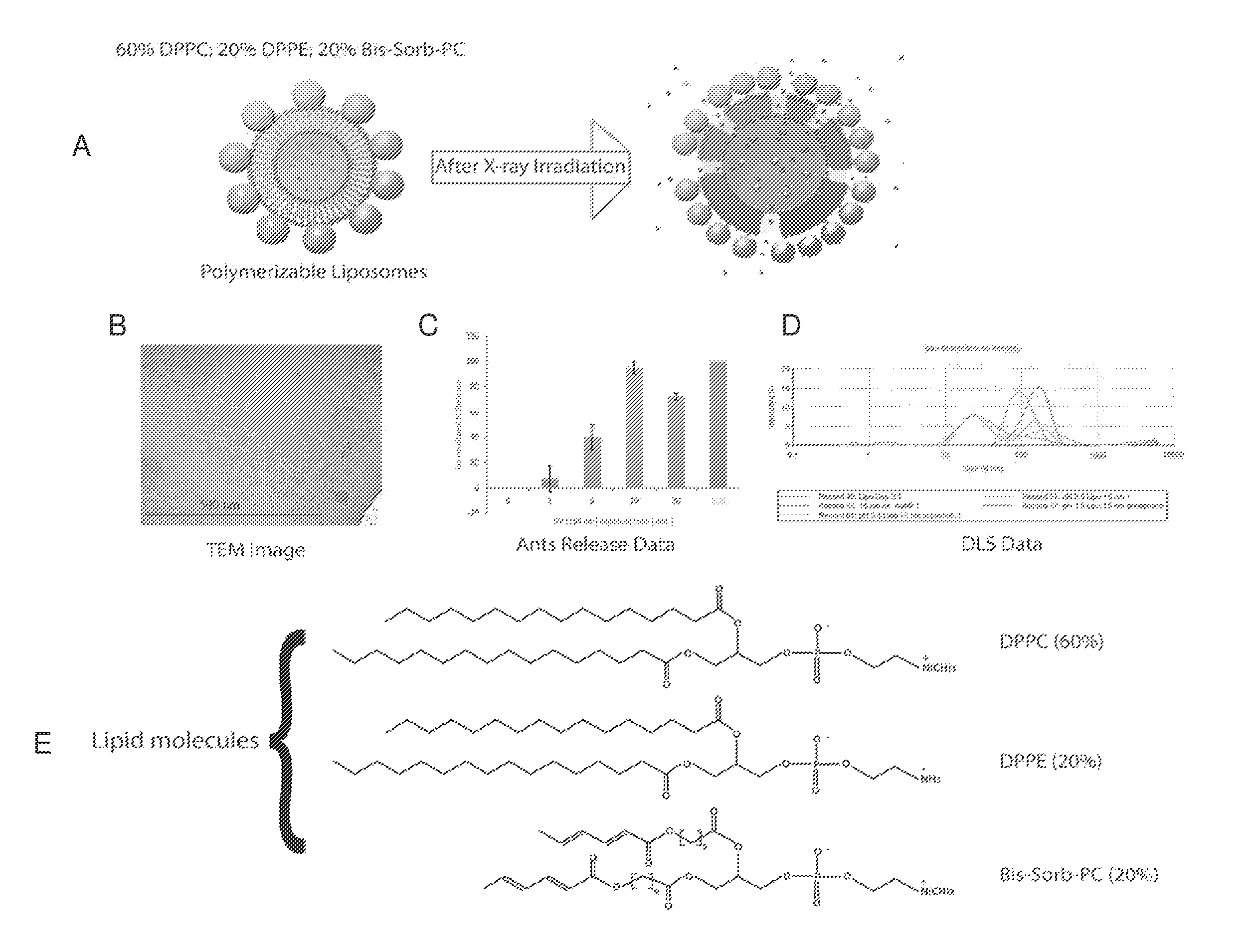
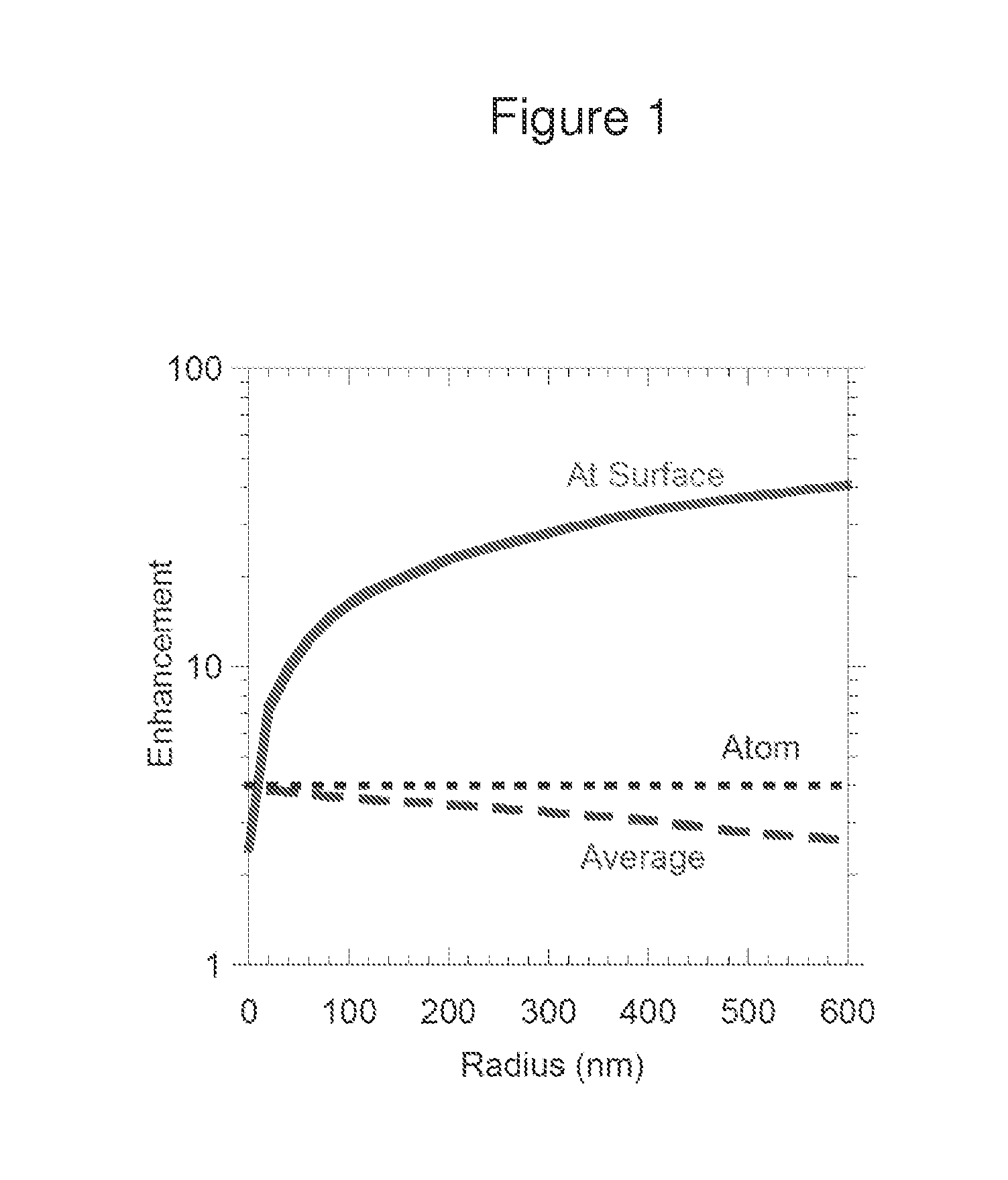
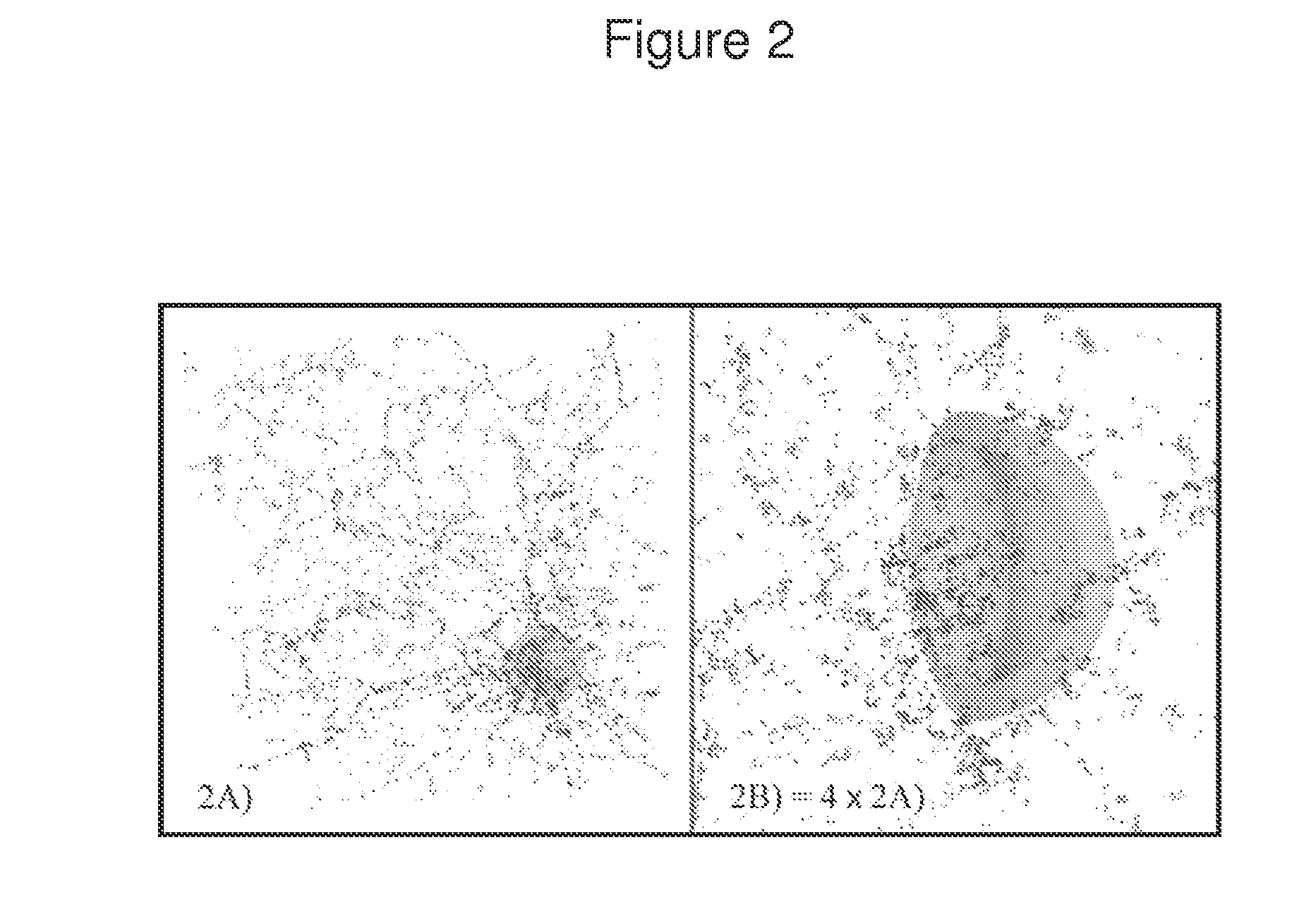
- The use of nanoshells comprising metal atoms, such as gold, platinum, or bismuth, with optimized geometries and compositions to enhance energy deposition from ionizing radiation, particularly X-rays, by releasing electrons that deposit energy densely in the surrounding solution, achieving significant enhancements through geometry and composition optimization.

Methods of enhancing cerenkov luminescence using nanoparticles, and compositions related thereto
PatentWO2016134164A1
Innovation
- Coupling radionuclides covalently or non-covalently with biocompatible high refractive index nanoparticles to modulate photon flux and enhance Cerenkov luminescence, utilizing various interactions with high-energy subatomic particles and nanoparticles to improve biomedical imaging and therapeutic applications.


Radiation Safety Regulations in Nanotechnology Applications
The regulatory landscape for radiation safety in nanotechnology applications has evolved significantly as ionizing radiation techniques become increasingly prevalent in nanomaterial synthesis, characterization, and modification processes. Current international frameworks primarily build upon existing radiation protection standards established by the International Commission on Radiological Protection (ICRP) and the International Atomic Energy Agency (IAEA), though these require substantial adaptation for nanotechnology-specific applications.
Occupational exposure limits for workers handling ionizing radiation in nanotechnology facilities follow the ALARA principle (As Low As Reasonably Achievable), with annual dose limits typically set at 20 mSv for radiation workers. However, the unique challenges posed by nanoscale materials require additional considerations, as conventional dosimetry methods may not adequately account for the enhanced biological effects that can occur when ionizing radiation interacts with nanoparticles within biological systems.
Facility licensing requirements have become increasingly stringent, particularly for operations involving high-energy electron beams, X-ray sources, and gamma radiation used in nanomaterial processing. Regulatory bodies now mandate comprehensive radiation safety programs that include detailed protocols for nanomaterial handling, specialized ventilation systems to prevent airborne nanoparticle contamination, and enhanced personal protective equipment designed to address both radiation exposure and nanoparticle inhalation risks.
Environmental discharge regulations present particular complexity in nanotechnology applications, as traditional radiation monitoring may not detect the subtle but potentially significant changes in nanomaterial properties induced by ionizing radiation. New guidelines require comprehensive environmental impact assessments that consider both the radiological and nanomaterial-specific risks, including potential ecosystem effects of radiation-modified nanoparticles.
Emerging regulatory trends indicate a shift toward risk-based approaches that consider the synergistic effects of ionizing radiation and nanomaterial exposure. Several jurisdictions are developing specialized frameworks that address the unique safety challenges posed by radiation-enhanced nanotechnology processes, including requirements for advanced monitoring systems capable of detecting both radiation levels and nanoparticle characteristics simultaneously.
Occupational exposure limits for workers handling ionizing radiation in nanotechnology facilities follow the ALARA principle (As Low As Reasonably Achievable), with annual dose limits typically set at 20 mSv for radiation workers. However, the unique challenges posed by nanoscale materials require additional considerations, as conventional dosimetry methods may not adequately account for the enhanced biological effects that can occur when ionizing radiation interacts with nanoparticles within biological systems.
Facility licensing requirements have become increasingly stringent, particularly for operations involving high-energy electron beams, X-ray sources, and gamma radiation used in nanomaterial processing. Regulatory bodies now mandate comprehensive radiation safety programs that include detailed protocols for nanomaterial handling, specialized ventilation systems to prevent airborne nanoparticle contamination, and enhanced personal protective equipment designed to address both radiation exposure and nanoparticle inhalation risks.
Environmental discharge regulations present particular complexity in nanotechnology applications, as traditional radiation monitoring may not detect the subtle but potentially significant changes in nanomaterial properties induced by ionizing radiation. New guidelines require comprehensive environmental impact assessments that consider both the radiological and nanomaterial-specific risks, including potential ecosystem effects of radiation-modified nanoparticles.
Emerging regulatory trends indicate a shift toward risk-based approaches that consider the synergistic effects of ionizing radiation and nanomaterial exposure. Several jurisdictions are developing specialized frameworks that address the unique safety challenges posed by radiation-enhanced nanotechnology processes, including requirements for advanced monitoring systems capable of detecting both radiation levels and nanoparticle characteristics simultaneously.
Environmental Impact Assessment of Ionizing Nanoprocesses
The environmental implications of ionizing radiation applications in nanotechnology present a complex landscape of both beneficial and potentially harmful effects. As ionizing rays become increasingly utilized for nanomaterial synthesis, surface modification, and sterilization processes, comprehensive assessment of their environmental footprint becomes critical for sustainable technological advancement.
Ionizing nanoprocesses generate several categories of environmental concerns. Primary radiation exposure occurs during direct processing operations, where high-energy particles or electromagnetic radiation interact with target materials. Secondary radiation effects emerge from activated materials and byproducts, potentially creating long-lived radioactive species that require careful management. Additionally, the production of reactive oxygen species and free radicals during irradiation can lead to unintended chemical transformations in surrounding environments.
Atmospheric impact assessment reveals that electron beam and gamma ray processing facilities may release trace amounts of ozone and nitrogen oxides, contributing to local air quality considerations. However, these emissions are typically minimal compared to conventional chemical processing alternatives. The energy consumption associated with radiation generation equipment also contributes to indirect carbon footprint calculations.
Aquatic ecosystem effects represent a significant concern when ionizing nanoprocesses involve water-based systems or generate liquid waste streams. Radiolysis of water produces hydrogen peroxide and hydroxyl radicals, which can affect aquatic organisms at cellular levels. Nanoparticles modified through ionizing radiation may exhibit altered surface chemistry, potentially influencing their bioaccumulation patterns and toxicity profiles in marine environments.
Soil contamination risks arise primarily from improper disposal of irradiated materials or accidental releases during processing. Certain nanomaterials subjected to high-dose radiation may develop enhanced mobility in soil matrices, affecting their transport behavior and potential for groundwater contamination. Long-term studies indicate that radiation-induced structural changes in nanoparticles can alter their biodegradation pathways.
Waste management protocols for ionizing nanoprocesses require specialized handling procedures to address both radioactive decay products and chemically modified nanomaterials. Current regulatory frameworks are evolving to address these dual concerns, with emphasis on lifecycle assessment approaches that consider cumulative environmental impacts from production through disposal phases.
Ionizing nanoprocesses generate several categories of environmental concerns. Primary radiation exposure occurs during direct processing operations, where high-energy particles or electromagnetic radiation interact with target materials. Secondary radiation effects emerge from activated materials and byproducts, potentially creating long-lived radioactive species that require careful management. Additionally, the production of reactive oxygen species and free radicals during irradiation can lead to unintended chemical transformations in surrounding environments.
Atmospheric impact assessment reveals that electron beam and gamma ray processing facilities may release trace amounts of ozone and nitrogen oxides, contributing to local air quality considerations. However, these emissions are typically minimal compared to conventional chemical processing alternatives. The energy consumption associated with radiation generation equipment also contributes to indirect carbon footprint calculations.
Aquatic ecosystem effects represent a significant concern when ionizing nanoprocesses involve water-based systems or generate liquid waste streams. Radiolysis of water produces hydrogen peroxide and hydroxyl radicals, which can affect aquatic organisms at cellular levels. Nanoparticles modified through ionizing radiation may exhibit altered surface chemistry, potentially influencing their bioaccumulation patterns and toxicity profiles in marine environments.
Soil contamination risks arise primarily from improper disposal of irradiated materials or accidental releases during processing. Certain nanomaterials subjected to high-dose radiation may develop enhanced mobility in soil matrices, affecting their transport behavior and potential for groundwater contamination. Long-term studies indicate that radiation-induced structural changes in nanoparticles can alter their biodegradation pathways.
Waste management protocols for ionizing nanoprocesses require specialized handling procedures to address both radioactive decay products and chemically modified nanomaterials. Current regulatory frameworks are evolving to address these dual concerns, with emphasis on lifecycle assessment approaches that consider cumulative environmental impacts from production through disposal phases.
Unlock deeper insights with PatSnap Eureka Quick Research — get a full tech report to explore trends and direct your research. Try now!
Generate Your Research Report Instantly with AI Agent
Supercharge your innovation with PatSnap Eureka AI Agent Platform!