
Compare Temperature Programmed Reduction for CO2 Reduction Catalysts
MAR 7, 20269 MIN READ
Generate Your Research Report Instantly with AI Agent
Patsnap Eureka helps you evaluate technical feasibility & market potential.
TPR Background and CO2 Reduction Goals
Temperature Programmed Reduction (TPR) has emerged as a fundamental characterization technique in heterogeneous catalysis, particularly gaining prominence in CO2 reduction research over the past three decades. This analytical method involves the controlled heating of catalyst samples in a reducing atmosphere, typically hydrogen, while monitoring the consumption of the reducing agent. The technique provides crucial insights into the reducibility of metal oxides, the strength of metal-support interactions, and the dispersion of active sites within catalyst structures.
The evolution of TPR methodology has been closely intertwined with advances in CO2 conversion technologies. Initially developed for traditional hydrogenation catalysts, TPR has been adapted and refined to address the unique challenges posed by CO2 reduction systems. The technique's ability to probe the electronic and structural properties of catalytic materials has made it indispensable for understanding the complex redox processes involved in CO2 activation and conversion.
Contemporary CO2 reduction research faces unprecedented challenges driven by climate change imperatives and the urgent need for sustainable carbon utilization technologies. The primary technical objectives center on developing catalysts capable of efficiently converting CO2 into valuable chemicals and fuels under mild reaction conditions. Key targets include achieving high selectivity toward specific products such as methanol, carbon monoxide, or higher hydrocarbons, while maintaining catalyst stability over extended operational periods.
The integration of TPR analysis into CO2 catalyst development workflows aims to establish clear structure-activity relationships that can guide rational catalyst design. Researchers seek to correlate TPR profiles with catalytic performance metrics, enabling the prediction of catalyst behavior based on reduction characteristics. This approach is particularly valuable for optimizing bimetallic and multimetallic systems where complex interactions between different metal phases significantly influence CO2 conversion pathways.
Current technological goals emphasize the development of earth-abundant catalysts that can replace precious metal-based systems while maintaining comparable or superior performance. TPR serves as a critical screening tool in this endeavor, allowing researchers to rapidly assess the reducibility and thermal stability of novel catalyst formulations. The technique's sensitivity to subtle changes in catalyst composition and preparation methods makes it essential for fine-tuning synthesis protocols and identifying optimal activation procedures.
The ultimate vision driving this research direction involves establishing TPR as a predictive tool for CO2 catalyst performance, enabling accelerated catalyst discovery and development cycles that can meet the demanding timelines required for large-scale CO2 utilization implementation.
The evolution of TPR methodology has been closely intertwined with advances in CO2 conversion technologies. Initially developed for traditional hydrogenation catalysts, TPR has been adapted and refined to address the unique challenges posed by CO2 reduction systems. The technique's ability to probe the electronic and structural properties of catalytic materials has made it indispensable for understanding the complex redox processes involved in CO2 activation and conversion.
Contemporary CO2 reduction research faces unprecedented challenges driven by climate change imperatives and the urgent need for sustainable carbon utilization technologies. The primary technical objectives center on developing catalysts capable of efficiently converting CO2 into valuable chemicals and fuels under mild reaction conditions. Key targets include achieving high selectivity toward specific products such as methanol, carbon monoxide, or higher hydrocarbons, while maintaining catalyst stability over extended operational periods.
The integration of TPR analysis into CO2 catalyst development workflows aims to establish clear structure-activity relationships that can guide rational catalyst design. Researchers seek to correlate TPR profiles with catalytic performance metrics, enabling the prediction of catalyst behavior based on reduction characteristics. This approach is particularly valuable for optimizing bimetallic and multimetallic systems where complex interactions between different metal phases significantly influence CO2 conversion pathways.
Current technological goals emphasize the development of earth-abundant catalysts that can replace precious metal-based systems while maintaining comparable or superior performance. TPR serves as a critical screening tool in this endeavor, allowing researchers to rapidly assess the reducibility and thermal stability of novel catalyst formulations. The technique's sensitivity to subtle changes in catalyst composition and preparation methods makes it essential for fine-tuning synthesis protocols and identifying optimal activation procedures.
The ultimate vision driving this research direction involves establishing TPR as a predictive tool for CO2 catalyst performance, enabling accelerated catalyst discovery and development cycles that can meet the demanding timelines required for large-scale CO2 utilization implementation.
Market Demand for CO2 Conversion Technologies
The global market for CO2 conversion technologies has experienced unprecedented growth driven by escalating climate change concerns and increasingly stringent environmental regulations worldwide. Governments across major economies have implemented carbon pricing mechanisms and emission reduction mandates, creating substantial economic incentives for industries to adopt CO2 utilization technologies. This regulatory landscape has transformed CO2 from a waste product into a valuable feedstock for chemical production.
Industrial sectors are demonstrating strong demand for CO2 conversion solutions, particularly in petrochemicals, fuels, and specialty chemicals manufacturing. The chemical industry seeks sustainable alternatives to traditional fossil fuel-based feedstocks, while the energy sector pursues carbon-neutral fuel production pathways. Temperature programmed reduction techniques for catalyst development have become critical enablers for these applications, as they provide essential insights into catalyst performance optimization.
Market drivers extend beyond regulatory compliance to include corporate sustainability commitments and consumer preferences for low-carbon products. Major corporations have established net-zero emission targets, creating downstream demand for CO2-derived materials and fuels. This corporate momentum has accelerated investment in CO2 conversion infrastructure and catalyst research programs.
The economic viability of CO2 conversion technologies depends heavily on catalyst efficiency and selectivity, making temperature programmed reduction analysis indispensable for commercial development. Industries require catalysts that operate under economically feasible conditions while maintaining high conversion rates and product selectivity. The comparative analysis of catalyst reduction behavior directly impacts process economics and market competitiveness.
Emerging applications in sustainable aviation fuels, green methanol production, and carbon-negative concrete additives are expanding market opportunities. These sectors demand specialized catalysts with specific performance characteristics, driving the need for sophisticated catalyst characterization techniques including temperature programmed reduction studies.
Regional market dynamics vary significantly, with Europe and Asia-Pacific leading in policy support and industrial implementation. North American markets show strong growth potential driven by industrial decarbonization initiatives and renewable energy integration. The convergence of policy support, industrial demand, and technological advancement creates a robust foundation for continued market expansion in CO2 conversion technologies.
Industrial sectors are demonstrating strong demand for CO2 conversion solutions, particularly in petrochemicals, fuels, and specialty chemicals manufacturing. The chemical industry seeks sustainable alternatives to traditional fossil fuel-based feedstocks, while the energy sector pursues carbon-neutral fuel production pathways. Temperature programmed reduction techniques for catalyst development have become critical enablers for these applications, as they provide essential insights into catalyst performance optimization.
Market drivers extend beyond regulatory compliance to include corporate sustainability commitments and consumer preferences for low-carbon products. Major corporations have established net-zero emission targets, creating downstream demand for CO2-derived materials and fuels. This corporate momentum has accelerated investment in CO2 conversion infrastructure and catalyst research programs.
The economic viability of CO2 conversion technologies depends heavily on catalyst efficiency and selectivity, making temperature programmed reduction analysis indispensable for commercial development. Industries require catalysts that operate under economically feasible conditions while maintaining high conversion rates and product selectivity. The comparative analysis of catalyst reduction behavior directly impacts process economics and market competitiveness.
Emerging applications in sustainable aviation fuels, green methanol production, and carbon-negative concrete additives are expanding market opportunities. These sectors demand specialized catalysts with specific performance characteristics, driving the need for sophisticated catalyst characterization techniques including temperature programmed reduction studies.
Regional market dynamics vary significantly, with Europe and Asia-Pacific leading in policy support and industrial implementation. North American markets show strong growth potential driven by industrial decarbonization initiatives and renewable energy integration. The convergence of policy support, industrial demand, and technological advancement creates a robust foundation for continued market expansion in CO2 conversion technologies.
Current TPR Status and CO2 Catalyst Challenges
Temperature Programmed Reduction (TPR) has emerged as a fundamental characterization technique for CO2 reduction catalysts, providing critical insights into catalyst reducibility and active site formation. Current TPR methodologies primarily employ hydrogen as the reducing agent, with systematic temperature ramping from ambient conditions to 800-1000°C. This approach enables researchers to identify reduction peaks corresponding to different metal species and their interaction with support materials.
The technique has proven particularly valuable for characterizing copper-based catalysts, where distinct reduction peaks at 200-250°C and 300-400°C correspond to highly dispersed Cu2+ species and bulk CuO phases respectively. For zinc-copper catalysts commonly used in methanol synthesis from CO2, TPR profiles reveal the synergistic effects between metal components and their optimal reduction conditions.
However, significant challenges persist in TPR application for CO2 reduction catalyst development. The primary limitation lies in the disconnect between TPR conditions and actual CO2 reduction environments. Traditional H2-TPR creates a highly reducing atmosphere that may not accurately represent the catalyst behavior under CO2-rich conditions where competitive adsorption occurs between CO2, H2, and reaction intermediates.
Quantitative analysis remains problematic due to overlapping reduction peaks from different metal species and support interactions. This complexity is particularly pronounced in multi-metallic systems where electronic interactions between components create broad, convoluted reduction profiles that are difficult to deconvolute accurately.
The interpretation of TPR data for predicting CO2 reduction performance faces additional complications from the dynamic nature of working catalysts. Many CO2 reduction catalysts undergo structural reconstruction under reaction conditions, forming active phases that differ significantly from their initial reduced states characterized by TPR.
Recent developments have introduced CO2-TPR and CO-TPR variants to better simulate realistic reaction environments. These modified approaches provide more relevant information about catalyst behavior under CO2-containing atmospheres, though standardization and widespread adoption remain limited.
The temporal resolution of conventional TPR systems also presents challenges for studying rapid phase transitions and metastable intermediate formation, which are crucial for understanding catalyst activation mechanisms in CO2 reduction processes.
The technique has proven particularly valuable for characterizing copper-based catalysts, where distinct reduction peaks at 200-250°C and 300-400°C correspond to highly dispersed Cu2+ species and bulk CuO phases respectively. For zinc-copper catalysts commonly used in methanol synthesis from CO2, TPR profiles reveal the synergistic effects between metal components and their optimal reduction conditions.
However, significant challenges persist in TPR application for CO2 reduction catalyst development. The primary limitation lies in the disconnect between TPR conditions and actual CO2 reduction environments. Traditional H2-TPR creates a highly reducing atmosphere that may not accurately represent the catalyst behavior under CO2-rich conditions where competitive adsorption occurs between CO2, H2, and reaction intermediates.
Quantitative analysis remains problematic due to overlapping reduction peaks from different metal species and support interactions. This complexity is particularly pronounced in multi-metallic systems where electronic interactions between components create broad, convoluted reduction profiles that are difficult to deconvolute accurately.
The interpretation of TPR data for predicting CO2 reduction performance faces additional complications from the dynamic nature of working catalysts. Many CO2 reduction catalysts undergo structural reconstruction under reaction conditions, forming active phases that differ significantly from their initial reduced states characterized by TPR.
Recent developments have introduced CO2-TPR and CO-TPR variants to better simulate realistic reaction environments. These modified approaches provide more relevant information about catalyst behavior under CO2-containing atmospheres, though standardization and widespread adoption remain limited.
The temporal resolution of conventional TPR systems also presents challenges for studying rapid phase transitions and metastable intermediate formation, which are crucial for understanding catalyst activation mechanisms in CO2 reduction processes.
Current TPR Solutions for CO2 Catalyst Analysis
01 Temperature programmed reduction apparatus and equipment design
This category focuses on the design and construction of specialized apparatus for conducting temperature programmed reduction experiments. The equipment typically includes temperature control systems, gas flow management components, sample holders, and detection systems. These designs aim to provide precise temperature ramping capabilities while maintaining controlled atmospheric conditions for reduction reactions. The apparatus may incorporate features such as programmable heating elements, mass flow controllers, and integrated analysis systems to monitor the reduction process in real-time.- Temperature programmed reduction apparatus and equipment design: This category focuses on the design and construction of specialized apparatus for conducting temperature programmed reduction experiments. The equipment typically includes temperature control systems, gas flow management components, sample holders, and detection systems. These devices are designed to precisely control heating rates and monitor reduction processes under controlled atmospheric conditions. The apparatus may incorporate features such as programmable temperature controllers, mass flow controllers, and data acquisition systems to ensure accurate and reproducible results.
- Temperature programmed reduction methods for catalyst characterization: This category encompasses methods and techniques for characterizing catalytic materials using temperature programmed reduction. The approach involves systematically heating catalyst samples in a reducing atmosphere while monitoring hydrogen consumption or other reduction indicators. These methods are particularly useful for determining the reducibility of metal oxides, identifying different metal species, and evaluating catalyst activation conditions. The techniques provide valuable information about catalyst composition, metal-support interactions, and optimal reduction temperatures for catalyst preparation.
- Temperature programmed reduction in catalyst preparation and activation: This category relates to the application of temperature programmed reduction in the preparation and activation of catalytic materials. The process involves controlled reduction of catalyst precursors to generate active catalytic species with desired properties. This approach is commonly used in the production of supported metal catalysts, where metal oxides are reduced to metallic states. The technique allows for optimization of reduction conditions to achieve specific catalyst characteristics such as metal dispersion, particle size, and catalytic activity.
- Temperature programmed reduction for material analysis and testing: This category covers the use of temperature programmed reduction as an analytical technique for studying the reduction behavior of various materials. The method is employed to investigate the thermal stability, reduction kinetics, and phase transformations of metal oxides and other reducible compounds. Applications include quality control of catalytic materials, research on new catalyst formulations, and fundamental studies of reduction mechanisms. The technique provides quantitative data on reduction temperatures, hydrogen consumption, and the presence of different reducible species.
- Advanced temperature programmed reduction systems with integrated analysis: This category focuses on sophisticated temperature programmed reduction systems that integrate multiple analytical capabilities. These advanced systems combine temperature programmed reduction with complementary techniques such as mass spectrometry, thermal conductivity detection, or gas chromatography. The integrated approach enables comprehensive characterization of reduction processes, including identification of gaseous products, quantification of reducing agent consumption, and real-time monitoring of reduction progress. Such systems are designed for research applications requiring detailed mechanistic understanding of reduction phenomena.
02 Temperature programmed reduction methods for catalyst characterization
This category encompasses methods and techniques for characterizing catalytic materials using temperature programmed reduction. The approach involves systematically heating catalyst samples in a reducing atmosphere while monitoring hydrogen consumption or other reduction indicators. These methods are particularly useful for determining the reducibility of metal oxides, identifying different metal species, and evaluating catalyst activation temperatures. The techniques provide valuable information about catalyst composition, metal-support interactions, and the distribution of active sites.Expand Specific Solutions03 Temperature programmed reduction in catalyst preparation and activation
This category relates to the application of temperature programmed reduction in the preparation and activation of catalytic materials. The process involves controlled reduction of catalyst precursors to generate active catalytic species with desired properties. This approach is commonly used in the production of supported metal catalysts, where metal oxides are reduced to metallic states. The technique allows for optimization of reduction conditions to achieve specific catalyst characteristics such as metal dispersion, particle size, and catalytic activity.Expand Specific Solutions04 Temperature programmed reduction for material analysis and testing
This category covers the use of temperature programmed reduction as an analytical technique for studying the reduction behavior of various materials. The method provides quantitative and qualitative information about the reducibility of compounds, phase transformations, and reaction kinetics. Applications include the analysis of metal oxides, mixed oxides, and composite materials. The technique is valuable for quality control, material development, and understanding reduction mechanisms in different chemical systems.Expand Specific Solutions05 Temperature programmed reduction in industrial processes and applications
This category focuses on the implementation of temperature programmed reduction in industrial-scale processes and practical applications. The technology is applied in various fields including metallurgy, chemical production, and materials processing. Industrial applications involve the reduction of metal ores, regeneration of catalysts, and production of reduced metal powders. The processes are designed to optimize energy efficiency, product quality, and operational safety while scaling up from laboratory conditions to commercial production.Expand Specific Solutions
Key Players in CO2 Reduction Catalyst Industry
The CO2 reduction catalyst field represents a rapidly evolving sector driven by urgent climate imperatives and advancing carbon utilization technologies. The industry is transitioning from early research phases to pilot-scale demonstrations, with market potential reaching billions as carbon pricing mechanisms expand globally. Technology maturity varies significantly across different catalyst approaches, with major energy corporations like Sinopec, Shell, and Total Petrochemicals leading industrial-scale development alongside automotive manufacturers Honda, Nissan, and Mitsubishi Motors pursuing mobile applications. Research institutions including Nanyang Technological University, Beijing University of Chemical Technology, and CNRS are advancing fundamental catalyst science, while specialized companies like Virent and Wanhua Chemical focus on commercial catalyst production. The competitive landscape shows strong convergence between traditional petrochemical players and emerging clean technology developers, indicating technology readiness approaching commercial viability for specific applications.
China Petroleum & Chemical Corp.
Technical Solution: Sinopec has developed advanced CO2 reduction catalyst systems utilizing temperature programmed reduction (TPR) techniques for optimizing catalyst performance. Their approach focuses on Cu-based and Fe-based catalysts with systematic TPR analysis to determine optimal reduction temperatures ranging from 200-400°C. The company employs multi-stage TPR protocols to activate different metal phases sequentially, enabling enhanced CO2 conversion efficiency in Fischer-Tropsch synthesis and methanol production processes. Their catalyst characterization includes H2-TPR studies to understand metal-support interactions and optimize catalyst preparation conditions for industrial-scale CO2 utilization applications.
Strengths: Extensive industrial experience and large-scale production capabilities. Weaknesses: Limited focus on novel catalyst materials compared to specialized research institutions.
Shell Internationale Research Maatschappij BV
Technical Solution: Shell has developed comprehensive TPR methodologies for CO2 reduction catalysts, particularly focusing on supported metal catalysts for CO2 hydrogenation to hydrocarbons. Their TPR approach involves systematic temperature ramping from ambient to 800°C with controlled H2 flow rates to identify distinct reduction peaks corresponding to different metal oxide species. Shell's catalyst systems utilize Ru, Co, and Fe-based formulations with detailed TPR characterization to optimize metal dispersion and reducibility. The company has integrated TPR data with kinetic studies to establish structure-activity relationships, enabling rational catalyst design for CO2 conversion processes with improved selectivity toward desired products like synthetic fuels and chemicals.
Strengths: Strong integration of TPR with industrial process development and extensive catalyst testing facilities. Weaknesses: Primarily focused on hydrocarbon production rather than diverse CO2 reduction pathways.
Core TPR Innovations in CO2 Reduction Research
Method for reducing carbon dioxide at high temperatures on catalysts especially carbide supported catalysts
PatentWO2013135673A1
Innovation
- A process using catalysts with metals M1 and M2 supported on carbides, oxycarbides, or other metal compounds, operated at temperatures above 700°C, where M1 and M2 are selected from specific groups of metals and A and B, to enhance catalyst stability and selectivity, achieving high CO2 conversion.


Carbon supported single atom carbon dioxide reduction electro catalysts
PatentActiveUS20190276943A1
Innovation
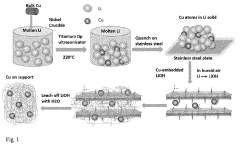
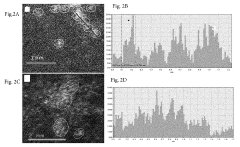
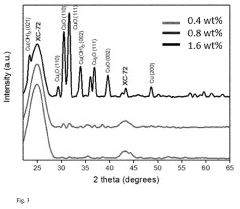
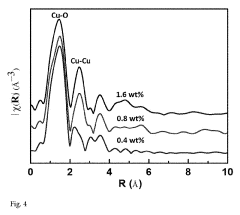
- The development of electro-catalysts with atomically dispersed metal supported over high surface area carbon, synthesized using a lithium-melt method, which allows for the formation of monometallic single atoms or single atom 'clouds' that are highly selective and efficient in converting CO2 to hydrocarbons like ethanol and acetone at low overpotentials and high stability.
Environmental Policy Impact on CO2 Technologies
Environmental policies worldwide have emerged as critical drivers shaping the development and deployment of CO2 reduction technologies, particularly those involving temperature programmed reduction (TPR) methodologies for catalyst evaluation. The Paris Agreement and subsequent national commitments have established ambitious carbon neutrality targets, creating unprecedented demand for efficient CO2 conversion catalysts and standardized characterization techniques.
The European Union's Green Deal and associated funding mechanisms have significantly accelerated research into TPR-based catalyst screening methods. The EU's Horizon Europe program allocates substantial resources specifically for CO2 utilization technologies, with TPR analysis serving as a fundamental characterization tool for catalyst development. This policy framework has led to increased standardization requirements for catalyst testing protocols, driving the adoption of comparative TPR methodologies across research institutions.
China's carbon peak and neutrality goals by 2030 and 2060 respectively have triggered massive investments in CO2 reduction technologies. The country's 14th Five-Year Plan explicitly emphasizes carbon capture, utilization, and storage (CCUS) technologies, creating substantial market demand for advanced catalyst characterization methods including TPR analysis. Chinese environmental regulations now mandate comprehensive catalyst performance documentation, making TPR comparison studies essential for technology validation.
The United States' Inflation Reduction Act provides significant tax incentives for CO2 utilization projects, indirectly promoting the development of sophisticated catalyst evaluation techniques. Federal funding agencies increasingly require standardized catalyst characterization data, including TPR profiles, for project approval and continuation. This regulatory environment has fostered collaboration between academic institutions and industry players in developing comparative TPR methodologies.
Carbon pricing mechanisms implemented across various jurisdictions create economic incentives for developing highly efficient CO2 reduction catalysts. The need to demonstrate catalyst superiority through rigorous comparison studies has elevated the importance of standardized TPR protocols. Regulatory bodies increasingly recognize TPR data as critical evidence for technology assessment and approval processes.
International standards organizations are developing unified protocols for catalyst characterization, with TPR analysis playing a central role. These emerging standards directly influence research priorities and funding allocation, ensuring that comparative TPR studies align with global sustainability objectives and regulatory requirements.
The European Union's Green Deal and associated funding mechanisms have significantly accelerated research into TPR-based catalyst screening methods. The EU's Horizon Europe program allocates substantial resources specifically for CO2 utilization technologies, with TPR analysis serving as a fundamental characterization tool for catalyst development. This policy framework has led to increased standardization requirements for catalyst testing protocols, driving the adoption of comparative TPR methodologies across research institutions.
China's carbon peak and neutrality goals by 2030 and 2060 respectively have triggered massive investments in CO2 reduction technologies. The country's 14th Five-Year Plan explicitly emphasizes carbon capture, utilization, and storage (CCUS) technologies, creating substantial market demand for advanced catalyst characterization methods including TPR analysis. Chinese environmental regulations now mandate comprehensive catalyst performance documentation, making TPR comparison studies essential for technology validation.
The United States' Inflation Reduction Act provides significant tax incentives for CO2 utilization projects, indirectly promoting the development of sophisticated catalyst evaluation techniques. Federal funding agencies increasingly require standardized catalyst characterization data, including TPR profiles, for project approval and continuation. This regulatory environment has fostered collaboration between academic institutions and industry players in developing comparative TPR methodologies.
Carbon pricing mechanisms implemented across various jurisdictions create economic incentives for developing highly efficient CO2 reduction catalysts. The need to demonstrate catalyst superiority through rigorous comparison studies has elevated the importance of standardized TPR protocols. Regulatory bodies increasingly recognize TPR data as critical evidence for technology assessment and approval processes.
International standards organizations are developing unified protocols for catalyst characterization, with TPR analysis playing a central role. These emerging standards directly influence research priorities and funding allocation, ensuring that comparative TPR studies align with global sustainability objectives and regulatory requirements.
Industrial Scale-up Challenges for TPR Analysis
The transition from laboratory-scale Temperature Programmed Reduction (TPR) analysis to industrial applications for CO2 reduction catalysts presents significant technical and operational challenges that must be carefully addressed to maintain analytical accuracy and economic viability.
Scaling up TPR equipment from milligram-scale laboratory samples to kilogram-scale industrial batches introduces fundamental heat and mass transfer limitations. Industrial reactors struggle to achieve the uniform temperature distribution essential for accurate TPR measurements, as larger sample volumes create temperature gradients that can lead to inconsistent reduction profiles. The challenge becomes more pronounced when dealing with heterogeneous CO2 reduction catalysts, where particle size distribution and packing density significantly affect gas flow patterns and thermal conductivity.
Sample representativeness emerges as a critical concern during industrial scale-up. Laboratory TPR typically analyzes 10-50 mg samples, while industrial catalyst batches may contain tons of material with inherent compositional variations. Developing statistically meaningful sampling protocols that capture the true reduction behavior of the entire catalyst batch requires sophisticated sampling strategies and multiple parallel analyses, substantially increasing operational complexity and costs.
Gas handling systems face substantial engineering challenges when scaled to industrial levels. The precise control of reducing gas composition, flow rates, and pressure required for accurate TPR analysis becomes exponentially more difficult with larger systems. Industrial-scale gas distribution networks must maintain uniform flow across large reactor cross-sections while managing significantly higher volumetric flow rates, often requiring advanced flow control systems and extensive piping networks.
Economic considerations create additional constraints on industrial TPR implementation. The extended analysis times required for large-scale TPR, combined with the substantial infrastructure investments needed for industrial-grade equipment, challenge the cost-effectiveness of routine catalyst characterization. Energy consumption for heating large reactor volumes and maintaining precise temperature control represents a significant operational expense that must be balanced against the analytical value provided.
Process integration challenges arise when attempting to incorporate TPR analysis into continuous industrial catalyst production workflows. Unlike laboratory batch analysis, industrial applications often require real-time or near-real-time catalyst characterization to support process control decisions, necessitating the development of automated sampling, analysis, and data interpretation systems that can operate reliably in harsh industrial environments.
Scaling up TPR equipment from milligram-scale laboratory samples to kilogram-scale industrial batches introduces fundamental heat and mass transfer limitations. Industrial reactors struggle to achieve the uniform temperature distribution essential for accurate TPR measurements, as larger sample volumes create temperature gradients that can lead to inconsistent reduction profiles. The challenge becomes more pronounced when dealing with heterogeneous CO2 reduction catalysts, where particle size distribution and packing density significantly affect gas flow patterns and thermal conductivity.
Sample representativeness emerges as a critical concern during industrial scale-up. Laboratory TPR typically analyzes 10-50 mg samples, while industrial catalyst batches may contain tons of material with inherent compositional variations. Developing statistically meaningful sampling protocols that capture the true reduction behavior of the entire catalyst batch requires sophisticated sampling strategies and multiple parallel analyses, substantially increasing operational complexity and costs.
Gas handling systems face substantial engineering challenges when scaled to industrial levels. The precise control of reducing gas composition, flow rates, and pressure required for accurate TPR analysis becomes exponentially more difficult with larger systems. Industrial-scale gas distribution networks must maintain uniform flow across large reactor cross-sections while managing significantly higher volumetric flow rates, often requiring advanced flow control systems and extensive piping networks.
Economic considerations create additional constraints on industrial TPR implementation. The extended analysis times required for large-scale TPR, combined with the substantial infrastructure investments needed for industrial-grade equipment, challenge the cost-effectiveness of routine catalyst characterization. Energy consumption for heating large reactor volumes and maintaining precise temperature control represents a significant operational expense that must be balanced against the analytical value provided.
Process integration challenges arise when attempting to incorporate TPR analysis into continuous industrial catalyst production workflows. Unlike laboratory batch analysis, industrial applications often require real-time or near-real-time catalyst characterization to support process control decisions, necessitating the development of automated sampling, analysis, and data interpretation systems that can operate reliably in harsh industrial environments.
Unlock deeper insights with Patsnap Eureka Quick Research — get a full tech report to explore trends and direct your research. Try now!
Generate Your Research Report Instantly with AI Agent
Supercharge your innovation with Patsnap Eureka AI Agent Platform!