

How to Improve Lattice Oxygen Mobility with Temperature Programmed Reduction
MAR 7, 20269 MIN READ
Generate Your Research Report Instantly with AI Agent
Patsnap Eureka helps you evaluate technical feasibility & market potential.
Lattice Oxygen Mobility Enhancement Background and Objectives
Lattice oxygen mobility represents a fundamental property that governs the performance of numerous solid-state materials, particularly in applications involving oxygen ion conduction, catalytic processes, and energy storage systems. The ability of oxygen ions to migrate through crystalline structures directly influences material functionality in solid oxide fuel cells, oxygen separation membranes, and heterogeneous catalysts. Understanding and enhancing this mobility has become increasingly critical as industries demand more efficient and sustainable technologies.
Temperature Programmed Reduction (TPR) has emerged as a powerful analytical technique for investigating oxygen mobility characteristics in solid materials. This method involves systematically heating materials in a reducing atmosphere while monitoring oxygen release patterns, providing valuable insights into the energetics and kinetics of oxygen migration processes. The correlation between TPR profiles and actual oxygen mobility behavior offers researchers a practical pathway to optimize material properties through controlled synthesis and treatment protocols.
The historical development of lattice oxygen mobility research can be traced back to early studies on ionic conductors in the mid-20th century. Initial investigations focused primarily on simple oxide systems, gradually expanding to complex perovskites, fluorites, and layered structures. The integration of TPR methodology into this field occurred during the 1980s, when researchers recognized its potential for characterizing oxygen defect chemistry and migration pathways in various material systems.
Current technological demands are driving unprecedented interest in enhancing lattice oxygen mobility. The global push toward clean energy technologies has intensified research efforts in developing superior oxygen ion conductors for next-generation fuel cells and electrolyzers. Similarly, the chemical industry's need for more selective and efficient catalysts has highlighted the importance of controllable oxygen mobility in oxide-based catalytic materials.
The primary objective of improving lattice oxygen mobility through TPR-guided approaches centers on establishing quantitative relationships between reduction behavior and ionic transport properties. This involves developing systematic methodologies to correlate TPR characteristics with fundamental mobility parameters, enabling predictive design of materials with enhanced oxygen ion conduction capabilities.
Secondary objectives include optimizing synthesis conditions based on TPR feedback, identifying structural modifications that promote oxygen mobility, and establishing standardized protocols for TPR-based material screening. These goals collectively aim to accelerate the development of advanced materials for energy conversion and catalytic applications while reducing development costs and timeframes.
Temperature Programmed Reduction (TPR) has emerged as a powerful analytical technique for investigating oxygen mobility characteristics in solid materials. This method involves systematically heating materials in a reducing atmosphere while monitoring oxygen release patterns, providing valuable insights into the energetics and kinetics of oxygen migration processes. The correlation between TPR profiles and actual oxygen mobility behavior offers researchers a practical pathway to optimize material properties through controlled synthesis and treatment protocols.
The historical development of lattice oxygen mobility research can be traced back to early studies on ionic conductors in the mid-20th century. Initial investigations focused primarily on simple oxide systems, gradually expanding to complex perovskites, fluorites, and layered structures. The integration of TPR methodology into this field occurred during the 1980s, when researchers recognized its potential for characterizing oxygen defect chemistry and migration pathways in various material systems.
Current technological demands are driving unprecedented interest in enhancing lattice oxygen mobility. The global push toward clean energy technologies has intensified research efforts in developing superior oxygen ion conductors for next-generation fuel cells and electrolyzers. Similarly, the chemical industry's need for more selective and efficient catalysts has highlighted the importance of controllable oxygen mobility in oxide-based catalytic materials.
The primary objective of improving lattice oxygen mobility through TPR-guided approaches centers on establishing quantitative relationships between reduction behavior and ionic transport properties. This involves developing systematic methodologies to correlate TPR characteristics with fundamental mobility parameters, enabling predictive design of materials with enhanced oxygen ion conduction capabilities.
Secondary objectives include optimizing synthesis conditions based on TPR feedback, identifying structural modifications that promote oxygen mobility, and establishing standardized protocols for TPR-based material screening. These goals collectively aim to accelerate the development of advanced materials for energy conversion and catalytic applications while reducing development costs and timeframes.
Market Demand for Advanced Oxygen Mobility Applications
The global demand for advanced oxygen mobility technologies is experiencing unprecedented growth, driven by the urgent need for cleaner energy solutions and more efficient industrial processes. Industries ranging from solid oxide fuel cells to catalytic converters are increasingly seeking materials with enhanced lattice oxygen mobility to improve performance and reduce environmental impact. This demand is particularly pronounced in the renewable energy sector, where oxygen ion conductors play crucial roles in energy storage and conversion systems.
The automotive industry represents one of the most significant market drivers for improved oxygen mobility applications. As emission standards become increasingly stringent worldwide, manufacturers require advanced catalytic materials that can operate effectively at lower temperatures while maintaining high oxygen exchange rates. Temperature programmed reduction techniques offer promising pathways to optimize these materials by creating oxygen vacancies and enhancing ionic conductivity, directly addressing market needs for more efficient exhaust treatment systems.
Industrial chemical processing sectors are also driving substantial demand for materials with superior oxygen mobility characteristics. Petrochemical refineries, steel production facilities, and chemical synthesis operations require catalysts and membrane materials that can facilitate rapid oxygen transport at various operating temperatures. The ability to fine-tune oxygen mobility through controlled reduction processes presents significant commercial opportunities for improving process efficiency and reducing energy consumption.
The emerging hydrogen economy is creating new market segments that heavily rely on advanced oxygen mobility technologies. Electrolyzers for hydrogen production and fuel cells for power generation both require materials with optimized oxygen ion transport properties. Market projections indicate substantial growth potential in these applications, particularly as governments worldwide implement policies supporting hydrogen infrastructure development.
Energy storage applications, including solid-state batteries and thermal energy storage systems, represent rapidly expanding markets for oxygen mobility technologies. These applications demand materials that can maintain stable oxygen transport properties across wide temperature ranges and extended operational cycles. The development of temperature programmed reduction methods to enhance lattice oxygen mobility directly addresses these market requirements, offering pathways to improve energy density and cycling stability.
The growing emphasis on industrial decarbonization is creating additional market opportunities for advanced oxygen mobility applications. Carbon capture and utilization technologies, along with direct air capture systems, increasingly rely on materials with enhanced oxygen transport capabilities to achieve economic viability and operational efficiency.
The automotive industry represents one of the most significant market drivers for improved oxygen mobility applications. As emission standards become increasingly stringent worldwide, manufacturers require advanced catalytic materials that can operate effectively at lower temperatures while maintaining high oxygen exchange rates. Temperature programmed reduction techniques offer promising pathways to optimize these materials by creating oxygen vacancies and enhancing ionic conductivity, directly addressing market needs for more efficient exhaust treatment systems.
Industrial chemical processing sectors are also driving substantial demand for materials with superior oxygen mobility characteristics. Petrochemical refineries, steel production facilities, and chemical synthesis operations require catalysts and membrane materials that can facilitate rapid oxygen transport at various operating temperatures. The ability to fine-tune oxygen mobility through controlled reduction processes presents significant commercial opportunities for improving process efficiency and reducing energy consumption.
The emerging hydrogen economy is creating new market segments that heavily rely on advanced oxygen mobility technologies. Electrolyzers for hydrogen production and fuel cells for power generation both require materials with optimized oxygen ion transport properties. Market projections indicate substantial growth potential in these applications, particularly as governments worldwide implement policies supporting hydrogen infrastructure development.
Energy storage applications, including solid-state batteries and thermal energy storage systems, represent rapidly expanding markets for oxygen mobility technologies. These applications demand materials that can maintain stable oxygen transport properties across wide temperature ranges and extended operational cycles. The development of temperature programmed reduction methods to enhance lattice oxygen mobility directly addresses these market requirements, offering pathways to improve energy density and cycling stability.
The growing emphasis on industrial decarbonization is creating additional market opportunities for advanced oxygen mobility applications. Carbon capture and utilization technologies, along with direct air capture systems, increasingly rely on materials with enhanced oxygen transport capabilities to achieve economic viability and operational efficiency.
Current State of TPR-Based Oxygen Mobility Research
Temperature Programmed Reduction (TPR) has emerged as a fundamental characterization technique for investigating lattice oxygen mobility in various oxide materials, particularly in catalysis and energy storage applications. Current research predominantly focuses on understanding the relationship between reduction temperature profiles and oxygen diffusion kinetics in perovskite oxides, mixed ionic-electronic conductors, and oxygen storage materials.
Recent studies have established that TPR-based oxygen mobility research encompasses several key methodological approaches. Conventional H2-TPR remains the most widely adopted technique, providing insights into oxygen vacancy formation and migration pathways through systematic analysis of reduction peak temperatures and hydrogen consumption patterns. Advanced isotopic exchange methods, including 18O2-TPR and D2-TPR, have gained prominence for their ability to distinguish between surface and bulk oxygen species mobility.
The field has witnessed significant progress in correlating TPR data with structural parameters and electronic properties. Researchers have successfully linked reduction peak shifts to changes in metal-oxygen bond strength, coordination environments, and defect concentrations. Multi-step reduction profiles are now routinely interpreted in terms of sequential oxygen removal from different crystallographic sites, providing detailed maps of oxygen mobility pathways within complex oxide structures.
Current limitations in TPR-based oxygen mobility research center around quantitative analysis challenges and temporal resolution constraints. Traditional TPR setups often lack the sensitivity required for detecting subtle changes in oxygen mobility, particularly in materials with inherently low oxygen vacancy concentrations. Additionally, the dynamic nature of TPR experiments makes it difficult to establish direct correlations between instantaneous reduction rates and intrinsic oxygen diffusion coefficients.
Emerging research directions include the integration of TPR with in-situ spectroscopic techniques such as X-ray absorption spectroscopy and Raman spectroscopy. These combined approaches enable real-time monitoring of structural changes during reduction processes, providing unprecedented insights into the mechanisms governing oxygen mobility enhancement. Furthermore, computational modeling efforts are increasingly being coupled with experimental TPR data to validate theoretical predictions of oxygen migration barriers and diffusion pathways.
The development of high-throughput TPR screening methods represents another significant advancement, allowing researchers to rapidly evaluate oxygen mobility characteristics across large material libraries. This approach has proven particularly valuable for identifying composition-structure-property relationships in complex oxide systems and accelerating the discovery of materials with enhanced oxygen transport properties.
Recent studies have established that TPR-based oxygen mobility research encompasses several key methodological approaches. Conventional H2-TPR remains the most widely adopted technique, providing insights into oxygen vacancy formation and migration pathways through systematic analysis of reduction peak temperatures and hydrogen consumption patterns. Advanced isotopic exchange methods, including 18O2-TPR and D2-TPR, have gained prominence for their ability to distinguish between surface and bulk oxygen species mobility.
The field has witnessed significant progress in correlating TPR data with structural parameters and electronic properties. Researchers have successfully linked reduction peak shifts to changes in metal-oxygen bond strength, coordination environments, and defect concentrations. Multi-step reduction profiles are now routinely interpreted in terms of sequential oxygen removal from different crystallographic sites, providing detailed maps of oxygen mobility pathways within complex oxide structures.
Current limitations in TPR-based oxygen mobility research center around quantitative analysis challenges and temporal resolution constraints. Traditional TPR setups often lack the sensitivity required for detecting subtle changes in oxygen mobility, particularly in materials with inherently low oxygen vacancy concentrations. Additionally, the dynamic nature of TPR experiments makes it difficult to establish direct correlations between instantaneous reduction rates and intrinsic oxygen diffusion coefficients.
Emerging research directions include the integration of TPR with in-situ spectroscopic techniques such as X-ray absorption spectroscopy and Raman spectroscopy. These combined approaches enable real-time monitoring of structural changes during reduction processes, providing unprecedented insights into the mechanisms governing oxygen mobility enhancement. Furthermore, computational modeling efforts are increasingly being coupled with experimental TPR data to validate theoretical predictions of oxygen migration barriers and diffusion pathways.
The development of high-throughput TPR screening methods represents another significant advancement, allowing researchers to rapidly evaluate oxygen mobility characteristics across large material libraries. This approach has proven particularly valuable for identifying composition-structure-property relationships in complex oxide systems and accelerating the discovery of materials with enhanced oxygen transport properties.
Existing TPR Methods for Lattice Oxygen Enhancement
01 Oxygen vacancy engineering in metal oxides for enhanced lattice oxygen mobility
Metal oxide materials can be engineered with controlled oxygen vacancies to enhance lattice oxygen mobility. The introduction of oxygen vacancies creates defect sites that facilitate oxygen ion migration through the crystal lattice. This approach is particularly effective in perovskite and fluorite-structured oxides where oxygen vacancy concentration directly correlates with ionic conductivity. Doping strategies and synthesis conditions can be optimized to achieve desired vacancy concentrations while maintaining structural stability.- Oxygen vacancy engineering in metal oxides for enhanced lattice oxygen mobility: Metal oxide materials can be engineered with controlled oxygen vacancies to enhance lattice oxygen mobility. The introduction of oxygen vacancies creates defect sites that facilitate oxygen ion migration through the crystal lattice. This approach is particularly effective in perovskite and fluorite-structured oxides where oxygen vacancy concentration directly correlates with ionic conductivity. Doping strategies and synthesis conditions can be optimized to achieve desired vacancy concentrations while maintaining structural stability.
- Lattice oxygen participation in catalytic oxidation reactions: Lattice oxygen from metal oxide catalysts can directly participate in oxidation reactions through a Mars-van Krevelen mechanism. The mobility of lattice oxygen determines the catalyst's ability to supply oxygen to reactants and regenerate oxygen vacancies. Materials with high lattice oxygen mobility show enhanced catalytic activity for oxidation reactions including methane conversion, CO oxidation, and volatile organic compound elimination. The oxygen mobility can be tuned through composition modification and structural design.
- Solid oxide fuel cell electrolytes with improved oxygen ion conductivity: Solid oxide fuel cell performance depends critically on oxygen ion transport through the electrolyte material. Enhanced lattice oxygen mobility in electrolyte materials enables higher ionic conductivity and improved cell efficiency at reduced operating temperatures. Doped ceria, zirconia, and perovskite-based materials demonstrate superior oxygen mobility through optimized crystal structures and dopant selection. Advanced characterization techniques can quantify oxygen diffusion coefficients and activation energies.
- Oxygen storage and release materials with dynamic lattice oxygen: Materials capable of reversible oxygen storage and release rely on facile lattice oxygen mobility for rapid response to changing oxygen partial pressures. Ceria-based mixed oxides and perovskite materials exhibit excellent oxygen storage capacity through redox cycling of metal cations coupled with oxygen vacancy formation and annihilation. The kinetics of oxygen uptake and release are governed by lattice oxygen diffusion rates, which can be enhanced through nanostructuring and compositional optimization.
- Characterization methods for measuring lattice oxygen mobility: Various experimental techniques have been developed to quantify lattice oxygen mobility in solid materials. Isotopic exchange methods using labeled oxygen enable tracking of oxygen diffusion pathways and calculation of diffusion coefficients. Electrochemical impedance spectroscopy provides information on oxygen ion conductivity and activation energies. Temperature-programmed techniques combined with mass spectrometry reveal oxygen desorption kinetics and lattice oxygen reactivity. Computational modeling complements experimental approaches for understanding oxygen migration mechanisms at the atomic level.
02 Lattice oxygen participation in catalytic oxidation reactions
Lattice oxygen from metal oxide catalysts can directly participate in oxidation reactions through a Mars-van Krevelen mechanism. The mobility of lattice oxygen determines the catalyst's ability to supply oxygen to reactants and regenerate oxygen vacancies. Materials with high lattice oxygen mobility show enhanced catalytic activity for oxidation reactions including methane conversion, CO oxidation, and volatile organic compound elimination. The oxygen mobility can be tuned through composition modification and structural design.Expand Specific Solutions03 Solid oxide fuel cell electrolytes with improved oxygen ion conductivity
Solid oxide fuel cell performance depends critically on oxygen ion transport through the electrolyte material. Enhanced lattice oxygen mobility in electrolyte materials enables higher ionic conductivity and improved cell efficiency at reduced operating temperatures. Doped ceria, zirconia, and perovskite-based materials demonstrate superior oxygen mobility through optimized crystal structures and dopant selection. The activation energy for oxygen migration can be reduced through careful materials design.Expand Specific Solutions04 Oxygen storage and release materials with dynamic lattice oxygen
Materials capable of reversible oxygen storage and release rely on facile lattice oxygen mobility for rapid response to changing oxygen partial pressures. Ceria-based mixed oxides and perovskite materials exhibit excellent oxygen storage capacity due to their ability to accommodate large variations in oxygen stoichiometry. The rate of oxygen uptake and release is governed by lattice oxygen diffusion kinetics. These materials find applications in three-way catalysts, chemical looping processes, and oxygen separation membranes.Expand Specific Solutions05 Characterization and measurement techniques for lattice oxygen mobility
Various experimental and computational methods are employed to quantify lattice oxygen mobility in solid materials. Isotopic exchange techniques using labeled oxygen allow direct measurement of oxygen diffusion coefficients and surface exchange rates. Electrochemical impedance spectroscopy provides information on oxygen ion transport properties. Temperature-programmed techniques and in-situ spectroscopic methods reveal oxygen mobility under operating conditions. Computational modeling including density functional theory calculations helps predict oxygen migration pathways and activation barriers.Expand Specific Solutions
Key Players in TPR and Oxygen Mobility Research
The lattice oxygen mobility enhancement technology represents an emerging field within the broader catalysis and materials science industry, currently in its early development stage with significant growth potential. The market is driven by increasing demand for efficient catalytic processes in automotive emissions control, industrial chemical production, and energy storage applications, with the global catalyst market valued at approximately $35 billion and growing steadily. Technology maturity varies significantly across market participants, with established players like Umicore SA, Robert Bosch GmbH, and Baker Hughes Co. leveraging decades of catalysis expertise to advance temperature programmed reduction techniques. Semiconductor companies including Shin-Etsu Handotai, Micron Technology, and Siltronic AG contribute advanced materials characterization capabilities, while automotive leaders Honda Motor and Toyota Central R&D Labs drive application-specific innovations. Research institutions like McGill University, Beihang University, and Japan Science & Technology Agency provide fundamental scientific breakthroughs, creating a competitive landscape where traditional catalyst manufacturers, technology companies, and academic institutions collaborate to overcome technical challenges in optimizing oxygen mobility through controlled thermal treatment processes.
China Petroleum & Chemical Corp.
Technical Solution: China Petroleum & Chemical Corp (Sinopec) has implemented temperature programmed reduction strategies to improve lattice oxygen mobility in petrochemical catalysts, particularly for oxidation and reforming processes. Their TPR approach involves multi-stage reduction protocols using hydrogen and synthesis gas to enhance oxygen transport properties in metal oxide catalysts. The company has developed specialized TPR treatments for improving oxygen vacancy formation in cerium oxide, titanium dioxide, and mixed metal oxide systems used in petrochemical refining. Their methodology includes optimization of reduction temperature profiles and gas compositions to maximize oxygen storage and release capabilities in industrial catalytic processes.
Strengths: Large-scale industrial experience and extensive catalyst testing facilities. Weaknesses: Focus on petrochemical applications may limit innovation in other sectors.
Toyota Central R&D Labs, Inc.
Technical Solution: Toyota Central R&D Labs has pioneered temperature programmed reduction techniques for improving lattice oxygen mobility in automotive exhaust catalysts and solid oxide fuel cells. Their methodology focuses on creating controlled oxygen defects through systematic reduction treatments using hydrogen-rich atmospheres at temperatures ranging from 300-800°C. The company has developed proprietary TPR protocols that enhance oxygen ion conductivity in perovskite and fluorite-structured materials by optimizing the concentration and distribution of oxygen vacancies. Their approach includes in-situ characterization during TPR processes to monitor real-time changes in lattice oxygen dynamics and electronic conductivity.
Strengths: Strong automotive application focus and extensive R&D capabilities in materials science. Weaknesses: Limited to specific temperature ranges and may require expensive characterization equipment.
Core Innovations in TPR-Enhanced Oxygen Mobility
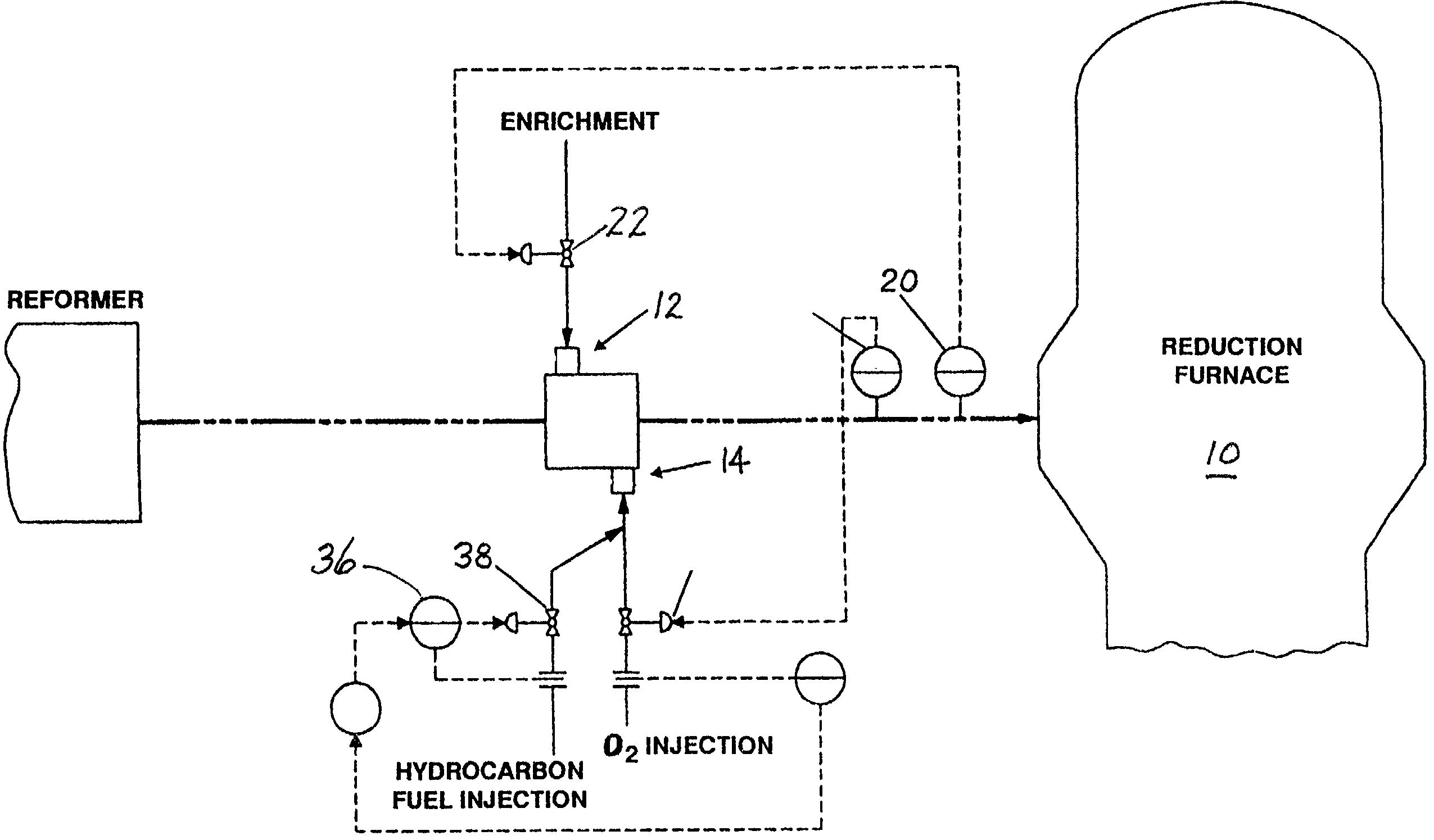
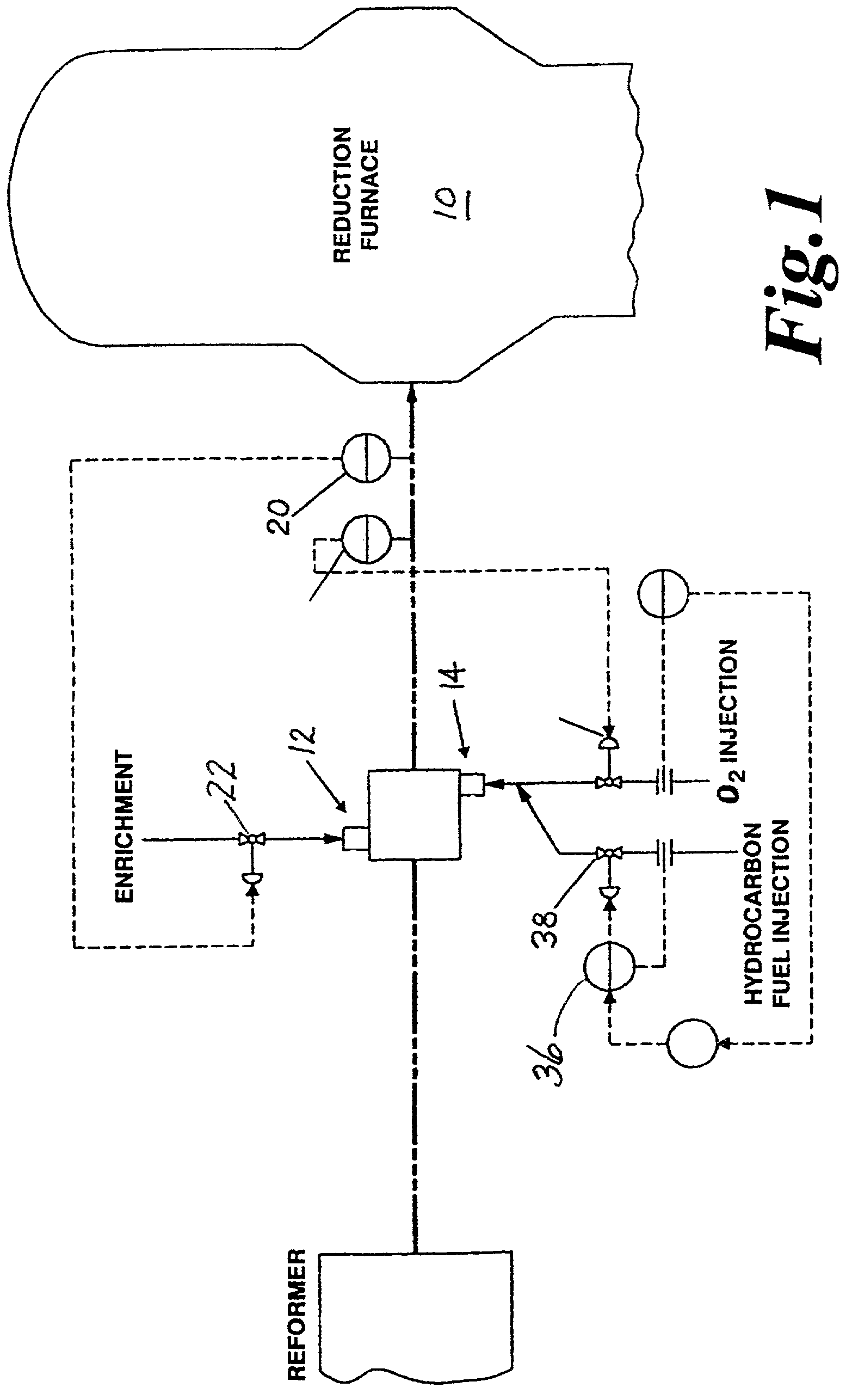
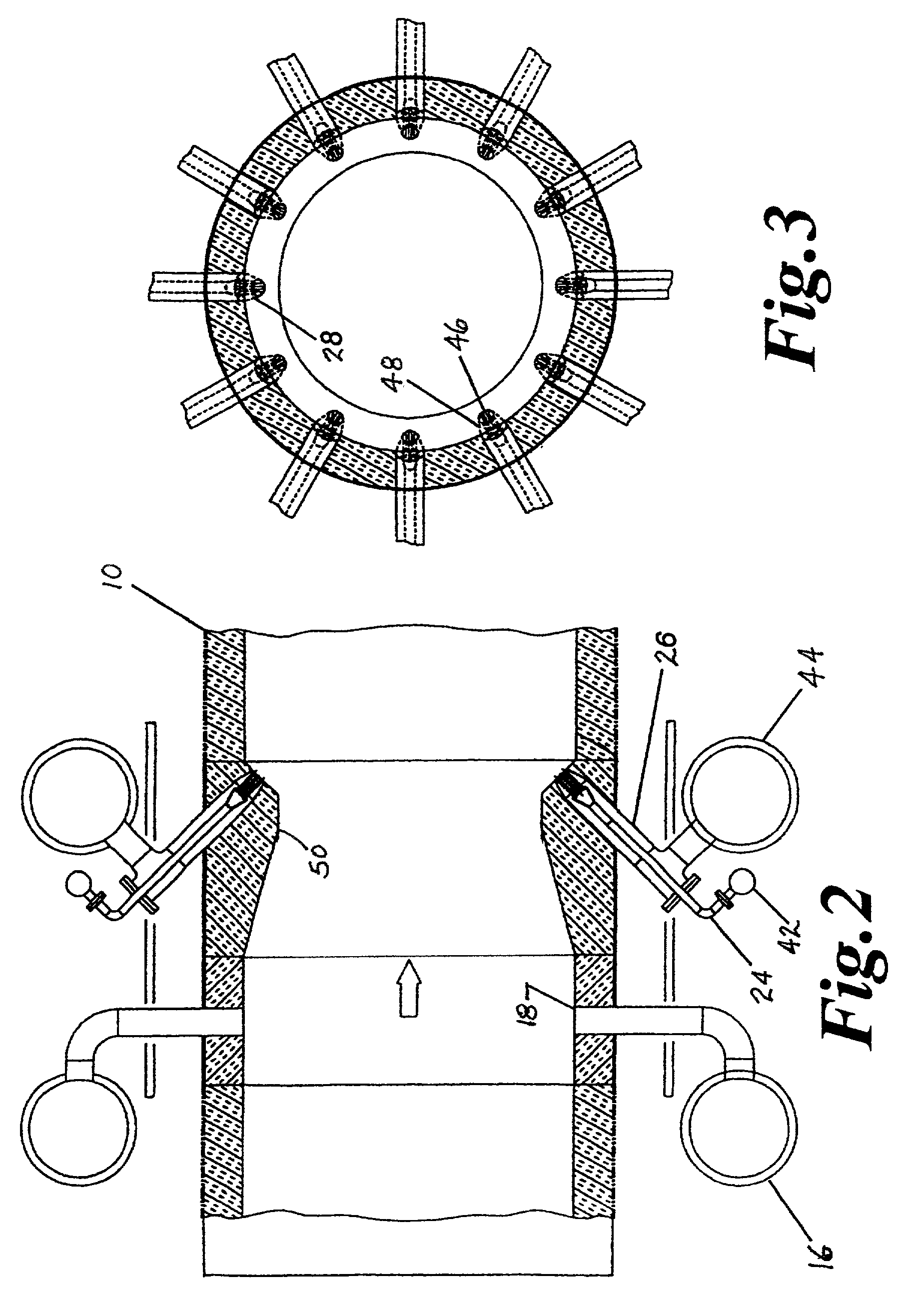
Apparatus and method for optimizing the use of oxygen in the direct reduction of iron
PatentInactiveUS20020007699A1
Innovation
- An apparatus and method that enriches the reducing gas with hydrocarbons and controls the temperature by injecting an oxygen-hydrocarbon mixture into the gas stream, using a refractory lined shaft with distinct enrichment and oxygen/fuel injection sections to optimize the production of hydrogen and carbon monoxide while minimizing methane content and maintaining desired reaction temperatures.
Method of synthesis of electrocatalytically active porous carbon material for oxygen reduction in low-temperature fuel cells
PatentWO2013011146A3
Innovation
- Novel synthesis approach using metal atom removal from nitrogen-enriched carbide MCaNb followed by surface deactivation in reducing atmosphere to create porous carbon-nitrogen skeleton structure.
- Strategic nitrogen substitution in carbon crystal lattice that shifts oxygen reduction potential to more positive values, improving electrocatalytic performance compared to non-enriched carbon materials.
- Integration of porous structure formation with nitrogen enrichment in a single synthetic route, enabling enhanced mass transport and active site accessibility for fuel cell applications.
Environmental Impact of Enhanced Oxygen Mobility
Enhanced lattice oxygen mobility through temperature programmed reduction presents significant environmental implications that extend beyond immediate industrial applications. The improved oxygen transport properties fundamentally alter how materials interact with atmospheric components, potentially reducing harmful emissions while simultaneously creating new environmental considerations that require careful evaluation.
The primary environmental benefit stems from enhanced catalytic efficiency in pollution control systems. Materials with improved oxygen mobility demonstrate superior performance in automotive catalytic converters and industrial emission control devices. These enhanced materials facilitate more complete oxidation of carbon monoxide, hydrocarbons, and nitrogen oxides at lower operating temperatures, resulting in reduced energy consumption and decreased greenhouse gas emissions from heating requirements.
Industrial processes utilizing materials with enhanced oxygen mobility show measurable reductions in energy intensity. The improved oxygen transport kinetics enable chemical reactions to proceed at lower temperatures and pressures, directly translating to reduced fossil fuel consumption and associated carbon dioxide emissions. Manufacturing sectors implementing these materials report energy savings ranging from 15-30% in high-temperature oxidation processes.
However, the environmental impact extends to material lifecycle considerations. Enhanced oxygen mobility often requires specific dopant materials or structural modifications that may introduce rare earth elements or other environmentally sensitive compounds. The extraction and processing of these materials present upstream environmental challenges, including habitat disruption and potential water contamination from mining operations.
The disposal and recycling of materials with enhanced oxygen mobility characteristics pose unique environmental challenges. These materials often contain complex crystal structures and dopant elements that complicate traditional recycling processes. Current waste management infrastructure lacks specialized protocols for handling such materials, potentially leading to improper disposal and environmental contamination.
Air quality improvements represent another significant environmental dimension. Enhanced oxygen mobility materials enable more efficient combustion processes in power generation and industrial heating applications, resulting in reduced particulate matter emissions and improved local air quality. Urban areas implementing these technologies in distributed energy systems report measurable improvements in ambient air quality metrics.
Long-term environmental sustainability requires comprehensive assessment of the trade-offs between operational benefits and material production impacts. While enhanced oxygen mobility delivers immediate environmental gains through improved efficiency, the cumulative environmental cost of material synthesis, processing, and eventual disposal must be carefully balanced against these operational advantages to ensure net positive environmental outcomes.
The primary environmental benefit stems from enhanced catalytic efficiency in pollution control systems. Materials with improved oxygen mobility demonstrate superior performance in automotive catalytic converters and industrial emission control devices. These enhanced materials facilitate more complete oxidation of carbon monoxide, hydrocarbons, and nitrogen oxides at lower operating temperatures, resulting in reduced energy consumption and decreased greenhouse gas emissions from heating requirements.
Industrial processes utilizing materials with enhanced oxygen mobility show measurable reductions in energy intensity. The improved oxygen transport kinetics enable chemical reactions to proceed at lower temperatures and pressures, directly translating to reduced fossil fuel consumption and associated carbon dioxide emissions. Manufacturing sectors implementing these materials report energy savings ranging from 15-30% in high-temperature oxidation processes.
However, the environmental impact extends to material lifecycle considerations. Enhanced oxygen mobility often requires specific dopant materials or structural modifications that may introduce rare earth elements or other environmentally sensitive compounds. The extraction and processing of these materials present upstream environmental challenges, including habitat disruption and potential water contamination from mining operations.
The disposal and recycling of materials with enhanced oxygen mobility characteristics pose unique environmental challenges. These materials often contain complex crystal structures and dopant elements that complicate traditional recycling processes. Current waste management infrastructure lacks specialized protocols for handling such materials, potentially leading to improper disposal and environmental contamination.
Air quality improvements represent another significant environmental dimension. Enhanced oxygen mobility materials enable more efficient combustion processes in power generation and industrial heating applications, resulting in reduced particulate matter emissions and improved local air quality. Urban areas implementing these technologies in distributed energy systems report measurable improvements in ambient air quality metrics.
Long-term environmental sustainability requires comprehensive assessment of the trade-offs between operational benefits and material production impacts. While enhanced oxygen mobility delivers immediate environmental gains through improved efficiency, the cumulative environmental cost of material synthesis, processing, and eventual disposal must be carefully balanced against these operational advantages to ensure net positive environmental outcomes.
Industrial Safety Standards for TPR Applications
Industrial safety standards for Temperature Programmed Reduction (TPR) applications encompass comprehensive protocols designed to mitigate risks associated with high-temperature operations, reactive gas handling, and equipment malfunction scenarios. These standards are particularly critical when TPR techniques are employed to enhance lattice oxygen mobility in industrial catalytic processes, where operational temperatures can exceed 1000°C and involve potentially hazardous reducing atmospheres.
The primary safety framework addresses gas handling protocols, requiring specialized ventilation systems capable of managing hydrogen-rich atmospheres and carbon monoxide emissions generated during reduction processes. Emergency shutdown procedures must be implemented with automated safety interlocks that can rapidly terminate gas flow and initiate cooling sequences when temperature excursions or gas leakage events are detected. Personnel training requirements mandate comprehensive understanding of reducing gas toxicity, proper use of gas detection equipment, and emergency response procedures.
Equipment design standards specify the use of explosion-proof electrical components in areas where flammable gas concentrations may accumulate. Reactor vessels must comply with pressure vessel codes and incorporate redundant temperature monitoring systems to prevent thermal runaway conditions that could compromise lattice structure integrity or generate dangerous pressure buildup.
Material compatibility assessments are essential for TPR applications targeting improved oxygen mobility, as reducing atmospheres can cause embrittlement of certain steel alloys and degradation of sealing materials. Regular inspection protocols must verify the integrity of gas lines, reactor internals, and safety relief systems to prevent catastrophic failures during extended high-temperature operations.
Environmental safety considerations include proper treatment of exhaust gases containing unreacted reducing agents and potential catalyst particles. Waste heat recovery systems must incorporate fail-safe mechanisms to prevent overheating of downstream equipment, while maintaining compliance with emissions regulations for industrial catalytic processes involving enhanced oxygen transport mechanisms.
The primary safety framework addresses gas handling protocols, requiring specialized ventilation systems capable of managing hydrogen-rich atmospheres and carbon monoxide emissions generated during reduction processes. Emergency shutdown procedures must be implemented with automated safety interlocks that can rapidly terminate gas flow and initiate cooling sequences when temperature excursions or gas leakage events are detected. Personnel training requirements mandate comprehensive understanding of reducing gas toxicity, proper use of gas detection equipment, and emergency response procedures.
Equipment design standards specify the use of explosion-proof electrical components in areas where flammable gas concentrations may accumulate. Reactor vessels must comply with pressure vessel codes and incorporate redundant temperature monitoring systems to prevent thermal runaway conditions that could compromise lattice structure integrity or generate dangerous pressure buildup.
Material compatibility assessments are essential for TPR applications targeting improved oxygen mobility, as reducing atmospheres can cause embrittlement of certain steel alloys and degradation of sealing materials. Regular inspection protocols must verify the integrity of gas lines, reactor internals, and safety relief systems to prevent catastrophic failures during extended high-temperature operations.
Environmental safety considerations include proper treatment of exhaust gases containing unreacted reducing agents and potential catalyst particles. Waste heat recovery systems must incorporate fail-safe mechanisms to prevent overheating of downstream equipment, while maintaining compliance with emissions regulations for industrial catalytic processes involving enhanced oxygen transport mechanisms.
Unlock deeper insights with Patsnap Eureka Quick Research — get a full tech report to explore trends and direct your research. Try now!
Generate Your Research Report Instantly with AI Agent
Supercharge your innovation with Patsnap Eureka AI Agent Platform!