

Comparing Catalytic Pyrolysis and Pyro-Gasification
APR 23, 20269 MIN READ
Generate Your Research Report Instantly with AI Agent
PatSnap Eureka helps you evaluate technical feasibility & market potential.
Catalytic Pyrolysis and Pyro-Gasification Background and Objectives
Catalytic pyrolysis and pyro-gasification represent two distinct thermochemical conversion pathways that have emerged as promising technologies for biomass and waste valorization. Both processes originated from traditional pyrolysis concepts but have evolved to address specific challenges in renewable energy production and waste management. The fundamental distinction lies in their operational environments and target products: catalytic pyrolysis operates under oxygen-limited conditions to maximize liquid bio-oil production, while pyro-gasification combines pyrolysis with controlled gasification to generate synthesis gas.
The historical development of these technologies traces back to the early 20th century when basic pyrolysis was first industrialized for charcoal production. The integration of catalysts into pyrolysis processes gained momentum in the 1980s as researchers sought to improve product quality and reduce unwanted compounds. Simultaneously, pyro-gasification emerged as a hybrid approach combining the benefits of both pyrolysis and gasification, particularly gaining attention during the 1990s energy crisis periods.
Current technological evolution trends indicate a shift toward more sophisticated catalyst systems and process optimization. Advanced zeolite catalysts, metal-based catalysts, and novel bifunctional catalysts are being developed to enhance selectivity and reduce deactivation rates. Process intensification through integrated reactor designs and improved heat management systems represents another significant trend driving both technologies forward.
The primary objective of comparing these technologies centers on identifying optimal pathways for specific feedstock types and desired end products. For catalytic pyrolysis, the main goals include maximizing bio-oil yield while improving its quality through deoxygenation and reducing corrosive compounds. The technology aims to produce transportation fuels and high-value chemicals from lignocellulosic biomass and organic waste streams.
Pyro-gasification objectives focus on maximizing syngas production with optimal H2/CO ratios suitable for downstream Fischer-Tropsch synthesis or methanol production. This technology targets applications requiring gaseous products and offers advantages in handling diverse feedstock compositions, including high-moisture content materials and contaminated waste streams.
Both technologies share common objectives in carbon footprint reduction, waste-to-energy conversion efficiency, and economic viability enhancement. The comparative analysis aims to establish clear selection criteria based on feedstock characteristics, product requirements, economic considerations, and environmental impact assessments to guide industrial implementation decisions.
The historical development of these technologies traces back to the early 20th century when basic pyrolysis was first industrialized for charcoal production. The integration of catalysts into pyrolysis processes gained momentum in the 1980s as researchers sought to improve product quality and reduce unwanted compounds. Simultaneously, pyro-gasification emerged as a hybrid approach combining the benefits of both pyrolysis and gasification, particularly gaining attention during the 1990s energy crisis periods.
Current technological evolution trends indicate a shift toward more sophisticated catalyst systems and process optimization. Advanced zeolite catalysts, metal-based catalysts, and novel bifunctional catalysts are being developed to enhance selectivity and reduce deactivation rates. Process intensification through integrated reactor designs and improved heat management systems represents another significant trend driving both technologies forward.
The primary objective of comparing these technologies centers on identifying optimal pathways for specific feedstock types and desired end products. For catalytic pyrolysis, the main goals include maximizing bio-oil yield while improving its quality through deoxygenation and reducing corrosive compounds. The technology aims to produce transportation fuels and high-value chemicals from lignocellulosic biomass and organic waste streams.
Pyro-gasification objectives focus on maximizing syngas production with optimal H2/CO ratios suitable for downstream Fischer-Tropsch synthesis or methanol production. This technology targets applications requiring gaseous products and offers advantages in handling diverse feedstock compositions, including high-moisture content materials and contaminated waste streams.
Both technologies share common objectives in carbon footprint reduction, waste-to-energy conversion efficiency, and economic viability enhancement. The comparative analysis aims to establish clear selection criteria based on feedstock characteristics, product requirements, economic considerations, and environmental impact assessments to guide industrial implementation decisions.
Market Demand for Advanced Thermal Conversion Technologies
The global market for advanced thermal conversion technologies is experiencing unprecedented growth driven by mounting environmental pressures and the urgent need for sustainable waste management solutions. Governments worldwide are implementing increasingly stringent regulations on waste disposal and carbon emissions, creating substantial demand for technologies that can convert waste materials into valuable energy products while minimizing environmental impact.
Industrial sectors are actively seeking alternatives to traditional waste management approaches, particularly as landfill costs continue to rise and disposal options become more limited. The circular economy paradigm has gained significant traction among manufacturers, who recognize the potential of thermal conversion technologies to transform waste streams into feedstock for new products or energy generation.
The energy sector represents a particularly promising market segment, as utilities and independent power producers explore diversification strategies beyond conventional fossil fuels. Advanced thermal conversion technologies offer the dual benefit of waste reduction and energy production, aligning with corporate sustainability goals and renewable energy mandates.
Municipal waste management authorities face increasing pressure to reduce landfill dependency while managing growing waste volumes from urbanization. These entities are evaluating thermal conversion solutions as viable alternatives that can significantly reduce waste volume while generating energy for local communities.
Chemical and petrochemical industries demonstrate strong interest in pyrolysis and gasification technologies for their ability to produce valuable chemical intermediates and synthetic fuels. The potential to create circular material flows within industrial processes presents compelling economic incentives for technology adoption.
Emerging markets in developing countries present substantial growth opportunities, as these regions seek to address waste management challenges while building energy infrastructure. The scalability and modularity of advanced thermal conversion systems make them particularly attractive for distributed deployment in areas lacking centralized waste management facilities.
Investment patterns indicate robust confidence in the sector, with venture capital and strategic investors increasingly funding technology development and commercial deployment projects. This financial backing accelerates technology maturation and market penetration across diverse application areas.
Industrial sectors are actively seeking alternatives to traditional waste management approaches, particularly as landfill costs continue to rise and disposal options become more limited. The circular economy paradigm has gained significant traction among manufacturers, who recognize the potential of thermal conversion technologies to transform waste streams into feedstock for new products or energy generation.
The energy sector represents a particularly promising market segment, as utilities and independent power producers explore diversification strategies beyond conventional fossil fuels. Advanced thermal conversion technologies offer the dual benefit of waste reduction and energy production, aligning with corporate sustainability goals and renewable energy mandates.
Municipal waste management authorities face increasing pressure to reduce landfill dependency while managing growing waste volumes from urbanization. These entities are evaluating thermal conversion solutions as viable alternatives that can significantly reduce waste volume while generating energy for local communities.
Chemical and petrochemical industries demonstrate strong interest in pyrolysis and gasification technologies for their ability to produce valuable chemical intermediates and synthetic fuels. The potential to create circular material flows within industrial processes presents compelling economic incentives for technology adoption.
Emerging markets in developing countries present substantial growth opportunities, as these regions seek to address waste management challenges while building energy infrastructure. The scalability and modularity of advanced thermal conversion systems make them particularly attractive for distributed deployment in areas lacking centralized waste management facilities.
Investment patterns indicate robust confidence in the sector, with venture capital and strategic investors increasingly funding technology development and commercial deployment projects. This financial backing accelerates technology maturation and market penetration across diverse application areas.
Current Status and Challenges in Pyrolysis Technologies
Pyrolysis technologies have experienced significant advancement over the past decade, with catalytic pyrolysis and pyro-gasification emerging as two prominent thermal conversion pathways for biomass and waste processing. Both technologies operate under oxygen-limited conditions but differ fundamentally in their process mechanisms and target products. Current industrial implementations demonstrate varying degrees of technological maturity, with conventional pyrolysis systems achieving commercial scale while advanced catalytic variants remain predominantly at pilot and demonstration phases.
The global landscape of pyrolysis technology deployment reveals distinct regional concentrations, with Europe leading in policy-driven implementations, North America focusing on waste-to-energy applications, and Asia-Pacific regions emphasizing biomass utilization for rural energy security. Catalytic pyrolysis systems currently face significant scalability challenges, particularly in catalyst regeneration and long-term stability under industrial operating conditions. The technology struggles with catalyst deactivation rates that can reach 15-20% within 100 hours of operation, necessitating frequent replacement cycles that impact economic viability.
Pyro-gasification technologies encounter different but equally complex challenges, primarily centered around tar formation and syngas quality control. Current systems typically produce syngas with tar contents ranging from 5-15 g/Nm³, requiring extensive downstream cleaning processes that add substantial capital and operational costs. Temperature control remains critical, with optimal gasification zones requiring precise maintenance between 800-900°C to balance conversion efficiency with equipment durability.
Product quality consistency represents a major constraint across both technology pathways. Catalytic pyrolysis systems demonstrate significant variability in bio-oil properties, with oxygen content fluctuating between 15-40% depending on feedstock characteristics and catalyst performance. This variability directly impacts downstream upgrading processes and limits direct application potential in existing petroleum infrastructure.
Economic barriers persist as primary adoption constraints, with capital expenditure requirements for commercial-scale catalytic pyrolysis plants ranging from $3-5 million per MW of processing capacity. Pyro-gasification systems face similar economic pressures, compounded by the need for sophisticated gas cleaning equipment that can represent 30-40% of total system costs. These financial requirements significantly exceed those of conventional thermal processing alternatives, creating substantial market entry barriers.
Feedstock flexibility limitations further constrain widespread deployment, as both technologies demonstrate sensitivity to moisture content, ash composition, and particle size distribution. Current systems typically require feedstock preprocessing to achieve moisture contents below 10% and specific particle size ranges, adding operational complexity and cost burdens that reduce overall process economics and limit feedstock sourcing flexibility.
The global landscape of pyrolysis technology deployment reveals distinct regional concentrations, with Europe leading in policy-driven implementations, North America focusing on waste-to-energy applications, and Asia-Pacific regions emphasizing biomass utilization for rural energy security. Catalytic pyrolysis systems currently face significant scalability challenges, particularly in catalyst regeneration and long-term stability under industrial operating conditions. The technology struggles with catalyst deactivation rates that can reach 15-20% within 100 hours of operation, necessitating frequent replacement cycles that impact economic viability.
Pyro-gasification technologies encounter different but equally complex challenges, primarily centered around tar formation and syngas quality control. Current systems typically produce syngas with tar contents ranging from 5-15 g/Nm³, requiring extensive downstream cleaning processes that add substantial capital and operational costs. Temperature control remains critical, with optimal gasification zones requiring precise maintenance between 800-900°C to balance conversion efficiency with equipment durability.
Product quality consistency represents a major constraint across both technology pathways. Catalytic pyrolysis systems demonstrate significant variability in bio-oil properties, with oxygen content fluctuating between 15-40% depending on feedstock characteristics and catalyst performance. This variability directly impacts downstream upgrading processes and limits direct application potential in existing petroleum infrastructure.
Economic barriers persist as primary adoption constraints, with capital expenditure requirements for commercial-scale catalytic pyrolysis plants ranging from $3-5 million per MW of processing capacity. Pyro-gasification systems face similar economic pressures, compounded by the need for sophisticated gas cleaning equipment that can represent 30-40% of total system costs. These financial requirements significantly exceed those of conventional thermal processing alternatives, creating substantial market entry barriers.
Feedstock flexibility limitations further constrain widespread deployment, as both technologies demonstrate sensitivity to moisture content, ash composition, and particle size distribution. Current systems typically require feedstock preprocessing to achieve moisture contents below 10% and specific particle size ranges, adding operational complexity and cost burdens that reduce overall process economics and limit feedstock sourcing flexibility.
Current Technical Solutions for Pyrolysis Process Optimization
01 Catalytic pyrolysis using metal-based catalysts
Metal-based catalysts such as zeolites, metal oxides, and transition metals are employed to enhance the pyrolysis process by lowering activation energy and improving product selectivity. These catalysts facilitate the breaking of chemical bonds in organic materials at lower temperatures, resulting in higher yields of valuable products such as bio-oils and gases. The catalytic activity can be optimized by adjusting catalyst composition, particle size, and support materials to achieve desired conversion rates and product distributions.- Catalytic pyrolysis using metal-based catalysts: Metal-based catalysts such as zeolites, metal oxides, and transition metals are employed in catalytic pyrolysis processes to enhance the conversion efficiency and product selectivity. These catalysts facilitate the breaking of chemical bonds in organic materials at lower temperatures, improving the yield of valuable products such as bio-oils and gases. The catalysts can be designed with specific pore structures and active sites to optimize the pyrolysis reactions and reduce the formation of undesired byproducts.
- Pyro-gasification process for biomass conversion: Pyro-gasification combines pyrolysis and gasification processes to convert biomass and waste materials into syngas, which consists primarily of hydrogen and carbon monoxide. This integrated approach allows for higher energy recovery and more complete conversion of feedstock materials. The process typically involves heating the material in a controlled atmosphere with limited oxygen, followed by gasification reactions that produce combustible gases suitable for energy generation or chemical synthesis.
- Reactor design and configuration for catalytic pyrolysis: Various reactor designs including fluidized bed reactors, fixed bed reactors, and rotary kilns are utilized for catalytic pyrolysis and pyro-gasification processes. The reactor configuration affects heat transfer efficiency, residence time, and contact between feedstock and catalyst. Advanced designs incorporate features such as multi-stage processing, catalyst regeneration systems, and optimized gas-solid contact to maximize conversion rates and product quality while minimizing energy consumption.
- Product upgrading and separation techniques: Post-pyrolysis treatment methods are employed to upgrade and separate the products obtained from catalytic pyrolysis and pyro-gasification. These techniques include condensation systems for bio-oil recovery, gas cleaning and purification units, and fractionation processes to separate different hydrocarbon fractions. Advanced separation technologies enable the production of high-quality fuels and chemicals from pyrolysis products, improving the overall economic viability of the process.
- Feedstock pretreatment and optimization: Pretreatment methods for feedstock materials prior to catalytic pyrolysis and pyro-gasification include drying, size reduction, torrefaction, and chemical treatment. These preprocessing steps improve the efficiency of the conversion process by reducing moisture content, increasing surface area, and modifying the chemical composition of the feedstock. Optimized pretreatment conditions lead to enhanced product yields, better energy efficiency, and reduced formation of tar and other problematic byproducts during the pyrolysis process.
02 Integrated pyro-gasification systems for waste treatment
Integrated systems combine pyrolysis and gasification processes to maximize energy recovery from various waste materials including biomass, plastics, and municipal solid waste. These systems operate in staged reactors where pyrolysis occurs first to produce char and volatiles, followed by gasification of the char to produce syngas. The integration allows for better thermal efficiency and more complete conversion of feedstock into useful energy products while minimizing residual waste.Expand Specific Solutions03 Temperature and residence time optimization in pyrolysis reactors
Controlling temperature profiles and residence time in pyrolysis reactors is critical for maximizing desired product yields and quality. Operating parameters such as heating rates, peak temperatures, and vapor residence times are adjusted based on feedstock characteristics to optimize the production of specific fractions. Advanced reactor designs incorporate temperature zoning and controlled atmosphere conditions to achieve precise control over product distribution and minimize unwanted secondary reactions.Expand Specific Solutions04 Syngas production and upgrading through catalytic gasification
Catalytic gasification processes convert carbonaceous materials into synthesis gas with enhanced hydrogen and carbon monoxide content. Catalysts promote steam reforming and water-gas shift reactions to improve syngas quality and composition. The process can be tailored to produce syngas with specific hydrogen-to-carbon monoxide ratios suitable for downstream applications such as Fischer-Tropsch synthesis or methanol production. Gas cleaning and conditioning steps are integrated to remove contaminants and adjust syngas properties.Expand Specific Solutions05 Reactor design and configuration for continuous pyrolysis operations
Advanced reactor configurations including fluidized bed, rotary kiln, and auger reactors enable continuous processing of feedstock materials with improved heat transfer and mass transfer characteristics. These designs incorporate features such as multiple heating zones, gas recirculation systems, and automated feeding mechanisms to maintain stable operating conditions. Reactor geometry and internal components are optimized to ensure uniform temperature distribution, adequate mixing, and efficient separation of solid, liquid, and gaseous products.Expand Specific Solutions
Major Players in Thermal Conversion Technology Industry
The catalytic pyrolysis and pyro-gasification sector represents an emerging technology landscape within the broader waste-to-energy and biomass conversion industry, currently in its early commercialization phase with significant growth potential driven by increasing environmental regulations and circular economy initiatives. The market demonstrates substantial scale opportunities, particularly in renewable fuel production and chemical feedstock generation, with established players like China Petroleum & Chemical Corp., ExxonMobil Technology & Engineering, and Axens SA leveraging their petrochemical expertise alongside specialized technology developers such as Anellotech, Quantafuel AS, and Haffner Energy SA. Technology maturity varies considerably across the competitive landscape, with traditional energy giants possessing robust R&D capabilities and manufacturing infrastructure, while innovative companies like Primus Green Energy and Topsoe A/S focus on breakthrough process optimization and catalyst development, supported by strong academic partnerships with institutions including Tianjin University and Harbin Institute of Technology advancing fundamental research.
China Petroleum & Chemical Corp.
Technical Solution: Sinopec has developed integrated catalytic pyrolysis technologies for converting heavy oil and biomass feedstocks into lighter hydrocarbons and chemicals. Their approach utilizes zeolite-based catalysts in fluidized bed reactors operating at temperatures of 450-550°C, achieving high conversion rates of 85-90% for heavy oil fractions. The company has also invested in pyro-gasification systems that combine thermal decomposition with partial oxidation, producing syngas with H2/CO ratios of 1.5-2.0, suitable for Fischer-Tropsch synthesis and methanol production.
Strengths: Extensive industrial experience, large-scale processing capabilities, integrated refinery infrastructure. Weaknesses: High capital investment requirements, limited flexibility for diverse feedstock types, environmental compliance challenges.
ExxonMobil Technology & Engineering Co.
Technical Solution: ExxonMobil has developed proprietary catalytic pyrolysis processes focusing on plastic waste conversion using advanced zeolite catalysts modified with metal promoters. Their technology operates at moderate temperatures of 400-500°C with residence times of 2-5 seconds, achieving plastic-to-fuel conversion efficiencies exceeding 80%. The company's pyro-gasification approach integrates steam reforming with partial oxidation, producing high-quality syngas with minimal tar formation. Their dual-stage reactor design allows for optimized temperature profiles and enhanced product selectivity for transportation fuels and petrochemical feedstocks.
Strengths: Advanced catalyst development, proven industrial scale-up capabilities, strong R&D infrastructure. Weaknesses: High technology licensing costs, complex process control requirements, limited public disclosure of technical details.
Core Patents in Catalytic Pyrolysis vs Pyro-Gasification
Regeneration of catalytic fast pyrolysis catalyst
PatentWO2014165223A2
Innovation
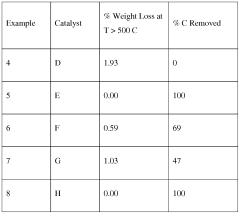
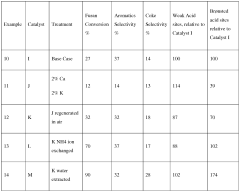
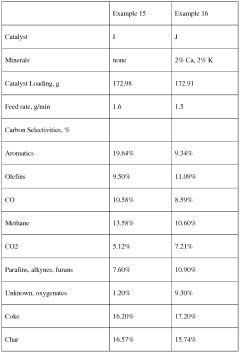
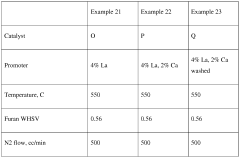
- A method involving washing the catalyst with a liquid solution, such as water or acidic water, to remove carbon deposits and minerals, followed by oxidation and potential metal reintroduction, to restore catalyst activity and selectivity, with the catalyst being reused in the catalytic pyrolysis process.
Catalysts for pyrolysis
PatentWO2017219019A1
Innovation
- The use of biochar derived from pyrolysis of wastewater biosolids and paper mill sludge, as well as ash from biosolids incineration, as catalysts in pyrolysis reactions to increase pyrolysis gas production and decrease bio-oil production, thereby minimizing heavy hydrocarbon content in bio-oil and improving its transparency.


Environmental Regulations for Pyrolysis Technologies
Environmental regulations governing pyrolysis technologies have evolved significantly as governments worldwide recognize both the potential benefits and risks associated with thermal conversion processes. The regulatory landscape varies considerably across jurisdictions, with developed nations typically implementing more stringent frameworks compared to emerging economies. These regulations primarily focus on emission controls, waste management protocols, and operational safety standards.
Air quality regulations represent the most critical aspect of pyrolysis technology oversight. The United States Environmental Protection Agency (EPA) classifies pyrolysis facilities under the Clean Air Act, requiring compliance with National Emission Standards for Hazardous Air Pollutants (NESHAP). European Union directives, particularly the Industrial Emissions Directive (IED), establish strict limits on particulate matter, volatile organic compounds, and other atmospheric pollutants. These regulations mandate continuous emission monitoring systems and periodic stack testing to ensure compliance.
Waste input regulations significantly impact both catalytic pyrolysis and pyro-gasification operations. The Resource Conservation and Recovery Act (RCRA) in the United States defines acceptable feedstock materials and prohibits processing of certain hazardous wastes without specialized permits. Similar restrictions exist under European waste framework directives, which classify pyrolysis as a recovery operation rather than disposal, requiring demonstration of environmental benefits over conventional waste management methods.
Product quality and safety standards govern the commercial viability of pyrolysis outputs. Fuel products derived from pyrolysis processes must meet established specifications under fuel quality directives, while char and other solid residues are subject to soil amendment or construction material standards. The REACH regulation in Europe requires comprehensive chemical registration for novel pyrolysis-derived products entering the market.
Emerging regulatory trends indicate increasing focus on lifecycle assessment requirements and carbon accounting methodologies. Several jurisdictions are developing specific certification schemes for pyrolysis technologies, emphasizing greenhouse gas reduction potential and circular economy principles. These evolving frameworks will likely influence technology selection between catalytic pyrolysis and pyro-gasification approaches, as regulatory compliance costs and market access requirements become determining factors in commercial deployment decisions.
Air quality regulations represent the most critical aspect of pyrolysis technology oversight. The United States Environmental Protection Agency (EPA) classifies pyrolysis facilities under the Clean Air Act, requiring compliance with National Emission Standards for Hazardous Air Pollutants (NESHAP). European Union directives, particularly the Industrial Emissions Directive (IED), establish strict limits on particulate matter, volatile organic compounds, and other atmospheric pollutants. These regulations mandate continuous emission monitoring systems and periodic stack testing to ensure compliance.
Waste input regulations significantly impact both catalytic pyrolysis and pyro-gasification operations. The Resource Conservation and Recovery Act (RCRA) in the United States defines acceptable feedstock materials and prohibits processing of certain hazardous wastes without specialized permits. Similar restrictions exist under European waste framework directives, which classify pyrolysis as a recovery operation rather than disposal, requiring demonstration of environmental benefits over conventional waste management methods.
Product quality and safety standards govern the commercial viability of pyrolysis outputs. Fuel products derived from pyrolysis processes must meet established specifications under fuel quality directives, while char and other solid residues are subject to soil amendment or construction material standards. The REACH regulation in Europe requires comprehensive chemical registration for novel pyrolysis-derived products entering the market.
Emerging regulatory trends indicate increasing focus on lifecycle assessment requirements and carbon accounting methodologies. Several jurisdictions are developing specific certification schemes for pyrolysis technologies, emphasizing greenhouse gas reduction potential and circular economy principles. These evolving frameworks will likely influence technology selection between catalytic pyrolysis and pyro-gasification approaches, as regulatory compliance costs and market access requirements become determining factors in commercial deployment decisions.
Economic Feasibility Analysis of Pyrolysis Technologies
The economic feasibility of catalytic pyrolysis and pyro-gasification technologies depends heavily on capital expenditure requirements, operational costs, and revenue potential from product streams. Catalytic pyrolysis typically requires higher initial investment due to sophisticated catalyst systems, specialized reactor designs, and precise temperature control mechanisms. The catalyst replacement and regeneration costs constitute significant ongoing expenses, with catalyst lifespans ranging from 6 months to 2 years depending on feedstock quality and operating conditions.
Pyro-gasification systems generally demonstrate lower capital intensity per unit capacity, primarily due to simpler reactor configurations and reduced catalyst requirements. However, the technology demands robust gas cleaning systems and downstream processing equipment to handle syngas purification, which can offset initial cost advantages. The operational complexity of managing gasification parameters and maintaining optimal gas composition adds to operational expenditure.
Revenue generation models differ substantially between the two technologies. Catalytic pyrolysis produces higher-value liquid products, including bio-oils with improved properties suitable for direct fuel applications or chemical feedstock. Market prices for these refined products typically range from $400-800 per metric ton, depending on quality specifications and regional demand. The technology also generates valuable char byproducts for carbon applications or soil amendment.
Pyro-gasification primarily generates syngas for power generation or chemical synthesis, with revenue streams dependent on local energy prices and industrial gas demand. The electricity generation pathway typically yields lower unit revenues but offers more stable, long-term contracts with utilities. Chemical synthesis applications, particularly methanol or Fischer-Tropsch fuels, provide higher value propositions but require additional downstream investment.
Economic viability is significantly influenced by feedstock costs, which can represent 40-60% of total operational expenses. Both technologies benefit from consistent, low-cost biomass supply chains, though catalytic pyrolysis demonstrates greater sensitivity to feedstock quality variations. Scale economics favor larger installations, with break-even points typically occurring at processing capacities exceeding 50,000 tons annually for catalytic pyrolysis and 100,000 tons for pyro-gasification systems.
Pyro-gasification systems generally demonstrate lower capital intensity per unit capacity, primarily due to simpler reactor configurations and reduced catalyst requirements. However, the technology demands robust gas cleaning systems and downstream processing equipment to handle syngas purification, which can offset initial cost advantages. The operational complexity of managing gasification parameters and maintaining optimal gas composition adds to operational expenditure.
Revenue generation models differ substantially between the two technologies. Catalytic pyrolysis produces higher-value liquid products, including bio-oils with improved properties suitable for direct fuel applications or chemical feedstock. Market prices for these refined products typically range from $400-800 per metric ton, depending on quality specifications and regional demand. The technology also generates valuable char byproducts for carbon applications or soil amendment.
Pyro-gasification primarily generates syngas for power generation or chemical synthesis, with revenue streams dependent on local energy prices and industrial gas demand. The electricity generation pathway typically yields lower unit revenues but offers more stable, long-term contracts with utilities. Chemical synthesis applications, particularly methanol or Fischer-Tropsch fuels, provide higher value propositions but require additional downstream investment.
Economic viability is significantly influenced by feedstock costs, which can represent 40-60% of total operational expenses. Both technologies benefit from consistent, low-cost biomass supply chains, though catalytic pyrolysis demonstrates greater sensitivity to feedstock quality variations. Scale economics favor larger installations, with break-even points typically occurring at processing capacities exceeding 50,000 tons annually for catalytic pyrolysis and 100,000 tons for pyro-gasification systems.
Unlock deeper insights with PatSnap Eureka Quick Research — get a full tech report to explore trends and direct your research. Try now!
Generate Your Research Report Instantly with AI Agent
Supercharge your innovation with PatSnap Eureka AI Agent Platform!