

Comparing DSP and Neural Networks: Data Processing Capabilities
FEB 26, 20269 MIN READ
Generate Your Research Report Instantly with AI Agent
Patsnap Eureka helps you evaluate technical feasibility & market potential.
DSP vs Neural Networks Background and Objectives
Digital Signal Processing (DSP) and Neural Networks represent two fundamental paradigms in computational data processing, each with distinct evolutionary trajectories that have shaped modern information technology. DSP emerged in the 1960s as a mathematical framework for analyzing, modifying, and synthesizing digital signals, initially driven by telecommunications and audio processing requirements. This field established rigorous mathematical foundations through transform theory, filter design, and spectral analysis techniques.
Neural Networks, conversely, originated from biological neuron modeling in the 1940s but experienced significant renaissance periods, particularly during the 1980s backpropagation breakthrough and the recent deep learning revolution since 2010. Unlike DSP's deterministic mathematical approach, Neural Networks employ adaptive learning mechanisms inspired by biological neural systems to extract patterns and relationships from complex datasets.
The convergence of these technologies has become increasingly relevant as data processing demands have evolved beyond traditional signal processing applications. Modern applications require systems capable of handling multimodal data streams, real-time adaptive processing, and complex pattern recognition tasks that challenge conventional DSP methodologies while demanding the computational efficiency that Neural Networks sometimes lack.
Contemporary data processing challenges encompass diverse domains including autonomous systems, IoT sensor networks, multimedia content analysis, and edge computing applications. These scenarios demand processing architectures that can simultaneously deliver deterministic performance guarantees, adaptive learning capabilities, and computational efficiency across varying operational conditions.
The primary objective of comparing these paradigms centers on establishing comprehensive evaluation frameworks for data processing capabilities across multiple dimensions. This includes computational complexity analysis, real-time performance characteristics, power consumption profiles, and adaptability to varying data distributions and noise conditions.
Furthermore, this comparative analysis aims to identify optimal integration strategies where DSP and Neural Network approaches can complement each other, potentially creating hybrid architectures that leverage the mathematical rigor of DSP with the adaptive intelligence of Neural Networks. Understanding these synergies becomes crucial for developing next-generation data processing systems that can meet increasingly sophisticated application requirements while maintaining practical implementation constraints.
Neural Networks, conversely, originated from biological neuron modeling in the 1940s but experienced significant renaissance periods, particularly during the 1980s backpropagation breakthrough and the recent deep learning revolution since 2010. Unlike DSP's deterministic mathematical approach, Neural Networks employ adaptive learning mechanisms inspired by biological neural systems to extract patterns and relationships from complex datasets.
The convergence of these technologies has become increasingly relevant as data processing demands have evolved beyond traditional signal processing applications. Modern applications require systems capable of handling multimodal data streams, real-time adaptive processing, and complex pattern recognition tasks that challenge conventional DSP methodologies while demanding the computational efficiency that Neural Networks sometimes lack.
Contemporary data processing challenges encompass diverse domains including autonomous systems, IoT sensor networks, multimedia content analysis, and edge computing applications. These scenarios demand processing architectures that can simultaneously deliver deterministic performance guarantees, adaptive learning capabilities, and computational efficiency across varying operational conditions.
The primary objective of comparing these paradigms centers on establishing comprehensive evaluation frameworks for data processing capabilities across multiple dimensions. This includes computational complexity analysis, real-time performance characteristics, power consumption profiles, and adaptability to varying data distributions and noise conditions.
Furthermore, this comparative analysis aims to identify optimal integration strategies where DSP and Neural Network approaches can complement each other, potentially creating hybrid architectures that leverage the mathematical rigor of DSP with the adaptive intelligence of Neural Networks. Understanding these synergies becomes crucial for developing next-generation data processing systems that can meet increasingly sophisticated application requirements while maintaining practical implementation constraints.
Market Demand for Advanced Data Processing Solutions
The global data processing market is experiencing unprecedented growth driven by the exponential increase in data generation across industries. Organizations worldwide are grappling with massive volumes of structured and unstructured data that require sophisticated processing capabilities to extract meaningful insights. This surge in data complexity has created a substantial demand for advanced processing solutions that can handle real-time analytics, machine learning workloads, and high-throughput signal processing applications.
Traditional industries such as telecommunications, automotive, and healthcare are undergoing digital transformation, necessitating robust data processing infrastructures. The telecommunications sector requires advanced signal processing for 5G networks and beyond, while autonomous vehicles demand real-time sensor data processing capabilities. Healthcare organizations need sophisticated algorithms for medical imaging, genomic analysis, and patient monitoring systems, creating diverse market opportunities for both DSP and neural network technologies.
The artificial intelligence revolution has significantly amplified market demand for neural network processing capabilities. Enterprise adoption of AI-driven applications, including natural language processing, computer vision, and predictive analytics, has created a multi-billion dollar market for specialized processing hardware and software solutions. Cloud service providers are investing heavily in AI infrastructure to meet growing customer demands for machine learning services and edge computing capabilities.
Edge computing emergence has created new market segments requiring efficient, low-power data processing solutions. Internet of Things deployments, smart city initiatives, and industrial automation systems demand processing capabilities that can operate in resource-constrained environments while maintaining high performance standards. This trend has intensified competition between DSP-based solutions and neural network accelerators for market share in embedded applications.
Financial services, retail, and manufacturing sectors are driving demand for real-time data processing solutions that can support fraud detection, recommendation systems, and predictive maintenance applications. These industries require processing architectures that can handle both traditional signal processing tasks and modern machine learning workloads, creating opportunities for hybrid solutions that combine DSP efficiency with neural network flexibility.
The market landscape is further shaped by increasing regulatory requirements for data privacy and security, pushing organizations to seek processing solutions that can handle sensitive data locally while maintaining compliance standards. This regulatory environment favors solutions that offer transparent processing capabilities and deterministic performance characteristics.
Traditional industries such as telecommunications, automotive, and healthcare are undergoing digital transformation, necessitating robust data processing infrastructures. The telecommunications sector requires advanced signal processing for 5G networks and beyond, while autonomous vehicles demand real-time sensor data processing capabilities. Healthcare organizations need sophisticated algorithms for medical imaging, genomic analysis, and patient monitoring systems, creating diverse market opportunities for both DSP and neural network technologies.
The artificial intelligence revolution has significantly amplified market demand for neural network processing capabilities. Enterprise adoption of AI-driven applications, including natural language processing, computer vision, and predictive analytics, has created a multi-billion dollar market for specialized processing hardware and software solutions. Cloud service providers are investing heavily in AI infrastructure to meet growing customer demands for machine learning services and edge computing capabilities.
Edge computing emergence has created new market segments requiring efficient, low-power data processing solutions. Internet of Things deployments, smart city initiatives, and industrial automation systems demand processing capabilities that can operate in resource-constrained environments while maintaining high performance standards. This trend has intensified competition between DSP-based solutions and neural network accelerators for market share in embedded applications.
Financial services, retail, and manufacturing sectors are driving demand for real-time data processing solutions that can support fraud detection, recommendation systems, and predictive maintenance applications. These industries require processing architectures that can handle both traditional signal processing tasks and modern machine learning workloads, creating opportunities for hybrid solutions that combine DSP efficiency with neural network flexibility.
The market landscape is further shaped by increasing regulatory requirements for data privacy and security, pushing organizations to seek processing solutions that can handle sensitive data locally while maintaining compliance standards. This regulatory environment favors solutions that offer transparent processing capabilities and deterministic performance characteristics.
Current State and Challenges in DSP and NN Processing
Digital Signal Processing (DSP) has reached a mature state with well-established algorithms and hardware implementations optimized for specific signal processing tasks. Traditional DSP systems excel in real-time processing scenarios, offering deterministic performance with low latency and predictable computational requirements. Current DSP architectures leverage specialized processors, FPGAs, and dedicated hardware accelerators that provide exceptional efficiency for linear operations, filtering, and frequency domain transformations.
Neural Networks, particularly deep learning architectures, have demonstrated remarkable capabilities in pattern recognition, feature extraction, and adaptive processing tasks. Modern NN implementations benefit from GPU acceleration, specialized AI chips, and distributed computing frameworks that enable processing of complex, high-dimensional data. The current state shows significant advancement in convolutional neural networks for signal processing applications, recurrent networks for temporal data analysis, and transformer architectures for sequence processing.
The primary challenge facing DSP systems lies in their limited adaptability to varying signal characteristics and environments. Traditional DSP algorithms require manual parameter tuning and struggle with non-linear signal relationships, making them less effective for complex, dynamic scenarios. Additionally, DSP systems face difficulties in handling unstructured data and require extensive domain expertise for algorithm development and optimization.
Neural Networks encounter substantial challenges in computational complexity and resource requirements. Training deep networks demands significant computational power and large datasets, while inference can be computationally intensive for real-time applications. The black-box nature of neural networks presents interpretability challenges, making it difficult to understand decision-making processes and ensure reliability in critical applications.
Integration challenges emerge when attempting to combine DSP and NN approaches. Hybrid systems must address compatibility issues between deterministic DSP algorithms and probabilistic neural network outputs. Memory bandwidth limitations, power consumption constraints, and the need for specialized hardware create additional complexity in developing unified processing architectures.
Geographically, DSP technology development concentrates in established semiconductor regions including Silicon Valley, Europe, and East Asia, where traditional signal processing expertise resides. Neural network advancement shows strong presence in AI research hubs, with significant contributions from North American tech companies, Chinese AI firms, and European research institutions, creating a distributed landscape of innovation across both domains.
Neural Networks, particularly deep learning architectures, have demonstrated remarkable capabilities in pattern recognition, feature extraction, and adaptive processing tasks. Modern NN implementations benefit from GPU acceleration, specialized AI chips, and distributed computing frameworks that enable processing of complex, high-dimensional data. The current state shows significant advancement in convolutional neural networks for signal processing applications, recurrent networks for temporal data analysis, and transformer architectures for sequence processing.
The primary challenge facing DSP systems lies in their limited adaptability to varying signal characteristics and environments. Traditional DSP algorithms require manual parameter tuning and struggle with non-linear signal relationships, making them less effective for complex, dynamic scenarios. Additionally, DSP systems face difficulties in handling unstructured data and require extensive domain expertise for algorithm development and optimization.
Neural Networks encounter substantial challenges in computational complexity and resource requirements. Training deep networks demands significant computational power and large datasets, while inference can be computationally intensive for real-time applications. The black-box nature of neural networks presents interpretability challenges, making it difficult to understand decision-making processes and ensure reliability in critical applications.
Integration challenges emerge when attempting to combine DSP and NN approaches. Hybrid systems must address compatibility issues between deterministic DSP algorithms and probabilistic neural network outputs. Memory bandwidth limitations, power consumption constraints, and the need for specialized hardware create additional complexity in developing unified processing architectures.
Geographically, DSP technology development concentrates in established semiconductor regions including Silicon Valley, Europe, and East Asia, where traditional signal processing expertise resides. Neural network advancement shows strong presence in AI research hubs, with significant contributions from North American tech companies, Chinese AI firms, and European research institutions, creating a distributed landscape of innovation across both domains.
Existing DSP and Neural Network Processing Solutions
01 Hybrid DSP-Neural Network Architecture for Enhanced Processing
Integration of digital signal processors with neural network accelerators enables efficient data processing by combining the strengths of both technologies. DSPs handle traditional signal processing tasks while neural network components manage complex pattern recognition and learning operations. This hybrid approach optimizes power consumption and processing speed for real-time applications requiring both conventional signal processing and machine learning capabilities.- Hybrid DSP-Neural Network Architecture for Enhanced Processing: Integration of digital signal processors with neural network accelerators enables efficient data processing by combining the strengths of both technologies. DSP units handle traditional signal processing tasks such as filtering and transformation, while neural network components perform complex pattern recognition and inference. This hybrid approach optimizes power consumption and processing speed for real-time applications, allowing systems to leverage specialized hardware for different computational tasks.
- Neural Network Acceleration Using DSP Instructions: Specialized digital signal processing instruction sets can be extended to support neural network operations, enabling efficient execution of convolution, pooling, and activation functions. By utilizing existing DSP hardware with enhanced instruction capabilities, systems can perform neural network inference without dedicated AI accelerators. This approach reduces hardware complexity while maintaining high throughput for deep learning workloads through optimized multiply-accumulate operations and parallel processing capabilities.
- Data Preprocessing and Feature Extraction Pipeline: Digital signal processors perform critical preprocessing operations on raw sensor data before neural network inference, including noise reduction, normalization, and feature extraction. These preprocessing stages enhance the quality of input data and reduce computational burden on neural networks. The pipeline architecture enables efficient data flow management and synchronization between DSP preprocessing units and neural network inference engines, improving overall system latency and accuracy.
- Reconfigurable Processing Architecture for Adaptive Workloads: Flexible processing architectures allow dynamic allocation of computational resources between DSP and neural network tasks based on workload requirements. Reconfigurable hardware enables systems to adapt to varying processing demands by adjusting the balance between signal processing and machine learning operations. This adaptability optimizes resource utilization and power efficiency across different application scenarios, supporting multiple operating modes within a single hardware platform.
- Memory Management and Data Transfer Optimization: Efficient memory architectures and data transfer mechanisms are essential for maximizing throughput between DSP and neural network processing units. Advanced memory hierarchies, including shared buffers and cache systems, minimize data movement overhead and reduce latency. Optimized data transfer protocols ensure seamless communication between processing elements while managing bandwidth constraints, enabling high-performance execution of complex algorithms that require frequent data exchange between different processing domains.
02 Neural Network Acceleration Using Specialized DSP Instructions
Digital signal processors equipped with specialized instruction sets designed for neural network operations can significantly improve computational efficiency. These enhanced DSP architectures include dedicated hardware for matrix operations, activation functions, and convolution calculations commonly used in deep learning models. The specialized instructions reduce processing cycles and memory bandwidth requirements for neural network inference and training tasks.Expand Specific Solutions03 Parallel Processing Architecture for Neural Network Workloads
Implementation of parallel processing capabilities in DSP systems enables simultaneous execution of multiple neural network operations. This architecture utilizes multiple processing units working concurrently to handle different layers or portions of neural networks, significantly reducing overall computation time. The parallel approach is particularly effective for handling large-scale deep learning models and real-time inference requirements.Expand Specific Solutions04 Memory Optimization Techniques for Neural Network Data Flow
Advanced memory management strategies optimize data movement between processing units and memory hierarchies in DSP-based neural network systems. These techniques include intelligent caching, data prefetching, and memory compression to minimize latency and maximize throughput. Efficient memory utilization is critical for handling the large datasets and model parameters typical of modern neural network applications.Expand Specific Solutions05 Adaptive Processing for Dynamic Neural Network Configurations
DSP systems with adaptive processing capabilities can dynamically adjust their operation based on neural network requirements and input data characteristics. This flexibility allows the processor to optimize resource allocation, adjust precision levels, and modify processing strategies in real-time. Such adaptability is essential for supporting various neural network architectures and accommodating changing computational demands in edge computing and mobile applications.Expand Specific Solutions
Key Players in DSP and Neural Network Industry
The DSP versus neural networks data processing landscape represents a mature yet rapidly evolving competitive environment. The industry is experiencing a significant transformation as traditional DSP leaders like Analog Devices, Texas Instruments, and Intel face increasing competition from AI-focused companies such as Furiosa AI and emerging neural processing solutions. Market size continues expanding driven by automotive, IoT, and edge computing applications. Technology maturity varies significantly across segments - conventional DSP solutions from established players like Microchip Technology and Renesas Electronics demonstrate high reliability, while neural network implementations from companies like Huawei, Microsoft Technology Licensing, and research institutions including Zhejiang University represent cutting-edge but less mature approaches. The convergence of these technologies is creating hybrid solutions, with companies like ARM and Imagination Technologies developing specialized architectures that combine traditional signal processing with machine learning capabilities.
Analog Devices, Inc.
Technical Solution: Analog Devices focuses on bridging the gap between traditional DSP and emerging neural network processing through their SHARC and Blackfin processor families enhanced with AI capabilities. Their approach emphasizes real-time processing requirements where DSP excels in deterministic, low-latency operations while neural networks provide adaptive learning and pattern recognition. ADI's processors integrate dedicated MAC units for DSP operations alongside tensor processing capabilities for neural network inference. Their CrossCore Embedded Studio development environment provides tools for optimizing hybrid algorithms that combine classical signal processing with machine learning models. The company's solution architecture allows for seamless data flow between DSP and neural processing stages, particularly valuable in applications like audio processing, industrial automation, and automotive systems where both precise signal conditioning and intelligent decision-making are required.
Strengths: Strong expertise in analog and mixed-signal processing, excellent real-time performance, robust development tools. Weaknesses: Limited scalability for large neural networks, smaller market presence in AI-focused applications.
Texas Instruments Incorporated
Technical Solution: Texas Instruments has developed a comprehensive approach to combining DSP and neural network processing through their C2000 and TMS320 processor families with integrated AI acceleration. Their solution architecture recognizes that DSP excels in mathematical operations, filtering, and transform functions while neural networks provide superior pattern recognition and adaptive processing capabilities. TI's processors feature dedicated DSP cores with specialized instruction sets for signal processing alongside programmable accelerators for neural network inference. Their Code Composer Studio IDE includes optimization tools for hybrid algorithms that leverage both processing paradigms. The company's approach emphasizes energy efficiency and real-time performance, making their solutions particularly suitable for embedded applications in automotive, industrial, and communications sectors where both precise signal processing and intelligent decision-making are essential.
Strengths: Excellent power efficiency, strong embedded market presence, comprehensive development ecosystem. Weaknesses: Limited performance for complex neural networks, focus primarily on embedded rather than high-performance computing applications.
Core Innovations in Hybrid DSP-NN Architectures
Digital signal processing with neural networks
PatentActiveUS11599799B1
Innovation
- A computerized neural network training and testing environment is developed to train a neural network that produces outputs corresponding to a DSP algorithm, allowing replication in any processing environment, with a reversed process flow to generate an inverse DSP algorithm.


Digital Signal Processor Having Instruction Set With An Exponential Function Using Reduced Look-Up Table
PatentInactiveUS20100198894A1
Innovation
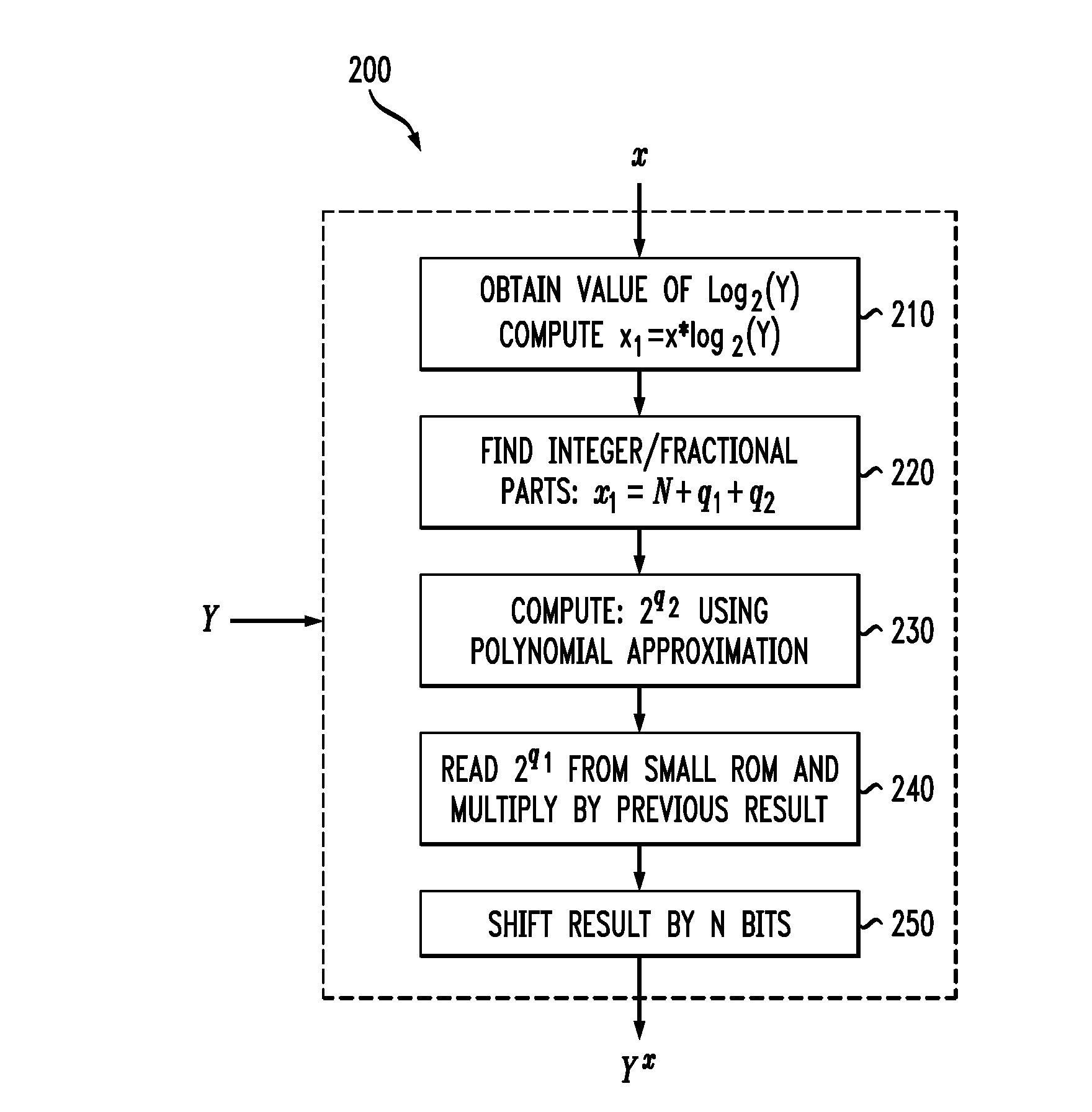
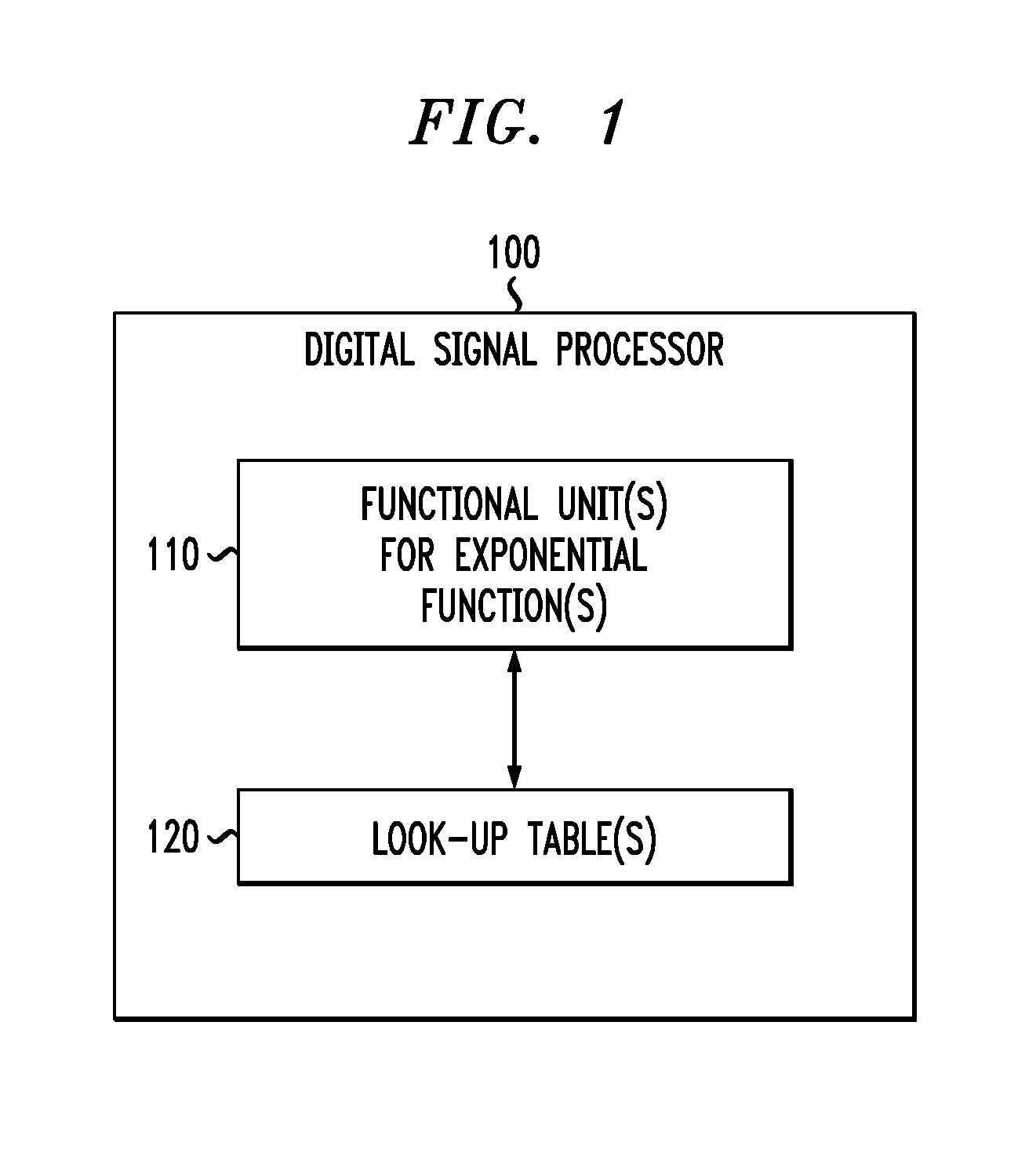
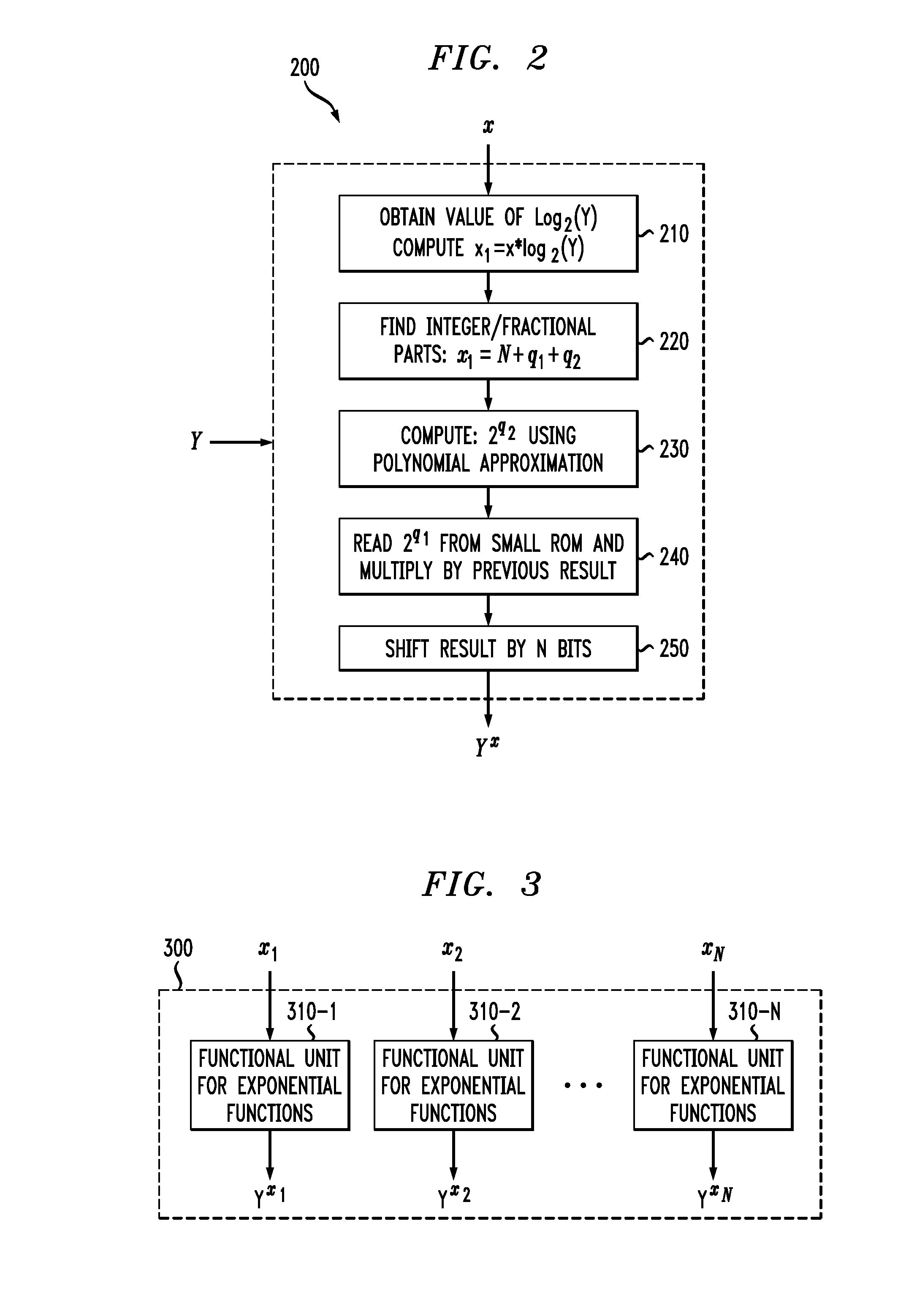
- A digital signal processor is designed with an instruction set that uses a reduced look-up table to evaluate exponential functions by decomposing input values into integer and fractional parts, employing polynomial approximations and sharing hardware components to reduce memory usage and latency.

Hardware Acceleration Standards and Protocols
The hardware acceleration landscape for DSP and neural network processing has been shaped by several key standards and protocols that define how accelerated computing resources are accessed, managed, and optimized. OpenCL (Open Computing Language) stands as one of the most significant cross-platform standards, enabling both DSP and neural network workloads to leverage heterogeneous computing environments including CPUs, GPUs, and specialized accelerators.
CUDA (Compute Unified Device Architecture) has established itself as the dominant proprietary framework for GPU-accelerated computing, particularly influential in neural network training and inference. While primarily associated with NVIDIA hardware, CUDA's programming model and extensive library ecosystem have set de facto standards for parallel computing architectures that influence DSP implementations as well.
The emergence of specialized AI acceleration protocols has introduced new standardization efforts. The ONNX (Open Neural Network Exchange) format has become crucial for neural network model portability across different hardware platforms, while OpenVINO provides standardized APIs for deploying neural networks on Intel's diverse hardware ecosystem including CPUs, GPUs, and VPUs.
For DSP-specific applications, traditional standards like VSIPL (Vector Signal and Image Processing Library) continue to provide standardized APIs for signal processing operations. However, newer protocols such as SYCL are gaining traction by offering single-source programming models that can target both traditional DSP hardware and modern AI accelerators.
Memory management protocols represent another critical standardization area. The Unified Memory Architecture standards enable seamless data sharing between different processing units, reducing the overhead traditionally associated with data movement between DSP cores and neural processing units. PCIe and newer CXL (Compute Express Link) protocols define how accelerators communicate with host systems, directly impacting the performance characteristics of both DSP and neural network workloads.
Industry consortiums like the Khronos Group continue to develop standards that bridge the gap between traditional signal processing and modern AI workloads, ensuring interoperability and performance optimization across diverse hardware acceleration platforms.
CUDA (Compute Unified Device Architecture) has established itself as the dominant proprietary framework for GPU-accelerated computing, particularly influential in neural network training and inference. While primarily associated with NVIDIA hardware, CUDA's programming model and extensive library ecosystem have set de facto standards for parallel computing architectures that influence DSP implementations as well.
The emergence of specialized AI acceleration protocols has introduced new standardization efforts. The ONNX (Open Neural Network Exchange) format has become crucial for neural network model portability across different hardware platforms, while OpenVINO provides standardized APIs for deploying neural networks on Intel's diverse hardware ecosystem including CPUs, GPUs, and VPUs.
For DSP-specific applications, traditional standards like VSIPL (Vector Signal and Image Processing Library) continue to provide standardized APIs for signal processing operations. However, newer protocols such as SYCL are gaining traction by offering single-source programming models that can target both traditional DSP hardware and modern AI accelerators.
Memory management protocols represent another critical standardization area. The Unified Memory Architecture standards enable seamless data sharing between different processing units, reducing the overhead traditionally associated with data movement between DSP cores and neural processing units. PCIe and newer CXL (Compute Express Link) protocols define how accelerators communicate with host systems, directly impacting the performance characteristics of both DSP and neural network workloads.
Industry consortiums like the Khronos Group continue to develop standards that bridge the gap between traditional signal processing and modern AI workloads, ensuring interoperability and performance optimization across diverse hardware acceleration platforms.
Energy Efficiency Considerations in Processing Systems
Energy efficiency represents a critical differentiator between DSP and neural network processing systems, fundamentally influencing their deployment strategies and application domains. The architectural distinctions between these technologies create vastly different power consumption profiles that directly impact their viability in various operational environments.
DSP processors demonstrate superior energy efficiency in traditional signal processing tasks due to their specialized instruction sets and optimized data paths. These processors typically consume between 0.1 to 2 watts during active processing, with power consumption scaling predictably with computational complexity. The deterministic nature of DSP algorithms allows for precise power management, enabling dynamic voltage and frequency scaling based on real-time processing requirements.
Neural network processing presents more complex energy considerations, varying significantly between inference and training operations. GPU-based neural network implementations can consume 150-300 watts during intensive computations, while specialized neural processing units achieve greater efficiency at 5-50 watts for inference tasks. The parallel nature of neural computations creates opportunities for energy optimization through techniques such as quantization and pruning.
Memory access patterns significantly influence energy consumption in both architectures. DSP systems benefit from predictable memory access patterns that enable efficient cache utilization and reduced memory bandwidth requirements. Neural networks, particularly deep architectures, face energy penalties from frequent weight loading and activation transfers, though emerging in-memory computing approaches show promise for addressing these challenges.
Processing workload characteristics determine optimal energy efficiency strategies. DSP excels in continuous, real-time processing scenarios where consistent power draw enables effective thermal management. Neural networks demonstrate variable energy profiles, with inference operations requiring burst processing capabilities that may necessitate sophisticated power management systems.
Emerging low-power neural architectures, including spiking neural networks and neuromorphic processors, challenge traditional energy assumptions by mimicking biological neural efficiency principles. These developments suggest convergence opportunities where neural processing approaches DSP-level energy efficiency for specific applications.
DSP processors demonstrate superior energy efficiency in traditional signal processing tasks due to their specialized instruction sets and optimized data paths. These processors typically consume between 0.1 to 2 watts during active processing, with power consumption scaling predictably with computational complexity. The deterministic nature of DSP algorithms allows for precise power management, enabling dynamic voltage and frequency scaling based on real-time processing requirements.
Neural network processing presents more complex energy considerations, varying significantly between inference and training operations. GPU-based neural network implementations can consume 150-300 watts during intensive computations, while specialized neural processing units achieve greater efficiency at 5-50 watts for inference tasks. The parallel nature of neural computations creates opportunities for energy optimization through techniques such as quantization and pruning.
Memory access patterns significantly influence energy consumption in both architectures. DSP systems benefit from predictable memory access patterns that enable efficient cache utilization and reduced memory bandwidth requirements. Neural networks, particularly deep architectures, face energy penalties from frequent weight loading and activation transfers, though emerging in-memory computing approaches show promise for addressing these challenges.
Processing workload characteristics determine optimal energy efficiency strategies. DSP excels in continuous, real-time processing scenarios where consistent power draw enables effective thermal management. Neural networks demonstrate variable energy profiles, with inference operations requiring burst processing capabilities that may necessitate sophisticated power management systems.
Emerging low-power neural architectures, including spiking neural networks and neuromorphic processors, challenge traditional energy assumptions by mimicking biological neural efficiency principles. These developments suggest convergence opportunities where neural processing approaches DSP-level energy efficiency for specific applications.
Unlock deeper insights with Patsnap Eureka Quick Research — get a full tech report to explore trends and direct your research. Try now!
Generate Your Research Report Instantly with AI Agent
Supercharge your innovation with Patsnap Eureka AI Agent Platform!