

How to Implement DSP on Embedded Systems for Improved Performance
FEB 26, 20269 MIN READ
Generate Your Research Report Instantly with AI Agent
Patsnap Eureka helps you evaluate technical feasibility & market potential.
DSP Embedded Systems Background and Performance Goals
Digital Signal Processing (DSP) has emerged as a cornerstone technology in modern embedded systems, fundamentally transforming how electronic devices process, analyze, and manipulate real-time data streams. The evolution of DSP implementation in embedded environments traces back to the early 1980s when dedicated DSP processors first appeared, offering specialized architectures optimized for mathematical operations essential to signal processing algorithms.
The historical progression of embedded DSP systems demonstrates a clear trajectory from discrete, power-hungry implementations to highly integrated, energy-efficient solutions. Early embedded DSP applications were primarily confined to telecommunications and audio processing, where dedicated DSP chips operated alongside general-purpose microcontrollers. The advent of System-on-Chip (SoC) architectures in the late 1990s marked a pivotal shift, enabling the integration of DSP capabilities directly into embedded processors.
Contemporary embedded systems increasingly demand sophisticated DSP functionality across diverse applications including automotive radar systems, medical imaging devices, industrial automation, and Internet of Things (IoT) sensors. This expansion has driven the need for more efficient DSP implementation strategies that balance computational performance with stringent power and size constraints typical of embedded environments.
The primary performance objectives for DSP implementation in embedded systems center on achieving optimal real-time processing capabilities while maintaining minimal power consumption and memory footprint. Latency reduction stands as a critical goal, particularly in applications such as active noise cancellation, motor control systems, and communication protocols where processing delays directly impact system effectiveness.
Throughput optimization represents another fundamental target, requiring embedded DSP implementations to handle increasing data rates while preserving accuracy and reliability. Modern embedded applications often process multiple concurrent data streams, necessitating parallel processing architectures and efficient memory management strategies.
Energy efficiency has become paramount as battery-powered devices proliferate across consumer and industrial markets. The challenge lies in maximizing DSP computational performance per watt consumed, driving innovations in low-power processor architectures, dynamic voltage scaling, and algorithmic optimizations specifically tailored for resource-constrained environments.
Cost-effectiveness remains a driving factor, particularly in high-volume consumer applications where silicon area and component count directly impact manufacturing expenses. This economic pressure has accelerated the development of hybrid processing solutions that leverage existing embedded processor resources rather than requiring dedicated DSP hardware.
The integration of artificial intelligence and machine learning algorithms into embedded DSP systems represents an emerging performance frontier, demanding new architectural approaches that can efficiently execute both traditional signal processing operations and neural network computations within unified embedded platforms.
The historical progression of embedded DSP systems demonstrates a clear trajectory from discrete, power-hungry implementations to highly integrated, energy-efficient solutions. Early embedded DSP applications were primarily confined to telecommunications and audio processing, where dedicated DSP chips operated alongside general-purpose microcontrollers. The advent of System-on-Chip (SoC) architectures in the late 1990s marked a pivotal shift, enabling the integration of DSP capabilities directly into embedded processors.
Contemporary embedded systems increasingly demand sophisticated DSP functionality across diverse applications including automotive radar systems, medical imaging devices, industrial automation, and Internet of Things (IoT) sensors. This expansion has driven the need for more efficient DSP implementation strategies that balance computational performance with stringent power and size constraints typical of embedded environments.
The primary performance objectives for DSP implementation in embedded systems center on achieving optimal real-time processing capabilities while maintaining minimal power consumption and memory footprint. Latency reduction stands as a critical goal, particularly in applications such as active noise cancellation, motor control systems, and communication protocols where processing delays directly impact system effectiveness.
Throughput optimization represents another fundamental target, requiring embedded DSP implementations to handle increasing data rates while preserving accuracy and reliability. Modern embedded applications often process multiple concurrent data streams, necessitating parallel processing architectures and efficient memory management strategies.
Energy efficiency has become paramount as battery-powered devices proliferate across consumer and industrial markets. The challenge lies in maximizing DSP computational performance per watt consumed, driving innovations in low-power processor architectures, dynamic voltage scaling, and algorithmic optimizations specifically tailored for resource-constrained environments.
Cost-effectiveness remains a driving factor, particularly in high-volume consumer applications where silicon area and component count directly impact manufacturing expenses. This economic pressure has accelerated the development of hybrid processing solutions that leverage existing embedded processor resources rather than requiring dedicated DSP hardware.
The integration of artificial intelligence and machine learning algorithms into embedded DSP systems represents an emerging performance frontier, demanding new architectural approaches that can efficiently execute both traditional signal processing operations and neural network computations within unified embedded platforms.
Market Demand for High-Performance DSP Embedded Solutions
The global embedded systems market is experiencing unprecedented growth driven by the proliferation of IoT devices, autonomous vehicles, industrial automation, and smart consumer electronics. This expansion has created substantial demand for high-performance digital signal processing capabilities within resource-constrained embedded environments. Traditional general-purpose processors often fall short of meeting the stringent real-time processing requirements and power efficiency demands of modern embedded applications.
Telecommunications infrastructure represents one of the largest market segments driving DSP embedded solutions demand. The deployment of 5G networks requires sophisticated signal processing for beamforming, channel estimation, and interference mitigation, all of which must be implemented in compact, power-efficient base station equipment. Edge computing nodes similarly require robust DSP capabilities to process sensor data locally, reducing latency and bandwidth requirements for cloud communications.
The automotive industry has emerged as a critical growth driver, with advanced driver assistance systems and autonomous vehicles requiring real-time processing of multiple sensor streams including radar, lidar, and camera data. These applications demand DSP solutions capable of handling complex algorithms such as object detection, sensor fusion, and path planning while maintaining strict safety and reliability standards.
Industrial automation and Industry 4.0 initiatives are fueling demand for embedded DSP solutions in manufacturing equipment, robotics, and predictive maintenance systems. These applications require precise motor control, vibration analysis, and acoustic monitoring capabilities that traditional microcontrollers cannot efficiently provide.
Consumer electronics continue to drive volume demand, particularly in audio processing, image enhancement, and wireless communication applications. Smart speakers, wearable devices, and mobile phones increasingly rely on embedded DSP for noise cancellation, voice recognition, and multimedia processing while maintaining extended battery life.
The medical device sector presents growing opportunities for specialized DSP embedded solutions, particularly in portable diagnostic equipment, hearing aids, and implantable devices where power efficiency and processing performance are equally critical. Regulatory requirements and safety standards in this sector create additional complexity but also barriers to entry that can support premium pricing.
Market dynamics indicate a shift toward heterogeneous computing architectures that combine traditional processors with dedicated DSP cores, FPGAs, or specialized accelerators. This trend reflects the need to balance processing performance, power consumption, and development complexity across diverse application requirements.
Telecommunications infrastructure represents one of the largest market segments driving DSP embedded solutions demand. The deployment of 5G networks requires sophisticated signal processing for beamforming, channel estimation, and interference mitigation, all of which must be implemented in compact, power-efficient base station equipment. Edge computing nodes similarly require robust DSP capabilities to process sensor data locally, reducing latency and bandwidth requirements for cloud communications.
The automotive industry has emerged as a critical growth driver, with advanced driver assistance systems and autonomous vehicles requiring real-time processing of multiple sensor streams including radar, lidar, and camera data. These applications demand DSP solutions capable of handling complex algorithms such as object detection, sensor fusion, and path planning while maintaining strict safety and reliability standards.
Industrial automation and Industry 4.0 initiatives are fueling demand for embedded DSP solutions in manufacturing equipment, robotics, and predictive maintenance systems. These applications require precise motor control, vibration analysis, and acoustic monitoring capabilities that traditional microcontrollers cannot efficiently provide.
Consumer electronics continue to drive volume demand, particularly in audio processing, image enhancement, and wireless communication applications. Smart speakers, wearable devices, and mobile phones increasingly rely on embedded DSP for noise cancellation, voice recognition, and multimedia processing while maintaining extended battery life.
The medical device sector presents growing opportunities for specialized DSP embedded solutions, particularly in portable diagnostic equipment, hearing aids, and implantable devices where power efficiency and processing performance are equally critical. Regulatory requirements and safety standards in this sector create additional complexity but also barriers to entry that can support premium pricing.
Market dynamics indicate a shift toward heterogeneous computing architectures that combine traditional processors with dedicated DSP cores, FPGAs, or specialized accelerators. This trend reflects the need to balance processing performance, power consumption, and development complexity across diverse application requirements.
Current DSP Implementation Challenges in Embedded Systems
Embedded systems face significant computational constraints when implementing Digital Signal Processing algorithms, primarily due to limited processing power, memory restrictions, and real-time performance requirements. Traditional general-purpose processors often struggle to meet the demanding computational needs of DSP applications while maintaining energy efficiency and cost-effectiveness in resource-constrained environments.
Memory bandwidth limitations represent a critical bottleneck in embedded DSP implementations. Most embedded processors feature limited cache sizes and slower memory access speeds compared to desktop systems, creating performance degradation when processing large datasets or complex algorithms. The frequent data transfers between memory and processing units introduce latency issues that directly impact real-time signal processing capabilities.
Power consumption constraints pose another fundamental challenge, particularly in battery-powered devices and IoT applications. DSP algorithms typically require intensive mathematical operations that consume substantial energy, forcing designers to balance computational performance against power efficiency. This trade-off becomes especially critical in mobile devices where thermal management and battery life directly affect user experience.
Real-time processing requirements create additional complexity in embedded DSP systems. Many applications demand deterministic response times and consistent throughput, which can be difficult to achieve with limited computational resources. Interrupt handling, task scheduling, and memory management must be carefully optimized to prevent timing violations that could compromise system functionality.
Hardware-software integration challenges further complicate DSP implementation in embedded systems. Developers must navigate complex interactions between specialized DSP hardware accelerators, general-purpose processors, and software frameworks. The lack of standardized development tools and programming models across different embedded platforms increases development complexity and time-to-market pressures.
Scalability issues emerge when attempting to port DSP algorithms from simulation environments to actual embedded hardware. Algorithms that perform well in floating-point desktop environments often require significant modifications to operate effectively with fixed-point arithmetic and limited precision available in embedded processors. This conversion process frequently introduces numerical stability concerns and requires extensive validation to ensure acceptable performance levels.
Memory bandwidth limitations represent a critical bottleneck in embedded DSP implementations. Most embedded processors feature limited cache sizes and slower memory access speeds compared to desktop systems, creating performance degradation when processing large datasets or complex algorithms. The frequent data transfers between memory and processing units introduce latency issues that directly impact real-time signal processing capabilities.
Power consumption constraints pose another fundamental challenge, particularly in battery-powered devices and IoT applications. DSP algorithms typically require intensive mathematical operations that consume substantial energy, forcing designers to balance computational performance against power efficiency. This trade-off becomes especially critical in mobile devices where thermal management and battery life directly affect user experience.
Real-time processing requirements create additional complexity in embedded DSP systems. Many applications demand deterministic response times and consistent throughput, which can be difficult to achieve with limited computational resources. Interrupt handling, task scheduling, and memory management must be carefully optimized to prevent timing violations that could compromise system functionality.
Hardware-software integration challenges further complicate DSP implementation in embedded systems. Developers must navigate complex interactions between specialized DSP hardware accelerators, general-purpose processors, and software frameworks. The lack of standardized development tools and programming models across different embedded platforms increases development complexity and time-to-market pressures.
Scalability issues emerge when attempting to port DSP algorithms from simulation environments to actual embedded hardware. Algorithms that perform well in floating-point desktop environments often require significant modifications to operate effectively with fixed-point arithmetic and limited precision available in embedded processors. This conversion process frequently introduces numerical stability concerns and requires extensive validation to ensure acceptable performance levels.
Existing DSP Implementation Solutions for Embedded Systems
01 DSP architecture optimization for enhanced processing efficiency
Digital signal processors can achieve improved performance through architectural enhancements including optimized instruction sets, parallel processing capabilities, and specialized execution units. These architectural improvements enable faster data throughput, reduced latency, and more efficient handling of complex signal processing tasks. Advanced pipeline designs and memory hierarchies contribute to overall performance gains in DSP systems.- DSP architecture optimization for enhanced processing efficiency: Digital signal processors can achieve improved performance through architectural enhancements including optimized instruction sets, parallel processing capabilities, and specialized execution units. These architectural improvements enable faster data throughput, reduced latency, and more efficient handling of complex signal processing tasks. Advanced pipeline structures and memory hierarchies contribute to overall performance gains in DSP systems.
- Power consumption reduction techniques in DSP implementations: Performance optimization in digital signal processors includes methods for reducing power consumption while maintaining processing capabilities. Techniques involve dynamic voltage scaling, clock gating, and efficient resource allocation strategies. These approaches enable DSP systems to operate with lower energy requirements, which is particularly important for battery-powered and mobile applications.
- Memory access and data transfer optimization: Enhanced DSP performance can be achieved through improved memory architectures and data transfer mechanisms. This includes implementation of efficient cache systems, direct memory access controllers, and optimized bus structures. These improvements reduce memory access bottlenecks and enable faster data movement between processing units and storage elements.
- Real-time processing capabilities and latency reduction: Digital signal processors can be optimized for real-time applications through specialized scheduling algorithms, interrupt handling mechanisms, and deterministic execution paths. These enhancements ensure predictable timing behavior and minimal processing delays, which are critical for applications requiring immediate response to input signals.
- Multi-core and parallel processing architectures: Performance scaling in DSP systems can be achieved through multi-core architectures and parallel processing techniques. These implementations allow simultaneous execution of multiple tasks, improved throughput for computationally intensive operations, and better resource utilization. Coordination mechanisms and inter-processor communication protocols enable efficient collaboration between processing elements.
02 Power consumption reduction techniques in DSP implementations
Performance optimization in digital signal processors includes methods for reducing power consumption while maintaining processing capabilities. Techniques involve dynamic voltage and frequency scaling, clock gating, and efficient resource allocation. These approaches enable DSP systems to operate with improved energy efficiency, which is particularly important for battery-powered and mobile applications.Expand Specific Solutions03 Memory access and data transfer optimization
Enhanced DSP performance can be achieved through improved memory architectures and data transfer mechanisms. This includes implementation of efficient cache systems, direct memory access controllers, and optimized bus architectures. These improvements reduce memory access bottlenecks and enable faster data movement between processing units and storage elements.Expand Specific Solutions04 Real-time processing capabilities and latency reduction
Digital signal processors can be optimized for real-time applications through specialized scheduling algorithms, interrupt handling mechanisms, and deterministic execution paths. These enhancements ensure predictable timing behavior and minimal processing delays, which are critical for applications requiring immediate response to input signals.Expand Specific Solutions05 Multi-core and parallel processing architectures
Performance scaling in DSP systems can be achieved through multi-core architectures and parallel processing techniques. These implementations allow simultaneous execution of multiple tasks, improved workload distribution, and enhanced overall throughput. Coordination mechanisms and inter-processor communication protocols enable efficient utilization of multiple processing elements.Expand Specific Solutions
Key Players in DSP Chip and Embedded System Industry
The DSP implementation on embedded systems market represents a mature and highly competitive landscape dominated by established semiconductor giants. The industry has reached a consolidation phase with significant market concentration among key players including Texas Instruments, Qualcomm, Analog Devices, Intel, and NXP Semiconductors, who collectively control substantial market share through comprehensive DSP processor portfolios. Technology maturity varies across segments, with companies like Texas Instruments and Analog Devices leading in dedicated DSP architectures, while Intel and Qualcomm excel in integrated SoC solutions combining DSP with general-purpose processing. Emerging players like MediaTek and specialized FPGA providers such as Xilinx (now AMD) are driving innovation in adaptive computing platforms. The market demonstrates high barriers to entry due to substantial R&D investments required, complex IP portfolios, and established customer relationships, though opportunities exist in specialized applications and emerging markets like IoT and edge computing.
Texas Instruments Incorporated
Technical Solution: TI implements DSP on embedded systems through their C6000 DSP processor family and TMS320 series, featuring optimized VLIW architecture that enables parallel execution of up to 8 instructions per cycle. Their approach integrates dedicated hardware accelerators for common DSP functions like FFT and FIR filtering, achieving up to 40 GMACS performance. The company provides Code Composer Studio IDE with optimized libraries and real-time debugging capabilities. TI's DSP solutions support both fixed-point and floating-point operations, with power consumption as low as 0.5W for battery-powered applications. Their heterogeneous architecture combines ARM Cortex processors with DSP cores, enabling efficient task distribution and real-time processing for applications like audio processing, motor control, and wireless communications.
Strengths: Industry-leading DSP processor performance, comprehensive development tools, extensive optimization libraries, low power consumption designs. Weaknesses: Higher cost compared to general-purpose processors, steeper learning curve for VLIW programming, limited flexibility for non-DSP tasks.
QUALCOMM, Inc.
Technical Solution: Qualcomm implements DSP functionality through their Hexagon DSP architecture integrated into Snapdragon SoCs, utilizing VLIW instruction set with SIMD capabilities for parallel processing. Their approach features dedicated vector processing units that can handle up to 1024-bit wide operations, achieving significant performance improvements for multimedia and AI workloads. The Hexagon SDK provides optimized libraries for common DSP algorithms including image processing, audio enhancement, and sensor fusion. Qualcomm's implementation supports both scalar and vector operations with hardware-accelerated functions for FFT, matrix operations, and convolution. Their DSP cores operate at frequencies up to 1.8GHz while maintaining power efficiency through dynamic voltage and frequency scaling, making them suitable for mobile and IoT applications requiring real-time signal processing.
Strengths: Excellent integration with mobile SoCs, superior power efficiency, strong multimedia processing capabilities, comprehensive SDK support. Weaknesses: Primarily focused on mobile applications, limited availability for general embedded markets, proprietary architecture requires specific development expertise.
Core DSP Optimization Techniques for Embedded Platforms
Multiple-memory application-specific digital signal processor
PatentWO2011066459A2
Innovation
- An integrated circuit device comprising a digital signal processor (ASDSP) with a data unit and control unit, featuring a function core for specific mathematical expressions and multiple memory banks, which executes a specific digital signal processing algorithm, allowing for efficient data flow and simultaneous read/write operations.


Prefetch buffer method and apparatus
PatentInactiveUS6895475B2
Innovation
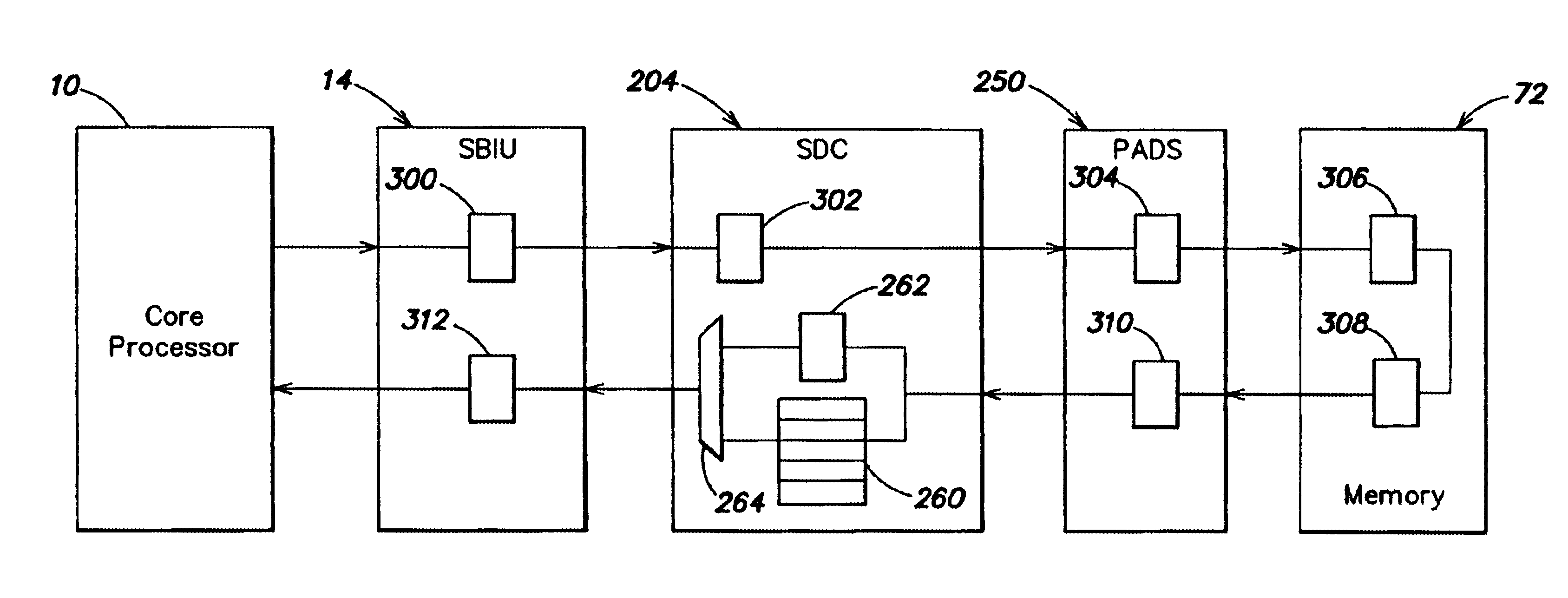
- A digital processing system with a prefetch buffer that speculatively loads data from lower-level memory, reducing latency by anticipating and preloading the next line of data during cache line fill operations, thereby minimizing wait times for the processor.


Real-Time Processing Requirements and Standards
Real-time processing in embedded DSP systems demands adherence to strict temporal constraints where computational tasks must be completed within predetermined deadlines. These systems operate under hard real-time requirements, meaning that missing a deadline can result in system failure or unacceptable performance degradation. The fundamental challenge lies in guaranteeing deterministic response times while maintaining high computational throughput for signal processing operations.
The IEEE 1003.1 POSIX standard provides essential real-time extensions that define scheduling policies, priority inheritance mechanisms, and inter-process communication protocols for embedded systems. Additionally, the IEC 61508 functional safety standard establishes requirements for safety-critical applications where DSP systems must maintain reliable operation under fault conditions. These standards collectively ensure that embedded DSP implementations can meet both performance and safety requirements across various application domains.
Latency constraints vary significantly across different DSP applications, ranging from microseconds in high-frequency trading systems to milliseconds in audio processing applications. Audio systems typically require latencies below 10 milliseconds to prevent perceptible delays, while industrial control systems may demand sub-millisecond response times for critical safety functions. Understanding these application-specific requirements is crucial for selecting appropriate hardware architectures and software optimization strategies.
Jitter control represents another critical aspect of real-time DSP performance, as variations in processing delays can severely impact signal quality and system stability. Modern embedded processors incorporate hardware features such as cache locking, interrupt prioritization, and dedicated DSP instruction sets to minimize timing variations. Software techniques including priority ceiling protocols and deadline monotonic scheduling algorithms further enhance temporal predictability.
Memory bandwidth and access patterns significantly influence real-time performance in embedded DSP systems. Efficient data organization, including circular buffering and memory alignment strategies, helps maintain consistent throughput while minimizing cache misses. The integration of specialized memory architectures, such as tightly-coupled memory and multi-bank configurations, enables concurrent data access patterns essential for maintaining real-time processing deadlines in complex DSP algorithms.
The IEEE 1003.1 POSIX standard provides essential real-time extensions that define scheduling policies, priority inheritance mechanisms, and inter-process communication protocols for embedded systems. Additionally, the IEC 61508 functional safety standard establishes requirements for safety-critical applications where DSP systems must maintain reliable operation under fault conditions. These standards collectively ensure that embedded DSP implementations can meet both performance and safety requirements across various application domains.
Latency constraints vary significantly across different DSP applications, ranging from microseconds in high-frequency trading systems to milliseconds in audio processing applications. Audio systems typically require latencies below 10 milliseconds to prevent perceptible delays, while industrial control systems may demand sub-millisecond response times for critical safety functions. Understanding these application-specific requirements is crucial for selecting appropriate hardware architectures and software optimization strategies.
Jitter control represents another critical aspect of real-time DSP performance, as variations in processing delays can severely impact signal quality and system stability. Modern embedded processors incorporate hardware features such as cache locking, interrupt prioritization, and dedicated DSP instruction sets to minimize timing variations. Software techniques including priority ceiling protocols and deadline monotonic scheduling algorithms further enhance temporal predictability.
Memory bandwidth and access patterns significantly influence real-time performance in embedded DSP systems. Efficient data organization, including circular buffering and memory alignment strategies, helps maintain consistent throughput while minimizing cache misses. The integration of specialized memory architectures, such as tightly-coupled memory and multi-bank configurations, enables concurrent data access patterns essential for maintaining real-time processing deadlines in complex DSP algorithms.
Power Efficiency Considerations in DSP Embedded Design
Power efficiency stands as a critical design constraint in DSP embedded systems, directly impacting battery life, thermal management, and overall system reliability. Modern embedded DSP applications demand sophisticated signal processing capabilities while operating under stringent power budgets, particularly in portable devices, IoT sensors, and battery-powered systems.
The fundamental approach to power-efficient DSP design involves optimizing both hardware architecture and software implementation strategies. Dynamic voltage and frequency scaling (DVFS) techniques enable processors to adjust operating parameters based on computational workload, reducing power consumption during periods of lower processing demands. This adaptive approach can achieve power savings of 30-50% in typical DSP applications without compromising performance requirements.
Algorithm-level optimizations play a crucial role in minimizing computational complexity and memory access patterns. Fixed-point arithmetic implementations consume significantly less power than floating-point operations, with studies showing up to 10x reduction in energy consumption for equivalent mathematical operations. Careful selection of filter structures, transform algorithms, and data representation formats directly influences power efficiency.
Memory hierarchy optimization represents another critical consideration, as data movement often consumes more energy than actual computation. Implementing efficient cache utilization strategies, minimizing external memory accesses, and employing on-chip memory for frequently accessed data can reduce overall system power consumption by 20-40%. Local memory architectures and data locality optimization techniques prove particularly effective in DSP applications with predictable access patterns.
Hardware acceleration through dedicated DSP units, specialized instruction sets, and parallel processing architectures offers substantial power efficiency gains. Modern embedded processors incorporate hardware multiply-accumulate units, SIMD instructions, and dedicated signal processing blocks that execute common DSP operations with minimal energy overhead compared to general-purpose processing units.
Clock gating and power domain management techniques enable selective shutdown of unused functional blocks during idle periods. Advanced power management strategies include adaptive body biasing, substrate biasing, and multi-threshold voltage designs that optimize leakage current while maintaining performance specifications across varying operational conditions.
The fundamental approach to power-efficient DSP design involves optimizing both hardware architecture and software implementation strategies. Dynamic voltage and frequency scaling (DVFS) techniques enable processors to adjust operating parameters based on computational workload, reducing power consumption during periods of lower processing demands. This adaptive approach can achieve power savings of 30-50% in typical DSP applications without compromising performance requirements.
Algorithm-level optimizations play a crucial role in minimizing computational complexity and memory access patterns. Fixed-point arithmetic implementations consume significantly less power than floating-point operations, with studies showing up to 10x reduction in energy consumption for equivalent mathematical operations. Careful selection of filter structures, transform algorithms, and data representation formats directly influences power efficiency.
Memory hierarchy optimization represents another critical consideration, as data movement often consumes more energy than actual computation. Implementing efficient cache utilization strategies, minimizing external memory accesses, and employing on-chip memory for frequently accessed data can reduce overall system power consumption by 20-40%. Local memory architectures and data locality optimization techniques prove particularly effective in DSP applications with predictable access patterns.
Hardware acceleration through dedicated DSP units, specialized instruction sets, and parallel processing architectures offers substantial power efficiency gains. Modern embedded processors incorporate hardware multiply-accumulate units, SIMD instructions, and dedicated signal processing blocks that execute common DSP operations with minimal energy overhead compared to general-purpose processing units.
Clock gating and power domain management techniques enable selective shutdown of unused functional blocks during idle periods. Advanced power management strategies include adaptive body biasing, substrate biasing, and multi-threshold voltage designs that optimize leakage current while maintaining performance specifications across varying operational conditions.
Unlock deeper insights with Patsnap Eureka Quick Research — get a full tech report to explore trends and direct your research. Try now!
Generate Your Research Report Instantly with AI Agent
Supercharge your innovation with Patsnap Eureka AI Agent Platform!