
Comparing Energy Losses In Solid-State Circuit Breakers Vs Electromechanical
MAY 14, 20269 MIN READ
Generate Your Research Report Instantly with AI Agent
Patsnap Eureka helps you evaluate technical feasibility & market potential.
Solid-State vs Electromechanical Circuit Breaker Energy Loss Background
Circuit breakers have evolved significantly since their inception in the late 19th century, transitioning from simple mechanical switches to sophisticated protective devices essential for modern electrical systems. The fundamental purpose remains unchanged: to interrupt electrical current flow during fault conditions to protect equipment and personnel from damage or injury.
Traditional electromechanical circuit breakers dominated the market for over a century, utilizing physical contacts and arc extinguishing mechanisms to interrupt current flow. These devices rely on mechanical motion to separate contacts, creating an air gap that prevents current continuation. The technology matured through decades of refinement, incorporating various arc quenching methods including oil, air blast, vacuum, and sulfur hexafluoride gas insulation.
The emergence of solid-state circuit breakers represents a paradigm shift in protection technology. These devices utilize semiconductor components such as IGBTs, MOSFETs, or thyristors to control current flow without mechanical contact separation. The concept gained traction in the 1980s with advances in power semiconductor technology, but practical implementation remained limited due to cost and performance constraints.
Recent technological developments have accelerated solid-state circuit breaker adoption across various applications. Wide bandgap semiconductors like silicon carbide and gallium nitride have significantly improved switching speeds and reduced conduction losses. These materials enable operation at higher temperatures and voltages while maintaining superior efficiency compared to traditional silicon-based devices.
The energy loss comparison between these technologies has become increasingly critical as power systems demand higher efficiency and reliability. Electromechanical breakers exhibit energy losses primarily during switching operations and through contact resistance during normal operation. Solid-state alternatives present different loss characteristics, with conduction losses during normal operation but virtually instantaneous switching capabilities.
Modern power grid requirements emphasize rapid fault clearing, precise control, and minimal energy waste. Smart grid implementations and renewable energy integration demand circuit protection devices capable of frequent switching operations without degradation. These evolving requirements have intensified focus on energy efficiency optimization across all protection system components.
The technological objective centers on minimizing total energy losses while maintaining reliable protection functionality. This encompasses both steady-state conduction losses during normal operation and transient losses during switching events. Understanding these loss mechanisms enables informed selection between solid-state and electromechanical solutions based on specific application requirements and operational profiles.
Traditional electromechanical circuit breakers dominated the market for over a century, utilizing physical contacts and arc extinguishing mechanisms to interrupt current flow. These devices rely on mechanical motion to separate contacts, creating an air gap that prevents current continuation. The technology matured through decades of refinement, incorporating various arc quenching methods including oil, air blast, vacuum, and sulfur hexafluoride gas insulation.
The emergence of solid-state circuit breakers represents a paradigm shift in protection technology. These devices utilize semiconductor components such as IGBTs, MOSFETs, or thyristors to control current flow without mechanical contact separation. The concept gained traction in the 1980s with advances in power semiconductor technology, but practical implementation remained limited due to cost and performance constraints.
Recent technological developments have accelerated solid-state circuit breaker adoption across various applications. Wide bandgap semiconductors like silicon carbide and gallium nitride have significantly improved switching speeds and reduced conduction losses. These materials enable operation at higher temperatures and voltages while maintaining superior efficiency compared to traditional silicon-based devices.
The energy loss comparison between these technologies has become increasingly critical as power systems demand higher efficiency and reliability. Electromechanical breakers exhibit energy losses primarily during switching operations and through contact resistance during normal operation. Solid-state alternatives present different loss characteristics, with conduction losses during normal operation but virtually instantaneous switching capabilities.
Modern power grid requirements emphasize rapid fault clearing, precise control, and minimal energy waste. Smart grid implementations and renewable energy integration demand circuit protection devices capable of frequent switching operations without degradation. These evolving requirements have intensified focus on energy efficiency optimization across all protection system components.
The technological objective centers on minimizing total energy losses while maintaining reliable protection functionality. This encompasses both steady-state conduction losses during normal operation and transient losses during switching events. Understanding these loss mechanisms enables informed selection between solid-state and electromechanical solutions based on specific application requirements and operational profiles.
Market Demand for Energy-Efficient Circuit Protection Systems
The global circuit protection market is experiencing unprecedented growth driven by increasing demands for energy efficiency across industrial, commercial, and residential sectors. Traditional electromechanical circuit breakers, while reliable, contribute significantly to system energy losses through mechanical friction, contact resistance, and arc formation during switching operations. This inherent inefficiency has created substantial market pressure for alternative technologies that can minimize energy waste while maintaining protective functionality.
Industrial facilities represent the largest segment driving demand for energy-efficient circuit protection systems. Manufacturing plants, data centers, and processing facilities face mounting pressure to reduce operational costs and meet stringent environmental regulations. Energy losses in circuit protection systems directly impact operational expenses, particularly in high-current applications where even small efficiency improvements translate to significant cost savings over the equipment lifecycle.
The renewable energy sector has emerged as a critical market driver, demanding circuit protection solutions that complement the efficiency goals of solar, wind, and energy storage systems. Solid-state circuit breakers offer compelling advantages in these applications, including faster switching speeds, reduced maintenance requirements, and elimination of mechanical wear components that plague traditional electromechanical systems.
Smart grid infrastructure development is accelerating market adoption of advanced circuit protection technologies. Utilities and grid operators require protection systems capable of rapid response times and precise control, characteristics that align with solid-state technology capabilities. The ability to integrate seamlessly with digital monitoring and control systems represents a significant market advantage over conventional electromechanical alternatives.
Regulatory frameworks worldwide are increasingly emphasizing energy efficiency standards, creating mandatory requirements for reduced system losses. European Union directives on energy efficiency and similar regulations in North America and Asia-Pacific regions are establishing performance benchmarks that favor solid-state solutions over traditional electromechanical systems.
The electric vehicle charging infrastructure market presents substantial growth opportunities for energy-efficient circuit protection. High-power charging stations require protection systems that minimize energy losses while providing reliable fault protection, making solid-state circuit breakers particularly attractive for these applications.
Market research indicates strong growth potential across multiple sectors, with particular emphasis on applications where energy efficiency directly impacts operational profitability and regulatory compliance.
Industrial facilities represent the largest segment driving demand for energy-efficient circuit protection systems. Manufacturing plants, data centers, and processing facilities face mounting pressure to reduce operational costs and meet stringent environmental regulations. Energy losses in circuit protection systems directly impact operational expenses, particularly in high-current applications where even small efficiency improvements translate to significant cost savings over the equipment lifecycle.
The renewable energy sector has emerged as a critical market driver, demanding circuit protection solutions that complement the efficiency goals of solar, wind, and energy storage systems. Solid-state circuit breakers offer compelling advantages in these applications, including faster switching speeds, reduced maintenance requirements, and elimination of mechanical wear components that plague traditional electromechanical systems.
Smart grid infrastructure development is accelerating market adoption of advanced circuit protection technologies. Utilities and grid operators require protection systems capable of rapid response times and precise control, characteristics that align with solid-state technology capabilities. The ability to integrate seamlessly with digital monitoring and control systems represents a significant market advantage over conventional electromechanical alternatives.
Regulatory frameworks worldwide are increasingly emphasizing energy efficiency standards, creating mandatory requirements for reduced system losses. European Union directives on energy efficiency and similar regulations in North America and Asia-Pacific regions are establishing performance benchmarks that favor solid-state solutions over traditional electromechanical systems.
The electric vehicle charging infrastructure market presents substantial growth opportunities for energy-efficient circuit protection. High-power charging stations require protection systems that minimize energy losses while providing reliable fault protection, making solid-state circuit breakers particularly attractive for these applications.
Market research indicates strong growth potential across multiple sectors, with particular emphasis on applications where energy efficiency directly impacts operational profitability and regulatory compliance.
Current Energy Loss Challenges in Circuit Breaker Technologies
Circuit breaker technologies face significant energy loss challenges that directly impact system efficiency and operational costs. Traditional electromechanical circuit breakers suffer from inherent mechanical friction losses, contact resistance variations, and arc formation during switching operations. These losses manifest as heat generation, reduced system efficiency, and increased maintenance requirements.
Electromechanical circuit breakers experience substantial conduction losses due to contact resistance, which varies with contact pressure, surface oxidation, and mechanical wear over time. The moving contacts create additional resistance points that contribute to I²R losses during normal operation. Arc formation during interruption processes represents another major energy loss mechanism, where electrical energy converts to heat and light during the arc extinction process.
Solid-state circuit breakers present different energy loss characteristics primarily centered around semiconductor device losses. Power semiconductor devices such as IGBTs, MOSFETs, and thyristors exhibit conduction losses proportional to current flow and switching losses during turn-on and turn-off transitions. These losses are predictable and relatively stable compared to mechanical systems but can be significant at high current levels.
Thermal management emerges as a critical challenge for both technologies but manifests differently. Electromechanical systems require heat dissipation from contact points and arc chambers, while solid-state systems need sophisticated cooling solutions for semiconductor junctions. The thermal cycling in solid-state devices can lead to reliability issues and performance degradation over time.
Power quality considerations add another dimension to energy loss challenges. Electromechanical breakers can introduce voltage transients and harmonics during switching operations, leading to system-wide efficiency reductions. Solid-state breakers offer better control over switching characteristics but may introduce high-frequency switching losses and electromagnetic interference.
The challenge of optimizing energy efficiency while maintaining protection functionality requires careful consideration of operating voltage levels, current ratings, and switching frequencies. Higher voltage applications tend to favor electromechanical solutions due to semiconductor voltage limitations, while lower voltage, high-frequency applications benefit from solid-state technologies.
Cost-effectiveness analysis reveals that while solid-state circuit breakers may offer lower operational losses, their higher initial costs and complex control systems present economic challenges. The total cost of ownership must account for energy losses, maintenance requirements, and system reliability over the operational lifetime.
Electromechanical circuit breakers experience substantial conduction losses due to contact resistance, which varies with contact pressure, surface oxidation, and mechanical wear over time. The moving contacts create additional resistance points that contribute to I²R losses during normal operation. Arc formation during interruption processes represents another major energy loss mechanism, where electrical energy converts to heat and light during the arc extinction process.
Solid-state circuit breakers present different energy loss characteristics primarily centered around semiconductor device losses. Power semiconductor devices such as IGBTs, MOSFETs, and thyristors exhibit conduction losses proportional to current flow and switching losses during turn-on and turn-off transitions. These losses are predictable and relatively stable compared to mechanical systems but can be significant at high current levels.
Thermal management emerges as a critical challenge for both technologies but manifests differently. Electromechanical systems require heat dissipation from contact points and arc chambers, while solid-state systems need sophisticated cooling solutions for semiconductor junctions. The thermal cycling in solid-state devices can lead to reliability issues and performance degradation over time.
Power quality considerations add another dimension to energy loss challenges. Electromechanical breakers can introduce voltage transients and harmonics during switching operations, leading to system-wide efficiency reductions. Solid-state breakers offer better control over switching characteristics but may introduce high-frequency switching losses and electromagnetic interference.
The challenge of optimizing energy efficiency while maintaining protection functionality requires careful consideration of operating voltage levels, current ratings, and switching frequencies. Higher voltage applications tend to favor electromechanical solutions due to semiconductor voltage limitations, while lower voltage, high-frequency applications benefit from solid-state technologies.
Cost-effectiveness analysis reveals that while solid-state circuit breakers may offer lower operational losses, their higher initial costs and complex control systems present economic challenges. The total cost of ownership must account for energy losses, maintenance requirements, and system reliability over the operational lifetime.
Existing Energy Loss Measurement and Comparison Solutions
01 Arc extinction and energy dissipation mechanisms
Circuit breakers utilize various arc extinction techniques to minimize energy losses during switching operations. These mechanisms include gas-blast systems, vacuum interrupters, and oil-immersed contacts that help dissipate the energy generated during arc formation. Advanced arc extinction methods reduce the duration and intensity of arcing, thereby minimizing energy losses and improving overall circuit breaker efficiency.- Arc extinction and energy dissipation mechanisms: Circuit breakers utilize various arc extinction methods to minimize energy losses during switching operations. These mechanisms include gas blast techniques, vacuum interruption, and magnetic field manipulation to quickly extinguish arcs and reduce energy dissipation. Advanced arc control systems help optimize the interruption process and minimize thermal losses.
- Contact resistance optimization and materials: Energy losses in circuit breakers are significantly affected by contact resistance, which can be minimized through proper contact materials and design. Advanced contact alloys, surface treatments, and contact pressure optimization help reduce resistive losses during normal operation. Innovative contact geometries and materials contribute to improved electrical conductivity and reduced heating.
- Thermal management and heat dissipation: Effective thermal management systems are crucial for reducing energy losses in circuit breakers. Heat sinks, cooling systems, and thermal barriers help dissipate heat generated during operation. Advanced thermal design considerations include material selection, airflow optimization, and temperature monitoring to maintain efficient operation and minimize thermal losses.
- Magnetic field control and electromagnetic losses: Circuit breakers employ magnetic field control techniques to manage electromagnetic losses and improve switching performance. Magnetic blow-out systems, electromagnetic actuators, and field shaping elements help reduce eddy current losses and optimize magnetic flux distribution. These technologies contribute to more efficient operation and reduced energy consumption.
- Switching speed optimization and timing control: Fast and precise switching mechanisms help minimize energy losses by reducing arc duration and optimizing interruption timing. Advanced actuator systems, spring mechanisms, and electronic control units enable rapid contact separation and closure. Optimized switching sequences and timing control algorithms contribute to reduced energy dissipation during breaker operations.
02 Contact resistance optimization and materials
The selection of contact materials and design optimization plays a crucial role in reducing resistive losses in circuit breakers. Special alloys and surface treatments are employed to minimize contact resistance and prevent degradation over time. Proper contact pressure and geometry ensure low resistance paths during normal operation, reducing joule heating and associated energy losses.Expand Specific Solutions03 Magnetic field control and electromagnetic losses
Circuit breakers incorporate magnetic field control systems to manage electromagnetic forces and reduce associated energy losses. These systems use magnetic blow-out coils and field shaping techniques to control arc behavior and minimize electromagnetic interference. Proper magnetic field design helps reduce eddy current losses and improves the overall energy efficiency of the switching process.Expand Specific Solutions04 Thermal management and cooling systems
Effective thermal management is essential for minimizing energy losses due to heat generation in circuit breakers. Advanced cooling systems, heat sinks, and thermal barriers are implemented to dissipate heat efficiently. Temperature monitoring and control mechanisms help maintain optimal operating conditions and prevent thermal-related energy losses during both normal operation and fault conditions.Expand Specific Solutions05 Switching speed optimization and timing control
The optimization of switching speed and precise timing control significantly impacts energy losses in circuit breakers. Fast-acting mechanisms and electronic control systems are employed to minimize the duration of switching operations. Proper synchronization and timing reduce the energy dissipated during opening and closing operations, while advanced control algorithms optimize the switching sequence for minimum energy loss.Expand Specific Solutions
Key Players in Solid-State and Electromechanical Circuit Breaker Industry
The solid-state versus electromechanical circuit breaker energy loss comparison represents a rapidly evolving market segment within the broader electrical protection industry, currently in its growth phase with significant technological transformation underway. The global circuit breaker market, valued at approximately $15 billion, is experiencing increased demand for energy-efficient solutions driven by renewable energy integration and smart grid development. Technology maturity varies considerably across market players, with established giants like ABB Ltd., Siemens AG, and Schneider Electric leveraging decades of electromechanical expertise while transitioning to solid-state technologies. Emerging innovators such as Atom Power are pioneering pure solid-state solutions, while traditional manufacturers like Mitsubishi Electric and Eaton are developing hybrid approaches. Chinese companies including State Grid Corp. and Huawei Digital Power Technologies are aggressively investing in next-generation technologies, supported by strong academic partnerships with institutions like Huazhong University of Science & Technology and Xi'an Jiaotong University, creating a competitive landscape where energy efficiency optimization is becoming the primary differentiator.
ABB Ltd.
Technical Solution: ABB has developed advanced solid-state circuit breaker technology utilizing wide bandgap semiconductors like SiC and GaN to minimize conduction and switching losses. Their SSCB solutions feature optimized gate drive circuits and thermal management systems that reduce energy losses by up to 50% compared to traditional electromechanical breakers. The company's hybrid approach combines solid-state switching with mechanical isolation, achieving fast fault clearing times under 1ms while maintaining low steady-state losses through intelligent bypass mechanisms during normal operation.
Strengths: Industry-leading experience in power electronics, comprehensive thermal management solutions, proven hybrid technology approach. Weaknesses: Higher initial costs compared to electromechanical alternatives, complexity in system integration.
Siemens Industry, Inc.
Technical Solution: Siemens has developed solid-state circuit breaker technology focusing on minimizing energy losses through advanced semiconductor selection and optimized switching algorithms. Their SSCB designs utilize silicon carbide (SiC) MOSFETs with low on-resistance characteristics, reducing conduction losses significantly compared to electromechanical breakers. The company implements intelligent switching control that minimizes switching losses during fault conditions while maintaining fast response times. Their energy loss analysis shows SSCBs can achieve 70-80% reduction in total energy losses during fault clearing operations compared to traditional electromechanical breakers.
Strengths: Strong semiconductor expertise, comprehensive system integration capabilities, proven track record in industrial applications. Weaknesses: Higher manufacturing costs, requires specialized maintenance expertise.
Core Innovations in Low-Loss Circuit Breaker Design
A hybrid circuit breaker
PatentInactiveIN3983CHENP2012A
Innovation
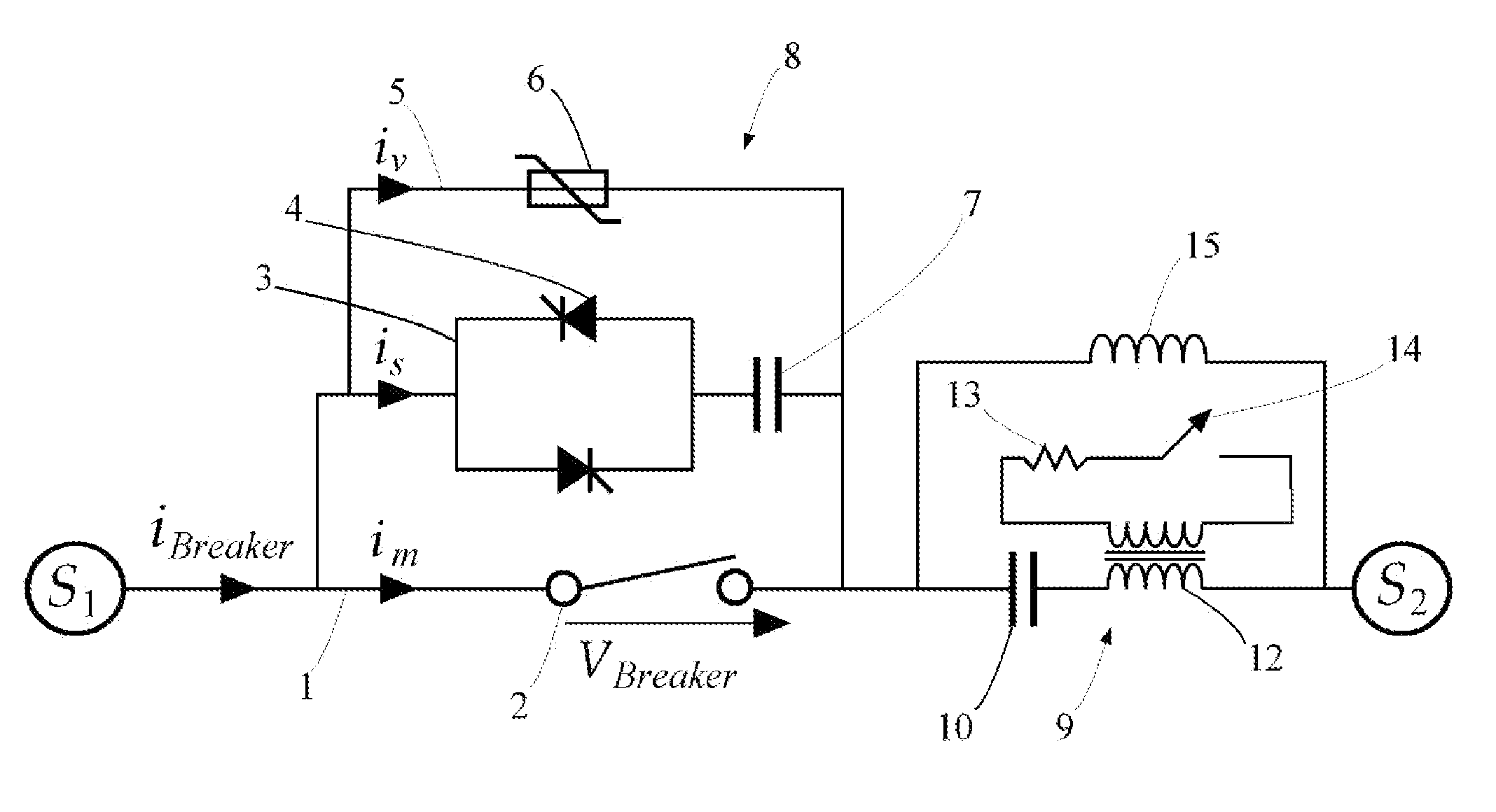
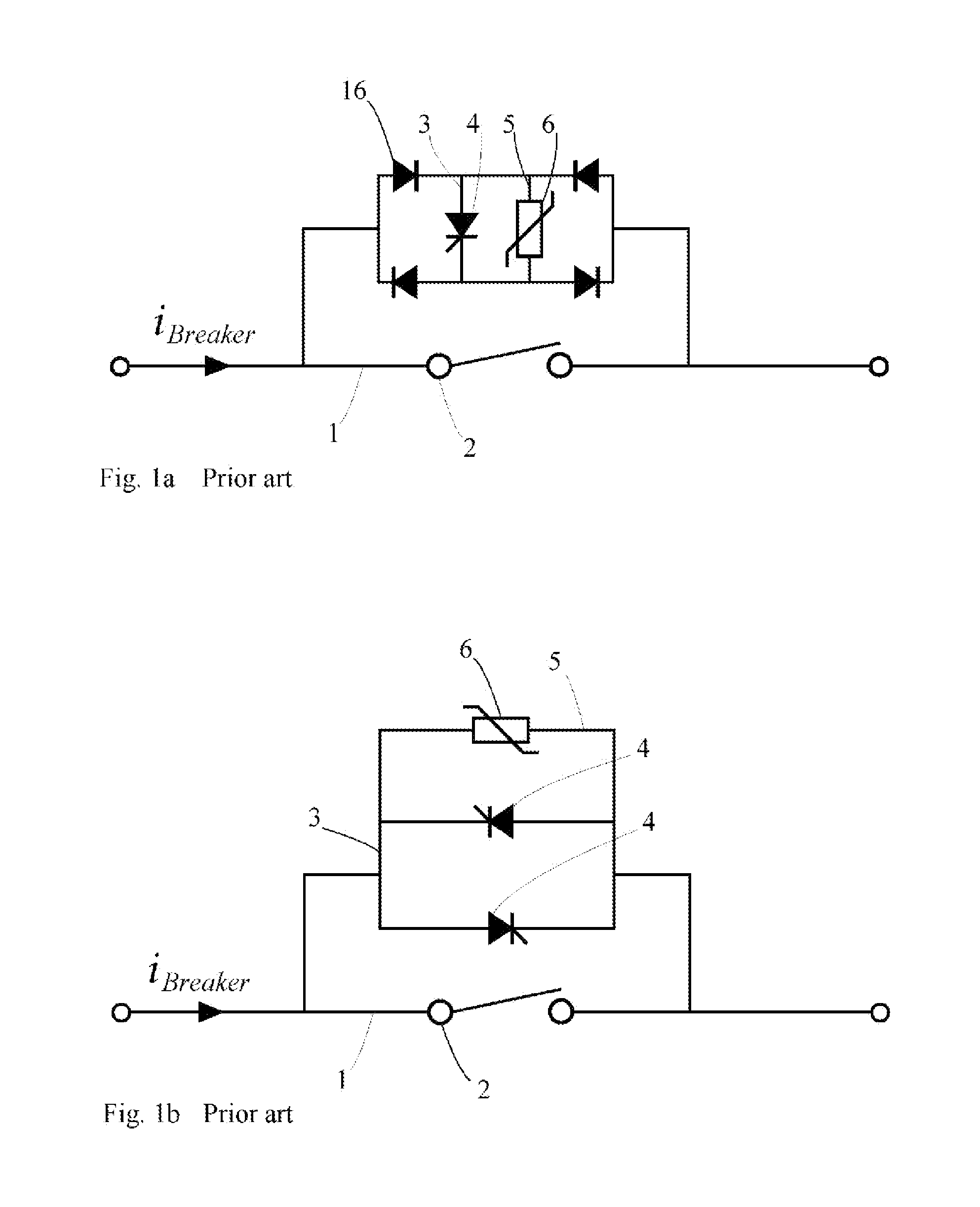
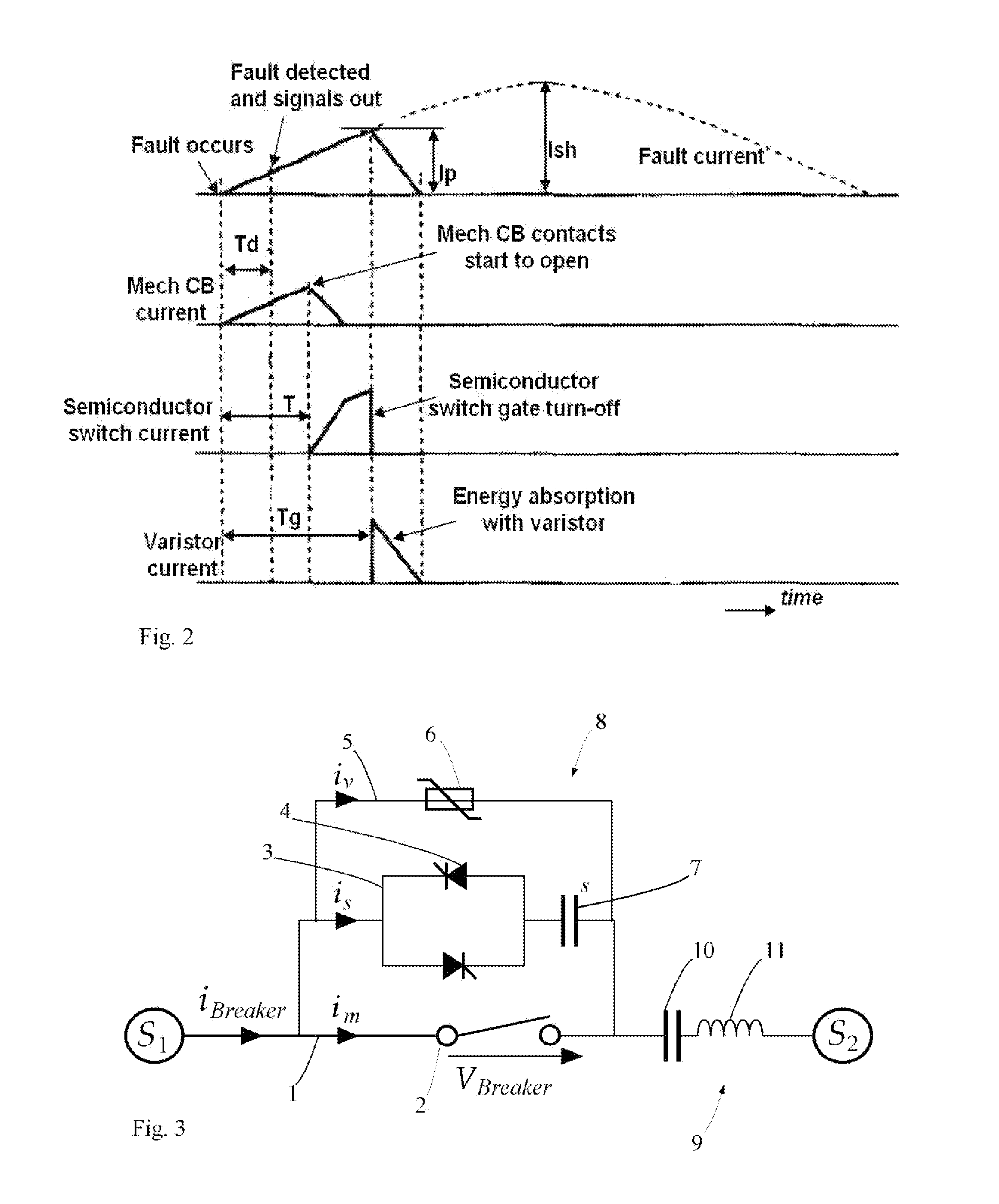
- A hybrid circuit breaker design incorporating a mechanical switch element and a controllable semiconductor switch with a capacitor in series, along with an inductance-generating element forming a resonant circuit at line frequency, to manage voltage and current effectively during fault conditions, reducing arcing and thermal losses.


Hybrid Circuit Breaker
PatentActiveUS20120218676A1
Innovation
- A hybrid circuit breaker design incorporating a mechanical switch element and a controllable semiconductor switch in parallel, with a capacitor in series with the semiconductor switch to maintain low voltage across the mechanical switch and prevent arcing, and an inductance-generating element forming a series resonant circuit to manage fault currents effectively.

Grid Integration Standards for Energy-Efficient Circuit Breakers
The integration of energy-efficient circuit breakers into modern electrical grids requires adherence to comprehensive standards that address both solid-state and electromechanical technologies. Current grid integration standards primarily focus on IEEE C37 series, IEC 62271 standards, and emerging IEEE 2030 guidelines for smart grid applications. These standards establish fundamental requirements for voltage ratings, current handling capabilities, interrupting capacity, and operational reliability that both circuit breaker technologies must meet.
For solid-state circuit breakers, grid integration standards emphasize electromagnetic compatibility (EMC) requirements due to their semiconductor-based switching mechanisms. IEC 61000 series standards become particularly relevant, addressing conducted and radiated emissions that may interfere with grid communication systems. The standards also specify power quality requirements, including total harmonic distortion limits and voltage regulation parameters that solid-state devices must maintain during normal and fault conditions.
Electromechanical circuit breakers face different standardization challenges, primarily related to mechanical wear, contact erosion, and arc extinction capabilities. IEEE C37.04 and IEC 62271-100 standards define specific testing procedures for mechanical endurance, short-circuit performance, and environmental conditions. These standards also establish requirements for auxiliary systems, including control circuits, monitoring capabilities, and communication interfaces essential for grid integration.
Energy efficiency metrics within grid integration standards are evolving to accommodate both technologies. Recent updates to IEEE 1547 standards incorporate power loss specifications, standby power consumption limits, and efficiency measurement methodologies. These standards recognize that solid-state circuit breakers typically exhibit lower standby losses but may have higher conduction losses during normal operation compared to electromechanical alternatives.
Communication protocol standards play a crucial role in modern grid integration, with IEC 61850 establishing requirements for substation automation and communication. Both circuit breaker technologies must support standardized communication interfaces, real-time monitoring capabilities, and remote control functions. The standards also address cybersecurity requirements, particularly relevant for solid-state devices with advanced digital control systems.
Future grid integration standards are anticipated to incorporate more stringent energy efficiency requirements, advanced grid support functions, and enhanced interoperability specifications. These evolving standards will likely favor technologies that can provide both low energy losses and advanced grid support capabilities, influencing the comparative advantages of solid-state versus electromechanical circuit breaker technologies in future electrical infrastructure deployments.
For solid-state circuit breakers, grid integration standards emphasize electromagnetic compatibility (EMC) requirements due to their semiconductor-based switching mechanisms. IEC 61000 series standards become particularly relevant, addressing conducted and radiated emissions that may interfere with grid communication systems. The standards also specify power quality requirements, including total harmonic distortion limits and voltage regulation parameters that solid-state devices must maintain during normal and fault conditions.
Electromechanical circuit breakers face different standardization challenges, primarily related to mechanical wear, contact erosion, and arc extinction capabilities. IEEE C37.04 and IEC 62271-100 standards define specific testing procedures for mechanical endurance, short-circuit performance, and environmental conditions. These standards also establish requirements for auxiliary systems, including control circuits, monitoring capabilities, and communication interfaces essential for grid integration.
Energy efficiency metrics within grid integration standards are evolving to accommodate both technologies. Recent updates to IEEE 1547 standards incorporate power loss specifications, standby power consumption limits, and efficiency measurement methodologies. These standards recognize that solid-state circuit breakers typically exhibit lower standby losses but may have higher conduction losses during normal operation compared to electromechanical alternatives.
Communication protocol standards play a crucial role in modern grid integration, with IEC 61850 establishing requirements for substation automation and communication. Both circuit breaker technologies must support standardized communication interfaces, real-time monitoring capabilities, and remote control functions. The standards also address cybersecurity requirements, particularly relevant for solid-state devices with advanced digital control systems.
Future grid integration standards are anticipated to incorporate more stringent energy efficiency requirements, advanced grid support functions, and enhanced interoperability specifications. These evolving standards will likely favor technologies that can provide both low energy losses and advanced grid support capabilities, influencing the comparative advantages of solid-state versus electromechanical circuit breaker technologies in future electrical infrastructure deployments.
Environmental Impact Assessment of Circuit Breaker Energy Losses
The environmental implications of energy losses in circuit breakers represent a critical consideration in modern electrical infrastructure development. Energy dissipation in both solid-state and electromechanical circuit breakers contributes to carbon footprint through different pathways, necessitating comprehensive assessment of their lifecycle environmental impacts.
Solid-state circuit breakers typically exhibit higher continuous energy losses due to semiconductor conduction losses, particularly in power MOSFETs and IGBTs. These losses manifest as heat generation, requiring active cooling systems that consume additional energy. The environmental impact extends beyond direct energy consumption to include the carbon footprint of cooling infrastructure and the embodied energy in semiconductor manufacturing processes, which involve energy-intensive fabrication techniques and rare earth materials.
Electromechanical circuit breakers demonstrate lower steady-state losses due to metallic contact conductivity but generate environmental impacts through mechanical wear and maintenance requirements. The periodic replacement of contacts and arc-extinguishing media contributes to material waste streams. Additionally, SF6 gas used in high-voltage applications presents significant greenhouse gas concerns, with global warming potential thousands of times greater than CO2.
The cumulative environmental assessment reveals that energy losses translate to increased power generation demands, amplifying the carbon intensity of electrical systems. For solid-state devices, continuous losses of 0.1-0.5% of rated current result in measurable increases in grid-level energy consumption. Conversely, electromechanical breakers' intermittent high-energy switching events, while brief, contribute to peak demand scenarios that often rely on carbon-intensive peaking power plants.
Lifecycle analysis indicates that solid-state circuit breakers' environmental impact is front-loaded during manufacturing, while electromechanical systems distribute environmental costs across operational maintenance cycles. The net environmental benefit depends significantly on application duty cycles, with solid-state solutions favoring low-switching applications and electromechanical systems proving more sustainable for high-frequency switching scenarios where their lower continuous losses offset switching-related environmental impacts.
Solid-state circuit breakers typically exhibit higher continuous energy losses due to semiconductor conduction losses, particularly in power MOSFETs and IGBTs. These losses manifest as heat generation, requiring active cooling systems that consume additional energy. The environmental impact extends beyond direct energy consumption to include the carbon footprint of cooling infrastructure and the embodied energy in semiconductor manufacturing processes, which involve energy-intensive fabrication techniques and rare earth materials.
Electromechanical circuit breakers demonstrate lower steady-state losses due to metallic contact conductivity but generate environmental impacts through mechanical wear and maintenance requirements. The periodic replacement of contacts and arc-extinguishing media contributes to material waste streams. Additionally, SF6 gas used in high-voltage applications presents significant greenhouse gas concerns, with global warming potential thousands of times greater than CO2.
The cumulative environmental assessment reveals that energy losses translate to increased power generation demands, amplifying the carbon intensity of electrical systems. For solid-state devices, continuous losses of 0.1-0.5% of rated current result in measurable increases in grid-level energy consumption. Conversely, electromechanical breakers' intermittent high-energy switching events, while brief, contribute to peak demand scenarios that often rely on carbon-intensive peaking power plants.
Lifecycle analysis indicates that solid-state circuit breakers' environmental impact is front-loaded during manufacturing, while electromechanical systems distribute environmental costs across operational maintenance cycles. The net environmental benefit depends significantly on application duty cycles, with solid-state solutions favoring low-switching applications and electromechanical systems proving more sustainable for high-frequency switching scenarios where their lower continuous losses offset switching-related environmental impacts.
Unlock deeper insights with Patsnap Eureka Quick Research — get a full tech report to explore trends and direct your research. Try now!
Generate Your Research Report Instantly with AI Agent
Supercharge your innovation with Patsnap Eureka AI Agent Platform!