
Optimizing Fault Current Limitation In Solid-State Circuit Breakers
MAY 14, 20269 MIN READ
Generate Your Research Report Instantly with AI Agent
Patsnap Eureka helps you evaluate technical feasibility & market potential.
Solid-State Breaker Technology Background and Objectives
Solid-state circuit breakers represent a paradigm shift from traditional mechanical circuit protection devices, emerging from the convergence of power electronics and advanced semiconductor technologies. Unlike conventional electromechanical breakers that rely on physical contact separation and arc extinction chambers, solid-state breakers utilize semiconductor switches such as IGBTs, MOSFETs, or silicon carbide devices to interrupt fault currents electronically. This fundamental difference eliminates mechanical wear, reduces switching times to microseconds, and enables precise control over current interruption processes.
The evolution of solid-state breaker technology has been driven by the increasing demands of modern electrical systems, particularly in renewable energy integration, electric vehicle charging infrastructure, and smart grid applications. Traditional mechanical breakers, while reliable, suffer from inherent limitations including slow response times, limited switching cycles, and inability to provide real-time current regulation. These constraints become critical in applications requiring rapid fault detection and isolation, such as DC microgrids and high-frequency switching systems.
The core challenge in solid-state circuit breaker design centers on optimizing fault current limitation while maintaining system efficiency and reliability. Fault current limitation involves controlling the rate of current rise during fault conditions, minimizing energy dissipation in semiconductor devices, and ensuring complete current interruption within acceptable timeframes. This optimization requires sophisticated control algorithms, advanced semiconductor materials, and innovative circuit topologies that can handle high fault currents while minimizing losses during normal operation.
Current technological objectives focus on achieving fault current interruption capabilities comparable to or exceeding mechanical breakers while maintaining the inherent advantages of solid-state switching. Key performance targets include reducing conduction losses below 0.1% of rated power, achieving fault detection and interruption within 10-50 microseconds, and handling fault currents up to 10-20 times the rated current. Additionally, the integration of intelligent monitoring and communication capabilities enables predictive maintenance and grid optimization functions.
The strategic importance of optimizing fault current limitation extends beyond individual device performance to encompass system-level benefits including enhanced grid stability, reduced equipment damage during faults, and improved power quality. As electrical systems become increasingly complex and interconnected, the ability to provide fast, precise, and repeatable fault protection becomes essential for maintaining reliable power delivery and protecting critical infrastructure investments.
The evolution of solid-state breaker technology has been driven by the increasing demands of modern electrical systems, particularly in renewable energy integration, electric vehicle charging infrastructure, and smart grid applications. Traditional mechanical breakers, while reliable, suffer from inherent limitations including slow response times, limited switching cycles, and inability to provide real-time current regulation. These constraints become critical in applications requiring rapid fault detection and isolation, such as DC microgrids and high-frequency switching systems.
The core challenge in solid-state circuit breaker design centers on optimizing fault current limitation while maintaining system efficiency and reliability. Fault current limitation involves controlling the rate of current rise during fault conditions, minimizing energy dissipation in semiconductor devices, and ensuring complete current interruption within acceptable timeframes. This optimization requires sophisticated control algorithms, advanced semiconductor materials, and innovative circuit topologies that can handle high fault currents while minimizing losses during normal operation.
Current technological objectives focus on achieving fault current interruption capabilities comparable to or exceeding mechanical breakers while maintaining the inherent advantages of solid-state switching. Key performance targets include reducing conduction losses below 0.1% of rated power, achieving fault detection and interruption within 10-50 microseconds, and handling fault currents up to 10-20 times the rated current. Additionally, the integration of intelligent monitoring and communication capabilities enables predictive maintenance and grid optimization functions.
The strategic importance of optimizing fault current limitation extends beyond individual device performance to encompass system-level benefits including enhanced grid stability, reduced equipment damage during faults, and improved power quality. As electrical systems become increasingly complex and interconnected, the ability to provide fast, precise, and repeatable fault protection becomes essential for maintaining reliable power delivery and protecting critical infrastructure investments.
Market Demand for Advanced Fault Current Limitation Solutions
The global electrical infrastructure is experiencing unprecedented stress due to increasing power demands, renewable energy integration, and grid modernization initiatives. Traditional mechanical circuit breakers, while reliable, face significant limitations in response time and current interruption capabilities, creating substantial market opportunities for advanced solid-state solutions. The growing complexity of modern electrical systems demands faster, more precise fault current limitation technologies that can respond within microseconds rather than milliseconds.
Industrial sectors represent the largest demand segment for advanced fault current limitation solutions, particularly in manufacturing facilities, data centers, and chemical processing plants where electrical faults can result in catastrophic equipment damage and extended downtime. These environments require circuit protection systems capable of handling high fault currents while maintaining operational continuity. The increasing adoption of variable frequency drives, power electronics, and sensitive automation equipment has amplified the need for precise current limitation that preserves equipment integrity.
Renewable energy integration is driving substantial demand for sophisticated fault current management solutions. Solar farms, wind installations, and energy storage systems introduce unique challenges including bidirectional power flows, inverter-based resources, and grid stability concerns. Solid-state circuit breakers offer superior performance in these applications through their ability to provide selective coordination and maintain grid stability during fault conditions.
The electric vehicle charging infrastructure market presents emerging opportunities for advanced fault current limitation technologies. High-power charging stations require robust protection systems capable of managing rapid load variations and potential fault scenarios while ensuring user safety and equipment protection. The proliferation of DC fast charging networks necessitates specialized protection solutions that traditional AC-based systems cannot adequately address.
Utility companies are increasingly recognizing the value proposition of solid-state circuit breakers for distribution network applications. Aging grid infrastructure, combined with regulatory pressures for improved reliability and reduced outage durations, is creating demand for advanced protection technologies. Smart grid initiatives further emphasize the need for intelligent, communicating protection devices that can provide real-time system monitoring and adaptive protection schemes.
Market drivers include stringent safety regulations, insurance requirements for improved electrical protection, and the economic impact of electrical faults on business operations. The total cost of ownership considerations increasingly favor advanced protection technologies despite higher initial investments, as organizations recognize the value of preventing costly equipment damage and operational disruptions.
Industrial sectors represent the largest demand segment for advanced fault current limitation solutions, particularly in manufacturing facilities, data centers, and chemical processing plants where electrical faults can result in catastrophic equipment damage and extended downtime. These environments require circuit protection systems capable of handling high fault currents while maintaining operational continuity. The increasing adoption of variable frequency drives, power electronics, and sensitive automation equipment has amplified the need for precise current limitation that preserves equipment integrity.
Renewable energy integration is driving substantial demand for sophisticated fault current management solutions. Solar farms, wind installations, and energy storage systems introduce unique challenges including bidirectional power flows, inverter-based resources, and grid stability concerns. Solid-state circuit breakers offer superior performance in these applications through their ability to provide selective coordination and maintain grid stability during fault conditions.
The electric vehicle charging infrastructure market presents emerging opportunities for advanced fault current limitation technologies. High-power charging stations require robust protection systems capable of managing rapid load variations and potential fault scenarios while ensuring user safety and equipment protection. The proliferation of DC fast charging networks necessitates specialized protection solutions that traditional AC-based systems cannot adequately address.
Utility companies are increasingly recognizing the value proposition of solid-state circuit breakers for distribution network applications. Aging grid infrastructure, combined with regulatory pressures for improved reliability and reduced outage durations, is creating demand for advanced protection technologies. Smart grid initiatives further emphasize the need for intelligent, communicating protection devices that can provide real-time system monitoring and adaptive protection schemes.
Market drivers include stringent safety regulations, insurance requirements for improved electrical protection, and the economic impact of electrical faults on business operations. The total cost of ownership considerations increasingly favor advanced protection technologies despite higher initial investments, as organizations recognize the value of preventing costly equipment damage and operational disruptions.
Current State and Challenges in SSCB Fault Current Management
Solid-state circuit breakers represent a significant advancement in electrical protection systems, yet their fault current limitation capabilities remain constrained by several fundamental challenges. Current SSCB technologies primarily rely on wide bandgap semiconductors such as silicon carbide (SiC) and gallium nitride (GaN) devices, which offer superior switching speeds compared to traditional mechanical breakers but face limitations in handling high fault currents effectively.
The predominant challenge lies in the trade-off between switching speed and current handling capacity. While SSCBs can interrupt fault currents within microseconds, significantly faster than conventional breakers, their semiconductor components are inherently limited by thermal and electrical stress tolerances. Most commercial SSCBs currently available can handle fault currents ranging from 10kA to 25kA, which falls short of the requirements for high-voltage transmission applications where fault currents can exceed 50kA.
Thermal management presents another critical bottleneck in current SSCB designs. During fault conditions, the rapid dissipation of energy through semiconductor devices generates substantial heat, potentially leading to device failure or performance degradation. Existing cooling solutions, including advanced heat sinks and liquid cooling systems, add complexity and cost while still limiting the maximum fault current capacity.
The integration of current limiting techniques within SSCB architectures remains technically challenging. Current approaches include series impedance insertion, active current control through gate modulation, and hybrid topologies combining mechanical and solid-state elements. However, these solutions often compromise either response time or current limitation effectiveness, creating design dilemmas for engineers.
Cost considerations significantly impact the widespread adoption of advanced SSCB fault current management systems. The high-performance semiconductor devices required for effective fault current limitation substantially increase system costs compared to traditional protection equipment. This economic barrier limits deployment primarily to critical applications where the benefits justify the investment.
Standardization and testing protocols for SSCB fault current performance remain underdeveloped compared to established mechanical breaker standards. The lack of comprehensive testing methodologies and performance benchmarks creates uncertainty in system reliability and complicates the qualification process for utility applications.
The predominant challenge lies in the trade-off between switching speed and current handling capacity. While SSCBs can interrupt fault currents within microseconds, significantly faster than conventional breakers, their semiconductor components are inherently limited by thermal and electrical stress tolerances. Most commercial SSCBs currently available can handle fault currents ranging from 10kA to 25kA, which falls short of the requirements for high-voltage transmission applications where fault currents can exceed 50kA.
Thermal management presents another critical bottleneck in current SSCB designs. During fault conditions, the rapid dissipation of energy through semiconductor devices generates substantial heat, potentially leading to device failure or performance degradation. Existing cooling solutions, including advanced heat sinks and liquid cooling systems, add complexity and cost while still limiting the maximum fault current capacity.
The integration of current limiting techniques within SSCB architectures remains technically challenging. Current approaches include series impedance insertion, active current control through gate modulation, and hybrid topologies combining mechanical and solid-state elements. However, these solutions often compromise either response time or current limitation effectiveness, creating design dilemmas for engineers.
Cost considerations significantly impact the widespread adoption of advanced SSCB fault current management systems. The high-performance semiconductor devices required for effective fault current limitation substantially increase system costs compared to traditional protection equipment. This economic barrier limits deployment primarily to critical applications where the benefits justify the investment.
Standardization and testing protocols for SSCB fault current performance remain underdeveloped compared to established mechanical breaker standards. The lack of comprehensive testing methodologies and performance benchmarks creates uncertainty in system reliability and complicates the qualification process for utility applications.
Existing Fault Current Limitation Solutions in SSCBs
01 Semiconductor-based current limiting devices
Solid-state circuit breakers utilize semiconductor devices such as power transistors, thyristors, and MOSFETs to limit fault currents. These devices can rapidly respond to overcurrent conditions and provide precise current control through electronic switching mechanisms. The semiconductor components enable fast interruption capabilities and can be designed to handle high voltage and current ratings while maintaining compact form factors.- Semiconductor-based current limiting devices: Solid-state circuit breakers utilize semiconductor devices such as power transistors, thyristors, and MOSFETs to limit fault currents. These devices can rapidly respond to overcurrent conditions by controlling the current flow through electronic switching mechanisms. The semiconductor components provide precise control over current limitation and can be integrated with advanced control circuits for enhanced protection capabilities.
- Fast fault detection and response mechanisms: Advanced fault detection systems in solid-state circuit breakers employ real-time monitoring and rapid response algorithms to identify fault conditions within microseconds. These systems utilize current sensors, voltage monitoring, and digital signal processing to detect abnormal conditions and trigger immediate current limitation actions. The fast response capability significantly reduces the let-through energy during fault conditions.
- Hybrid circuit breaker architectures: Hybrid designs combine mechanical switching elements with solid-state components to achieve optimal fault current limitation performance. These architectures leverage the benefits of both technologies, using solid-state devices for rapid fault detection and initial current limitation, while mechanical components handle steady-state operations. This approach provides enhanced reliability and cost-effectiveness for high-power applications.
- Current limiting reactor and impedance control: Implementation of variable impedance elements and current limiting reactors in solid-state circuit breakers provides controlled fault current limitation. These systems can dynamically adjust the circuit impedance during fault conditions to limit the current magnitude while maintaining system stability. The impedance control mechanisms can be electronically controlled for precise current limitation characteristics.
- Protection coordination and smart grid integration: Modern solid-state circuit breakers incorporate intelligent protection coordination features and smart grid communication capabilities. These systems can communicate with other protection devices and grid management systems to optimize fault current limitation strategies. The integration includes remote monitoring, adaptive protection settings, and coordinated response with other grid protection elements for enhanced system reliability.
02 Current sensing and detection mechanisms
Advanced current sensing technologies are employed to detect fault conditions in real-time. These systems use various sensing methods including current transformers, Hall effect sensors, and shunt resistors to monitor electrical parameters. The detection circuits provide rapid fault identification and trigger protective actions within microseconds, enabling precise current limitation before damage occurs to the electrical system.Expand Specific Solutions03 Control algorithms and protection strategies
Sophisticated control algorithms manage the operation of solid-state circuit breakers during fault conditions. These systems implement various protection strategies including current limiting, voltage regulation, and coordination with other protective devices. The control methods utilize digital signal processing and real-time computation to optimize fault current limitation while maintaining system stability and selectivity.Expand Specific Solutions04 Hybrid circuit breaker architectures
Hybrid designs combine solid-state components with mechanical switching elements to optimize performance and cost-effectiveness. These architectures leverage the fast response of semiconductor devices for current limiting while utilizing mechanical contacts for normal operation and final isolation. The hybrid approach provides enhanced fault current limitation capabilities while reducing power losses during steady-state operation.Expand Specific Solutions05 Arc suppression and energy dissipation methods
Specialized techniques are employed to manage arc formation and energy dissipation during fault current interruption. These methods include magnetic arc control, vacuum interrupters, and energy absorption circuits that safely dissipate fault energy. The arc suppression systems work in conjunction with current limiting mechanisms to ensure reliable fault clearance and prevent equipment damage.Expand Specific Solutions
Key Players in SSCB and Power Electronics Industry
The solid-state circuit breaker fault current limitation technology is in a rapidly evolving growth phase, driven by increasing demand for smart grid infrastructure and enhanced electrical safety systems. The global market demonstrates substantial expansion potential, particularly in industrial automation and renewable energy integration sectors. Technology maturity varies significantly across market participants, with established industrial giants like ABB Ltd., Siemens AG, and Mitsubishi Electric Corp. leading advanced commercial implementations through decades of power systems expertise. Chinese entities including State Grid Corp. of China, NARI Group Corp., and research institutions like Huazhong University of Science & Technology are aggressively developing competitive solutions, while specialized companies such as Eaton Industries focus on niche applications. The competitive landscape shows a clear division between mature multinational corporations with proven track records and emerging players leveraging innovative approaches, creating a dynamic environment where technological advancement and market penetration strategies determine competitive positioning in this critical infrastructure technology sector.
ABB Ltd.
Technical Solution: ABB has developed advanced solid-state circuit breaker technology utilizing wide bandgap semiconductors, particularly silicon carbide (SiC) devices, to achieve rapid fault current interruption within microseconds. Their solution incorporates intelligent current limiting algorithms that can detect fault conditions and limit current flow before it reaches dangerous levels. The technology features modular design with scalable power ratings from medium voltage to high voltage applications. ABB's SSCB systems integrate advanced control electronics with real-time monitoring capabilities, enabling predictive maintenance and enhanced grid reliability. The fault current limitation is optimized through precise gate control of power semiconductors and coordinated protection schemes.
Strengths: Market leader with extensive R&D resources and proven track record in power systems. Weaknesses: High initial costs and complex integration requirements for existing infrastructure.
Siemens AG
Technical Solution: Siemens has developed solid-state circuit breaker solutions focusing on hybrid topology that combines mechanical switches with semiconductor devices for optimal fault current limitation. Their approach utilizes intelligent power modules (IPMs) with integrated gate drivers and protection circuits to achieve fast fault detection and current interruption. The system employs advanced algorithms for fault current prediction and pre-emptive current limiting, reducing stress on semiconductor components. Siemens' SSCB technology incorporates digital twin concepts for real-time system optimization and features modular architecture supporting various voltage levels. The fault limitation strategy includes coordinated control between multiple SSCB units for enhanced system protection.
Strengths: Strong integration capabilities with existing power infrastructure and comprehensive digital solutions. Weaknesses: Limited market presence in SSCB compared to traditional circuit breakers.
Core Innovations in SSCB Fault Current Optimization
Novel DC solid-state circuit breaker with self-adapt current limiting capability and the control method thereof
PatentActiveUS20210226439A1
Innovation
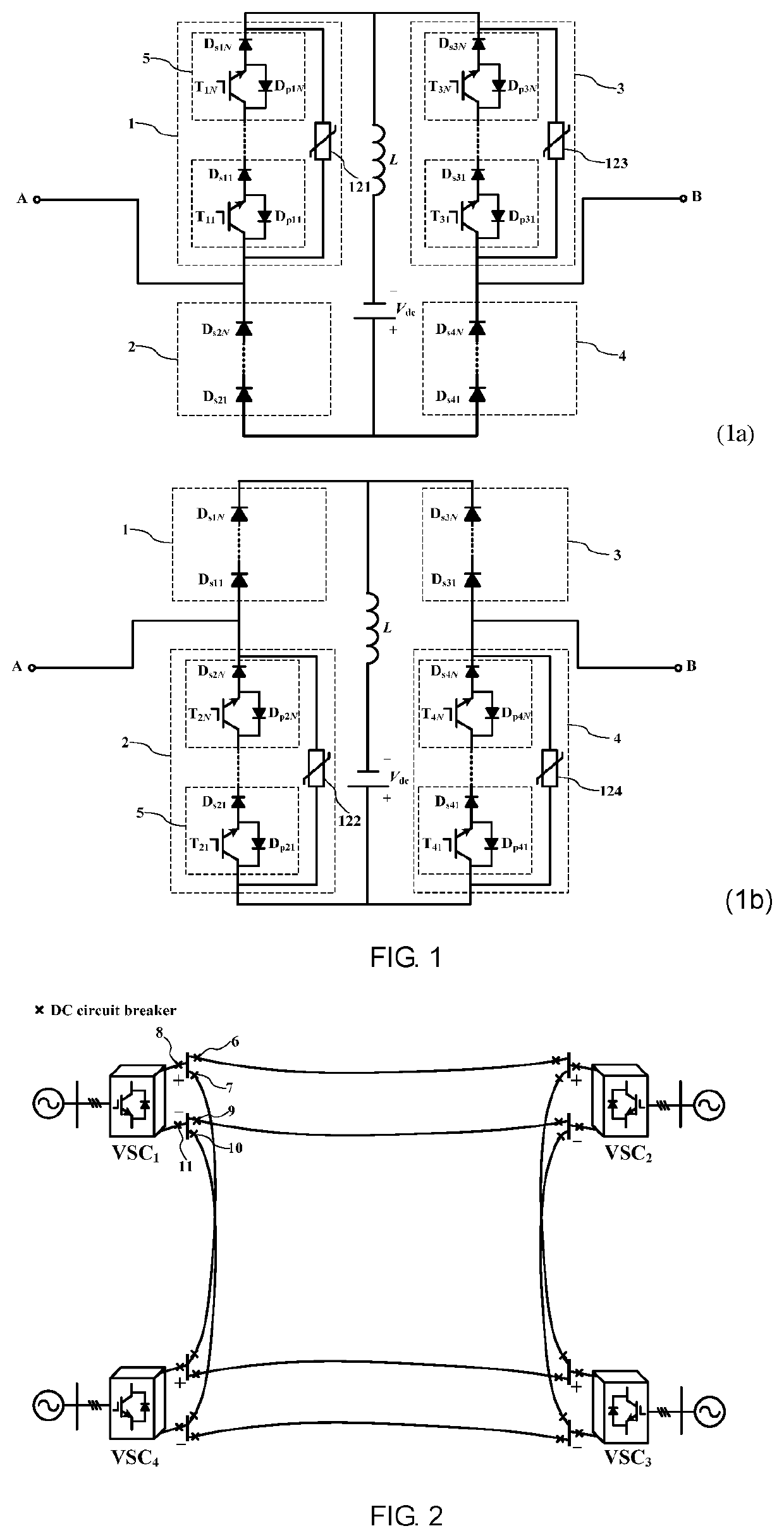
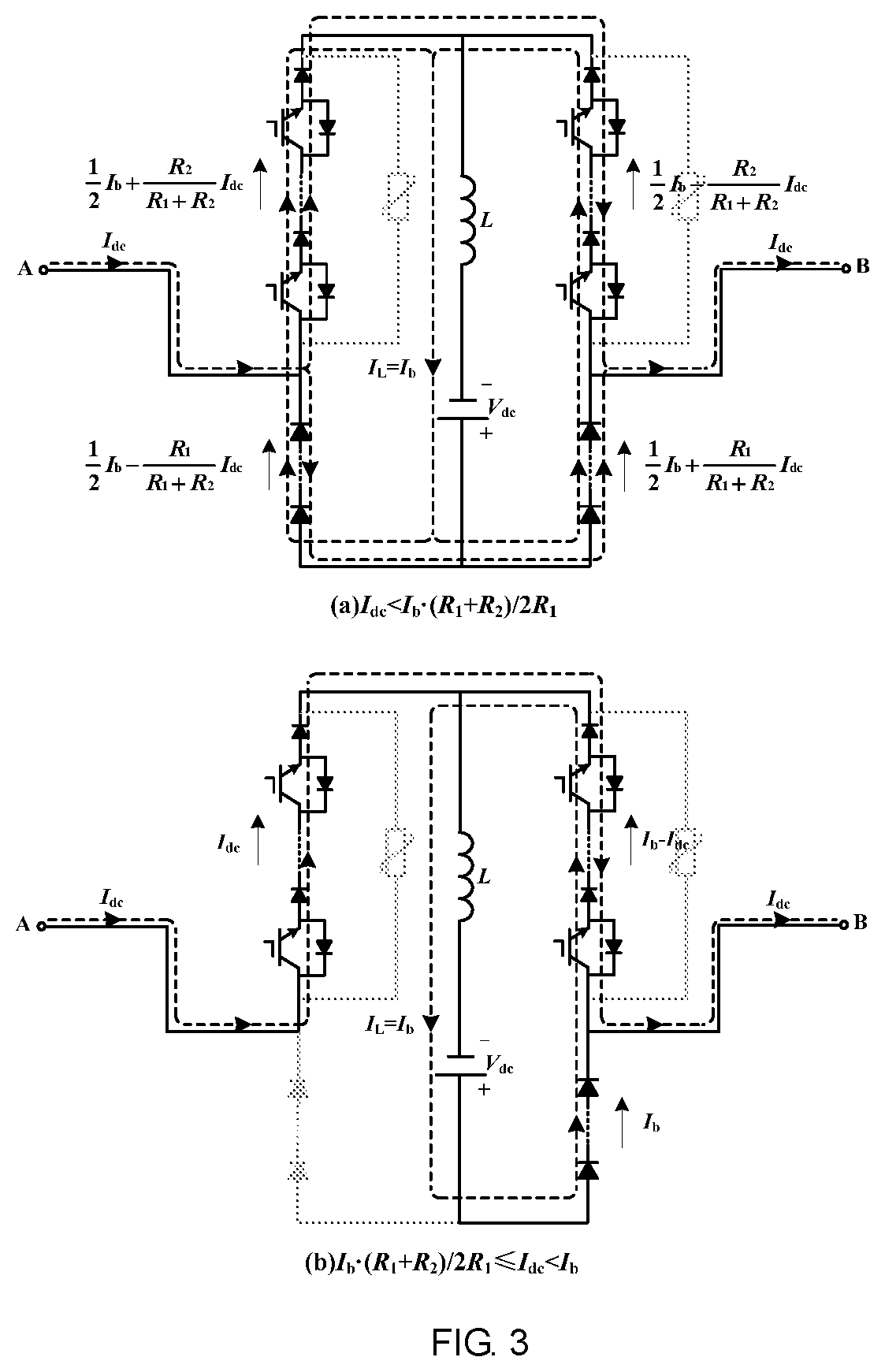
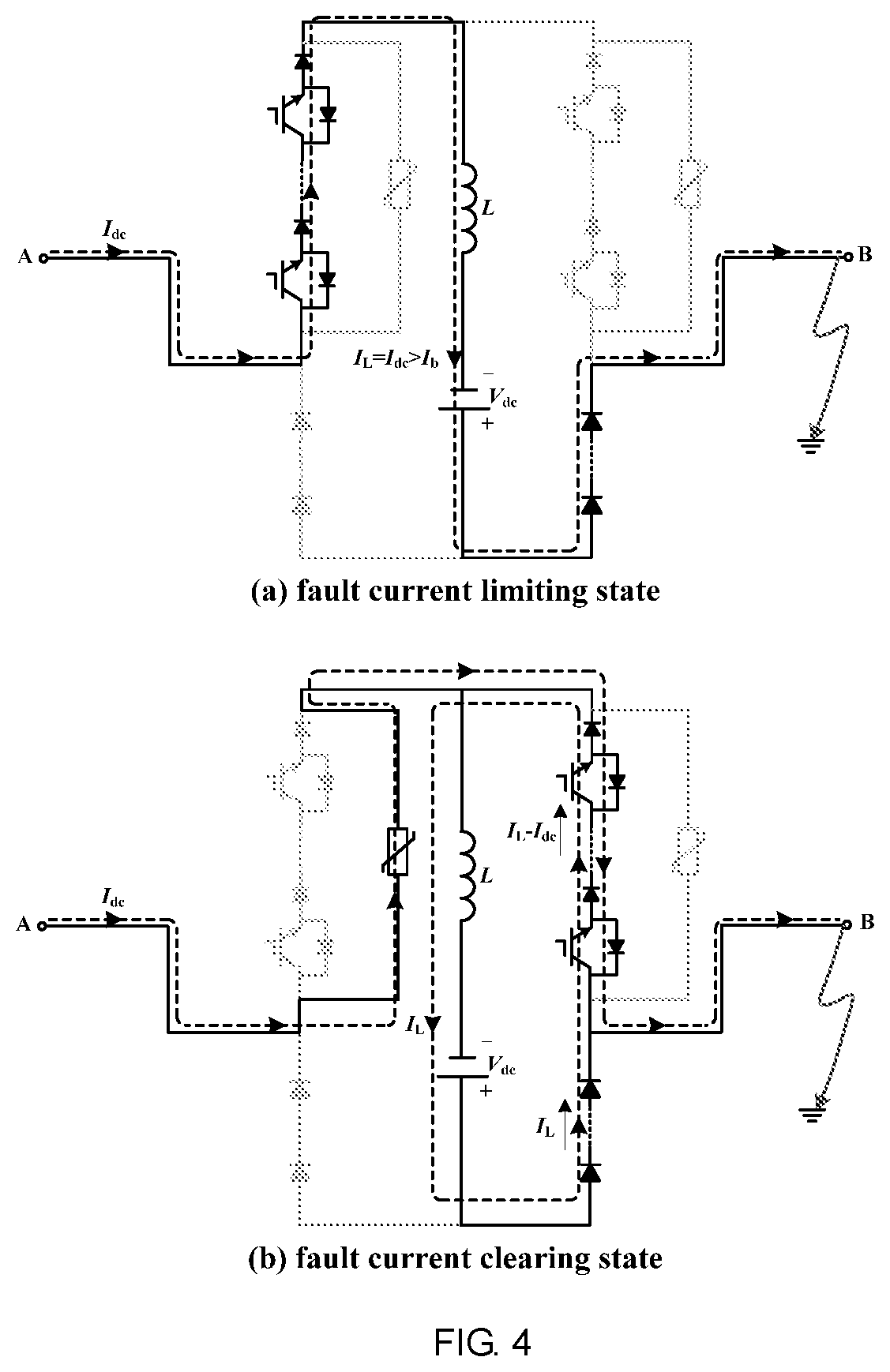
- A DC solid-state circuit breaker (SSCB) with self-adaptive fault current limiting capability, utilizing a H-bridge circuit with unidirectional breakable bridge arms and series-connected diode bridge arms, along with a DC reactor and bias power supply, which automatically connects the reactor to the fault circuit upon fault detection, allowing quick fault current limiting and isolation without negatively impacting system stability.

Method and apparatus for controlling a current for solid-state circuit breakers
PatentPendingUS20250062608A1
Innovation
- The proposed solution involves using energy absorption components, such as TVS diodes, in conjunction with GaN HEMT switches to enhance current limiting capability in series-connected SSCB switching cells. This approach utilizes the high pulse power capability of TVS diodes to absorb a major part of the energy, allowing the GaN HEMTs to control the limited current level by operating in saturation mode and alternating between switches to distribute energy absorption effectively.


Grid Integration Standards for Solid-State Circuit Breakers
The integration of solid-state circuit breakers into modern electrical grids requires adherence to comprehensive standards that ensure reliable operation, safety, and interoperability. Current grid integration standards for SSCBs are evolving rapidly to address the unique characteristics of these semiconductor-based protection devices, particularly in their fault current limitation capabilities.
IEEE 1547 series standards provide the foundational framework for distributed energy resource interconnection, which increasingly applies to SSCB deployments in smart grid applications. These standards specify voltage and frequency ride-through requirements, power quality parameters, and communication protocols that SSCBs must support. The recent IEEE 1547-2018 revision introduces enhanced grid support functions that align well with SSCB capabilities, including dynamic voltage support and frequency response characteristics.
IEC 62271 series standards, traditionally focused on conventional switchgear, are being adapted to accommodate solid-state switching technologies. The emerging IEC 62271-111 standard specifically addresses high-voltage switchgear and controlgear with integrated protection systems, providing relevant guidance for SSCB integration. These standards define testing procedures, performance criteria, and safety requirements that ensure SSCBs can operate reliably within existing grid infrastructure.
Grid codes from transmission system operators worldwide are incorporating specific provisions for solid-state switching devices. European Network of Transmission System Operators for Electricity (ENTSO-E) has developed technical requirements that address the fast switching capabilities of SSCBs, including specifications for fault ride-through performance and grid stability support functions. Similarly, North American Electric Reliability Corporation (NERC) standards are being updated to recognize the unique operational characteristics of solid-state protection devices.
Communication and interoperability standards play a crucial role in SSCB grid integration. IEC 61850 provides the communication protocol framework that enables SSCBs to interface with supervisory control and data acquisition systems. The standard's logical node definitions are being extended to accommodate the advanced monitoring and control capabilities inherent in solid-state devices, facilitating seamless integration with existing grid management systems.
Testing and certification requirements for grid-connected SSCBs are defined through a combination of existing standards and emerging specifications. IEEE C37.04 provides general requirements for AC high-voltage circuit breakers, while specialized testing protocols are being developed to validate the unique fault current limitation characteristics of solid-state devices under various grid conditions.
IEEE 1547 series standards provide the foundational framework for distributed energy resource interconnection, which increasingly applies to SSCB deployments in smart grid applications. These standards specify voltage and frequency ride-through requirements, power quality parameters, and communication protocols that SSCBs must support. The recent IEEE 1547-2018 revision introduces enhanced grid support functions that align well with SSCB capabilities, including dynamic voltage support and frequency response characteristics.
IEC 62271 series standards, traditionally focused on conventional switchgear, are being adapted to accommodate solid-state switching technologies. The emerging IEC 62271-111 standard specifically addresses high-voltage switchgear and controlgear with integrated protection systems, providing relevant guidance for SSCB integration. These standards define testing procedures, performance criteria, and safety requirements that ensure SSCBs can operate reliably within existing grid infrastructure.
Grid codes from transmission system operators worldwide are incorporating specific provisions for solid-state switching devices. European Network of Transmission System Operators for Electricity (ENTSO-E) has developed technical requirements that address the fast switching capabilities of SSCBs, including specifications for fault ride-through performance and grid stability support functions. Similarly, North American Electric Reliability Corporation (NERC) standards are being updated to recognize the unique operational characteristics of solid-state protection devices.
Communication and interoperability standards play a crucial role in SSCB grid integration. IEC 61850 provides the communication protocol framework that enables SSCBs to interface with supervisory control and data acquisition systems. The standard's logical node definitions are being extended to accommodate the advanced monitoring and control capabilities inherent in solid-state devices, facilitating seamless integration with existing grid management systems.
Testing and certification requirements for grid-connected SSCBs are defined through a combination of existing standards and emerging specifications. IEEE C37.04 provides general requirements for AC high-voltage circuit breakers, while specialized testing protocols are being developed to validate the unique fault current limitation characteristics of solid-state devices under various grid conditions.
Reliability and Safety Considerations in SSCB Design
Reliability in SSCB design fundamentally depends on the robustness of semiconductor switching devices under extreme fault conditions. Power semiconductor components, particularly IGBTs and MOSFETs, must withstand significant thermal and electrical stress during fault current interruption. The reliability challenge intensifies as these devices operate near their maximum ratings during fault scenarios, potentially leading to degradation or catastrophic failure. Advanced thermal management systems, including sophisticated heat sinks and cooling mechanisms, are essential to maintain junction temperatures within safe operating limits during fault events.
Safety considerations in SSCB design encompass multiple protection layers to prevent cascading failures and ensure personnel protection. Arc flash mitigation represents a critical safety advantage of SSCBs over traditional mechanical breakers, as solid-state devices can interrupt fault currents without generating dangerous arcs. However, the failure modes of semiconductor devices differ significantly from mechanical systems, requiring comprehensive fault detection and protection algorithms to identify device degradation before complete failure occurs.
Redundancy strategies play a vital role in enhancing SSCB reliability, with parallel semiconductor paths providing backup current interruption capability. Series-connected devices distribute voltage stress more evenly, reducing the likelihood of individual device failure. Advanced monitoring systems continuously assess device health through parameters such as on-state voltage drop, switching characteristics, and thermal behavior, enabling predictive maintenance and preventing unexpected failures.
The integration of fail-safe mechanisms ensures that SSCB failures do not compromise system safety. Mechanical bypass switches can provide alternative current paths during semiconductor failure, while fast-acting protection circuits can isolate failed components within microseconds. Comprehensive diagnostic systems must differentiate between temporary operational stress and permanent device degradation, ensuring appropriate response strategies.
Environmental factors significantly impact SSCB reliability, with humidity, temperature variations, and electromagnetic interference affecting semiconductor performance. Robust enclosure design and environmental sealing protect sensitive components from external influences. Additionally, the long-term reliability of gate drive circuits and control electronics requires careful consideration of component aging and drift characteristics over the expected operational lifetime of the SSCB system.
Safety considerations in SSCB design encompass multiple protection layers to prevent cascading failures and ensure personnel protection. Arc flash mitigation represents a critical safety advantage of SSCBs over traditional mechanical breakers, as solid-state devices can interrupt fault currents without generating dangerous arcs. However, the failure modes of semiconductor devices differ significantly from mechanical systems, requiring comprehensive fault detection and protection algorithms to identify device degradation before complete failure occurs.
Redundancy strategies play a vital role in enhancing SSCB reliability, with parallel semiconductor paths providing backup current interruption capability. Series-connected devices distribute voltage stress more evenly, reducing the likelihood of individual device failure. Advanced monitoring systems continuously assess device health through parameters such as on-state voltage drop, switching characteristics, and thermal behavior, enabling predictive maintenance and preventing unexpected failures.
The integration of fail-safe mechanisms ensures that SSCB failures do not compromise system safety. Mechanical bypass switches can provide alternative current paths during semiconductor failure, while fast-acting protection circuits can isolate failed components within microseconds. Comprehensive diagnostic systems must differentiate between temporary operational stress and permanent device degradation, ensuring appropriate response strategies.
Environmental factors significantly impact SSCB reliability, with humidity, temperature variations, and electromagnetic interference affecting semiconductor performance. Robust enclosure design and environmental sealing protect sensitive components from external influences. Additionally, the long-term reliability of gate drive circuits and control electronics requires careful consideration of component aging and drift characteristics over the expected operational lifetime of the SSCB system.
Unlock deeper insights with Patsnap Eureka Quick Research — get a full tech report to explore trends and direct your research. Try now!
Generate Your Research Report Instantly with AI Agent
Supercharge your innovation with Patsnap Eureka AI Agent Platform!