
Comparing Optical Backplane Data Accuracy with Free-Space Optics Systems
MAY 20, 20269 MIN READ
Generate Your Research Report Instantly with AI Agent
Patsnap Eureka helps you evaluate technical feasibility & market potential.
Optical Backplane vs Free-Space Optics Background and Objectives
The evolution of optical communication systems has been driven by the relentless demand for higher bandwidth, lower latency, and improved data integrity in modern computing and telecommunications infrastructure. As traditional electrical interconnects approach their fundamental limitations in terms of speed and power consumption, optical solutions have emerged as the primary pathway for next-generation data transmission systems.
Optical backplane technology represents a revolutionary approach to intra-system communication, where optical waveguides are integrated directly into printed circuit boards or specialized substrates. This technology enables high-speed data transmission between multiple processing units, memory modules, and peripheral devices within a single chassis or rack system. The optical backplane architecture typically employs embedded optical fibers, polymer waveguides, or silicon photonic circuits to create dedicated optical pathways.
Free-space optics systems, in contrast, utilize unguided optical transmission through air or vacuum to establish communication links between discrete components or systems. These systems leverage laser diodes, photodetectors, and sophisticated beam steering mechanisms to maintain optical alignment and signal integrity across varying distances. Free-space optical communication has found applications ranging from short-range chip-to-chip interconnects to long-distance telecommunications links.
The fundamental challenge in comparing these two optical paradigms lies in their inherently different approaches to data transmission and the resulting implications for data accuracy. Optical backplanes offer the advantage of controlled transmission environments with minimal external interference, while free-space systems provide greater flexibility in system configuration and component placement but face challenges related to atmospheric effects, mechanical vibrations, and alignment stability.
The primary objective of this technological investigation centers on establishing comprehensive performance benchmarks for data accuracy between optical backplane and free-space optics systems. This involves developing standardized testing methodologies that can accurately measure bit error rates, signal-to-noise ratios, and data integrity metrics under various operational conditions. The research aims to identify the specific scenarios where each technology demonstrates superior performance characteristics.
A secondary objective focuses on understanding the underlying physical mechanisms that contribute to data transmission errors in both systems. This includes analyzing the impact of optical component tolerances, environmental factors, and system integration complexities on overall data accuracy. The investigation seeks to establish predictive models that can guide system designers in selecting the most appropriate optical solution for specific applications.
The ultimate goal is to provide industry stakeholders with evidence-based recommendations for optical system selection, enabling more informed decisions in the development of next-generation computing and communication platforms.
Optical backplane technology represents a revolutionary approach to intra-system communication, where optical waveguides are integrated directly into printed circuit boards or specialized substrates. This technology enables high-speed data transmission between multiple processing units, memory modules, and peripheral devices within a single chassis or rack system. The optical backplane architecture typically employs embedded optical fibers, polymer waveguides, or silicon photonic circuits to create dedicated optical pathways.
Free-space optics systems, in contrast, utilize unguided optical transmission through air or vacuum to establish communication links between discrete components or systems. These systems leverage laser diodes, photodetectors, and sophisticated beam steering mechanisms to maintain optical alignment and signal integrity across varying distances. Free-space optical communication has found applications ranging from short-range chip-to-chip interconnects to long-distance telecommunications links.
The fundamental challenge in comparing these two optical paradigms lies in their inherently different approaches to data transmission and the resulting implications for data accuracy. Optical backplanes offer the advantage of controlled transmission environments with minimal external interference, while free-space systems provide greater flexibility in system configuration and component placement but face challenges related to atmospheric effects, mechanical vibrations, and alignment stability.
The primary objective of this technological investigation centers on establishing comprehensive performance benchmarks for data accuracy between optical backplane and free-space optics systems. This involves developing standardized testing methodologies that can accurately measure bit error rates, signal-to-noise ratios, and data integrity metrics under various operational conditions. The research aims to identify the specific scenarios where each technology demonstrates superior performance characteristics.
A secondary objective focuses on understanding the underlying physical mechanisms that contribute to data transmission errors in both systems. This includes analyzing the impact of optical component tolerances, environmental factors, and system integration complexities on overall data accuracy. The investigation seeks to establish predictive models that can guide system designers in selecting the most appropriate optical solution for specific applications.
The ultimate goal is to provide industry stakeholders with evidence-based recommendations for optical system selection, enabling more informed decisions in the development of next-generation computing and communication platforms.
Market Demand for High-Accuracy Optical Data Transmission
The global demand for high-accuracy optical data transmission systems has experienced unprecedented growth driven by the exponential increase in data center traffic, cloud computing adoption, and emerging technologies requiring ultra-low latency communications. Data centers worldwide are facing bandwidth bottlenecks as traditional copper-based interconnects reach their physical limitations, creating substantial market opportunities for advanced optical solutions.
Enterprise customers are increasingly prioritizing data transmission accuracy as mission-critical applications demand error-free communication channels. Financial trading platforms, autonomous vehicle networks, and real-time industrial control systems represent key market segments where data integrity directly impacts operational success and safety. These applications cannot tolerate the signal degradation and electromagnetic interference commonly associated with conventional transmission methods.
The telecommunications infrastructure modernization wave has accelerated demand for optical backplane solutions in high-density switching equipment and routing systems. Service providers require reliable interconnect technologies capable of supporting next-generation network architectures while maintaining signal fidelity across multiple transmission paths. This trend has created significant market pull for optical backplane technologies that can deliver consistent performance in challenging operational environments.
Free-space optical communication systems are experiencing growing adoption in specialized applications where physical cable installation proves impractical or cost-prohibitive. Satellite communication networks, building-to-building connectivity, and temporary high-bandwidth links represent expanding market opportunities for FSO technologies. However, market acceptance remains contingent on addressing accuracy limitations caused by atmospheric interference and beam alignment challenges.
The competitive landscape reveals distinct market preferences based on application requirements and operational constraints. Optical backplane systems dominate markets requiring predictable performance and environmental stability, while free-space optics capture opportunities in scenarios demanding rapid deployment flexibility. Market research indicates that accuracy specifications increasingly serve as primary selection criteria, with customers willing to invest premium pricing for solutions delivering superior data integrity.
Emerging market drivers include artificial intelligence workloads requiring massive parallel processing capabilities and edge computing deployments demanding reliable low-latency connections. These applications generate sustained demand for optical transmission technologies capable of maintaining accuracy standards while scaling to meet growing bandwidth requirements across diverse operational environments.
Enterprise customers are increasingly prioritizing data transmission accuracy as mission-critical applications demand error-free communication channels. Financial trading platforms, autonomous vehicle networks, and real-time industrial control systems represent key market segments where data integrity directly impacts operational success and safety. These applications cannot tolerate the signal degradation and electromagnetic interference commonly associated with conventional transmission methods.
The telecommunications infrastructure modernization wave has accelerated demand for optical backplane solutions in high-density switching equipment and routing systems. Service providers require reliable interconnect technologies capable of supporting next-generation network architectures while maintaining signal fidelity across multiple transmission paths. This trend has created significant market pull for optical backplane technologies that can deliver consistent performance in challenging operational environments.
Free-space optical communication systems are experiencing growing adoption in specialized applications where physical cable installation proves impractical or cost-prohibitive. Satellite communication networks, building-to-building connectivity, and temporary high-bandwidth links represent expanding market opportunities for FSO technologies. However, market acceptance remains contingent on addressing accuracy limitations caused by atmospheric interference and beam alignment challenges.
The competitive landscape reveals distinct market preferences based on application requirements and operational constraints. Optical backplane systems dominate markets requiring predictable performance and environmental stability, while free-space optics capture opportunities in scenarios demanding rapid deployment flexibility. Market research indicates that accuracy specifications increasingly serve as primary selection criteria, with customers willing to invest premium pricing for solutions delivering superior data integrity.
Emerging market drivers include artificial intelligence workloads requiring massive parallel processing capabilities and edge computing deployments demanding reliable low-latency connections. These applications generate sustained demand for optical transmission technologies capable of maintaining accuracy standards while scaling to meet growing bandwidth requirements across diverse operational environments.
Current Accuracy Limitations in Optical Backplane and FSO Systems
Optical backplane systems face significant accuracy limitations primarily due to modal dispersion and crosstalk interference within waveguide structures. The confined optical paths in backplane architectures, while providing stable transmission channels, introduce systematic errors through mode mixing and polarization-dependent losses. These effects become particularly pronounced at higher data rates, where inter-symbol interference can degrade signal integrity by up to 15-20% compared to theoretical performance limits.
Temperature variations present another critical challenge for optical backplane accuracy. The thermal coefficient of refractive index changes in polymer and glass waveguides causes wavelength-dependent phase shifts, leading to chromatic dispersion effects that accumulate over transmission distances. Current backplane systems typically exhibit temperature-induced accuracy degradation of 2-3 dB per 10°C variation, significantly impacting system reliability in industrial environments.
Free-space optics systems encounter fundamentally different accuracy limitations, primarily dominated by atmospheric turbulence and beam divergence effects. Atmospheric scintillation causes rapid fluctuations in received signal strength, with accuracy variations reaching 10-15 dB under moderate turbulence conditions. The stochastic nature of these variations makes error correction more complex compared to the deterministic errors in backplane systems.
Alignment precision represents a critical accuracy bottleneck for FSO systems. Mechanical vibrations and thermal expansion in mounting structures can cause beam pointing errors, resulting in coupling losses that directly translate to data accuracy degradation. Current FSO implementations require alignment tolerances within microradians to maintain acceptable error rates, making them sensitive to environmental disturbances.
Both technologies face wavelength stability challenges, though manifesting differently. Optical backplanes suffer from wavelength-dependent coupling efficiency variations across different waveguide modes, while FSO systems experience atmospheric absorption variations that are highly wavelength-specific. These limitations collectively constrain the achievable data accuracy in both architectures, necessitating advanced compensation techniques and error correction algorithms to approach theoretical performance boundaries.
Temperature variations present another critical challenge for optical backplane accuracy. The thermal coefficient of refractive index changes in polymer and glass waveguides causes wavelength-dependent phase shifts, leading to chromatic dispersion effects that accumulate over transmission distances. Current backplane systems typically exhibit temperature-induced accuracy degradation of 2-3 dB per 10°C variation, significantly impacting system reliability in industrial environments.
Free-space optics systems encounter fundamentally different accuracy limitations, primarily dominated by atmospheric turbulence and beam divergence effects. Atmospheric scintillation causes rapid fluctuations in received signal strength, with accuracy variations reaching 10-15 dB under moderate turbulence conditions. The stochastic nature of these variations makes error correction more complex compared to the deterministic errors in backplane systems.
Alignment precision represents a critical accuracy bottleneck for FSO systems. Mechanical vibrations and thermal expansion in mounting structures can cause beam pointing errors, resulting in coupling losses that directly translate to data accuracy degradation. Current FSO implementations require alignment tolerances within microradians to maintain acceptable error rates, making them sensitive to environmental disturbances.
Both technologies face wavelength stability challenges, though manifesting differently. Optical backplanes suffer from wavelength-dependent coupling efficiency variations across different waveguide modes, while FSO systems experience atmospheric absorption variations that are highly wavelength-specific. These limitations collectively constrain the achievable data accuracy in both architectures, necessitating advanced compensation techniques and error correction algorithms to approach theoretical performance boundaries.
Existing Accuracy Enhancement Solutions for Optical Systems
01 Error correction and signal processing techniques
Advanced error correction algorithms and signal processing methods are employed to enhance data accuracy in optical communication systems. These techniques include forward error correction, adaptive signal processing, and digital signal processing algorithms that compensate for transmission impairments and noise. The implementation of sophisticated coding schemes and error detection mechanisms ensures reliable data transmission with minimal bit error rates.- Error correction and signal processing techniques: Advanced error correction algorithms and signal processing methods are employed to enhance data accuracy in optical communication systems. These techniques include forward error correction, adaptive signal processing, and digital signal processing algorithms that compensate for transmission impairments and reduce bit error rates in high-speed optical data transmission.
- Optical alignment and beam steering systems: Precision optical alignment mechanisms and beam steering technologies are critical for maintaining accurate data transmission in free-space optical systems. These systems utilize active tracking, adaptive optics, and mechanical or electronic beam steering to compensate for environmental disturbances and maintain optimal optical coupling between transmitter and receiver components.
- Modulation and encoding schemes: Sophisticated modulation formats and encoding techniques are implemented to improve data integrity and transmission accuracy. These methods include advanced modulation schemes, coding algorithms, and multiplexing techniques that optimize signal quality and minimize data corruption in optical backplane and free-space communication systems.
- Environmental compensation and adaptive control: Environmental factors such as atmospheric turbulence, temperature variations, and mechanical vibrations significantly impact data accuracy in optical systems. Adaptive control systems and environmental compensation techniques are employed to monitor and correct for these disturbances, ensuring stable and accurate data transmission under varying operating conditions.
- Optical component design and system architecture: Specialized optical components and system architectures are designed to optimize data accuracy in backplane and free-space optical systems. This includes the development of high-precision optical interconnects, waveguides, lenses, and detector arrays that minimize signal degradation and maintain data integrity throughout the optical transmission path.
02 Optical alignment and beam steering systems
Precise optical alignment mechanisms and beam steering technologies are critical for maintaining data accuracy in free-space optical systems. These systems utilize active tracking, adaptive optics, and mechanical or electronic beam steering to compensate for environmental factors such as atmospheric turbulence, vibration, and thermal drift. Automated alignment systems ensure optimal signal coupling and minimize signal degradation.Expand Specific Solutions03 Wavelength division multiplexing and channel management
Wavelength division multiplexing techniques enable multiple data channels to be transmitted simultaneously while maintaining signal integrity and accuracy. Advanced channel management systems monitor and control individual wavelength channels, implementing crosstalk reduction methods and channel equalization. These systems optimize spectral efficiency while ensuring minimal inter-channel interference and maintaining high data fidelity across all channels.Expand Specific Solutions04 Modulation and demodulation schemes
Sophisticated modulation and demodulation techniques are employed to maximize data throughput while maintaining accuracy in optical backplane systems. These include advanced phase modulation, amplitude modulation, and hybrid modulation schemes that optimize signal-to-noise ratios. Digital coherent detection methods and advanced demodulation algorithms enable high-speed data transmission with enhanced noise immunity and improved bit error rate performance.Expand Specific Solutions05 System monitoring and adaptive control
Real-time monitoring and adaptive control systems continuously assess system performance and automatically adjust parameters to maintain optimal data accuracy. These systems implement feedback control loops, performance monitoring algorithms, and predictive maintenance capabilities. Environmental compensation mechanisms and dynamic system optimization ensure consistent performance under varying operating conditions while maintaining high data integrity standards.Expand Specific Solutions
Key Players in Optical Backplane and FSO Industry
The optical communication technology sector is experiencing rapid growth as demand for high-speed data transmission intensifies across aerospace, telecommunications, and defense industries. The market demonstrates significant expansion potential, driven by increasing satellite constellation deployments and 5G infrastructure requirements. Technology maturity varies considerably among key players: established aerospace giants like Boeing, Airbus, and Raytheon leverage decades of experience in traditional optical systems, while specialized companies such as Aalyria Technologies and OutThere Astronautics are pioneering next-generation free-space optical solutions with capabilities exceeding 100 Gbps over extreme distances. Research institutions including Huazhong University of Science & Technology and Beijing Institute of Technology contribute fundamental innovations, particularly in optical precision and system integration. The competitive landscape shows a clear bifurcation between mature backplane optical technologies, dominated by traditional players like Ciena and Hewlett Packard Enterprise, and emerging free-space optical systems where newer entrants are achieving technological breakthroughs in beam steering, atmospheric compensation, and network orchestration capabilities.
The Boeing Co.
Technical Solution: Boeing has developed advanced optical backplane systems for aerospace applications, focusing on high-speed data transmission within aircraft and satellite systems. Their optical backplane technology utilizes wavelength division multiplexing (WDM) to achieve multi-terabit data rates with enhanced signal integrity compared to traditional electrical backplanes. The company has also invested in free-space optical communication systems for aircraft-to-ground and satellite communications, implementing adaptive optics to compensate for atmospheric turbulence and maintain data accuracy. Boeing's systems incorporate error correction algorithms and redundant optical paths to ensure reliable data transmission in challenging aerospace environments.
Strengths: Proven aerospace-grade reliability, advanced error correction capabilities, extensive experience in harsh environment applications. Weaknesses: High cost implementation, complex system integration requirements, limited commercial market penetration outside aerospace sector.
Nokia Solutions & Networks Oy
Technical Solution: Nokia has developed comprehensive optical networking solutions including advanced optical backplane architectures for telecommunications infrastructure. Their optical backplane systems utilize coherent optical technology with digital signal processing to achieve data rates up to 800 Gbps per wavelength with superior signal quality and reduced power consumption. Nokia has also implemented free-space optical systems for last-mile connectivity and mobile backhaul applications, featuring adaptive modulation schemes that maintain data integrity across various atmospheric conditions. The company's solutions incorporate machine learning algorithms for real-time optimization of optical link performance and automatic compensation for environmental factors affecting data accuracy.
Strengths: Extensive telecommunications expertise, scalable commercial solutions, advanced digital signal processing capabilities. Weaknesses: Focus primarily on telecom applications, less experience in specialized aerospace environments, competitive pricing pressure in commercial markets.
Core Patents in Optical Data Accuracy Improvement
Coupler assembly for an optical backplane system
PatentInactiveUS7062132B2
Innovation
- A coupler assembly with movable optical elements, such as MEMS mirrors or flexible optical fibers, that can automatically adjust to maintain optical coupling by tracking changes in the relative position of the circuit pack and backplane, accommodating initial misalignment and subsequent deformations without operator intervention.
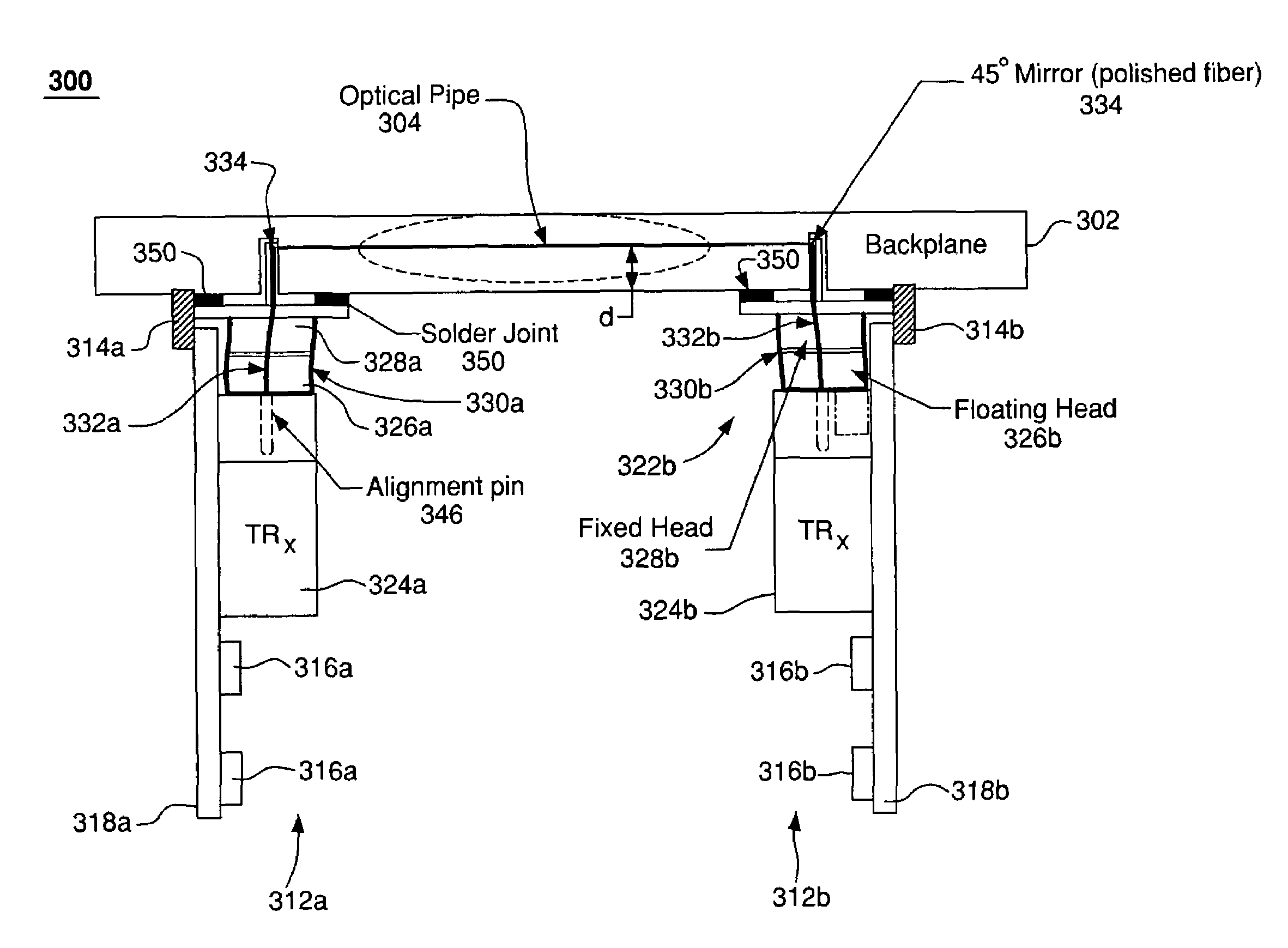
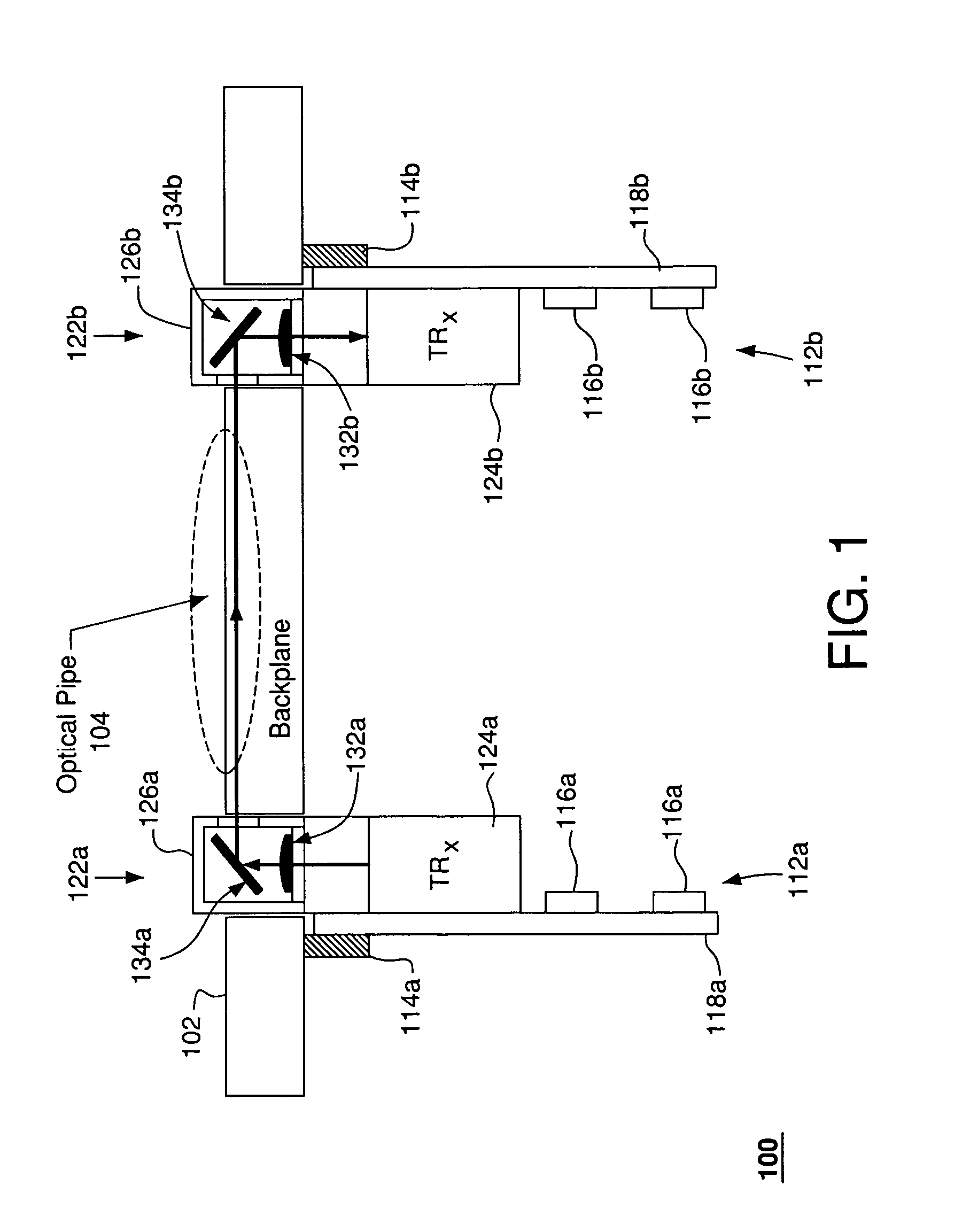
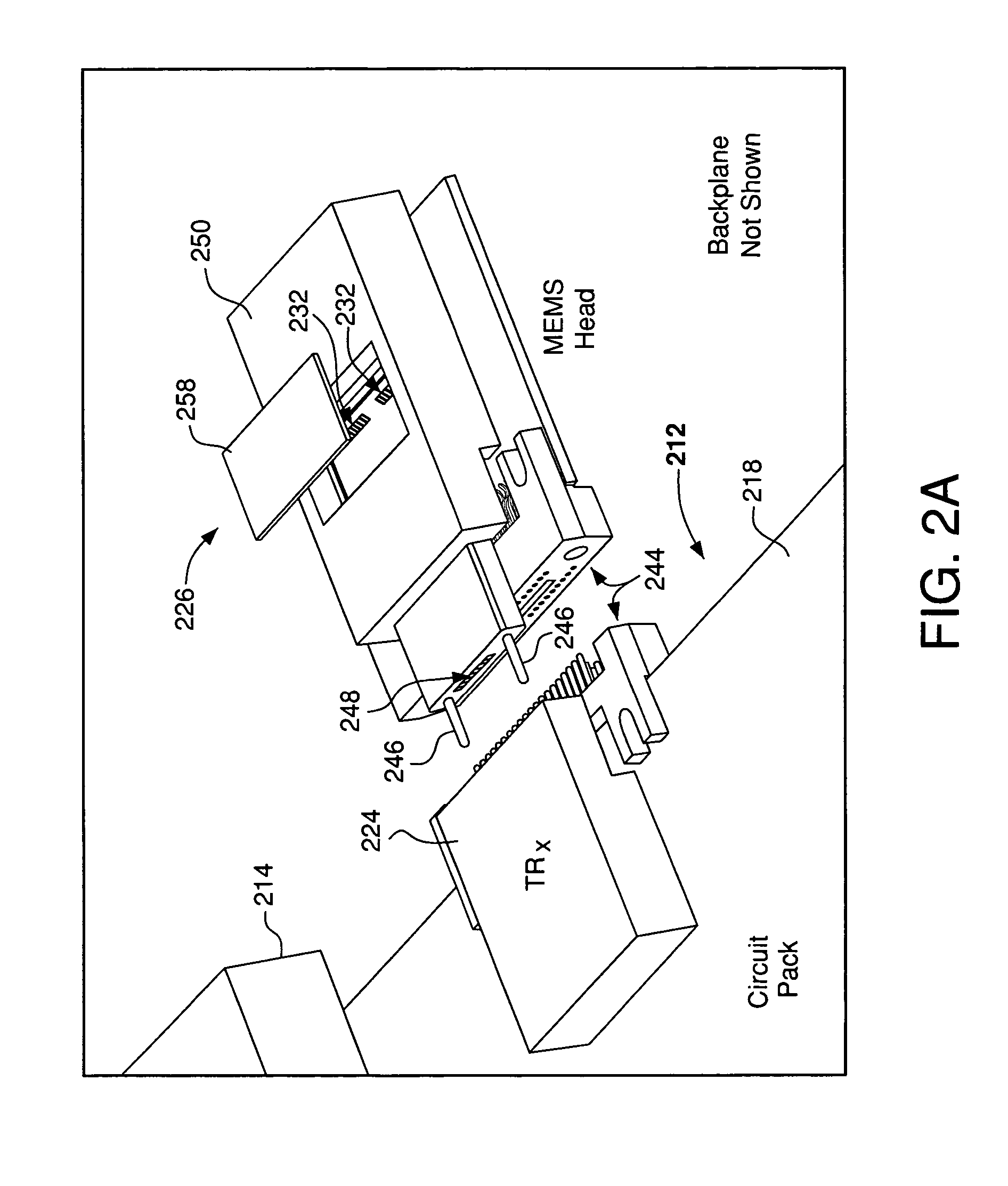

Free space optical "backplane" (FSO)
PatentInactiveUS6526211B2
Innovation
- A free-space optical data transmission system is implemented using switch cards with laser transmitters and photodetectors positioned at each end of the chassis, aligned to enable direct beam transmission across the chassis, reducing the need for physical connectors and allowing for self-testing and redundant communication paths.


Standards and Certification Requirements for Optical Systems
The standardization landscape for optical systems encompasses both optical backplane and free-space optics technologies, with distinct certification pathways reflecting their different operational environments and applications. International standards organizations have established comprehensive frameworks to ensure reliability, safety, and interoperability across these optical communication systems.
For optical backplane systems, the primary standards framework centers around IEEE 802.3 Ethernet standards, particularly the 802.3ba and 802.3bs specifications for high-speed optical interconnects. These standards define precise requirements for signal integrity, bit error rates, and optical power budgets within enclosed system environments. The IEC 61300 series provides additional specifications for optical connector performance and durability testing, ensuring consistent mechanical and optical characteristics across different manufacturers.
Free-space optical systems operate under a broader regulatory framework that includes both telecommunications and safety standards. The ITU-T G.692 and G.694 series establish wavelength allocation and optical safety parameters for outdoor FSO deployments. Additionally, IEC 60825 laser safety standards are critical for FSO systems, defining classification requirements and safety measures for optical radiation exposure in various operational scenarios.
Certification processes differ significantly between these technologies due to their distinct deployment environments. Optical backplane systems typically undergo controlled laboratory testing focusing on thermal cycling, vibration resistance, and electromagnetic compatibility under IEC 61000 standards. The certification process emphasizes repeatability and long-term stability within predictable environmental conditions.
FSO systems require more comprehensive environmental testing protocols, including atmospheric transmission modeling, weather resistance evaluation, and beam divergence characterization. Certification bodies such as FCC, ETSI, and national telecommunications authorities mandate specific testing procedures for outdoor optical systems, including eye safety assessments and interference analysis with existing optical services.
Emerging standards development focuses on hybrid optical systems that combine backplane and free-space technologies. The IEEE P802.11bb standard for light communications and ongoing work in optical wireless communications create new certification requirements that bridge traditional boundaries between enclosed and free-space optical systems, necessitating updated testing methodologies and compliance frameworks.
For optical backplane systems, the primary standards framework centers around IEEE 802.3 Ethernet standards, particularly the 802.3ba and 802.3bs specifications for high-speed optical interconnects. These standards define precise requirements for signal integrity, bit error rates, and optical power budgets within enclosed system environments. The IEC 61300 series provides additional specifications for optical connector performance and durability testing, ensuring consistent mechanical and optical characteristics across different manufacturers.
Free-space optical systems operate under a broader regulatory framework that includes both telecommunications and safety standards. The ITU-T G.692 and G.694 series establish wavelength allocation and optical safety parameters for outdoor FSO deployments. Additionally, IEC 60825 laser safety standards are critical for FSO systems, defining classification requirements and safety measures for optical radiation exposure in various operational scenarios.
Certification processes differ significantly between these technologies due to their distinct deployment environments. Optical backplane systems typically undergo controlled laboratory testing focusing on thermal cycling, vibration resistance, and electromagnetic compatibility under IEC 61000 standards. The certification process emphasizes repeatability and long-term stability within predictable environmental conditions.
FSO systems require more comprehensive environmental testing protocols, including atmospheric transmission modeling, weather resistance evaluation, and beam divergence characterization. Certification bodies such as FCC, ETSI, and national telecommunications authorities mandate specific testing procedures for outdoor optical systems, including eye safety assessments and interference analysis with existing optical services.
Emerging standards development focuses on hybrid optical systems that combine backplane and free-space technologies. The IEEE P802.11bb standard for light communications and ongoing work in optical wireless communications create new certification requirements that bridge traditional boundaries between enclosed and free-space optical systems, necessitating updated testing methodologies and compliance frameworks.
Performance Benchmarking Methodologies for Optical Accuracy
Establishing robust performance benchmarking methodologies for optical accuracy requires a comprehensive framework that addresses the unique characteristics of both optical backplane and free-space optics systems. The fundamental challenge lies in developing standardized measurement protocols that can accurately capture the performance differences between these two distinct optical transmission approaches while accounting for their inherent operational variations.
The primary benchmarking methodology centers on bit error rate (BER) measurements under controlled environmental conditions. This approach involves systematic testing across multiple data rates, ranging from 10 Gbps to 400 Gbps, while maintaining consistent power levels and signal-to-noise ratios. The methodology requires precise calibration of optical power meters, spectrum analyzers, and error detection equipment to ensure measurement repeatability and accuracy within acceptable tolerance ranges.
Environmental stress testing forms a critical component of the benchmarking framework. This methodology subjects both optical backplane and free-space systems to temperature variations from -40°C to +85°C, humidity fluctuations between 10% and 95% relative humidity, and vibration profiles that simulate real-world deployment conditions. The testing protocol measures accuracy degradation patterns and establishes performance baselines under adverse conditions.
Signal integrity analysis represents another essential benchmarking dimension. This methodology employs eye diagram measurements, jitter analysis, and optical signal-to-noise ratio (OSNR) evaluations to quantify transmission quality. The approach utilizes high-speed oscilloscopes with optical sampling modules and specialized software tools to capture and analyze signal characteristics across different wavelengths and modulation formats.
Latency and timing accuracy measurements constitute a specialized benchmarking category. The methodology employs precision timing equipment capable of nanosecond-level resolution to measure end-to-end transmission delays and timing jitter. This approach is particularly crucial for applications requiring synchronous data transmission and real-time processing capabilities.
Statistical validation protocols ensure the reliability of benchmarking results. The methodology incorporates Monte Carlo simulations, confidence interval calculations, and regression analysis to establish statistically significant performance comparisons. This approach requires extensive data collection over extended periods to account for temporal variations and system aging effects.
The primary benchmarking methodology centers on bit error rate (BER) measurements under controlled environmental conditions. This approach involves systematic testing across multiple data rates, ranging from 10 Gbps to 400 Gbps, while maintaining consistent power levels and signal-to-noise ratios. The methodology requires precise calibration of optical power meters, spectrum analyzers, and error detection equipment to ensure measurement repeatability and accuracy within acceptable tolerance ranges.
Environmental stress testing forms a critical component of the benchmarking framework. This methodology subjects both optical backplane and free-space systems to temperature variations from -40°C to +85°C, humidity fluctuations between 10% and 95% relative humidity, and vibration profiles that simulate real-world deployment conditions. The testing protocol measures accuracy degradation patterns and establishes performance baselines under adverse conditions.
Signal integrity analysis represents another essential benchmarking dimension. This methodology employs eye diagram measurements, jitter analysis, and optical signal-to-noise ratio (OSNR) evaluations to quantify transmission quality. The approach utilizes high-speed oscilloscopes with optical sampling modules and specialized software tools to capture and analyze signal characteristics across different wavelengths and modulation formats.
Latency and timing accuracy measurements constitute a specialized benchmarking category. The methodology employs precision timing equipment capable of nanosecond-level resolution to measure end-to-end transmission delays and timing jitter. This approach is particularly crucial for applications requiring synchronous data transmission and real-time processing capabilities.
Statistical validation protocols ensure the reliability of benchmarking results. The methodology incorporates Monte Carlo simulations, confidence interval calculations, and regression analysis to establish statistically significant performance comparisons. This approach requires extensive data collection over extended periods to account for temporal variations and system aging effects.
Unlock deeper insights with Patsnap Eureka Quick Research — get a full tech report to explore trends and direct your research. Try now!
Generate Your Research Report Instantly with AI Agent
Supercharge your innovation with Patsnap Eureka AI Agent Platform!