
Optical Backplane Wavelength Compatibility for Cross-Platform Use
MAY 20, 20269 MIN READ
Generate Your Research Report Instantly with AI Agent
Patsnap Eureka helps you evaluate technical feasibility & market potential.
Optical Backplane Technology Background and Objectives
Optical backplane technology emerged in the late 1990s as a revolutionary approach to address the growing bandwidth limitations of traditional electrical interconnects in high-performance computing and telecommunications systems. The fundamental concept involves replacing copper-based electrical connections with optical waveguides or fiber optic channels within the backplane infrastructure, enabling significantly higher data transmission rates and reduced electromagnetic interference.
The evolution of optical backplanes has been driven by the exponential growth in data processing requirements across multiple industries. Early implementations focused primarily on point-to-point optical connections, but the technology has progressively advanced toward more sophisticated architectures supporting wavelength division multiplexing and multi-channel configurations. This progression reflects the industry's pursuit of scalable solutions capable of handling terabit-level data throughput.
Current technological trends indicate a shift toward standardized optical backplane architectures that can accommodate diverse hardware platforms and vendor ecosystems. The integration of silicon photonics, advanced optical switching mechanisms, and intelligent wavelength management systems has created new possibilities for cross-platform compatibility. These developments are particularly significant in data center environments where equipment from multiple manufacturers must operate seamlessly within unified infrastructure frameworks.
The primary technical objective centers on achieving wavelength compatibility across heterogeneous platform environments while maintaining optimal signal integrity and transmission performance. This involves developing standardized wavelength allocation protocols, implementing adaptive optical interfaces, and establishing robust error correction mechanisms that can function reliably across different hardware configurations and vendor specifications.
Secondary objectives include minimizing insertion losses, reducing crosstalk between adjacent channels, and ensuring long-term reliability under varying environmental conditions. The technology must also support hot-swappable components and provide real-time monitoring capabilities for proactive maintenance and fault detection. These requirements are essential for maintaining continuous operation in mission-critical applications where system downtime can result in significant operational and financial consequences.
Future development goals encompass the creation of universal optical backplane standards that can seamlessly integrate with emerging technologies such as artificial intelligence accelerators, quantum computing interfaces, and next-generation network processors. This forward-looking approach aims to establish a foundation for sustained technological advancement while preserving investment protection for existing infrastructure deployments.
The evolution of optical backplanes has been driven by the exponential growth in data processing requirements across multiple industries. Early implementations focused primarily on point-to-point optical connections, but the technology has progressively advanced toward more sophisticated architectures supporting wavelength division multiplexing and multi-channel configurations. This progression reflects the industry's pursuit of scalable solutions capable of handling terabit-level data throughput.
Current technological trends indicate a shift toward standardized optical backplane architectures that can accommodate diverse hardware platforms and vendor ecosystems. The integration of silicon photonics, advanced optical switching mechanisms, and intelligent wavelength management systems has created new possibilities for cross-platform compatibility. These developments are particularly significant in data center environments where equipment from multiple manufacturers must operate seamlessly within unified infrastructure frameworks.
The primary technical objective centers on achieving wavelength compatibility across heterogeneous platform environments while maintaining optimal signal integrity and transmission performance. This involves developing standardized wavelength allocation protocols, implementing adaptive optical interfaces, and establishing robust error correction mechanisms that can function reliably across different hardware configurations and vendor specifications.
Secondary objectives include minimizing insertion losses, reducing crosstalk between adjacent channels, and ensuring long-term reliability under varying environmental conditions. The technology must also support hot-swappable components and provide real-time monitoring capabilities for proactive maintenance and fault detection. These requirements are essential for maintaining continuous operation in mission-critical applications where system downtime can result in significant operational and financial consequences.
Future development goals encompass the creation of universal optical backplane standards that can seamlessly integrate with emerging technologies such as artificial intelligence accelerators, quantum computing interfaces, and next-generation network processors. This forward-looking approach aims to establish a foundation for sustained technological advancement while preserving investment protection for existing infrastructure deployments.
Market Demand for Cross-Platform Optical Interconnects
The demand for cross-platform optical interconnects has experienced unprecedented growth driven by the exponential increase in data center traffic and the proliferation of heterogeneous computing architectures. Modern data centers require seamless connectivity between diverse hardware platforms, including servers from different vendors, storage systems, and specialized computing units such as GPUs and AI accelerators. This heterogeneous environment necessitates optical backplane solutions that can maintain wavelength compatibility across multiple platforms without vendor lock-in constraints.
Cloud service providers represent the largest segment driving market demand, as they operate massive infrastructures comprising equipment from multiple suppliers. These organizations require optical interconnect solutions that can support various wavelength standards simultaneously, enabling flexible deployment strategies and reducing operational complexity. The ability to maintain consistent performance across different platform configurations has become a critical procurement criterion.
Enterprise data centers are increasingly adopting hybrid cloud strategies, creating additional demand for cross-platform optical solutions. Organizations need to ensure seamless data flow between on-premises infrastructure and cloud environments, often involving different hardware ecosystems. This trend has accelerated the need for standardized wavelength compatibility protocols that can bridge diverse technological implementations.
The telecommunications sector presents another significant market opportunity, particularly with the deployment of 5G networks and edge computing infrastructure. Network operators require optical backplane solutions that can integrate equipment from various suppliers while maintaining service quality and reducing maintenance overhead. Cross-platform wavelength compatibility enables more flexible network architectures and faster service deployment.
High-performance computing applications in research institutions and financial services are driving demand for ultra-low latency optical interconnects that can operate across different computing platforms. These environments often combine specialized processors and accelerators from various manufacturers, requiring optical solutions that can adapt to different wavelength requirements without performance degradation.
The market is also influenced by regulatory requirements and industry standards that promote interoperability. Organizations increasingly prioritize solutions that comply with emerging standards for optical interconnect compatibility, driving vendors to develop more flexible and adaptable wavelength management technologies.
Cloud service providers represent the largest segment driving market demand, as they operate massive infrastructures comprising equipment from multiple suppliers. These organizations require optical interconnect solutions that can support various wavelength standards simultaneously, enabling flexible deployment strategies and reducing operational complexity. The ability to maintain consistent performance across different platform configurations has become a critical procurement criterion.
Enterprise data centers are increasingly adopting hybrid cloud strategies, creating additional demand for cross-platform optical solutions. Organizations need to ensure seamless data flow between on-premises infrastructure and cloud environments, often involving different hardware ecosystems. This trend has accelerated the need for standardized wavelength compatibility protocols that can bridge diverse technological implementations.
The telecommunications sector presents another significant market opportunity, particularly with the deployment of 5G networks and edge computing infrastructure. Network operators require optical backplane solutions that can integrate equipment from various suppliers while maintaining service quality and reducing maintenance overhead. Cross-platform wavelength compatibility enables more flexible network architectures and faster service deployment.
High-performance computing applications in research institutions and financial services are driving demand for ultra-low latency optical interconnects that can operate across different computing platforms. These environments often combine specialized processors and accelerators from various manufacturers, requiring optical solutions that can adapt to different wavelength requirements without performance degradation.
The market is also influenced by regulatory requirements and industry standards that promote interoperability. Organizations increasingly prioritize solutions that comply with emerging standards for optical interconnect compatibility, driving vendors to develop more flexible and adaptable wavelength management technologies.
Current Wavelength Compatibility Challenges in Optical Backplanes
Optical backplane systems face significant wavelength compatibility challenges that impede seamless cross-platform integration. The primary obstacle stems from the lack of standardized wavelength allocation across different manufacturers and system architectures. Current optical backplanes typically operate within the C-band spectrum (1530-1565 nm), but specific wavelength assignments vary considerably between vendors, creating incompatibility issues when attempting to integrate components from different suppliers.
Wavelength drift represents another critical challenge affecting long-term system reliability. Temperature fluctuations, aging components, and manufacturing tolerances cause laser sources to deviate from their nominal wavelengths over time. This drift can result in crosstalk between adjacent channels, reduced signal quality, and potential system failures. The tolerance margins for wavelength stability are becoming increasingly stringent as channel spacing decreases to accommodate higher data densities.
Dense Wavelength Division Multiplexing (DWDM) implementations in optical backplanes encounter severe constraints due to limited spectral resources and the need for precise wavelength control. The ITU-T grid standards provide a framework, but practical implementations often require custom wavelength plans that are not interoperable across different platforms. This fragmentation forces system integrators to maintain separate inventories and limits the flexibility of network configurations.
Chromatic dispersion compensation presents additional complexity in multi-platform environments. Different optical backplane designs employ varying fiber types, path lengths, and dispersion compensation schemes. When components from different platforms are integrated, the accumulated dispersion characteristics may not align, leading to signal degradation and reduced transmission distances.
The emergence of silicon photonics has introduced new wavelength compatibility challenges. Silicon-based optical components exhibit different thermal characteristics and wavelength dependencies compared to traditional III-V semiconductor devices. The integration of silicon photonic elements with conventional optical backplane components requires careful consideration of wavelength stability and thermal management across the entire system.
Power budget allocation across multiple wavelengths becomes increasingly complex in cross-platform scenarios. Different manufacturers optimize their systems for specific power distribution profiles, and combining components with mismatched power requirements can result in suboptimal performance or component damage. The lack of standardized power level specifications further complicates system integration efforts.
Monitoring and control systems for wavelength management vary significantly between platforms, creating operational challenges. Each manufacturer typically implements proprietary wavelength monitoring protocols and control algorithms, making it difficult to achieve unified system management across heterogeneous optical backplane deployments.
Wavelength drift represents another critical challenge affecting long-term system reliability. Temperature fluctuations, aging components, and manufacturing tolerances cause laser sources to deviate from their nominal wavelengths over time. This drift can result in crosstalk between adjacent channels, reduced signal quality, and potential system failures. The tolerance margins for wavelength stability are becoming increasingly stringent as channel spacing decreases to accommodate higher data densities.
Dense Wavelength Division Multiplexing (DWDM) implementations in optical backplanes encounter severe constraints due to limited spectral resources and the need for precise wavelength control. The ITU-T grid standards provide a framework, but practical implementations often require custom wavelength plans that are not interoperable across different platforms. This fragmentation forces system integrators to maintain separate inventories and limits the flexibility of network configurations.
Chromatic dispersion compensation presents additional complexity in multi-platform environments. Different optical backplane designs employ varying fiber types, path lengths, and dispersion compensation schemes. When components from different platforms are integrated, the accumulated dispersion characteristics may not align, leading to signal degradation and reduced transmission distances.
The emergence of silicon photonics has introduced new wavelength compatibility challenges. Silicon-based optical components exhibit different thermal characteristics and wavelength dependencies compared to traditional III-V semiconductor devices. The integration of silicon photonic elements with conventional optical backplane components requires careful consideration of wavelength stability and thermal management across the entire system.
Power budget allocation across multiple wavelengths becomes increasingly complex in cross-platform scenarios. Different manufacturers optimize their systems for specific power distribution profiles, and combining components with mismatched power requirements can result in suboptimal performance or component damage. The lack of standardized power level specifications further complicates system integration efforts.
Monitoring and control systems for wavelength management vary significantly between platforms, creating operational challenges. Each manufacturer typically implements proprietary wavelength monitoring protocols and control algorithms, making it difficult to achieve unified system management across heterogeneous optical backplane deployments.
Existing Wavelength Standardization Solutions
01 Wavelength division multiplexing in optical backplanes
Optical backplane systems utilize wavelength division multiplexing techniques to enable multiple data channels to operate simultaneously on different wavelengths within the same optical medium. This approach allows for increased bandwidth capacity and improved signal isolation between channels, ensuring that different wavelengths can coexist without interference in high-speed data transmission applications.- Wavelength division multiplexing in optical backplanes: Optical backplane systems utilize wavelength division multiplexing techniques to enable multiple data channels to operate simultaneously on different wavelengths within the same optical medium. This approach allows for increased bandwidth capacity and improved signal isolation between channels, ensuring that different wavelengths can coexist without interference in backplane architectures.
- Optical connector wavelength matching systems: Specialized optical connector designs incorporate wavelength-specific matching mechanisms to ensure proper signal transmission across backplane connections. These systems feature precise alignment structures and wavelength-selective components that maintain signal integrity when connecting different optical modules operating at various wavelengths.
- Multi-wavelength signal routing and switching: Advanced routing architectures enable dynamic wavelength assignment and switching capabilities within optical backplane systems. These implementations provide flexible signal path management and allow for real-time reconfiguration of wavelength assignments to optimize system performance and accommodate varying traffic demands.
- Wavelength stabilization and control mechanisms: Temperature compensation and feedback control systems maintain wavelength stability across varying operating conditions in optical backplane environments. These mechanisms include active monitoring circuits and adjustment algorithms that ensure consistent wavelength output despite environmental fluctuations and component aging effects.
- Cross-wavelength interference mitigation: Filtering and isolation techniques prevent crosstalk and interference between different wavelength channels in dense optical backplane configurations. These solutions incorporate spectral filtering elements, physical channel separation methods, and signal processing algorithms to maintain clean signal transmission across all operational wavelengths.
02 Optical signal routing and switching compatibility
Advanced optical switching mechanisms are implemented to manage wavelength-specific routing within backplane architectures. These systems provide dynamic reconfiguration capabilities that allow different wavelengths to be directed to appropriate destinations while maintaining signal integrity and minimizing crosstalk between optical channels.Expand Specific Solutions03 Multi-wavelength optical interconnect systems
Integrated optical interconnect solutions support multiple wavelength operations through specialized coupling and distribution networks. These systems enable efficient wavelength management across backplane connections, providing scalable solutions for high-density optical communication requirements in data center and telecommunications applications.Expand Specific Solutions04 Wavelength-specific optical component integration
Specialized optical components including filters, couplers, and modulators are designed to operate at specific wavelengths within backplane systems. These components ensure proper wavelength selection, signal conditioning, and optical power management to maintain compatibility across different wavelength channels in complex optical networks.Expand Specific Solutions05 Optical backplane wavelength standardization and protocols
Standardized wavelength allocation schemes and communication protocols are established to ensure interoperability between different optical backplane components and systems. These standards define wavelength spacing, power levels, and signaling formats that enable seamless integration of various optical devices while maintaining system-wide compatibility and performance.Expand Specific Solutions
Key Players in Optical Backplane and Photonic Industry
The optical backplane wavelength compatibility market is in a mature growth phase, driven by increasing demand for high-speed data transmission across heterogeneous network infrastructures. The market demonstrates substantial scale with established telecommunications giants like Huawei, NEC, Ericsson, and ZTE leading infrastructure development, while specialized optical component manufacturers such as Molex, SENKO Advanced Components, and Corning Optical Communications provide critical interconnect solutions. Technology maturity varies significantly across players, with semiconductor leaders like Intel, TSMC, and GlobalFoundries advancing chip-level integration, while research institutions including MIT, HUST, and UESTC drive fundamental wavelength standardization innovations. The competitive landscape reflects a convergence of traditional telecom equipment vendors, precision optical manufacturers, and semiconductor foundries, indicating the technology's evolution toward standardized cross-platform compatibility solutions essential for next-generation optical networking architectures.
Huawei Technologies Co., Ltd.
Technical Solution: Huawei has developed comprehensive optical backplane solutions featuring wavelength division multiplexing (WDM) technology that supports multi-wavelength compatibility across different platforms. Their approach utilizes standardized wavelength grids based on ITU-T recommendations, enabling seamless integration between various optical components and systems. The company implements advanced wavelength management protocols and optical switching matrices that can dynamically allocate wavelengths for cross-platform communication. Their optical backplane architecture incorporates tunable lasers and broadband photodetectors to ensure compatibility with different wavelength specifications used by various equipment manufacturers.
Strengths: Comprehensive WDM implementation with ITU-T standard compliance, dynamic wavelength allocation capabilities. Weaknesses: Complex system architecture may increase cost and power consumption.
NEC Corp.
Technical Solution: NEC has pioneered optical backplane wavelength compatibility through their multi-vendor interoperability framework. Their solution employs wavelength-agnostic optical switching technology combined with intelligent wavelength translation mechanisms. The system features adaptive wavelength conversion units that can automatically detect and convert between different wavelength standards used by various platform vendors. NEC's approach includes comprehensive wavelength mapping protocols and real-time monitoring systems to ensure optimal performance across heterogeneous optical networks. Their technology supports both coarse and dense wavelength division multiplexing for maximum flexibility.
Strengths: Advanced wavelength translation capabilities, multi-vendor interoperability support. Weaknesses: Wavelength conversion may introduce additional latency and signal degradation.
Core Patents in Multi-Wavelength Optical Backplane Design
Reconfigurable optical backplane
PatentActiveUS20220029728A1
Innovation
- An optical backplane with an optical wavelength demultiplexer and multiplexer, coupled with routing devices and interface boxes, allows for the reconfiguration of optical communication networks by managing data channels of different wavelengths, enabling dynamic service allocation and network adaptability without modifying the existing architecture.

Optical backplane system
PatentInactiveUS7142746B2
Innovation
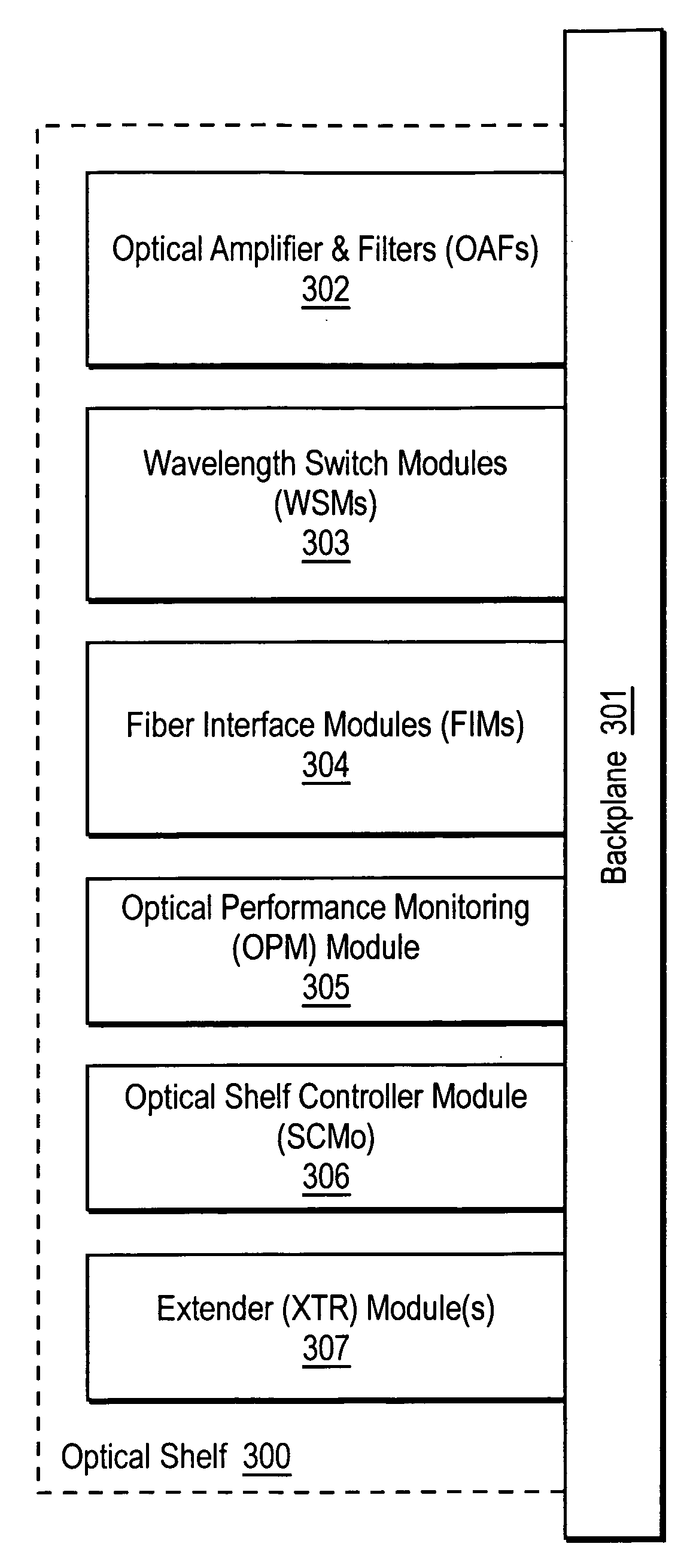
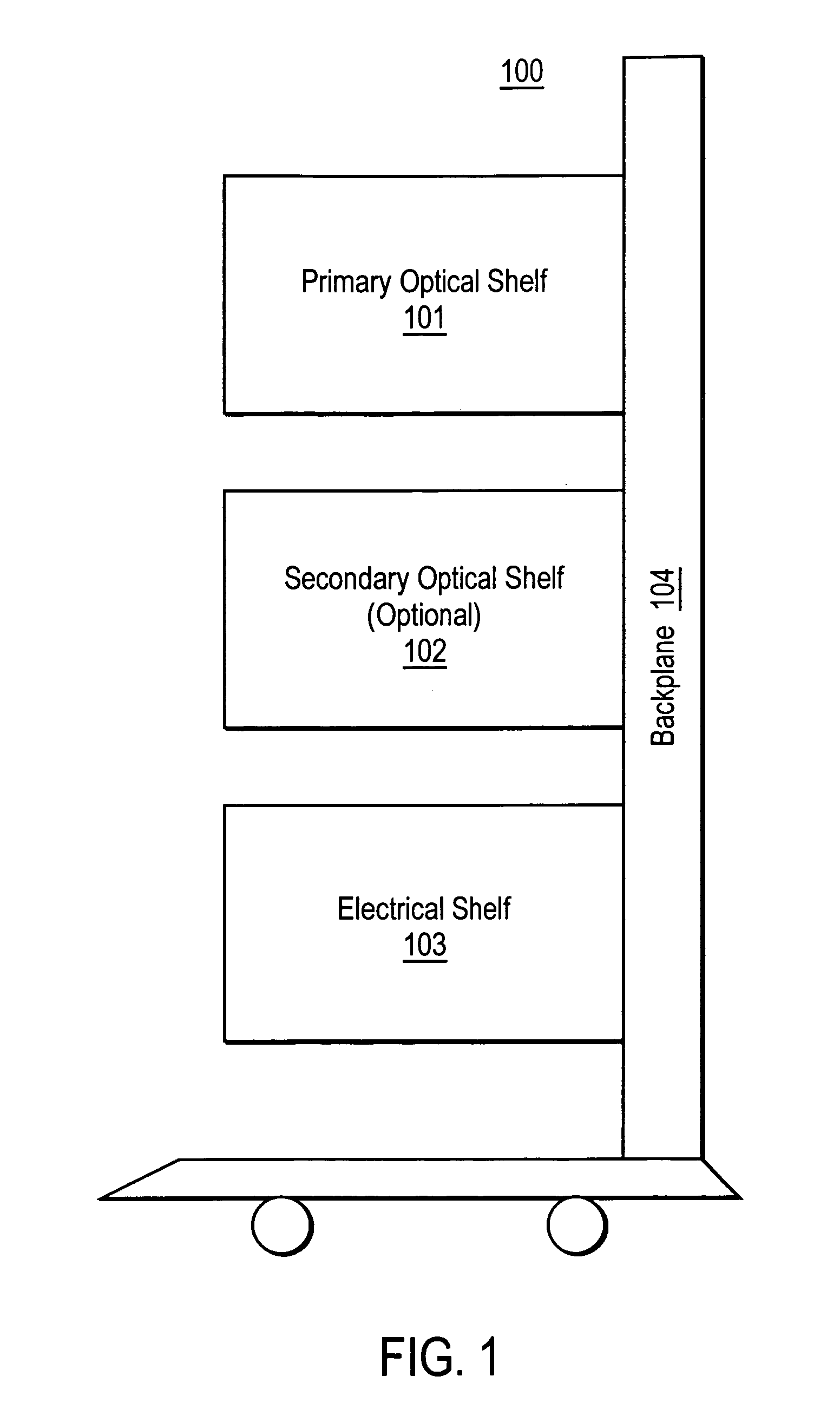
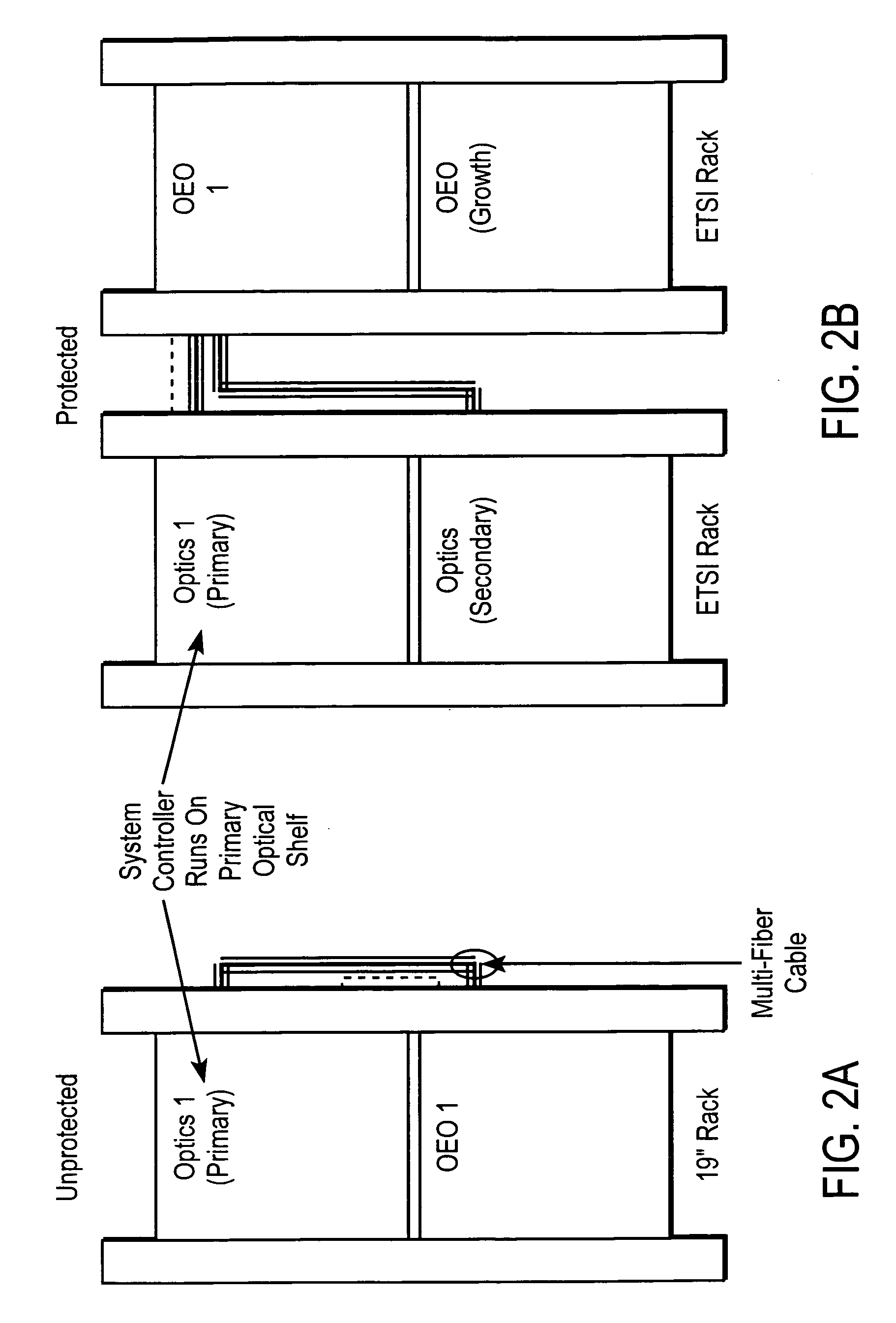
- An optical backplane system with a modular design that routes connections within the backplane, reducing the need for front-end interconnections and allowing for easier module configuration, using fiber interface modules that extend incoming and outgoing fibers to optical modules without significant signal processing, enabling efficient interconnection of multiple optical and electrical modules.

Industry Standards and Certification Requirements
The standardization landscape for optical backplane wavelength compatibility across different platforms is governed by multiple international organizations and industry consortiums. The Institute of Electrical and Electronics Engineers (IEEE) plays a pivotal role through standards such as IEEE 802.3, which defines Ethernet specifications including wavelength allocations for optical communications. The International Telecommunication Union (ITU) contributes through ITU-T recommendations, particularly the G-series standards that establish wavelength grids and optical interface specifications for telecommunications equipment.
The Optical Internetworking Forum (OIF) has developed implementation agreements that address multi-source agreement (MSA) specifications for optical transceivers and backplane interfaces. These agreements ensure interoperability between components from different vendors while maintaining performance standards. Additionally, the International Electrotechnical Commission (IEC) provides safety and performance standards through IEC 61300 series for optical fiber connectors and IEC 60825 for laser safety requirements.
Certification processes typically involve rigorous testing protocols that validate wavelength accuracy, power levels, and signal integrity across specified operating conditions. Equipment manufacturers must demonstrate compliance with eye safety standards, electromagnetic compatibility requirements, and environmental specifications including temperature, humidity, and vibration tolerance. Third-party testing laboratories accredited by organizations such as UL, TÜV, or similar bodies conduct these evaluations.
Regional standards bodies also influence certification requirements. The European Telecommunications Standards Institute (ETSI) establishes European-specific requirements, while the Telecommunications Industry Association (TIA) focuses on North American standards. These regional variations can create additional complexity for manufacturers seeking global market access.
Emerging standards development focuses on higher data rates and denser wavelength division multiplexing schemes. The ongoing evolution toward 400G and 800G optical interfaces requires updated certification criteria that address new wavelength bands and modulation formats. Compliance with these evolving standards becomes critical for ensuring long-term compatibility and market acceptance of cross-platform optical backplane solutions.
The Optical Internetworking Forum (OIF) has developed implementation agreements that address multi-source agreement (MSA) specifications for optical transceivers and backplane interfaces. These agreements ensure interoperability between components from different vendors while maintaining performance standards. Additionally, the International Electrotechnical Commission (IEC) provides safety and performance standards through IEC 61300 series for optical fiber connectors and IEC 60825 for laser safety requirements.
Certification processes typically involve rigorous testing protocols that validate wavelength accuracy, power levels, and signal integrity across specified operating conditions. Equipment manufacturers must demonstrate compliance with eye safety standards, electromagnetic compatibility requirements, and environmental specifications including temperature, humidity, and vibration tolerance. Third-party testing laboratories accredited by organizations such as UL, TÜV, or similar bodies conduct these evaluations.
Regional standards bodies also influence certification requirements. The European Telecommunications Standards Institute (ETSI) establishes European-specific requirements, while the Telecommunications Industry Association (TIA) focuses on North American standards. These regional variations can create additional complexity for manufacturers seeking global market access.
Emerging standards development focuses on higher data rates and denser wavelength division multiplexing schemes. The ongoing evolution toward 400G and 800G optical interfaces requires updated certification criteria that address new wavelength bands and modulation formats. Compliance with these evolving standards becomes critical for ensuring long-term compatibility and market acceptance of cross-platform optical backplane solutions.
Interoperability Testing and Validation Frameworks
Establishing comprehensive interoperability testing and validation frameworks for optical backplane wavelength compatibility requires systematic approaches that address both technical verification and cross-platform integration challenges. These frameworks must encompass standardized testing protocols, automated validation procedures, and real-world deployment scenarios to ensure reliable wavelength management across diverse optical systems.
The foundation of effective testing frameworks lies in developing standardized test suites that can evaluate wavelength compatibility across different vendor platforms. These suites should incorporate both laboratory-based controlled testing environments and field deployment simulations. Key testing parameters include wavelength drift tolerance, power budget variations, chromatic dispersion effects, and thermal stability across operational temperature ranges. Automated testing equipment capable of generating multiple wavelength scenarios simultaneously enables comprehensive coverage of potential compatibility issues.
Validation methodologies must address both static and dynamic compatibility scenarios. Static testing focuses on baseline wavelength alignment and power level matching between different optical components and platforms. Dynamic validation examines system behavior under varying operational conditions, including temperature fluctuations, aging effects, and real-time wavelength adjustments. These methodologies should incorporate statistical analysis techniques to quantify compatibility margins and predict long-term system reliability.
Cross-platform validation presents unique challenges requiring specialized testing approaches. Frameworks must accommodate different optical interface standards, varying wavelength grid specifications, and diverse control protocols. Establishing common reference standards and calibration procedures ensures consistent testing results across different testing facilities and vendor environments. Integration testing protocols should simulate realistic deployment scenarios where multiple vendor systems must coexist and maintain wavelength compatibility.
Certification and compliance verification represent critical components of validation frameworks. These processes require establishing clear acceptance criteria, defining test pass/fail thresholds, and creating documentation standards for compatibility verification. Automated reporting systems can streamline the certification process while maintaining traceability and audit capabilities. Regular framework updates ensure alignment with evolving industry standards and emerging optical technologies, maintaining relevance as wavelength compatibility requirements continue advancing.
The foundation of effective testing frameworks lies in developing standardized test suites that can evaluate wavelength compatibility across different vendor platforms. These suites should incorporate both laboratory-based controlled testing environments and field deployment simulations. Key testing parameters include wavelength drift tolerance, power budget variations, chromatic dispersion effects, and thermal stability across operational temperature ranges. Automated testing equipment capable of generating multiple wavelength scenarios simultaneously enables comprehensive coverage of potential compatibility issues.
Validation methodologies must address both static and dynamic compatibility scenarios. Static testing focuses on baseline wavelength alignment and power level matching between different optical components and platforms. Dynamic validation examines system behavior under varying operational conditions, including temperature fluctuations, aging effects, and real-time wavelength adjustments. These methodologies should incorporate statistical analysis techniques to quantify compatibility margins and predict long-term system reliability.
Cross-platform validation presents unique challenges requiring specialized testing approaches. Frameworks must accommodate different optical interface standards, varying wavelength grid specifications, and diverse control protocols. Establishing common reference standards and calibration procedures ensures consistent testing results across different testing facilities and vendor environments. Integration testing protocols should simulate realistic deployment scenarios where multiple vendor systems must coexist and maintain wavelength compatibility.
Certification and compliance verification represent critical components of validation frameworks. These processes require establishing clear acceptance criteria, defining test pass/fail thresholds, and creating documentation standards for compatibility verification. Automated reporting systems can streamline the certification process while maintaining traceability and audit capabilities. Regular framework updates ensure alignment with evolving industry standards and emerging optical technologies, maintaining relevance as wavelength compatibility requirements continue advancing.
Unlock deeper insights with Patsnap Eureka Quick Research — get a full tech report to explore trends and direct your research. Try now!
Generate Your Research Report Instantly with AI Agent
Supercharge your innovation with Patsnap Eureka AI Agent Platform!