Comparing Piezoelectric vs Magnetoelectric Actuators
APR 16, 20269 MIN READ
Generate Your Research Report Instantly with AI Agent
PatSnap Eureka helps you evaluate technical feasibility & market potential.
Piezoelectric vs Magnetoelectric Actuator Technology Background
Actuator technology has undergone significant evolution since the early 20th century, driven by the increasing demand for precise motion control across diverse industrial applications. The fundamental principle of converting electrical energy into mechanical motion has been realized through various physical phenomena, with piezoelectric and magnetoelectric effects emerging as two distinct yet complementary approaches to actuator design.
Piezoelectric actuators trace their origins to the discovery of the piezoelectric effect by Pierre and Jacques Curie in 1880. This phenomenon, where certain crystalline materials generate mechanical deformation when subjected to an electric field, laid the foundation for modern piezoelectric actuator technology. The inverse piezoelectric effect enables direct conversion of electrical energy to mechanical displacement, making these devices particularly suitable for applications requiring high precision and rapid response times.
Magnetoelectric actuators represent a more recent technological development, emerging from advances in composite material science and multiferroic research. These devices exploit the magnetoelectric coupling effect, where mechanical strain is induced through the interaction between magnetic and electric fields within specially engineered composite structures. The technology gained momentum in the late 20th century as researchers developed sophisticated methods to enhance magnetoelectric coupling coefficients in layered and particulate composite materials.
The evolution of both technologies has been shaped by distinct performance requirements and application constraints. Piezoelectric actuators have traditionally excelled in applications demanding sub-nanometer positioning accuracy, high-frequency operation, and compact form factors. Their development trajectory has focused on improving displacement range, reducing hysteresis effects, and enhancing temperature stability through advanced ceramic formulations and crystal engineering techniques.
Magnetoelectric actuators have evolved along a different path, emphasizing energy efficiency, reduced power consumption, and compatibility with low-voltage control systems. The technology's development has been driven by the need for actuators that can operate effectively in electromagnetic interference-sensitive environments while providing substantial force output relative to their size and power requirements.
Contemporary research in both fields continues to push technological boundaries through materials innovation, structural optimization, and hybrid system integration. The convergence of nanotechnology, advanced manufacturing techniques, and computational modeling has opened new possibilities for enhancing actuator performance characteristics and expanding their application domains across industries ranging from precision manufacturing to biomedical devices.
Piezoelectric actuators trace their origins to the discovery of the piezoelectric effect by Pierre and Jacques Curie in 1880. This phenomenon, where certain crystalline materials generate mechanical deformation when subjected to an electric field, laid the foundation for modern piezoelectric actuator technology. The inverse piezoelectric effect enables direct conversion of electrical energy to mechanical displacement, making these devices particularly suitable for applications requiring high precision and rapid response times.
Magnetoelectric actuators represent a more recent technological development, emerging from advances in composite material science and multiferroic research. These devices exploit the magnetoelectric coupling effect, where mechanical strain is induced through the interaction between magnetic and electric fields within specially engineered composite structures. The technology gained momentum in the late 20th century as researchers developed sophisticated methods to enhance magnetoelectric coupling coefficients in layered and particulate composite materials.
The evolution of both technologies has been shaped by distinct performance requirements and application constraints. Piezoelectric actuators have traditionally excelled in applications demanding sub-nanometer positioning accuracy, high-frequency operation, and compact form factors. Their development trajectory has focused on improving displacement range, reducing hysteresis effects, and enhancing temperature stability through advanced ceramic formulations and crystal engineering techniques.
Magnetoelectric actuators have evolved along a different path, emphasizing energy efficiency, reduced power consumption, and compatibility with low-voltage control systems. The technology's development has been driven by the need for actuators that can operate effectively in electromagnetic interference-sensitive environments while providing substantial force output relative to their size and power requirements.
Contemporary research in both fields continues to push technological boundaries through materials innovation, structural optimization, and hybrid system integration. The convergence of nanotechnology, advanced manufacturing techniques, and computational modeling has opened new possibilities for enhancing actuator performance characteristics and expanding their application domains across industries ranging from precision manufacturing to biomedical devices.
Market Demand Analysis for Advanced Actuator Technologies
The global actuator market is experiencing unprecedented growth driven by the convergence of automation, miniaturization, and precision control requirements across multiple industries. Advanced actuator technologies, particularly piezoelectric and magnetoelectric systems, are positioned at the forefront of this expansion as traditional electromagnetic actuators reach their performance limitations in emerging applications.
Industrial automation represents the largest demand segment for advanced actuators, where manufacturers increasingly require precise positioning systems capable of nanometer-level accuracy. The semiconductor fabrication industry drives significant demand for piezoelectric actuators in lithography equipment, wafer positioning systems, and probe stations. Similarly, the growing adoption of collaborative robots and precision assembly systems creates substantial market opportunities for both actuator technologies.
The automotive sector presents rapidly expanding demand driven by electric vehicle proliferation and advanced driver assistance systems. Piezoelectric actuators find applications in fuel injection systems, active suspension components, and haptic feedback interfaces, while magnetoelectric actuators show promise in electric power steering and brake-by-wire systems. The transition toward autonomous vehicles further amplifies demand for high-precision actuators in sensor positioning and control systems.
Healthcare and medical device markets demonstrate strong growth potential, particularly in minimally invasive surgical instruments, drug delivery systems, and diagnostic equipment. Piezoelectric actuators dominate applications requiring biocompatibility and precise micro-positioning, such as ultrasonic surgical tools and micropumps. The aging global population and increasing healthcare expenditure continue to drive market expansion in this sector.
Aerospace and defense applications demand actuators capable of operating in extreme environments while maintaining exceptional reliability. Both piezoelectric and magnetoelectric technologies address requirements for lightweight, high-performance systems in satellite positioning mechanisms, aircraft control surfaces, and precision guidance systems. The growing commercial space industry adds additional market momentum.
Consumer electronics represent an emerging high-volume market segment, with applications in smartphone camera stabilization, haptic feedback systems, and wearable devices. The miniaturization trend and demand for enhanced user experiences create opportunities for compact, energy-efficient actuator solutions.
Market growth faces challenges including cost sensitivity in high-volume applications and the need for specialized control electronics. However, advancing manufacturing techniques and economies of scale continue to improve the commercial viability of advanced actuator technologies across diverse market segments.
Industrial automation represents the largest demand segment for advanced actuators, where manufacturers increasingly require precise positioning systems capable of nanometer-level accuracy. The semiconductor fabrication industry drives significant demand for piezoelectric actuators in lithography equipment, wafer positioning systems, and probe stations. Similarly, the growing adoption of collaborative robots and precision assembly systems creates substantial market opportunities for both actuator technologies.
The automotive sector presents rapidly expanding demand driven by electric vehicle proliferation and advanced driver assistance systems. Piezoelectric actuators find applications in fuel injection systems, active suspension components, and haptic feedback interfaces, while magnetoelectric actuators show promise in electric power steering and brake-by-wire systems. The transition toward autonomous vehicles further amplifies demand for high-precision actuators in sensor positioning and control systems.
Healthcare and medical device markets demonstrate strong growth potential, particularly in minimally invasive surgical instruments, drug delivery systems, and diagnostic equipment. Piezoelectric actuators dominate applications requiring biocompatibility and precise micro-positioning, such as ultrasonic surgical tools and micropumps. The aging global population and increasing healthcare expenditure continue to drive market expansion in this sector.
Aerospace and defense applications demand actuators capable of operating in extreme environments while maintaining exceptional reliability. Both piezoelectric and magnetoelectric technologies address requirements for lightweight, high-performance systems in satellite positioning mechanisms, aircraft control surfaces, and precision guidance systems. The growing commercial space industry adds additional market momentum.
Consumer electronics represent an emerging high-volume market segment, with applications in smartphone camera stabilization, haptic feedback systems, and wearable devices. The miniaturization trend and demand for enhanced user experiences create opportunities for compact, energy-efficient actuator solutions.
Market growth faces challenges including cost sensitivity in high-volume applications and the need for specialized control electronics. However, advancing manufacturing techniques and economies of scale continue to improve the commercial viability of advanced actuator technologies across diverse market segments.
Current Status and Challenges in Actuator Development
The actuator technology landscape has experienced significant advancement over the past decade, with piezoelectric and magnetoelectric actuators emerging as two prominent solutions for precision motion control applications. Both technologies have reached commercial maturity in specific market segments, yet each faces distinct developmental challenges that limit broader adoption across industries.
Piezoelectric actuators currently dominate the precision positioning market, particularly in semiconductor manufacturing, optical systems, and medical devices. These devices leverage the direct piezoelectric effect to convert electrical energy into mechanical displacement with nanometer-scale precision. The technology has achieved remarkable miniaturization capabilities, with actuators now available in MEMS-scale packages. However, piezoelectric systems face fundamental limitations including hysteresis effects, temperature sensitivity, and relatively low force output per unit volume.
Magnetoelectric actuators represent a newer technological approach that combines magnetic and electric field interactions to generate mechanical motion. This hybrid mechanism offers potential advantages in terms of energy efficiency and force density. Current implementations primarily focus on low-frequency applications where the magnetoelectric coupling can be optimized. The technology shows promise for wireless actuation systems and energy harvesting applications, though commercial deployment remains limited compared to piezoelectric alternatives.
Manufacturing scalability presents a significant challenge for both technologies. Piezoelectric actuators require specialized ceramic processing techniques and precise electrode patterning, leading to higher production costs for complex geometries. Quality control during manufacturing directly impacts performance consistency, particularly regarding linearity and repeatability specifications.
Magnetoelectric actuators face even greater manufacturing complexity due to the need for precise control of both magnetic and electric material properties within composite structures. The interface between magnetic and piezoelectric phases critically determines overall performance, requiring advanced processing techniques that are not yet fully standardized across the industry.
Material limitations constitute another major challenge area. Piezoelectric materials suffer from aging effects and depolarization under high electric fields or elevated temperatures. Lead-based piezoelectric ceramics, while offering superior performance, face increasing regulatory restrictions due to environmental concerns, driving research toward lead-free alternatives with currently inferior performance characteristics.
Magnetoelectric materials face fundamental physics limitations related to the strength of magnetoelectric coupling at room temperature. Most high-performance magnetoelectric materials require specific temperature ranges or external bias conditions to achieve optimal coupling coefficients, limiting practical applications.
Control system integration challenges affect both technologies differently. Piezoelectric actuators require high-voltage drive electronics and sophisticated feedback systems to compensate for nonlinear behavior. Magnetoelectric actuators need complex multi-field control systems that can simultaneously manage electric and magnetic field interactions, increasing system complexity and cost.
Piezoelectric actuators currently dominate the precision positioning market, particularly in semiconductor manufacturing, optical systems, and medical devices. These devices leverage the direct piezoelectric effect to convert electrical energy into mechanical displacement with nanometer-scale precision. The technology has achieved remarkable miniaturization capabilities, with actuators now available in MEMS-scale packages. However, piezoelectric systems face fundamental limitations including hysteresis effects, temperature sensitivity, and relatively low force output per unit volume.
Magnetoelectric actuators represent a newer technological approach that combines magnetic and electric field interactions to generate mechanical motion. This hybrid mechanism offers potential advantages in terms of energy efficiency and force density. Current implementations primarily focus on low-frequency applications where the magnetoelectric coupling can be optimized. The technology shows promise for wireless actuation systems and energy harvesting applications, though commercial deployment remains limited compared to piezoelectric alternatives.
Manufacturing scalability presents a significant challenge for both technologies. Piezoelectric actuators require specialized ceramic processing techniques and precise electrode patterning, leading to higher production costs for complex geometries. Quality control during manufacturing directly impacts performance consistency, particularly regarding linearity and repeatability specifications.
Magnetoelectric actuators face even greater manufacturing complexity due to the need for precise control of both magnetic and electric material properties within composite structures. The interface between magnetic and piezoelectric phases critically determines overall performance, requiring advanced processing techniques that are not yet fully standardized across the industry.
Material limitations constitute another major challenge area. Piezoelectric materials suffer from aging effects and depolarization under high electric fields or elevated temperatures. Lead-based piezoelectric ceramics, while offering superior performance, face increasing regulatory restrictions due to environmental concerns, driving research toward lead-free alternatives with currently inferior performance characteristics.
Magnetoelectric materials face fundamental physics limitations related to the strength of magnetoelectric coupling at room temperature. Most high-performance magnetoelectric materials require specific temperature ranges or external bias conditions to achieve optimal coupling coefficients, limiting practical applications.
Control system integration challenges affect both technologies differently. Piezoelectric actuators require high-voltage drive electronics and sophisticated feedback systems to compensate for nonlinear behavior. Magnetoelectric actuators need complex multi-field control systems that can simultaneously manage electric and magnetic field interactions, increasing system complexity and cost.
Current Technical Solutions for Actuator Applications
01 Piezoelectric actuator structures and configurations
Various structural designs and configurations of piezoelectric actuators have been developed to optimize their performance. These include multilayer structures, stack configurations, and bimorph designs that enhance displacement and force generation. The actuators can be configured in different geometries such as cylindrical, rectangular, or disc shapes to suit specific applications. Advanced manufacturing techniques enable precise control over the piezoelectric element arrangement and electrode patterns.- Piezoelectric actuator structures and configurations: Various structural designs and configurations of piezoelectric actuators have been developed to optimize their performance. These include multilayer structures, stack configurations, and bimorph designs that enhance displacement and force generation. The actuators can be configured in different geometries such as cantilever beams, diaphragms, or cylindrical shapes to suit specific applications. Advanced manufacturing techniques enable precise control over the piezoelectric element dimensions and electrode patterns for improved actuation characteristics.
- Magnetoelectric composite materials and coupling mechanisms: Magnetoelectric actuators utilize composite materials that combine magnetic and electric properties to achieve enhanced actuation performance. These composites typically consist of piezoelectric and magnetostrictive phases that are coupled mechanically, enabling conversion between magnetic and electric fields. The coupling mechanisms can be optimized through material selection, phase connectivity patterns, and interface engineering. Various composite architectures including particulate, laminate, and core-shell structures have been developed to maximize the magnetoelectric coefficient.
- Control systems and driving circuits for actuators: Sophisticated control systems and driving circuits are essential for precise operation of piezoelectric and magnetoelectric actuators. These systems include power amplifiers, feedback control loops, and signal processing units that regulate voltage, current, and frequency parameters. Advanced control algorithms enable position control, force control, and resonance tracking for optimal actuator performance. The driving circuits are designed to handle high voltages and frequencies while minimizing power consumption and heat generation.
- Applications in precision positioning and micro-manipulation: Piezoelectric and magnetoelectric actuators are widely employed in precision positioning systems and micro-manipulation devices due to their high resolution and fast response. These actuators enable nanometer-scale positioning accuracy in applications such as scanning probe microscopy, optical alignment, and semiconductor manufacturing equipment. The actuators can be integrated into multi-axis positioning stages, micro-grippers, and adaptive optics systems. Their compact size and high force density make them suitable for miniaturized devices and space-constrained applications.
- Hybrid actuator systems combining multiple actuation principles: Hybrid actuator systems integrate piezoelectric and magnetoelectric actuation principles with other technologies to achieve enhanced performance characteristics. These systems may combine electromagnetic, electrostatic, or thermal actuation mechanisms to extend the range of motion, increase force output, or improve energy efficiency. The hybrid approach allows for complementary advantages of different actuation methods while compensating for individual limitations. Such systems find applications in robotics, haptic devices, and adaptive structures where versatile actuation capabilities are required.
02 Magnetoelectric composite materials and structures
Magnetoelectric actuators utilize composite materials that combine magnetic and electric properties to achieve enhanced actuation performance. These composites typically consist of piezoelectric and magnetostrictive phases that are coupled mechanically or through interfacial bonding. The magnetoelectric effect enables conversion between magnetic and electric fields, allowing for novel actuation mechanisms. Various laminate structures and particulate composites have been developed to maximize the magnetoelectric coupling coefficient.Expand Specific Solutions03 Control systems and driving circuits for actuators
Sophisticated control systems and driving circuits are essential for operating piezoelectric and magnetoelectric actuators effectively. These systems include power amplifiers, signal generators, and feedback control mechanisms that regulate voltage, current, and frequency. Advanced control algorithms enable precise positioning, vibration control, and dynamic response optimization. The driving circuits are designed to handle high voltages and frequencies while minimizing power consumption and heat generation.Expand Specific Solutions04 Applications in precision positioning and motion control
Piezoelectric and magnetoelectric actuators are widely used in precision positioning systems and motion control applications. These actuators provide nanometer-scale resolution and fast response times, making them ideal for scanning probe microscopy, optical alignment, and micro-manipulation tasks. They are integrated into stages, platforms, and robotic systems that require high accuracy and repeatability. The actuators can operate in various environments including vacuum, cryogenic, and high-temperature conditions.Expand Specific Solutions05 Hybrid and integrated actuator systems
Hybrid actuator systems combine piezoelectric and magnetoelectric elements with other actuation technologies to achieve enhanced performance characteristics. These integrated systems may incorporate electromagnetic, thermal, or hydraulic components to extend the range of motion or increase force output. Multi-degree-of-freedom actuators enable complex motion patterns and improved versatility. The integration of sensors and actuators in smart structures allows for self-monitoring and adaptive control capabilities.Expand Specific Solutions
Major Players in Actuator Technology Industry
The piezoelectric versus magnetoelectric actuator technology landscape represents a mature but evolving market segment within precision motion control systems. The industry has reached commercial maturity, with established players like Physik Instrumente, Murata Manufacturing, and Panasonic Holdings leading piezoelectric solutions across automotive, semiconductor, and consumer electronics applications. Market size continues expanding driven by miniaturization demands in mobile devices and precision requirements in industrial automation. Technology maturity varies significantly between the two approaches - piezoelectric actuators demonstrate high commercial readiness with companies like Sony Group, Kyocera, and ABB integrating them into mass-market products, while magnetoelectric actuators remain largely in research phases at institutions like MIT, Carnegie Mellon University, and Beijing Institute of Technology. The competitive landscape shows traditional electronics giants like Robert Bosch, NEC, and STMicroelectronics investing heavily in piezoelectric technologies, while magnetoelectric solutions are primarily advancing through academic research partnerships, indicating a technology gap of approximately 5-10 years between commercial viability stages.
Robert Bosch GmbH
Technical Solution: Bosch has developed advanced piezoelectric actuator systems primarily for automotive fuel injection applications, featuring high-precision control with response times under 1 millisecond. Their piezoelectric injectors deliver superior fuel atomization and reduced emissions compared to conventional solenoid systems. The company has also explored magnetoelectric actuators for sensor applications, combining magnetic and electric field coupling for enhanced sensitivity. Their actuator technologies integrate advanced materials engineering with precise manufacturing processes, enabling operation across wide temperature ranges from -40°C to 150°C. Bosch's actuator solutions emphasize reliability and durability for harsh automotive environments.
Strengths: Proven automotive-grade reliability, high-precision control, extensive manufacturing capabilities. Weaknesses: Higher cost compared to conventional actuators, complex drive electronics requirements.
Massachusetts Institute of Technology
Technical Solution: MIT has conducted extensive research comparing piezoelectric and magnetoelectric actuators, developing novel composite materials that combine both mechanisms for enhanced performance. Their research demonstrates magnetoelectric actuators achieving 10x higher energy efficiency compared to traditional piezoelectric systems in specific applications. The institute has pioneered nanostructured magnetoelectric composites with coupling coefficients exceeding 500 mV/cm·Oe, significantly higher than conventional materials. MIT's work includes development of hybrid actuator systems that can switch between piezoelectric and magnetoelectric modes depending on operational requirements. Their research has led to breakthrough understanding of multiferroic materials and their applications in next-generation actuator technologies.
Strengths: Cutting-edge research capabilities, novel material development, fundamental technology breakthroughs. Weaknesses: Limited commercial manufacturing experience, early-stage technology maturity.
Core Technology Analysis of PE and ME Actuators
Acoustic pulse actuator
PatentInactiveUS20060236777A1
Innovation
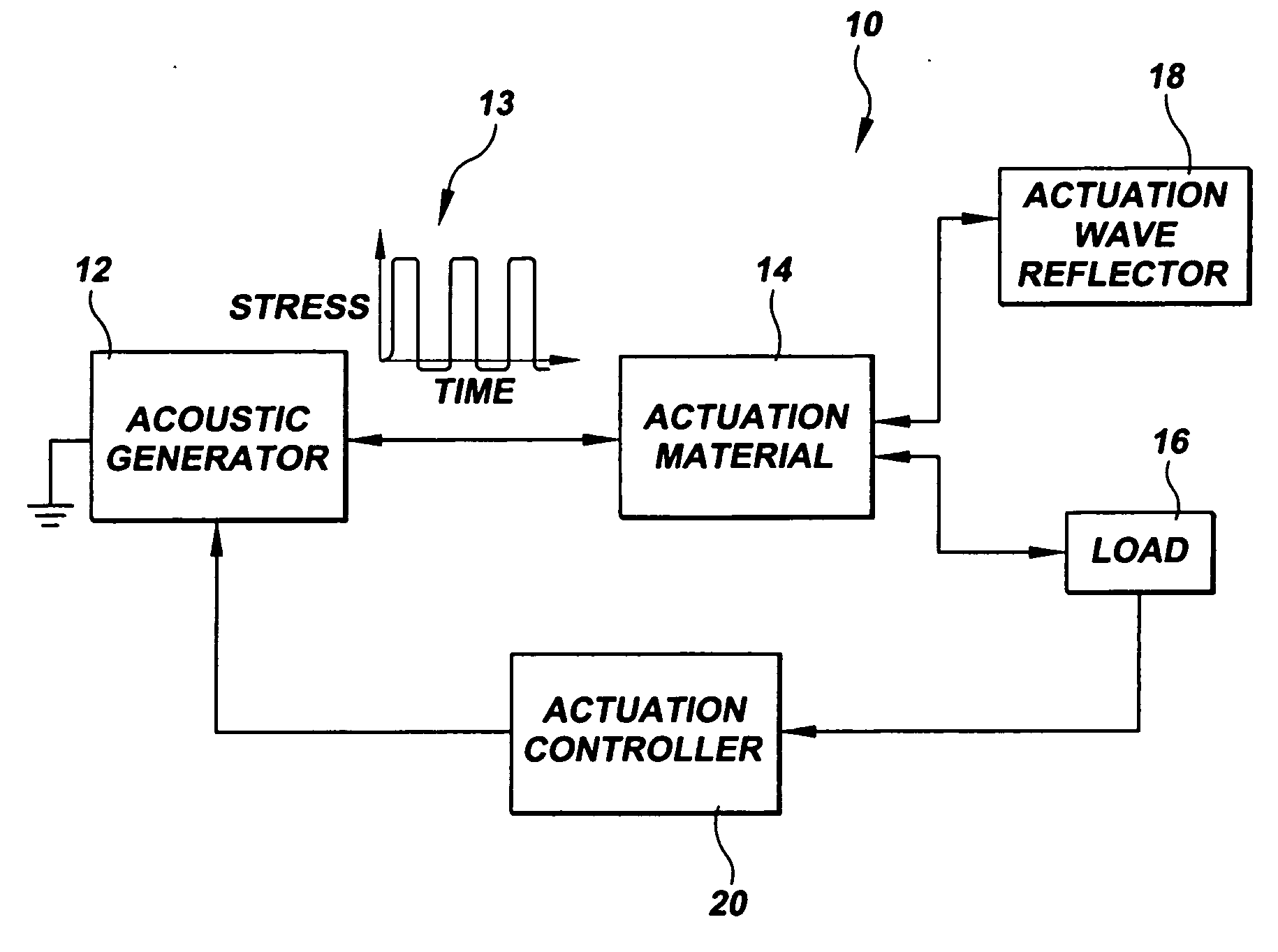
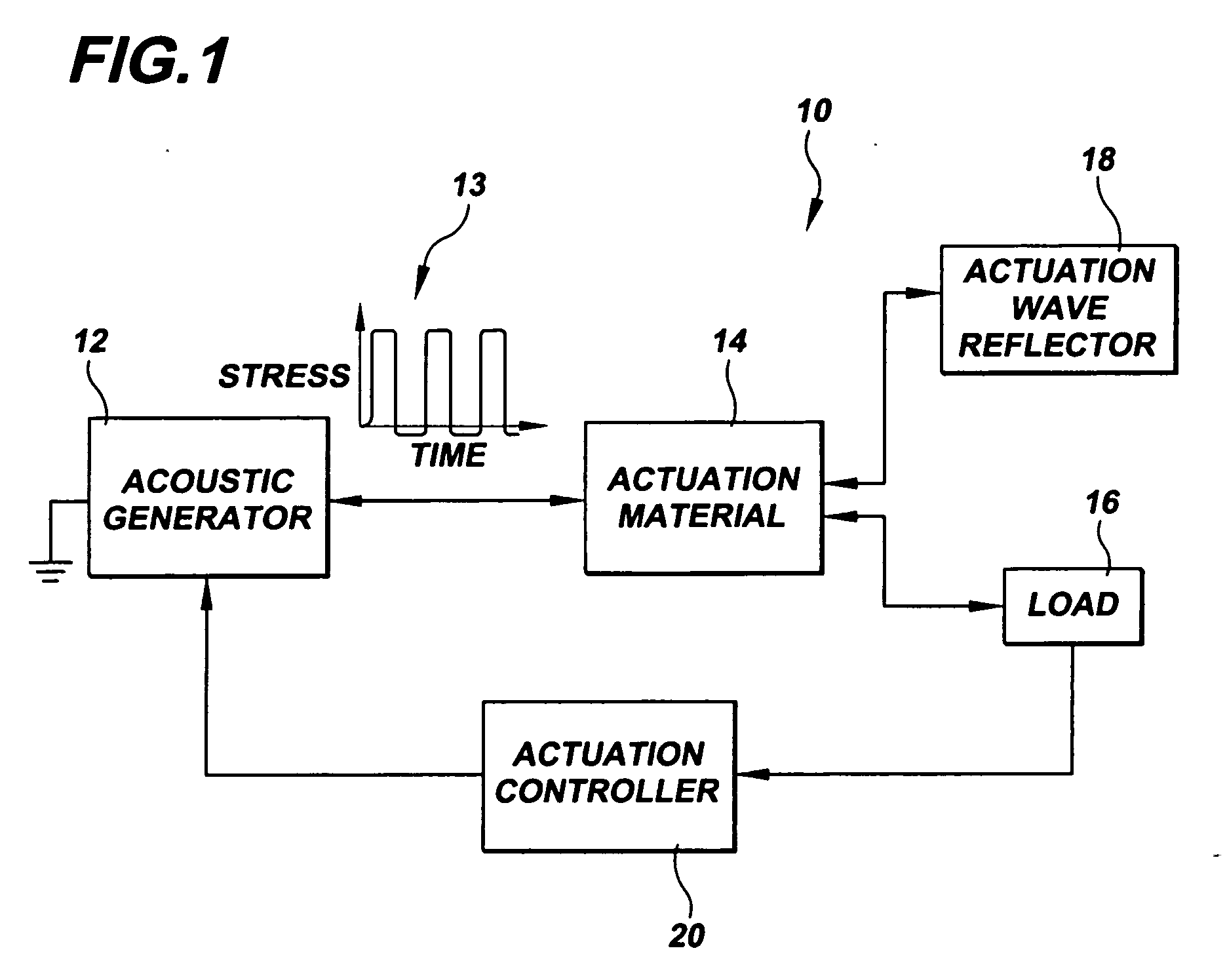
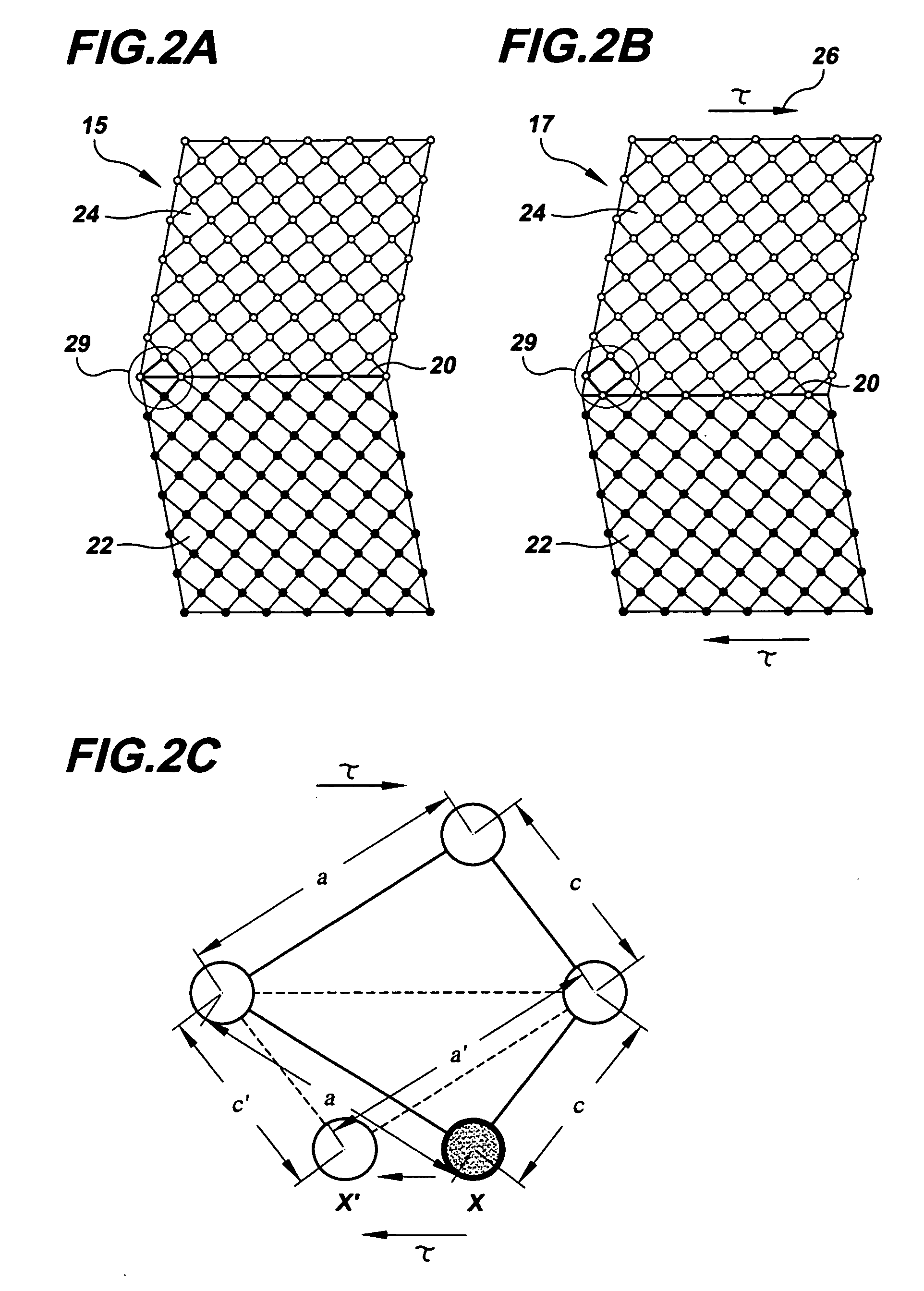
- An acoustically-driven actuator that utilizes acoustic stress waves to actuate materials conventionally driven by electric, magnetic, or thermal fields, enabling large actuation stroke with fast response times and high output strain at convenient operating temperatures, without the bulkiness associated with ferromagnetic shape memory alloy actuators.

Actuator with amplified stroke length
PatentInactiveEP1788645A1
Innovation
- A compact actuator design featuring a primary driver with a controllably variable length, a reaction surface, and an incompressible amplification medium within a working chamber, where the actuating rod's travel distance is amplified relative to the primary driver's length change, and thermal expansion is compensated to maintain consistent performance across varying temperatures.


Material Science Advances in Actuator Development
The development of advanced actuator materials has undergone significant transformation over the past decade, driven by the need for more efficient, precise, and miniaturized actuation systems. Recent breakthroughs in material synthesis and characterization techniques have enabled researchers to engineer materials with enhanced electromechanical properties, leading to substantial improvements in both piezoelectric and magnetoelectric actuator performance.
In piezoelectric materials, the focus has shifted toward developing lead-free compositions that maintain high piezoelectric coefficients while addressing environmental concerns. Advanced ceramic processing techniques, including spark plasma sintering and additive manufacturing, have enabled the creation of textured ceramics with significantly improved d33 coefficients exceeding 600 pC/N in potassium sodium niobate-based systems. Single crystal growth technologies have also matured, allowing for the production of large-scale PMN-PT and PZN-PT crystals with exceptional electromechanical coupling factors above 0.9.
Magnetoelectric materials have experienced remarkable progress through the development of composite architectures and interface engineering. Laminated composites combining high-permeability magnetic alloys like Metglas with high-performance piezoelectric ceramics have achieved magnetoelectric coefficients exceeding 50 V/cm·Oe. Novel nanostructured approaches, including core-shell nanoparticles and vertically aligned nanocomposites, have demonstrated enhanced coupling effects through strain-mediated interactions at the nanoscale.
Thin film deposition technologies have revolutionized both material categories, enabling precise control over crystallographic orientation and stress states. Pulsed laser deposition and molecular beam epitaxy have facilitated the growth of epitaxial films with superior properties compared to their bulk counterparts. These advances have been particularly impactful for MEMS applications, where film thickness and uniformity directly influence device performance.
The integration of computational materials science has accelerated discovery processes, with density functional theory calculations guiding the design of new compositions and predicting optimal dopant concentrations. Machine learning algorithms are increasingly employed to identify promising material combinations and processing parameters, significantly reducing development timelines from years to months.
In piezoelectric materials, the focus has shifted toward developing lead-free compositions that maintain high piezoelectric coefficients while addressing environmental concerns. Advanced ceramic processing techniques, including spark plasma sintering and additive manufacturing, have enabled the creation of textured ceramics with significantly improved d33 coefficients exceeding 600 pC/N in potassium sodium niobate-based systems. Single crystal growth technologies have also matured, allowing for the production of large-scale PMN-PT and PZN-PT crystals with exceptional electromechanical coupling factors above 0.9.
Magnetoelectric materials have experienced remarkable progress through the development of composite architectures and interface engineering. Laminated composites combining high-permeability magnetic alloys like Metglas with high-performance piezoelectric ceramics have achieved magnetoelectric coefficients exceeding 50 V/cm·Oe. Novel nanostructured approaches, including core-shell nanoparticles and vertically aligned nanocomposites, have demonstrated enhanced coupling effects through strain-mediated interactions at the nanoscale.
Thin film deposition technologies have revolutionized both material categories, enabling precise control over crystallographic orientation and stress states. Pulsed laser deposition and molecular beam epitaxy have facilitated the growth of epitaxial films with superior properties compared to their bulk counterparts. These advances have been particularly impactful for MEMS applications, where film thickness and uniformity directly influence device performance.
The integration of computational materials science has accelerated discovery processes, with density functional theory calculations guiding the design of new compositions and predicting optimal dopant concentrations. Machine learning algorithms are increasingly employed to identify promising material combinations and processing parameters, significantly reducing development timelines from years to months.
Energy Efficiency Standards for Actuator Systems
Energy efficiency standards for actuator systems have become increasingly critical as industries seek to reduce operational costs and meet environmental regulations. Current international standards, including IEC 60034-30-1 and IEEE 112, establish baseline efficiency requirements that both piezoelectric and magnetoelectric actuators must meet in commercial applications. These standards typically mandate minimum efficiency thresholds ranging from 85% to 95% depending on power ratings and application categories.
Piezoelectric actuators demonstrate exceptional energy efficiency in precision positioning applications, often achieving conversion efficiencies exceeding 90% due to their direct electromechanical coupling mechanism. However, their efficiency significantly degrades under continuous operation scenarios, particularly when driving capacitive loads that require constant power to maintain position. The energy consumption patterns of piezoelectric systems align well with intermittent duty cycle standards but face challenges meeting continuous operation efficiency requirements.
Magnetoelectric actuators present a different efficiency profile, with electromagnetic variants typically operating at 70-85% efficiency under rated conditions. While lower than piezoelectric peak efficiency, magnetoelectric systems maintain more consistent performance across varying load conditions and operational frequencies. Their efficiency characteristics better match standards designed for continuous duty applications, making them suitable for industrial automation systems requiring sustained operation.
Emerging efficiency standards specifically address standby power consumption, where piezoelectric actuators excel due to their ability to maintain position without continuous power input. New draft standards propose dynamic efficiency metrics that account for varying operational modes, potentially favoring hybrid actuator designs that combine both technologies. These evolving standards recognize that optimal efficiency depends on application-specific duty cycles rather than peak performance alone.
Compliance testing methodologies continue to evolve, with recent standards incorporating real-world operational profiles rather than static laboratory conditions. This shift particularly impacts magnetoelectric actuator evaluation, as their efficiency varies significantly with load characteristics and environmental conditions. Future standards are expected to mandate comprehensive efficiency mapping across operational ranges, driving innovation in both actuator technologies toward adaptive efficiency optimization strategies.
Piezoelectric actuators demonstrate exceptional energy efficiency in precision positioning applications, often achieving conversion efficiencies exceeding 90% due to their direct electromechanical coupling mechanism. However, their efficiency significantly degrades under continuous operation scenarios, particularly when driving capacitive loads that require constant power to maintain position. The energy consumption patterns of piezoelectric systems align well with intermittent duty cycle standards but face challenges meeting continuous operation efficiency requirements.
Magnetoelectric actuators present a different efficiency profile, with electromagnetic variants typically operating at 70-85% efficiency under rated conditions. While lower than piezoelectric peak efficiency, magnetoelectric systems maintain more consistent performance across varying load conditions and operational frequencies. Their efficiency characteristics better match standards designed for continuous duty applications, making them suitable for industrial automation systems requiring sustained operation.
Emerging efficiency standards specifically address standby power consumption, where piezoelectric actuators excel due to their ability to maintain position without continuous power input. New draft standards propose dynamic efficiency metrics that account for varying operational modes, potentially favoring hybrid actuator designs that combine both technologies. These evolving standards recognize that optimal efficiency depends on application-specific duty cycles rather than peak performance alone.
Compliance testing methodologies continue to evolve, with recent standards incorporating real-world operational profiles rather than static laboratory conditions. This shift particularly impacts magnetoelectric actuator evaluation, as their efficiency varies significantly with load characteristics and environmental conditions. Future standards are expected to mandate comprehensive efficiency mapping across operational ranges, driving innovation in both actuator technologies toward adaptive efficiency optimization strategies.
Unlock deeper insights with PatSnap Eureka Quick Research — get a full tech report to explore trends and direct your research. Try now!
Generate Your Research Report Instantly with AI Agent
Supercharge your innovation with PatSnap Eureka AI Agent Platform!