

Comparing Signal Fidelity in Different Waveguide Grating Designs
APR 14, 20269 MIN READ
Generate Your Research Report Instantly with AI Agent
PatSnap Eureka helps you evaluate technical feasibility & market potential.
Waveguide Grating Signal Fidelity Background and Objectives
Waveguide gratings have emerged as fundamental components in modern photonic systems, serving critical roles in optical communications, sensing applications, and integrated photonic circuits. These structures, which consist of periodic variations in refractive index or physical dimensions within optical waveguides, enable precise control over light propagation, wavelength filtering, and signal routing. The evolution of waveguide grating technology spans several decades, beginning with early fiber Bragg gratings in the 1970s and progressing to sophisticated integrated photonic grating structures used in today's advanced optical systems.
The development trajectory of waveguide gratings has been driven by the increasing demand for higher bandwidth, improved signal quality, and miniaturization in optical communication systems. Early implementations focused primarily on basic wavelength selection and reflection functions. However, as photonic integration advanced, the requirements evolved to encompass complex signal processing capabilities, including dispersion compensation, wavelength division multiplexing, and optical signal conditioning.
Contemporary waveguide grating designs encompass various architectural approaches, including uniform period gratings, chirped gratings, apodized structures, and complex multi-section configurations. Each design variant offers distinct advantages in terms of spectral response, bandwidth characteristics, and signal fidelity performance. The geometric parameters, such as grating period, duty cycle, etch depth, and coupling strength, significantly influence the overall system performance and signal integrity.
The primary technical objective in comparing signal fidelity across different waveguide grating designs centers on establishing quantitative metrics for evaluating signal quality preservation throughout the optical transmission chain. Signal fidelity encompasses multiple performance parameters, including insertion loss, spectral response uniformity, phase linearity, polarization dependence, and temporal dispersion characteristics. Understanding how different grating architectures impact these parameters is crucial for optimizing system-level performance.
Current research objectives focus on developing comprehensive characterization methodologies that enable accurate comparison of signal fidelity across diverse grating implementations. This includes establishing standardized measurement protocols, developing advanced simulation frameworks, and creating predictive models that correlate design parameters with fidelity metrics. The ultimate goal is to provide design guidelines that enable engineers to select optimal grating configurations based on specific application requirements and performance constraints.
The development trajectory of waveguide gratings has been driven by the increasing demand for higher bandwidth, improved signal quality, and miniaturization in optical communication systems. Early implementations focused primarily on basic wavelength selection and reflection functions. However, as photonic integration advanced, the requirements evolved to encompass complex signal processing capabilities, including dispersion compensation, wavelength division multiplexing, and optical signal conditioning.
Contemporary waveguide grating designs encompass various architectural approaches, including uniform period gratings, chirped gratings, apodized structures, and complex multi-section configurations. Each design variant offers distinct advantages in terms of spectral response, bandwidth characteristics, and signal fidelity performance. The geometric parameters, such as grating period, duty cycle, etch depth, and coupling strength, significantly influence the overall system performance and signal integrity.
The primary technical objective in comparing signal fidelity across different waveguide grating designs centers on establishing quantitative metrics for evaluating signal quality preservation throughout the optical transmission chain. Signal fidelity encompasses multiple performance parameters, including insertion loss, spectral response uniformity, phase linearity, polarization dependence, and temporal dispersion characteristics. Understanding how different grating architectures impact these parameters is crucial for optimizing system-level performance.
Current research objectives focus on developing comprehensive characterization methodologies that enable accurate comparison of signal fidelity across diverse grating implementations. This includes establishing standardized measurement protocols, developing advanced simulation frameworks, and creating predictive models that correlate design parameters with fidelity metrics. The ultimate goal is to provide design guidelines that enable engineers to select optimal grating configurations based on specific application requirements and performance constraints.
Market Demand for High-Fidelity Waveguide Grating Solutions
The telecommunications and photonics industries are experiencing unprecedented demand for high-fidelity waveguide grating solutions, driven by the exponential growth in data transmission requirements and the proliferation of advanced optical communication systems. Modern applications ranging from 5G networks to data center interconnects require increasingly sophisticated optical components that can maintain signal integrity across diverse operating conditions while supporting higher bandwidth densities.
Fiber-to-the-home deployments and metropolitan area networks represent significant growth segments where waveguide gratings play crucial roles in wavelength division multiplexing systems. The demand for enhanced signal fidelity has become particularly acute as network operators seek to maximize channel capacity while minimizing signal degradation over extended transmission distances. This trend is further amplified by the emergence of coherent optical communication systems that require precise spectral control and minimal phase noise.
The automotive industry's transition toward autonomous vehicles has created substantial demand for high-performance LiDAR systems, where waveguide gratings serve as critical beam steering components. These applications require exceptional signal fidelity to ensure accurate distance measurements and object detection capabilities under varying environmental conditions. Similarly, the aerospace and defense sectors demand robust waveguide grating solutions for radar systems and satellite communications, where signal integrity directly impacts mission-critical operations.
Emerging applications in quantum computing and quantum communication networks are establishing new performance benchmarks for waveguide grating technologies. These systems require unprecedented levels of signal fidelity to maintain quantum coherence and enable reliable quantum state manipulation. The growing investment in quantum technologies by both government agencies and private enterprises is creating substantial market opportunities for advanced grating solutions.
The medical device industry represents another expanding market segment, particularly in optical coherence tomography systems and minimally invasive surgical instruments. These applications demand high-fidelity waveguide gratings capable of delivering precise spectral performance while maintaining biocompatibility and reliability standards. The aging global population and increasing healthcare expenditure continue to drive demand for advanced medical imaging and diagnostic equipment incorporating sophisticated optical components.
Industrial sensing and measurement applications are increasingly adopting waveguide grating-based solutions for process monitoring and quality control systems. Manufacturing industries require high-fidelity optical sensors capable of operating in harsh environments while delivering consistent performance over extended operational periods.
Fiber-to-the-home deployments and metropolitan area networks represent significant growth segments where waveguide gratings play crucial roles in wavelength division multiplexing systems. The demand for enhanced signal fidelity has become particularly acute as network operators seek to maximize channel capacity while minimizing signal degradation over extended transmission distances. This trend is further amplified by the emergence of coherent optical communication systems that require precise spectral control and minimal phase noise.
The automotive industry's transition toward autonomous vehicles has created substantial demand for high-performance LiDAR systems, where waveguide gratings serve as critical beam steering components. These applications require exceptional signal fidelity to ensure accurate distance measurements and object detection capabilities under varying environmental conditions. Similarly, the aerospace and defense sectors demand robust waveguide grating solutions for radar systems and satellite communications, where signal integrity directly impacts mission-critical operations.
Emerging applications in quantum computing and quantum communication networks are establishing new performance benchmarks for waveguide grating technologies. These systems require unprecedented levels of signal fidelity to maintain quantum coherence and enable reliable quantum state manipulation. The growing investment in quantum technologies by both government agencies and private enterprises is creating substantial market opportunities for advanced grating solutions.
The medical device industry represents another expanding market segment, particularly in optical coherence tomography systems and minimally invasive surgical instruments. These applications demand high-fidelity waveguide gratings capable of delivering precise spectral performance while maintaining biocompatibility and reliability standards. The aging global population and increasing healthcare expenditure continue to drive demand for advanced medical imaging and diagnostic equipment incorporating sophisticated optical components.
Industrial sensing and measurement applications are increasingly adopting waveguide grating-based solutions for process monitoring and quality control systems. Manufacturing industries require high-fidelity optical sensors capable of operating in harsh environments while delivering consistent performance over extended operational periods.
Current State and Signal Loss Challenges in Waveguide Gratings
Waveguide gratings represent a critical component in modern photonic systems, serving as fundamental building blocks for wavelength division multiplexing, optical filtering, and sensing applications. The current technological landscape demonstrates significant advancement in fabrication techniques and design methodologies, yet substantial challenges persist in maintaining optimal signal fidelity across different grating architectures.
Contemporary waveguide grating implementations primarily utilize silicon-on-insulator platforms, leveraging mature CMOS fabrication processes to achieve sub-micron feature sizes. Advanced lithography techniques, including electron beam lithography and deep ultraviolet photolithography, enable precise control over grating periodicity and duty cycles. However, manufacturing tolerances continue to impose fundamental limitations on achievable performance metrics.
Signal loss mechanisms in waveguide gratings manifest through multiple pathways, with scattering losses representing the most significant contributor to overall system degradation. Surface roughness induced by etching processes creates random variations in the effective refractive index, leading to unwanted optical scattering and reduced transmission efficiency. Typical scattering losses range from 0.1 to 2 dB per centimeter, depending on fabrication quality and grating geometry.
Coupling losses between waveguide modes and grating structures constitute another critical challenge, particularly in applications requiring high spectral selectivity. Mode mismatch at grating interfaces can result in reflection coefficients exceeding 10%, significantly impacting overall system performance. This issue becomes more pronounced in compact grating designs where abrupt index transitions are unavoidable.
Thermal sensitivity presents additional complications for maintaining signal integrity in practical deployment scenarios. Temperature variations induce refractive index changes in silicon waveguides, causing spectral drift in grating response characteristics. Typical thermal coefficients range from 80 to 100 pm/°C, necessitating active temperature control or athermal design strategies for stable operation.
Polarization-dependent losses emerge as a significant concern in many grating configurations, particularly those optimized for specific polarization states. Cross-polarization coupling can introduce insertion losses exceeding 1 dB while degrading extinction ratios in filtering applications. Current mitigation strategies include polarization diversity schemes and specialized grating geometries, though these approaches often compromise other performance parameters.
Nonlinear effects, while less prominent in typical operating conditions, can become significant in high-power applications or ultra-compact designs. Two-photon absorption and free-carrier effects contribute to power-dependent losses and spectral distortions, limiting the dynamic range of grating-based devices.
Contemporary waveguide grating implementations primarily utilize silicon-on-insulator platforms, leveraging mature CMOS fabrication processes to achieve sub-micron feature sizes. Advanced lithography techniques, including electron beam lithography and deep ultraviolet photolithography, enable precise control over grating periodicity and duty cycles. However, manufacturing tolerances continue to impose fundamental limitations on achievable performance metrics.
Signal loss mechanisms in waveguide gratings manifest through multiple pathways, with scattering losses representing the most significant contributor to overall system degradation. Surface roughness induced by etching processes creates random variations in the effective refractive index, leading to unwanted optical scattering and reduced transmission efficiency. Typical scattering losses range from 0.1 to 2 dB per centimeter, depending on fabrication quality and grating geometry.
Coupling losses between waveguide modes and grating structures constitute another critical challenge, particularly in applications requiring high spectral selectivity. Mode mismatch at grating interfaces can result in reflection coefficients exceeding 10%, significantly impacting overall system performance. This issue becomes more pronounced in compact grating designs where abrupt index transitions are unavoidable.
Thermal sensitivity presents additional complications for maintaining signal integrity in practical deployment scenarios. Temperature variations induce refractive index changes in silicon waveguides, causing spectral drift in grating response characteristics. Typical thermal coefficients range from 80 to 100 pm/°C, necessitating active temperature control or athermal design strategies for stable operation.
Polarization-dependent losses emerge as a significant concern in many grating configurations, particularly those optimized for specific polarization states. Cross-polarization coupling can introduce insertion losses exceeding 1 dB while degrading extinction ratios in filtering applications. Current mitigation strategies include polarization diversity schemes and specialized grating geometries, though these approaches often compromise other performance parameters.
Nonlinear effects, while less prominent in typical operating conditions, can become significant in high-power applications or ultra-compact designs. Two-photon absorption and free-carrier effects contribute to power-dependent losses and spectral distortions, limiting the dynamic range of grating-based devices.
Existing Waveguide Grating Design Solutions
01 Grating structure optimization for improved signal fidelity
Optimizing the physical structure of waveguide gratings, including grating period, depth, and duty cycle, can significantly enhance signal fidelity. Precise control of these parameters reduces signal distortion and improves the accuracy of light coupling and diffraction. Advanced fabrication techniques enable the creation of gratings with uniform characteristics that maintain signal integrity across the operational wavelength range.- Grating structure optimization for improved signal fidelity: Optimizing the physical structure of waveguide gratings, including grating period, depth, and duty cycle, can significantly enhance signal fidelity. Precise control of these parameters reduces unwanted diffraction orders and minimizes signal distortion. Advanced fabrication techniques enable the creation of gratings with improved uniformity and reduced defects, leading to better signal transmission characteristics and higher fidelity in optical communication systems.
- Apodization techniques for sidelobe suppression: Implementing apodization profiles in waveguide gratings helps suppress sidelobes and improve signal quality. By gradually varying the grating strength along its length, unwanted spectral components can be minimized. This technique reduces crosstalk and enhances the signal-to-noise ratio, resulting in improved fidelity for wavelength-selective applications. Various apodization functions can be applied to achieve optimal performance for specific applications.
- Temperature compensation methods for stable signal transmission: Temperature variations can affect waveguide grating performance and signal fidelity. Compensation techniques include using materials with matched thermal expansion coefficients or implementing active temperature control systems. These methods maintain consistent grating characteristics across temperature ranges, ensuring stable wavelength response and preserving signal integrity in varying environmental conditions.
- Chirped grating designs for dispersion management: Chirped gratings with non-uniform periods enable effective dispersion compensation and pulse shaping capabilities. These designs help maintain signal fidelity by counteracting chromatic dispersion effects in optical transmission systems. The controlled variation in grating period allows for precise manipulation of different wavelength components, improving overall signal quality and reducing pulse broadening in high-speed communication applications.
- Coupling efficiency enhancement through mode matching: Improving coupling efficiency between waveguides and gratings through optimized mode matching techniques enhances signal fidelity. This involves designing grating structures that better match the modal profiles of input and output waveguides, reducing insertion loss and reflection. Advanced coupling configurations minimize mode conversion losses and maintain signal integrity throughout the transmission path, resulting in higher overall system performance.
02 Apodization techniques for sidelobe suppression
Implementing apodization methods in waveguide grating design helps suppress unwanted sidelobes and reduce crosstalk, thereby improving signal fidelity. By varying the grating strength along its length, apodization creates a more controlled spectral response with reduced ripples and enhanced main lobe characteristics. This technique is particularly effective in filtering applications and wavelength-selective devices.Expand Specific Solutions03 Temperature compensation mechanisms
Temperature variations can significantly affect waveguide grating performance and signal fidelity. Incorporating temperature compensation mechanisms, such as using materials with specific thermal expansion coefficients or active temperature control systems, helps maintain stable grating characteristics across different operating conditions. These approaches ensure consistent signal quality and minimize wavelength drift caused by thermal effects.Expand Specific Solutions04 Chirped grating designs for dispersion management
Chirped waveguide gratings with non-uniform periods enable effective dispersion compensation and pulse shaping, which are critical for maintaining signal fidelity in high-speed optical communication systems. The gradual variation in grating period allows for precise control of group delay characteristics, reducing signal distortion caused by chromatic dispersion. This approach is essential for long-distance transmission and high-bandwidth applications.Expand Specific Solutions05 Multi-layer and cascaded grating configurations
Utilizing multi-layer waveguide structures or cascaded grating arrangements enhances signal fidelity by providing additional degrees of freedom in spectral shaping and filtering. These configurations allow for more complex transfer functions and improved rejection of unwanted signals. The combination of multiple gratings can achieve superior performance in terms of bandwidth, extinction ratio, and overall signal quality compared to single-grating designs.Expand Specific Solutions
Key Players in Photonic Waveguide and Grating Industry
The waveguide grating technology sector is experiencing rapid growth driven by expanding AR/VR applications and telecommunications demands. The industry is in a transitional phase from research-intensive development to commercial deployment, with market size projected to reach billions as consumer adoption accelerates. Technology maturity varies significantly across players, with established companies like Huawei Technologies, Applied Materials, and BOE Technology Group leading in manufacturing scalability and integration capabilities. Research institutions including Zhejiang University, Technical University of Denmark, and University of Southampton drive fundamental innovations in grating design optimization. Specialized firms like DigiLens and Greatar Tech focus on holographic waveguide solutions, while CSEM and Industrial Technology Research Institute bridge academic research with industrial applications. The competitive landscape shows a clear division between volume manufacturers achieving production maturity and innovative startups developing next-generation designs, indicating the technology is approaching commercial viability while maintaining significant differentiation opportunities.
Fujikura Ltd.
Technical Solution: Fujikura leverages its extensive fiber optic expertise to develop high-fidelity waveguide grating solutions for sensing and communication applications. Their technology focuses on fiber Bragg gratings and planar waveguide gratings with exceptional spectral characteristics and thermal stability. The company's manufacturing processes ensure precise refractive index modulation and uniform grating periods, resulting in superior signal fidelity and reduced noise characteristics. Their waveguide gratings demonstrate excellent wavelength selectivity with side-lobe suppression ratios exceeding 25dB and temperature coefficients optimized for stable operation across wide environmental ranges, making them ideal for demanding industrial and aerospace applications.
Strengths: Decades of fiber optic manufacturing experience with proven reliability in harsh environments. Weaknesses: Traditional focus on fiber-based solutions may limit innovation in emerging planar waveguide technologies.
DigiLens, Inc.
Technical Solution: DigiLens specializes in holographic waveguide display technology with proprietary diffractive waveguide designs that maintain high signal fidelity across wide field-of-view applications. Their waveguide gratings utilize volume holographic optical elements (vHOEs) that provide superior light efficiency and uniformity compared to traditional surface relief gratings. The company's MonoEye and Crystal50 waveguides demonstrate exceptional signal preservation through optimized grating coupling structures that minimize optical losses and maintain consistent brightness distribution. Their manufacturing process enables precise control over grating parameters, resulting in waveguides with minimal signal degradation and improved optical performance for AR/VR applications.
Strengths: Industry-leading holographic waveguide technology with superior light efficiency and field-of-view coverage. Weaknesses: Limited to display applications and higher manufacturing complexity compared to conventional approaches.
Core Innovations in Signal Fidelity Enhancement Technologies
Optical waveguide type grating element, production method thereof, multiplexer/demultiplexer module, and optical transmission system
PatentInactiveUS20040114864A1
Innovation
- An optical waveguide type grating element with a grating index modulation formed over a predetermined range, optimized to minimize chromatic dispersion by controlling group delay deviations and transmittance, featuring a phase-inverted amplitude profile and symmetric index modulation amplitudes, which reduces chromatic dispersion to 0.8 ps/nm or less within specific wavelength ranges.


Waveguide structure and arrayed waveguide grating structure
PatentInactiveUS7848602B2
Innovation
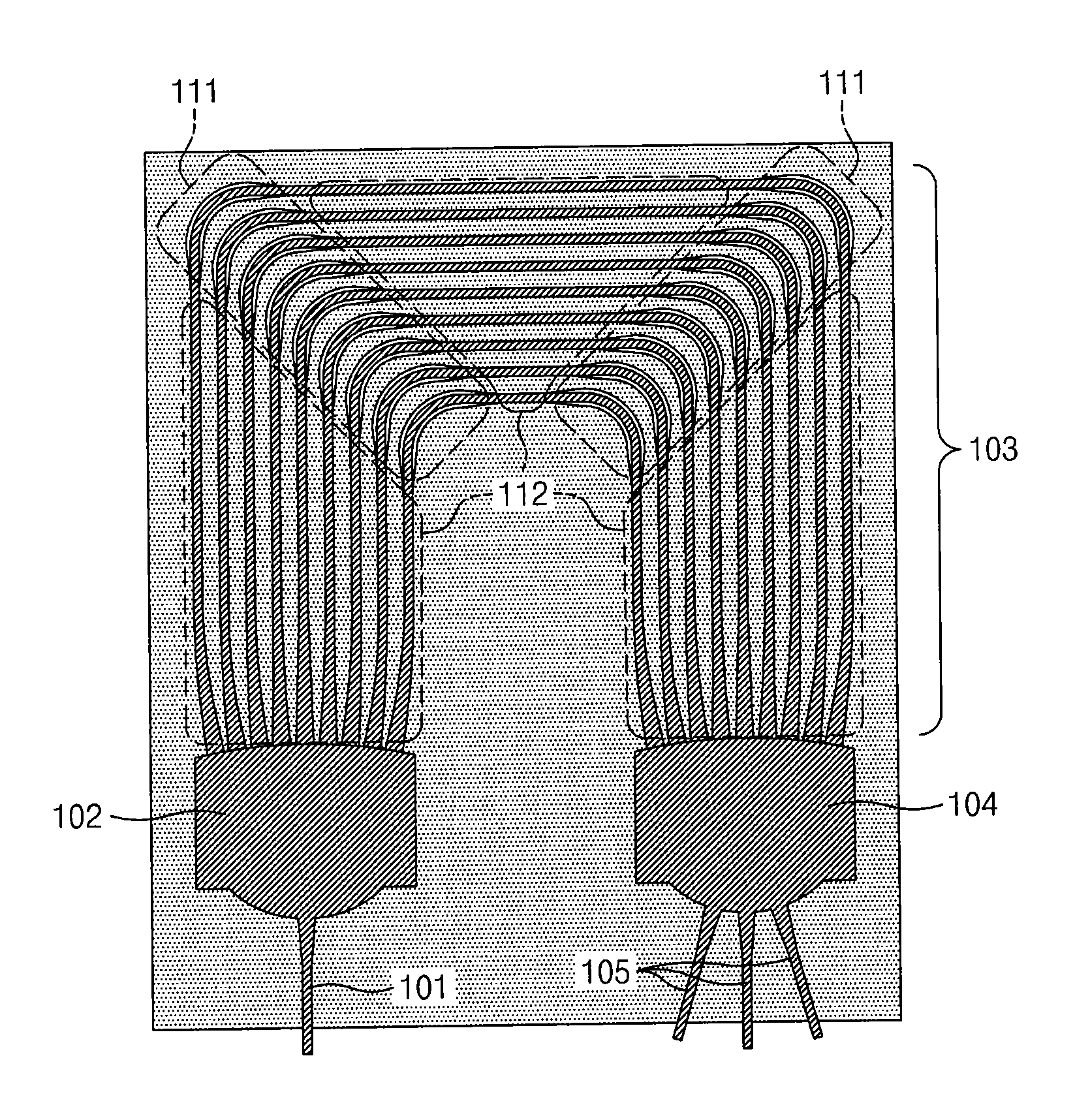
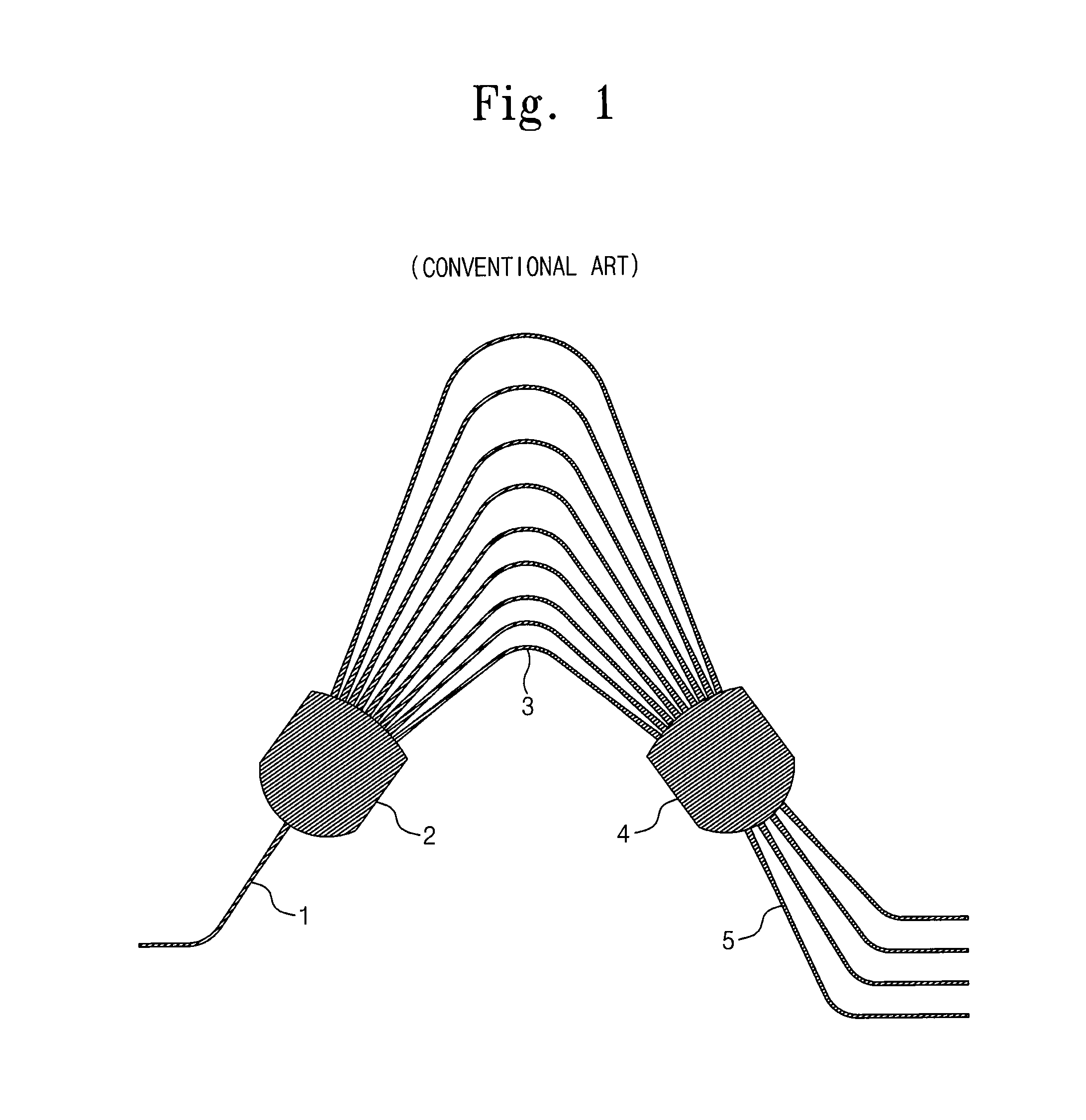
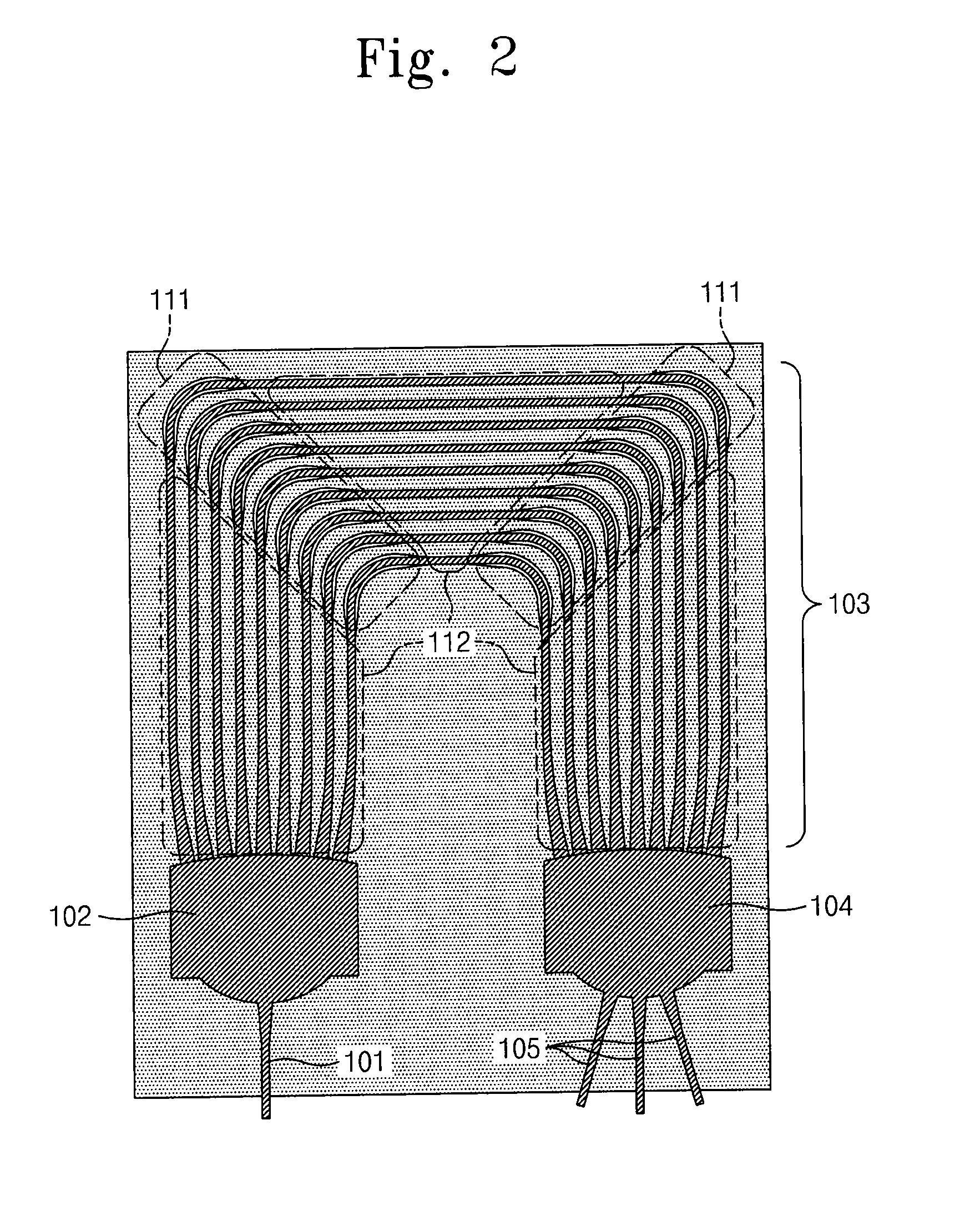
- The AWG structure incorporates sections with high and low confinement factors, including approximately linear and bending sections with varying lengths and refractive patterns, to optimize signal propagation and reduce phase errors, with auxiliary patterns and different refractive index materials used to manage confinement factors and minimize signal loss.

Manufacturing Standards for Photonic Waveguide Components
The manufacturing of photonic waveguide components requires adherence to stringent standards that directly impact signal fidelity performance across different grating designs. Current industry standards are primarily governed by international organizations including the International Electrotechnical Commission (IEC) and the Institute of Electrical and Electronics Engineers (IEEE), which establish fundamental parameters for dimensional tolerances, material specifications, and fabrication processes.
Dimensional precision represents the cornerstone of manufacturing standards for waveguide gratings. The IEC 61300 series specifies core diameter tolerances within ±0.5 micrometers for single-mode waveguides, while grating period variations must remain below ±2 nanometers to maintain signal integrity. These tolerances become increasingly critical when comparing different grating architectures, as uniform gratings require tighter period control compared to chirped or apodized designs that can accommodate slightly broader manufacturing windows.
Material quality standards encompass refractive index uniformity, optical loss specifications, and thermal stability requirements. The telecommunications industry standard ITU-T G.652 defines maximum attenuation coefficients of 0.4 dB/km at 1310 nm wavelength, while advanced photonic applications demand even lower loss figures. Silicon photonics manufacturing follows CMOS-compatible processes with specific requirements for silicon-on-insulator wafer quality, including buried oxide thickness uniformity within ±5% across the wafer surface.
Surface roughness control emerges as a critical manufacturing parameter affecting signal fidelity in grating structures. Industry standards specify sidewall roughness below 1 nanometer RMS for high-performance applications, achieved through optimized etching processes and post-fabrication treatments. Different grating designs exhibit varying sensitivity to surface imperfections, with distributed Bragg reflector gratings showing higher tolerance compared to surface relief gratings.
Fabrication process standards encompass lithography resolution requirements, etching selectivity specifications, and cleanliness protocols. Advanced grating structures demand electron-beam lithography capabilities with sub-10 nanometer resolution, while production-scale manufacturing relies on deep-UV photolithography with appropriate proximity correction techniques. Quality control procedures include automated optical inspection systems and standardized testing protocols for spectral response verification, ensuring consistent performance across different waveguide grating implementations while maintaining the signal fidelity characteristics essential for reliable photonic system operation.
Dimensional precision represents the cornerstone of manufacturing standards for waveguide gratings. The IEC 61300 series specifies core diameter tolerances within ±0.5 micrometers for single-mode waveguides, while grating period variations must remain below ±2 nanometers to maintain signal integrity. These tolerances become increasingly critical when comparing different grating architectures, as uniform gratings require tighter period control compared to chirped or apodized designs that can accommodate slightly broader manufacturing windows.
Material quality standards encompass refractive index uniformity, optical loss specifications, and thermal stability requirements. The telecommunications industry standard ITU-T G.652 defines maximum attenuation coefficients of 0.4 dB/km at 1310 nm wavelength, while advanced photonic applications demand even lower loss figures. Silicon photonics manufacturing follows CMOS-compatible processes with specific requirements for silicon-on-insulator wafer quality, including buried oxide thickness uniformity within ±5% across the wafer surface.
Surface roughness control emerges as a critical manufacturing parameter affecting signal fidelity in grating structures. Industry standards specify sidewall roughness below 1 nanometer RMS for high-performance applications, achieved through optimized etching processes and post-fabrication treatments. Different grating designs exhibit varying sensitivity to surface imperfections, with distributed Bragg reflector gratings showing higher tolerance compared to surface relief gratings.
Fabrication process standards encompass lithography resolution requirements, etching selectivity specifications, and cleanliness protocols. Advanced grating structures demand electron-beam lithography capabilities with sub-10 nanometer resolution, while production-scale manufacturing relies on deep-UV photolithography with appropriate proximity correction techniques. Quality control procedures include automated optical inspection systems and standardized testing protocols for spectral response verification, ensuring consistent performance across different waveguide grating implementations while maintaining the signal fidelity characteristics essential for reliable photonic system operation.
Signal Quality Measurement and Characterization Methods
Signal quality measurement in waveguide grating systems requires comprehensive characterization methodologies that can accurately assess performance variations across different design configurations. The fundamental approach involves establishing standardized measurement protocols that enable direct comparison between various grating architectures while maintaining consistent evaluation criteria.
Optical spectrum analysis serves as the primary measurement technique for evaluating signal fidelity in waveguide gratings. This method employs high-resolution optical spectrum analyzers to capture detailed spectral characteristics, including center wavelength accuracy, spectral linewidth, and side-mode suppression ratio. The measurement setup typically incorporates calibrated light sources, precision optical attenuators, and temperature-controlled environments to ensure reproducible results across different grating designs.
Insertion loss characterization represents another critical measurement parameter that directly impacts signal quality assessment. This involves systematic evaluation of power transmission efficiency through the waveguide grating structure using calibrated photodetectors and power meters. The measurement protocol requires careful consideration of coupling losses, propagation losses, and reflection losses to isolate the intrinsic performance characteristics of each grating design.
Temporal response analysis provides essential insights into signal fidelity through pulse response measurements and group delay characterization. These measurements utilize ultrafast optical pulses and high-speed detection systems to evaluate signal distortion effects, including pulse broadening and dispersion-induced degradation. The characterization process involves swept-wavelength measurements to map the frequency-dependent response across the operational bandwidth.
Polarization-dependent loss measurements constitute an important aspect of signal quality evaluation, particularly for applications requiring polarization-insensitive operation. This characterization employs polarization controllers and polarization analyzers to assess signal fidelity variations under different polarization states, providing comprehensive understanding of grating performance uniformity.
Environmental stability testing forms an integral component of signal quality characterization, involving temperature cycling, humidity exposure, and mechanical stress evaluation. These measurements assess signal fidelity degradation under operational conditions, enabling reliable performance prediction for different waveguide grating implementations in practical deployment scenarios.
Optical spectrum analysis serves as the primary measurement technique for evaluating signal fidelity in waveguide gratings. This method employs high-resolution optical spectrum analyzers to capture detailed spectral characteristics, including center wavelength accuracy, spectral linewidth, and side-mode suppression ratio. The measurement setup typically incorporates calibrated light sources, precision optical attenuators, and temperature-controlled environments to ensure reproducible results across different grating designs.
Insertion loss characterization represents another critical measurement parameter that directly impacts signal quality assessment. This involves systematic evaluation of power transmission efficiency through the waveguide grating structure using calibrated photodetectors and power meters. The measurement protocol requires careful consideration of coupling losses, propagation losses, and reflection losses to isolate the intrinsic performance characteristics of each grating design.
Temporal response analysis provides essential insights into signal fidelity through pulse response measurements and group delay characterization. These measurements utilize ultrafast optical pulses and high-speed detection systems to evaluate signal distortion effects, including pulse broadening and dispersion-induced degradation. The characterization process involves swept-wavelength measurements to map the frequency-dependent response across the operational bandwidth.
Polarization-dependent loss measurements constitute an important aspect of signal quality evaluation, particularly for applications requiring polarization-insensitive operation. This characterization employs polarization controllers and polarization analyzers to assess signal fidelity variations under different polarization states, providing comprehensive understanding of grating performance uniformity.
Environmental stability testing forms an integral component of signal quality characterization, involving temperature cycling, humidity exposure, and mechanical stress evaluation. These measurements assess signal fidelity degradation under operational conditions, enabling reliable performance prediction for different waveguide grating implementations in practical deployment scenarios.
Unlock deeper insights with PatSnap Eureka Quick Research — get a full tech report to explore trends and direct your research. Try now!
Generate Your Research Report Instantly with AI Agent
Supercharge your innovation with PatSnap Eureka AI Agent Platform!