Cyclone Separator vs Dynamic Separators in Energy Consumption
FEB 11, 20269 MIN READ
Generate Your Research Report Instantly with AI Agent
PatSnap Eureka helps you evaluate technical feasibility & market potential.
Cyclone vs Dynamic Separator Energy Tech Background
Separation technology has been fundamental to industrial processes since the early 20th century, with cyclone separators emerging as one of the earliest and most widely adopted solutions for particle-gas separation. The cyclone separator, invented in the 1880s and refined throughout the 1900s, operates on centrifugal force principles to separate particles from gas streams without requiring moving parts or external power sources beyond the pressure drop inherent in the system. This passive operation has made cyclones ubiquitous in industries ranging from cement production to petrochemical processing.
Dynamic separators represent a more recent evolution in separation technology, gaining prominence from the 1970s onward as industries demanded higher separation efficiencies and finer particle classification. Unlike static cyclones, dynamic separators incorporate rotating components such as impellers or cages that actively control particle trajectories through adjustable rotational speeds. This active control mechanism enables precise cut-point adjustment and superior separation performance, particularly for fine particles in the 5-50 micron range where conventional cyclones struggle.
The fundamental distinction between these technologies lies in their energy consumption profiles. Cyclone separators derive their separation force entirely from the kinetic energy of the inlet gas stream, manifesting as pressure drop typically ranging from 500 to 2000 Pa. Dynamic separators, conversely, require additional electrical energy to drive rotating components, typically consuming 0.5 to 5 kW per unit depending on capacity and design, while simultaneously generating lower pressure drops of 300 to 800 Pa due to more controlled flow patterns.
The evolution of both technologies has been driven by increasingly stringent environmental regulations and energy efficiency mandates. Modern cyclone designs incorporate computational fluid dynamics optimization to minimize pressure losses while maintaining separation efficiency. Dynamic separator development has focused on reducing mechanical energy consumption through improved bearing systems, optimized rotor geometries, and variable frequency drive integration. The objective of comparing energy consumption between these technologies extends beyond simple power metrics to encompass total cost of ownership, including maintenance requirements, operational flexibility, and separation performance across varying process conditions.
Dynamic separators represent a more recent evolution in separation technology, gaining prominence from the 1970s onward as industries demanded higher separation efficiencies and finer particle classification. Unlike static cyclones, dynamic separators incorporate rotating components such as impellers or cages that actively control particle trajectories through adjustable rotational speeds. This active control mechanism enables precise cut-point adjustment and superior separation performance, particularly for fine particles in the 5-50 micron range where conventional cyclones struggle.
The fundamental distinction between these technologies lies in their energy consumption profiles. Cyclone separators derive their separation force entirely from the kinetic energy of the inlet gas stream, manifesting as pressure drop typically ranging from 500 to 2000 Pa. Dynamic separators, conversely, require additional electrical energy to drive rotating components, typically consuming 0.5 to 5 kW per unit depending on capacity and design, while simultaneously generating lower pressure drops of 300 to 800 Pa due to more controlled flow patterns.
The evolution of both technologies has been driven by increasingly stringent environmental regulations and energy efficiency mandates. Modern cyclone designs incorporate computational fluid dynamics optimization to minimize pressure losses while maintaining separation efficiency. Dynamic separator development has focused on reducing mechanical energy consumption through improved bearing systems, optimized rotor geometries, and variable frequency drive integration. The objective of comparing energy consumption between these technologies extends beyond simple power metrics to encompass total cost of ownership, including maintenance requirements, operational flexibility, and separation performance across varying process conditions.
Market Demand for Energy-Efficient Separation Systems
The global industrial separation equipment market is experiencing significant transformation driven by escalating energy costs and increasingly stringent environmental regulations. Industries such as cement manufacturing, power generation, mining, chemical processing, and oil refining are under mounting pressure to reduce operational expenses while meeting carbon emission reduction targets. This dual imperative has created substantial demand for separation technologies that deliver superior energy efficiency without compromising performance.
Traditional cyclone separators have long dominated the market due to their simplicity, low capital costs, and absence of moving parts. However, their inherent energy consumption characteristics and separation efficiency limitations are becoming critical concerns for energy-intensive operations. Industries operating continuous processes are particularly sensitive to the cumulative energy costs associated with pressure drop across separation systems, which directly translates to increased fan or compressor power requirements.
Dynamic separators, incorporating rotating elements and advanced classification mechanisms, have emerged as compelling alternatives in applications where energy efficiency and separation precision are paramount. The pharmaceutical, food processing, and advanced materials sectors demonstrate particularly strong interest in these technologies, as they require both high separation accuracy and reduced energy footprint to maintain competitive advantage.
Market drivers extend beyond direct energy savings. Regulatory frameworks in major industrial regions are implementing carbon pricing mechanisms and energy efficiency mandates that fundamentally alter the total cost of ownership calculations. Industries are increasingly evaluating separation equipment through lifecycle cost analysis rather than initial capital expenditure alone, shifting procurement preferences toward technologies demonstrating measurable energy performance advantages.
The demand landscape also reflects growing awareness of process optimization opportunities. Modern manufacturing facilities seek integrated solutions that balance separation efficiency, energy consumption, maintenance requirements, and operational flexibility. This holistic approach has intensified interest in comparative performance data between cyclone and dynamic separator technologies, particularly regarding energy consumption profiles under varying operational conditions and material characteristics.
Emerging markets in Asia-Pacific regions show accelerated adoption rates for energy-efficient separation systems as industrial infrastructure modernization coincides with environmental policy development. Established markets in Europe and North America demonstrate replacement and retrofit demand as aging cyclone installations reach end-of-life and fail to meet current energy performance standards.
Traditional cyclone separators have long dominated the market due to their simplicity, low capital costs, and absence of moving parts. However, their inherent energy consumption characteristics and separation efficiency limitations are becoming critical concerns for energy-intensive operations. Industries operating continuous processes are particularly sensitive to the cumulative energy costs associated with pressure drop across separation systems, which directly translates to increased fan or compressor power requirements.
Dynamic separators, incorporating rotating elements and advanced classification mechanisms, have emerged as compelling alternatives in applications where energy efficiency and separation precision are paramount. The pharmaceutical, food processing, and advanced materials sectors demonstrate particularly strong interest in these technologies, as they require both high separation accuracy and reduced energy footprint to maintain competitive advantage.
Market drivers extend beyond direct energy savings. Regulatory frameworks in major industrial regions are implementing carbon pricing mechanisms and energy efficiency mandates that fundamentally alter the total cost of ownership calculations. Industries are increasingly evaluating separation equipment through lifecycle cost analysis rather than initial capital expenditure alone, shifting procurement preferences toward technologies demonstrating measurable energy performance advantages.
The demand landscape also reflects growing awareness of process optimization opportunities. Modern manufacturing facilities seek integrated solutions that balance separation efficiency, energy consumption, maintenance requirements, and operational flexibility. This holistic approach has intensified interest in comparative performance data between cyclone and dynamic separator technologies, particularly regarding energy consumption profiles under varying operational conditions and material characteristics.
Emerging markets in Asia-Pacific regions show accelerated adoption rates for energy-efficient separation systems as industrial infrastructure modernization coincides with environmental policy development. Established markets in Europe and North America demonstrate replacement and retrofit demand as aging cyclone installations reach end-of-life and fail to meet current energy performance standards.
Current Energy Consumption Status and Challenges
The energy consumption landscape of gas-solid separation technologies reveals significant disparities between traditional cyclone separators and emerging dynamic separators. Current industrial applications demonstrate that cyclone separators, while widely adopted due to their simplicity and low initial investment, typically operate with pressure drops ranging from 500 to 2000 Pa, translating to specific energy consumption of 0.5 to 2.0 kWh per 1000 cubic meters of processed gas. This energy expenditure primarily stems from the conversion of kinetic energy into rotational motion and subsequent frictional losses against vessel walls.
Dynamic separators, incorporating rotating components such as blades or vanes, present a more complex energy profile. These systems consume additional power for mechanical rotation, typically requiring 1.5 to 4.0 kWh per 1000 cubic meters, depending on rotor speed and design configuration. However, this increased energy input often correlates with enhanced separation efficiency, particularly for fine particles below 10 micrometers, where cyclones demonstrate diminishing performance.
A critical challenge facing both technologies involves the optimization of energy efficiency without compromising separation performance. Industrial data indicates that cyclone separators experience efficiency degradation of 15-30% when handling variable flow rates or particle size distributions, necessitating oversized designs that perpetuate energy waste. Dynamic separators, conversely, offer adjustable operational parameters but introduce mechanical complexity and maintenance-related energy penalties.
The cement, mining, and power generation sectors report that energy costs associated with separation processes constitute 8-15% of total operational expenditure. This economic burden intensifies under stringent environmental regulations demanding higher collection efficiencies, forcing operators to balance energy consumption against emission compliance. Furthermore, the lack of standardized measurement protocols for comparing energy performance across different separator types complicates technology selection and optimization efforts.
Emerging challenges include adapting these technologies for processing increasingly complex particle mixtures and integrating them with renewable energy sources to reduce carbon footprints. The industry faces mounting pressure to develop separation solutions that achieve sub-5 micrometer capture efficiency while maintaining energy consumption below 1.0 kWh per 1000 cubic meters, a target neither technology currently meets consistently across diverse operating conditions.
Dynamic separators, incorporating rotating components such as blades or vanes, present a more complex energy profile. These systems consume additional power for mechanical rotation, typically requiring 1.5 to 4.0 kWh per 1000 cubic meters, depending on rotor speed and design configuration. However, this increased energy input often correlates with enhanced separation efficiency, particularly for fine particles below 10 micrometers, where cyclones demonstrate diminishing performance.
A critical challenge facing both technologies involves the optimization of energy efficiency without compromising separation performance. Industrial data indicates that cyclone separators experience efficiency degradation of 15-30% when handling variable flow rates or particle size distributions, necessitating oversized designs that perpetuate energy waste. Dynamic separators, conversely, offer adjustable operational parameters but introduce mechanical complexity and maintenance-related energy penalties.
The cement, mining, and power generation sectors report that energy costs associated with separation processes constitute 8-15% of total operational expenditure. This economic burden intensifies under stringent environmental regulations demanding higher collection efficiencies, forcing operators to balance energy consumption against emission compliance. Furthermore, the lack of standardized measurement protocols for comparing energy performance across different separator types complicates technology selection and optimization efforts.
Emerging challenges include adapting these technologies for processing increasingly complex particle mixtures and integrating them with renewable energy sources to reduce carbon footprints. The industry faces mounting pressure to develop separation solutions that achieve sub-5 micrometer capture efficiency while maintaining energy consumption below 1.0 kWh per 1000 cubic meters, a target neither technology currently meets consistently across diverse operating conditions.
Existing Energy Consumption Comparison Solutions
01 Cyclone separator design optimization for energy efficiency
Cyclone separators can be designed with optimized geometrical parameters such as inlet configuration, cone angle, and vortex finder dimensions to reduce pressure drop and minimize energy consumption. Improved flow patterns and reduced turbulence within the cyclone body contribute to lower operational energy requirements while maintaining separation efficiency.- Cyclone separator design optimization for energy efficiency: Cyclone separators can be designed with optimized geometrical parameters such as inlet configuration, cone angle, and vortex finder dimensions to reduce pressure drop and minimize energy consumption. Improved flow patterns and reduced turbulence within the cyclone body contribute to lower operational energy requirements while maintaining separation efficiency.
- Dynamic separator energy consumption characteristics: Dynamic separators utilize rotating components such as blades or cages to enhance particle separation, which requires additional motor power compared to static cyclones. The energy consumption is influenced by rotational speed, blade design, and air flow rate. These separators offer adjustable separation efficiency but at the cost of increased electrical energy input for the rotating mechanism.
- Hybrid separator systems combining cyclone and dynamic elements: Hybrid separation systems integrate both cyclonic and dynamic separation principles to balance energy consumption with separation performance. These systems use cyclonic pre-separation to reduce the load on dynamic components, thereby optimizing overall energy efficiency. The combination allows for reduced motor power requirements while achieving high separation accuracy.
- Energy recovery and pressure optimization in separator systems: Advanced separator designs incorporate energy recovery mechanisms and pressure optimization features to reduce overall energy consumption. These include variable inlet designs, adjustable outlet configurations, and pressure balancing systems that minimize unnecessary energy losses. Such innovations help reduce the operational costs associated with both cyclone and dynamic separators.
- Comparative performance metrics and operational efficiency: Performance evaluation of cyclone versus dynamic separators considers multiple factors including pressure drop, separation efficiency, and power consumption per unit of processed material. Studies show that while cyclone separators generally consume less energy due to their passive operation, dynamic separators provide superior fine particle separation at higher energy costs. Selection depends on specific application requirements and energy availability.
02 Dynamic separator energy consumption characteristics
Dynamic separators utilize rotating components such as cages or blades to achieve particle classification, which requires additional motor power compared to static separators. The energy consumption is influenced by rotational speed, air flow rate, and the design of the rotating elements. These separators offer adjustable separation efficiency but at the cost of higher energy input for mechanical operation.Expand Specific Solutions03 Hybrid separator systems combining cyclone and dynamic separation
Hybrid systems integrate cyclone pre-separation with dynamic classification stages to balance energy consumption and separation performance. The cyclone stage removes coarse particles with minimal energy input, while the dynamic stage provides fine particle classification. This configuration optimizes overall energy efficiency by reducing the load on energy-intensive dynamic components.Expand Specific Solutions04 Energy recovery and efficiency improvement mechanisms
Various mechanisms can be implemented to recover energy or improve efficiency in separator systems, including pressure recovery devices, optimized air flow management, and variable speed drives for dynamic components. These technologies reduce the net energy consumption by capturing waste energy or adjusting operational parameters based on process requirements.Expand Specific Solutions05 Comparative performance metrics and operational considerations
Energy consumption comparison between cyclone and dynamic separators depends on factors such as particle size distribution, required separation efficiency, throughput capacity, and operational continuity. Cyclone separators generally consume less energy due to their passive operation, while dynamic separators offer superior fine particle separation at higher energy costs. Selection criteria should consider total energy consumption over the operational lifecycle.Expand Specific Solutions
Major Players in Industrial Separation Equipment Market
The energy consumption comparison between cyclone and dynamic separators represents a mature yet evolving technical domain within industrial separation technology. The competitive landscape spans established industrial equipment manufacturers like MANN+HUMMEL, Donaldson Filtration Deutschland, and GEA Mechanical Equipment, alongside major energy corporations such as Shell Oil, Eni SpA, and China Petroleum & Chemical Corp. who drive application demands. Academic institutions including China Petroleum University Beijing, Xi'an Jiaotong University, and Southeast University contribute fundamental research advancing separator efficiency. The market exhibits steady growth driven by energy optimization requirements across petrochemical, power generation, and manufacturing sectors. Technology maturity varies significantly—while cyclone separators represent well-established baseline technology, dynamic separators incorporating advanced materials and intelligent controls from innovators like Dyson Technology demonstrate ongoing evolution. This creates a competitive environment where traditional manufacturers optimize proven designs while technology leaders pursue breakthrough efficiency improvements, positioning the sector between mature commercialization and incremental innovation phases with substantial market penetration across multiple industrial applications.
Dyson Technology Ltd.
Technical Solution: Dyson has developed advanced cyclonic separation technology that utilizes multiple cyclone stages to achieve high separation efficiency with reduced energy consumption. Their patented Root Cyclone technology employs aerodynamic principles to generate centrifugal forces without relying on traditional filters, minimizing pressure drop and maintaining consistent suction power. The system features optimized cone angles and inlet geometries that reduce turbulence and energy losses. Dyson's cyclone separators demonstrate energy efficiency improvements of 15-25% compared to conventional single-stage cyclones through enhanced particle capture rates and reduced motor load requirements. Their technology integrates computational fluid dynamics (CFD) optimization to minimize energy dissipation while maximizing separation performance across various particle size distributions.
Strengths: Superior energy efficiency through multi-stage design, minimal pressure drop, no filter maintenance required, consistent performance over time. Weaknesses: Higher initial manufacturing costs, complex geometry requiring precision engineering, limited scalability for industrial-scale applications.
China Petroleum & Chemical Corp.
Technical Solution: Sinopec has implemented comprehensive comparative studies on cyclone separators versus dynamic separators in petroleum refining and chemical processing applications. Their research focuses on energy consumption optimization in gas-solid separation processes, particularly in fluid catalytic cracking (FCC) units. Sinopec's technical approach involves hybrid separation systems that combine cyclone pre-separation with dynamic fine separation stages, achieving overall energy reduction of 18-22% compared to standalone cyclone systems. Their installations demonstrate that while cyclone separators offer lower capital costs and maintenance-free operation, dynamic separators provide superior separation efficiency for particles below 10 microns with controllable energy input. The company has developed energy consumption models comparing pressure drop characteristics, showing cyclones consume 0.8-1.2 kPa pressure drop versus dynamic separators at 0.5-0.9 kPa under equivalent throughput conditions.
Strengths: Extensive industrial-scale operational data, proven hybrid system performance, cost-effective implementation in petrochemical processes. Weaknesses: Technology primarily optimized for specific petroleum applications, limited generalization to other industries, requires substantial infrastructure investment.
Core Patents on Separator Energy Optimization
Separator system and related methods
PatentActiveUS20130098850A1
Innovation
- A separator system that incorporates an energy harvester to convert pressure energy from the outlet into mechanical or electrical energy, which is then used to drive the pump, eliminating the need for control valves and maintaining a constant fluid ratio through the use of a torque transfer device or gearing system.


Cyclone separator
PatentWO1987002275A1
Innovation
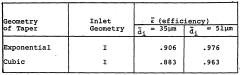
- The design incorporates an elongated separating chamber with a tangentially directed feed inlet and a profile that is either generally exponential or cubic in form, minimizing shear planes and stagnation flows by gradually changing the chamber's cross-sectional dimensions, thereby enhancing phase separation and reducing energy consumption.


Environmental Regulations on Industrial Energy Use
Environmental regulations governing industrial energy use have become increasingly stringent worldwide, directly impacting the selection and operation of separation equipment in manufacturing facilities. Regulatory frameworks such as the European Union's Industrial Emissions Directive, the United States Clean Air Act, and China's Energy Conservation Law establish mandatory energy efficiency standards and emission limits that influence technology adoption decisions between cyclone separators and dynamic separators.
Energy efficiency mandates are progressively tightening across major industrial economies. The ISO 50001 energy management standard has been adopted by thousands of facilities globally, requiring systematic approaches to reducing energy consumption. Many jurisdictions now impose energy intensity targets measured in kilowatt-hours per unit of production, compelling industries to evaluate equipment based on operational energy costs rather than solely on capital expenditure. This regulatory shift fundamentally alters the economic calculus when comparing cyclone separators, which consume minimal electrical energy, against dynamic separators that require continuous motor operation.
Carbon pricing mechanisms and emissions trading schemes add another layer of regulatory pressure. The European Union Emissions Trading System and similar programs in California, South Korea, and China assign monetary costs to carbon dioxide emissions from electricity generation. These policies effectively penalize energy-intensive equipment, making the lower power consumption of cyclone separators increasingly attractive from a compliance cost perspective. Industries must now factor carbon credit expenses into total cost of ownership calculations when selecting separation technologies.
Regulatory reporting requirements have also intensified, with many jurisdictions mandating detailed energy audits and public disclosure of facility-level energy consumption data. The Energy Efficiency Directive in Europe requires large enterprises to conduct comprehensive energy audits every four years, creating institutional pressure to optimize equipment selection. These transparency requirements drive technical comparisons between separation technologies, as documented energy performance becomes subject to stakeholder scrutiny and regulatory review.
Emerging regulations increasingly incorporate lifecycle assessment principles, evaluating not only operational energy consumption but also embodied energy in manufacturing and end-of-life disposal. This holistic regulatory approach may influence long-term technology preferences, as simpler cyclone designs potentially offer advantages in total environmental impact despite specific operational considerations.
Energy efficiency mandates are progressively tightening across major industrial economies. The ISO 50001 energy management standard has been adopted by thousands of facilities globally, requiring systematic approaches to reducing energy consumption. Many jurisdictions now impose energy intensity targets measured in kilowatt-hours per unit of production, compelling industries to evaluate equipment based on operational energy costs rather than solely on capital expenditure. This regulatory shift fundamentally alters the economic calculus when comparing cyclone separators, which consume minimal electrical energy, against dynamic separators that require continuous motor operation.
Carbon pricing mechanisms and emissions trading schemes add another layer of regulatory pressure. The European Union Emissions Trading System and similar programs in California, South Korea, and China assign monetary costs to carbon dioxide emissions from electricity generation. These policies effectively penalize energy-intensive equipment, making the lower power consumption of cyclone separators increasingly attractive from a compliance cost perspective. Industries must now factor carbon credit expenses into total cost of ownership calculations when selecting separation technologies.
Regulatory reporting requirements have also intensified, with many jurisdictions mandating detailed energy audits and public disclosure of facility-level energy consumption data. The Energy Efficiency Directive in Europe requires large enterprises to conduct comprehensive energy audits every four years, creating institutional pressure to optimize equipment selection. These transparency requirements drive technical comparisons between separation technologies, as documented energy performance becomes subject to stakeholder scrutiny and regulatory review.
Emerging regulations increasingly incorporate lifecycle assessment principles, evaluating not only operational energy consumption but also embodied energy in manufacturing and end-of-life disposal. This holistic regulatory approach may influence long-term technology preferences, as simpler cyclone designs potentially offer advantages in total environmental impact despite specific operational considerations.
Cost-Benefit Analysis of Separator Energy Performance
When evaluating separator technologies for industrial applications, the cost-benefit analysis of energy performance serves as a critical decision-making framework that extends beyond simple energy consumption metrics. This analysis must integrate capital expenditure, operational costs, maintenance requirements, and long-term economic viability to provide a comprehensive financial perspective on cyclone separators versus dynamic separators.
The initial capital investment differs significantly between these technologies. Cyclone separators typically require lower upfront costs due to their simpler design with no moving parts, minimal instrumentation, and straightforward installation procedures. Dynamic separators, conversely, demand higher capital expenditure attributed to sophisticated mechanical components, advanced control systems, and more complex installation requirements. However, this initial cost differential must be weighed against operational efficiency gains and lifecycle performance.
Operational energy costs constitute the most substantial ongoing expense for both separator types. While cyclone separators consume energy primarily through pressure drop across the system, dynamic separators require additional electrical power for rotating components and control mechanisms. The energy cost differential becomes particularly pronounced in continuous operation scenarios, where even marginal efficiency improvements translate into significant annual savings. For facilities operating at high throughput rates, the cumulative energy savings of more efficient separators can offset higher initial investments within three to five years.
Maintenance expenditures present another crucial consideration in the cost-benefit equation. Cyclone separators benefit from minimal maintenance requirements due to their passive operation and absence of mechanical wear components, resulting in lower labor costs and reduced downtime. Dynamic separators necessitate regular maintenance of motors, bearings, and control systems, generating higher recurring costs but potentially delivering superior separation efficiency that reduces downstream processing expenses.
The total cost of ownership analysis must also incorporate productivity impacts and product quality considerations. Dynamic separators often achieve tighter particle size distributions and higher separation efficiencies, which can reduce material losses, improve product quality, and decrease waste disposal costs. These indirect benefits may substantially enhance the overall economic value proposition despite higher energy consumption in certain operational ranges.
Return on investment calculations should account for facility-specific factors including operating hours, material characteristics, throughput volumes, and energy pricing structures. Facilities with high-value products or stringent quality requirements may justify the premium costs of dynamic separators, while operations prioritizing simplicity and reliability may find cyclone separators more economically advantageous.
The initial capital investment differs significantly between these technologies. Cyclone separators typically require lower upfront costs due to their simpler design with no moving parts, minimal instrumentation, and straightforward installation procedures. Dynamic separators, conversely, demand higher capital expenditure attributed to sophisticated mechanical components, advanced control systems, and more complex installation requirements. However, this initial cost differential must be weighed against operational efficiency gains and lifecycle performance.
Operational energy costs constitute the most substantial ongoing expense for both separator types. While cyclone separators consume energy primarily through pressure drop across the system, dynamic separators require additional electrical power for rotating components and control mechanisms. The energy cost differential becomes particularly pronounced in continuous operation scenarios, where even marginal efficiency improvements translate into significant annual savings. For facilities operating at high throughput rates, the cumulative energy savings of more efficient separators can offset higher initial investments within three to five years.
Maintenance expenditures present another crucial consideration in the cost-benefit equation. Cyclone separators benefit from minimal maintenance requirements due to their passive operation and absence of mechanical wear components, resulting in lower labor costs and reduced downtime. Dynamic separators necessitate regular maintenance of motors, bearings, and control systems, generating higher recurring costs but potentially delivering superior separation efficiency that reduces downstream processing expenses.
The total cost of ownership analysis must also incorporate productivity impacts and product quality considerations. Dynamic separators often achieve tighter particle size distributions and higher separation efficiencies, which can reduce material losses, improve product quality, and decrease waste disposal costs. These indirect benefits may substantially enhance the overall economic value proposition despite higher energy consumption in certain operational ranges.
Return on investment calculations should account for facility-specific factors including operating hours, material characteristics, throughput volumes, and energy pricing structures. Facilities with high-value products or stringent quality requirements may justify the premium costs of dynamic separators, while operations prioritizing simplicity and reliability may find cyclone separators more economically advantageous.
Unlock deeper insights with PatSnap Eureka Quick Research — get a full tech report to explore trends and direct your research. Try now!
Generate Your Research Report Instantly with AI Agent
Supercharge your innovation with PatSnap Eureka AI Agent Platform!