

Coolant Distribution Manifolds vs Radiators: Efficiency Comparison
MAY 27, 20269 MIN READ
Generate Your Research Report Instantly with AI Agent
PatSnap Eureka helps you evaluate technical feasibility & market potential.
Coolant System Technology Background and Thermal Goals
Coolant systems have evolved significantly since the early days of automotive and industrial applications, transitioning from simple air-cooling mechanisms to sophisticated liquid-based thermal management solutions. The fundamental principle underlying all coolant systems remains consistent: efficient heat transfer from high-temperature components to the surrounding environment through controlled fluid circulation and heat exchange processes.
The historical development of coolant technology can be traced through several distinct phases. Early systems relied primarily on natural convection and basic radiator designs, where heated coolant would rise through vertical tubes while cooler fluid descended. This passive approach gradually gave way to forced circulation systems incorporating mechanical pumps, enabling more precise control over coolant flow rates and thermal distribution patterns.
Modern coolant systems have witnessed a paradigm shift toward integrated thermal management architectures. Traditional radiator-centric designs, which dominated the industry for decades, are increasingly being challenged by advanced distribution manifold technologies. These manifold systems represent a fundamental reimagining of coolant flow dynamics, emphasizing localized thermal control and optimized heat transfer coefficients through strategic fluid routing.
The technological evolution has been driven by escalating thermal demands across multiple industries. Automotive powertrains now generate significantly higher heat loads due to increased power densities and stricter emission requirements. Similarly, electronic systems in data centers and industrial equipment face mounting thermal challenges as component miniaturization continues while performance expectations rise exponentially.
Contemporary thermal management objectives extend beyond simple temperature regulation to encompass comprehensive system optimization. Primary goals include achieving uniform temperature distribution across critical components, minimizing thermal gradients that could induce mechanical stress, and maintaining optimal operating temperatures under varying load conditions. Secondary objectives focus on energy efficiency, reducing parasitic losses associated with coolant circulation, and minimizing system weight and packaging constraints.
The emergence of electric vehicles and high-performance computing applications has further intensified the focus on thermal efficiency metrics. These applications demand precise temperature control within narrow operating windows, making the comparison between distribution manifolds and traditional radiators increasingly relevant for next-generation thermal management solutions.
The historical development of coolant technology can be traced through several distinct phases. Early systems relied primarily on natural convection and basic radiator designs, where heated coolant would rise through vertical tubes while cooler fluid descended. This passive approach gradually gave way to forced circulation systems incorporating mechanical pumps, enabling more precise control over coolant flow rates and thermal distribution patterns.
Modern coolant systems have witnessed a paradigm shift toward integrated thermal management architectures. Traditional radiator-centric designs, which dominated the industry for decades, are increasingly being challenged by advanced distribution manifold technologies. These manifold systems represent a fundamental reimagining of coolant flow dynamics, emphasizing localized thermal control and optimized heat transfer coefficients through strategic fluid routing.
The technological evolution has been driven by escalating thermal demands across multiple industries. Automotive powertrains now generate significantly higher heat loads due to increased power densities and stricter emission requirements. Similarly, electronic systems in data centers and industrial equipment face mounting thermal challenges as component miniaturization continues while performance expectations rise exponentially.
Contemporary thermal management objectives extend beyond simple temperature regulation to encompass comprehensive system optimization. Primary goals include achieving uniform temperature distribution across critical components, minimizing thermal gradients that could induce mechanical stress, and maintaining optimal operating temperatures under varying load conditions. Secondary objectives focus on energy efficiency, reducing parasitic losses associated with coolant circulation, and minimizing system weight and packaging constraints.
The emergence of electric vehicles and high-performance computing applications has further intensified the focus on thermal efficiency metrics. These applications demand precise temperature control within narrow operating windows, making the comparison between distribution manifolds and traditional radiators increasingly relevant for next-generation thermal management solutions.
Market Demand for Advanced Thermal Management Solutions
The global thermal management market is experiencing unprecedented growth driven by the increasing complexity and power density of modern electronic systems. Data centers, electric vehicles, high-performance computing systems, and advanced manufacturing equipment are generating substantially higher heat loads, creating urgent demand for more efficient cooling solutions. Traditional thermal management approaches are reaching their performance limits, necessitating innovative solutions that can handle greater heat dissipation while maintaining compact form factors.
Electric vehicle adoption represents one of the most significant growth drivers for advanced thermal management solutions. Battery thermal management systems require precise temperature control to optimize performance, extend battery life, and ensure safety. The automotive industry's shift toward electrification has created substantial demand for sophisticated cooling architectures that can efficiently manage heat from batteries, power electronics, and electric motors simultaneously.
Data center expansion continues to fuel market demand as cloud computing, artificial intelligence, and edge computing applications proliferate. Modern processors and graphics processing units generate intense heat loads that challenge conventional air-cooling methods. Facility operators increasingly seek liquid cooling solutions that offer superior heat removal capabilities while reducing energy consumption and operational costs.
The semiconductor industry's progression toward smaller process nodes and higher transistor densities has intensified thermal challenges. Advanced packaging technologies, including chiplet designs and three-dimensional integrated circuits, concentrate more heat in smaller spaces. This trend drives demand for innovative thermal interface materials, advanced heat spreaders, and efficient coolant distribution systems.
Industrial applications across aerospace, defense, and manufacturing sectors require robust thermal management solutions capable of operating in harsh environments. High-power laser systems, radar equipment, and industrial processing machinery generate significant heat loads that demand reliable, high-performance cooling systems.
Market growth is further accelerated by regulatory pressures for energy efficiency and environmental sustainability. Organizations seek thermal management solutions that reduce overall energy consumption while maintaining or improving cooling performance. This trend favors advanced liquid cooling technologies over traditional air-cooling methods, particularly in applications where energy efficiency directly impacts operational costs and environmental compliance.
Electric vehicle adoption represents one of the most significant growth drivers for advanced thermal management solutions. Battery thermal management systems require precise temperature control to optimize performance, extend battery life, and ensure safety. The automotive industry's shift toward electrification has created substantial demand for sophisticated cooling architectures that can efficiently manage heat from batteries, power electronics, and electric motors simultaneously.
Data center expansion continues to fuel market demand as cloud computing, artificial intelligence, and edge computing applications proliferate. Modern processors and graphics processing units generate intense heat loads that challenge conventional air-cooling methods. Facility operators increasingly seek liquid cooling solutions that offer superior heat removal capabilities while reducing energy consumption and operational costs.
The semiconductor industry's progression toward smaller process nodes and higher transistor densities has intensified thermal challenges. Advanced packaging technologies, including chiplet designs and three-dimensional integrated circuits, concentrate more heat in smaller spaces. This trend drives demand for innovative thermal interface materials, advanced heat spreaders, and efficient coolant distribution systems.
Industrial applications across aerospace, defense, and manufacturing sectors require robust thermal management solutions capable of operating in harsh environments. High-power laser systems, radar equipment, and industrial processing machinery generate significant heat loads that demand reliable, high-performance cooling systems.
Market growth is further accelerated by regulatory pressures for energy efficiency and environmental sustainability. Organizations seek thermal management solutions that reduce overall energy consumption while maintaining or improving cooling performance. This trend favors advanced liquid cooling technologies over traditional air-cooling methods, particularly in applications where energy efficiency directly impacts operational costs and environmental compliance.
Current State of Manifold vs Radiator Technologies
The current landscape of coolant distribution technologies presents two dominant paradigms: traditional radiator systems and advanced manifold-based architectures. Radiator technology has evolved significantly from its early automotive origins, now incorporating sophisticated fin designs, multi-pass configurations, and enhanced heat transfer surfaces. Modern radiators utilize aluminum construction with optimized tube geometries and advanced brazing techniques, achieving heat transfer coefficients ranging from 50-150 W/m²K depending on application requirements.
Manifold-based cooling systems represent a more recent technological advancement, featuring integrated distribution networks that enable precise coolant flow control across multiple zones. These systems typically employ microchannel architectures with hydraulic diameters between 0.1-2.0mm, facilitating superior heat transfer performance through enhanced surface area-to-volume ratios. Current manifold designs incorporate computational fluid dynamics optimization, resulting in more uniform temperature distributions and reduced pressure drops compared to conventional approaches.
Contemporary radiator implementations face inherent limitations in thermal management efficiency, particularly in high-density heat load applications. Traditional designs struggle with flow maldistribution, leading to hotspot formation and suboptimal heat rejection performance. However, recent innovations including variable-geometry fins, phase-change material integration, and smart flow control valves have improved radiator effectiveness by 15-25% over baseline configurations.
Manifold technology currently demonstrates superior performance metrics in controlled environments, with heat transfer coefficients exceeding 300 W/m²K in optimized configurations. Advanced manufacturing techniques such as additive manufacturing and precision machining enable complex internal geometries previously unachievable with conventional fabrication methods. Current manifold systems incorporate real-time flow monitoring, adaptive pressure regulation, and predictive thermal management algorithms.
The technological maturity gap between these approaches remains significant. Radiator systems benefit from decades of refinement, established manufacturing infrastructure, and comprehensive reliability data. Conversely, manifold technologies, while promising superior performance characteristics, face challenges in scalability, manufacturing complexity, and long-term durability validation. Current research focuses on hybrid architectures combining radiator robustness with manifold precision, potentially offering optimal solutions for next-generation thermal management applications.
Manifold-based cooling systems represent a more recent technological advancement, featuring integrated distribution networks that enable precise coolant flow control across multiple zones. These systems typically employ microchannel architectures with hydraulic diameters between 0.1-2.0mm, facilitating superior heat transfer performance through enhanced surface area-to-volume ratios. Current manifold designs incorporate computational fluid dynamics optimization, resulting in more uniform temperature distributions and reduced pressure drops compared to conventional approaches.
Contemporary radiator implementations face inherent limitations in thermal management efficiency, particularly in high-density heat load applications. Traditional designs struggle with flow maldistribution, leading to hotspot formation and suboptimal heat rejection performance. However, recent innovations including variable-geometry fins, phase-change material integration, and smart flow control valves have improved radiator effectiveness by 15-25% over baseline configurations.
Manifold technology currently demonstrates superior performance metrics in controlled environments, with heat transfer coefficients exceeding 300 W/m²K in optimized configurations. Advanced manufacturing techniques such as additive manufacturing and precision machining enable complex internal geometries previously unachievable with conventional fabrication methods. Current manifold systems incorporate real-time flow monitoring, adaptive pressure regulation, and predictive thermal management algorithms.
The technological maturity gap between these approaches remains significant. Radiator systems benefit from decades of refinement, established manufacturing infrastructure, and comprehensive reliability data. Conversely, manifold technologies, while promising superior performance characteristics, face challenges in scalability, manufacturing complexity, and long-term durability validation. Current research focuses on hybrid architectures combining radiator robustness with manifold precision, potentially offering optimal solutions for next-generation thermal management applications.
Existing Coolant Distribution and Heat Dissipation Solutions
01 Advanced manifold design for optimized coolant flow distribution
Innovative manifold configurations that enhance coolant distribution through improved internal geometries, flow channels, and distribution patterns. These designs focus on achieving uniform coolant flow across all radiator sections to maximize heat transfer efficiency and minimize pressure drops throughout the cooling system.- Manifold design optimization for uniform coolant distribution: Advanced manifold designs focus on optimizing internal geometry and flow channels to ensure uniform coolant distribution across all radiator sections. These designs incorporate specific inlet and outlet configurations, internal baffles, and flow directing elements to minimize pressure drops and eliminate dead zones. The optimization includes computational fluid dynamics considerations to achieve balanced flow rates and improved heat transfer efficiency throughout the entire cooling system.
- Enhanced radiator core configurations and fin structures: Improved radiator efficiency through advanced core designs featuring optimized fin geometries, tube arrangements, and heat exchange surfaces. These configurations include multi-pass designs, enhanced surface area treatments, and specialized fin patterns that maximize heat dissipation while minimizing airflow resistance. The designs focus on increasing the heat transfer coefficient and overall thermal performance of the radiator assembly.
- Integrated cooling system control and flow regulation: Smart cooling systems incorporating active flow control mechanisms, temperature sensors, and automated regulation devices to optimize coolant circulation based on operating conditions. These systems feature variable flow control valves, electronic monitoring systems, and adaptive cooling strategies that respond to thermal loads and environmental conditions to maintain optimal operating temperatures while maximizing energy efficiency.
- Multi-zone cooling architecture and parallel flow systems: Advanced cooling architectures employing multiple cooling zones with independent flow circuits and parallel distribution networks. These systems allow for targeted cooling of specific components or areas while maintaining overall system efficiency. The designs incorporate zone-specific flow rates, temperature control, and isolation capabilities to optimize cooling performance for different thermal requirements within the same system.
- Heat exchanger integration and thermal management optimization: Comprehensive thermal management solutions that integrate multiple heat exchangers, auxiliary cooling components, and thermal interface materials to maximize overall system efficiency. These approaches include heat recovery systems, thermal storage elements, and advanced materials that enhance heat transfer capabilities while reducing system complexity and weight. The integration focuses on synergistic effects between different cooling components.
02 Heat exchanger efficiency enhancement through radiator core optimization
Technologies that improve radiator performance by optimizing core structures, fin designs, and tube arrangements. These innovations focus on maximizing heat dissipation capacity while maintaining compact form factors and reducing weight, leading to improved overall thermal management system efficiency.Expand Specific Solutions03 Integrated cooling system components for improved thermal performance
Comprehensive cooling solutions that integrate manifolds with radiators and other thermal management components. These systems provide enhanced coordination between different cooling elements, resulting in better temperature control and more efficient heat rejection from the engine or electronic components.Expand Specific Solutions04 Flow control mechanisms and pressure regulation systems
Advanced flow control technologies that regulate coolant pressure and distribution within manifolds and radiators. These mechanisms ensure optimal coolant circulation, prevent flow stagnation, and maintain consistent cooling performance across varying operating conditions and load requirements.Expand Specific Solutions05 Material innovations and manufacturing techniques for cooling components
Novel materials and fabrication methods for constructing manifolds and radiators that offer superior thermal conductivity, corrosion resistance, and durability. These advancements enable the production of more efficient cooling components with extended service life and reduced maintenance requirements.Expand Specific Solutions
Key Players in Thermal Management Industry
The coolant distribution manifolds versus radiators efficiency comparison represents a mature thermal management sector experiencing steady growth driven by automotive electrification and data center expansion. The market demonstrates significant scale with established players like Honda Motor, Toyota Industries, and Mitsubishi Electric leading automotive applications, while specialized companies such as Asetek Danmark and Iceotope Group advance liquid cooling solutions for high-performance computing. Technology maturity varies across segments, with traditional radiator systems being well-established while advanced manifold designs and precision liquid cooling represent emerging innovations. Key players including Valeo Thermal Systems, MAHLE Thermal & Fluid Systems, and Hanon Systems drive automotive thermal solutions, whereas companies like Carrier Corp. and NIDEC Corp. contribute to broader HVAC applications. The competitive landscape shows consolidation around integrated thermal management systems, with research institutions like Xi'an Jiaotong University and Zhejiang University supporting fundamental research advancements in heat transfer optimization and smart cooling technologies.
Valeo Thermal Systems Japan Corp.
Technical Solution: Valeo develops hybrid cooling systems that strategically combine coolant distribution manifolds with optimized radiator configurations to maximize overall system efficiency. Their approach uses computational fluid dynamics modeling to design manifold geometries that ensure uniform coolant distribution while minimizing parasitic losses. The integrated system demonstrates up to 18% improvement in heat rejection capacity compared to radiator-only solutions. Valeo's technology incorporates variable speed pumps and electronically controlled thermostats that work with the manifold system to optimize energy consumption across different operating conditions.
Strengths: Advanced CFD modeling capabilities, strong research and development focus, proven automotive industry experience. Weaknesses: Technology requires sophisticated electronic controls, potential reliability concerns with increased system complexity.
Hanon Systems
Technical Solution: Hanon Systems specializes in integrated thermal management solutions that combine coolant distribution manifolds with enhanced radiator designs for optimal system efficiency. Their technology features multi-loop cooling architectures where manifolds distribute coolant to targeted zones while working in conjunction with high-efficiency radiators. The system can achieve up to 20% better thermal performance compared to conventional single-loop radiator systems. Their manifold technology includes smart valve controls and temperature sensors that enable real-time optimization of coolant flow distribution based on thermal loads.
Strengths: Comprehensive thermal system integration capabilities, strong OEM partnerships, innovative multi-loop cooling architectures. Weaknesses: System complexity requires sophisticated control algorithms, higher manufacturing costs for integrated solutions.
Core Innovations in Manifold and Radiator Design
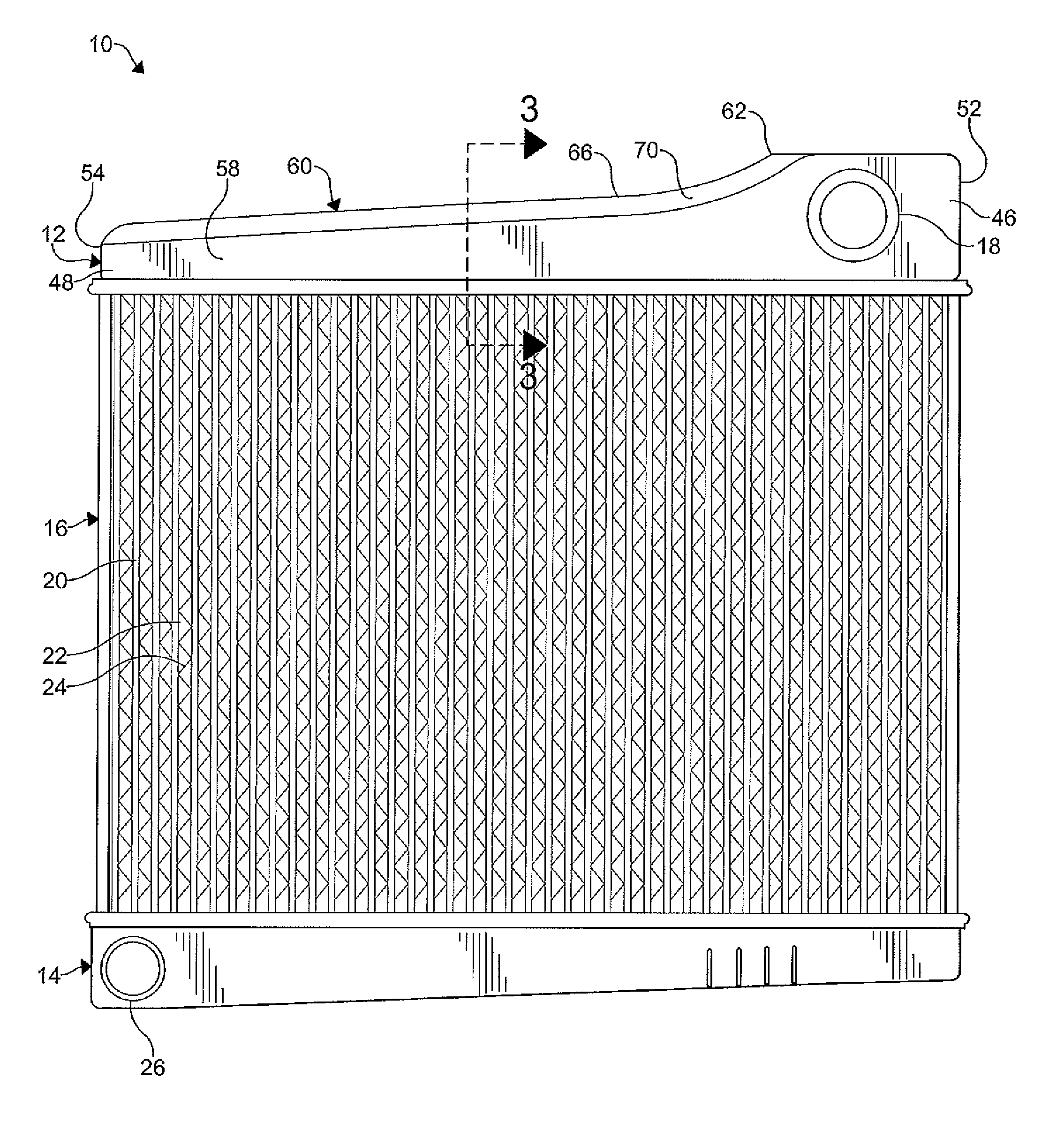
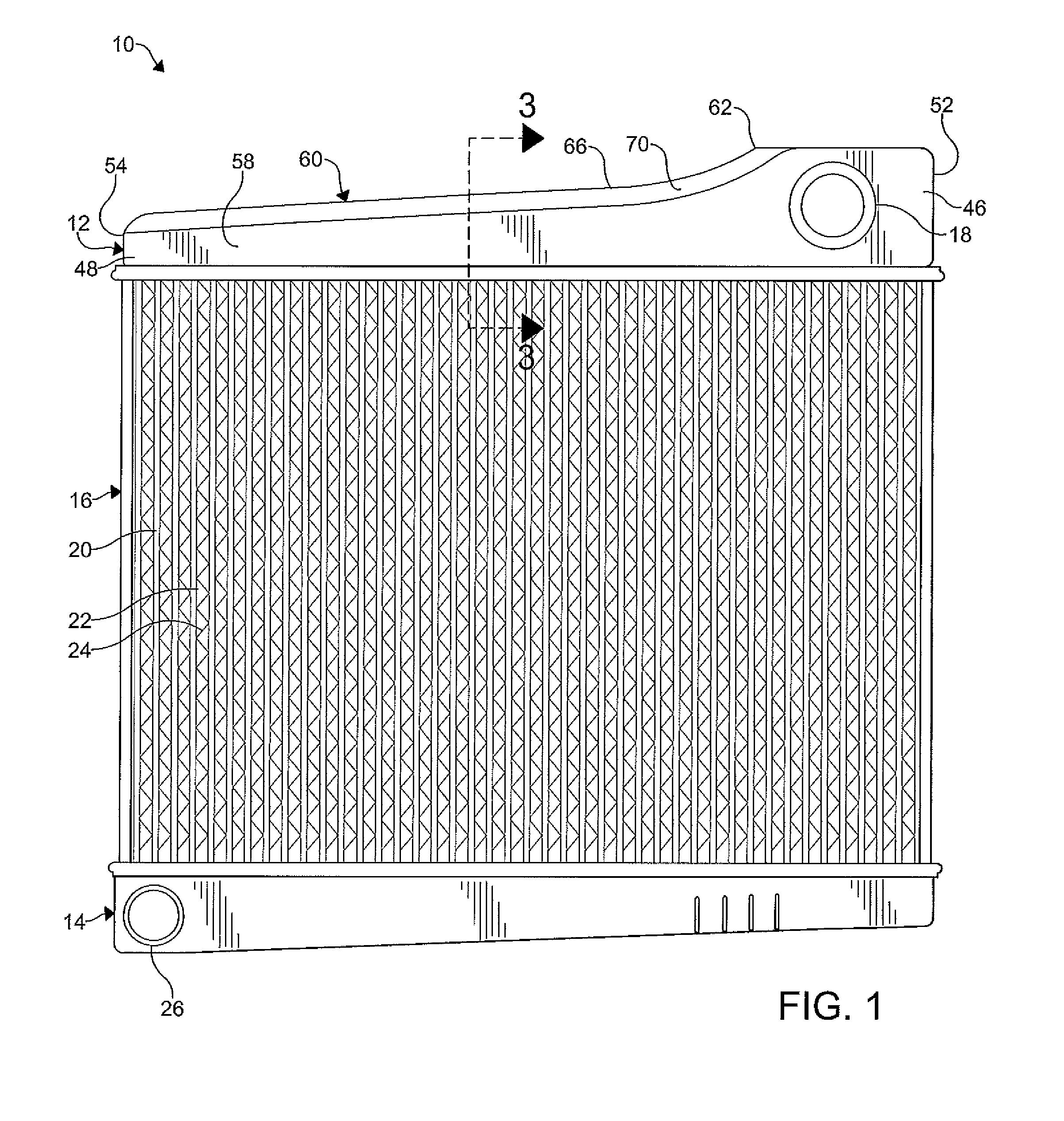
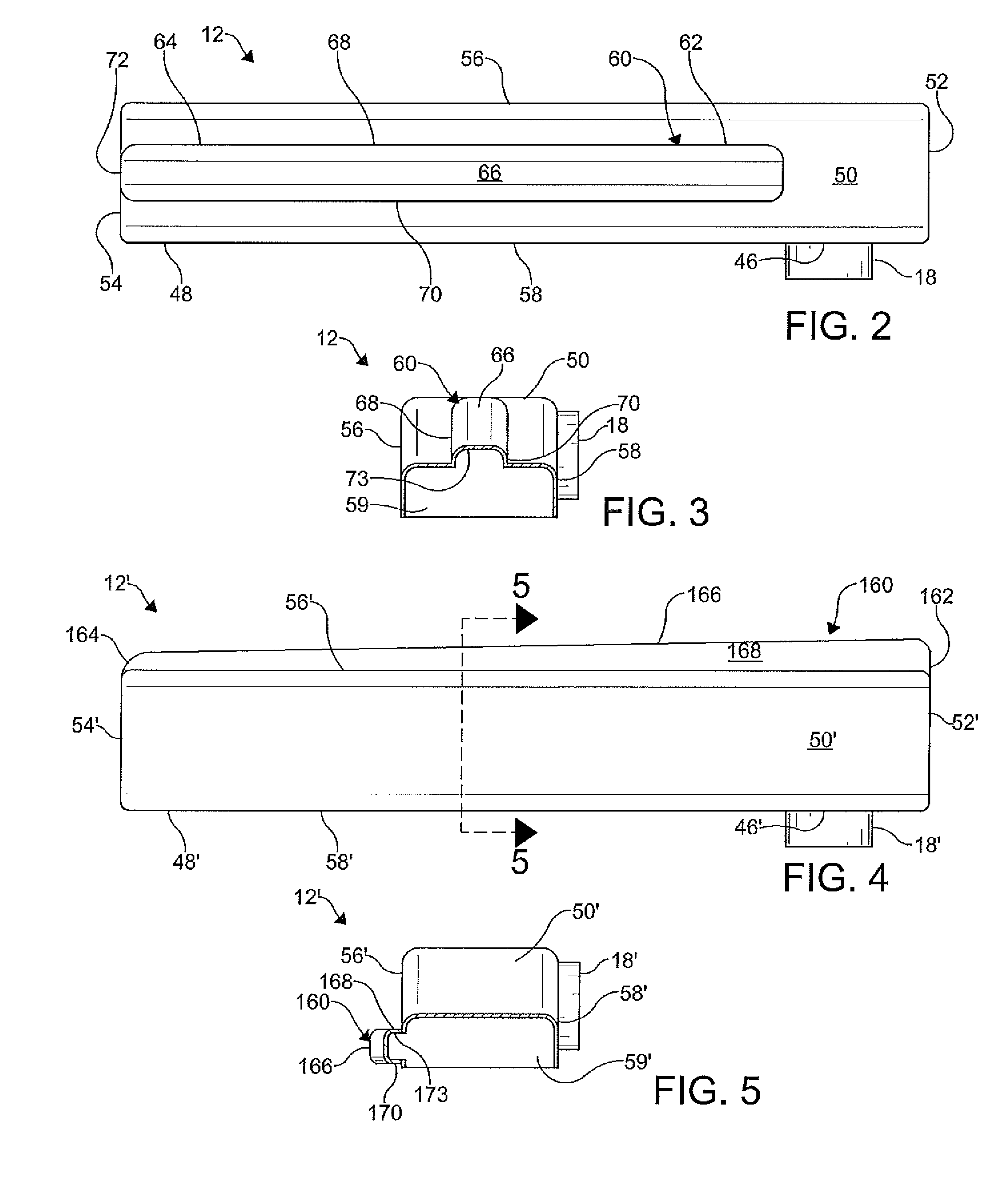
Heat exchanger manifold with a fluid flow distribution feature
PatentInactiveUS20140182826A1
Innovation
- A heat exchanger manifold with a fluid flow distribution feature, such as a channel extending parallel to the fluid flow direction, is integrated into the manifold to ensure uniform distribution of the radiator liquid, minimizing structural complexity and package size.

Heat exchangers capable of bidirectional fluid flow
PatentActiveUS20200300488A1
Innovation
- A low-profile heat exchanger design with a stacked cooling block structure featuring interlaced coolant channels and flow-balancing features, allowing bidirectional fluid flow, which distributes coolant evenly across the channels to maintain uniform temperatures regardless of flow direction.


Environmental Regulations for Coolant Systems
The regulatory landscape for coolant systems has evolved significantly in response to growing environmental concerns and the need for sustainable thermal management solutions. Current environmental regulations primarily focus on the chemical composition of coolants, their disposal methods, and the overall environmental impact of cooling systems throughout their lifecycle.
The European Union's REACH regulation and RoHS directive establish strict guidelines for coolant formulations, particularly restricting the use of heavy metals, volatile organic compounds, and substances of very high concern. These regulations directly impact the design choices between distribution manifolds and radiators, as different configurations may require varying coolant volumes and chemical compositions to achieve optimal performance.
In North America, the Environmental Protection Agency enforces regulations under the Clean Air Act and Clean Water Act that govern coolant emissions and disposal practices. The regulations mandate specific containment measures for coolant systems, influencing the selection of manifold versus radiator configurations based on their leak potential and maintenance requirements. Distribution manifolds, with their multiple connection points, face stricter scrutiny regarding potential leak sources compared to traditional radiator systems.
Emerging regulations in Asia-Pacific regions, particularly in China and Japan, emphasize energy efficiency standards that indirectly affect coolant system design. These standards favor configurations that minimize pumping power and reduce overall system energy consumption, creating regulatory pressure to optimize the efficiency comparison between manifolds and radiators.
The regulatory trend toward circular economy principles is driving new requirements for coolant system recyclability and end-of-life management. This shift particularly impacts material selection for both manifolds and radiators, with increasing emphasis on recyclable materials and modular designs that facilitate component recovery.
Future regulatory developments are expected to introduce carbon footprint assessments for thermal management systems, potentially favoring more efficient configurations that reduce overall environmental impact through improved heat transfer performance and reduced energy consumption.
The European Union's REACH regulation and RoHS directive establish strict guidelines for coolant formulations, particularly restricting the use of heavy metals, volatile organic compounds, and substances of very high concern. These regulations directly impact the design choices between distribution manifolds and radiators, as different configurations may require varying coolant volumes and chemical compositions to achieve optimal performance.
In North America, the Environmental Protection Agency enforces regulations under the Clean Air Act and Clean Water Act that govern coolant emissions and disposal practices. The regulations mandate specific containment measures for coolant systems, influencing the selection of manifold versus radiator configurations based on their leak potential and maintenance requirements. Distribution manifolds, with their multiple connection points, face stricter scrutiny regarding potential leak sources compared to traditional radiator systems.
Emerging regulations in Asia-Pacific regions, particularly in China and Japan, emphasize energy efficiency standards that indirectly affect coolant system design. These standards favor configurations that minimize pumping power and reduce overall system energy consumption, creating regulatory pressure to optimize the efficiency comparison between manifolds and radiators.
The regulatory trend toward circular economy principles is driving new requirements for coolant system recyclability and end-of-life management. This shift particularly impacts material selection for both manifolds and radiators, with increasing emphasis on recyclable materials and modular designs that facilitate component recovery.
Future regulatory developments are expected to introduce carbon footprint assessments for thermal management systems, potentially favoring more efficient configurations that reduce overall environmental impact through improved heat transfer performance and reduced energy consumption.
Energy Efficiency Standards Impact on Thermal Design
Energy efficiency standards have fundamentally transformed thermal design approaches in automotive and industrial cooling systems, creating new paradigms for evaluating coolant distribution manifolds versus traditional radiator configurations. Regulatory frameworks such as the Corporate Average Fuel Economy (CAFE) standards in North America and Euro 7 emissions regulations in Europe have established stringent efficiency benchmarks that directly influence thermal management system design decisions.
The implementation of these standards has shifted design priorities from purely performance-based metrics to comprehensive efficiency evaluations that consider energy consumption, weight optimization, and thermal effectiveness simultaneously. Modern thermal designs must now demonstrate measurable improvements in overall system efficiency, typically requiring 15-25% better performance compared to baseline configurations established in previous regulatory cycles.
Coolant distribution manifolds have gained significant attention under current efficiency standards due to their ability to reduce parasitic losses through optimized flow distribution and reduced pumping power requirements. These systems can achieve up to 12% reduction in coolant pump energy consumption compared to conventional radiator setups, directly contributing to overall vehicle or system efficiency ratings that regulatory bodies now mandate.
Traditional radiator designs face increasing pressure to incorporate advanced materials and geometric optimizations to meet evolving standards. The integration of microchannel technology, enhanced surface treatments, and lightweight aluminum alloys has become essential for radiator manufacturers to maintain compliance with efficiency requirements while preserving thermal performance capabilities.
Regulatory impact extends beyond component-level design to system-level integration strategies. Current standards emphasize holistic thermal management approaches that consider heat recovery, waste heat utilization, and intelligent control systems. This regulatory environment favors manifold-based solutions that can seamlessly integrate with heat pump systems, exhaust gas recirculation, and other efficiency-enhancing technologies.
The measurement methodologies prescribed by efficiency standards have also evolved to include real-world operating conditions rather than idealized laboratory scenarios. This shift requires thermal designs to demonstrate consistent performance across variable load conditions, ambient temperatures, and operational duty cycles, fundamentally altering the comparative evaluation criteria between manifold and radiator solutions.
Future regulatory developments indicate increasingly stringent efficiency requirements, with proposed standards targeting additional 20-30% improvements by 2030. These anticipated changes are already influencing current thermal design strategies, pushing manufacturers toward more innovative solutions that can adapt to evolving regulatory landscapes while maintaining cost-effectiveness and reliability.
The implementation of these standards has shifted design priorities from purely performance-based metrics to comprehensive efficiency evaluations that consider energy consumption, weight optimization, and thermal effectiveness simultaneously. Modern thermal designs must now demonstrate measurable improvements in overall system efficiency, typically requiring 15-25% better performance compared to baseline configurations established in previous regulatory cycles.
Coolant distribution manifolds have gained significant attention under current efficiency standards due to their ability to reduce parasitic losses through optimized flow distribution and reduced pumping power requirements. These systems can achieve up to 12% reduction in coolant pump energy consumption compared to conventional radiator setups, directly contributing to overall vehicle or system efficiency ratings that regulatory bodies now mandate.
Traditional radiator designs face increasing pressure to incorporate advanced materials and geometric optimizations to meet evolving standards. The integration of microchannel technology, enhanced surface treatments, and lightweight aluminum alloys has become essential for radiator manufacturers to maintain compliance with efficiency requirements while preserving thermal performance capabilities.
Regulatory impact extends beyond component-level design to system-level integration strategies. Current standards emphasize holistic thermal management approaches that consider heat recovery, waste heat utilization, and intelligent control systems. This regulatory environment favors manifold-based solutions that can seamlessly integrate with heat pump systems, exhaust gas recirculation, and other efficiency-enhancing technologies.
The measurement methodologies prescribed by efficiency standards have also evolved to include real-world operating conditions rather than idealized laboratory scenarios. This shift requires thermal designs to demonstrate consistent performance across variable load conditions, ambient temperatures, and operational duty cycles, fundamentally altering the comparative evaluation criteria between manifold and radiator solutions.
Future regulatory developments indicate increasingly stringent efficiency requirements, with proposed standards targeting additional 20-30% improvements by 2030. These anticipated changes are already influencing current thermal design strategies, pushing manufacturers toward more innovative solutions that can adapt to evolving regulatory landscapes while maintaining cost-effectiveness and reliability.
Unlock deeper insights with PatSnap Eureka Quick Research — get a full tech report to explore trends and direct your research. Try now!
Generate Your Research Report Instantly with AI Agent
Supercharge your innovation with PatSnap Eureka AI Agent Platform!