

Cycloidal Drives in Light Rail Systems: Smooth Acceleration
APR 27, 20269 MIN READ
Generate Your Research Report Instantly with AI Agent
PatSnap Eureka helps you evaluate technical feasibility & market potential.
Cycloidal Drive Technology Background and Rail Transit Goals
Cycloidal drives represent a sophisticated mechanical transmission technology that has evolved significantly since their initial development in the early 20th century. Originally conceived as a solution for achieving high reduction ratios in compact spaces, these drives utilize the mathematical principles of cycloidal motion to convert high-speed, low-torque input into low-speed, high-torque output with exceptional precision and reliability.
The fundamental mechanism operates through an eccentric cam that drives a cycloidal disc in a rolling motion within a ring of pins or rollers. This unique kinematic arrangement eliminates the sliding friction inherent in traditional gear systems, resulting in superior efficiency rates typically exceeding 90% and significantly reduced wear characteristics. The technology has found widespread adoption across industrial automation, robotics, and precision machinery applications.
In the context of rail transit systems, cycloidal drives have emerged as a transformative technology addressing critical operational challenges. Traditional rail propulsion systems often struggle with achieving smooth acceleration profiles, particularly during startup phases and low-speed operations where passenger comfort and system efficiency are paramount. The inherent characteristics of cycloidal drives, including their ability to provide precise speed control and virtually backlash-free operation, make them ideally suited for these demanding applications.
The integration of cycloidal drive technology in light rail systems specifically targets the achievement of seamless acceleration curves that minimize passenger discomfort while optimizing energy consumption. Unlike conventional gear reduction systems that can introduce vibrations and torque irregularities, cycloidal drives deliver consistent power transmission throughout the entire speed range, enabling more sophisticated control algorithms and improved ride quality.
Contemporary rail transit goals emphasize sustainability, passenger experience, and operational efficiency. Cycloidal drives contribute to these objectives through their compact design, reduced maintenance requirements, and superior controllability. The technology enables rail operators to implement more aggressive energy recovery strategies during braking while maintaining smooth deceleration profiles, directly supporting environmental sustainability initiatives.
The precision inherent in cycloidal drive systems also facilitates advanced train control systems, including automatic train operation and precision docking capabilities. These features are increasingly critical as urban rail networks seek to maximize throughput while maintaining safety standards and passenger comfort in high-density transportation corridors.
The fundamental mechanism operates through an eccentric cam that drives a cycloidal disc in a rolling motion within a ring of pins or rollers. This unique kinematic arrangement eliminates the sliding friction inherent in traditional gear systems, resulting in superior efficiency rates typically exceeding 90% and significantly reduced wear characteristics. The technology has found widespread adoption across industrial automation, robotics, and precision machinery applications.
In the context of rail transit systems, cycloidal drives have emerged as a transformative technology addressing critical operational challenges. Traditional rail propulsion systems often struggle with achieving smooth acceleration profiles, particularly during startup phases and low-speed operations where passenger comfort and system efficiency are paramount. The inherent characteristics of cycloidal drives, including their ability to provide precise speed control and virtually backlash-free operation, make them ideally suited for these demanding applications.
The integration of cycloidal drive technology in light rail systems specifically targets the achievement of seamless acceleration curves that minimize passenger discomfort while optimizing energy consumption. Unlike conventional gear reduction systems that can introduce vibrations and torque irregularities, cycloidal drives deliver consistent power transmission throughout the entire speed range, enabling more sophisticated control algorithms and improved ride quality.
Contemporary rail transit goals emphasize sustainability, passenger experience, and operational efficiency. Cycloidal drives contribute to these objectives through their compact design, reduced maintenance requirements, and superior controllability. The technology enables rail operators to implement more aggressive energy recovery strategies during braking while maintaining smooth deceleration profiles, directly supporting environmental sustainability initiatives.
The precision inherent in cycloidal drive systems also facilitates advanced train control systems, including automatic train operation and precision docking capabilities. These features are increasingly critical as urban rail networks seek to maximize throughput while maintaining safety standards and passenger comfort in high-density transportation corridors.
Market Demand for Smooth Light Rail Acceleration Systems
The global light rail transit market is experiencing unprecedented growth driven by urbanization trends and increasing emphasis on sustainable transportation solutions. Metropolitan areas worldwide are investing heavily in light rail infrastructure to address traffic congestion, reduce carbon emissions, and provide efficient public transportation alternatives. This expansion creates substantial demand for advanced propulsion systems that can deliver superior passenger comfort through smooth acceleration profiles.
Passenger experience has emerged as a critical differentiator in modern transit systems. Traditional acceleration methods often produce jerky movements, sudden speed changes, and uncomfortable transitions that negatively impact ridership satisfaction. Transit authorities increasingly recognize that smooth acceleration directly correlates with passenger retention, system reputation, and overall operational success. The demand for refined motion control extends beyond comfort to encompass safety considerations, particularly for elderly passengers, individuals with mobility challenges, and standing commuters.
Energy efficiency requirements are reshaping propulsion system specifications across the transit industry. Regulatory frameworks and environmental mandates are pushing operators to adopt technologies that minimize power consumption while maintaining performance standards. Smooth acceleration systems that optimize energy usage during startup and speed transitions offer compelling value propositions for cost-conscious transit authorities facing budget constraints and sustainability targets.
The competitive landscape among light rail manufacturers is intensifying pressure for technological differentiation. System integrators and rolling stock manufacturers are seeking advanced drive technologies that provide competitive advantages in tender processes. Smooth acceleration capabilities have become key selling points when competing for major transit contracts, particularly in markets where passenger experience metrics influence procurement decisions.
Maintenance cost reduction represents another significant market driver for advanced propulsion technologies. Traditional drive systems with abrupt acceleration patterns generate higher mechanical stress, leading to increased wear on components, more frequent maintenance intervals, and elevated lifecycle costs. Transit operators are actively seeking solutions that extend component lifespan through gentler operational profiles while maintaining schedule adherence and system reliability.
Emerging markets in Asia, Latin America, and Africa are establishing new light rail networks with modern performance expectations from the outset. These markets present substantial opportunities for advanced drive technologies, as they lack legacy infrastructure constraints and can implement state-of-the-art systems. The growing middle class in these regions demands transportation quality comparable to developed markets, creating additional pressure for smooth, comfortable transit experiences.
Passenger experience has emerged as a critical differentiator in modern transit systems. Traditional acceleration methods often produce jerky movements, sudden speed changes, and uncomfortable transitions that negatively impact ridership satisfaction. Transit authorities increasingly recognize that smooth acceleration directly correlates with passenger retention, system reputation, and overall operational success. The demand for refined motion control extends beyond comfort to encompass safety considerations, particularly for elderly passengers, individuals with mobility challenges, and standing commuters.
Energy efficiency requirements are reshaping propulsion system specifications across the transit industry. Regulatory frameworks and environmental mandates are pushing operators to adopt technologies that minimize power consumption while maintaining performance standards. Smooth acceleration systems that optimize energy usage during startup and speed transitions offer compelling value propositions for cost-conscious transit authorities facing budget constraints and sustainability targets.
The competitive landscape among light rail manufacturers is intensifying pressure for technological differentiation. System integrators and rolling stock manufacturers are seeking advanced drive technologies that provide competitive advantages in tender processes. Smooth acceleration capabilities have become key selling points when competing for major transit contracts, particularly in markets where passenger experience metrics influence procurement decisions.
Maintenance cost reduction represents another significant market driver for advanced propulsion technologies. Traditional drive systems with abrupt acceleration patterns generate higher mechanical stress, leading to increased wear on components, more frequent maintenance intervals, and elevated lifecycle costs. Transit operators are actively seeking solutions that extend component lifespan through gentler operational profiles while maintaining schedule adherence and system reliability.
Emerging markets in Asia, Latin America, and Africa are establishing new light rail networks with modern performance expectations from the outset. These markets present substantial opportunities for advanced drive technologies, as they lack legacy infrastructure constraints and can implement state-of-the-art systems. The growing middle class in these regions demands transportation quality comparable to developed markets, creating additional pressure for smooth, comfortable transit experiences.
Current State and Challenges of Cycloidal Drives in Rail
Cycloidal drives have gained significant traction in light rail applications due to their inherent advantages in providing smooth torque transmission and precise speed control. Currently, these systems are predominantly implemented in traction motor assemblies and auxiliary drive systems across major metropolitan rail networks worldwide. The technology has matured to support gear ratios ranging from 10:1 to 200:1, with efficiency levels consistently exceeding 90% in optimal operating conditions.
The global deployment of cycloidal drives in rail systems shows concentrated adoption in Asia-Pacific regions, particularly in Japan, South Korea, and China, where high-speed rail and urban transit systems demand exceptional reliability. European markets have embraced the technology primarily for metro and light rail applications, while North American adoption remains more conservative, focusing on specific urban transit projects.
Despite technological advances, several critical challenges persist in cycloidal drive implementation for rail systems. Vibration management remains a primary concern, as the inherent cycloidal motion can generate harmonic frequencies that interfere with passenger comfort and system longevity. Current solutions involve sophisticated damping systems and precision manufacturing tolerances, but these approaches significantly increase production costs and maintenance complexity.
Lubrication presents another substantial challenge, particularly in variable temperature environments typical of rail operations. The complex internal geometry of cycloidal drives requires specialized lubricants that maintain viscosity across temperature ranges from -40°C to 60°C. Conventional lubrication systems often fail to adequately reach all contact surfaces, leading to premature wear and reduced operational efficiency.
Manufacturing precision requirements constitute a significant barrier to widespread adoption. Cycloidal drives demand tolerances within 0.01mm for optimal performance, necessitating advanced manufacturing capabilities that many suppliers cannot consistently achieve. This precision requirement directly impacts cost structures and limits the supplier base for rail system integrators.
Maintenance accessibility poses operational challenges in rail environments. The compact, integrated design of cycloidal drives, while advantageous for space-constrained applications, complicates field maintenance procedures. Technicians require specialized training and tools, increasing operational overhead and potentially extending system downtime during maintenance cycles.
Integration with existing rail control systems presents compatibility challenges, particularly in retrofit applications. Legacy rail systems often lack the sophisticated control interfaces required to fully exploit cycloidal drive capabilities, limiting performance benefits and requiring additional investment in control system upgrades.
The global deployment of cycloidal drives in rail systems shows concentrated adoption in Asia-Pacific regions, particularly in Japan, South Korea, and China, where high-speed rail and urban transit systems demand exceptional reliability. European markets have embraced the technology primarily for metro and light rail applications, while North American adoption remains more conservative, focusing on specific urban transit projects.
Despite technological advances, several critical challenges persist in cycloidal drive implementation for rail systems. Vibration management remains a primary concern, as the inherent cycloidal motion can generate harmonic frequencies that interfere with passenger comfort and system longevity. Current solutions involve sophisticated damping systems and precision manufacturing tolerances, but these approaches significantly increase production costs and maintenance complexity.
Lubrication presents another substantial challenge, particularly in variable temperature environments typical of rail operations. The complex internal geometry of cycloidal drives requires specialized lubricants that maintain viscosity across temperature ranges from -40°C to 60°C. Conventional lubrication systems often fail to adequately reach all contact surfaces, leading to premature wear and reduced operational efficiency.
Manufacturing precision requirements constitute a significant barrier to widespread adoption. Cycloidal drives demand tolerances within 0.01mm for optimal performance, necessitating advanced manufacturing capabilities that many suppliers cannot consistently achieve. This precision requirement directly impacts cost structures and limits the supplier base for rail system integrators.
Maintenance accessibility poses operational challenges in rail environments. The compact, integrated design of cycloidal drives, while advantageous for space-constrained applications, complicates field maintenance procedures. Technicians require specialized training and tools, increasing operational overhead and potentially extending system downtime during maintenance cycles.
Integration with existing rail control systems presents compatibility challenges, particularly in retrofit applications. Legacy rail systems often lack the sophisticated control interfaces required to fully exploit cycloidal drive capabilities, limiting performance benefits and requiring additional investment in control system upgrades.
Current Cycloidal Drive Solutions for Rail Applications
01 Cycloidal gear design optimization for smooth motion transmission
Advanced cycloidal gear configurations that optimize tooth profiles and gear ratios to minimize vibration and ensure smooth acceleration characteristics. These designs focus on precise geometric relationships between cycloidal curves and gear teeth to reduce backlash and improve motion quality during acceleration phases.- Cycloidal gear design optimization for smooth motion: Advanced cycloidal gear configurations that optimize tooth profiles and gear ratios to minimize vibration and ensure smooth acceleration characteristics. These designs focus on mathematical modeling of cycloidal curves to reduce backlash and improve motion transmission efficiency through precise geometric relationships.
- Control systems for cycloidal drive acceleration management: Electronic control mechanisms and feedback systems that regulate the acceleration profiles of cycloidal drives. These systems incorporate sensors and algorithms to monitor and adjust drive parameters in real-time, ensuring consistent and smooth acceleration patterns across various operating conditions.
- Bearing and support structure improvements: Enhanced bearing arrangements and structural support systems specifically designed for cycloidal drives to reduce friction and mechanical irregularities. These improvements focus on load distribution, bearing placement, and housing design to minimize resistance and enable smoother acceleration characteristics.
- Material and manufacturing techniques for precision components: Specialized materials and manufacturing processes used in cycloidal drive components to achieve higher precision and reduced tolerances. These techniques include advanced machining methods, heat treatment processes, and material selection that contribute to smoother operation and consistent acceleration performance.
- Lubrication and damping systems: Integrated lubrication mechanisms and vibration damping solutions designed to reduce friction and absorb mechanical irregularities in cycloidal drives. These systems ensure consistent fluid film formation and provide damping effects that contribute to smoother acceleration and reduced wear over extended operation periods.
02 Control systems for cycloidal drive acceleration management
Electronic control mechanisms and feedback systems specifically designed to manage acceleration profiles in cycloidal drives. These systems incorporate sensors and algorithms to monitor and adjust drive parameters in real-time, ensuring consistent and smooth acceleration performance across varying load conditions.Expand Specific Solutions03 Bearing and support structure improvements for reduced friction
Enhanced bearing arrangements and structural support systems that minimize friction losses and mechanical resistance during cycloidal drive operation. These improvements focus on load distribution, lubrication optimization, and precision manufacturing to achieve smoother acceleration characteristics.Expand Specific Solutions04 Dynamic balancing techniques for cycloidal mechanisms
Methods for achieving optimal dynamic balance in cycloidal drive systems to eliminate unwanted oscillations and ensure uniform acceleration. These techniques involve precise mass distribution, counterweight positioning, and harmonic analysis to minimize dynamic forces that could cause irregular motion patterns.Expand Specific Solutions05 Material and manufacturing innovations for enhanced performance
Advanced materials and precision manufacturing processes specifically developed for cycloidal drive components to improve durability and motion smoothness. These innovations include specialized alloys, surface treatments, and manufacturing tolerances that contribute to consistent acceleration performance and extended operational life.Expand Specific Solutions
Key Players in Rail Drive Systems and Cycloidal Technology
The cycloidal drives market for light rail systems is in a mature development stage, driven by increasing urbanization and demand for efficient public transportation. The global light rail market, valued at approximately $6-8 billion, shows steady growth with cycloidal drives gaining traction due to their superior torque density and smooth operation characteristics. Technology maturity varies significantly across players, with established industrial giants like Siemens AG, Schaeffler Technologies, and Sumitomo Heavy Industries leading in advanced cycloidal drive applications. Automotive specialists including BYD Co. and Continental Automotive are adapting their expertise to rail applications, while academic institutions like Chongqing University and Xi'an Jiaotong University contribute fundamental research. Emerging players such as Suzhou Skylark Robot Technology and specialized manufacturers like IMS Gear represent the growing innovation ecosystem, indicating a competitive landscape where traditional mechanical engineering excellence meets modern precision manufacturing capabilities.
Schaeffler Technologies AG & Co. KG
Technical Solution: Schaeffler has developed precision cycloidal drive components specifically engineered for light rail traction applications. Their solution focuses on high-precision bearings and cycloidal gear sets that enable smooth power transmission with minimal backlash and vibration. The company's cycloidal drives incorporate advanced lubrication systems and wear-resistant materials designed to withstand the demanding operating conditions of light rail systems. Their technology includes integrated sensors for real-time monitoring of drive performance and predictive maintenance capabilities. Schaeffler's cycloidal drives are designed to work seamlessly with electric traction motors, providing smooth acceleration curves and reduced noise levels during operation.
Strengths: High precision components, excellent durability, advanced monitoring capabilities. Weaknesses: Requires specialized maintenance expertise, higher component costs.
Siemens AG
Technical Solution: Siemens has developed advanced cycloidal drive systems specifically for light rail applications, featuring their proprietary SITRAC traction control technology integrated with cycloidal gearing mechanisms. Their solution incorporates variable frequency drives with cycloidal reducers that provide smooth torque transmission and precise speed control for light rail vehicles. The system utilizes advanced motor control algorithms that work in conjunction with cycloidal drives to achieve seamless acceleration profiles, reducing passenger discomfort and mechanical stress on the drivetrain components. Their technology includes regenerative braking capabilities and energy-efficient operation modes optimized for urban transit applications.
Strengths: Proven track record in rail systems, excellent torque smoothness, high reliability. Weaknesses: Higher initial cost, complex maintenance requirements.
Core Innovations in Cycloidal Gear Design for Transit
Railway vehicle drive unit
PatentInactiveUS20110000394A1
Innovation
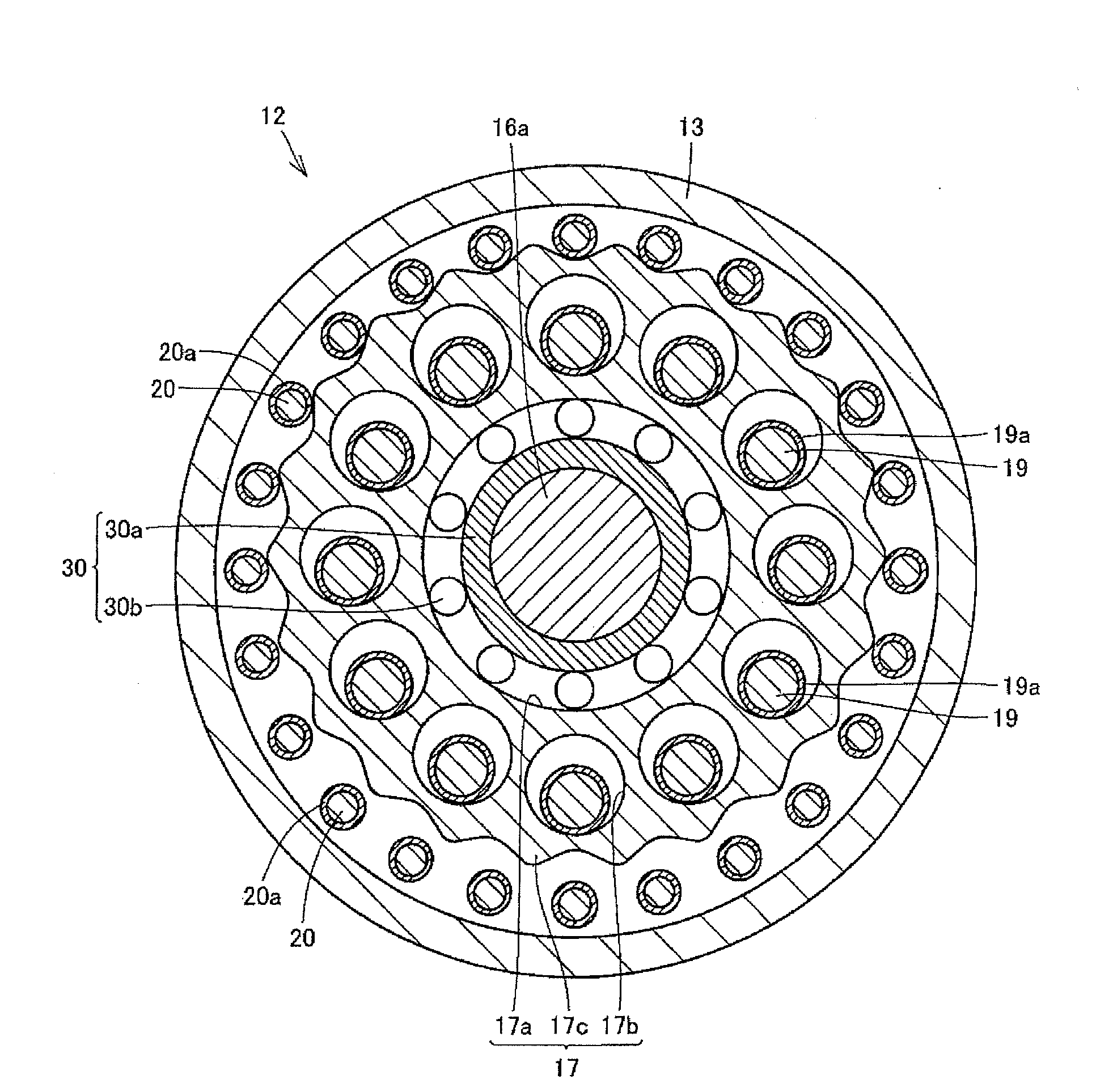
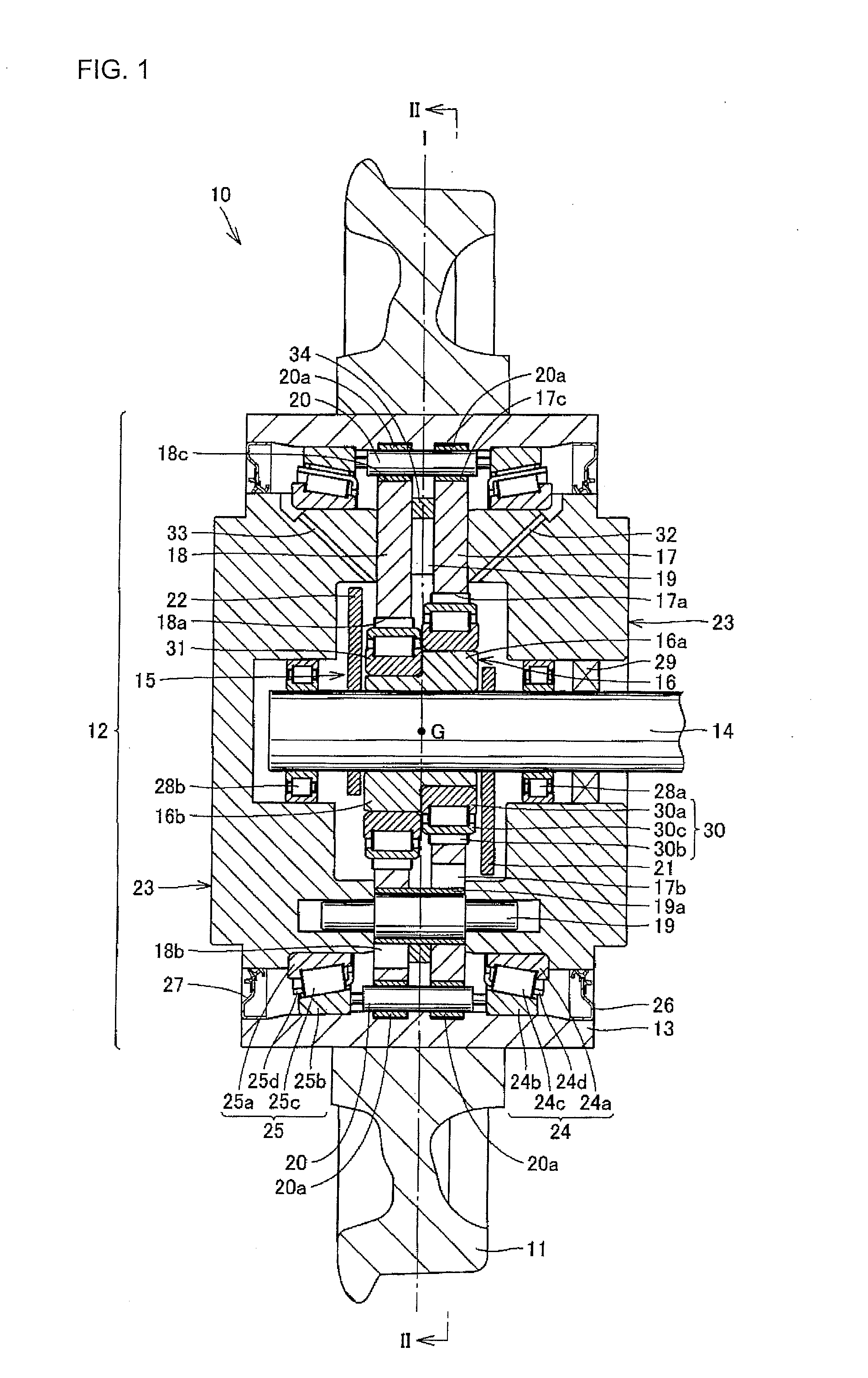
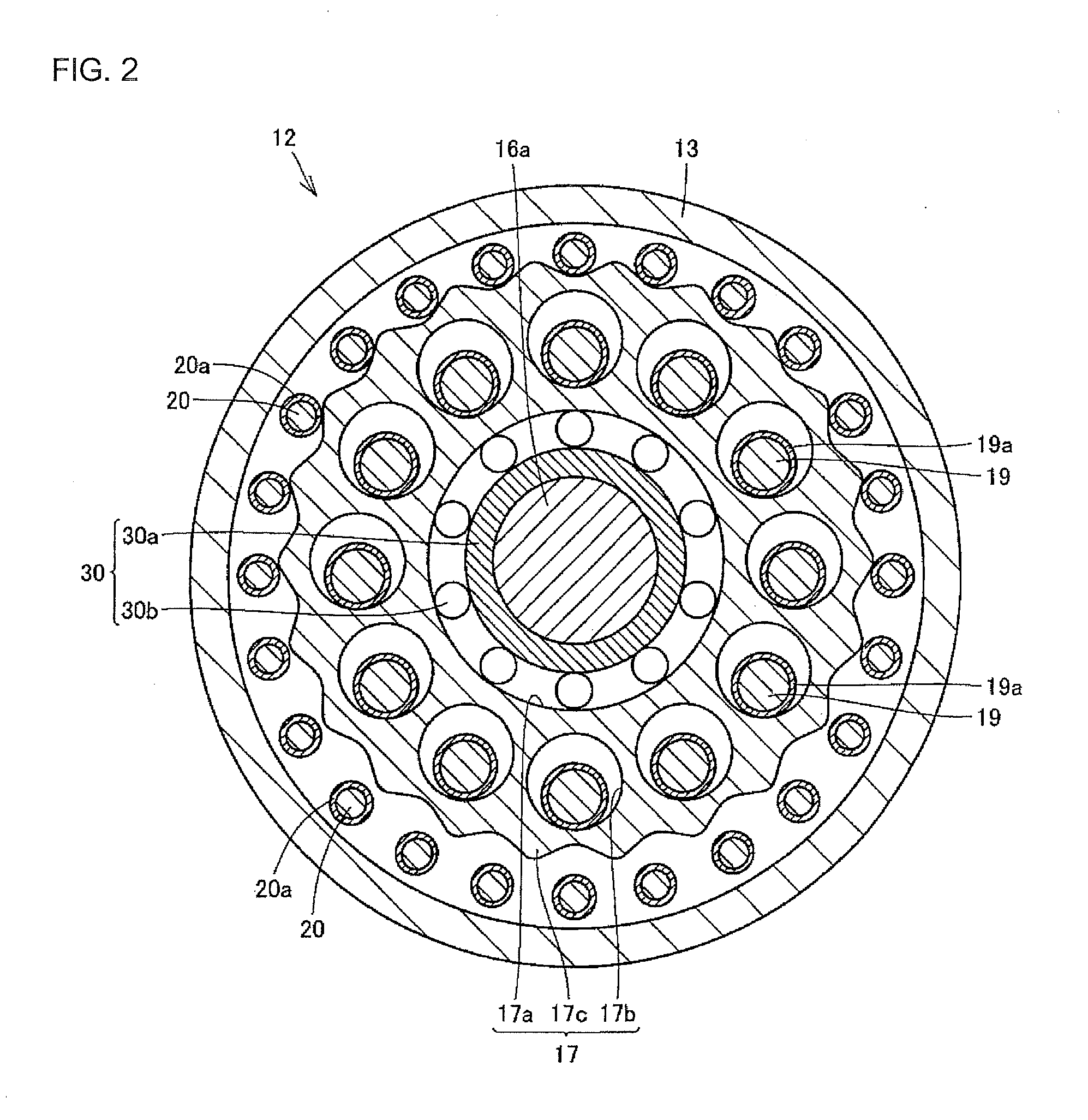
- A railway vehicle drive unit with a lubricant oil circulating mechanism that utilizes centrifugal force to circulate oil within the reducer housing, maintaining a constant oil surface height and reducing heat generation and torque loss, featuring a tapered roller bearing and seal member configuration to manage oil distribution and a lubricant oil holding chamber for pressure adjustment.

Driving system for driving a conveyer band of a conveyer apparatus
PatentWO2018141687A1
Innovation
- A driving system utilizing a cycloidal gearbox to synchronize the rotation of sprockets and chains, minimizing vibrations and allowing for easier maintenance by positioning the cycloidal drive outside the main shaft or parallel to it, thus reducing the height of the conveyor apparatus and enhancing accessibility.


Safety Standards and Regulations for Rail Drive Systems
The implementation of cycloidal drives in light rail systems requires strict adherence to comprehensive safety standards and regulatory frameworks that govern rail transportation infrastructure. International standards such as EN 50126 (Railway Applications - Specification and Demonstration of Reliability, Availability, Maintainability and Safety) provide the foundational requirements for safety integrity levels in rail systems. These standards mandate rigorous testing protocols for drive components, including cycloidal gear systems, to ensure they meet Safety Integrity Level 4 (SIL-4) requirements for critical applications.
Federal Railroad Administration (FRA) regulations in the United States and similar regulatory bodies worldwide have established specific guidelines for mechanical drive systems in rail applications. These regulations address torque transmission reliability, failure mode analysis, and emergency braking capabilities. Cycloidal drives must demonstrate compliance with vibration resistance standards under dynamic loading conditions typical in light rail operations, including frequent acceleration and deceleration cycles.
The European Committee for Standardization has developed EN 15663 standards specifically addressing railway applications for wheelset and bogie maintenance. These standards directly impact cycloidal drive integration, requiring comprehensive documentation of maintenance intervals, lubrication specifications, and wear monitoring protocols. Drive systems must incorporate condition monitoring capabilities to detect potential failures before they compromise operational safety.
Certification processes for cycloidal drives in rail applications involve extensive testing under simulated operational conditions. This includes endurance testing over millions of cycles, temperature variation testing from -40°C to +70°C, and shock resistance evaluation. The drives must maintain precise positioning accuracy and torque output consistency throughout their operational lifespan to meet regulatory approval.
Fire safety regulations mandate that all mechanical components, including cycloidal drive housings and lubricants, comply with flame resistance standards such as EN 45545. Additionally, electromagnetic compatibility requirements ensure that drive systems do not interfere with signaling and communication systems critical to rail safety operations.
Federal Railroad Administration (FRA) regulations in the United States and similar regulatory bodies worldwide have established specific guidelines for mechanical drive systems in rail applications. These regulations address torque transmission reliability, failure mode analysis, and emergency braking capabilities. Cycloidal drives must demonstrate compliance with vibration resistance standards under dynamic loading conditions typical in light rail operations, including frequent acceleration and deceleration cycles.
The European Committee for Standardization has developed EN 15663 standards specifically addressing railway applications for wheelset and bogie maintenance. These standards directly impact cycloidal drive integration, requiring comprehensive documentation of maintenance intervals, lubrication specifications, and wear monitoring protocols. Drive systems must incorporate condition monitoring capabilities to detect potential failures before they compromise operational safety.
Certification processes for cycloidal drives in rail applications involve extensive testing under simulated operational conditions. This includes endurance testing over millions of cycles, temperature variation testing from -40°C to +70°C, and shock resistance evaluation. The drives must maintain precise positioning accuracy and torque output consistency throughout their operational lifespan to meet regulatory approval.
Fire safety regulations mandate that all mechanical components, including cycloidal drive housings and lubricants, comply with flame resistance standards such as EN 45545. Additionally, electromagnetic compatibility requirements ensure that drive systems do not interfere with signaling and communication systems critical to rail safety operations.
Environmental Impact of Advanced Rail Propulsion Tech
The integration of cycloidal drives in light rail systems represents a significant advancement in sustainable urban transportation, offering substantial environmental benefits compared to conventional propulsion technologies. These precision gear reduction systems contribute to reduced energy consumption through their high efficiency ratings, typically achieving 85-90% mechanical efficiency compared to 70-80% for traditional gear systems. The improved energy transfer directly translates to lower electricity demand from power grids, reducing the overall carbon footprint of rail operations.
Cycloidal drives enable smoother acceleration profiles that minimize energy waste during start-stop cycles common in urban rail environments. The elimination of jerky movements and vibrations reduces mechanical stress on rail infrastructure, extending component lifespan and decreasing the frequency of maintenance interventions. This longevity factor significantly reduces the environmental impact associated with manufacturing replacement parts and conducting repair operations.
The noise reduction capabilities of cycloidal drive systems address urban noise pollution concerns effectively. Traditional rail systems generate substantial acoustic emissions during acceleration and deceleration phases, contributing to urban environmental degradation. Cycloidal drives operate with significantly lower noise levels, typically reducing sound emissions by 15-20 decibels compared to conventional gear systems, thereby improving the acoustic environment in densely populated areas.
From a lifecycle perspective, the compact design and reduced component count of cycloidal drives minimize material usage during manufacturing. The systems require fewer lubricants and generate less waste heat, contributing to reduced thermal pollution in urban environments. Additionally, the precise control characteristics enable regenerative braking systems to operate more efficiently, recovering energy that would otherwise be lost as heat during deceleration phases.
The enhanced reliability of cycloidal drives reduces the frequency of service disruptions, encouraging greater public transportation adoption and subsequently decreasing private vehicle usage. This modal shift represents a multiplicative environmental benefit, as each light rail passenger represents a reduction in individual vehicle emissions and urban congestion patterns.
Cycloidal drives enable smoother acceleration profiles that minimize energy waste during start-stop cycles common in urban rail environments. The elimination of jerky movements and vibrations reduces mechanical stress on rail infrastructure, extending component lifespan and decreasing the frequency of maintenance interventions. This longevity factor significantly reduces the environmental impact associated with manufacturing replacement parts and conducting repair operations.
The noise reduction capabilities of cycloidal drive systems address urban noise pollution concerns effectively. Traditional rail systems generate substantial acoustic emissions during acceleration and deceleration phases, contributing to urban environmental degradation. Cycloidal drives operate with significantly lower noise levels, typically reducing sound emissions by 15-20 decibels compared to conventional gear systems, thereby improving the acoustic environment in densely populated areas.
From a lifecycle perspective, the compact design and reduced component count of cycloidal drives minimize material usage during manufacturing. The systems require fewer lubricants and generate less waste heat, contributing to reduced thermal pollution in urban environments. Additionally, the precise control characteristics enable regenerative braking systems to operate more efficiently, recovering energy that would otherwise be lost as heat during deceleration phases.
The enhanced reliability of cycloidal drives reduces the frequency of service disruptions, encouraging greater public transportation adoption and subsequently decreasing private vehicle usage. This modal shift represents a multiplicative environmental benefit, as each light rail passenger represents a reduction in individual vehicle emissions and urban congestion patterns.
Unlock deeper insights with PatSnap Eureka Quick Research — get a full tech report to explore trends and direct your research. Try now!
Generate Your Research Report Instantly with AI Agent
Supercharge your innovation with PatSnap Eureka AI Agent Platform!