
Data Center Fabrics vs Blockchain Networks: Throughput Analysis
MAY 19, 20269 MIN READ
Generate Your Research Report Instantly with AI Agent
Patsnap Eureka helps you evaluate technical feasibility & market potential.
Data Center and Blockchain Network Performance Goals
Data center fabrics and blockchain networks represent two distinct paradigms in distributed computing, each with fundamentally different performance objectives shaped by their operational requirements and architectural constraints. Understanding these divergent goals is essential for conducting meaningful throughput analysis between these technologies.
Data center fabrics prioritize ultra-low latency communication with typical inter-rack latencies measured in microseconds, enabling real-time processing capabilities crucial for high-frequency trading, scientific computing, and interactive applications. The primary objective centers on maximizing aggregate bandwidth utilization while maintaining predictable performance characteristics across thousands of concurrent connections.
Modern data center networks target aggregate throughput capacities exceeding multiple terabits per second, with individual server connections operating at 25Gbps, 100Gbps, or higher speeds. These systems emphasize deterministic performance, aiming for consistent sub-millisecond response times and minimal jitter to support latency-sensitive workloads.
Blockchain networks operate under entirely different performance paradigms, where security, decentralization, and consensus validation take precedence over raw throughput metrics. The fundamental goal involves maintaining network integrity while processing transactions across geographically distributed nodes with varying computational capabilities and network conditions.
Transaction throughput in blockchain networks typically ranges from single-digit transactions per second in proof-of-work systems to thousands of transactions per second in optimized proof-of-stake implementations. However, these networks prioritize finality guarantees and Byzantine fault tolerance over peak performance, accepting higher latencies measured in seconds or minutes rather than microseconds.
Energy efficiency represents another critical performance dimension, particularly for blockchain networks where consensus mechanisms directly impact power consumption. Data center fabrics optimize for performance-per-watt ratios while blockchain networks increasingly focus on sustainable consensus algorithms that reduce computational overhead without compromising security guarantees.
Scalability objectives also differ significantly between these architectures. Data center fabrics scale through hierarchical topologies and advanced switching technologies, targeting linear performance scaling with infrastructure expansion. Blockchain networks face inherent scalability trilemmas, balancing decentralization, security, and throughput through layer-two solutions and sharding mechanisms.
Data center fabrics prioritize ultra-low latency communication with typical inter-rack latencies measured in microseconds, enabling real-time processing capabilities crucial for high-frequency trading, scientific computing, and interactive applications. The primary objective centers on maximizing aggregate bandwidth utilization while maintaining predictable performance characteristics across thousands of concurrent connections.
Modern data center networks target aggregate throughput capacities exceeding multiple terabits per second, with individual server connections operating at 25Gbps, 100Gbps, or higher speeds. These systems emphasize deterministic performance, aiming for consistent sub-millisecond response times and minimal jitter to support latency-sensitive workloads.
Blockchain networks operate under entirely different performance paradigms, where security, decentralization, and consensus validation take precedence over raw throughput metrics. The fundamental goal involves maintaining network integrity while processing transactions across geographically distributed nodes with varying computational capabilities and network conditions.
Transaction throughput in blockchain networks typically ranges from single-digit transactions per second in proof-of-work systems to thousands of transactions per second in optimized proof-of-stake implementations. However, these networks prioritize finality guarantees and Byzantine fault tolerance over peak performance, accepting higher latencies measured in seconds or minutes rather than microseconds.
Energy efficiency represents another critical performance dimension, particularly for blockchain networks where consensus mechanisms directly impact power consumption. Data center fabrics optimize for performance-per-watt ratios while blockchain networks increasingly focus on sustainable consensus algorithms that reduce computational overhead without compromising security guarantees.
Scalability objectives also differ significantly between these architectures. Data center fabrics scale through hierarchical topologies and advanced switching technologies, targeting linear performance scaling with infrastructure expansion. Blockchain networks face inherent scalability trilemmas, balancing decentralization, security, and throughput through layer-two solutions and sharding mechanisms.
Market Demand for High-Throughput Network Infrastructure
The global demand for high-throughput network infrastructure has reached unprecedented levels, driven by the exponential growth of data-intensive applications and the proliferation of distributed computing architectures. Enterprise data centers are experiencing massive traffic increases as organizations migrate to cloud-native applications, implement artificial intelligence workloads, and deploy real-time analytics platforms. These applications require network fabrics capable of delivering consistent low-latency performance while maintaining high bandwidth utilization across thousands of interconnected nodes.
Blockchain networks represent another significant driver of network infrastructure demand, particularly as decentralized finance protocols, non-fungible token marketplaces, and enterprise blockchain solutions gain mainstream adoption. The throughput limitations of current blockchain networks have created substantial market pressure for infrastructure solutions that can support higher transaction volumes without compromising security or decentralization principles. Layer-2 scaling solutions and interoperability protocols are generating additional requirements for specialized network architectures.
The convergence of edge computing and Internet of Things deployments is creating new market segments that demand ultra-low latency network solutions. Manufacturing facilities implementing Industry 4.0 initiatives require network fabrics that can support real-time control systems and massive sensor data streams. Autonomous vehicle networks and smart city infrastructure projects are driving demand for network solutions that can handle both high-throughput data processing and mission-critical communication requirements.
Financial services institutions are particularly influential market drivers, as high-frequency trading platforms and real-time risk management systems require network infrastructure capable of processing millions of transactions per second with microsecond-level latency guarantees. The regulatory compliance requirements in financial markets are also shaping demand for network solutions that can provide comprehensive audit trails and deterministic performance characteristics.
Telecommunications service providers are investing heavily in network infrastructure upgrades to support 5G deployments and network function virtualization initiatives. These investments are creating substantial demand for data center fabric solutions that can efficiently handle the dynamic traffic patterns and quality-of-service requirements associated with next-generation mobile networks and edge computing services.
Blockchain networks represent another significant driver of network infrastructure demand, particularly as decentralized finance protocols, non-fungible token marketplaces, and enterprise blockchain solutions gain mainstream adoption. The throughput limitations of current blockchain networks have created substantial market pressure for infrastructure solutions that can support higher transaction volumes without compromising security or decentralization principles. Layer-2 scaling solutions and interoperability protocols are generating additional requirements for specialized network architectures.
The convergence of edge computing and Internet of Things deployments is creating new market segments that demand ultra-low latency network solutions. Manufacturing facilities implementing Industry 4.0 initiatives require network fabrics that can support real-time control systems and massive sensor data streams. Autonomous vehicle networks and smart city infrastructure projects are driving demand for network solutions that can handle both high-throughput data processing and mission-critical communication requirements.
Financial services institutions are particularly influential market drivers, as high-frequency trading platforms and real-time risk management systems require network infrastructure capable of processing millions of transactions per second with microsecond-level latency guarantees. The regulatory compliance requirements in financial markets are also shaping demand for network solutions that can provide comprehensive audit trails and deterministic performance characteristics.
Telecommunications service providers are investing heavily in network infrastructure upgrades to support 5G deployments and network function virtualization initiatives. These investments are creating substantial demand for data center fabric solutions that can efficiently handle the dynamic traffic patterns and quality-of-service requirements associated with next-generation mobile networks and edge computing services.
Current Throughput Limitations in DC Fabrics and Blockchain
Data center fabrics face significant throughput constraints primarily due to their hierarchical network architectures and switching infrastructure limitations. Traditional three-tier architectures create bottlenecks at aggregation and core layers, where oversubscription ratios typically range from 2.5:1 to 8:1, meaning that simultaneous communication across all leaf switches cannot achieve full line rate. Even modern spine-leaf topologies, while reducing latency and improving bisection bandwidth, encounter limitations when scaling beyond certain port densities due to physical switching ASIC constraints and power consumption boundaries.
The fundamental challenge lies in the physics of electrical switching, where current generation merchant silicon switches peak at approximately 25.6 Tbps forwarding capacity per device. This creates a ceiling effect when building large-scale fabrics, as the number of required spine switches grows exponentially with leaf switch count to maintain non-blocking characteristics. Additionally, buffer management becomes increasingly complex at higher speeds, with shallow buffers in modern switches struggling to handle microbursts and congestion scenarios effectively.
Blockchain networks encounter entirely different throughput limitations rooted in consensus mechanisms and cryptographic validation requirements. Bitcoin's proof-of-work consensus artificially constrains transaction throughput to approximately 7 transactions per second due to fixed block sizes and 10-minute block intervals. Ethereum, despite transitioning to proof-of-stake, maintains similar constraints with roughly 15 transactions per second, primarily limited by gas limits per block and the sequential nature of transaction processing.
The computational overhead of cryptographic operations presents another significant barrier. Each transaction requires multiple digital signature verifications, hash computations, and state tree updates, creating CPU-bound bottlenecks that scale poorly with network size. Layer-1 blockchain protocols face the fundamental trilemma of balancing security, decentralization, and scalability, where optimizing for any two typically compromises the third.
Network propagation delays compound these issues, as consensus protocols require global state synchronization across geographically distributed nodes. The time required for block propagation and validation creates practical upper bounds on block production rates, as faster block times increase the probability of chain forks and reduce network security. Current blockchain architectures struggle to achieve the microsecond-level latencies common in data center environments, instead operating in second-to-minute timeframes that fundamentally limit transaction throughput capabilities.
The fundamental challenge lies in the physics of electrical switching, where current generation merchant silicon switches peak at approximately 25.6 Tbps forwarding capacity per device. This creates a ceiling effect when building large-scale fabrics, as the number of required spine switches grows exponentially with leaf switch count to maintain non-blocking characteristics. Additionally, buffer management becomes increasingly complex at higher speeds, with shallow buffers in modern switches struggling to handle microbursts and congestion scenarios effectively.
Blockchain networks encounter entirely different throughput limitations rooted in consensus mechanisms and cryptographic validation requirements. Bitcoin's proof-of-work consensus artificially constrains transaction throughput to approximately 7 transactions per second due to fixed block sizes and 10-minute block intervals. Ethereum, despite transitioning to proof-of-stake, maintains similar constraints with roughly 15 transactions per second, primarily limited by gas limits per block and the sequential nature of transaction processing.
The computational overhead of cryptographic operations presents another significant barrier. Each transaction requires multiple digital signature verifications, hash computations, and state tree updates, creating CPU-bound bottlenecks that scale poorly with network size. Layer-1 blockchain protocols face the fundamental trilemma of balancing security, decentralization, and scalability, where optimizing for any two typically compromises the third.
Network propagation delays compound these issues, as consensus protocols require global state synchronization across geographically distributed nodes. The time required for block propagation and validation creates practical upper bounds on block production rates, as faster block times increase the probability of chain forks and reduce network security. Current blockchain architectures struggle to achieve the microsecond-level latencies common in data center environments, instead operating in second-to-minute timeframes that fundamentally limit transaction throughput capabilities.
Existing Throughput Optimization Solutions
01 Data center fabric architecture optimization
Advanced fabric architectures are designed to optimize data flow and reduce latency in data center environments. These architectures implement sophisticated switching mechanisms, load balancing techniques, and traffic management protocols to enhance overall network performance. The optimization focuses on minimizing bottlenecks and maximizing bandwidth utilization across the entire fabric infrastructure.- Network fabric architecture optimization for data centers: Advanced network fabric architectures are designed to optimize data flow and reduce latency in data center environments. These architectures implement sophisticated switching mechanisms, load balancing techniques, and traffic management protocols to enhance overall network performance. The optimization focuses on minimizing bottlenecks and maximizing bandwidth utilization across distributed computing resources.
- Blockchain consensus mechanisms for improved throughput: Novel consensus algorithms and protocols are developed to increase transaction processing speed and network throughput in blockchain systems. These mechanisms optimize validation processes, reduce computational overhead, and implement parallel processing techniques to handle higher transaction volumes while maintaining security and decentralization principles.
- Quality of Service management in distributed networks: Advanced quality of service frameworks ensure consistent performance levels across data center fabrics and blockchain networks. These systems implement priority-based routing, bandwidth allocation strategies, and performance monitoring tools to guarantee service level agreements and optimize resource utilization for different types of network traffic.
- Scalable network protocols for high-throughput applications: Specialized network protocols are engineered to support massive scalability requirements in modern data centers and blockchain infrastructures. These protocols incorporate adaptive routing algorithms, dynamic resource allocation mechanisms, and efficient data serialization techniques to maintain high performance as network size and transaction volume increase.
- Performance monitoring and analytics for network optimization: Comprehensive monitoring and analytics systems provide real-time insights into network performance metrics, enabling proactive optimization of data center fabrics and blockchain networks. These systems utilize machine learning algorithms, predictive analytics, and automated adjustment mechanisms to continuously improve throughput and identify potential performance bottlenecks.
02 Blockchain network throughput enhancement mechanisms
Specialized mechanisms are developed to improve transaction processing speed and network throughput in blockchain systems. These solutions address scalability challenges through innovative consensus algorithms, parallel processing techniques, and optimized block validation methods. The enhancements enable higher transaction volumes while maintaining network security and decentralization principles.Expand Specific Solutions03 Network performance monitoring and analytics
Comprehensive monitoring systems are implemented to track and analyze network performance metrics in real-time. These systems provide detailed insights into throughput patterns, latency measurements, and resource utilization across distributed networks. Advanced analytics capabilities enable predictive maintenance and proactive optimization of network infrastructure.Expand Specific Solutions04 Quality of service and traffic management
Sophisticated traffic management systems are designed to prioritize and route network traffic based on service requirements and performance objectives. These systems implement dynamic bandwidth allocation, congestion control mechanisms, and service level agreement enforcement to ensure optimal performance for critical applications and services.Expand Specific Solutions05 Distributed computing and resource allocation
Advanced resource allocation strategies are employed to optimize computing resources across distributed systems and networks. These approaches focus on efficient workload distribution, dynamic scaling capabilities, and intelligent resource scheduling to maximize system throughput and minimize response times in complex network environments.Expand Specific Solutions
Key Players in Data Center and Blockchain Infrastructure
The competitive landscape for data center fabrics versus blockchain networks throughput analysis reveals a rapidly evolving market at the intersection of traditional networking and distributed ledger technologies. The industry is experiencing significant growth driven by increasing demand for high-performance computing infrastructure and blockchain adoption across financial services. Major technology players including Huawei, Tencent, and Akamai are advancing data center fabric solutions, while specialized blockchain companies like Ant Blockchain Technology and Tiande Technology focus on network optimization. Academic institutions such as Beihang University and Xidian University contribute foundational research. Technology maturity varies significantly, with data center fabrics reaching commercial deployment while blockchain network optimization remains largely experimental, creating opportunities for hybrid solutions combining traditional networking expertise with blockchain innovation.
Tencent Technology (Shenzhen) Co., Ltd.
Technical Solution: Tencent has developed TrustSQL blockchain platform with optimized consensus mechanisms achieving throughput of up to 10,000 TPS through parallel processing and improved PBFT algorithms[4]. Their data center fabric approach utilizes spine-leaf architecture with 100GbE connectivity and implements intelligent load balancing algorithms that can handle millions of concurrent connections[5]. The company focuses on hybrid cloud-blockchain integration, enabling seamless data flow between traditional data center workloads and blockchain applications. Their solution includes custom network protocols optimized for both high-frequency trading and blockchain consensus traffic, with adaptive bandwidth allocation based on workload characteristics[6].
Strengths: Strong integration capabilities, proven scalability in gaming and social platforms, cost-effective solutions. Weaknesses: Limited global presence, primarily focused on Chinese market requirements.
Xilinx, Inc.
Technical Solution: Xilinx provides FPGA-based acceleration solutions for both data center fabrics and blockchain networks, delivering programmable hardware that can achieve 100+ Gbps throughput for network processing[10]. Their Versal ACAP platform enables custom blockchain consensus algorithm implementation with hardware acceleration, reducing transaction validation time by up to 90% compared to software-only solutions[11]. For data center fabrics, Xilinx FPGAs implement custom packet processing pipelines with sub-microsecond latency and support for advanced features like in-network computing and real-time analytics[12]. The solution allows dynamic reconfiguration of network protocols to optimize for specific blockchain consensus mechanisms or data center traffic patterns.
Strengths: Hardware acceleration capabilities, flexible programmable architecture, excellent performance optimization. Weaknesses: Requires specialized FPGA development expertise, higher development complexity and time-to-market.
Core Innovations in Network Throughput Enhancement
High performance distributed system of record with hosted origin services
PatentWO2020112779A1
Innovation
- A distributed system architecture that segments transaction data across autonomous computing nodes, utilizing a CDN edge network for message processing and a core network with a high-performance, low-latency communications fabric, enabling concurrent processing and storage with minimal synchronization, and incorporating cryptographic services for secure key management and transaction validation.


Blockchain data storage method and system
PatentActiveCN111031086A
Innovation
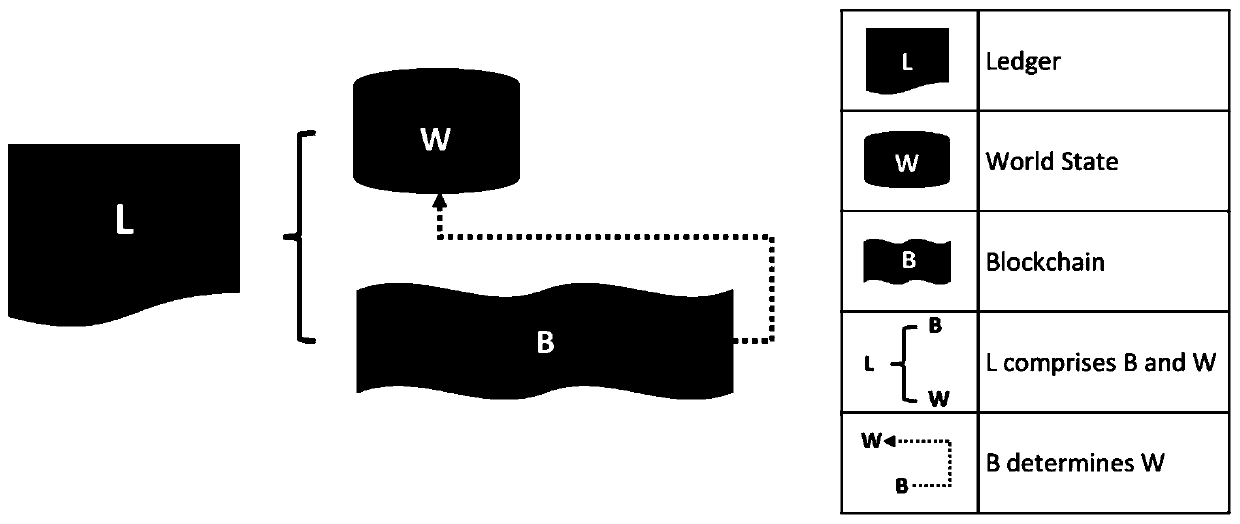
- The bridge component of CS mode is used to connect the Fabric platform with the external distributed file storage platform, and the transmission and storage of block data are realized through the gRPC protocol. The factory mode is used to transform the network storage layer into persistent classes, and distributed storage such as Hadoop and GFS are used. platform to reduce deployment complexity and operation and maintenance costs.


Energy Efficiency Standards for High-Throughput Networks
Energy efficiency has emerged as a critical performance metric for high-throughput networks, particularly when comparing data center fabrics and blockchain networks. The fundamental challenge lies in balancing computational throughput with power consumption, as both network architectures face increasing pressure to optimize their energy profiles while maintaining performance standards.
Data center fabrics typically operate under established energy efficiency frameworks such as Power Usage Effectiveness (PUE) metrics, which measure the ratio of total facility energy consumption to IT equipment energy consumption. Modern data centers achieve PUE ratios between 1.1 and 1.3, with leading facilities approaching theoretical minimums through advanced cooling systems, power distribution optimization, and hardware efficiency improvements.
Blockchain networks present unique energy efficiency challenges due to their consensus mechanisms and distributed nature. Proof-of-Work systems like Bitcoin consume substantial energy per transaction, while newer consensus algorithms such as Proof-of-Stake demonstrate significantly improved energy profiles. The energy cost per transaction varies dramatically across different blockchain implementations, ranging from kilowatt-hours for Bitcoin to milliwatt-hours for modern efficient protocols.
Emerging standards focus on throughput-normalized energy metrics, measuring energy consumption per unit of data processed or transactions completed. This approach enables direct comparison between different network architectures and drives innovation toward more efficient designs. Industry initiatives are developing standardized measurement methodologies that account for network topology, workload characteristics, and operational conditions.
The convergence of artificial intelligence workloads and high-frequency trading applications is pushing both data center fabrics and blockchain networks toward similar efficiency optimization strategies. These include dynamic voltage scaling, workload-aware resource allocation, and predictive power management systems that adapt energy consumption to real-time throughput demands.
Future energy efficiency standards will likely incorporate carbon footprint considerations, renewable energy integration metrics, and lifecycle energy assessments. This holistic approach recognizes that true efficiency extends beyond immediate power consumption to encompass the entire network infrastructure's environmental impact and sustainability profile.
Data center fabrics typically operate under established energy efficiency frameworks such as Power Usage Effectiveness (PUE) metrics, which measure the ratio of total facility energy consumption to IT equipment energy consumption. Modern data centers achieve PUE ratios between 1.1 and 1.3, with leading facilities approaching theoretical minimums through advanced cooling systems, power distribution optimization, and hardware efficiency improvements.
Blockchain networks present unique energy efficiency challenges due to their consensus mechanisms and distributed nature. Proof-of-Work systems like Bitcoin consume substantial energy per transaction, while newer consensus algorithms such as Proof-of-Stake demonstrate significantly improved energy profiles. The energy cost per transaction varies dramatically across different blockchain implementations, ranging from kilowatt-hours for Bitcoin to milliwatt-hours for modern efficient protocols.
Emerging standards focus on throughput-normalized energy metrics, measuring energy consumption per unit of data processed or transactions completed. This approach enables direct comparison between different network architectures and drives innovation toward more efficient designs. Industry initiatives are developing standardized measurement methodologies that account for network topology, workload characteristics, and operational conditions.
The convergence of artificial intelligence workloads and high-frequency trading applications is pushing both data center fabrics and blockchain networks toward similar efficiency optimization strategies. These include dynamic voltage scaling, workload-aware resource allocation, and predictive power management systems that adapt energy consumption to real-time throughput demands.
Future energy efficiency standards will likely incorporate carbon footprint considerations, renewable energy integration metrics, and lifecycle energy assessments. This holistic approach recognizes that true efficiency extends beyond immediate power consumption to encompass the entire network infrastructure's environmental impact and sustainability profile.
Interoperability Challenges Between DC and Blockchain Networks
The integration of data center fabrics with blockchain networks presents significant interoperability challenges that stem from fundamental architectural and operational differences between these two distinct networking paradigms. Data center fabrics are designed for high-speed, low-latency communication within controlled environments, while blockchain networks prioritize decentralization, consensus mechanisms, and cryptographic security across distributed nodes.
Protocol compatibility represents the most immediate challenge, as data center fabrics typically utilize specialized protocols like RDMA over Converged Ethernet (RoCE) or InfiniBand for optimized performance, whereas blockchain networks rely on standard internet protocols such as TCP/IP and HTTP/HTTPS. This protocol mismatch creates translation overhead and potential bottlenecks when attempting to bridge these environments.
Security model conflicts pose another critical challenge. Data center fabrics operate under centralized security frameworks with trusted internal communications, while blockchain networks assume zero-trust environments where every transaction requires cryptographic verification. Reconciling these opposing security philosophies requires sophisticated gateway solutions that can maintain blockchain integrity while leveraging data center efficiency.
Consensus mechanism integration presents unique difficulties when blockchain validation processes must interact with data center fabric operations. The deterministic, high-throughput nature of data center communications conflicts with the probabilistic, consensus-driven approach of blockchain networks, potentially creating synchronization issues and performance degradation.
Network topology differences further complicate interoperability. Data center fabrics employ hierarchical, spine-leaf architectures optimized for predictable traffic patterns, while blockchain networks utilize mesh topologies designed for resilience and decentralization. Bridging these topologies requires intelligent routing mechanisms that can adapt to both structured and unstructured network behaviors.
Latency and throughput expectations create additional friction points. Data center applications expect microsecond-level latencies and multi-gigabit throughput, while blockchain networks typically operate with second-level confirmation times and significantly lower transaction rates. Managing these performance disparities requires careful buffer management and quality-of-service implementations.
Addressing these interoperability challenges demands the development of specialized middleware solutions, hybrid protocol stacks, and adaptive security frameworks that can seamlessly translate between data center and blockchain paradigms while preserving the essential characteristics of both systems.
Protocol compatibility represents the most immediate challenge, as data center fabrics typically utilize specialized protocols like RDMA over Converged Ethernet (RoCE) or InfiniBand for optimized performance, whereas blockchain networks rely on standard internet protocols such as TCP/IP and HTTP/HTTPS. This protocol mismatch creates translation overhead and potential bottlenecks when attempting to bridge these environments.
Security model conflicts pose another critical challenge. Data center fabrics operate under centralized security frameworks with trusted internal communications, while blockchain networks assume zero-trust environments where every transaction requires cryptographic verification. Reconciling these opposing security philosophies requires sophisticated gateway solutions that can maintain blockchain integrity while leveraging data center efficiency.
Consensus mechanism integration presents unique difficulties when blockchain validation processes must interact with data center fabric operations. The deterministic, high-throughput nature of data center communications conflicts with the probabilistic, consensus-driven approach of blockchain networks, potentially creating synchronization issues and performance degradation.
Network topology differences further complicate interoperability. Data center fabrics employ hierarchical, spine-leaf architectures optimized for predictable traffic patterns, while blockchain networks utilize mesh topologies designed for resilience and decentralization. Bridging these topologies requires intelligent routing mechanisms that can adapt to both structured and unstructured network behaviors.
Latency and throughput expectations create additional friction points. Data center applications expect microsecond-level latencies and multi-gigabit throughput, while blockchain networks typically operate with second-level confirmation times and significantly lower transaction rates. Managing these performance disparities requires careful buffer management and quality-of-service implementations.
Addressing these interoperability challenges demands the development of specialized middleware solutions, hybrid protocol stacks, and adaptive security frameworks that can seamlessly translate between data center and blockchain paradigms while preserving the essential characteristics of both systems.
Unlock deeper insights with Patsnap Eureka Quick Research — get a full tech report to explore trends and direct your research. Try now!
Generate Your Research Report Instantly with AI Agent
Supercharge your innovation with Patsnap Eureka AI Agent Platform!