
How to Create Modular Extensions for Scalable Data Center Fabrics
MAY 19, 20269 MIN READ
Generate Your Research Report Instantly with AI Agent
Patsnap Eureka helps you evaluate technical feasibility & market potential.
Modular Data Center Fabric Evolution and Objectives
The evolution of data center fabric architectures has undergone significant transformation over the past two decades, driven by exponential growth in data processing demands and the proliferation of cloud computing services. Traditional three-tier network architectures, consisting of core, aggregation, and access layers, have gradually given way to more sophisticated fabric designs that prioritize scalability, performance, and operational efficiency.
Early data center networks relied heavily on spanning tree protocols and hierarchical designs that created bottlenecks and limited east-west traffic flow. The emergence of virtualization technologies and distributed computing paradigms necessitated a fundamental shift toward flatter, more resilient network topologies. This evolution led to the development of leaf-spine architectures, which became the foundation for modern data center fabrics.
The introduction of software-defined networking principles marked a pivotal moment in fabric evolution, enabling centralized control and programmability that traditional hardware-centric approaches could not provide. Concurrently, the rise of containerization and microservices architectures created new requirements for dynamic, fine-grained network segmentation and policy enforcement capabilities.
Modern data center fabrics must address several critical objectives to meet contemporary enterprise and service provider requirements. Scalability remains paramount, with fabrics needing to support seamless expansion from hundreds to tens of thousands of endpoints without performance degradation or architectural redesign. This scalability extends beyond mere port density to encompass bandwidth scaling, processing capacity, and management complexity.
Performance optimization represents another fundamental objective, encompassing ultra-low latency communication, high throughput capabilities, and consistent quality of service across diverse workload types. Fabrics must efficiently handle both north-south traffic patterns typical of client-server applications and the increasingly dominant east-west flows characteristic of distributed computing environments.
Operational simplicity and automation capabilities have become essential objectives as network complexity continues to grow. Modern fabrics must provide zero-touch provisioning, automated fault detection and remediation, and comprehensive telemetry for performance monitoring and capacity planning. The integration of artificial intelligence and machine learning technologies into fabric management systems represents a key evolutionary trend toward self-healing and self-optimizing networks.
Security integration at the fabric level has evolved from an afterthought to a core design principle, with objectives including microsegmentation, encrypted communication, and real-time threat detection capabilities embedded directly into the network infrastructure.
Early data center networks relied heavily on spanning tree protocols and hierarchical designs that created bottlenecks and limited east-west traffic flow. The emergence of virtualization technologies and distributed computing paradigms necessitated a fundamental shift toward flatter, more resilient network topologies. This evolution led to the development of leaf-spine architectures, which became the foundation for modern data center fabrics.
The introduction of software-defined networking principles marked a pivotal moment in fabric evolution, enabling centralized control and programmability that traditional hardware-centric approaches could not provide. Concurrently, the rise of containerization and microservices architectures created new requirements for dynamic, fine-grained network segmentation and policy enforcement capabilities.
Modern data center fabrics must address several critical objectives to meet contemporary enterprise and service provider requirements. Scalability remains paramount, with fabrics needing to support seamless expansion from hundreds to tens of thousands of endpoints without performance degradation or architectural redesign. This scalability extends beyond mere port density to encompass bandwidth scaling, processing capacity, and management complexity.
Performance optimization represents another fundamental objective, encompassing ultra-low latency communication, high throughput capabilities, and consistent quality of service across diverse workload types. Fabrics must efficiently handle both north-south traffic patterns typical of client-server applications and the increasingly dominant east-west flows characteristic of distributed computing environments.
Operational simplicity and automation capabilities have become essential objectives as network complexity continues to grow. Modern fabrics must provide zero-touch provisioning, automated fault detection and remediation, and comprehensive telemetry for performance monitoring and capacity planning. The integration of artificial intelligence and machine learning technologies into fabric management systems represents a key evolutionary trend toward self-healing and self-optimizing networks.
Security integration at the fabric level has evolved from an afterthought to a core design principle, with objectives including microsegmentation, encrypted communication, and real-time threat detection capabilities embedded directly into the network infrastructure.
Market Demand for Scalable Data Center Infrastructure
The global data center infrastructure market is experiencing unprecedented growth driven by the exponential increase in digital transformation initiatives across industries. Organizations are migrating workloads to cloud environments, implementing artificial intelligence and machine learning applications, and supporting remote work infrastructures that demand robust, scalable networking solutions. This digital shift has created an urgent need for data center fabrics that can dynamically expand and contract based on computational demands while maintaining consistent performance levels.
Enterprise customers are increasingly seeking modular data center solutions that offer flexibility in deployment and scaling. Traditional monolithic networking architectures struggle to meet the rapid provisioning requirements of modern applications, particularly those supporting real-time analytics, streaming services, and distributed computing frameworks. The demand for modular extensions stems from the need to reduce capital expenditure risks while ensuring infrastructure can adapt to unpredictable growth patterns.
Cloud service providers represent the largest segment driving demand for scalable fabric solutions. These organizations require the ability to rapidly deploy additional capacity across multiple availability zones while maintaining network consistency and performance guarantees. The competitive landscape in cloud services has intensified the focus on infrastructure efficiency, making modular scalability a critical differentiator in service delivery capabilities.
Edge computing deployment scenarios are creating additional market pressure for modular data center fabrics. As processing requirements move closer to end users, organizations need networking solutions that can be replicated and scaled across distributed locations with minimal complexity. This trend is particularly pronounced in telecommunications, autonomous vehicle networks, and industrial IoT applications where latency requirements demand localized processing capabilities.
The financial services and healthcare sectors are driving demand for scalable infrastructure that can accommodate regulatory compliance requirements while supporting business growth. These industries require networking solutions that can scale performance and capacity without compromising security isolation or audit capabilities, creating specific requirements for modular extension architectures.
Market research indicates that organizations prioritize solutions offering seamless integration with existing infrastructure investments. The demand pattern shows preference for modular approaches that can incrementally enhance current deployments rather than requiring complete infrastructure replacement, reflecting budget constraints and operational continuity requirements in enterprise environments.
Enterprise customers are increasingly seeking modular data center solutions that offer flexibility in deployment and scaling. Traditional monolithic networking architectures struggle to meet the rapid provisioning requirements of modern applications, particularly those supporting real-time analytics, streaming services, and distributed computing frameworks. The demand for modular extensions stems from the need to reduce capital expenditure risks while ensuring infrastructure can adapt to unpredictable growth patterns.
Cloud service providers represent the largest segment driving demand for scalable fabric solutions. These organizations require the ability to rapidly deploy additional capacity across multiple availability zones while maintaining network consistency and performance guarantees. The competitive landscape in cloud services has intensified the focus on infrastructure efficiency, making modular scalability a critical differentiator in service delivery capabilities.
Edge computing deployment scenarios are creating additional market pressure for modular data center fabrics. As processing requirements move closer to end users, organizations need networking solutions that can be replicated and scaled across distributed locations with minimal complexity. This trend is particularly pronounced in telecommunications, autonomous vehicle networks, and industrial IoT applications where latency requirements demand localized processing capabilities.
The financial services and healthcare sectors are driving demand for scalable infrastructure that can accommodate regulatory compliance requirements while supporting business growth. These industries require networking solutions that can scale performance and capacity without compromising security isolation or audit capabilities, creating specific requirements for modular extension architectures.
Market research indicates that organizations prioritize solutions offering seamless integration with existing infrastructure investments. The demand pattern shows preference for modular approaches that can incrementally enhance current deployments rather than requiring complete infrastructure replacement, reflecting budget constraints and operational continuity requirements in enterprise environments.
Current State and Challenges of Modular Fabric Extensions
The current landscape of modular fabric extensions in data center environments presents a complex array of technological achievements alongside significant implementation challenges. Modern data centers have evolved from traditional three-tier architectures to sophisticated leaf-spine topologies, with leading vendors like Cisco, Arista, and Juniper offering modular switching platforms that support hot-swappable line cards and fabric modules. These systems typically achieve aggregate bandwidths exceeding 25.6 Tbps per chassis while maintaining sub-microsecond latency characteristics.
Contemporary modular fabric implementations face substantial scalability constraints, particularly in maintaining consistent performance as network diameter increases. The fundamental challenge lies in preserving low-latency characteristics while accommodating exponential traffic growth patterns. Current solutions struggle with fabric congestion management when scaling beyond 10,000 endpoints, often resulting in performance degradation that impacts application-level service quality.
Interoperability remains a critical bottleneck in existing modular fabric deployments. Vendor-specific implementations of fabric extension protocols create isolated islands of connectivity, limiting the flexibility that modular architectures promise to deliver. Standards-based approaches like EVPN-VXLAN have gained traction, yet inconsistent feature implementations across different hardware platforms continue to complicate multi-vendor fabric deployments.
Power consumption and thermal management present increasingly complex challenges as fabric density requirements intensify. Current modular systems consume between 150-300 watts per 100G port, creating thermal hotspots that necessitate sophisticated cooling infrastructure. This power density limitation directly constrains the practical scalability of modular fabric extensions in space-constrained data center environments.
The software-defined networking integration complexity represents another significant challenge area. While SDN controllers promise centralized fabric management, the reality involves managing heterogeneous APIs, inconsistent telemetry data formats, and varying configuration models across different modular platforms. This complexity increases operational overhead and extends deployment timelines for large-scale fabric extensions.
Buffer management and congestion control mechanisms in current modular fabrics exhibit limitations when handling mixed traffic patterns typical of modern cloud workloads. Existing implementations often rely on static buffer allocation strategies that prove inadequate for dynamic traffic bursts, leading to packet loss and application performance degradation during peak utilization periods.
Contemporary modular fabric implementations face substantial scalability constraints, particularly in maintaining consistent performance as network diameter increases. The fundamental challenge lies in preserving low-latency characteristics while accommodating exponential traffic growth patterns. Current solutions struggle with fabric congestion management when scaling beyond 10,000 endpoints, often resulting in performance degradation that impacts application-level service quality.
Interoperability remains a critical bottleneck in existing modular fabric deployments. Vendor-specific implementations of fabric extension protocols create isolated islands of connectivity, limiting the flexibility that modular architectures promise to deliver. Standards-based approaches like EVPN-VXLAN have gained traction, yet inconsistent feature implementations across different hardware platforms continue to complicate multi-vendor fabric deployments.
Power consumption and thermal management present increasingly complex challenges as fabric density requirements intensify. Current modular systems consume between 150-300 watts per 100G port, creating thermal hotspots that necessitate sophisticated cooling infrastructure. This power density limitation directly constrains the practical scalability of modular fabric extensions in space-constrained data center environments.
The software-defined networking integration complexity represents another significant challenge area. While SDN controllers promise centralized fabric management, the reality involves managing heterogeneous APIs, inconsistent telemetry data formats, and varying configuration models across different modular platforms. This complexity increases operational overhead and extends deployment timelines for large-scale fabric extensions.
Buffer management and congestion control mechanisms in current modular fabrics exhibit limitations when handling mixed traffic patterns typical of modern cloud workloads. Existing implementations often rely on static buffer allocation strategies that prove inadequate for dynamic traffic bursts, leading to packet loss and application performance degradation during peak utilization periods.
Existing Modular Extension Solutions for DC Fabrics
01 Modular system architecture design
Systems designed with modular architectures that allow for independent development, deployment, and scaling of individual components. These architectures enable better resource allocation and system flexibility by separating concerns into distinct modules that can be managed independently while maintaining overall system coherence.- Modular system architecture design: Systems designed with modular architectures that allow for independent development, deployment, and scaling of individual components. These architectures enable better separation of concerns and facilitate easier maintenance and updates of specific modules without affecting the entire system.
- Dynamic extension loading mechanisms: Technologies that enable runtime loading and unloading of extensions or modules without requiring system restart. These mechanisms provide flexibility in adding new functionality and allow systems to adapt to changing requirements while maintaining operational continuity.
- Scalable plugin frameworks: Framework designs that support the development and integration of plugins or extensions in a scalable manner. These frameworks provide standardized interfaces and protocols that allow third-party developers to create compatible extensions while ensuring system performance and stability.
- Resource management for modular systems: Methods and systems for efficiently managing computational resources across multiple modules or extensions. These approaches ensure optimal resource allocation, prevent conflicts between modules, and maintain system performance as the number of active extensions increases.
- Inter-module communication protocols: Communication mechanisms that enable efficient data exchange and coordination between different modules or extensions. These protocols ensure reliable message passing, event handling, and synchronization across modular components while maintaining loose coupling between modules.
02 Dynamic extension loading mechanisms
Technologies that enable runtime loading and unloading of extensions without requiring system restarts or downtime. These mechanisms provide hot-swappable functionality where new modules can be integrated into existing systems dynamically, supporting continuous operation while expanding capabilities.Expand Specific Solutions03 Scalable plugin frameworks
Framework designs that support the addition of multiple plugins while maintaining performance and stability. These frameworks implement standardized interfaces and communication protocols that allow third-party extensions to integrate seamlessly while ensuring the system can handle increasing numbers of concurrent plugins.Expand Specific Solutions04 Resource management for extensible systems
Methods for efficiently managing computational resources, memory allocation, and processing power in systems that support modular extensions. These approaches ensure that adding new modules does not degrade overall system performance and that resources are distributed optimally across all active components.Expand Specific Solutions05 Inter-module communication protocols
Communication standards and protocols that enable different modules and extensions to interact effectively within a scalable system. These protocols define message passing, data sharing, and synchronization mechanisms that maintain system integrity while allowing independent module operation and scaling.Expand Specific Solutions
Key Players in Data Center Networking and Fabric Solutions
The modular extensions for scalable data center fabrics market represents a rapidly evolving sector driven by increasing demands for AI infrastructure and high-performance computing. The industry is in a growth phase, with significant market expansion fueled by cloud computing adoption and enterprise digital transformation initiatives. Technology maturity varies across segments, with established players like Microsoft Technology Licensing LLC, Huawei Technologies, and ZTE Corp. offering mature networking solutions, while specialized companies such as Enfabrica Corp. and Unifabrix Ltd. are pioneering next-generation fabric technologies including CXL and AI SuperNIC solutions. Traditional infrastructure providers like New H3C Technologies and Mellanox Technologies continue advancing established protocols, whereas emerging players focus on software-defined architectures and composable infrastructure. The competitive landscape shows a mix of mature enterprise solutions and cutting-edge innovations addressing AI workload requirements, memory fabric optimization, and ultra-low latency connectivity, indicating a market transitioning toward more sophisticated, AI-optimized data center architectures.
ZTE Corp.
Technical Solution: ZTE offers modular data center fabric solutions through their ZENIC series switches and SDN controller platform. Their modular approach incorporates flexible chassis designs with hot-swappable fabric modules and line cards supporting various interface types and speeds. The solution provides centralized fabric management through their ZENIC ONE controller, enabling automated provisioning of network services and dynamic bandwidth allocation. Their modular extensions support multi-layer network virtualization, allowing tenants to create isolated fabric segments with customized policies. The architecture includes standardized northbound and southbound APIs for integration with cloud orchestration platforms and third-party management systems.
Strengths: Cost-effective solutions with competitive pricing, comprehensive product portfolio covering various market segments, strong presence in emerging markets. Weaknesses: Limited brand recognition in premium enterprise markets, concerns about technology transfer restrictions in some regions, less extensive ecosystem compared to established vendors.
Enfabrica Corp.
Technical Solution: Enfabrica develops next-generation modular fabric solutions specifically designed for AI and machine learning workloads in modern data centers. Their Accelerated Compute Fabric (ACF) technology provides modular switching infrastructure optimized for GPU-to-GPU communication and distributed training scenarios. The modular design supports dynamic resource allocation and elastic scaling of compute fabrics based on workload demands. Their extensions include specialized protocols for collective communication operations and advanced congestion management algorithms tailored for AI traffic patterns. The solution enables seamless integration of heterogeneous accelerators and provides unified fabric management across diverse compute resources.
Strengths: Specialized optimization for AI/ML workloads, innovative approach to accelerated computing fabrics, strong technical leadership team. Weaknesses: Limited market presence as emerging company, unproven large-scale deployment track record, narrow focus may limit broader data center applications.
Core Innovations in Scalable Fabric Extension Design
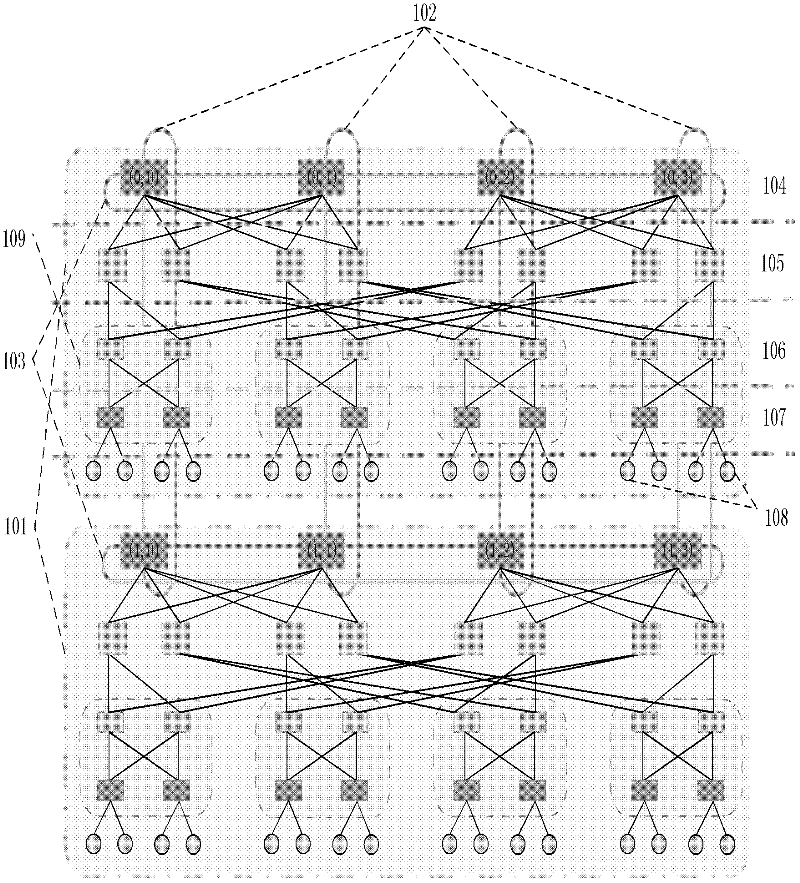
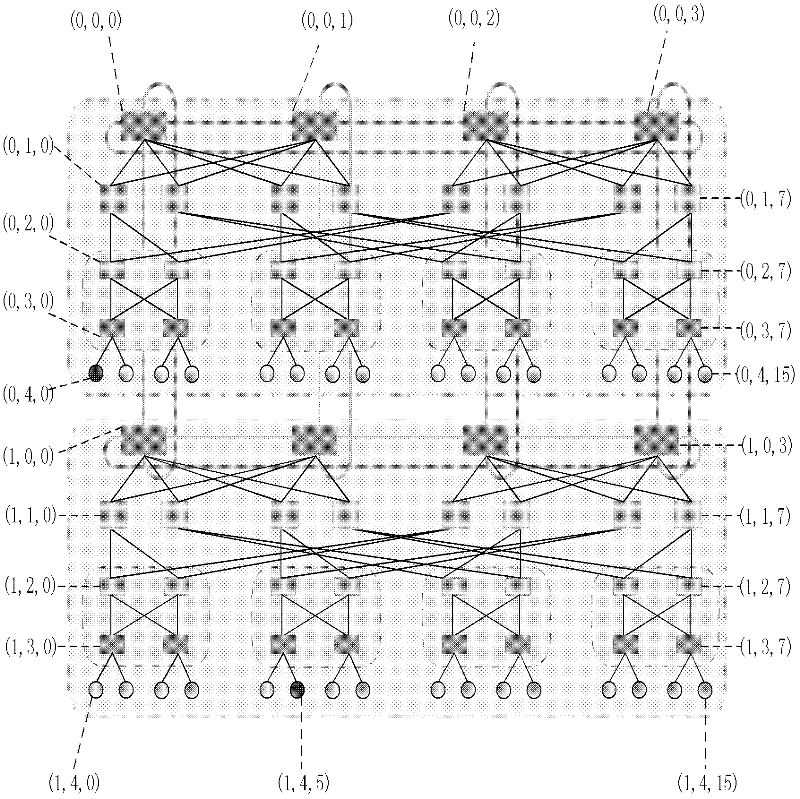
Routing method for module-expansion-based data center network topology system
PatentInactiveCN102420775A
Innovation
- The three-dimensional coordinate addressing mechanism is used to address network devices, and the virtual channel mechanism and distributed routing decision algorithm are used to select transmission paths in real time, make full use of equal-cost and non-equivalent paths, and dynamically adjust network status information to achieve traffic balance.

A system for scaling network fabrics
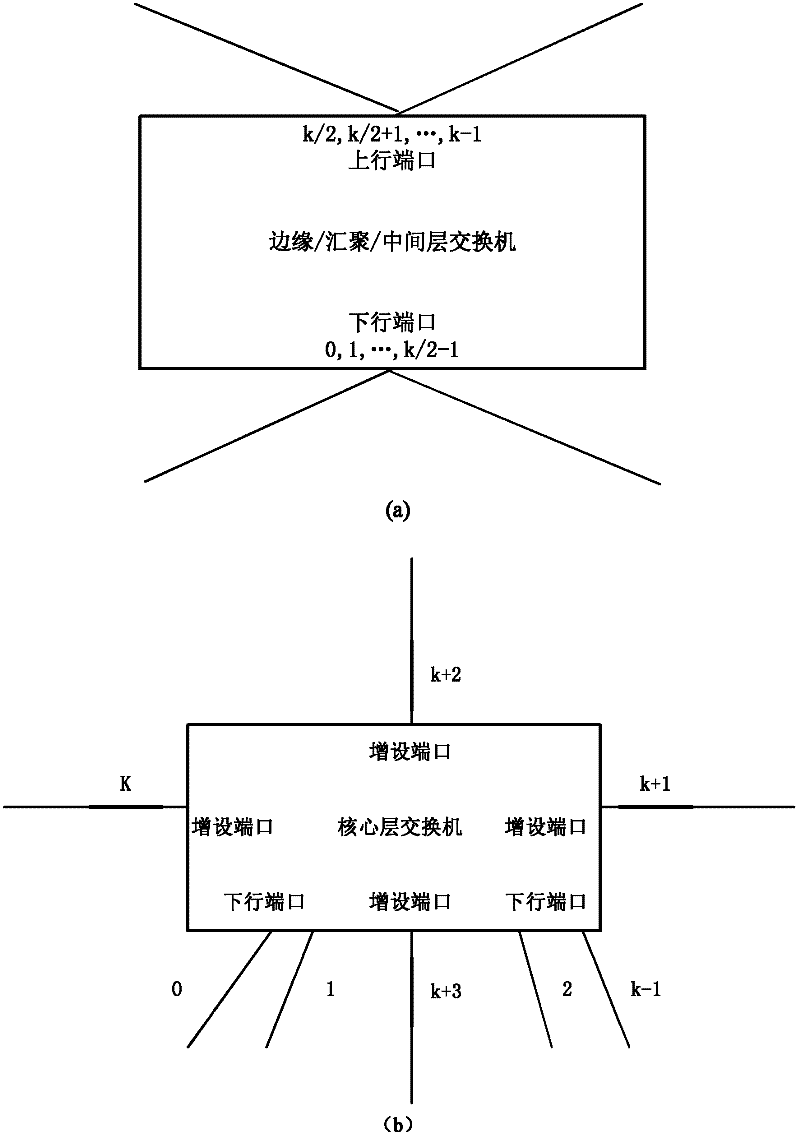
PatentActiveCN115208840B
Innovation
- A scaling network structure system is adopted. By introducing external adapters, the trunk and leaf switches are connected by jumpers, and multiple upper and lower layer switches and adapters are used to expand the network topology, reducing hardware complexity. degree and power consumption.


Standards and Protocols for Interoperable Fabric Extensions
The establishment of comprehensive standards and protocols forms the cornerstone of interoperable fabric extensions in modern data center environments. Industry-leading organizations such as the Institute of Electrical and Electronics Engineers (IEEE), Internet Engineering Task Force (IETF), and Open Networking Foundation (ONF) have developed critical frameworks that enable seamless integration across heterogeneous fabric architectures. These standardization efforts focus primarily on ensuring consistent communication protocols, unified management interfaces, and compatible extension mechanisms across different vendor implementations.
Ethernet-based standards, particularly IEEE 802.1 series protocols, provide fundamental interoperability for fabric extensions. The IEEE 802.1BR Bridge Port Extension standard enables the creation of distributed switching architectures, while IEEE 802.1Qbg defines edge virtual bridging capabilities essential for virtualized environments. Additionally, the IEEE 802.1AB Link Layer Discovery Protocol (LLDP) facilitates automatic discovery and configuration of extension modules, significantly reducing deployment complexity and operational overhead.
Software-defined networking protocols have emerged as critical enablers for modular fabric extensions. OpenFlow protocol, standardized by ONF, provides a unified interface for controlling distributed fabric components through centralized management planes. The Network Configuration Protocol (NETCONF) and RESTCONF APIs, defined by IETF RFC standards, establish consistent configuration and monitoring interfaces across diverse extension modules, ensuring vendor-agnostic management capabilities.
Container and virtualization standards play increasingly important roles in fabric extension interoperability. The Open Container Initiative (OCI) specifications and Kubernetes Container Network Interface (CNI) standards define how fabric extensions integrate with containerized workloads. These protocols ensure that modular extensions can dynamically adapt to changing application requirements while maintaining consistent network policies and security boundaries across the entire data center fabric infrastructure.
Emerging standards for intent-based networking and network function virtualization are reshaping fabric extension architectures. The ETSI NFV framework and ONAP specifications provide standardized approaches for deploying and managing virtualized network functions within modular fabric extensions, enabling greater flexibility and service agility in large-scale data center deployments.
Ethernet-based standards, particularly IEEE 802.1 series protocols, provide fundamental interoperability for fabric extensions. The IEEE 802.1BR Bridge Port Extension standard enables the creation of distributed switching architectures, while IEEE 802.1Qbg defines edge virtual bridging capabilities essential for virtualized environments. Additionally, the IEEE 802.1AB Link Layer Discovery Protocol (LLDP) facilitates automatic discovery and configuration of extension modules, significantly reducing deployment complexity and operational overhead.
Software-defined networking protocols have emerged as critical enablers for modular fabric extensions. OpenFlow protocol, standardized by ONF, provides a unified interface for controlling distributed fabric components through centralized management planes. The Network Configuration Protocol (NETCONF) and RESTCONF APIs, defined by IETF RFC standards, establish consistent configuration and monitoring interfaces across diverse extension modules, ensuring vendor-agnostic management capabilities.
Container and virtualization standards play increasingly important roles in fabric extension interoperability. The Open Container Initiative (OCI) specifications and Kubernetes Container Network Interface (CNI) standards define how fabric extensions integrate with containerized workloads. These protocols ensure that modular extensions can dynamically adapt to changing application requirements while maintaining consistent network policies and security boundaries across the entire data center fabric infrastructure.
Emerging standards for intent-based networking and network function virtualization are reshaping fabric extension architectures. The ETSI NFV framework and ONAP specifications provide standardized approaches for deploying and managing virtualized network functions within modular fabric extensions, enabling greater flexibility and service agility in large-scale data center deployments.
Energy Efficiency Considerations in Modular DC Design
Energy efficiency has emerged as a critical design consideration in modular data center fabrics, driven by escalating operational costs and environmental sustainability requirements. Modern data centers consume approximately 1-3% of global electricity, with networking infrastructure accounting for 10-15% of total facility power consumption. The modular approach to fabric design presents unique opportunities to optimize energy utilization through granular control and intelligent resource allocation.
Power consumption in modular fabric architectures varies significantly across different operational states and traffic patterns. Leaf-spine topologies, commonly employed in scalable designs, exhibit power consumption ranging from 0.5 to 2.5 watts per gigabit of switching capacity, depending on port utilization and forwarding complexity. Advanced silicon technologies, including 7nm and 5nm process nodes, have reduced per-port power consumption by 30-40% compared to previous generations while maintaining performance scalability.
Dynamic power management strategies play a crucial role in modular fabric efficiency. Adaptive link speed adjustment, where ports automatically scale between 10G, 25G, 50G, and 100G based on traffic demands, can achieve 20-35% power savings during low-utilization periods. Sleep mode implementations for idle fabric modules can reduce standby power consumption to less than 15% of operational levels, though wake-up latencies must be carefully managed to maintain service level agreements.
Thermal management integration significantly impacts overall energy efficiency in modular designs. Intelligent cooling systems that respond to real-time fabric utilization patterns can optimize airflow distribution and reduce cooling overhead by 15-25%. Hot-aisle containment strategies, combined with modular fabric placement optimization, enable more efficient heat extraction and reduced cooling energy requirements.
Advanced power delivery architectures, including 48V DC distribution and on-board voltage regulation, improve power conversion efficiency from typical 85-90% to 95-98%. These improvements become particularly significant in large-scale modular deployments where cumulative efficiency gains translate to substantial operational cost reductions and reduced carbon footprint across the entire data center infrastructure.
Power consumption in modular fabric architectures varies significantly across different operational states and traffic patterns. Leaf-spine topologies, commonly employed in scalable designs, exhibit power consumption ranging from 0.5 to 2.5 watts per gigabit of switching capacity, depending on port utilization and forwarding complexity. Advanced silicon technologies, including 7nm and 5nm process nodes, have reduced per-port power consumption by 30-40% compared to previous generations while maintaining performance scalability.
Dynamic power management strategies play a crucial role in modular fabric efficiency. Adaptive link speed adjustment, where ports automatically scale between 10G, 25G, 50G, and 100G based on traffic demands, can achieve 20-35% power savings during low-utilization periods. Sleep mode implementations for idle fabric modules can reduce standby power consumption to less than 15% of operational levels, though wake-up latencies must be carefully managed to maintain service level agreements.
Thermal management integration significantly impacts overall energy efficiency in modular designs. Intelligent cooling systems that respond to real-time fabric utilization patterns can optimize airflow distribution and reduce cooling overhead by 15-25%. Hot-aisle containment strategies, combined with modular fabric placement optimization, enable more efficient heat extraction and reduced cooling energy requirements.
Advanced power delivery architectures, including 48V DC distribution and on-board voltage regulation, improve power conversion efficiency from typical 85-90% to 95-98%. These improvements become particularly significant in large-scale modular deployments where cumulative efficiency gains translate to substantial operational cost reductions and reduced carbon footprint across the entire data center infrastructure.
Unlock deeper insights with Patsnap Eureka Quick Research — get a full tech report to explore trends and direct your research. Try now!
Generate Your Research Report Instantly with AI Agent
Supercharge your innovation with Patsnap Eureka AI Agent Platform!