
Design Guidelines for Reciprocating Compressor Port Alterations
MAR 20, 20269 MIN READ
Generate Your Research Report Instantly with AI Agent
Patsnap Eureka helps you evaluate technical feasibility & market potential.
Reciprocating Compressor Port Design Background and Objectives
Reciprocating compressors have served as fundamental components in industrial applications for over a century, with their development closely tied to the evolution of manufacturing, petrochemical processing, and energy production sectors. The technology emerged during the industrial revolution when the need for reliable gas compression became critical for various industrial processes. Early designs focused primarily on basic functionality, with limited attention to port optimization and flow dynamics.
The evolution of reciprocating compressor technology has been marked by significant advancements in materials science, precision manufacturing, and computational fluid dynamics. Modern compressors incorporate sophisticated valve systems, advanced metallurgy, and precision-engineered components that enable higher efficiency and reliability. The integration of digital monitoring systems and predictive maintenance capabilities has transformed these machines from simple mechanical devices into intelligent industrial assets.
Current technological trends emphasize the optimization of thermodynamic cycles, reduction of energy consumption, and enhancement of operational reliability. The industry is witnessing a shift toward more efficient port designs that minimize pressure losses, reduce valve wear, and improve overall compressor performance. Advanced simulation tools and computational modeling have enabled engineers to better understand flow patterns and optimize port geometries for specific applications.
The primary technical objectives for reciprocating compressor port alterations center on achieving optimal volumetric efficiency while maintaining mechanical integrity and operational safety. Key goals include minimizing pressure drop across inlet and discharge ports, reducing flow-induced vibrations, and optimizing valve dynamics to prevent premature failure. Enhanced port designs aim to improve heat transfer characteristics and reduce dead volume effects that can significantly impact compressor efficiency.
Performance optimization targets encompass both thermodynamic and mechanical aspects. Engineers seek to maximize isentropic efficiency through improved flow management while ensuring adequate structural strength to withstand cyclic loading conditions. The design process must balance competing requirements such as maximizing flow area while maintaining sufficient material thickness for pressure containment.
Future development directions focus on integrating smart materials, advanced manufacturing techniques such as additive manufacturing, and real-time adaptive control systems. These innovations promise to enable more sophisticated port geometries and dynamic optimization capabilities that can adapt to varying operating conditions, ultimately leading to more efficient and reliable reciprocating compressor systems across diverse industrial applications.
The evolution of reciprocating compressor technology has been marked by significant advancements in materials science, precision manufacturing, and computational fluid dynamics. Modern compressors incorporate sophisticated valve systems, advanced metallurgy, and precision-engineered components that enable higher efficiency and reliability. The integration of digital monitoring systems and predictive maintenance capabilities has transformed these machines from simple mechanical devices into intelligent industrial assets.
Current technological trends emphasize the optimization of thermodynamic cycles, reduction of energy consumption, and enhancement of operational reliability. The industry is witnessing a shift toward more efficient port designs that minimize pressure losses, reduce valve wear, and improve overall compressor performance. Advanced simulation tools and computational modeling have enabled engineers to better understand flow patterns and optimize port geometries for specific applications.
The primary technical objectives for reciprocating compressor port alterations center on achieving optimal volumetric efficiency while maintaining mechanical integrity and operational safety. Key goals include minimizing pressure drop across inlet and discharge ports, reducing flow-induced vibrations, and optimizing valve dynamics to prevent premature failure. Enhanced port designs aim to improve heat transfer characteristics and reduce dead volume effects that can significantly impact compressor efficiency.
Performance optimization targets encompass both thermodynamic and mechanical aspects. Engineers seek to maximize isentropic efficiency through improved flow management while ensuring adequate structural strength to withstand cyclic loading conditions. The design process must balance competing requirements such as maximizing flow area while maintaining sufficient material thickness for pressure containment.
Future development directions focus on integrating smart materials, advanced manufacturing techniques such as additive manufacturing, and real-time adaptive control systems. These innovations promise to enable more sophisticated port geometries and dynamic optimization capabilities that can adapt to varying operating conditions, ultimately leading to more efficient and reliable reciprocating compressor systems across diverse industrial applications.
Market Demand for Enhanced Compressor Port Performance
The global reciprocating compressor market is experiencing significant growth driven by increasing demand for enhanced port performance across multiple industrial sectors. Oil and gas operations, particularly in upstream extraction and midstream processing, represent the largest market segment requiring optimized compressor port designs. These applications demand higher efficiency, reduced maintenance intervals, and improved reliability under extreme operating conditions.
Manufacturing industries, including petrochemicals, pharmaceuticals, and food processing, are increasingly seeking compressors with superior port configurations to meet stringent quality standards and energy efficiency requirements. The automotive sector's expansion, particularly in emerging markets, has created substantial demand for compressed air systems with enhanced port performance characteristics.
Power generation facilities utilizing natural gas are driving demand for reciprocating compressors with optimized port designs that can handle varying gas compositions while maintaining consistent performance. The growing emphasis on distributed power generation and combined heat and power systems has further amplified this market segment.
Refrigeration and HVAC applications represent another significant market driver, where enhanced port performance directly translates to improved energy efficiency and reduced operational costs. Commercial and industrial refrigeration systems increasingly require compressors capable of handling alternative refrigerants while maintaining optimal performance levels.
The market demand is particularly strong for port alterations that address common operational challenges including valve flutter, pressure pulsations, and thermal efficiency losses. Industries are willing to invest in advanced port designs that demonstrate measurable improvements in volumetric efficiency, typically seeking enhancements that reduce energy consumption and extend equipment lifespan.
Emerging markets in Asia-Pacific and Latin America are experiencing rapid industrialization, creating substantial demand for high-performance reciprocating compressors. These regions particularly value port design improvements that enhance reliability and reduce maintenance requirements, given the often challenging operating environments and limited service infrastructure.
The increasing focus on environmental regulations and carbon footprint reduction is driving demand for compressor port modifications that improve overall system efficiency. Industries are actively seeking solutions that can retrofit existing equipment to meet new performance standards while avoiding complete system replacements.
Manufacturing industries, including petrochemicals, pharmaceuticals, and food processing, are increasingly seeking compressors with superior port configurations to meet stringent quality standards and energy efficiency requirements. The automotive sector's expansion, particularly in emerging markets, has created substantial demand for compressed air systems with enhanced port performance characteristics.
Power generation facilities utilizing natural gas are driving demand for reciprocating compressors with optimized port designs that can handle varying gas compositions while maintaining consistent performance. The growing emphasis on distributed power generation and combined heat and power systems has further amplified this market segment.
Refrigeration and HVAC applications represent another significant market driver, where enhanced port performance directly translates to improved energy efficiency and reduced operational costs. Commercial and industrial refrigeration systems increasingly require compressors capable of handling alternative refrigerants while maintaining optimal performance levels.
The market demand is particularly strong for port alterations that address common operational challenges including valve flutter, pressure pulsations, and thermal efficiency losses. Industries are willing to invest in advanced port designs that demonstrate measurable improvements in volumetric efficiency, typically seeking enhancements that reduce energy consumption and extend equipment lifespan.
Emerging markets in Asia-Pacific and Latin America are experiencing rapid industrialization, creating substantial demand for high-performance reciprocating compressors. These regions particularly value port design improvements that enhance reliability and reduce maintenance requirements, given the often challenging operating environments and limited service infrastructure.
The increasing focus on environmental regulations and carbon footprint reduction is driving demand for compressor port modifications that improve overall system efficiency. Industries are actively seeking solutions that can retrofit existing equipment to meet new performance standards while avoiding complete system replacements.
Current State and Challenges in Port Alteration Technologies
The current landscape of reciprocating compressor port alteration technologies presents a complex array of established practices alongside emerging challenges that demand innovative solutions. Traditional port modification approaches have primarily relied on empirical methods developed through decades of field experience, yet these conventional techniques increasingly struggle to meet the evolving demands of modern industrial applications.
Existing port alteration methodologies predominantly focus on valve pocket modifications, cylinder head redesigns, and clearance volume adjustments. These approaches typically involve mechanical machining processes to alter port geometries, resize valve seats, or modify flow passages. However, current practices often lack standardized design protocols, leading to inconsistent results across different applications and manufacturers.
The industry faces significant technical challenges in optimizing port configurations for enhanced volumetric efficiency while maintaining structural integrity. Computational fluid dynamics modeling has revealed complex flow phenomena within modified ports, including pressure drop variations, turbulence effects, and heat transfer implications that were previously poorly understood. These findings highlight the inadequacy of traditional rule-of-thumb approaches for modern high-performance applications.
Manufacturing precision represents another critical challenge area. Current port alteration techniques frequently encounter limitations in achieving tight dimensional tolerances required for optimal performance. The integration of advanced manufacturing technologies, such as precision CNC machining and additive manufacturing, remains inconsistent across the industry, creating disparities in modification quality and repeatability.
Regulatory compliance and safety considerations add additional complexity layers to port alteration projects. Existing standards often lack specific guidance for modified configurations, creating uncertainty regarding certification requirements and performance validation protocols. This regulatory gap particularly affects applications in critical industries where safety margins cannot be compromised.
Material compatibility issues emerge as ports undergo geometric changes that alter stress distributions and thermal cycling patterns. Traditional materials may exhibit unexpected failure modes under modified operating conditions, necessitating comprehensive materials engineering approaches that are currently underdeveloped in standard practice guidelines.
The lack of comprehensive design frameworks that integrate thermodynamic performance, mechanical reliability, and manufacturing feasibility represents the most significant challenge facing the industry. Current approaches typically address these aspects independently, resulting in suboptimal solutions that may excel in one area while compromising others.
Existing port alteration methodologies predominantly focus on valve pocket modifications, cylinder head redesigns, and clearance volume adjustments. These approaches typically involve mechanical machining processes to alter port geometries, resize valve seats, or modify flow passages. However, current practices often lack standardized design protocols, leading to inconsistent results across different applications and manufacturers.
The industry faces significant technical challenges in optimizing port configurations for enhanced volumetric efficiency while maintaining structural integrity. Computational fluid dynamics modeling has revealed complex flow phenomena within modified ports, including pressure drop variations, turbulence effects, and heat transfer implications that were previously poorly understood. These findings highlight the inadequacy of traditional rule-of-thumb approaches for modern high-performance applications.
Manufacturing precision represents another critical challenge area. Current port alteration techniques frequently encounter limitations in achieving tight dimensional tolerances required for optimal performance. The integration of advanced manufacturing technologies, such as precision CNC machining and additive manufacturing, remains inconsistent across the industry, creating disparities in modification quality and repeatability.
Regulatory compliance and safety considerations add additional complexity layers to port alteration projects. Existing standards often lack specific guidance for modified configurations, creating uncertainty regarding certification requirements and performance validation protocols. This regulatory gap particularly affects applications in critical industries where safety margins cannot be compromised.
Material compatibility issues emerge as ports undergo geometric changes that alter stress distributions and thermal cycling patterns. Traditional materials may exhibit unexpected failure modes under modified operating conditions, necessitating comprehensive materials engineering approaches that are currently underdeveloped in standard practice guidelines.
The lack of comprehensive design frameworks that integrate thermodynamic performance, mechanical reliability, and manufacturing feasibility represents the most significant challenge facing the industry. Current approaches typically address these aspects independently, resulting in suboptimal solutions that may excel in one area while compromising others.
Existing Port Alteration Solutions and Design Approaches
01 Port valve design and configuration
Reciprocating compressor ports can be optimized through specialized valve designs that control the flow of gas during compression and expansion cycles. These designs include valve plates, reed valves, and poppet valves that are configured to minimize pressure losses and improve volumetric efficiency. The valve mechanisms can incorporate features such as spring-loaded elements, damping systems, and optimized seating surfaces to enhance performance and reduce noise during operation.- Port plate design and configuration: The design and configuration of port plates in reciprocating compressors is critical for controlling gas flow. Port plates can feature various geometries, including circular, elongated, or specially shaped openings to optimize flow characteristics. The positioning and sizing of suction and discharge ports on the plate directly affect compressor efficiency and performance. Advanced designs may incorporate multiple ports with specific arrangements to reduce pressure losses and improve volumetric efficiency.
- Valve and port integration systems: Integration of valve mechanisms with compressor ports is essential for proper operation. This includes reed valves, ring valves, or poppet valves that work in conjunction with suction and discharge ports. The valve-port assembly must ensure proper sealing, minimal leakage, and efficient gas flow control during compression cycles. Design considerations include valve lift, spring characteristics, and the relationship between valve movement and port geometry to minimize flow restrictions and pressure drops.
- Port noise reduction and damping: Noise generated at compressor ports during operation can be significant and requires mitigation strategies. Techniques include incorporating damping chambers, resonators, or acoustic treatments around port areas. Port geometry modifications such as chamfering, radiusing edges, or adding diffusers can reduce turbulence and associated noise. Muffler designs integrated with port structures help attenuate pressure pulsations and reduce overall sound emissions from the compressor.
- Port flow optimization and efficiency enhancement: Optimizing flow through compressor ports involves computational fluid dynamics analysis and experimental testing to minimize pressure losses and maximize throughput. This includes streamlining port passages, optimizing port-to-cylinder area ratios, and reducing flow separation. Advanced designs may feature variable port geometries or adaptive systems that adjust to different operating conditions. Surface treatments and coatings on port surfaces can reduce friction and improve flow characteristics.
- Port sealing and thermal management: Effective sealing at compressor ports prevents gas leakage and maintains compression efficiency. Sealing solutions include gaskets, O-rings, or metal-to-metal seals designed to withstand high pressures and temperature variations. Thermal management at port areas addresses heat generated during compression cycles through cooling channels, heat sinks, or material selection with appropriate thermal properties. Port designs must accommodate thermal expansion while maintaining seal integrity throughout operating temperature ranges.
02 Port geometry and flow optimization
The geometric configuration of compressor ports significantly affects gas flow characteristics and compression efficiency. Port designs can include optimized inlet and discharge port shapes, cross-sectional areas, and flow passages that reduce turbulence and pressure drops. Advanced port geometries may incorporate streamlined transitions, variable cross-sections, and strategically positioned openings to improve gas flow dynamics and overall compressor performance.Expand Specific Solutions03 Port sealing mechanisms
Effective sealing at compressor ports is critical for preventing gas leakage and maintaining compression efficiency. Sealing solutions include gaskets, O-rings, mechanical seals, and specialized sealing surfaces that withstand high pressures and temperatures. These mechanisms can incorporate multiple sealing stages, self-adjusting features, and wear-resistant materials to ensure long-term reliability and minimize maintenance requirements.Expand Specific Solutions04 Port cooling and thermal management
Temperature control at compressor ports is essential for maintaining operational efficiency and preventing thermal damage. Cooling systems can include integrated cooling channels, heat exchangers, and thermal insulation features that dissipate heat generated during compression cycles. These thermal management solutions help maintain optimal operating temperatures, reduce thermal stress on components, and improve overall compressor reliability and lifespan.Expand Specific Solutions05 Port noise reduction and vibration control
Noise and vibration generated at compressor ports can be mitigated through specialized design features and damping mechanisms. Solutions include acoustic dampening materials, resonance chambers, vibration isolators, and optimized port timing to reduce pulsations. These features help minimize operational noise levels, reduce mechanical stress on components, and improve the overall acoustic performance of the compressor system.Expand Specific Solutions
Key Players in Compressor Manufacturing and Port Engineering
The reciprocating compressor port alteration technology market represents a mature industrial sector experiencing steady evolution driven by efficiency optimization and regulatory compliance demands. The industry operates in a consolidation phase with established players dominating through decades of engineering expertise and extensive patent portfolios. Market size reflects the broader industrial compressor segment, valued at several billion dollars globally, with port alteration representing a specialized niche focused on performance enhancement and retrofitting applications. Technology maturity varies significantly across market participants, with companies like General Electric, Toyota Industries, and Carrier demonstrating advanced capabilities through integrated R&D and manufacturing ecosystems. Specialized firms such as ACI Services and Sime Srl offer targeted expertise in compressor modifications and engineering solutions. Asian manufacturers including LG Electronics, Sanden Corp, and Mayekawa MFG contribute cost-effective innovations, while academic institutions like Fudan University and Northeast Petroleum University provide fundamental research support. The competitive landscape shows established industrial giants leveraging comprehensive product portfolios alongside specialized engineering consultancies focusing on customized port alteration solutions for specific applications.
Carrier Corp.
Technical Solution: Carrier employs a systematic approach to reciprocating compressor port design that integrates thermodynamic analysis with mechanical optimization. Their design guidelines emphasize port diameter calculations based on gas velocity limitations, typically maintaining velocities below 30 m/s to minimize noise and pressure losses. The company utilizes advanced simulation tools to model port flow dynamics, considering factors such as gas pulsation effects, heat transfer characteristics, and valve dynamics. Their methodology includes standardized port machining tolerances and surface finish requirements, with specific attention to port edge radiusing to reduce flow separation and turbulence formation during compression cycles.
Strengths: Comprehensive design methodology backed by decades of industry experience and strong integration with HVAC systems. Weaknesses: Design approaches may be conservative, potentially limiting performance optimization in specialized applications.
Copeland LP
Technical Solution: Copeland has developed advanced reciprocating compressor designs with optimized port geometries that enhance volumetric efficiency and reduce pressure losses. Their approach focuses on computational fluid dynamics (CFD) modeling to determine optimal port sizing, positioning, and valve timing coordination. The company implements variable port area designs that adapt to different operating conditions, incorporating reed valve systems with precisely engineered port-to-valve clearances. Their design methodology includes extensive testing of port flow coefficients and pressure drop characteristics across various refrigerants, ensuring compliance with energy efficiency standards while maintaining reliability in HVAC and refrigeration applications.
Strengths: Industry-leading expertise in compressor technology with extensive R&D capabilities and proven track record in commercial applications. Weaknesses: Solutions may be cost-prohibitive for smaller applications and require specialized manufacturing processes.
Core Innovations in Compressor Port Geometry Optimization
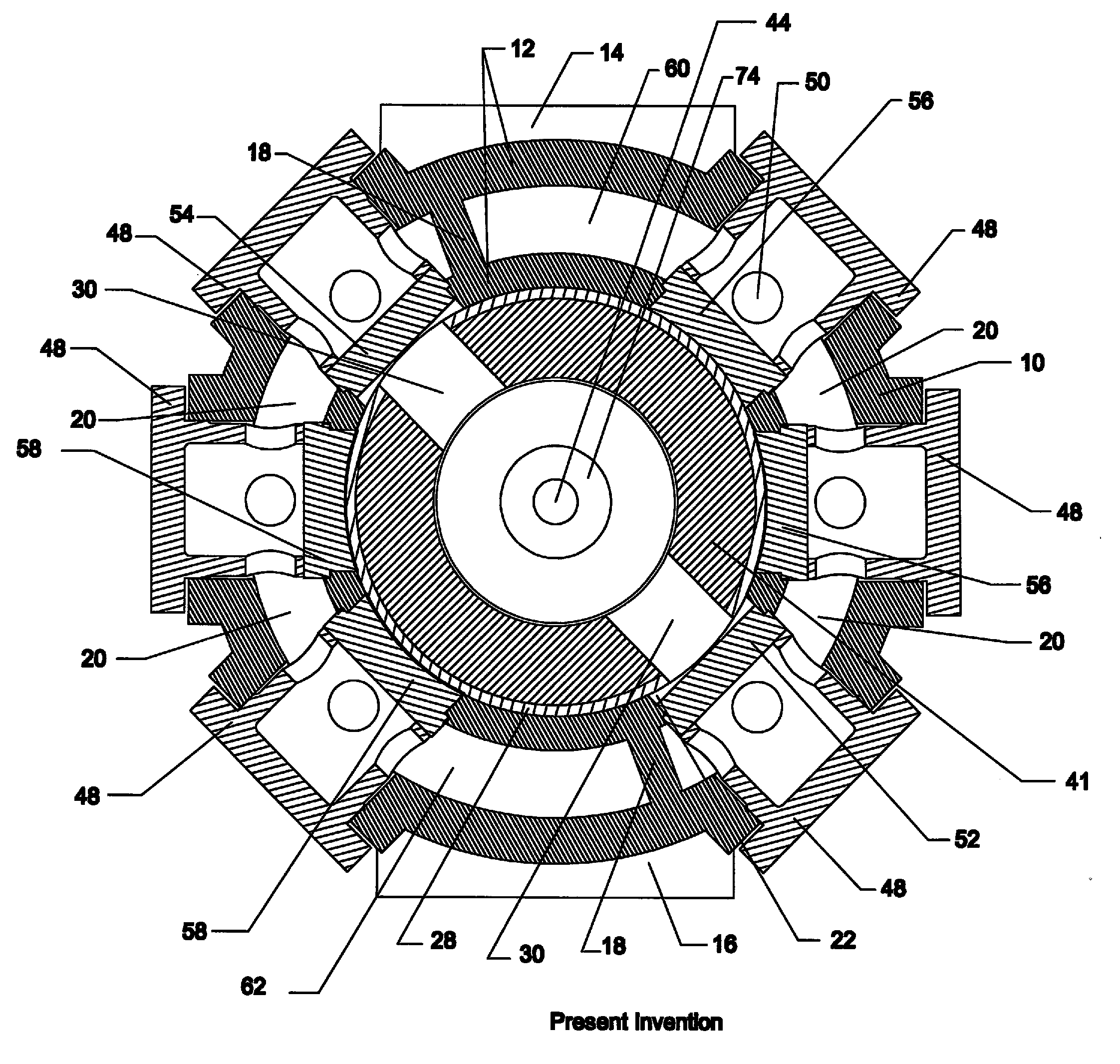
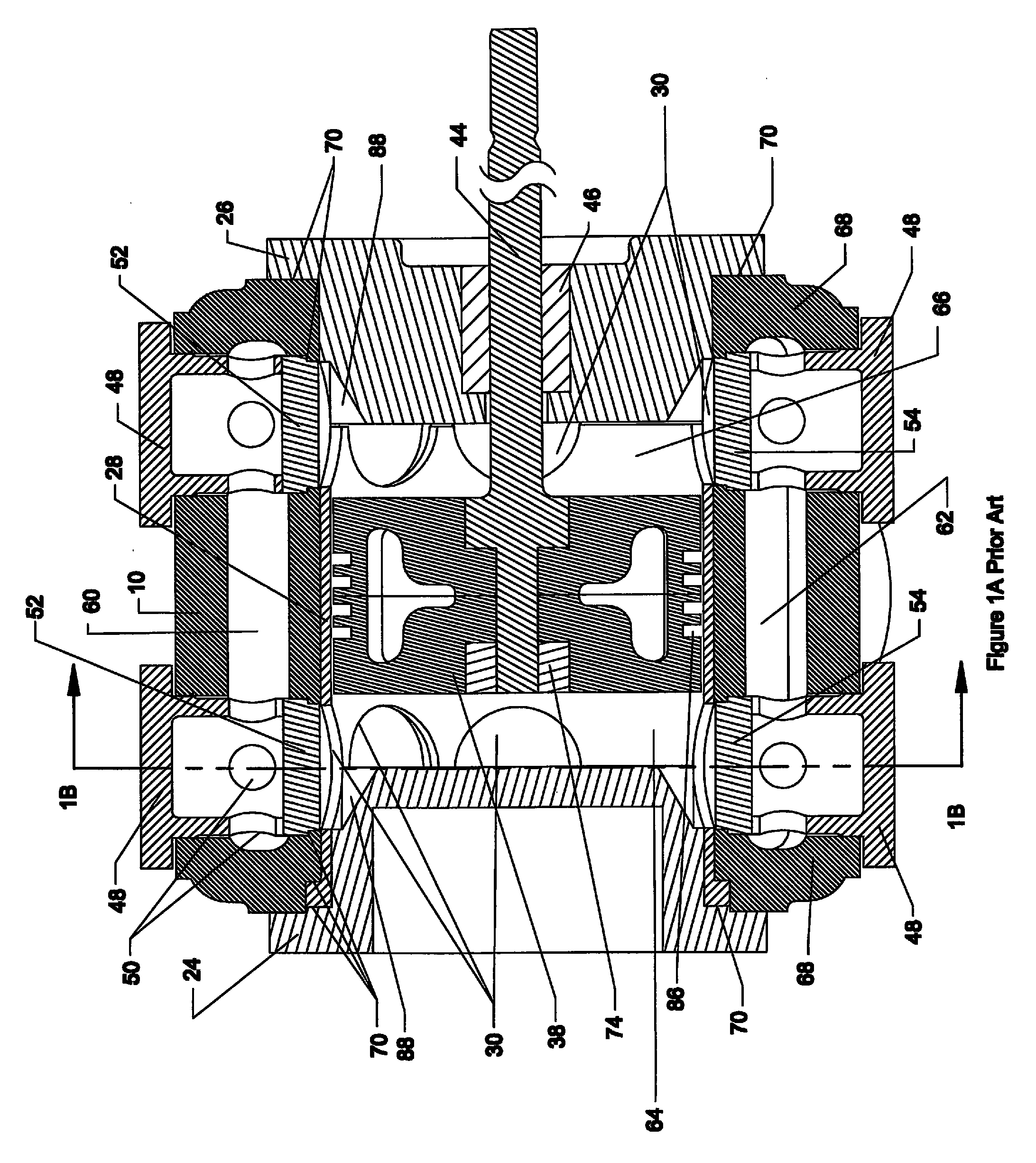
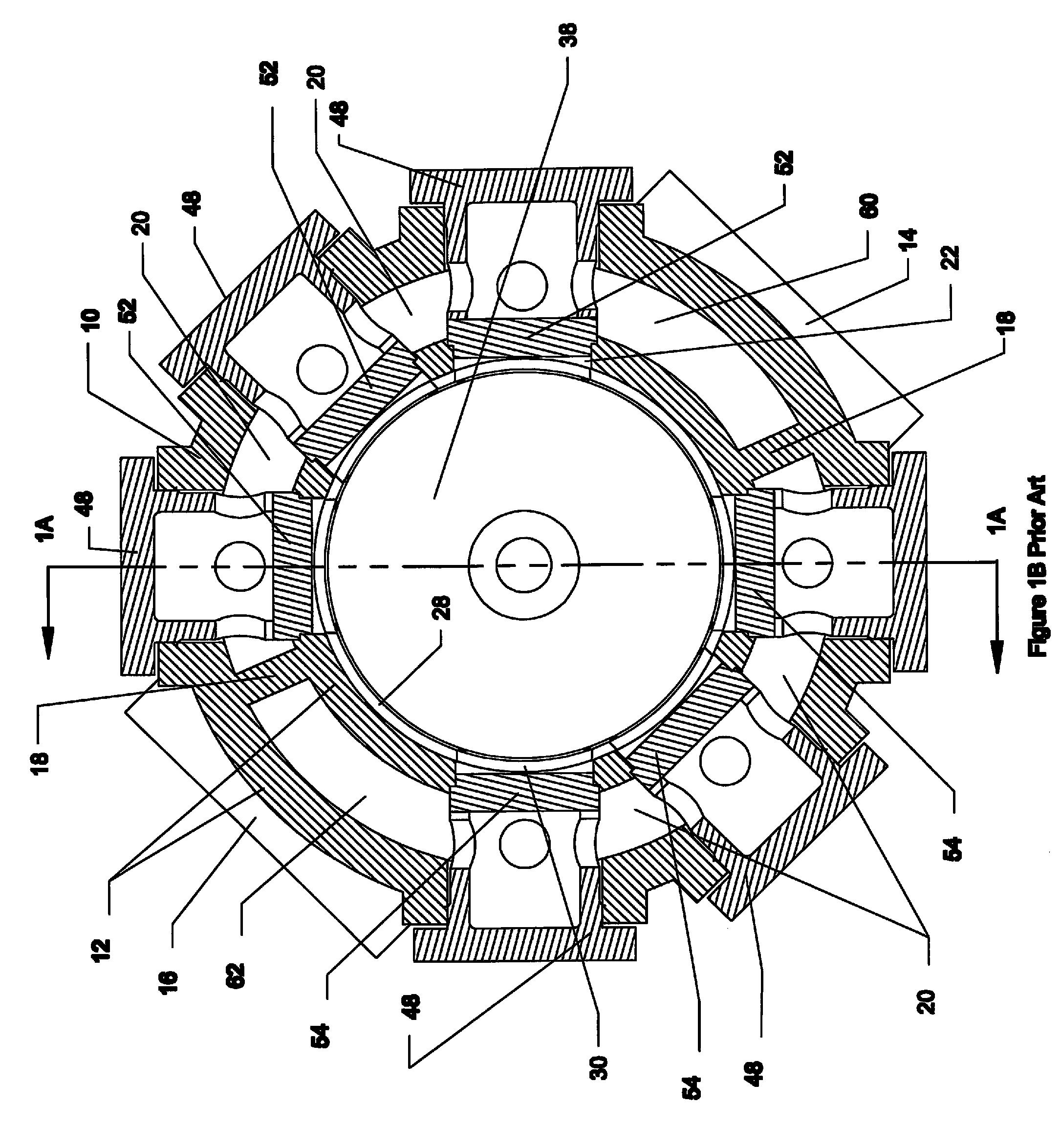
Reciprocating compressor with auxiliary port
PatentInactiveUS6318977B1
Innovation
- The use of auxiliary ports and valving arrangements in a reciprocating compressor, particularly with a linear motor drive, allows for variable stroke and position control, eliminating piston ring wear and enabling efficient handling of multiple pressures through auxiliary suction and discharge ports, with options for multiple ports and valves to optimize flow.


Variable bore convertible compressor cylinder
PatentInactiveUS20120107144A1
Innovation
- The design allows for quick in-situ conversion of cylinder bore diameter by removing and replacing components such as valve assemblies, port rings, and liners, with optimized port geometry and valve configuration to minimize clearance volume and maintain acceptable flow losses, enabling a wider range of bore diameters with a single cylinder body.

Safety Standards for Compressor Port Modifications
Safety standards for compressor port modifications represent a critical framework governing the alteration of reciprocating compressor systems. These standards encompass comprehensive regulatory requirements established by international organizations including ASME, API, and ISO, which mandate specific protocols for structural modifications to compressor ports. The regulatory landscape emphasizes maintaining system integrity while accommodating necessary design changes.
Primary safety considerations focus on pressure containment capabilities during port alterations. Modified ports must withstand operational pressures with appropriate safety factors, typically ranging from 1.5 to 4.0 depending on application criticality. Material compatibility standards require thorough evaluation of metallurgical properties, ensuring that new port configurations maintain corrosion resistance and mechanical strength equivalent to original specifications.
Welding and fabrication standards play a pivotal role in port modification safety protocols. Certified welding procedures must comply with ASME Section IX requirements, incorporating proper heat treatment processes and non-destructive testing methods. Post-modification inspections mandate radiographic or ultrasonic examination of all welded joints, with acceptance criteria strictly defined by applicable codes.
Operational safety measures include mandatory pressure testing protocols following port modifications. Hydrostatic testing at 1.5 times maximum allowable working pressure serves as the primary validation method, supplemented by pneumatic testing under controlled conditions. Documentation requirements mandate comprehensive records of all modifications, including engineering calculations, material certifications, and inspection reports.
Personnel safety standards emphasize proper training and certification for technicians performing port modifications. Lock-out/tag-out procedures ensure complete system isolation during modification work, while confined space protocols address safety concerns in compressor housing environments. Emergency response procedures must be established for potential incidents during modification activities.
Quality assurance frameworks require independent verification of all safety-critical modifications through third-party inspection services. Compliance documentation must demonstrate adherence to applicable safety standards, with periodic re-certification ensuring ongoing safety performance throughout the compressor's operational lifecycle.
Primary safety considerations focus on pressure containment capabilities during port alterations. Modified ports must withstand operational pressures with appropriate safety factors, typically ranging from 1.5 to 4.0 depending on application criticality. Material compatibility standards require thorough evaluation of metallurgical properties, ensuring that new port configurations maintain corrosion resistance and mechanical strength equivalent to original specifications.
Welding and fabrication standards play a pivotal role in port modification safety protocols. Certified welding procedures must comply with ASME Section IX requirements, incorporating proper heat treatment processes and non-destructive testing methods. Post-modification inspections mandate radiographic or ultrasonic examination of all welded joints, with acceptance criteria strictly defined by applicable codes.
Operational safety measures include mandatory pressure testing protocols following port modifications. Hydrostatic testing at 1.5 times maximum allowable working pressure serves as the primary validation method, supplemented by pneumatic testing under controlled conditions. Documentation requirements mandate comprehensive records of all modifications, including engineering calculations, material certifications, and inspection reports.
Personnel safety standards emphasize proper training and certification for technicians performing port modifications. Lock-out/tag-out procedures ensure complete system isolation during modification work, while confined space protocols address safety concerns in compressor housing environments. Emergency response procedures must be established for potential incidents during modification activities.
Quality assurance frameworks require independent verification of all safety-critical modifications through third-party inspection services. Compliance documentation must demonstrate adherence to applicable safety standards, with periodic re-certification ensuring ongoing safety performance throughout the compressor's operational lifecycle.
Environmental Impact of Port Design Optimization
The optimization of reciprocating compressor port designs presents significant opportunities for environmental impact reduction across multiple dimensions. Traditional port configurations often result in suboptimal energy efficiency, leading to increased power consumption and corresponding greenhouse gas emissions from power generation facilities. Modern port design optimization techniques can achieve energy savings of 8-15% through improved flow dynamics and reduced pressure losses, directly translating to substantial carbon footprint reductions in industrial applications.
Noise pollution represents another critical environmental consideration in port design optimization. Conventional reciprocating compressors generate substantial acoustic emissions, particularly during intake and discharge cycles. Advanced port geometries incorporating flow smoothing features, optimized valve timing, and resonance dampening elements can reduce noise levels by 5-12 dB across operational frequency ranges. This reduction is particularly valuable in urban industrial settings and offshore applications where noise regulations are increasingly stringent.
The manufacturing environmental impact of optimized port designs varies significantly depending on the chosen approach. While some advanced designs require precision machining and specialized materials that increase production energy consumption, the operational efficiency gains typically offset manufacturing impacts within 6-18 months of service. Additive manufacturing techniques for complex port geometries show promise for reducing material waste during production, though energy-intensive printing processes require careful lifecycle assessment.
Refrigerant and process gas leakage reduction emerges as a substantial environmental benefit of optimized port designs. Improved sealing characteristics and reduced pressure differentials in optimized configurations can decrease fugitive emissions by 15-25%. This is particularly significant for compressors handling greenhouse gases or ozone-depleting substances, where even minor leakage reductions contribute meaningfully to environmental protection goals.
Extended equipment lifespan resulting from optimized port designs provides indirect environmental benefits through reduced replacement frequency and associated manufacturing impacts. Enhanced flow characteristics reduce mechanical stress on valves, pistons, and cylinder components, potentially extending service intervals by 20-30% and reducing maintenance-related waste streams including lubricants, filters, and replacement components.
Noise pollution represents another critical environmental consideration in port design optimization. Conventional reciprocating compressors generate substantial acoustic emissions, particularly during intake and discharge cycles. Advanced port geometries incorporating flow smoothing features, optimized valve timing, and resonance dampening elements can reduce noise levels by 5-12 dB across operational frequency ranges. This reduction is particularly valuable in urban industrial settings and offshore applications where noise regulations are increasingly stringent.
The manufacturing environmental impact of optimized port designs varies significantly depending on the chosen approach. While some advanced designs require precision machining and specialized materials that increase production energy consumption, the operational efficiency gains typically offset manufacturing impacts within 6-18 months of service. Additive manufacturing techniques for complex port geometries show promise for reducing material waste during production, though energy-intensive printing processes require careful lifecycle assessment.
Refrigerant and process gas leakage reduction emerges as a substantial environmental benefit of optimized port designs. Improved sealing characteristics and reduced pressure differentials in optimized configurations can decrease fugitive emissions by 15-25%. This is particularly significant for compressors handling greenhouse gases or ozone-depleting substances, where even minor leakage reductions contribute meaningfully to environmental protection goals.
Extended equipment lifespan resulting from optimized port designs provides indirect environmental benefits through reduced replacement frequency and associated manufacturing impacts. Enhanced flow characteristics reduce mechanical stress on valves, pistons, and cylinder components, potentially extending service intervals by 20-30% and reducing maintenance-related waste streams including lubricants, filters, and replacement components.
Unlock deeper insights with Patsnap Eureka Quick Research — get a full tech report to explore trends and direct your research. Try now!
Generate Your Research Report Instantly with AI Agent
Supercharge your innovation with Patsnap Eureka AI Agent Platform!