How to Analyze Compressor Dynamics: Stability in Reciprocating Systems
MAR 20, 20269 MIN READ
Generate Your Research Report Instantly with AI Agent
PatSnap Eureka helps you evaluate technical feasibility & market potential.
Compressor Dynamics Background and Stability Objectives
Reciprocating compressors have been fundamental components in industrial applications since the early 19th century, evolving from simple steam-driven mechanisms to sophisticated high-performance systems. The development trajectory has consistently focused on enhancing efficiency, reliability, and operational stability while managing the inherent dynamic complexities associated with reciprocating motion and gas compression processes.
The evolution of compressor dynamics analysis emerged from the need to address vibration-related failures and performance degradation in industrial installations. Early developments concentrated on basic mechanical balance and foundation design, gradually expanding to encompass comprehensive dynamic modeling as computational capabilities advanced. Modern approaches integrate multi-physics simulations, real-time monitoring systems, and predictive analytics to achieve unprecedented levels of operational control.
Current technological trends emphasize the integration of digital twin technologies, advanced sensor networks, and machine learning algorithms to predict and prevent dynamic instabilities before they manifest as operational issues. The shift toward smart manufacturing and Industry 4.0 principles has accelerated the adoption of condition-based maintenance strategies, requiring more sophisticated understanding of compressor dynamic behavior patterns.
The primary technical objective centers on developing robust analytical frameworks capable of predicting and mitigating dynamic instabilities in reciprocating compressor systems. This encompasses establishing comprehensive mathematical models that accurately represent the complex interactions between mechanical components, thermodynamic processes, and control systems under varying operational conditions.
Stability analysis objectives include identifying critical operating parameters that influence system stability, developing early warning systems for potential instability conditions, and creating adaptive control strategies that maintain optimal performance across diverse operating scenarios. The goal extends to minimizing unplanned downtime, reducing maintenance costs, and extending equipment lifecycle through proactive dynamic management.
Advanced objectives focus on achieving real-time stability assessment capabilities, enabling operators to make informed decisions regarding load adjustments, maintenance scheduling, and operational parameter optimization. The ultimate aim involves creating self-regulating systems that automatically adjust operational parameters to maintain stability while maximizing efficiency and minimizing energy consumption throughout the entire operational envelope.
The evolution of compressor dynamics analysis emerged from the need to address vibration-related failures and performance degradation in industrial installations. Early developments concentrated on basic mechanical balance and foundation design, gradually expanding to encompass comprehensive dynamic modeling as computational capabilities advanced. Modern approaches integrate multi-physics simulations, real-time monitoring systems, and predictive analytics to achieve unprecedented levels of operational control.
Current technological trends emphasize the integration of digital twin technologies, advanced sensor networks, and machine learning algorithms to predict and prevent dynamic instabilities before they manifest as operational issues. The shift toward smart manufacturing and Industry 4.0 principles has accelerated the adoption of condition-based maintenance strategies, requiring more sophisticated understanding of compressor dynamic behavior patterns.
The primary technical objective centers on developing robust analytical frameworks capable of predicting and mitigating dynamic instabilities in reciprocating compressor systems. This encompasses establishing comprehensive mathematical models that accurately represent the complex interactions between mechanical components, thermodynamic processes, and control systems under varying operational conditions.
Stability analysis objectives include identifying critical operating parameters that influence system stability, developing early warning systems for potential instability conditions, and creating adaptive control strategies that maintain optimal performance across diverse operating scenarios. The goal extends to minimizing unplanned downtime, reducing maintenance costs, and extending equipment lifecycle through proactive dynamic management.
Advanced objectives focus on achieving real-time stability assessment capabilities, enabling operators to make informed decisions regarding load adjustments, maintenance scheduling, and operational parameter optimization. The ultimate aim involves creating self-regulating systems that automatically adjust operational parameters to maintain stability while maximizing efficiency and minimizing energy consumption throughout the entire operational envelope.
Market Demand for Stable Reciprocating Compressor Systems
The global market for stable reciprocating compressor systems demonstrates robust growth driven by expanding industrial applications and increasing demand for reliable compression solutions. Industries such as oil and gas, petrochemicals, manufacturing, and power generation require compressors that maintain consistent performance under varying operational conditions, creating substantial market opportunities for advanced stability technologies.
Energy sector applications represent the largest market segment, where reciprocating compressors handle critical processes including natural gas processing, pipeline compression, and refinery operations. The growing emphasis on operational efficiency and reduced downtime has intensified demand for compressors with enhanced dynamic stability characteristics. Process industries increasingly prioritize equipment that can maintain stable operation across wide pressure and flow ranges while minimizing vibration-related maintenance issues.
Manufacturing sectors, particularly automotive, pharmaceutical, and food processing industries, drive demand for precision-controlled compression systems. These applications require compressors capable of delivering consistent pressure profiles without fluctuations that could compromise product quality or process integrity. The trend toward automation and Industry 4.0 implementations further amplifies requirements for dynamically stable compression equipment.
Emerging markets in developing economies contribute significantly to demand growth, as infrastructure development and industrialization projects require reliable compression solutions. The expansion of natural gas distribution networks and the growth of chemical processing facilities in these regions create substantial opportunities for advanced reciprocating compressor technologies.
Environmental regulations and sustainability initiatives influence market dynamics by promoting energy-efficient compression systems. Stable compressor operation directly correlates with improved energy efficiency and reduced emissions, aligning with global environmental goals. This regulatory environment encourages adoption of advanced stability analysis and control technologies.
The market also responds to technological advancements in condition monitoring and predictive maintenance systems. Integration of real-time stability monitoring capabilities with reciprocating compressors creates value propositions that extend equipment lifespan and optimize operational costs. Industrial operators increasingly seek comprehensive solutions that combine mechanical reliability with intelligent monitoring capabilities.
Regional market variations reflect different industrial development stages and regulatory frameworks. Mature markets emphasize replacement and upgrade opportunities, while emerging markets focus on new installations and capacity expansion projects.
Energy sector applications represent the largest market segment, where reciprocating compressors handle critical processes including natural gas processing, pipeline compression, and refinery operations. The growing emphasis on operational efficiency and reduced downtime has intensified demand for compressors with enhanced dynamic stability characteristics. Process industries increasingly prioritize equipment that can maintain stable operation across wide pressure and flow ranges while minimizing vibration-related maintenance issues.
Manufacturing sectors, particularly automotive, pharmaceutical, and food processing industries, drive demand for precision-controlled compression systems. These applications require compressors capable of delivering consistent pressure profiles without fluctuations that could compromise product quality or process integrity. The trend toward automation and Industry 4.0 implementations further amplifies requirements for dynamically stable compression equipment.
Emerging markets in developing economies contribute significantly to demand growth, as infrastructure development and industrialization projects require reliable compression solutions. The expansion of natural gas distribution networks and the growth of chemical processing facilities in these regions create substantial opportunities for advanced reciprocating compressor technologies.
Environmental regulations and sustainability initiatives influence market dynamics by promoting energy-efficient compression systems. Stable compressor operation directly correlates with improved energy efficiency and reduced emissions, aligning with global environmental goals. This regulatory environment encourages adoption of advanced stability analysis and control technologies.
The market also responds to technological advancements in condition monitoring and predictive maintenance systems. Integration of real-time stability monitoring capabilities with reciprocating compressors creates value propositions that extend equipment lifespan and optimize operational costs. Industrial operators increasingly seek comprehensive solutions that combine mechanical reliability with intelligent monitoring capabilities.
Regional market variations reflect different industrial development stages and regulatory frameworks. Mature markets emphasize replacement and upgrade opportunities, while emerging markets focus on new installations and capacity expansion projects.
Current Stability Challenges in Reciprocating Compressors
Reciprocating compressors face numerous stability challenges that significantly impact their operational reliability and performance. These challenges stem from the inherent complexity of the reciprocating mechanism, which involves rapid acceleration and deceleration of pistons, creating dynamic forces that can destabilize the entire system. The primary stability issues include mechanical vibrations, pressure pulsations, and thermal fluctuations that interact in complex ways.
Mechanical vibration represents one of the most critical stability challenges in reciprocating compressors. The reciprocating motion of pistons generates unbalanced forces that propagate throughout the compressor structure. These forces create both primary and secondary vibrations, with frequencies corresponding to the compressor's operating speed and its harmonics. Excessive vibrations can lead to premature wear of components, misalignment of critical parts, and potential catastrophic failures.
Pressure pulsations constitute another significant stability challenge, arising from the discontinuous nature of gas compression in reciprocating systems. The periodic opening and closing of valves creates pressure waves that travel through the piping system, potentially causing resonance conditions. These pulsations can exceed acceptable limits, leading to valve damage, pipe fatigue, and reduced compressor efficiency. The interaction between acoustic resonance and mechanical vibrations further complicates the stability analysis.
Thermal stability challenges emerge from the heat generated during compression cycles and the varying thermal loads on different components. Temperature fluctuations cause thermal expansion and contraction of materials, affecting clearances, alignment, and stress distributions. Inadequate heat dissipation can lead to overheating, reduced gas density, and compromised compression efficiency. The thermal cycling also contributes to material fatigue and potential failure of critical components.
Dynamic interaction between multiple cylinders in multi-stage compressors presents additional complexity. The phase relationships between different pistons can either amplify or cancel out dynamic forces, depending on the compressor configuration. Improper balancing of these forces results in excessive foundation loads, structural stress, and operational instability.
Control system stability challenges arise from the need to maintain consistent pressure and flow rates while accommodating varying load demands. Traditional control methods may introduce delays and oscillations that affect overall system stability. The integration of variable speed drives and advanced control algorithms has introduced new stability considerations related to electrical and mechanical system interactions.
Current industry approaches to addressing these challenges include advanced vibration monitoring systems, computational fluid dynamics modeling for pressure pulsation analysis, and sophisticated control algorithms. However, the increasing demand for higher efficiency and reliability continues to push the boundaries of existing stability analysis methods, necessitating more comprehensive and integrated approaches to compressor dynamics evaluation.
Mechanical vibration represents one of the most critical stability challenges in reciprocating compressors. The reciprocating motion of pistons generates unbalanced forces that propagate throughout the compressor structure. These forces create both primary and secondary vibrations, with frequencies corresponding to the compressor's operating speed and its harmonics. Excessive vibrations can lead to premature wear of components, misalignment of critical parts, and potential catastrophic failures.
Pressure pulsations constitute another significant stability challenge, arising from the discontinuous nature of gas compression in reciprocating systems. The periodic opening and closing of valves creates pressure waves that travel through the piping system, potentially causing resonance conditions. These pulsations can exceed acceptable limits, leading to valve damage, pipe fatigue, and reduced compressor efficiency. The interaction between acoustic resonance and mechanical vibrations further complicates the stability analysis.
Thermal stability challenges emerge from the heat generated during compression cycles and the varying thermal loads on different components. Temperature fluctuations cause thermal expansion and contraction of materials, affecting clearances, alignment, and stress distributions. Inadequate heat dissipation can lead to overheating, reduced gas density, and compromised compression efficiency. The thermal cycling also contributes to material fatigue and potential failure of critical components.
Dynamic interaction between multiple cylinders in multi-stage compressors presents additional complexity. The phase relationships between different pistons can either amplify or cancel out dynamic forces, depending on the compressor configuration. Improper balancing of these forces results in excessive foundation loads, structural stress, and operational instability.
Control system stability challenges arise from the need to maintain consistent pressure and flow rates while accommodating varying load demands. Traditional control methods may introduce delays and oscillations that affect overall system stability. The integration of variable speed drives and advanced control algorithms has introduced new stability considerations related to electrical and mechanical system interactions.
Current industry approaches to addressing these challenges include advanced vibration monitoring systems, computational fluid dynamics modeling for pressure pulsation analysis, and sophisticated control algorithms. However, the increasing demand for higher efficiency and reliability continues to push the boundaries of existing stability analysis methods, necessitating more comprehensive and integrated approaches to compressor dynamics evaluation.
Existing Stability Analysis Solutions for Compressors
01 Vibration damping and isolation systems
Reciprocating compressor systems can incorporate vibration damping mechanisms and isolation systems to enhance stability. These systems utilize dampers, springs, and mounting structures to reduce vibrations transmitted from the compressor to the supporting structure. Advanced isolation techniques include elastomeric mounts, pneumatic isolators, and active vibration control systems that minimize oscillations and improve overall system stability during operation.- Vibration damping and isolation systems: Reciprocating compressor systems can incorporate vibration damping mechanisms and isolation systems to enhance stability. These systems utilize dampers, springs, and mounting structures to reduce vibrations transmitted from the compressor to the foundation and surrounding equipment. Advanced isolation techniques help minimize resonance effects and prevent structural fatigue, thereby improving overall system stability and operational reliability.
- Pulsation control and dampening devices: Pulsation dampening systems are critical for maintaining stability in reciprocating compressor operations. These devices include pulsation bottles, acoustic filters, and orifice plates that reduce pressure fluctuations in the piping system. By controlling gas pulsations, these systems prevent resonance conditions, reduce dynamic loads on piping and equipment, and ensure smooth operation of the compressor system.
- Foundation and mounting structure design: Proper foundation design and mounting structures are essential for reciprocating compressor stability. This includes reinforced concrete foundations, steel frame supports, and specialized mounting systems that can withstand dynamic forces. The design considerations account for mass, stiffness, and natural frequency to avoid resonance with compressor operating frequencies, ensuring long-term structural integrity and operational stability.
- Balance and alignment optimization: Maintaining proper balance and alignment in reciprocating compressor systems is crucial for stability. This involves precision balancing of rotating and reciprocating components, accurate shaft alignment, and regular monitoring of mechanical clearances. Advanced balancing techniques and alignment procedures minimize unbalanced forces, reduce wear on components, and prevent excessive vibrations that could compromise system stability.
- Monitoring and control systems: Modern reciprocating compressor systems employ sophisticated monitoring and control systems to maintain stability. These systems include vibration sensors, pressure transducers, and real-time data analysis software that continuously monitor operating parameters. Automated control algorithms can adjust operating conditions, trigger alarms, and initiate protective shutdowns when stability thresholds are exceeded, preventing equipment damage and ensuring safe operation.
02 Pulsation control and dampening devices
Pulsation dampeners and control devices are essential for maintaining stability in reciprocating compressor systems. These components reduce pressure fluctuations in the discharge and suction lines by absorbing energy from pressure waves. Technologies include volume bottles, acoustic filters, and orifice plates that smooth out pressure variations, preventing resonance conditions and ensuring stable operation across different operating conditions.Expand Specific Solutions03 Foundation and structural support optimization
Proper foundation design and structural support are critical for reciprocating compressor stability. This includes reinforced concrete bases, steel frame structures, and optimized mounting configurations that provide adequate mass and rigidity. The foundation design considers dynamic loads, resonance frequencies, and soil conditions to prevent excessive movement and maintain alignment of critical components during operation.Expand Specific Solutions04 Balance and counterweight systems
Balance optimization through counterweight systems and dynamic balancing techniques significantly improves reciprocating compressor stability. These systems compensate for reciprocating masses and rotating unbalance forces by strategically positioning counterweights on crankshafts and connecting rods. Advanced balancing methods include multi-plane balancing and computer-aided optimization to minimize vibration amplitudes and reduce bearing loads.Expand Specific Solutions05 Control systems and monitoring technologies
Advanced control systems and real-time monitoring technologies enhance reciprocating compressor stability through continuous assessment of operating parameters. These systems utilize sensors to monitor vibration levels, pressure fluctuations, temperature variations, and bearing conditions. Integrated control algorithms adjust operating parameters automatically to maintain stable operation, predict maintenance needs, and prevent failures through early detection of abnormal conditions.Expand Specific Solutions
Key Players in Reciprocating Compressor Industry
The compressor dynamics stability analysis market represents a mature industrial sector experiencing steady growth driven by increasing demand for energy-efficient systems across HVAC, refrigeration, and industrial applications. Major players demonstrate varying technological maturity levels, with established manufacturers like General Electric Company, Baker Hughes Co., and Samsung Electronics Co., Ltd. leading through comprehensive R&D capabilities and integrated solutions. Traditional appliance manufacturers including LG Electronics, Copeland LP, and Empresa Brasileira de Compressores SA focus on reciprocating compressor optimization for residential and commercial markets. Emerging players such as Sinoscience Fullcryo Technology Co., Ltd. and specialized firms like Windrock, Inc. are advancing niche applications in cryogenic systems and diagnostic technologies. The competitive landscape shows consolidation around companies offering complete system solutions, while academic institutions like Beijing University of Chemical Technology contribute fundamental research, indicating a technology-mature market with incremental innovations driving competitive differentiation.
Baker Hughes Co.
Technical Solution: Baker Hughes develops advanced compressor monitoring and control systems that utilize real-time vibration analysis, pressure pulsation monitoring, and thermodynamic performance tracking to assess reciprocating compressor stability. Their solutions incorporate machine learning algorithms to predict instability events and implement automated control responses. The company's Bently Nevada monitoring systems provide continuous assessment of mechanical dynamics, while their process control solutions optimize operating parameters to maintain stable compression cycles and prevent surge conditions.
Strengths: Industry-leading monitoring technology with proven field applications. Weaknesses: High implementation costs and complexity requiring specialized expertise.
General Electric Company
Technical Solution: GE's approach to reciprocating compressor dynamics analysis combines digital twin technology with advanced sensor networks to create comprehensive stability monitoring systems. Their Predix platform processes real-time operational data including cylinder pressure, valve dynamics, and crankshaft position to identify stability issues before they become critical. The system uses physics-based models coupled with AI-driven analytics to predict performance degradation and optimize maintenance schedules, ensuring consistent compressor operation across varying load conditions.
Strengths: Comprehensive digital solutions with strong industrial IoT integration. Weaknesses: Requires significant infrastructure investment and ongoing software licensing costs.
Core Technologies in Compressor Dynamics Modeling
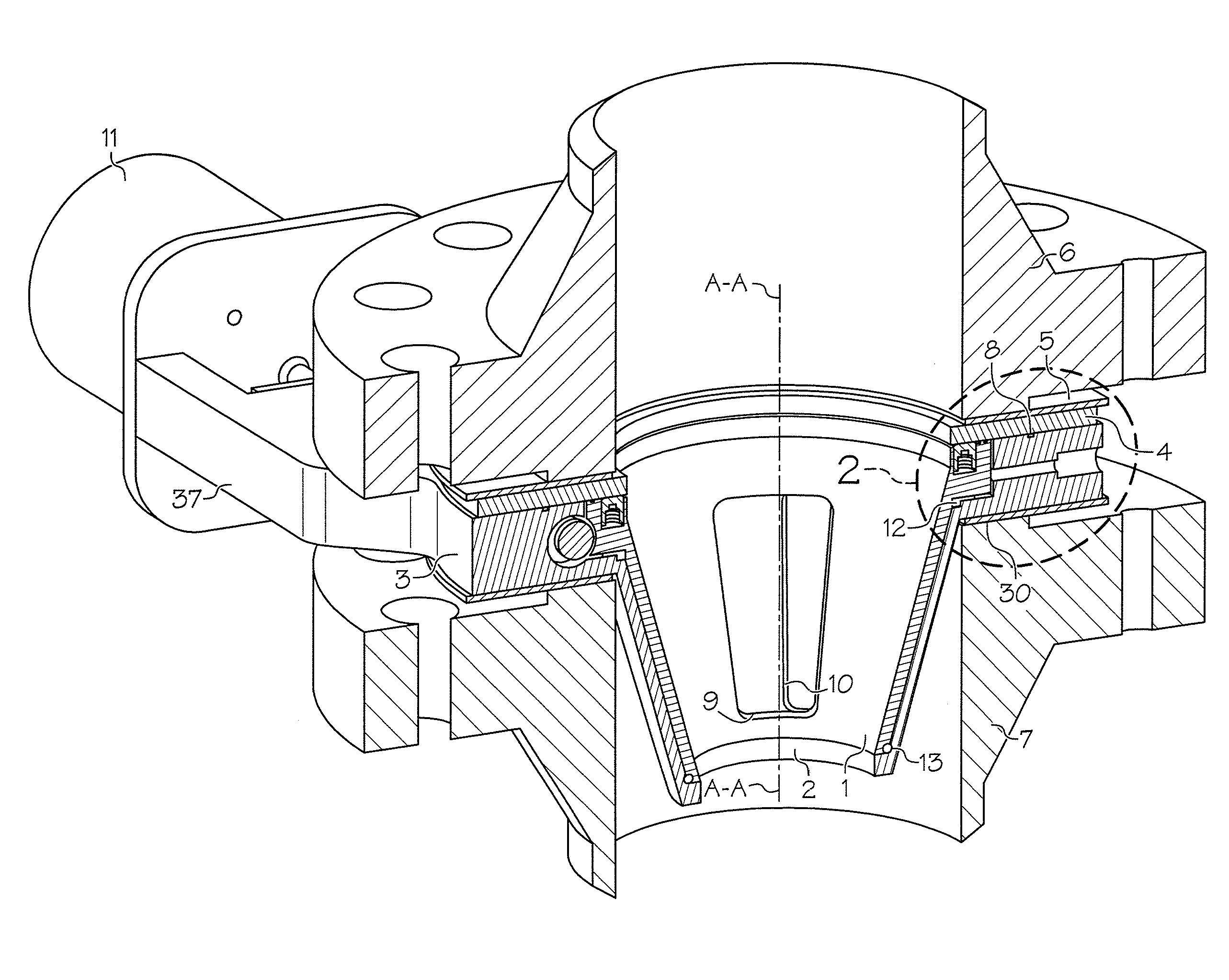
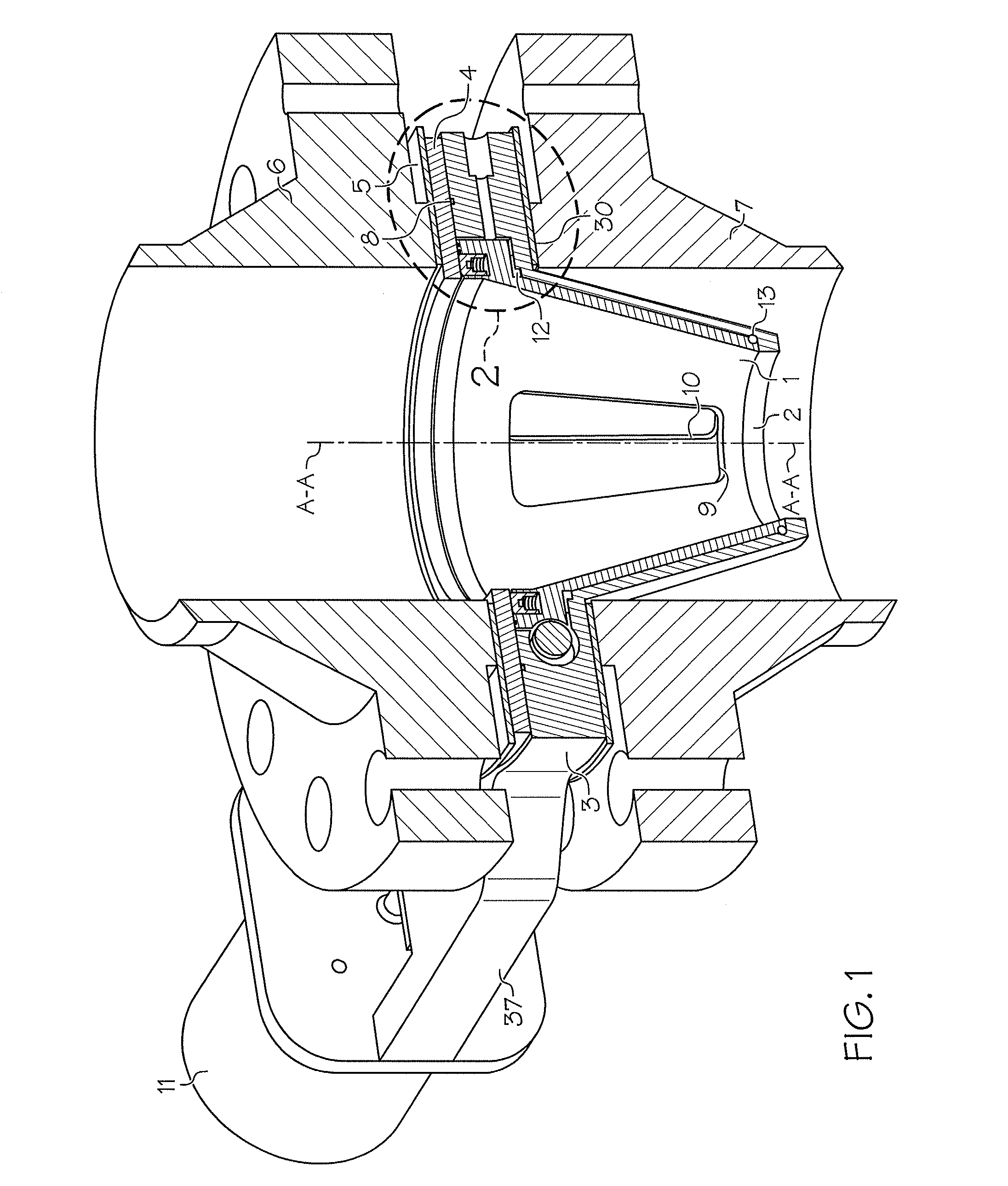
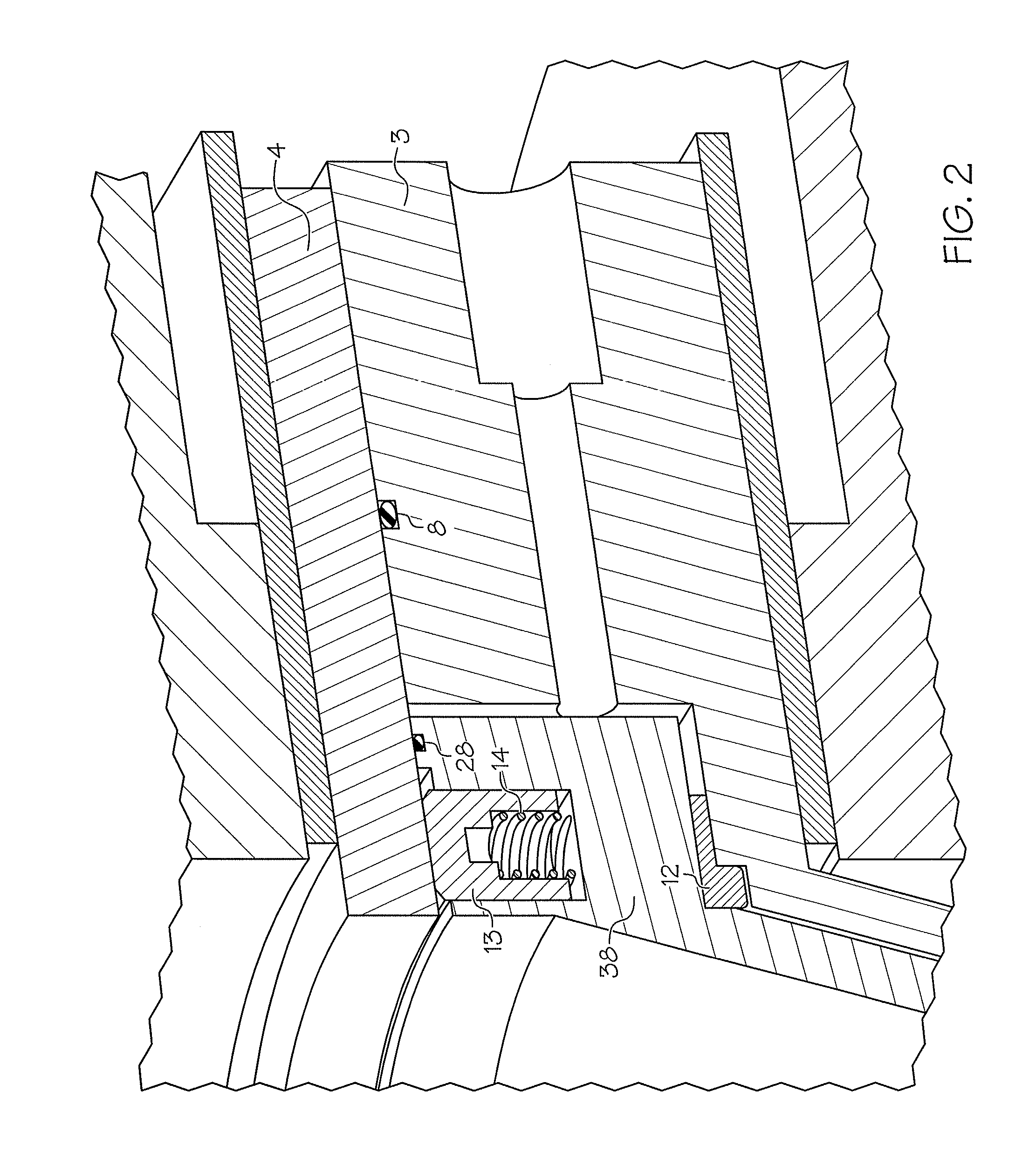
Dynamic variable orifice for compressor pulsation control
PatentActiveUS20150204317A1
Innovation
- A dynamic variable orifice (DVO) device that allows for adjustable orifice sizes in response to changing operating conditions, enabling manual or automated adjustment of orifice size to optimize pulsation control while minimizing pressure drop and power consumption, using a rotatable upper windowed plate and a fixed lower windowed plate with mating contours to align ports and change the effective orifice size.

Safety Standards for Industrial Compressor Systems
Industrial compressor systems operate under extreme conditions involving high pressures, temperatures, and mechanical stresses, making comprehensive safety standards essential for protecting personnel, equipment, and surrounding environments. The development of safety standards for reciprocating compressor systems has evolved significantly over the past decades, driven by technological advances and lessons learned from operational incidents.
The American Petroleum Institute (API) Standard 618 serves as the primary global reference for reciprocating compressor safety requirements, establishing fundamental guidelines for design, manufacturing, and operation. This standard addresses critical safety aspects including pressure vessel design, vibration limits, emergency shutdown systems, and material specifications. Complementing API 618, the American Society of Mechanical Engineers (ASME) Boiler and Pressure Vessel Code provides detailed requirements for pressure-containing components, ensuring structural integrity under dynamic loading conditions.
International standards such as ISO 13631 and European Directive 2014/68/EU (Pressure Equipment Directive) establish additional safety frameworks that address regional regulatory requirements. These standards emphasize risk assessment methodologies, conformity assessment procedures, and essential safety requirements for pressure equipment operation. The harmonization between different international standards has become increasingly important as compressor systems are deployed globally.
Modern safety standards specifically address dynamic stability concerns in reciprocating systems through vibration monitoring requirements, foundation design specifications, and operational parameter limits. Standards mandate continuous monitoring of critical parameters including discharge pressure, temperature, vibration levels, and lubrication system performance. Emergency shutdown systems must be designed to respond automatically to predetermined alarm conditions, preventing catastrophic failures.
Recent updates to safety standards have incorporated advanced diagnostic technologies, including real-time condition monitoring systems and predictive maintenance protocols. These enhancements enable early detection of potential stability issues before they compromise system safety. The integration of digital safety systems with traditional mechanical protection devices represents a significant evolution in compressor safety management.
Compliance verification procedures require comprehensive testing protocols, including performance verification tests, safety system functional tests, and periodic inspection requirements. Documentation standards ensure proper maintenance of safety-critical information throughout the equipment lifecycle, supporting effective risk management and regulatory compliance in industrial compressor operations.
The American Petroleum Institute (API) Standard 618 serves as the primary global reference for reciprocating compressor safety requirements, establishing fundamental guidelines for design, manufacturing, and operation. This standard addresses critical safety aspects including pressure vessel design, vibration limits, emergency shutdown systems, and material specifications. Complementing API 618, the American Society of Mechanical Engineers (ASME) Boiler and Pressure Vessel Code provides detailed requirements for pressure-containing components, ensuring structural integrity under dynamic loading conditions.
International standards such as ISO 13631 and European Directive 2014/68/EU (Pressure Equipment Directive) establish additional safety frameworks that address regional regulatory requirements. These standards emphasize risk assessment methodologies, conformity assessment procedures, and essential safety requirements for pressure equipment operation. The harmonization between different international standards has become increasingly important as compressor systems are deployed globally.
Modern safety standards specifically address dynamic stability concerns in reciprocating systems through vibration monitoring requirements, foundation design specifications, and operational parameter limits. Standards mandate continuous monitoring of critical parameters including discharge pressure, temperature, vibration levels, and lubrication system performance. Emergency shutdown systems must be designed to respond automatically to predetermined alarm conditions, preventing catastrophic failures.
Recent updates to safety standards have incorporated advanced diagnostic technologies, including real-time condition monitoring systems and predictive maintenance protocols. These enhancements enable early detection of potential stability issues before they compromise system safety. The integration of digital safety systems with traditional mechanical protection devices represents a significant evolution in compressor safety management.
Compliance verification procedures require comprehensive testing protocols, including performance verification tests, safety system functional tests, and periodic inspection requirements. Documentation standards ensure proper maintenance of safety-critical information throughout the equipment lifecycle, supporting effective risk management and regulatory compliance in industrial compressor operations.
Energy Efficiency Regulations Impact on Design
Energy efficiency regulations have fundamentally transformed the design paradigm for reciprocating compressor systems, creating unprecedented pressure on manufacturers to optimize both thermodynamic performance and mechanical stability. The implementation of stringent efficiency standards, such as the EU's Ecodesign Directive and similar regulations in North America and Asia, has established minimum energy performance standards that directly influence compressor dynamics analysis methodologies.
The regulatory landscape has evolved to encompass comprehensive lifecycle energy consumption metrics, forcing designers to reconsider traditional stability margins in favor of more aggressive operating parameters. Modern efficiency requirements typically mandate 15-25% improvements in energy performance compared to baseline systems, necessitating operation closer to stability boundaries where dynamic behavior becomes increasingly critical.
Compliance with these regulations has driven the adoption of advanced control strategies that actively manage compressor dynamics to maintain stability while maximizing efficiency. Variable speed drives, capacity modulation systems, and real-time pressure ratio optimization have become standard features, each introducing new dynamic considerations that must be incorporated into stability analysis frameworks.
The regulatory emphasis on part-load efficiency has particularly impacted reciprocating compressor design, as these systems must now demonstrate stable operation across extended operating ranges. This requirement has led to the development of sophisticated dynamic modeling approaches that can predict stability margins under varying load conditions, ambient temperatures, and system configurations.
Furthermore, emerging regulations addressing refrigerant phase-out and low global warming potential alternatives have introduced additional complexity to dynamic analysis. New refrigerants often exhibit different thermodynamic properties that can significantly alter compressor dynamics, requiring updated stability assessment methodologies to ensure reliable operation while meeting efficiency targets.
The integration of smart grid compatibility requirements has also influenced design approaches, as compressors must now accommodate demand response protocols and grid frequency variations while maintaining both efficiency and stability standards. This has necessitated the development of robust dynamic analysis tools capable of evaluating system performance under these variable operating conditions.
The regulatory landscape has evolved to encompass comprehensive lifecycle energy consumption metrics, forcing designers to reconsider traditional stability margins in favor of more aggressive operating parameters. Modern efficiency requirements typically mandate 15-25% improvements in energy performance compared to baseline systems, necessitating operation closer to stability boundaries where dynamic behavior becomes increasingly critical.
Compliance with these regulations has driven the adoption of advanced control strategies that actively manage compressor dynamics to maintain stability while maximizing efficiency. Variable speed drives, capacity modulation systems, and real-time pressure ratio optimization have become standard features, each introducing new dynamic considerations that must be incorporated into stability analysis frameworks.
The regulatory emphasis on part-load efficiency has particularly impacted reciprocating compressor design, as these systems must now demonstrate stable operation across extended operating ranges. This requirement has led to the development of sophisticated dynamic modeling approaches that can predict stability margins under varying load conditions, ambient temperatures, and system configurations.
Furthermore, emerging regulations addressing refrigerant phase-out and low global warming potential alternatives have introduced additional complexity to dynamic analysis. New refrigerants often exhibit different thermodynamic properties that can significantly alter compressor dynamics, requiring updated stability assessment methodologies to ensure reliable operation while meeting efficiency targets.
The integration of smart grid compatibility requirements has also influenced design approaches, as compressors must now accommodate demand response protocols and grid frequency variations while maintaining both efficiency and stability standards. This has necessitated the development of robust dynamic analysis tools capable of evaluating system performance under these variable operating conditions.
Unlock deeper insights with PatSnap Eureka Quick Research — get a full tech report to explore trends and direct your research. Try now!
Generate Your Research Report Instantly with AI Agent
Supercharge your innovation with PatSnap Eureka AI Agent Platform!