

Developing Robust LPR Systems for Field Use
MAR 7, 20269 MIN READ
Generate Your Research Report Instantly with AI Agent
PatSnap Eureka helps you evaluate technical feasibility & market potential.
LPR System Field Deployment Background and Objectives
License Plate Recognition (LPR) technology has evolved significantly since its inception in the 1970s, transitioning from simple optical character recognition systems to sophisticated AI-powered solutions capable of real-time processing. The technology's development trajectory reflects broader advances in computer vision, machine learning, and edge computing capabilities. Early systems relied heavily on controlled environments with optimal lighting and positioning, but modern LPR systems must operate effectively across diverse field conditions.
The evolution of LPR systems has been driven by increasing demands for automated vehicle identification across multiple sectors. Traditional stationary installations in toll booths and parking facilities have expanded to include mobile patrol units, traffic enforcement vehicles, and portable deployment scenarios. This expansion has highlighted the critical need for robust systems that maintain high accuracy rates regardless of environmental variables, vehicle speeds, or deployment contexts.
Current technological objectives center on achieving consistent performance across challenging field conditions that include varying weather patterns, diverse lighting scenarios, and dynamic traffic environments. Modern LPR systems must process multiple license plate formats, handle partial occlusions, and maintain accuracy with plates that exhibit wear, damage, or non-standard mounting positions. The integration of advanced image preprocessing, neural network architectures, and real-time optimization algorithms represents the current state of technological advancement.
Field deployment requirements have established specific performance benchmarks that robust LPR systems must achieve. These include maintaining accuracy rates above 95% across diverse vehicle types, processing speeds capable of handling high-traffic scenarios, and operational reliability in temperature ranges from -20°C to 60°C. Additionally, systems must demonstrate consistent performance across different geographic regions with varying license plate standards and regulatory requirements.
The primary technological objective involves developing adaptive algorithms that can automatically adjust processing parameters based on real-time environmental conditions. This includes dynamic exposure control, intelligent region-of-interest selection, and contextual character recognition that accounts for regional plate variations. Furthermore, robust field systems must incorporate fail-safe mechanisms and redundant processing pathways to ensure continuous operation in mission-critical applications.
Integration capabilities represent another crucial objective, as modern LPR systems must seamlessly interface with existing traffic management infrastructure, law enforcement databases, and automated enforcement platforms. This requires standardized communication protocols, secure data transmission methods, and compatibility with legacy systems while maintaining the flexibility to adapt to emerging technological standards and regulatory requirements.
The evolution of LPR systems has been driven by increasing demands for automated vehicle identification across multiple sectors. Traditional stationary installations in toll booths and parking facilities have expanded to include mobile patrol units, traffic enforcement vehicles, and portable deployment scenarios. This expansion has highlighted the critical need for robust systems that maintain high accuracy rates regardless of environmental variables, vehicle speeds, or deployment contexts.
Current technological objectives center on achieving consistent performance across challenging field conditions that include varying weather patterns, diverse lighting scenarios, and dynamic traffic environments. Modern LPR systems must process multiple license plate formats, handle partial occlusions, and maintain accuracy with plates that exhibit wear, damage, or non-standard mounting positions. The integration of advanced image preprocessing, neural network architectures, and real-time optimization algorithms represents the current state of technological advancement.
Field deployment requirements have established specific performance benchmarks that robust LPR systems must achieve. These include maintaining accuracy rates above 95% across diverse vehicle types, processing speeds capable of handling high-traffic scenarios, and operational reliability in temperature ranges from -20°C to 60°C. Additionally, systems must demonstrate consistent performance across different geographic regions with varying license plate standards and regulatory requirements.
The primary technological objective involves developing adaptive algorithms that can automatically adjust processing parameters based on real-time environmental conditions. This includes dynamic exposure control, intelligent region-of-interest selection, and contextual character recognition that accounts for regional plate variations. Furthermore, robust field systems must incorporate fail-safe mechanisms and redundant processing pathways to ensure continuous operation in mission-critical applications.
Integration capabilities represent another crucial objective, as modern LPR systems must seamlessly interface with existing traffic management infrastructure, law enforcement databases, and automated enforcement platforms. This requires standardized communication protocols, secure data transmission methods, and compatibility with legacy systems while maintaining the flexibility to adapt to emerging technological standards and regulatory requirements.
Market Demand Analysis for Robust LPR Solutions
The global demand for robust License Plate Recognition systems has experienced substantial growth driven by increasing urbanization, traffic management challenges, and heightened security concerns across various sectors. Traditional LPR systems often struggle in real-world field conditions, creating a significant market gap for more resilient solutions capable of operating effectively in diverse environmental conditions, varying lighting scenarios, and challenging weather patterns.
Law enforcement agencies represent a primary demand driver, requiring mobile and stationary LPR systems that can function reliably during patrol operations, traffic enforcement, and criminal investigations. These agencies need solutions that maintain high accuracy rates regardless of deployment location, time of day, or weather conditions. The growing emphasis on automated traffic violation detection and real-time vehicle tracking has further amplified this demand segment.
Transportation infrastructure management constitutes another major market segment, with highway authorities, toll operators, and parking facility managers seeking robust LPR solutions for revenue collection and access control. The increasing adoption of smart city initiatives has accelerated demand for integrated LPR systems that can seamlessly connect with broader urban management platforms while maintaining consistent performance across diverse installation environments.
Commercial and industrial sectors demonstrate growing interest in robust LPR solutions for security applications, including perimeter monitoring, employee access management, and visitor tracking. These applications often require systems capable of operating in challenging industrial environments with dust, vibration, and temperature variations that would compromise conventional LPR technologies.
The emergence of autonomous vehicle testing and fleet management applications has created new demand patterns for highly accurate, weather-resistant LPR systems capable of supporting advanced transportation technologies. This segment requires solutions that can maintain performance standards necessary for safety-critical applications while operating in unpredictable field conditions.
Market demand is increasingly focused on systems offering enhanced durability, improved image processing capabilities under adverse conditions, and reduced maintenance requirements. End users prioritize solutions that can deliver consistent performance across varying geographic regions, climate conditions, and operational scenarios without requiring frequent recalibration or component replacement.
Law enforcement agencies represent a primary demand driver, requiring mobile and stationary LPR systems that can function reliably during patrol operations, traffic enforcement, and criminal investigations. These agencies need solutions that maintain high accuracy rates regardless of deployment location, time of day, or weather conditions. The growing emphasis on automated traffic violation detection and real-time vehicle tracking has further amplified this demand segment.
Transportation infrastructure management constitutes another major market segment, with highway authorities, toll operators, and parking facility managers seeking robust LPR solutions for revenue collection and access control. The increasing adoption of smart city initiatives has accelerated demand for integrated LPR systems that can seamlessly connect with broader urban management platforms while maintaining consistent performance across diverse installation environments.
Commercial and industrial sectors demonstrate growing interest in robust LPR solutions for security applications, including perimeter monitoring, employee access management, and visitor tracking. These applications often require systems capable of operating in challenging industrial environments with dust, vibration, and temperature variations that would compromise conventional LPR technologies.
The emergence of autonomous vehicle testing and fleet management applications has created new demand patterns for highly accurate, weather-resistant LPR systems capable of supporting advanced transportation technologies. This segment requires solutions that can maintain performance standards necessary for safety-critical applications while operating in unpredictable field conditions.
Market demand is increasingly focused on systems offering enhanced durability, improved image processing capabilities under adverse conditions, and reduced maintenance requirements. End users prioritize solutions that can deliver consistent performance across varying geographic regions, climate conditions, and operational scenarios without requiring frequent recalibration or component replacement.
Current LPR Technology Status and Field Challenges
License Plate Recognition technology has evolved significantly over the past two decades, transitioning from simple character recognition systems to sophisticated AI-powered solutions. Current LPR systems primarily rely on computer vision algorithms combined with machine learning techniques, particularly deep neural networks and convolutional neural networks (CNNs). These systems typically operate through a multi-stage process involving image acquisition, plate localization, character segmentation, and optical character recognition.
Modern LPR implementations utilize high-resolution cameras with advanced image sensors capable of capturing clear images under various lighting conditions. The integration of infrared illumination and adaptive exposure control has improved performance during nighttime operations. However, the technology still faces substantial challenges when deployed in real-world field environments where conditions are far from controlled laboratory settings.
Weather-related obstacles represent one of the most significant challenges for field-deployed LPR systems. Rain, snow, fog, and dust can severely degrade image quality, leading to reduced recognition accuracy. Water droplets on camera lenses create distortions, while heavy precipitation can obscure license plates entirely. Snow accumulation on both cameras and vehicles poses additional complications, as it can block critical visual information needed for accurate plate detection.
Lighting variations present another major hurdle for robust field operation. Systems must handle extreme contrasts between bright sunlight and deep shadows, particularly in urban environments with tall buildings or under bridge structures. Glare from vehicle headlights, street lamps, and reflective surfaces can cause overexposure, while insufficient ambient lighting in rural or poorly lit areas results in underexposed images with poor character visibility.
Vehicle movement dynamics significantly impact recognition performance in field deployments. High-speed traffic creates motion blur, making character recognition challenging even with advanced image stabilization techniques. Varying vehicle angles, including steep approach angles at toll booths or parking entrances, can distort plate appearance and reduce system accuracy. Additionally, partial occlusion by other vehicles, trailers, or mounting hardware creates incomplete data for processing algorithms.
Environmental factors such as dust, dirt, and physical damage to license plates further complicate field operations. Plates may be bent, faded, or covered with mud, significantly reducing the contrast between characters and background. Different plate formats, fonts, and regional variations across jurisdictions add complexity to recognition algorithms that must maintain high accuracy across diverse plate types.
Current field-deployed systems also struggle with hardware reliability under harsh environmental conditions. Temperature extremes can affect camera performance and processing unit stability, while vibration from traffic or wind can misalign optical components over time, requiring frequent maintenance and calibration.
Modern LPR implementations utilize high-resolution cameras with advanced image sensors capable of capturing clear images under various lighting conditions. The integration of infrared illumination and adaptive exposure control has improved performance during nighttime operations. However, the technology still faces substantial challenges when deployed in real-world field environments where conditions are far from controlled laboratory settings.
Weather-related obstacles represent one of the most significant challenges for field-deployed LPR systems. Rain, snow, fog, and dust can severely degrade image quality, leading to reduced recognition accuracy. Water droplets on camera lenses create distortions, while heavy precipitation can obscure license plates entirely. Snow accumulation on both cameras and vehicles poses additional complications, as it can block critical visual information needed for accurate plate detection.
Lighting variations present another major hurdle for robust field operation. Systems must handle extreme contrasts between bright sunlight and deep shadows, particularly in urban environments with tall buildings or under bridge structures. Glare from vehicle headlights, street lamps, and reflective surfaces can cause overexposure, while insufficient ambient lighting in rural or poorly lit areas results in underexposed images with poor character visibility.
Vehicle movement dynamics significantly impact recognition performance in field deployments. High-speed traffic creates motion blur, making character recognition challenging even with advanced image stabilization techniques. Varying vehicle angles, including steep approach angles at toll booths or parking entrances, can distort plate appearance and reduce system accuracy. Additionally, partial occlusion by other vehicles, trailers, or mounting hardware creates incomplete data for processing algorithms.
Environmental factors such as dust, dirt, and physical damage to license plates further complicate field operations. Plates may be bent, faded, or covered with mud, significantly reducing the contrast between characters and background. Different plate formats, fonts, and regional variations across jurisdictions add complexity to recognition algorithms that must maintain high accuracy across diverse plate types.
Current field-deployed systems also struggle with hardware reliability under harsh environmental conditions. Temperature extremes can affect camera performance and processing unit stability, while vibration from traffic or wind can misalign optical components over time, requiring frequent maintenance and calibration.
Existing Robust LPR System Solutions
01 Image preprocessing and enhancement techniques for LPR systems
License plate recognition systems can improve robustness through advanced image preprocessing methods including noise reduction, contrast enhancement, illumination normalization, and image quality improvement. These techniques help handle challenging conditions such as poor lighting, weather effects, motion blur, and low-resolution images. Preprocessing algorithms can include adaptive histogram equalization, denoising filters, edge enhancement, and perspective correction to ensure consistent image quality before character recognition.- Image preprocessing and enhancement techniques for LPR systems: License plate recognition systems can improve robustness through various image preprocessing methods including noise reduction, contrast enhancement, illumination normalization, and image quality improvement. These techniques help handle challenging conditions such as poor lighting, weather effects, and image distortion. Advanced filtering algorithms and adaptive processing methods can be applied to enhance the clarity of license plate images before character recognition, thereby increasing the overall system accuracy and reliability.
- Multi-angle and multi-view license plate detection: Robust LPR systems incorporate capabilities to detect and recognize license plates from multiple angles and viewing perspectives. This includes handling tilted, skewed, or partially occluded plates through geometric transformation, perspective correction, and multi-camera fusion techniques. The system can process images captured from different positions and orientations to ensure reliable recognition regardless of vehicle position or camera placement.
- Deep learning and neural network-based recognition: Modern LPR systems employ deep learning architectures and neural networks to enhance recognition robustness. These methods include convolutional neural networks for feature extraction, recurrent networks for sequence recognition, and end-to-end learning approaches. The systems can be trained on diverse datasets to handle various license plate formats, fonts, and conditions, improving generalization capability and reducing false recognition rates across different scenarios.
- Environmental adaptation and challenging condition handling: LPR systems achieve robustness through specialized mechanisms for handling adverse environmental conditions including rain, fog, night-time operation, and extreme lighting variations. This involves adaptive algorithms that adjust processing parameters based on environmental sensing, infrared imaging integration, and temporal information fusion from video sequences. The systems can maintain performance stability across different weather conditions and times of day.
- Error correction and validation mechanisms: Robust LPR systems incorporate multiple layers of error detection and correction including character-level validation, format checking based on regional standards, and confidence scoring mechanisms. These systems may use contextual information, temporal tracking across multiple frames, and database verification to reduce false positives. Post-processing algorithms can identify and correct common recognition errors, while feedback loops enable continuous system improvement and adaptation.
02 Multi-angle and multi-view license plate detection
Robust LPR systems incorporate capabilities to detect and recognize license plates from multiple viewing angles and perspectives. This includes handling tilted, rotated, or skewed plates through geometric transformation and perspective correction algorithms. The systems can process plates captured from various camera positions and distances, utilizing multi-scale detection methods and angle compensation techniques to maintain recognition accuracy regardless of vehicle orientation or camera placement.Expand Specific Solutions03 Deep learning and neural network-based recognition
Modern LPR systems employ deep learning architectures including convolutional neural networks and recurrent neural networks to enhance recognition robustness. These systems can learn complex patterns and features automatically from training data, improving performance across diverse plate formats, fonts, and conditions. The neural network approaches provide better generalization capabilities, handling variations in plate designs, character styles, and environmental factors while maintaining high accuracy rates.Expand Specific Solutions04 Occlusion and damage handling mechanisms
Robust LPR systems include specialized algorithms to handle partially occluded, damaged, or obscured license plates. These mechanisms can reconstruct missing characters, compensate for dirt or debris coverage, and process plates with physical damage or wear. The systems utilize context-based inference, pattern matching, and probabilistic models to predict and verify characters even when portions of the plate are not clearly visible, ensuring reliable recognition in real-world scenarios.Expand Specific Solutions05 Real-time processing and system optimization
LPR system robustness is enhanced through optimized processing pipelines that enable real-time performance while maintaining accuracy. This includes efficient algorithm implementation, parallel processing capabilities, hardware acceleration, and adaptive resource allocation. The systems can dynamically adjust processing parameters based on input quality and computational resources, ensuring consistent performance across varying traffic conditions and system loads while minimizing latency and maximizing throughput.Expand Specific Solutions
Major Players in LPR and Computer Vision Industry
The License Plate Recognition (LPR) systems market is experiencing rapid growth driven by increasing security demands and smart city initiatives, with the global market expanding significantly as governments and enterprises prioritize automated vehicle identification. The industry is in a mature development phase, characterized by intense competition between established technology giants and specialized solution providers. Key players demonstrate varying levels of technological sophistication: automotive leaders like Ford Global Technologies LLC and Robert Bosch GmbH leverage their vehicle integration expertise, while industrial automation specialists such as Siemens AG and LG Electronics bring robust hardware capabilities. Research institutions including National University of Defense Technology and University of Michigan contribute advanced algorithmic innovations, particularly in deep learning and computer vision. Technology conglomerates like State Grid Corp. of China and China Electric Power Research Institute focus on infrastructure-scale deployments, while companies such as Infineon Technologies Americas Corp. provide essential semiconductor components for edge processing capabilities.
Siemens AG
Technical Solution: Siemens offers industrial-grade LPR systems built on their proven automation and control platforms, featuring ruggedized hardware designed for continuous operation in field environments. Their solution integrates with existing traffic management infrastructure and incorporates advanced image processing algorithms capable of handling multiple vehicle lanes simultaneously. The system utilizes edge computing capabilities with local data processing to ensure low latency and high reliability, while supporting various communication protocols for seamless integration with traffic control systems and databases.
Strengths: Industrial-grade reliability and extensive infrastructure integration capabilities with proven track record in automation. Weaknesses: Limited specialization in computer vision compared to dedicated AI companies and potentially higher maintenance costs.
Infineon Technologies Americas Corp.
Technical Solution: Infineon provides semiconductor solutions and processing platforms that enable robust LPR system development, focusing on hardware optimization for computer vision applications. Their technology includes specialized microcontrollers and image processing chips designed for automotive and industrial applications, offering low-power consumption and high-performance computing capabilities. The company's solutions support real-time image processing with integrated security features, enabling reliable license plate recognition in various environmental conditions while maintaining data integrity and system security.
Strengths: Advanced semiconductor technology and power-efficient processing solutions with strong security features. Weaknesses: Primarily hardware-focused requiring additional software development partnerships and limited end-to-end system integration capabilities.
Core Technologies for Field-Ready LPR Systems
System and methods for enhancing license plate and vehicle recognition
PatentInactiveUS20180268238A1
Innovation
- The system employs feature matching using high-dimensional feature vectors, with sorting and summarization techniques to reduce computational complexity and storage needs, and includes automated correction and categorization of plate records, allowing for efficient real-time processing and improved accuracy.
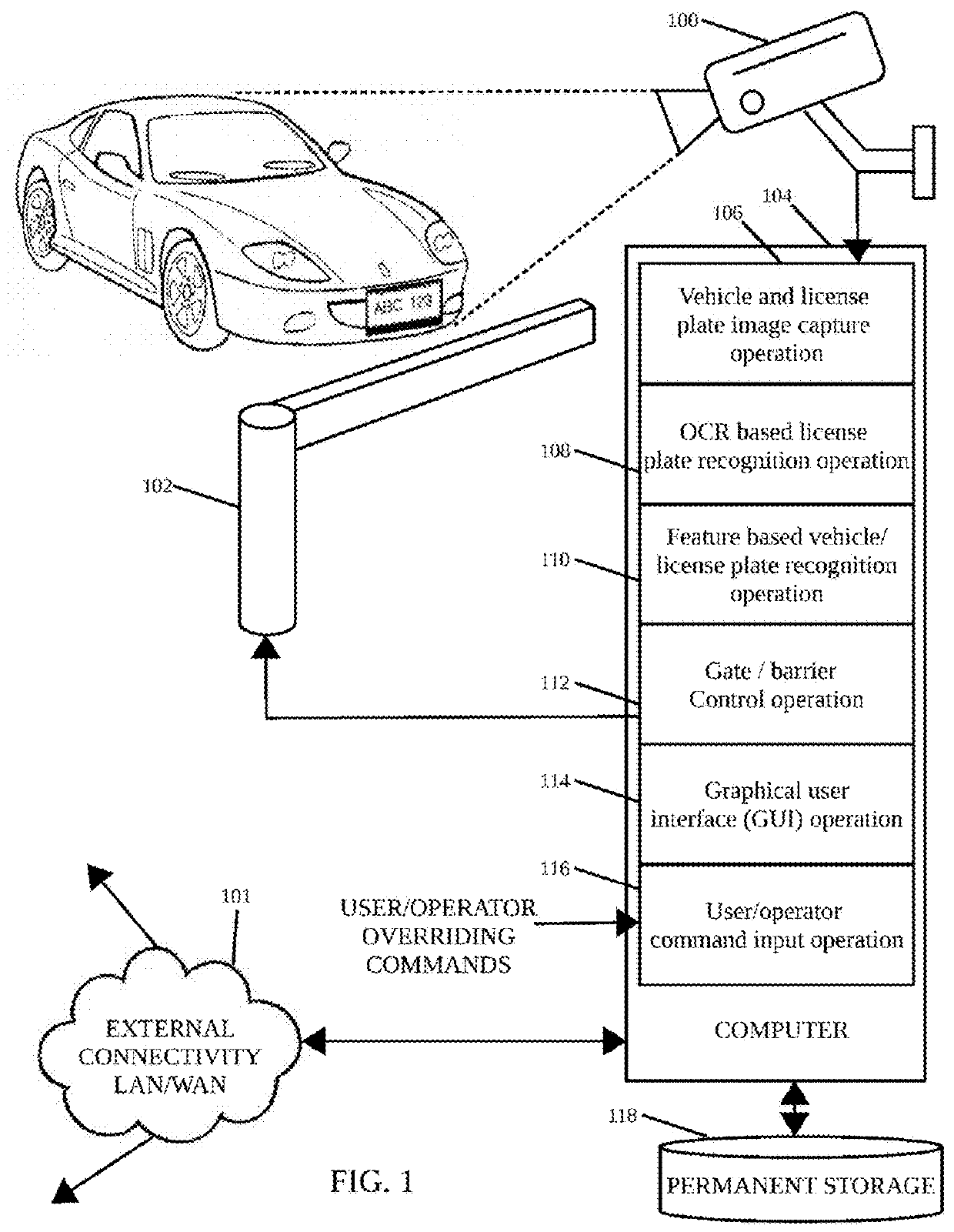
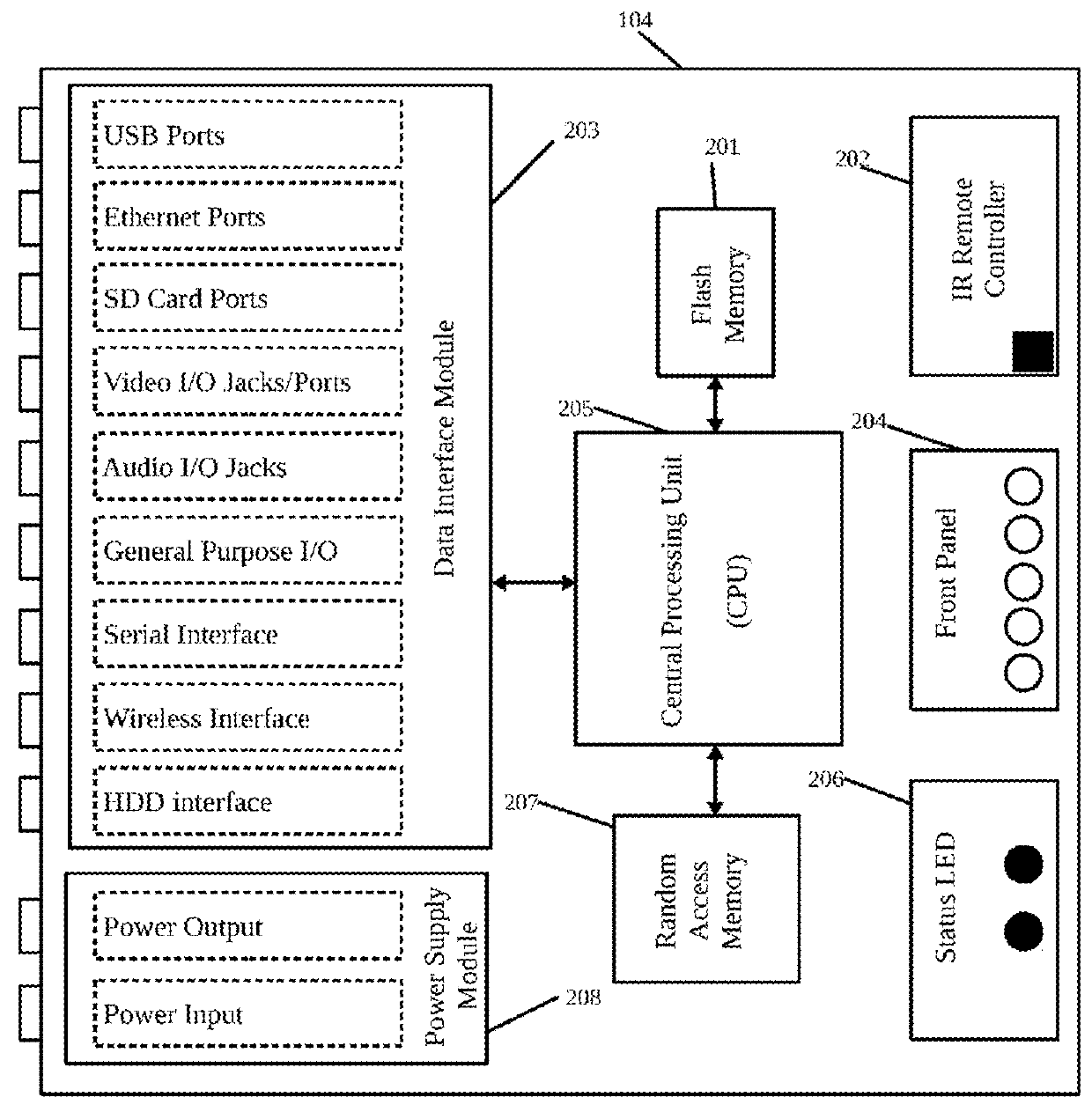
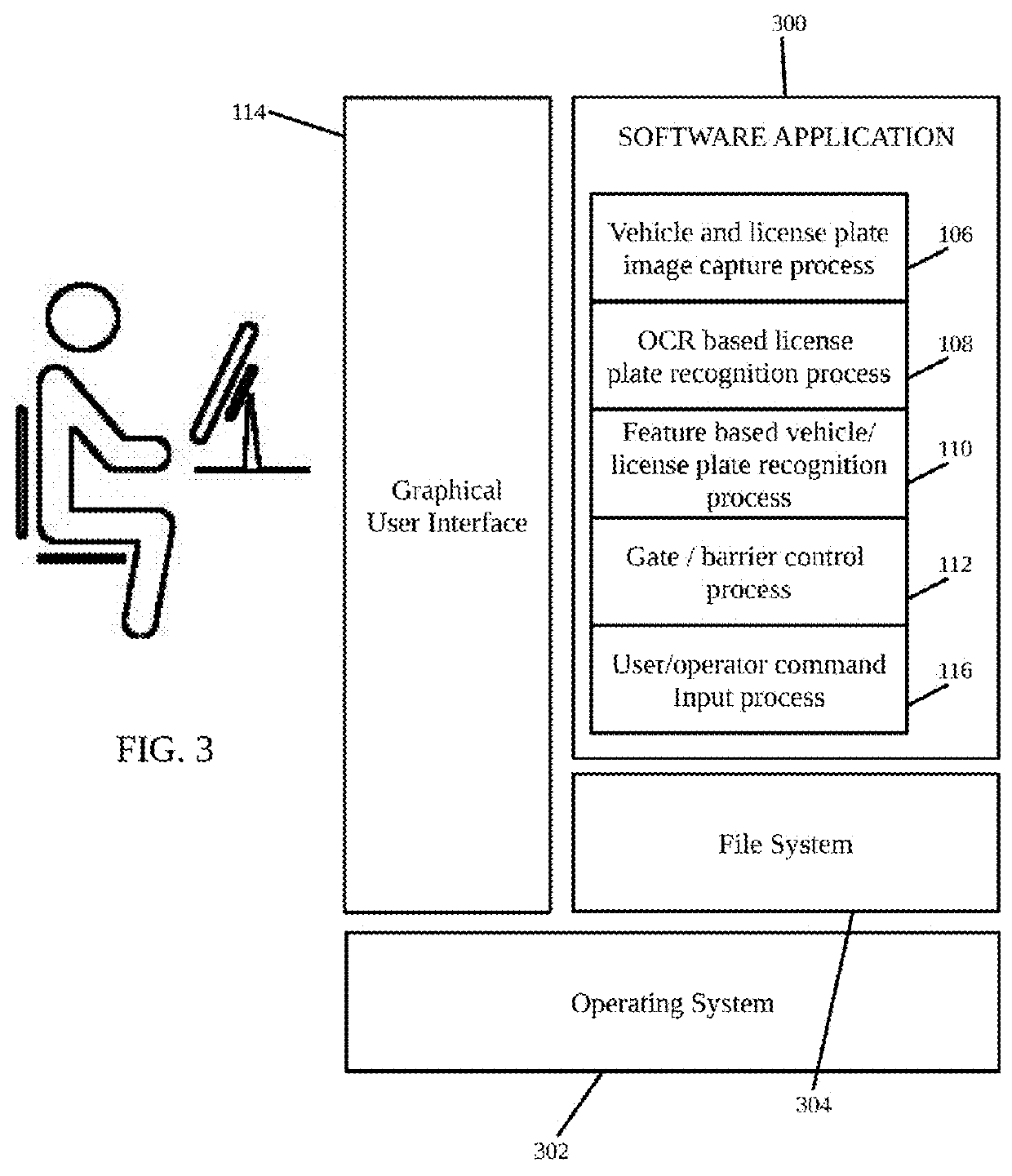

Method for automatic license plate recognition using adaptive feature set
PatentActiveUS20120155712A1
Innovation
- The method involves determining a confidence level for license plate recognition by processing vehicle images, extracting auxiliary data, and updating this level based on correspondence with stored data, allowing for improved accuracy and reduced human intervention by using OCR identification algorithms combined with image segmentation and auxiliary data analysis.


Privacy and Data Protection in LPR Deployment
Privacy and data protection represent critical considerations in License Plate Recognition (LPR) system deployment, particularly as these systems collect and process personally identifiable information on a massive scale. The intersection of advanced surveillance technology with fundamental privacy rights creates complex regulatory and ethical challenges that must be addressed through comprehensive frameworks encompassing legal compliance, technical safeguards, and operational protocols.
The regulatory landscape governing LPR deployments varies significantly across jurisdictions, with frameworks such as the European Union's General Data Protection Regulation (GDPR), California Consumer Privacy Act (CCPA), and various national data protection laws establishing stringent requirements for data collection, processing, and retention. These regulations mandate explicit consent mechanisms, purpose limitation principles, and data minimization practices that directly impact LPR system architecture and operational procedures.
Technical privacy protection measures include advanced encryption protocols for data transmission and storage, anonymization techniques that separate license plate data from location and timestamp information, and differential privacy algorithms that add statistical noise to datasets while preserving analytical utility. Edge computing architectures enable local processing capabilities that reduce data transmission requirements and minimize centralized storage vulnerabilities.
Data retention policies must balance operational requirements with privacy protection principles, establishing clear timelines for automatic data deletion and implementing secure disposal procedures for archived information. Access control mechanisms should incorporate role-based permissions, audit logging, and multi-factor authentication to prevent unauthorized data access and ensure accountability in system usage.
Transparency measures include public notification requirements for LPR deployment locations, clear privacy policies explaining data collection practices, and accessible procedures for individuals to request information about their data or file complaints. Regular privacy impact assessments help identify potential risks and ensure ongoing compliance with evolving regulatory requirements.
The implementation of privacy-by-design principles requires integrating data protection considerations into every stage of LPR system development and deployment, from initial system architecture through operational procedures and eventual system decommissioning, ensuring that privacy protection becomes an inherent characteristic rather than an afterthought in robust field-deployed LPR systems.
The regulatory landscape governing LPR deployments varies significantly across jurisdictions, with frameworks such as the European Union's General Data Protection Regulation (GDPR), California Consumer Privacy Act (CCPA), and various national data protection laws establishing stringent requirements for data collection, processing, and retention. These regulations mandate explicit consent mechanisms, purpose limitation principles, and data minimization practices that directly impact LPR system architecture and operational procedures.
Technical privacy protection measures include advanced encryption protocols for data transmission and storage, anonymization techniques that separate license plate data from location and timestamp information, and differential privacy algorithms that add statistical noise to datasets while preserving analytical utility. Edge computing architectures enable local processing capabilities that reduce data transmission requirements and minimize centralized storage vulnerabilities.
Data retention policies must balance operational requirements with privacy protection principles, establishing clear timelines for automatic data deletion and implementing secure disposal procedures for archived information. Access control mechanisms should incorporate role-based permissions, audit logging, and multi-factor authentication to prevent unauthorized data access and ensure accountability in system usage.
Transparency measures include public notification requirements for LPR deployment locations, clear privacy policies explaining data collection practices, and accessible procedures for individuals to request information about their data or file complaints. Regular privacy impact assessments help identify potential risks and ensure ongoing compliance with evolving regulatory requirements.
The implementation of privacy-by-design principles requires integrating data protection considerations into every stage of LPR system development and deployment, from initial system architecture through operational procedures and eventual system decommissioning, ensuring that privacy protection becomes an inherent characteristic rather than an afterthought in robust field-deployed LPR systems.
Environmental Adaptation Standards for Field LPR
Field-deployed License Plate Recognition (LPR) systems must operate reliably across diverse environmental conditions that significantly differ from controlled laboratory settings. Environmental adaptation standards establish critical performance benchmarks and operational parameters that ensure consistent accuracy and functionality regardless of external conditions. These standards encompass temperature tolerance, humidity resistance, precipitation protection, and illumination variability management.
Temperature adaptation requirements mandate LPR systems maintain operational accuracy within -40°C to +70°C ranges, addressing both electronic component stability and optical performance consistency. Thermal cycling tests verify system resilience through repeated temperature fluctuations, while thermal shock assessments evaluate rapid temperature change responses. Critical components including image sensors, processing units, and optical elements must demonstrate stable performance characteristics across this entire temperature spectrum without degradation in recognition accuracy.
Humidity and moisture protection standards require IP65 or higher ingress protection ratings, ensuring sealed enclosures prevent moisture infiltration that could compromise electronic circuits or fog optical surfaces. Condensation management protocols include active heating elements and ventilation systems that maintain clear optical paths. Salt spray resistance testing validates performance in coastal environments where corrosive atmospheric conditions accelerate component degradation.
Illumination adaptation standards address the most challenging aspect of field LPR deployment, requiring systems to maintain recognition accuracy across illumination ranges from 0.1 lux nighttime conditions to 100,000 lux direct sunlight. Adaptive exposure control algorithms automatically adjust camera settings, while infrared supplementation provides consistent illumination during low-light periods. Anti-glare technologies and polarization filters mitigate reflection interference from vehicle surfaces and wet pavement conditions.
Vibration and mechanical stress standards ensure system stability under wind loading, vehicle-induced vibrations, and seismic activity. Mounting hardware specifications define structural requirements for pole-mounted and overhead installations, while shock absorption mechanisms protect sensitive optical alignment. Environmental adaptation validation requires comprehensive field testing across representative climate zones, documenting performance metrics under actual deployment conditions rather than simulated laboratory environments.
Temperature adaptation requirements mandate LPR systems maintain operational accuracy within -40°C to +70°C ranges, addressing both electronic component stability and optical performance consistency. Thermal cycling tests verify system resilience through repeated temperature fluctuations, while thermal shock assessments evaluate rapid temperature change responses. Critical components including image sensors, processing units, and optical elements must demonstrate stable performance characteristics across this entire temperature spectrum without degradation in recognition accuracy.
Humidity and moisture protection standards require IP65 or higher ingress protection ratings, ensuring sealed enclosures prevent moisture infiltration that could compromise electronic circuits or fog optical surfaces. Condensation management protocols include active heating elements and ventilation systems that maintain clear optical paths. Salt spray resistance testing validates performance in coastal environments where corrosive atmospheric conditions accelerate component degradation.
Illumination adaptation standards address the most challenging aspect of field LPR deployment, requiring systems to maintain recognition accuracy across illumination ranges from 0.1 lux nighttime conditions to 100,000 lux direct sunlight. Adaptive exposure control algorithms automatically adjust camera settings, while infrared supplementation provides consistent illumination during low-light periods. Anti-glare technologies and polarization filters mitigate reflection interference from vehicle surfaces and wet pavement conditions.
Vibration and mechanical stress standards ensure system stability under wind loading, vehicle-induced vibrations, and seismic activity. Mounting hardware specifications define structural requirements for pole-mounted and overhead installations, while shock absorption mechanisms protect sensitive optical alignment. Environmental adaptation validation requires comprehensive field testing across representative climate zones, documenting performance metrics under actual deployment conditions rather than simulated laboratory environments.
Unlock deeper insights with PatSnap Eureka Quick Research — get a full tech report to explore trends and direct your research. Try now!
Generate Your Research Report Instantly with AI Agent
Supercharge your innovation with PatSnap Eureka AI Agent Platform!