

Streamlining Communications with LPR Integrated Systems
MAR 7, 20269 MIN READ
Generate Your Research Report Instantly with AI Agent
PatSnap Eureka helps you evaluate technical feasibility & market potential.
LPR System Integration Background and Objectives
License Plate Recognition (LPR) technology has undergone significant evolution since its inception in the 1970s, transforming from basic optical character recognition systems to sophisticated AI-powered solutions. Initially developed for toll collection and parking management, LPR systems have expanded their applications across multiple domains including traffic enforcement, security surveillance, and access control. The technology leverages advanced computer vision algorithms, machine learning models, and high-resolution imaging systems to automatically capture, process, and interpret vehicle license plate information in real-time.
The integration of LPR systems with broader communication infrastructures represents a critical advancement in intelligent transportation systems and smart city initiatives. Traditional standalone LPR deployments often operated in isolation, limiting their effectiveness and creating data silos that hindered comprehensive traffic management and security operations. Modern integrated approaches seek to connect LPR capabilities with centralized management platforms, enabling seamless data sharing, coordinated responses, and enhanced operational efficiency across multiple stakeholders.
Current technological trends emphasize the convergence of LPR systems with cloud computing, Internet of Things (IoT) networks, and edge computing architectures. This integration enables real-time data processing, distributed intelligence, and scalable deployment models that can adapt to varying operational requirements. The shift toward integrated systems reflects growing demands for interoperability, standardized communication protocols, and unified data management approaches that can support complex multi-agency operations.
The primary objective of streamlining communications within LPR integrated systems focuses on establishing robust, secure, and efficient data exchange mechanisms between distributed LPR nodes and central management systems. This involves implementing standardized communication protocols, ensuring data integrity and security, and enabling real-time information sharing across different organizational boundaries and technical platforms.
Key technical objectives include reducing latency in data transmission, improving system reliability and fault tolerance, and establishing scalable architectures that can accommodate future expansion requirements. The integration aims to create seamless workflows that enable automatic alert generation, coordinated response protocols, and comprehensive analytics capabilities that leverage aggregated data from multiple LPR deployment points.
Strategic goals encompass enhancing operational efficiency through automated processes, improving decision-making capabilities through real-time data availability, and establishing foundation infrastructure that supports advanced applications such as predictive analytics, automated enforcement, and intelligent traffic optimization systems.
The integration of LPR systems with broader communication infrastructures represents a critical advancement in intelligent transportation systems and smart city initiatives. Traditional standalone LPR deployments often operated in isolation, limiting their effectiveness and creating data silos that hindered comprehensive traffic management and security operations. Modern integrated approaches seek to connect LPR capabilities with centralized management platforms, enabling seamless data sharing, coordinated responses, and enhanced operational efficiency across multiple stakeholders.
Current technological trends emphasize the convergence of LPR systems with cloud computing, Internet of Things (IoT) networks, and edge computing architectures. This integration enables real-time data processing, distributed intelligence, and scalable deployment models that can adapt to varying operational requirements. The shift toward integrated systems reflects growing demands for interoperability, standardized communication protocols, and unified data management approaches that can support complex multi-agency operations.
The primary objective of streamlining communications within LPR integrated systems focuses on establishing robust, secure, and efficient data exchange mechanisms between distributed LPR nodes and central management systems. This involves implementing standardized communication protocols, ensuring data integrity and security, and enabling real-time information sharing across different organizational boundaries and technical platforms.
Key technical objectives include reducing latency in data transmission, improving system reliability and fault tolerance, and establishing scalable architectures that can accommodate future expansion requirements. The integration aims to create seamless workflows that enable automatic alert generation, coordinated response protocols, and comprehensive analytics capabilities that leverage aggregated data from multiple LPR deployment points.
Strategic goals encompass enhancing operational efficiency through automated processes, improving decision-making capabilities through real-time data availability, and establishing foundation infrastructure that supports advanced applications such as predictive analytics, automated enforcement, and intelligent traffic optimization systems.
Market Demand for Streamlined LPR Communication Solutions
The global market for License Plate Recognition (LPR) integrated communication systems is experiencing unprecedented growth driven by urbanization, smart city initiatives, and increasing security concerns. Traditional traffic management and security systems face significant challenges in real-time data sharing and coordinated response capabilities, creating substantial demand for streamlined communication solutions that can integrate LPR technology with existing infrastructure.
Government agencies and municipal authorities represent the largest market segment, seeking comprehensive solutions that enable seamless information flow between traffic management centers, law enforcement databases, and emergency response systems. The growing emphasis on intelligent transportation systems has amplified the need for LPR solutions that can communicate effectively across multiple platforms and stakeholders.
Commercial sectors, particularly parking management companies, toll road operators, and retail establishments, are driving demand for integrated LPR communication systems that can process high-volume transactions while maintaining real-time connectivity with payment systems and customer databases. The shift toward contactless operations has further accelerated adoption rates in these segments.
The emergence of smart city projects worldwide has created substantial market opportunities for LPR communication solutions that can integrate with broader urban management ecosystems. These projects require systems capable of handling massive data flows while ensuring interoperability between different municipal departments and service providers.
Security and surveillance markets continue to expand their requirements for LPR systems that can instantly communicate with law enforcement databases, border control systems, and private security networks. The increasing focus on public safety and counter-terrorism measures has elevated the importance of rapid, reliable communication capabilities in LPR deployments.
Technology integration challenges in legacy systems have created significant demand for solutions that can bridge communication gaps between older infrastructure and modern LPR capabilities. Organizations seek systems that can retrofit existing installations while providing enhanced communication features without requiring complete system overhauls.
The growing adoption of cloud-based services and edge computing architectures is reshaping market demand toward LPR communication solutions that can operate effectively in hybrid environments, supporting both on-premises and cloud-based data processing while maintaining consistent communication protocols across different deployment models.
Government agencies and municipal authorities represent the largest market segment, seeking comprehensive solutions that enable seamless information flow between traffic management centers, law enforcement databases, and emergency response systems. The growing emphasis on intelligent transportation systems has amplified the need for LPR solutions that can communicate effectively across multiple platforms and stakeholders.
Commercial sectors, particularly parking management companies, toll road operators, and retail establishments, are driving demand for integrated LPR communication systems that can process high-volume transactions while maintaining real-time connectivity with payment systems and customer databases. The shift toward contactless operations has further accelerated adoption rates in these segments.
The emergence of smart city projects worldwide has created substantial market opportunities for LPR communication solutions that can integrate with broader urban management ecosystems. These projects require systems capable of handling massive data flows while ensuring interoperability between different municipal departments and service providers.
Security and surveillance markets continue to expand their requirements for LPR systems that can instantly communicate with law enforcement databases, border control systems, and private security networks. The increasing focus on public safety and counter-terrorism measures has elevated the importance of rapid, reliable communication capabilities in LPR deployments.
Technology integration challenges in legacy systems have created significant demand for solutions that can bridge communication gaps between older infrastructure and modern LPR capabilities. Organizations seek systems that can retrofit existing installations while providing enhanced communication features without requiring complete system overhauls.
The growing adoption of cloud-based services and edge computing architectures is reshaping market demand toward LPR communication solutions that can operate effectively in hybrid environments, supporting both on-premises and cloud-based data processing while maintaining consistent communication protocols across different deployment models.
Current LPR Integration Challenges and Technical Barriers
License Plate Recognition (LPR) systems face significant integration challenges when attempting to streamline communications across diverse operational environments. The primary technical barrier stems from the heterogeneous nature of existing infrastructure, where legacy systems operate on incompatible communication protocols and data formats. Many facilities utilize proprietary systems that were not designed with interoperability in mind, creating isolated data silos that resist seamless integration.
Network connectivity represents another critical challenge, particularly in environments with limited bandwidth or unreliable internet connections. Real-time license plate data transmission requires consistent network performance, yet many parking facilities, toll stations, and security checkpoints operate in areas with suboptimal connectivity. This limitation affects the system's ability to perform instant verification against centralized databases or communicate with other integrated systems.
Data standardization poses substantial technical hurdles as different LPR vendors employ varying data structures, image formats, and metadata schemas. The absence of universal standards for license plate data exchange complicates integration efforts, requiring extensive customization and translation layers. Additionally, character recognition accuracy varies significantly across different lighting conditions, weather scenarios, and plate designs, leading to inconsistent data quality that affects downstream system reliability.
Security and privacy concerns create additional technical barriers, as integrated LPR systems must comply with diverse regulatory frameworks while maintaining secure data transmission channels. Implementing end-to-end encryption, access controls, and audit trails across multiple system components increases complexity and potential failure points.
Scalability limitations emerge when attempting to integrate multiple LPR units across large-scale deployments. Processing power requirements, database synchronization challenges, and real-time response demands strain existing infrastructure capabilities. The technical architecture must accommodate varying processing loads while maintaining consistent performance standards across all integrated components, often requiring significant hardware upgrades and system redesign efforts.
Network connectivity represents another critical challenge, particularly in environments with limited bandwidth or unreliable internet connections. Real-time license plate data transmission requires consistent network performance, yet many parking facilities, toll stations, and security checkpoints operate in areas with suboptimal connectivity. This limitation affects the system's ability to perform instant verification against centralized databases or communicate with other integrated systems.
Data standardization poses substantial technical hurdles as different LPR vendors employ varying data structures, image formats, and metadata schemas. The absence of universal standards for license plate data exchange complicates integration efforts, requiring extensive customization and translation layers. Additionally, character recognition accuracy varies significantly across different lighting conditions, weather scenarios, and plate designs, leading to inconsistent data quality that affects downstream system reliability.
Security and privacy concerns create additional technical barriers, as integrated LPR systems must comply with diverse regulatory frameworks while maintaining secure data transmission channels. Implementing end-to-end encryption, access controls, and audit trails across multiple system components increases complexity and potential failure points.
Scalability limitations emerge when attempting to integrate multiple LPR units across large-scale deployments. Processing power requirements, database synchronization challenges, and real-time response demands strain existing infrastructure capabilities. The technical architecture must accommodate varying processing loads while maintaining consistent performance standards across all integrated components, often requiring significant hardware upgrades and system redesign efforts.
Existing LPR Communication Integration Solutions
01 License plate recognition systems with integrated communication networks
Systems that combine license plate recognition (LPR) technology with communication networks to enable real-time data transmission and processing. These integrated systems allow for automatic vehicle identification and information sharing across multiple locations or enforcement agencies. The communication infrastructure supports centralized monitoring, data storage, and coordinated response capabilities for traffic management and security applications.- License plate recognition system architecture and integration: Integrated systems for license plate recognition (LPR) that combine image capture devices, processing units, and communication modules to enable automated vehicle identification. These systems integrate hardware components such as cameras and sensors with software algorithms for character recognition and data processing. The architecture supports real-time data transmission and integration with external databases and control systems for various applications including parking management, toll collection, and security monitoring.
- Communication protocols and data transmission methods: Methods and systems for transmitting license plate recognition data across networks using various communication protocols. These include wireless communication technologies, network interfaces, and data formatting standards that enable seamless integration between LPR devices and central management systems. The communication infrastructure supports bidirectional data exchange, remote configuration, and real-time status monitoring of distributed LPR units.
- Cloud-based and networked LPR systems: Cloud-based architectures for license plate recognition that enable centralized data storage, processing, and management across multiple locations. These systems utilize network connectivity to aggregate data from distributed LPR devices, provide remote access capabilities, and enable scalable deployment. The cloud infrastructure supports data analytics, historical record management, and integration with third-party applications through APIs and web services.
- Mobile and vehicle-mounted LPR communication systems: Mobile license plate recognition systems designed for installation on vehicles, enabling dynamic scanning and communication while in motion. These systems incorporate wireless communication capabilities to transmit captured data in real-time to central servers or other connected devices. The mobile architecture addresses challenges related to power management, data synchronization, and maintaining communication stability during vehicle movement.
- Integration with access control and security systems: Integration frameworks that connect LPR systems with broader security and access control infrastructure. These solutions enable automated gate control, visitor management, and security alerting based on license plate recognition results. The integration supports multiple communication interfaces and protocols to interface with existing security systems, databases, and management platforms, enabling coordinated responses and comprehensive monitoring capabilities.
02 Wireless communication protocols for LPR data transmission
Implementation of wireless communication technologies to transmit license plate data between recognition devices and central processing systems. These protocols enable mobile LPR units, remote monitoring stations, and distributed sensor networks to communicate efficiently. The systems support various wireless standards to ensure reliable data transfer in different operational environments and conditions.Expand Specific Solutions03 Cloud-based LPR data management and integration
Architecture for storing, processing, and accessing license plate recognition data through cloud computing platforms. These systems enable scalable data management, remote access, and integration with other databases and services. The cloud infrastructure supports multi-user access, real-time analytics, and cross-platform compatibility for enhanced operational efficiency.Expand Specific Solutions04 Multi-sensor integration for enhanced vehicle identification
Systems that combine license plate recognition with additional sensors and data sources to improve vehicle identification accuracy and provide comprehensive vehicle information. Integration includes cameras, RFID readers, and other detection technologies working in coordination. The multi-sensor approach enhances system reliability and provides redundancy for critical applications.Expand Specific Solutions05 Secure communication protocols for LPR system networks
Implementation of encryption and security measures to protect license plate data during transmission and storage within integrated communication systems. These protocols ensure data integrity, prevent unauthorized access, and comply with privacy regulations. Security features include authentication mechanisms, encrypted channels, and access control systems for sensitive vehicle information.Expand Specific Solutions
Major Players in LPR and Communication Integration Market
The LPR integrated systems market represents a rapidly evolving sector within the broader intelligent transportation and security technology landscape. The industry is currently in a growth phase, driven by increasing demand for automated vehicle identification and smart city infrastructure development. Major technology conglomerates including Samsung Electronics, LG Electronics, Huawei Technologies, and Qualcomm are leveraging their advanced semiconductor and communication capabilities to develop sophisticated LPR solutions. The market demonstrates significant scale potential, particularly in Asia-Pacific regions where companies like ZTE Corp., OPPO, and China Mobile are actively investing. Technology maturity varies across segments, with established players like Siemens AG and Fujitsu Ltd. offering enterprise-grade solutions, while emerging companies such as Honor Device and Shenzhen Gongjin Electronics focus on specialized applications. The competitive landscape shows convergence between traditional electronics manufacturers and telecommunications providers, indicating strong cross-industry collaboration in advancing LPR integration capabilities.
Huawei Technologies Co., Ltd.
Technical Solution: Huawei has developed comprehensive LPR integrated communication systems that combine license plate recognition with advanced networking infrastructure. Their solution leverages AI-powered edge computing nodes that process vehicle identification data in real-time while maintaining seamless connectivity through 5G networks. The system integrates cloud-based analytics platforms that enable instant data sharing between traffic management centers, law enforcement agencies, and smart city infrastructure. Huawei's LPR systems feature distributed processing capabilities that reduce latency to under 100ms for critical communications, while supporting up to 10,000 concurrent vehicle tracking sessions per node.
Strengths: Advanced 5G integration, robust edge computing capabilities, comprehensive ecosystem integration. Weaknesses: Limited market access in some regions due to regulatory restrictions, higher implementation costs.
QUALCOMM, Inc.
Technical Solution: Qualcomm provides the underlying chipset and connectivity solutions that power many LPR integrated communication systems through their Snapdragon automotive platforms. Their technology enables real-time processing of license plate data directly on edge devices while maintaining continuous 5G connectivity for instant communication with central monitoring systems. The platform supports Vehicle-to-Everything (V2X) communication protocols, allowing LPR-equipped vehicles and infrastructure to share identification data seamlessly. Qualcomm's solution includes dedicated AI processing units that can handle complex image recognition tasks while maintaining power efficiency, supporting deployment in battery-powered mobile LPR units with operational times exceeding 12 hours.
Strengths: Leading mobile connectivity technology, power-efficient processing, extensive automotive partnerships. Weaknesses: Primarily component-level solutions requiring system integration, limited direct customer relationships in LPR market.
Core Technologies in LPR Data Communication Protocols
Apparatus and method for automatic license plate recognition and traffic surveillance
PatentInactiveUS20150248595A1
Innovation
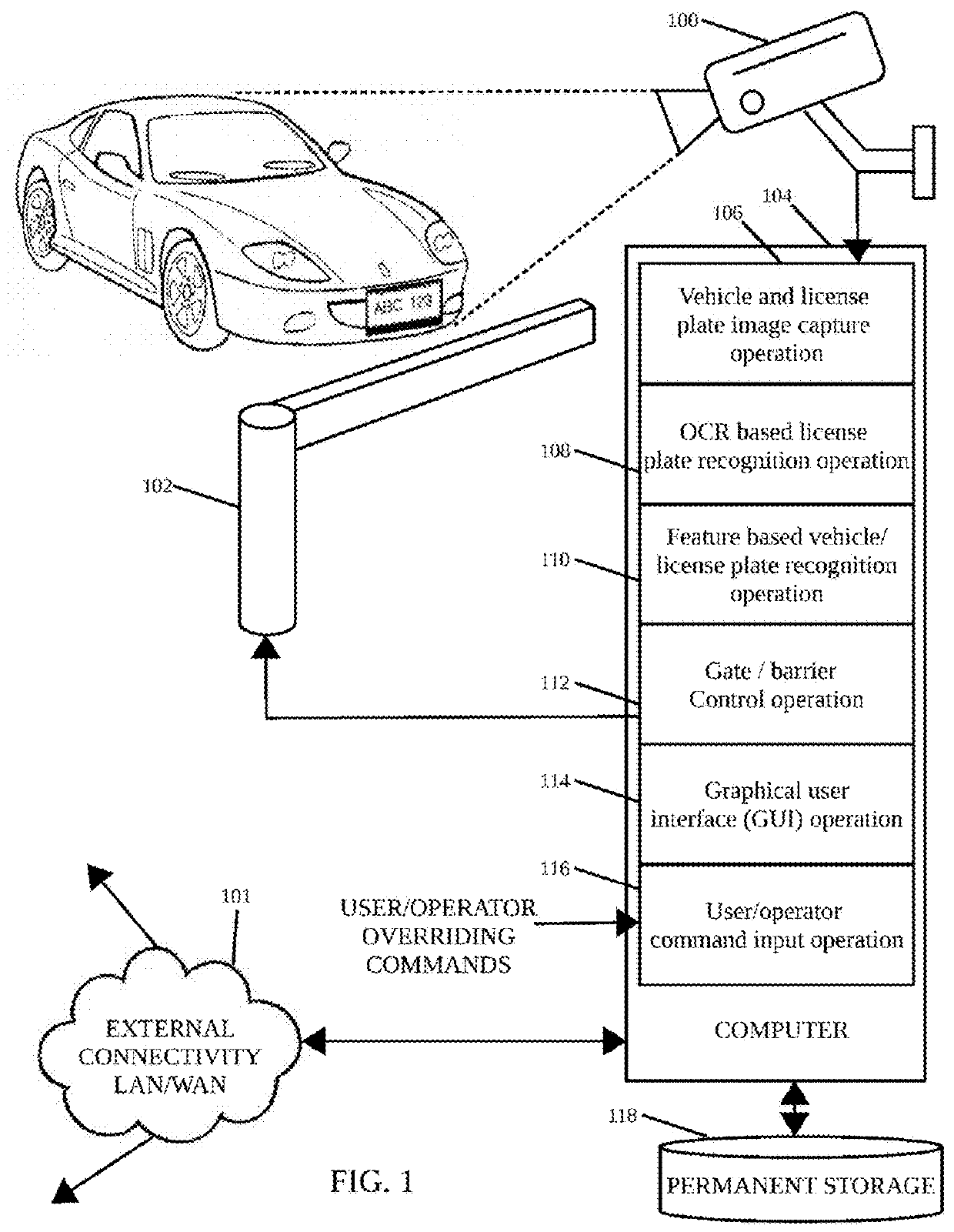
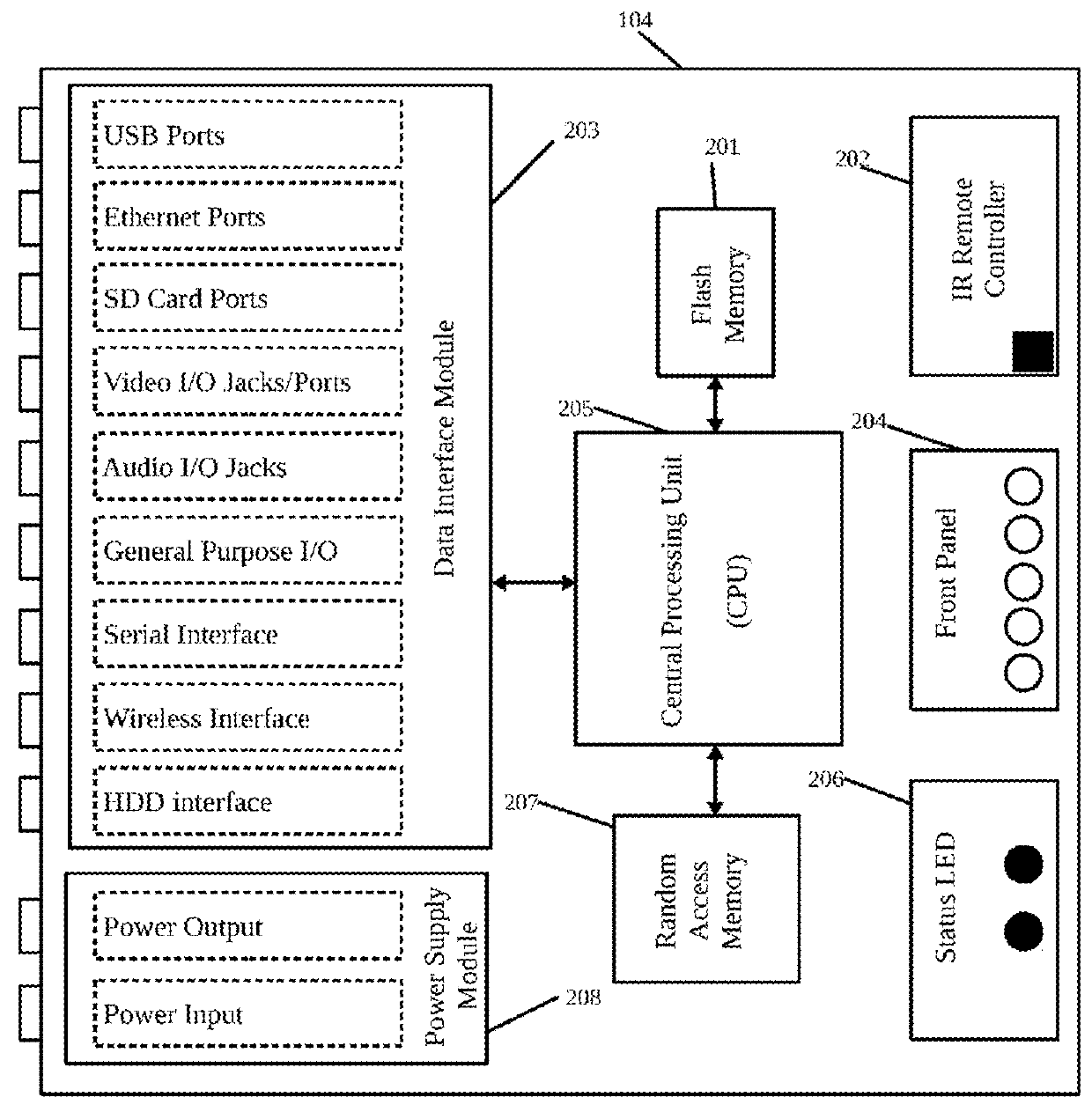
- A reconfigurable LPR processing apparatus with a small form factor based on Digital Signal Processors (DSPs), offering multiple interfaces and operating modes, including local and remote storage, camera configurations, and independent PC operation, allowing for flexible configuration to match various LPR applications and reducing development time and costs.


System and methods for enhancing license plate and vehicle recognition
PatentInactiveUS20180268238A1
Innovation
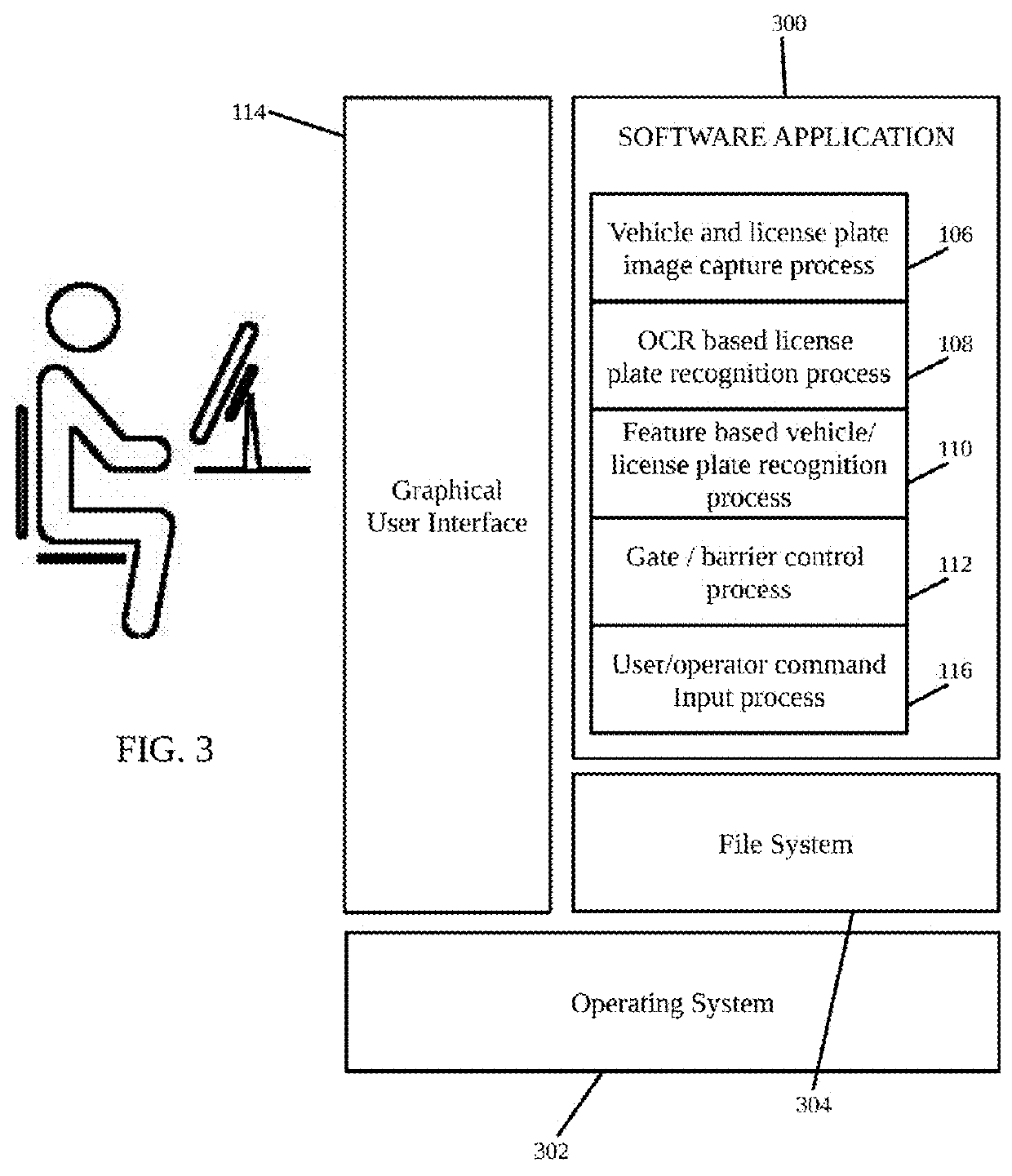
- The system employs feature matching using high-dimensional feature vectors, with sorting and summarization techniques to reduce computational complexity and storage needs, and includes automated correction and categorization of plate records, allowing for efficient real-time processing and improved accuracy.

Privacy and Data Protection in LPR Communications
Privacy and data protection represent critical considerations in License Plate Recognition (LPR) integrated communication systems, as these technologies inherently collect and process sensitive personal information. The deployment of LPR systems creates substantial privacy implications due to their capability to track vehicle movements, establish location patterns, and potentially infringe upon individual anonymity in public spaces.
Current regulatory frameworks governing LPR communications vary significantly across jurisdictions, with the European Union's General Data Protection Regulation (GDPR) establishing stringent requirements for data minimization, purpose limitation, and individual consent. In contrast, regulatory approaches in North America and Asia demonstrate varying degrees of privacy protection, creating compliance challenges for organizations operating across multiple regions.
Data encryption protocols form the foundation of secure LPR communications, with Advanced Encryption Standard (AES-256) and Transport Layer Security (TLS) protocols commonly implemented to protect data transmission between capture devices and central processing systems. End-to-end encryption ensures that license plate data remains protected throughout the communication pipeline, preventing unauthorized access during transmission phases.
Access control mechanisms within LPR systems typically employ role-based authentication protocols, limiting data access to authorized personnel through multi-factor authentication systems. These controls extend to API communications, where token-based authentication and OAuth 2.0 frameworks provide secure access management for integrated third-party applications and cross-system communications.
Data retention policies present ongoing challenges in LPR communications, as organizations must balance operational requirements with privacy obligations. Industry best practices recommend implementing automated data purging mechanisms that remove personally identifiable information after predetermined periods, while maintaining anonymized datasets for analytical purposes.
Anonymization techniques, including data masking and pseudonymization, enable LPR systems to maintain operational functionality while reducing privacy risks. These approaches allow for traffic pattern analysis and system optimization without retaining direct links to individual vehicle owners, supporting compliance with privacy regulations while preserving system effectiveness.
Emerging privacy-preserving technologies, such as differential privacy and homomorphic encryption, offer promising solutions for future LPR communication systems. These advanced cryptographic methods enable data analysis and sharing while mathematically guaranteeing individual privacy protection, representing the next generation of privacy-compliant LPR implementations.
Current regulatory frameworks governing LPR communications vary significantly across jurisdictions, with the European Union's General Data Protection Regulation (GDPR) establishing stringent requirements for data minimization, purpose limitation, and individual consent. In contrast, regulatory approaches in North America and Asia demonstrate varying degrees of privacy protection, creating compliance challenges for organizations operating across multiple regions.
Data encryption protocols form the foundation of secure LPR communications, with Advanced Encryption Standard (AES-256) and Transport Layer Security (TLS) protocols commonly implemented to protect data transmission between capture devices and central processing systems. End-to-end encryption ensures that license plate data remains protected throughout the communication pipeline, preventing unauthorized access during transmission phases.
Access control mechanisms within LPR systems typically employ role-based authentication protocols, limiting data access to authorized personnel through multi-factor authentication systems. These controls extend to API communications, where token-based authentication and OAuth 2.0 frameworks provide secure access management for integrated third-party applications and cross-system communications.
Data retention policies present ongoing challenges in LPR communications, as organizations must balance operational requirements with privacy obligations. Industry best practices recommend implementing automated data purging mechanisms that remove personally identifiable information after predetermined periods, while maintaining anonymized datasets for analytical purposes.
Anonymization techniques, including data masking and pseudonymization, enable LPR systems to maintain operational functionality while reducing privacy risks. These approaches allow for traffic pattern analysis and system optimization without retaining direct links to individual vehicle owners, supporting compliance with privacy regulations while preserving system effectiveness.
Emerging privacy-preserving technologies, such as differential privacy and homomorphic encryption, offer promising solutions for future LPR communication systems. These advanced cryptographic methods enable data analysis and sharing while mathematically guaranteeing individual privacy protection, representing the next generation of privacy-compliant LPR implementations.
Standardization Framework for LPR Integration
The establishment of a comprehensive standardization framework for License Plate Recognition (LPR) integration represents a critical foundation for achieving seamless communication across diverse systems and platforms. Current LPR implementations suffer from fragmented approaches, where proprietary protocols and incompatible data formats create significant barriers to system interoperability. A unified standardization framework addresses these challenges by defining common protocols, data structures, and communication interfaces that enable different LPR systems to work cohesively within integrated environments.
The framework must encompass multiple layers of standardization, beginning with hardware specifications that define camera resolution requirements, mounting standards, and environmental tolerance parameters. These specifications ensure consistent image quality and system reliability across different deployment scenarios. Additionally, the framework should establish standardized data formats for license plate information, including character encoding, metadata structures, and timestamp formats that facilitate seamless data exchange between systems.
Communication protocol standardization forms another crucial component, defining how LPR systems interact with central management platforms, databases, and third-party applications. This includes establishing standard APIs, message queuing protocols, and real-time data streaming specifications that enable efficient information flow. The framework should also address security protocols, ensuring encrypted communications and authenticated access controls that protect sensitive vehicle identification data.
Interoperability testing procedures represent an essential element of the standardization framework, providing systematic methodologies for validating system compatibility and performance consistency. These procedures should include benchmark testing scenarios, data accuracy verification protocols, and stress testing parameters that ensure reliable operation under various conditions.
The framework must also consider scalability requirements, defining standards for system expansion, load balancing, and distributed processing capabilities. This ensures that LPR integrated systems can accommodate growing data volumes and expanding operational requirements without compromising performance or reliability.
Implementation guidelines within the standardization framework should provide clear specifications for system integration processes, configuration parameters, and maintenance procedures. These guidelines enable consistent deployment practices and reduce integration complexity across different organizational environments, ultimately supporting the broader goal of streamlined communications in LPR integrated systems.
The framework must encompass multiple layers of standardization, beginning with hardware specifications that define camera resolution requirements, mounting standards, and environmental tolerance parameters. These specifications ensure consistent image quality and system reliability across different deployment scenarios. Additionally, the framework should establish standardized data formats for license plate information, including character encoding, metadata structures, and timestamp formats that facilitate seamless data exchange between systems.
Communication protocol standardization forms another crucial component, defining how LPR systems interact with central management platforms, databases, and third-party applications. This includes establishing standard APIs, message queuing protocols, and real-time data streaming specifications that enable efficient information flow. The framework should also address security protocols, ensuring encrypted communications and authenticated access controls that protect sensitive vehicle identification data.
Interoperability testing procedures represent an essential element of the standardization framework, providing systematic methodologies for validating system compatibility and performance consistency. These procedures should include benchmark testing scenarios, data accuracy verification protocols, and stress testing parameters that ensure reliable operation under various conditions.
The framework must also consider scalability requirements, defining standards for system expansion, load balancing, and distributed processing capabilities. This ensures that LPR integrated systems can accommodate growing data volumes and expanding operational requirements without compromising performance or reliability.
Implementation guidelines within the standardization framework should provide clear specifications for system integration processes, configuration parameters, and maintenance procedures. These guidelines enable consistent deployment practices and reduce integration complexity across different organizational environments, ultimately supporting the broader goal of streamlined communications in LPR integrated systems.
Unlock deeper insights with PatSnap Eureka Quick Research — get a full tech report to explore trends and direct your research. Try now!
Generate Your Research Report Instantly with AI Agent
Supercharge your innovation with PatSnap Eureka AI Agent Platform!