

Using Advanced Software Tools for LPR Data Interpretation
MAR 7, 20269 MIN READ
Generate Your Research Report Instantly with AI Agent
PatSnap Eureka helps you evaluate technical feasibility & market potential.
LPR Software Tools Background and Objectives
Ground Penetrating Radar (GPR) technology has undergone significant evolution since its inception in the early 20th century, transitioning from basic analog systems to sophisticated digital platforms capable of high-resolution subsurface imaging. Initially developed for military applications during World War II, GPR technology has expanded into diverse sectors including archaeology, geology, civil engineering, and environmental monitoring. The fundamental principle involves transmitting electromagnetic pulses into the ground and analyzing reflected signals to create detailed subsurface profiles.
The historical development of LPR data interpretation has been marked by several critical phases. Early systems relied heavily on manual interpretation of analog waveforms, requiring extensive expertise and often producing inconsistent results. The introduction of digital signal processing in the 1980s marked a pivotal transformation, enabling more precise data capture and preliminary automated analysis capabilities.
Modern LPR software tools have emerged as essential components in addressing the inherent complexity of subsurface data interpretation. Traditional manual analysis methods face significant limitations including subjective interpretation variability, time-intensive processing requirements, and difficulty in handling large datasets. These challenges have driven the development of advanced computational approaches that leverage machine learning algorithms, artificial intelligence, and sophisticated signal processing techniques.
The primary objective of implementing advanced software tools for LPR data interpretation centers on achieving automated feature recognition and classification within subsurface environments. This includes the identification of buried utilities, geological formations, archaeological artifacts, and structural anomalies with enhanced accuracy and reduced processing time. Secondary objectives encompass improving data visualization capabilities, enabling real-time analysis during field operations, and facilitating integration with other geophysical survey methods.
Contemporary software development efforts focus on creating comprehensive platforms that can handle multi-frequency data acquisition, perform advanced noise filtering, and implement predictive modeling algorithms. These tools aim to transform raw electromagnetic data into actionable intelligence for decision-making processes across various application domains.
The technological trajectory indicates a clear progression toward fully automated interpretation systems that can operate with minimal human intervention while maintaining high accuracy standards. This evolution represents a fundamental shift from traditional expert-dependent analysis to data-driven computational approaches that can democratize access to sophisticated subsurface investigation capabilities.
The historical development of LPR data interpretation has been marked by several critical phases. Early systems relied heavily on manual interpretation of analog waveforms, requiring extensive expertise and often producing inconsistent results. The introduction of digital signal processing in the 1980s marked a pivotal transformation, enabling more precise data capture and preliminary automated analysis capabilities.
Modern LPR software tools have emerged as essential components in addressing the inherent complexity of subsurface data interpretation. Traditional manual analysis methods face significant limitations including subjective interpretation variability, time-intensive processing requirements, and difficulty in handling large datasets. These challenges have driven the development of advanced computational approaches that leverage machine learning algorithms, artificial intelligence, and sophisticated signal processing techniques.
The primary objective of implementing advanced software tools for LPR data interpretation centers on achieving automated feature recognition and classification within subsurface environments. This includes the identification of buried utilities, geological formations, archaeological artifacts, and structural anomalies with enhanced accuracy and reduced processing time. Secondary objectives encompass improving data visualization capabilities, enabling real-time analysis during field operations, and facilitating integration with other geophysical survey methods.
Contemporary software development efforts focus on creating comprehensive platforms that can handle multi-frequency data acquisition, perform advanced noise filtering, and implement predictive modeling algorithms. These tools aim to transform raw electromagnetic data into actionable intelligence for decision-making processes across various application domains.
The technological trajectory indicates a clear progression toward fully automated interpretation systems that can operate with minimal human intervention while maintaining high accuracy standards. This evolution represents a fundamental shift from traditional expert-dependent analysis to data-driven computational approaches that can democratize access to sophisticated subsurface investigation capabilities.
Market Demand for Advanced LPR Data Analytics
The global market for advanced License Plate Recognition data analytics is experiencing unprecedented growth driven by escalating security concerns and the proliferation of smart city initiatives worldwide. Urban centers are increasingly deploying comprehensive surveillance networks that generate massive volumes of LPR data, creating substantial demand for sophisticated analytical tools capable of extracting actionable insights from this information stream.
Law enforcement agencies represent the primary market segment, requiring advanced analytics to support criminal investigations, traffic violation enforcement, and public safety operations. These organizations seek solutions that can process historical LPR data to identify patterns, track vehicle movements across multiple locations, and correlate license plate information with criminal databases in real-time.
The transportation and logistics sector has emerged as a significant growth driver, with companies utilizing LPR analytics to optimize fleet management, monitor delivery routes, and enhance supply chain visibility. Toll road operators and parking facility managers are increasingly adopting advanced analytical tools to improve revenue collection, reduce operational costs, and enhance customer experience through automated billing systems.
Commercial real estate and retail establishments are recognizing the value of LPR data analytics for customer behavior analysis, security enhancement, and operational optimization. Shopping centers, office complexes, and entertainment venues are implementing these systems to understand visitor patterns, manage parking resources, and improve overall facility management.
The market demand is further amplified by regulatory compliance requirements in various jurisdictions, where organizations must maintain detailed records of vehicle access and movement data. Financial institutions, government facilities, and critical infrastructure operators are mandated to implement comprehensive monitoring systems that rely heavily on advanced LPR data interpretation capabilities.
Emerging applications in insurance fraud detection, stolen vehicle recovery, and border security are expanding the market scope beyond traditional use cases. Insurance companies are leveraging LPR analytics to verify claims and detect fraudulent activities, while customs and border protection agencies utilize these tools for enhanced security screening and contraband detection.
The integration of artificial intelligence and machine learning technologies has created demand for more sophisticated analytical capabilities, including predictive analytics, anomaly detection, and automated alert systems. Organizations are seeking solutions that can adapt to evolving security threats and provide proactive rather than reactive monitoring capabilities.
Law enforcement agencies represent the primary market segment, requiring advanced analytics to support criminal investigations, traffic violation enforcement, and public safety operations. These organizations seek solutions that can process historical LPR data to identify patterns, track vehicle movements across multiple locations, and correlate license plate information with criminal databases in real-time.
The transportation and logistics sector has emerged as a significant growth driver, with companies utilizing LPR analytics to optimize fleet management, monitor delivery routes, and enhance supply chain visibility. Toll road operators and parking facility managers are increasingly adopting advanced analytical tools to improve revenue collection, reduce operational costs, and enhance customer experience through automated billing systems.
Commercial real estate and retail establishments are recognizing the value of LPR data analytics for customer behavior analysis, security enhancement, and operational optimization. Shopping centers, office complexes, and entertainment venues are implementing these systems to understand visitor patterns, manage parking resources, and improve overall facility management.
The market demand is further amplified by regulatory compliance requirements in various jurisdictions, where organizations must maintain detailed records of vehicle access and movement data. Financial institutions, government facilities, and critical infrastructure operators are mandated to implement comprehensive monitoring systems that rely heavily on advanced LPR data interpretation capabilities.
Emerging applications in insurance fraud detection, stolen vehicle recovery, and border security are expanding the market scope beyond traditional use cases. Insurance companies are leveraging LPR analytics to verify claims and detect fraudulent activities, while customs and border protection agencies utilize these tools for enhanced security screening and contraband detection.
The integration of artificial intelligence and machine learning technologies has created demand for more sophisticated analytical capabilities, including predictive analytics, anomaly detection, and automated alert systems. Organizations are seeking solutions that can adapt to evolving security threats and provide proactive rather than reactive monitoring capabilities.
Current LPR Software Limitations and Challenges
Current LPR software solutions face significant computational bottlenecks when processing large-scale datasets. Traditional signal processing algorithms struggle with the massive data volumes generated by modern LPR systems, often requiring extensive processing time that limits real-time analysis capabilities. The computational intensity becomes particularly problematic when dealing with high-resolution surveys or continuous monitoring applications where data streams can reach terabytes in size.
Signal-to-noise ratio enhancement remains a persistent challenge across existing LPR interpretation platforms. Environmental factors such as electromagnetic interference, ground heterogeneity, and atmospheric conditions introduce noise artifacts that current software struggles to effectively filter. Many existing tools rely on basic filtering techniques that either over-smooth critical subsurface features or fail to adequately suppress noise, resulting in compromised data quality and interpretation accuracy.
Automated feature recognition capabilities in current LPR software are severely limited, requiring extensive manual intervention from experienced operators. Most platforms lack sophisticated machine learning algorithms capable of automatically identifying and classifying subsurface objects, geological layers, or anomalies. This limitation forces users to rely heavily on manual interpretation, which is time-consuming, subjective, and prone to human error, particularly when analyzing complex subsurface environments.
Integration challenges plague the LPR software ecosystem, with most tools operating as standalone applications that cannot seamlessly interface with other geophysical software or Geographic Information Systems. Data format incompatibilities, proprietary file structures, and lack of standardized APIs create significant workflow inefficiencies. Users often must manually export and import data between different platforms, increasing the risk of data corruption and analysis errors.
Visualization capabilities in existing LPR software remain rudimentary, typically offering only basic 2D profile displays with limited interactive features. Advanced 3D visualization, real-time rendering, and multi-dimensional data fusion capabilities are either absent or poorly implemented. This limitation significantly hampers the ability to effectively communicate findings to stakeholders and limits comprehensive subsurface analysis.
Scalability issues emerge when current LPR software attempts to handle enterprise-level deployments or multi-site surveys. Most platforms lack cloud computing integration, distributed processing capabilities, or efficient database management systems necessary for large-scale operations. Performance degradation becomes evident as dataset sizes increase, limiting the practical application of LPR technology in extensive infrastructure monitoring or geological survey projects.
Signal-to-noise ratio enhancement remains a persistent challenge across existing LPR interpretation platforms. Environmental factors such as electromagnetic interference, ground heterogeneity, and atmospheric conditions introduce noise artifacts that current software struggles to effectively filter. Many existing tools rely on basic filtering techniques that either over-smooth critical subsurface features or fail to adequately suppress noise, resulting in compromised data quality and interpretation accuracy.
Automated feature recognition capabilities in current LPR software are severely limited, requiring extensive manual intervention from experienced operators. Most platforms lack sophisticated machine learning algorithms capable of automatically identifying and classifying subsurface objects, geological layers, or anomalies. This limitation forces users to rely heavily on manual interpretation, which is time-consuming, subjective, and prone to human error, particularly when analyzing complex subsurface environments.
Integration challenges plague the LPR software ecosystem, with most tools operating as standalone applications that cannot seamlessly interface with other geophysical software or Geographic Information Systems. Data format incompatibilities, proprietary file structures, and lack of standardized APIs create significant workflow inefficiencies. Users often must manually export and import data between different platforms, increasing the risk of data corruption and analysis errors.
Visualization capabilities in existing LPR software remain rudimentary, typically offering only basic 2D profile displays with limited interactive features. Advanced 3D visualization, real-time rendering, and multi-dimensional data fusion capabilities are either absent or poorly implemented. This limitation significantly hampers the ability to effectively communicate findings to stakeholders and limits comprehensive subsurface analysis.
Scalability issues emerge when current LPR software attempts to handle enterprise-level deployments or multi-site surveys. Most platforms lack cloud computing integration, distributed processing capabilities, or efficient database management systems necessary for large-scale operations. Performance degradation becomes evident as dataset sizes increase, limiting the practical application of LPR technology in extensive infrastructure monitoring or geological survey projects.
Existing Advanced LPR Data Interpretation Solutions
01 Machine learning and AI-based data interpretation systems
Advanced software tools utilize machine learning algorithms and artificial intelligence techniques to automatically analyze and interpret complex data sets. These systems can identify patterns, correlations, and anomalies in large volumes of data, providing insights that would be difficult to obtain through manual analysis. The tools employ neural networks, deep learning models, and statistical methods to process structured and unstructured data, enabling predictive analytics and decision support across various domains.- Machine learning and AI-based data interpretation systems: Advanced software tools utilize machine learning algorithms and artificial intelligence techniques to automatically analyze and interpret complex datasets. These systems can identify patterns, correlations, and anomalies in large volumes of data, providing automated insights and predictions. The tools employ neural networks, deep learning models, and statistical analysis methods to process structured and unstructured data, enabling users to extract meaningful information without extensive manual analysis.
- Visual data representation and interactive dashboards: Software tools provide sophisticated visualization capabilities that transform raw data into intuitive graphical representations such as charts, graphs, heat maps, and interactive dashboards. These visualization features enable users to quickly comprehend complex data relationships and trends through visual means. The tools support customizable display options, real-time data updates, and interactive elements that allow users to drill down into specific data segments for detailed analysis.
- Automated data processing and transformation pipelines: Advanced interpretation tools incorporate automated data processing workflows that handle data ingestion, cleansing, transformation, and normalization. These pipelines can automatically detect data quality issues, handle missing values, and convert data into standardized formats suitable for analysis. The systems support batch processing and real-time streaming data, enabling efficient handling of diverse data sources and formats while maintaining data integrity throughout the interpretation process.
- Natural language processing for data query and reporting: Software tools integrate natural language processing capabilities that allow users to query data and generate reports using conversational language rather than complex query syntax. These systems can understand user intent, translate natural language questions into database queries, and present results in human-readable formats. The tools also support automated report generation with narrative explanations of data insights, making data interpretation accessible to non-technical users.
- Predictive analytics and forecasting modules: Advanced data interpretation software includes predictive analytics capabilities that use historical data patterns to forecast future trends and outcomes. These modules employ time series analysis, regression models, and probabilistic forecasting techniques to generate predictions with confidence intervals. The tools can identify leading indicators, detect emerging trends, and provide scenario analysis to support decision-making processes across various business contexts.
02 Visual data representation and interactive dashboards
Software tools provide sophisticated visualization capabilities that transform raw data into intuitive graphical representations such as charts, graphs, heat maps, and interactive dashboards. These visualization features enable users to quickly comprehend complex data relationships and trends through visual exploration. The tools support customizable display options, real-time data updates, and drill-down capabilities that allow users to examine data at different levels of granularity for comprehensive analysis.Expand Specific Solutions03 Automated data processing and integration frameworks
Modern interpretation tools incorporate automated data processing pipelines that can extract, transform, and load data from multiple heterogeneous sources. These frameworks handle data cleansing, normalization, and integration tasks, ensuring data quality and consistency before analysis. The systems support various data formats and protocols, enabling seamless connectivity with databases, cloud services, and enterprise applications to create unified data environments for comprehensive interpretation.Expand Specific Solutions04 Statistical analysis and predictive modeling capabilities
Advanced software tools provide comprehensive statistical analysis functions including regression analysis, hypothesis testing, time series analysis, and multivariate analysis. These capabilities enable users to perform rigorous quantitative assessments and develop predictive models based on historical data patterns. The tools incorporate various statistical algorithms and modeling techniques that help identify significant variables, forecast future trends, and quantify uncertainties in data-driven predictions.Expand Specific Solutions05 Natural language processing for data insights
Software tools leverage natural language processing technologies to extract meaningful information from textual data and enable conversational interfaces for data querying. These systems can analyze unstructured text documents, generate automated summaries, and respond to natural language queries about data insights. The tools facilitate easier access to data interpretation capabilities for non-technical users by allowing them to interact with complex analytical systems using everyday language rather than specialized query languages.Expand Specific Solutions
Key Players in LPR Software and Analytics Industry
The LPR data interpretation technology market is experiencing rapid growth driven by increasing smart city initiatives and traffic management demands. The competitive landscape spans from mature technology giants like Samsung Electronics, Philips, and Huawei Technologies to specialized players including Kapsch TrafficCom AG and Genetec Corp., who focus specifically on intelligent transportation systems. Technology maturity varies significantly across players - established companies like Zscaler and Intuit leverage cloud-based platforms and advanced analytics, while emerging firms such as NEXPA System and Shanghai Baining Intelligent Technology are developing AI-driven solutions. Academic institutions including Tongji University, Central South University, and Sichuan University contribute foundational research, indicating strong innovation pipeline. The market demonstrates healthy competition with both hardware manufacturers like GETAC providing rugged computing solutions and software specialists offering advanced interpretation algorithms, suggesting the industry is transitioning from early adoption to mainstream deployment phase.
Kapsch TrafficCom AG
Technical Solution: Kapsch TrafficCom develops comprehensive LPR solutions utilizing advanced computer vision algorithms and machine learning techniques for automatic license plate recognition and data interpretation. Their software platform integrates real-time image processing capabilities with sophisticated pattern recognition algorithms to extract and analyze license plate data from various traffic monitoring scenarios. The system employs deep learning neural networks for character recognition and validation, combined with advanced filtering and correction algorithms to handle challenging conditions such as poor lighting, weather interference, and plate damage. Their software tools provide comprehensive data analytics, including traffic flow analysis, violation detection, and behavioral pattern recognition for traffic management applications.
Strengths: Established market leader in traffic technology with proven LPR solutions and strong integration capabilities. Weaknesses: Limited focus on emerging AI technologies compared to pure software companies.
Samsung Electronics Co., Ltd.
Technical Solution: Samsung develops advanced LPR software solutions leveraging their expertise in image processing and artificial intelligence technologies. Their approach utilizes convolutional neural networks and edge computing capabilities integrated into their smart camera systems and mobile devices. The software platform incorporates real-time image enhancement algorithms, multi-language character recognition, and adaptive learning mechanisms to improve accuracy across diverse geographical regions and plate formats. Samsung's solution emphasizes edge-based processing to reduce latency and bandwidth requirements while maintaining high accuracy rates through continuous model optimization and federated learning approaches for distributed deployment scenarios.
Strengths: Strong hardware-software integration capabilities and extensive R&D resources with global market presence. Weaknesses: Less specialized focus on traffic-specific applications compared to dedicated traffic technology companies.
Core Innovations in LPR Software Analytics
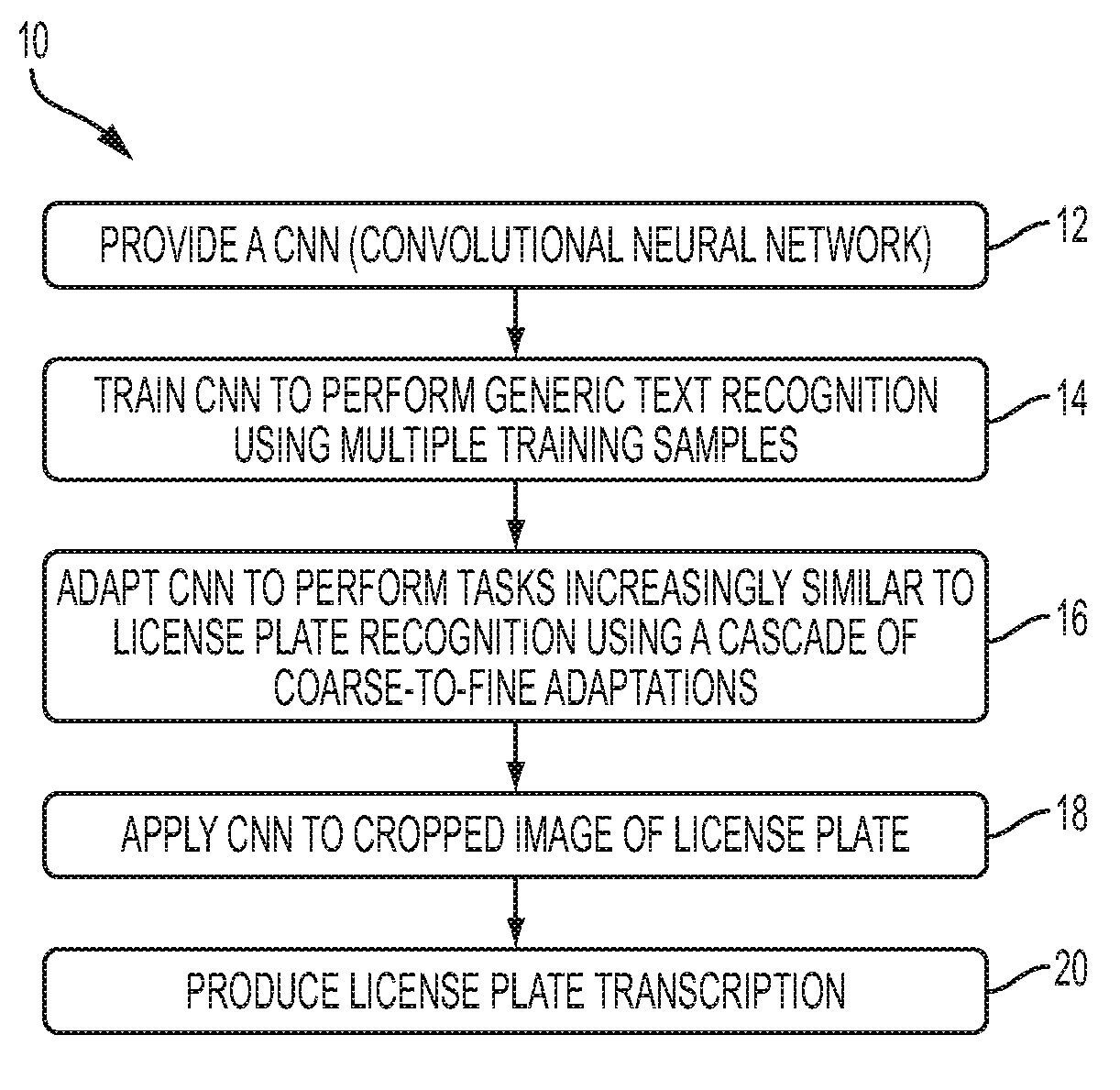
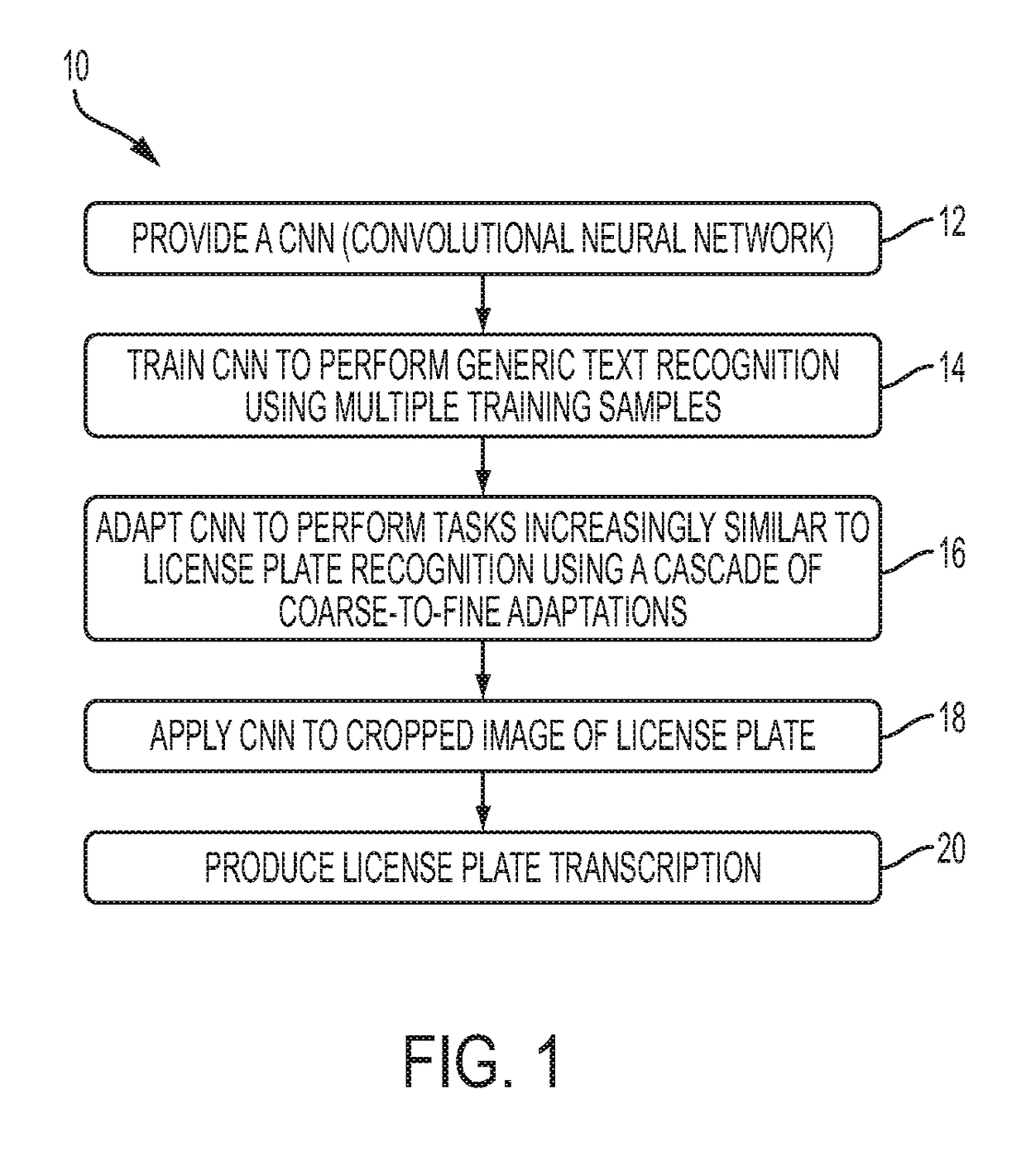
Coarse-to-fine cascade adaptations for license plate recognition with convolutional neural networks
PatentActiveUS20170177965A1
Innovation
- A Convolutional Neural Network (CNN) is trained using a cascade of coarse-to-fine adaptations to perform generic text recognition, which is then fine-tuned for license plate recognition, leveraging synthetic text data and specific target datasets to adapt the model effectively.

Apparatus and method for automatic license plate recognition and traffic surveillance
PatentInactiveUS20150248595A1
Innovation
- A reconfigurable LPR processing apparatus with a small form factor based on Digital Signal Processors (DSPs), offering multiple interfaces and operating modes, including local and remote storage, camera configurations, and independent PC operation, allowing for flexible configuration to match various LPR applications and reducing development time and costs.


Privacy and Data Protection in LPR Systems
Privacy and data protection represent critical considerations in License Plate Recognition (LPR) systems, as these technologies inherently collect and process personally identifiable information. The widespread deployment of LPR systems across urban environments, highways, and commercial facilities has intensified scrutiny regarding how vehicle movement data is captured, stored, and utilized. Modern LPR implementations must navigate complex regulatory frameworks while maintaining operational effectiveness.
The European Union's General Data Protection Regulation (GDPR) has established stringent requirements for LPR data handling, mandating explicit consent mechanisms, data minimization principles, and the right to erasure. Similar regulatory frameworks have emerged globally, including the California Consumer Privacy Act (CCPA) and various national data protection laws. These regulations require organizations to implement privacy-by-design approaches, ensuring that data protection measures are integrated from the initial system architecture phase rather than added as afterthoughts.
Technical privacy preservation methods have evolved significantly to address these challenges. Differential privacy techniques enable statistical analysis of LPR data while preventing individual vehicle identification. Homomorphic encryption allows computation on encrypted license plate data without decryption, maintaining privacy during processing operations. Edge computing architectures minimize data transmission by performing initial processing locally, reducing exposure risks during data transfer.
Data anonymization strategies include temporal and spatial generalization, where precise timestamps and locations are replaced with broader time windows and geographic regions. Pseudonymization techniques replace actual license plate numbers with reversible identifiers, enabling legitimate law enforcement access while protecting routine privacy. Advanced cryptographic methods such as secure multi-party computation allow multiple agencies to collaborate on LPR data analysis without exposing individual datasets.
Storage and retention policies have become increasingly sophisticated, implementing automated data lifecycle management systems that enforce regulatory compliance. These systems automatically delete or anonymize data based on predefined retention schedules, maintain audit trails for compliance verification, and provide granular access controls based on user roles and operational requirements.
Emerging privacy-enhancing technologies include federated learning approaches that enable model training across distributed LPR systems without centralizing sensitive data. Zero-knowledge proof systems allow verification of specific conditions without revealing underlying license plate information, supporting applications such as automated toll collection while preserving privacy.
The European Union's General Data Protection Regulation (GDPR) has established stringent requirements for LPR data handling, mandating explicit consent mechanisms, data minimization principles, and the right to erasure. Similar regulatory frameworks have emerged globally, including the California Consumer Privacy Act (CCPA) and various national data protection laws. These regulations require organizations to implement privacy-by-design approaches, ensuring that data protection measures are integrated from the initial system architecture phase rather than added as afterthoughts.
Technical privacy preservation methods have evolved significantly to address these challenges. Differential privacy techniques enable statistical analysis of LPR data while preventing individual vehicle identification. Homomorphic encryption allows computation on encrypted license plate data without decryption, maintaining privacy during processing operations. Edge computing architectures minimize data transmission by performing initial processing locally, reducing exposure risks during data transfer.
Data anonymization strategies include temporal and spatial generalization, where precise timestamps and locations are replaced with broader time windows and geographic regions. Pseudonymization techniques replace actual license plate numbers with reversible identifiers, enabling legitimate law enforcement access while protecting routine privacy. Advanced cryptographic methods such as secure multi-party computation allow multiple agencies to collaborate on LPR data analysis without exposing individual datasets.
Storage and retention policies have become increasingly sophisticated, implementing automated data lifecycle management systems that enforce regulatory compliance. These systems automatically delete or anonymize data based on predefined retention schedules, maintain audit trails for compliance verification, and provide granular access controls based on user roles and operational requirements.
Emerging privacy-enhancing technologies include federated learning approaches that enable model training across distributed LPR systems without centralizing sensitive data. Zero-knowledge proof systems allow verification of specific conditions without revealing underlying license plate information, supporting applications such as automated toll collection while preserving privacy.
AI Integration in LPR Data Processing
The integration of artificial intelligence into License Plate Recognition (LPR) data processing represents a transformative advancement in automated vehicle identification systems. Modern AI algorithms, particularly deep learning neural networks, have revolutionized the accuracy and efficiency of character recognition, enabling real-time processing of license plate data with unprecedented precision rates exceeding 98% under optimal conditions.
Convolutional Neural Networks (CNNs) serve as the backbone of contemporary LPR systems, automatically learning hierarchical features from raw image data without requiring manual feature engineering. These networks excel at handling variations in lighting conditions, viewing angles, and plate formats across different jurisdictions. Advanced architectures like YOLO (You Only Look Once) and R-CNN variants enable simultaneous plate detection and character recognition in single-pass operations, significantly reducing processing latency.
Machine learning algorithms enhance data interpretation through intelligent preprocessing and post-processing techniques. Adaptive image enhancement algorithms automatically adjust contrast, brightness, and noise reduction parameters based on environmental conditions. Natural Language Processing (NLP) techniques validate recognized characters against regional formatting rules, correcting common optical recognition errors through contextual analysis.
Edge AI deployment has emerged as a critical trend, enabling real-time processing at camera locations without requiring constant cloud connectivity. Specialized AI chips and optimized inference engines allow complex neural networks to operate efficiently on embedded hardware platforms, reducing bandwidth requirements and improving system responsiveness.
Advanced AI systems incorporate temporal analysis capabilities, tracking vehicle movements across multiple camera points to improve recognition accuracy through data fusion. Ensemble learning approaches combine multiple recognition models to achieve superior performance, while active learning systems continuously improve accuracy by incorporating feedback from manual verification processes.
The integration of computer vision APIs and cloud-based AI services provides scalable solutions for large-scale deployments, offering automatic model updates and performance optimization without requiring local infrastructure modifications.
Convolutional Neural Networks (CNNs) serve as the backbone of contemporary LPR systems, automatically learning hierarchical features from raw image data without requiring manual feature engineering. These networks excel at handling variations in lighting conditions, viewing angles, and plate formats across different jurisdictions. Advanced architectures like YOLO (You Only Look Once) and R-CNN variants enable simultaneous plate detection and character recognition in single-pass operations, significantly reducing processing latency.
Machine learning algorithms enhance data interpretation through intelligent preprocessing and post-processing techniques. Adaptive image enhancement algorithms automatically adjust contrast, brightness, and noise reduction parameters based on environmental conditions. Natural Language Processing (NLP) techniques validate recognized characters against regional formatting rules, correcting common optical recognition errors through contextual analysis.
Edge AI deployment has emerged as a critical trend, enabling real-time processing at camera locations without requiring constant cloud connectivity. Specialized AI chips and optimized inference engines allow complex neural networks to operate efficiently on embedded hardware platforms, reducing bandwidth requirements and improving system responsiveness.
Advanced AI systems incorporate temporal analysis capabilities, tracking vehicle movements across multiple camera points to improve recognition accuracy through data fusion. Ensemble learning approaches combine multiple recognition models to achieve superior performance, while active learning systems continuously improve accuracy by incorporating feedback from manual verification processes.
The integration of computer vision APIs and cloud-based AI services provides scalable solutions for large-scale deployments, offering automatic model updates and performance optimization without requiring local infrastructure modifications.
Unlock deeper insights with PatSnap Eureka Quick Research — get a full tech report to explore trends and direct your research. Try now!
Generate Your Research Report Instantly with AI Agent
Supercharge your innovation with PatSnap Eureka AI Agent Platform!