

Developing Underfill with Enhanced Yield Strength For BGA Packages
APR 7, 20269 MIN READ
Generate Your Research Report Instantly with AI Agent
PatSnap Eureka helps you evaluate technical feasibility & market potential.
BGA Underfill Technology Background and Yield Strength Goals
Ball Grid Array (BGA) packaging technology has emerged as a critical solution for high-density electronic assemblies, enabling miniaturization while maintaining robust electrical connections. The evolution of BGA packages began in the 1990s as semiconductor manufacturers sought alternatives to traditional pin-based packages that could accommodate increasing I/O requirements and shrinking form factors.
The fundamental challenge in BGA packaging lies in the thermal and mechanical stress management between the silicon die, substrate, and printed circuit board. These components exhibit different coefficients of thermal expansion, creating significant stress concentrations during temperature cycling that can lead to solder joint fatigue and package failure.
Underfill materials were introduced as a revolutionary solution to address these reliability concerns. These thermoset polymers, typically epoxy-based formulations, are dispensed to flow beneath the BGA package via capillary action, creating a mechanical bridge that redistributes stress away from individual solder joints. The underfill effectively transforms the assembly into a composite structure with enhanced fatigue resistance.
Traditional underfill development has focused primarily on flow characteristics, cure kinetics, and coefficient of thermal expansion matching. However, recent industry trends toward thinner packages, higher I/O densities, and more demanding operating environments have exposed limitations in conventional formulations, particularly regarding mechanical strength properties.
Yield strength has emerged as a critical performance parameter that directly influences the underfill's ability to withstand mechanical deformation without permanent damage. Enhanced yield strength enables the underfill to better absorb and distribute mechanical stresses from board flexing, drop impacts, and thermal cycling while maintaining structural integrity.
Current industry objectives center on developing next-generation underfill formulations that achieve yield strength values exceeding 80-100 MPa, representing a significant improvement over conventional materials that typically exhibit 50-70 MPa. This enhancement must be achieved while preserving essential properties including low viscosity for effective flow, appropriate cure profiles for manufacturing compatibility, and thermal expansion characteristics that minimize stress generation.
The pursuit of enhanced yield strength underfills represents a convergence of materials science advancement and packaging technology evolution, addressing the fundamental need for more robust electronic assemblies in increasingly demanding applications.
The fundamental challenge in BGA packaging lies in the thermal and mechanical stress management between the silicon die, substrate, and printed circuit board. These components exhibit different coefficients of thermal expansion, creating significant stress concentrations during temperature cycling that can lead to solder joint fatigue and package failure.
Underfill materials were introduced as a revolutionary solution to address these reliability concerns. These thermoset polymers, typically epoxy-based formulations, are dispensed to flow beneath the BGA package via capillary action, creating a mechanical bridge that redistributes stress away from individual solder joints. The underfill effectively transforms the assembly into a composite structure with enhanced fatigue resistance.
Traditional underfill development has focused primarily on flow characteristics, cure kinetics, and coefficient of thermal expansion matching. However, recent industry trends toward thinner packages, higher I/O densities, and more demanding operating environments have exposed limitations in conventional formulations, particularly regarding mechanical strength properties.
Yield strength has emerged as a critical performance parameter that directly influences the underfill's ability to withstand mechanical deformation without permanent damage. Enhanced yield strength enables the underfill to better absorb and distribute mechanical stresses from board flexing, drop impacts, and thermal cycling while maintaining structural integrity.
Current industry objectives center on developing next-generation underfill formulations that achieve yield strength values exceeding 80-100 MPa, representing a significant improvement over conventional materials that typically exhibit 50-70 MPa. This enhancement must be achieved while preserving essential properties including low viscosity for effective flow, appropriate cure profiles for manufacturing compatibility, and thermal expansion characteristics that minimize stress generation.
The pursuit of enhanced yield strength underfills represents a convergence of materials science advancement and packaging technology evolution, addressing the fundamental need for more robust electronic assemblies in increasingly demanding applications.
Market Demand for High-Performance BGA Packaging Solutions
The global electronics industry is experiencing unprecedented growth in high-performance computing applications, driving substantial demand for advanced BGA packaging solutions with superior underfill materials. Data centers, artificial intelligence processors, and 5G infrastructure components require increasingly robust packaging technologies that can withstand higher thermal cycling loads and mechanical stresses while maintaining signal integrity.
Automotive electronics represents another critical growth segment, where BGA packages must endure extreme temperature variations, vibration, and long-term reliability requirements. The transition toward electric vehicles and autonomous driving systems has intensified the need for underfill materials with enhanced yield strength to protect critical semiconductor components from mechanical failures during operation.
Consumer electronics manufacturers are pushing for miniaturization while demanding higher performance, creating a market pull for BGA packages with improved structural integrity. Mobile devices, gaming consoles, and wearable technology require underfill solutions that can maintain mechanical stability in increasingly compact form factors without compromising thermal management capabilities.
The telecommunications infrastructure sector is driving demand for high-reliability BGA packaging solutions capable of supporting next-generation network equipment. Base stations, optical networking hardware, and edge computing devices require underfill materials that can withstand prolonged operational stress while maintaining consistent electrical performance over extended service lifespans.
Industrial automation and Internet of Things applications are expanding the addressable market for enhanced BGA packaging solutions. These applications often operate in harsh environmental conditions where traditional underfill materials may experience premature failure, creating opportunities for advanced formulations with superior yield strength characteristics.
Market research indicates that packaging-related failures account for a significant portion of electronic device reliability issues, with underfill delamination and cracking being primary failure modes. This reliability challenge is driving electronics manufacturers to actively seek underfill solutions with enhanced mechanical properties, creating a clear market opportunity for materials with improved yield strength performance.
Automotive electronics represents another critical growth segment, where BGA packages must endure extreme temperature variations, vibration, and long-term reliability requirements. The transition toward electric vehicles and autonomous driving systems has intensified the need for underfill materials with enhanced yield strength to protect critical semiconductor components from mechanical failures during operation.
Consumer electronics manufacturers are pushing for miniaturization while demanding higher performance, creating a market pull for BGA packages with improved structural integrity. Mobile devices, gaming consoles, and wearable technology require underfill solutions that can maintain mechanical stability in increasingly compact form factors without compromising thermal management capabilities.
The telecommunications infrastructure sector is driving demand for high-reliability BGA packaging solutions capable of supporting next-generation network equipment. Base stations, optical networking hardware, and edge computing devices require underfill materials that can withstand prolonged operational stress while maintaining consistent electrical performance over extended service lifespans.
Industrial automation and Internet of Things applications are expanding the addressable market for enhanced BGA packaging solutions. These applications often operate in harsh environmental conditions where traditional underfill materials may experience premature failure, creating opportunities for advanced formulations with superior yield strength characteristics.
Market research indicates that packaging-related failures account for a significant portion of electronic device reliability issues, with underfill delamination and cracking being primary failure modes. This reliability challenge is driving electronics manufacturers to actively seek underfill solutions with enhanced mechanical properties, creating a clear market opportunity for materials with improved yield strength performance.
Current State and Challenges of Underfill Yield Strength
The current state of underfill yield strength in BGA packages presents a complex landscape of technological achievements and persistent challenges. Traditional underfill materials, primarily epoxy-based formulations, have been the industry standard for over two decades, providing adequate mechanical support and thermal cycling reliability for conventional electronic applications. However, these materials typically exhibit yield strengths ranging from 80-120 MPa, which increasingly falls short of modern packaging requirements.
Contemporary underfill formulations face significant limitations in achieving enhanced yield strength without compromising other critical properties. The primary challenge lies in the inherent trade-off between mechanical strength and processability. Higher yield strength materials often require elevated curing temperatures or extended cure times, which can adversely affect component reliability and manufacturing throughput. Additionally, increased mechanical strength frequently correlates with higher modulus values, potentially creating stress concentration points that can lead to interfacial delamination.
Manufacturing scalability represents another substantial challenge in the current landscape. While laboratory-scale formulations have demonstrated yield strengths exceeding 150 MPa, translating these achievements to high-volume production environments remains problematic. Issues include inconsistent material flow characteristics, reduced pot life, and increased sensitivity to processing parameters such as temperature and humidity control.
The geographical distribution of advanced underfill technology development is heavily concentrated in Asia-Pacific regions, particularly Taiwan, South Korea, and Japan, where major semiconductor packaging facilities are located. This concentration has created supply chain dependencies and limited the diversity of technological approaches being pursued globally.
Current technical constraints also include compatibility issues with emerging packaging technologies such as fan-out wafer-level packaging and 3D stacking architectures. Existing high-strength underfill materials often exhibit poor adhesion to advanced substrate materials and struggle to accommodate the complex geometries and thermal expansion mismatches inherent in next-generation package designs.
Furthermore, environmental and regulatory pressures are reshaping the underfill development landscape. The push toward halogen-free and low-outgassing formulations has eliminated many traditional strengthening additives, forcing researchers to explore novel reinforcement mechanisms while maintaining compliance with increasingly stringent environmental standards.
Contemporary underfill formulations face significant limitations in achieving enhanced yield strength without compromising other critical properties. The primary challenge lies in the inherent trade-off between mechanical strength and processability. Higher yield strength materials often require elevated curing temperatures or extended cure times, which can adversely affect component reliability and manufacturing throughput. Additionally, increased mechanical strength frequently correlates with higher modulus values, potentially creating stress concentration points that can lead to interfacial delamination.
Manufacturing scalability represents another substantial challenge in the current landscape. While laboratory-scale formulations have demonstrated yield strengths exceeding 150 MPa, translating these achievements to high-volume production environments remains problematic. Issues include inconsistent material flow characteristics, reduced pot life, and increased sensitivity to processing parameters such as temperature and humidity control.
The geographical distribution of advanced underfill technology development is heavily concentrated in Asia-Pacific regions, particularly Taiwan, South Korea, and Japan, where major semiconductor packaging facilities are located. This concentration has created supply chain dependencies and limited the diversity of technological approaches being pursued globally.
Current technical constraints also include compatibility issues with emerging packaging technologies such as fan-out wafer-level packaging and 3D stacking architectures. Existing high-strength underfill materials often exhibit poor adhesion to advanced substrate materials and struggle to accommodate the complex geometries and thermal expansion mismatches inherent in next-generation package designs.
Furthermore, environmental and regulatory pressures are reshaping the underfill development landscape. The push toward halogen-free and low-outgassing formulations has eliminated many traditional strengthening additives, forcing researchers to explore novel reinforcement mechanisms while maintaining compliance with increasingly stringent environmental standards.
Existing Underfill Formulations for Enhanced Mechanical Properties
01 Underfill composition with controlled filler content for yield strength optimization
Underfill materials can be formulated with specific filler content and particle size distribution to optimize yield strength properties. The composition typically includes epoxy resin systems combined with silica or other inorganic fillers at controlled weight percentages. The filler loading and particle size are carefully selected to achieve desired mechanical properties including yield strength, while maintaining appropriate flow characteristics during the underfill process.- Underfill composition with controlled filler content for yield strength optimization: Underfill materials can be formulated with specific filler content and particle size distribution to optimize yield strength properties. The composition typically includes epoxy resins combined with inorganic fillers at controlled ratios to achieve desired mechanical properties. The filler loading and dispersion directly influence the yield strength and overall mechanical performance of the underfill material.
- Thermal curing process optimization for enhanced yield strength: The curing temperature and time profiles significantly affect the yield strength of underfill materials. Controlled thermal curing processes can optimize the crosslinking density and internal stress distribution, leading to improved yield strength. Multi-stage curing schedules with specific temperature ramps and hold times can be employed to achieve optimal mechanical properties.
- Use of modified epoxy resins and hardeners for improved mechanical properties: Modified epoxy resin systems with specific hardener combinations can enhance the yield strength of underfill materials. The selection of appropriate epoxy backbone structures and curing agents affects the crosslink density and molecular architecture, which directly impacts yield strength. Functional group modifications and molecular weight control contribute to optimized mechanical performance.
- Incorporation of coupling agents and adhesion promoters: Coupling agents and adhesion promoters can be added to underfill formulations to improve interfacial bonding and stress transfer efficiency, thereby enhancing yield strength. These additives facilitate better interaction between organic and inorganic phases, leading to improved mechanical properties. Silane-based and other coupling agents create chemical bridges that strengthen the material structure.
- Advanced filler surface treatment and dispersion techniques: Surface treatment of inorganic fillers and advanced dispersion methods can significantly improve the yield strength of underfill materials. Proper filler surface modification enhances compatibility with the resin matrix and reduces agglomeration, leading to more uniform stress distribution. Optimized mixing and dispersion processes ensure homogeneous filler distribution throughout the underfill material.
02 Thermal curing process parameters affecting underfill yield strength
The yield strength of underfill materials can be enhanced through optimized thermal curing profiles. Curing temperature, time, and heating rate significantly influence the crosslinking density and final mechanical properties. Multi-stage curing processes with controlled temperature ramps help achieve uniform curing and maximize yield strength while minimizing residual stress in the underfill layer.Expand Specific Solutions03 Adhesion promoters and coupling agents for improved yield strength
Incorporation of adhesion promoters and silane coupling agents in underfill formulations enhances interfacial bonding between the underfill material and substrate surfaces. These additives improve load transfer efficiency and contribute to higher yield strength by strengthening the interface regions. The selection of appropriate coupling agents depends on the substrate materials and filler types used in the formulation.Expand Specific Solutions04 Rheological modification for yield strength enhancement
The rheological properties of underfill materials can be tailored through the addition of rheology modifiers and flow control agents to achieve optimal yield strength. Viscosity control during dispensing and flow ensures complete filling of gaps while maintaining structural integrity. The balance between flowability and mechanical strength is achieved through careful selection of resin molecular weight, reactive diluents, and thixotropic agents.Expand Specific Solutions05 Advanced filler systems and hybrid compositions for superior yield strength
Novel underfill formulations utilize hybrid filler systems combining different types of reinforcing materials to achieve superior yield strength. These may include combinations of spherical and irregular shaped fillers, nano-scale and micro-scale particles, or organic-inorganic hybrid fillers. The synergistic effects of multi-component filler systems provide enhanced mechanical properties including improved yield strength, toughness, and thermal stability.Expand Specific Solutions
Key Players in Underfill and BGA Packaging Industry
The underfill technology for BGA packages represents a mature yet evolving market segment within the semiconductor packaging industry, currently experiencing steady growth driven by miniaturization demands and advanced packaging requirements. The market demonstrates significant scale with established players spanning from specialized material suppliers like Namics Corp. and Darbond Technology to major semiconductor manufacturers including Taiwan Semiconductor Manufacturing, Samsung Electronics, and Intel Corp. Technology maturity varies across the competitive landscape, with companies like Sekisui Chemical and specialized adhesive manufacturers such as Dongguan Colltech Bonding Technology leading in advanced formulation development, while foundries like GlobalFoundries and assembly service providers including Siliconware Precision Industries focus on application optimization. The competitive environment reflects a multi-tiered ecosystem where material innovation companies collaborate with semiconductor giants and packaging specialists to address increasingly stringent yield strength requirements for next-generation BGA applications.
Taiwan Semiconductor Manufacturing Co., Ltd.
Technical Solution: TSMC has developed proprietary underfill materials and processes optimized for their advanced BGA packaging technologies, particularly for high-performance computing and mobile applications. Their underfill solutions are engineered to work with their advanced packaging platforms including CoWoS and InFO technologies. The underfill formulations are designed with enhanced yield strength properties to handle the mechanical stresses associated with large die sizes and fine-pitch interconnects. TSMC's underfill technology incorporates low-stress materials with controlled modulus properties that provide adequate support for solder joints while minimizing warpage and stress concentration. Their process optimization includes precise dispensing control, optimized cure profiles, and integration with their assembly line automation to ensure consistent underfill coverage and properties across high-volume production.
Strengths: Leading-edge packaging technology, high-volume manufacturing expertise, integrated process development. Weaknesses: Primarily focused on internal use rather than external material supply, limited availability to other manufacturers.
Intel Corp.
Technical Solution: Intel has developed advanced underfill materials as part of their comprehensive BGA packaging solutions for processors and chipsets. Their underfill technology focuses on materials with enhanced yield strength to support the reliability requirements of high-performance computing applications. Intel's underfill formulations utilize proprietary polymer systems with optimized filler loading to achieve the desired mechanical properties while maintaining thermal performance. The materials are designed to provide excellent adhesion to both silicon die and organic substrates, with controlled stress transfer characteristics that enhance solder joint reliability. Their underfill solutions incorporate low-alpha particle emission fillers for applications requiring high reliability. Intel's development approach includes extensive reliability testing including thermal cycling, mechanical shock, and long-term aging studies to validate the enhanced yield strength properties and ensure long-term package integrity under demanding operating conditions.
Strengths: Extensive reliability testing capabilities, high-performance application focus, strong materials engineering expertise. Weaknesses: Primarily developed for internal use, limited commercial availability, focus mainly on high-end applications.
Core Innovations in High Yield Strength Underfill Materials
Ball grid array underfilling systems
PatentActiveUS20210225748A1
Innovation
- A BGA assembly with underfill channels and a reservoir cavity containing underfill material and gas, where the gas pushes the underfill material through channels during reflow, allowing for efficient and space-saving underfilling without additional manual steps.


Method of underfill air vent for flipchip BGA
PatentInactiveUS20090230566A1
Innovation
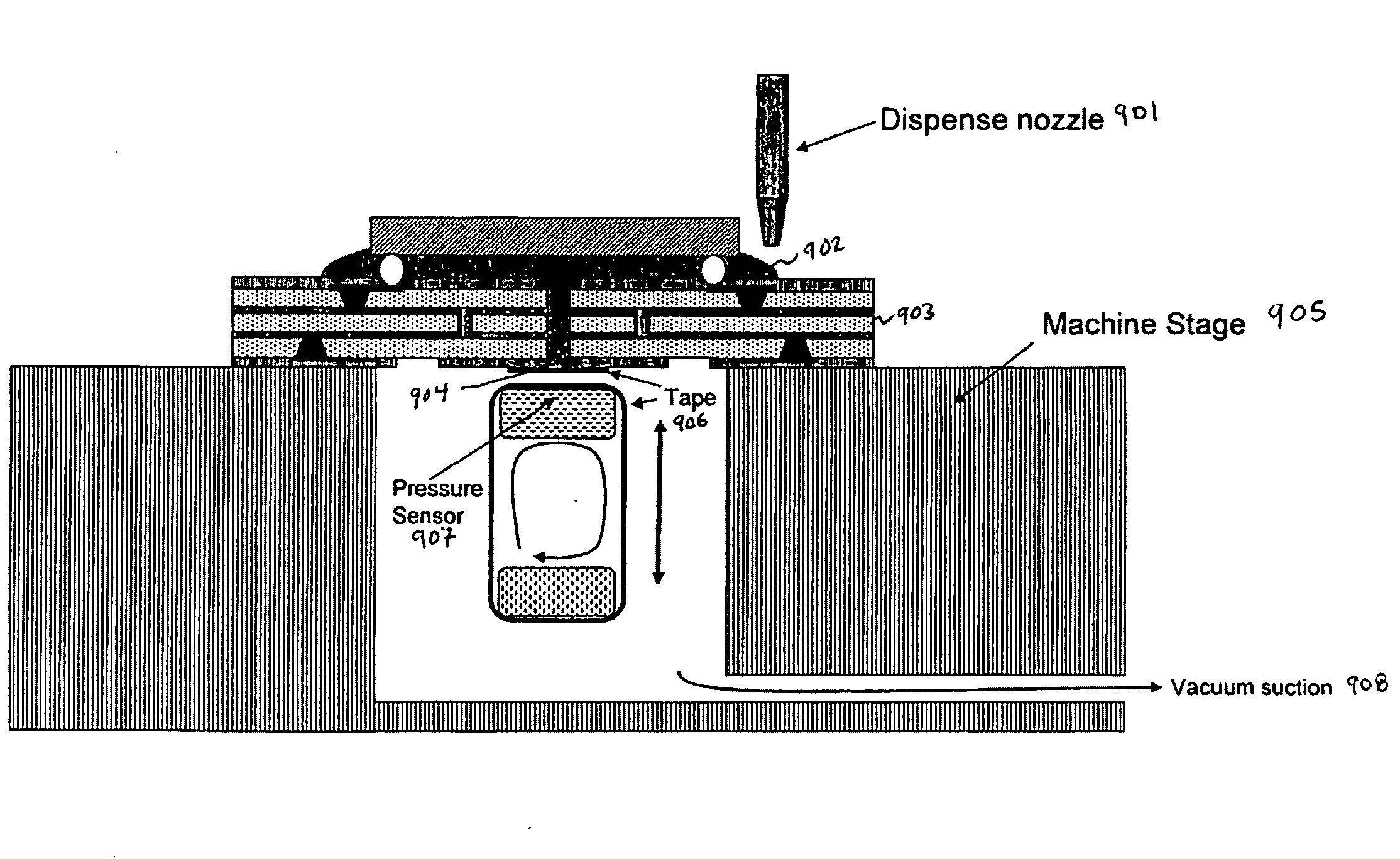
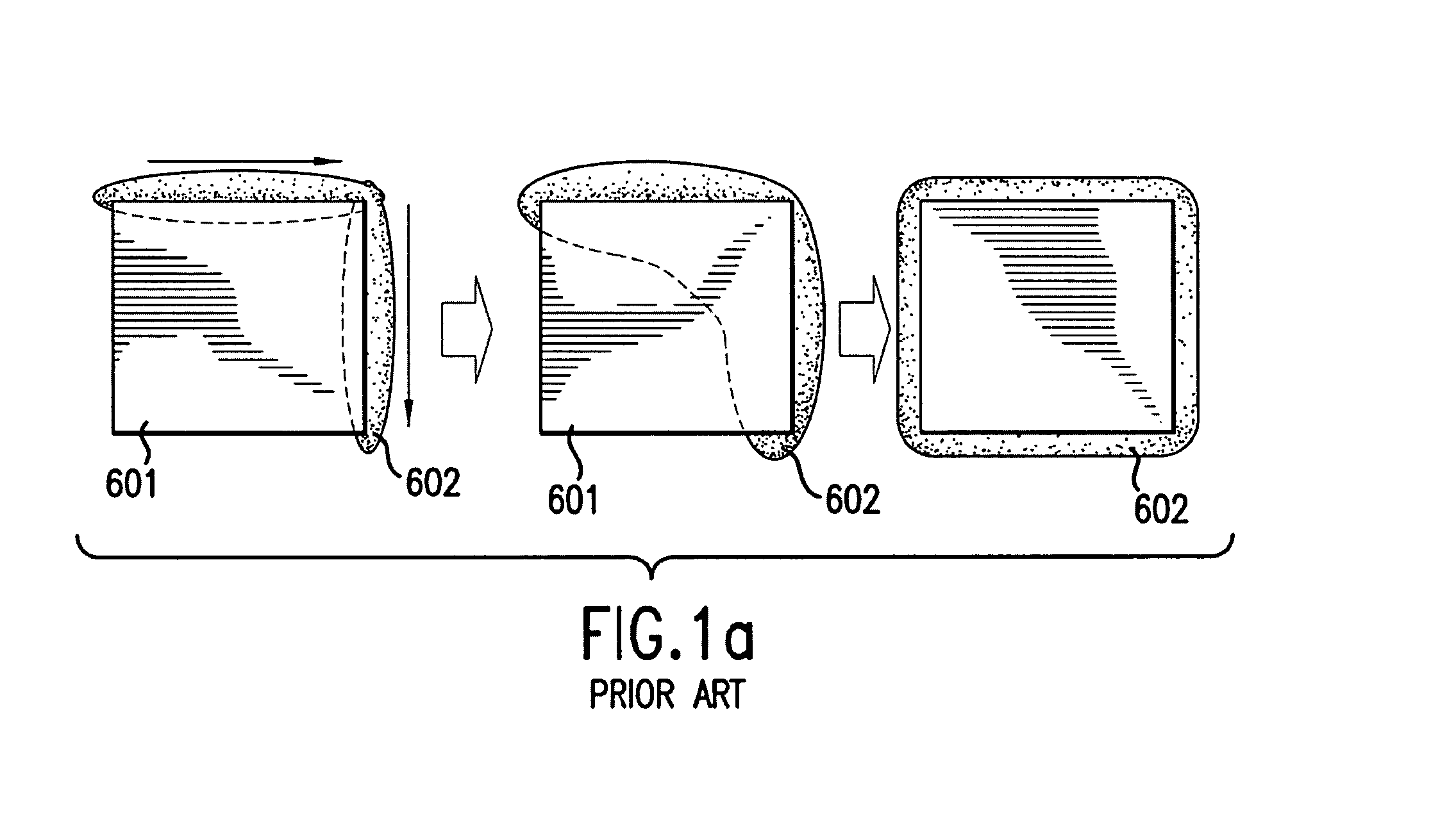
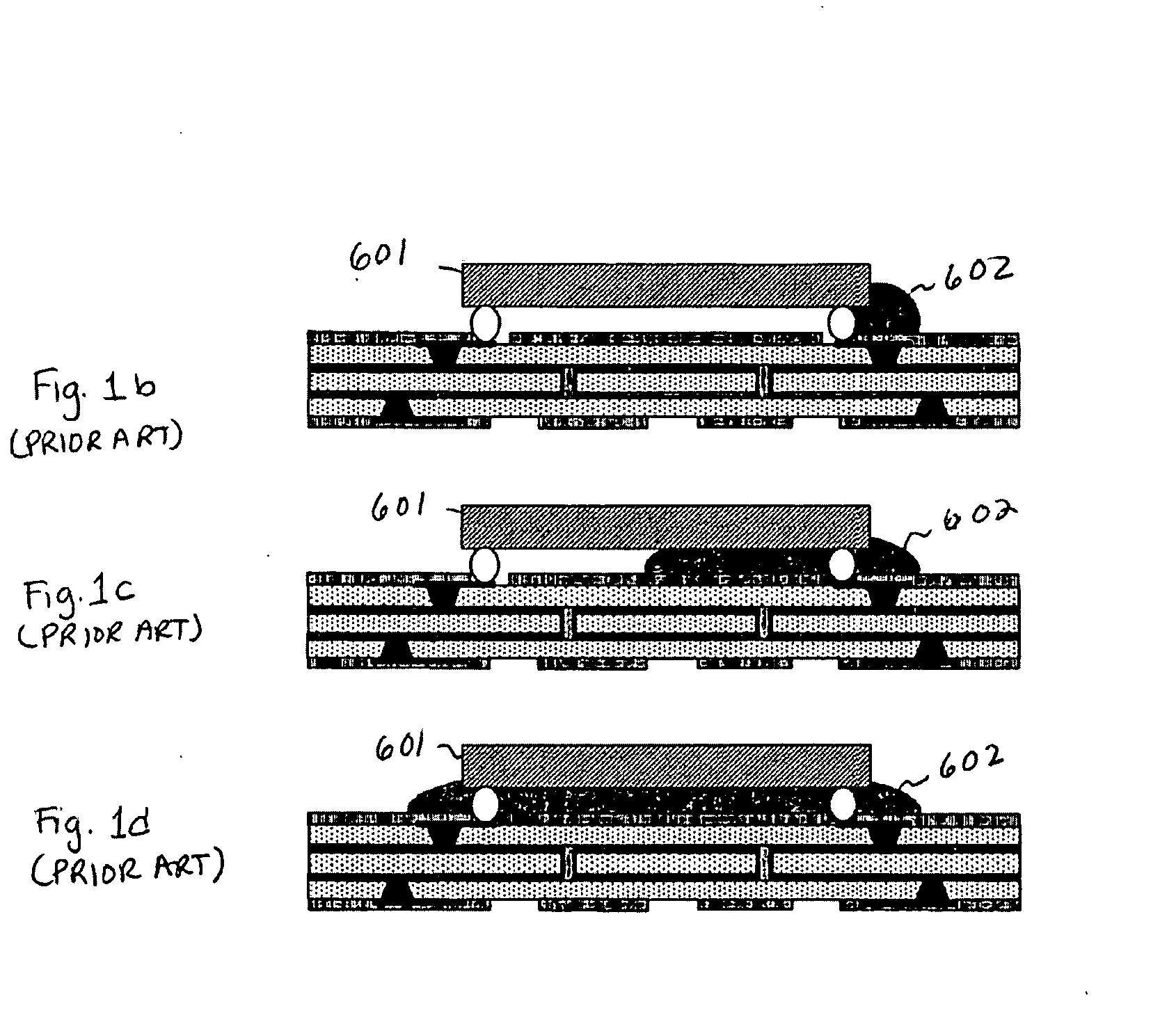
- The use of a through hole in a laminate as an air vent, combined with vacuum suction and a pressure sensor-controlled head mechanism to manage excessive resin, facilitates faster underfilling by eliminating voids and minimizing resin protrusions, with the through hole being drilled or laser-created and uncapped to allow simultaneous resin flow from multiple edges.

Environmental Regulations for Electronic Packaging Materials
The development of underfill materials with enhanced yield strength for BGA packages operates within an increasingly complex regulatory landscape that governs electronic packaging materials. Environmental regulations have become a critical factor influencing material selection, formulation strategies, and manufacturing processes in the semiconductor packaging industry.
The Restriction of Hazardous Substances (RoHS) directive remains the cornerstone regulation affecting underfill development. This directive restricts the use of lead, mercury, cadmium, hexavalent chromium, and specific brominated flame retardants in electronic products. For underfill materials, this particularly impacts the selection of flame retardants and catalysts, requiring manufacturers to develop lead-free compatible formulations that maintain mechanical performance while meeting environmental compliance standards.
Registration, Evaluation, Authorization and Restriction of Chemicals (REACH) regulation in Europe imposes additional constraints on underfill material development. This regulation requires comprehensive safety data for chemical substances exceeding one ton per year production volume. Underfill manufacturers must provide detailed toxicological and environmental impact assessments for epoxy resins, hardeners, and additives used in their formulations, potentially limiting the use of certain high-performance components.
The Waste Electrical and Electronic Equipment (WEEE) directive influences underfill design by promoting recyclability and end-of-life considerations. This regulation encourages the development of thermally reversible underfill materials that facilitate component removal and recycling, though this requirement often conflicts with the need for enhanced yield strength and long-term reliability.
Regional variations in environmental regulations create additional complexity for global underfill suppliers. China's RoHS implementation differs from European standards, while California's Proposition 65 imposes specific labeling requirements for materials containing potentially carcinogenic substances. These variations necessitate region-specific formulations or comprehensive compliance strategies that meet the most stringent requirements across all target markets.
Emerging regulations focusing on per- and polyfluoroalkyl substances (PFAS) present new challenges for underfill development. These "forever chemicals" have been used in some specialty electronic materials for their unique properties, but increasing regulatory scrutiny is driving the need for alternative chemistries that can deliver comparable performance without environmental persistence concerns.
The Restriction of Hazardous Substances (RoHS) directive remains the cornerstone regulation affecting underfill development. This directive restricts the use of lead, mercury, cadmium, hexavalent chromium, and specific brominated flame retardants in electronic products. For underfill materials, this particularly impacts the selection of flame retardants and catalysts, requiring manufacturers to develop lead-free compatible formulations that maintain mechanical performance while meeting environmental compliance standards.
Registration, Evaluation, Authorization and Restriction of Chemicals (REACH) regulation in Europe imposes additional constraints on underfill material development. This regulation requires comprehensive safety data for chemical substances exceeding one ton per year production volume. Underfill manufacturers must provide detailed toxicological and environmental impact assessments for epoxy resins, hardeners, and additives used in their formulations, potentially limiting the use of certain high-performance components.
The Waste Electrical and Electronic Equipment (WEEE) directive influences underfill design by promoting recyclability and end-of-life considerations. This regulation encourages the development of thermally reversible underfill materials that facilitate component removal and recycling, though this requirement often conflicts with the need for enhanced yield strength and long-term reliability.
Regional variations in environmental regulations create additional complexity for global underfill suppliers. China's RoHS implementation differs from European standards, while California's Proposition 65 imposes specific labeling requirements for materials containing potentially carcinogenic substances. These variations necessitate region-specific formulations or comprehensive compliance strategies that meet the most stringent requirements across all target markets.
Emerging regulations focusing on per- and polyfluoroalkyl substances (PFAS) present new challenges for underfill development. These "forever chemicals" have been used in some specialty electronic materials for their unique properties, but increasing regulatory scrutiny is driving the need for alternative chemistries that can deliver comparable performance without environmental persistence concerns.
Reliability Testing Standards for BGA Underfill Applications
The reliability testing standards for BGA underfill applications with enhanced yield strength require comprehensive evaluation protocols that address both mechanical and environmental performance criteria. Current industry standards primarily reference IPC-9701A for underfill characterization, JEDEC JESD22 series for package-level reliability, and ASTM D638 for tensile strength measurements. However, these existing standards inadequately address the specific requirements for high yield strength underfill materials in modern BGA packages.
Mechanical testing protocols must incorporate modified tensile testing procedures that account for the confined geometry of BGA underfill applications. Standard dog-bone specimens used in ASTM D638 do not accurately represent the stress distribution patterns found in actual BGA assemblies. Enhanced testing methodologies should include miniaturized specimen geometries that better simulate the thin-film characteristics of underfill materials, with specimen thicknesses ranging from 50 to 100 micrometers to match real-world applications.
Temperature cycling standards require adaptation for high yield strength underfills, as traditional JEDEC JESD22-A104 protocols may not adequately stress these materials to failure within reasonable test durations. Extended temperature ranges from -65°C to +150°C, combined with accelerated cycling rates, provide more effective screening for enhanced underfill formulations. The integration of real-time strain monitoring during thermal cycling enables precise measurement of yield point variations across temperature extremes.
Humidity and moisture sensitivity testing standards must incorporate modified preconditioning sequences that account for the reduced moisture permeability often associated with high yield strength underfill materials. Standard MSL classifications per JEDEC J-STD-020 require supplementary testing protocols that extend exposure durations and include intermediate moisture content measurements to ensure adequate material characterization.
Standardized test vehicles should incorporate representative BGA package configurations with varying ball counts, pitches, and substrate materials to ensure broad applicability of reliability data. The development of industry-standard test chips with integrated stress sensors would enable more precise correlation between laboratory testing results and field performance data, ultimately improving the predictive accuracy of reliability assessments for enhanced yield strength underfill applications.
Mechanical testing protocols must incorporate modified tensile testing procedures that account for the confined geometry of BGA underfill applications. Standard dog-bone specimens used in ASTM D638 do not accurately represent the stress distribution patterns found in actual BGA assemblies. Enhanced testing methodologies should include miniaturized specimen geometries that better simulate the thin-film characteristics of underfill materials, with specimen thicknesses ranging from 50 to 100 micrometers to match real-world applications.
Temperature cycling standards require adaptation for high yield strength underfills, as traditional JEDEC JESD22-A104 protocols may not adequately stress these materials to failure within reasonable test durations. Extended temperature ranges from -65°C to +150°C, combined with accelerated cycling rates, provide more effective screening for enhanced underfill formulations. The integration of real-time strain monitoring during thermal cycling enables precise measurement of yield point variations across temperature extremes.
Humidity and moisture sensitivity testing standards must incorporate modified preconditioning sequences that account for the reduced moisture permeability often associated with high yield strength underfill materials. Standard MSL classifications per JEDEC J-STD-020 require supplementary testing protocols that extend exposure durations and include intermediate moisture content measurements to ensure adequate material characterization.
Standardized test vehicles should incorporate representative BGA package configurations with varying ball counts, pitches, and substrate materials to ensure broad applicability of reliability data. The development of industry-standard test chips with integrated stress sensors would enable more precise correlation between laboratory testing results and field performance data, ultimately improving the predictive accuracy of reliability assessments for enhanced yield strength underfill applications.
Unlock deeper insights with PatSnap Eureka Quick Research — get a full tech report to explore trends and direct your research. Try now!
Generate Your Research Report Instantly with AI Agent
Supercharge your innovation with PatSnap Eureka AI Agent Platform!