

Reprofiling Underfill Integrations to Deepen Acoustic Reliability
APR 7, 20269 MIN READ
Generate Your Research Report Instantly with AI Agent
PatSnap Eureka helps you evaluate technical feasibility & market potential.
Underfill Reprofiling Technology Background and Objectives
Underfill materials have evolved as critical components in electronic packaging, serving as protective barriers that enhance mechanical stability and reliability of semiconductor devices. Originally developed to address thermal expansion mismatches between different materials in flip-chip assemblies, underfills have expanded their role to encompass acoustic performance optimization. The integration of underfill materials with acoustic considerations represents a convergence of mechanical engineering and acoustic science, driven by the increasing demand for high-performance electronic devices in noise-sensitive applications.
The acoustic reliability of electronic systems has become increasingly important as devices become more compact and operate at higher frequencies. Traditional underfill applications focused primarily on mechanical stress relief and thermal management, but emerging applications require materials that can simultaneously provide structural integrity while minimizing acoustic interference. This dual functionality presents unique challenges in material selection, processing techniques, and integration methodologies.
Reprofiling underfill integrations involves the systematic redesign of material properties, application methods, and structural configurations to optimize acoustic performance without compromising mechanical reliability. This approach recognizes that conventional underfill solutions may inadvertently create acoustic pathways or resonance points that degrade overall system performance. The reprofiling process encompasses material reformulation, geometric optimization, and interface engineering to achieve superior acoustic isolation.
The primary objective of this technology development is to establish a comprehensive framework for underfill integration that prioritizes acoustic reliability while maintaining essential mechanical and thermal properties. This involves developing new material compositions with tailored acoustic impedance characteristics, optimizing dispensing patterns to minimize acoustic coupling, and implementing quality control measures that ensure consistent acoustic performance across production volumes.
Secondary objectives include reducing manufacturing complexity, improving process repeatability, and establishing standardized testing protocols for acoustic validation. The technology aims to bridge the gap between traditional underfill applications and emerging acoustic requirements, creating solutions that are both technically superior and commercially viable for next-generation electronic systems requiring enhanced acoustic reliability.
The acoustic reliability of electronic systems has become increasingly important as devices become more compact and operate at higher frequencies. Traditional underfill applications focused primarily on mechanical stress relief and thermal management, but emerging applications require materials that can simultaneously provide structural integrity while minimizing acoustic interference. This dual functionality presents unique challenges in material selection, processing techniques, and integration methodologies.
Reprofiling underfill integrations involves the systematic redesign of material properties, application methods, and structural configurations to optimize acoustic performance without compromising mechanical reliability. This approach recognizes that conventional underfill solutions may inadvertently create acoustic pathways or resonance points that degrade overall system performance. The reprofiling process encompasses material reformulation, geometric optimization, and interface engineering to achieve superior acoustic isolation.
The primary objective of this technology development is to establish a comprehensive framework for underfill integration that prioritizes acoustic reliability while maintaining essential mechanical and thermal properties. This involves developing new material compositions with tailored acoustic impedance characteristics, optimizing dispensing patterns to minimize acoustic coupling, and implementing quality control measures that ensure consistent acoustic performance across production volumes.
Secondary objectives include reducing manufacturing complexity, improving process repeatability, and establishing standardized testing protocols for acoustic validation. The technology aims to bridge the gap between traditional underfill applications and emerging acoustic requirements, creating solutions that are both technically superior and commercially viable for next-generation electronic systems requiring enhanced acoustic reliability.
Market Demand for Enhanced Acoustic Reliability Solutions
The global electronics industry is experiencing unprecedented demand for enhanced acoustic reliability solutions, driven by the proliferation of consumer electronics, automotive systems, and industrial applications that require superior sound performance. Modern devices increasingly integrate complex acoustic components such as speakers, microphones, and sensors that must maintain consistent performance under various environmental stresses including temperature fluctuations, humidity, and mechanical vibrations.
Consumer electronics manufacturers face mounting pressure to deliver products with exceptional audio quality while maintaining compact form factors. Smartphones, tablets, wearables, and smart home devices require acoustic components that can withstand daily usage patterns without degradation in sound clarity or volume output. The miniaturization trend has intensified the need for robust underfill solutions that protect delicate acoustic assemblies from mechanical stress and environmental factors.
The automotive sector represents a rapidly expanding market segment for acoustic reliability solutions. Advanced driver assistance systems, in-vehicle entertainment platforms, and hands-free communication systems demand acoustic components that function reliably across extreme temperature ranges and vibration conditions. Electric vehicles particularly require enhanced acoustic performance due to reduced engine noise, making interior sound quality and external warning systems critical safety and comfort features.
Industrial and IoT applications are driving additional market demand as smart manufacturing systems, environmental monitoring devices, and communication equipment require long-term acoustic reliability in harsh operating conditions. These applications often involve extended deployment periods where component failure would result in significant maintenance costs and operational disruptions.
Market research indicates strong growth potential for acoustic reliability solutions across multiple industry verticals. The increasing complexity of electronic assemblies and the trend toward higher integration density create opportunities for innovative underfill technologies that can address both mechanical protection and acoustic performance optimization simultaneously.
Quality standards and regulatory requirements continue to evolve, particularly in automotive and medical device applications, creating additional market drivers for enhanced acoustic reliability solutions. Manufacturers must demonstrate consistent performance across product lifecycles, making reliable underfill integration technologies essential for market competitiveness and regulatory compliance.
Consumer electronics manufacturers face mounting pressure to deliver products with exceptional audio quality while maintaining compact form factors. Smartphones, tablets, wearables, and smart home devices require acoustic components that can withstand daily usage patterns without degradation in sound clarity or volume output. The miniaturization trend has intensified the need for robust underfill solutions that protect delicate acoustic assemblies from mechanical stress and environmental factors.
The automotive sector represents a rapidly expanding market segment for acoustic reliability solutions. Advanced driver assistance systems, in-vehicle entertainment platforms, and hands-free communication systems demand acoustic components that function reliably across extreme temperature ranges and vibration conditions. Electric vehicles particularly require enhanced acoustic performance due to reduced engine noise, making interior sound quality and external warning systems critical safety and comfort features.
Industrial and IoT applications are driving additional market demand as smart manufacturing systems, environmental monitoring devices, and communication equipment require long-term acoustic reliability in harsh operating conditions. These applications often involve extended deployment periods where component failure would result in significant maintenance costs and operational disruptions.
Market research indicates strong growth potential for acoustic reliability solutions across multiple industry verticals. The increasing complexity of electronic assemblies and the trend toward higher integration density create opportunities for innovative underfill technologies that can address both mechanical protection and acoustic performance optimization simultaneously.
Quality standards and regulatory requirements continue to evolve, particularly in automotive and medical device applications, creating additional market drivers for enhanced acoustic reliability solutions. Manufacturers must demonstrate consistent performance across product lifecycles, making reliable underfill integration technologies essential for market competitiveness and regulatory compliance.
Current Underfill Integration Challenges and Acoustic Limitations
Current underfill integration processes face significant technical barriers that directly impact acoustic performance in electronic assemblies. Traditional underfill materials exhibit inconsistent flow characteristics during dispensing, leading to void formation and incomplete coverage around critical components. These voids create acoustic impedance mismatches that generate unwanted resonances and degrade signal integrity in high-frequency applications.
The curing profile of conventional underfill systems presents another fundamental challenge. Standard thermal curing cycles often result in non-uniform crosslinking density throughout the material matrix, creating regions with varying acoustic properties. This heterogeneity introduces frequency-dependent attenuation variations that compromise the predictability of acoustic transmission paths within the assembly.
Adhesion interface stability between underfill materials and substrate surfaces remains problematic under dynamic acoustic loading conditions. Delamination at these critical interfaces occurs due to coefficient of thermal expansion mismatches and inadequate interfacial bonding strength. Such failures create air gaps that severely disrupt acoustic coupling and introduce parasitic resonances that interfere with intended signal propagation.
Material property limitations of existing underfill formulations constrain their acoustic performance capabilities. Current polymer matrices lack the necessary viscoelastic characteristics to provide optimal acoustic damping across broad frequency ranges. The acoustic impedance values of standard underfill materials often create significant mismatches with adjacent components, resulting in reflection losses and reduced transmission efficiency.
Process-induced stress concentrations during underfill integration generate microcrack networks that propagate over time under acoustic excitation. These microscopic defects act as scattering centers that attenuate desired acoustic signals while simultaneously creating noise through nonlinear acoustic interactions. The cumulative effect significantly reduces the long-term reliability of acoustic transmission systems.
Temperature cycling effects exacerbate these integration challenges by inducing cyclic stress patterns that accelerate interfacial degradation. The resulting changes in acoustic properties over operational lifetime create drift in system performance that is difficult to predict and compensate for in design phases.
The curing profile of conventional underfill systems presents another fundamental challenge. Standard thermal curing cycles often result in non-uniform crosslinking density throughout the material matrix, creating regions with varying acoustic properties. This heterogeneity introduces frequency-dependent attenuation variations that compromise the predictability of acoustic transmission paths within the assembly.
Adhesion interface stability between underfill materials and substrate surfaces remains problematic under dynamic acoustic loading conditions. Delamination at these critical interfaces occurs due to coefficient of thermal expansion mismatches and inadequate interfacial bonding strength. Such failures create air gaps that severely disrupt acoustic coupling and introduce parasitic resonances that interfere with intended signal propagation.
Material property limitations of existing underfill formulations constrain their acoustic performance capabilities. Current polymer matrices lack the necessary viscoelastic characteristics to provide optimal acoustic damping across broad frequency ranges. The acoustic impedance values of standard underfill materials often create significant mismatches with adjacent components, resulting in reflection losses and reduced transmission efficiency.
Process-induced stress concentrations during underfill integration generate microcrack networks that propagate over time under acoustic excitation. These microscopic defects act as scattering centers that attenuate desired acoustic signals while simultaneously creating noise through nonlinear acoustic interactions. The cumulative effect significantly reduces the long-term reliability of acoustic transmission systems.
Temperature cycling effects exacerbate these integration challenges by inducing cyclic stress patterns that accelerate interfacial degradation. The resulting changes in acoustic properties over operational lifetime create drift in system performance that is difficult to predict and compensate for in design phases.
Existing Underfill Reprofiling Solutions and Methods
01 Underfill material composition and properties for acoustic performance
The formulation of underfill materials with specific rheological properties, filler content, and curing characteristics can significantly impact acoustic reliability. Materials with controlled viscosity, appropriate filler particle size distribution, and optimized thermal expansion coefficients help minimize acoustic interference and maintain signal integrity. The selection of epoxy resins, silicone-based materials, or hybrid compositions affects both mechanical bonding and acoustic wave propagation characteristics.- Underfill material composition and properties for acoustic devices: Specific underfill materials with controlled viscosity, thermal expansion coefficients, and elastic modulus are formulated to ensure acoustic reliability in semiconductor packages. The material composition is optimized to minimize stress on acoustic components while maintaining proper adhesion and flow characteristics during the underfill process. These materials are designed to prevent acoustic performance degradation by controlling material properties that affect sound wave transmission.
- Underfill process control for acoustic component protection: Manufacturing processes are developed to control underfill dispensing patterns, curing temperatures, and flow rates to protect acoustic elements such as MEMS microphones and speakers. The process parameters are optimized to prevent underfill material from entering acoustic cavities or blocking sound ports. Specialized dispensing techniques ensure uniform coverage while maintaining acoustic pathways and preventing performance degradation.
- Acoustic cavity design and underfill integration: Package structures incorporate dedicated acoustic cavities and channels that remain free from underfill material during the integration process. Design features include barriers, dams, and selective underfill zones that protect acoustic regions while providing mechanical support to other package areas. The cavity architecture ensures sound transmission paths remain unobstructed while achieving reliable chip-to-substrate connections.
- Stress management in underfilled acoustic packages: Techniques are employed to manage mechanical stress in packages containing acoustic components through underfill material selection and structural design modifications. Stress relief features and compliant layers are integrated to prevent stress-induced changes in acoustic performance. The approach addresses thermal cycling reliability and drop test performance while maintaining acoustic specifications throughout the product lifetime.
- Testing and quality control methods for acoustic reliability: Inspection and testing methodologies are developed to verify acoustic performance after underfill integration, including frequency response measurements, sensitivity testing, and acoustic impedance characterization. Non-destructive evaluation techniques detect underfill defects that could impact acoustic function. Quality control procedures ensure consistent acoustic performance across production volumes while maintaining high manufacturing yields.
02 Underfill process integration methods for acoustic devices
Various integration techniques including capillary underfill, no-flow underfill, and molded underfill processes affect the acoustic performance of semiconductor packages. The dispensing patterns, curing profiles, and void control during underfill application are critical for maintaining acoustic reliability. Process parameters such as temperature ramping, pressure control, and flow rate optimization ensure uniform material distribution without compromising acoustic transducer functionality.Expand Specific Solutions03 Void management and defect control in underfill for acoustic applications
The presence of voids and defects in underfill materials can severely impact acoustic signal transmission and device reliability. Advanced techniques for void detection, prevention, and elimination include vacuum-assisted dispensing, optimized flow paths, and real-time monitoring systems. Material formulations with improved wetting characteristics and degassing properties help achieve void-free underfill layers that maintain consistent acoustic impedance.Expand Specific Solutions04 Thermal and mechanical stress management in acoustic package underfill
Managing thermal cycling and mechanical stress in underfilled acoustic packages is essential for long-term reliability. Underfill materials with matched coefficient of thermal expansion, appropriate modulus, and stress-relief properties prevent delamination and maintain acoustic coupling. Design considerations include fillet geometry, material thickness control, and interface adhesion optimization to withstand environmental stresses while preserving acoustic performance.Expand Specific Solutions05 Acoustic impedance matching and signal integrity in underfilled structures
Achieving proper acoustic impedance matching between underfill materials, die, substrate, and acoustic transducers is crucial for signal integrity. Material selection based on acoustic properties such as sound velocity, attenuation coefficient, and impedance characteristics ensures minimal signal loss. Multilayer structures with graded acoustic properties and optimized interface designs enhance transmission efficiency and reduce reflections in acoustic sensing applications.Expand Specific Solutions
Key Players in Underfill and Acoustic Reliability Industry
The reprofiling underfill integrations for acoustic reliability represents an emerging technology segment within the broader acoustic components industry, currently in its early development stage with significant growth potential. The market demonstrates substantial scale, driven by increasing demand for enhanced audio performance in consumer electronics, automotive, and industrial applications. Technology maturity varies significantly across key players, with established acoustic specialists like GoerTek Inc., AAC Technologies, and Murata Manufacturing leading in miniaturized component integration, while technology giants Intel, Apple, and IBM contribute advanced materials science and system-level integration capabilities. Industrial leaders such as Bosch and ZF Friedrichshafen bring automotive-grade reliability expertise, complemented by materials specialists like Momentive Performance Materials and Saint-Gobain Isover providing foundational underfill technologies. This diverse ecosystem indicates a maturing competitive landscape where acoustic performance, manufacturing scalability, and reliability convergence are driving innovation toward more sophisticated integration solutions.
GoerTek Inc.
Technical Solution: GoerTek has developed advanced underfill integration technologies specifically for acoustic devices, focusing on material composition optimization and curing process control. Their approach involves using modified epoxy-based underfill materials with enhanced flow characteristics and thermal stability. The company has implemented precision dispensing systems that ensure uniform underfill distribution around acoustic components, particularly in MEMS microphones and speakers. Their reprofiling techniques include controlled temperature ramping during curing processes and specialized surface treatment methods to improve adhesion between underfill materials and acoustic substrates. This comprehensive approach addresses delamination issues and enhances long-term acoustic reliability in consumer electronics applications.
Strengths: Strong expertise in acoustic component manufacturing and established supply chain relationships with major electronics manufacturers. Weaknesses: Limited research publications on fundamental underfill chemistry compared to specialized materials companies.
AAC Microtech (Changzhou) Co., Ltd.
Technical Solution: AAC Microtech has developed proprietary underfill formulations tailored for miniaturized acoustic components, emphasizing low-stress materials that minimize impact on acoustic performance. Their technology focuses on capillary underfill processes with controlled viscosity profiles that ensure complete filling without air entrapment. The company has implemented advanced curing schedules that optimize cross-linking density while maintaining acoustic transparency. Their reprofiling approach includes post-cure annealing processes and stress-relief techniques that enhance the mechanical integrity of underfill joints. Special attention is given to coefficient of thermal expansion matching between underfill materials and acoustic substrates to prevent thermomechanical stress-induced failures during temperature cycling.
Strengths: Specialized focus on acoustic applications with deep understanding of acoustic-mechanical interactions. Weaknesses: Smaller scale operations compared to major semiconductor packaging companies may limit R&D resources.
Core Patents in Acoustic-Enhanced Underfill Technologies
Underfill for maximum flip chip package reliability
PatentInactiveUS6956165B1
Innovation
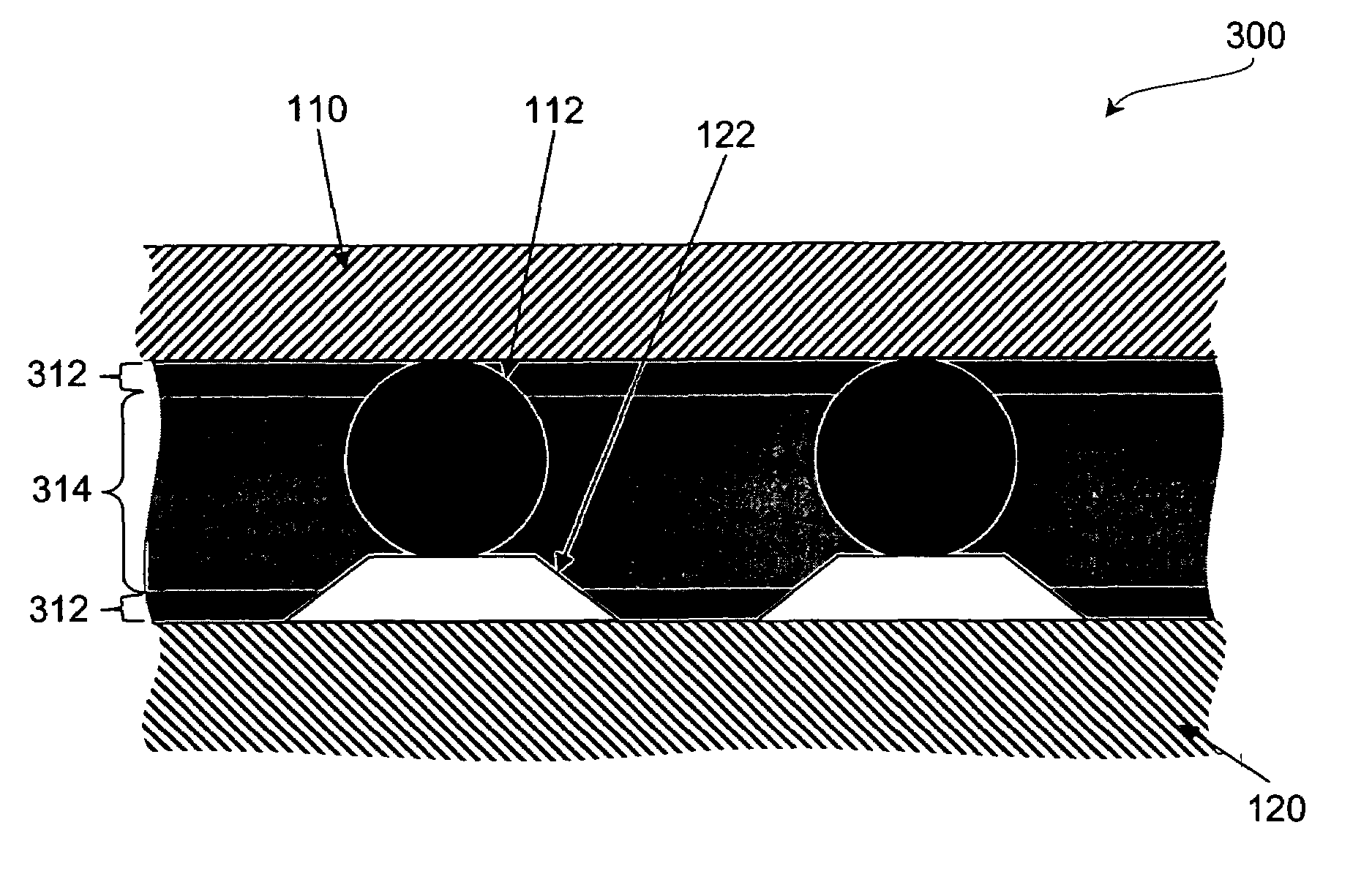
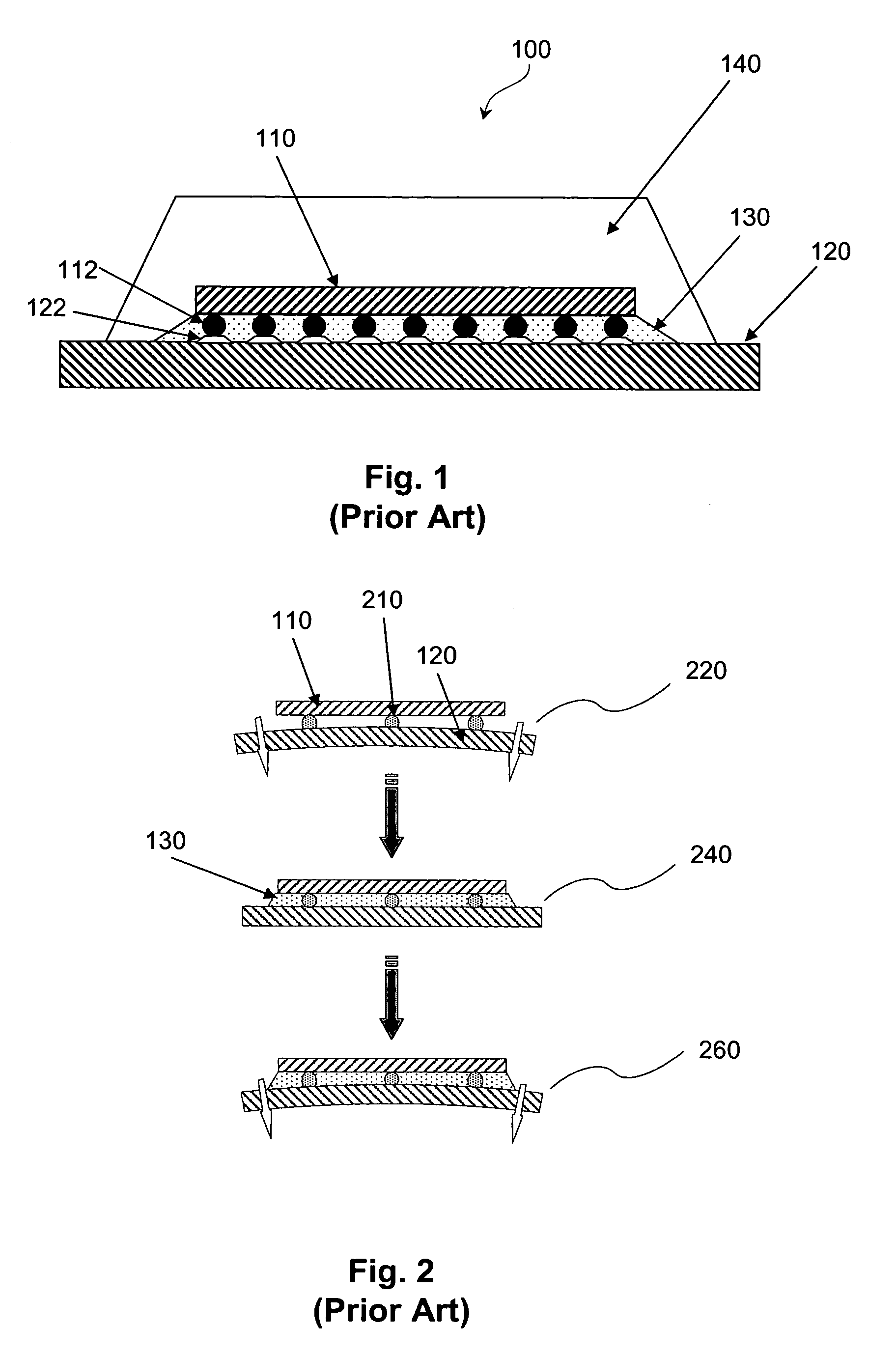
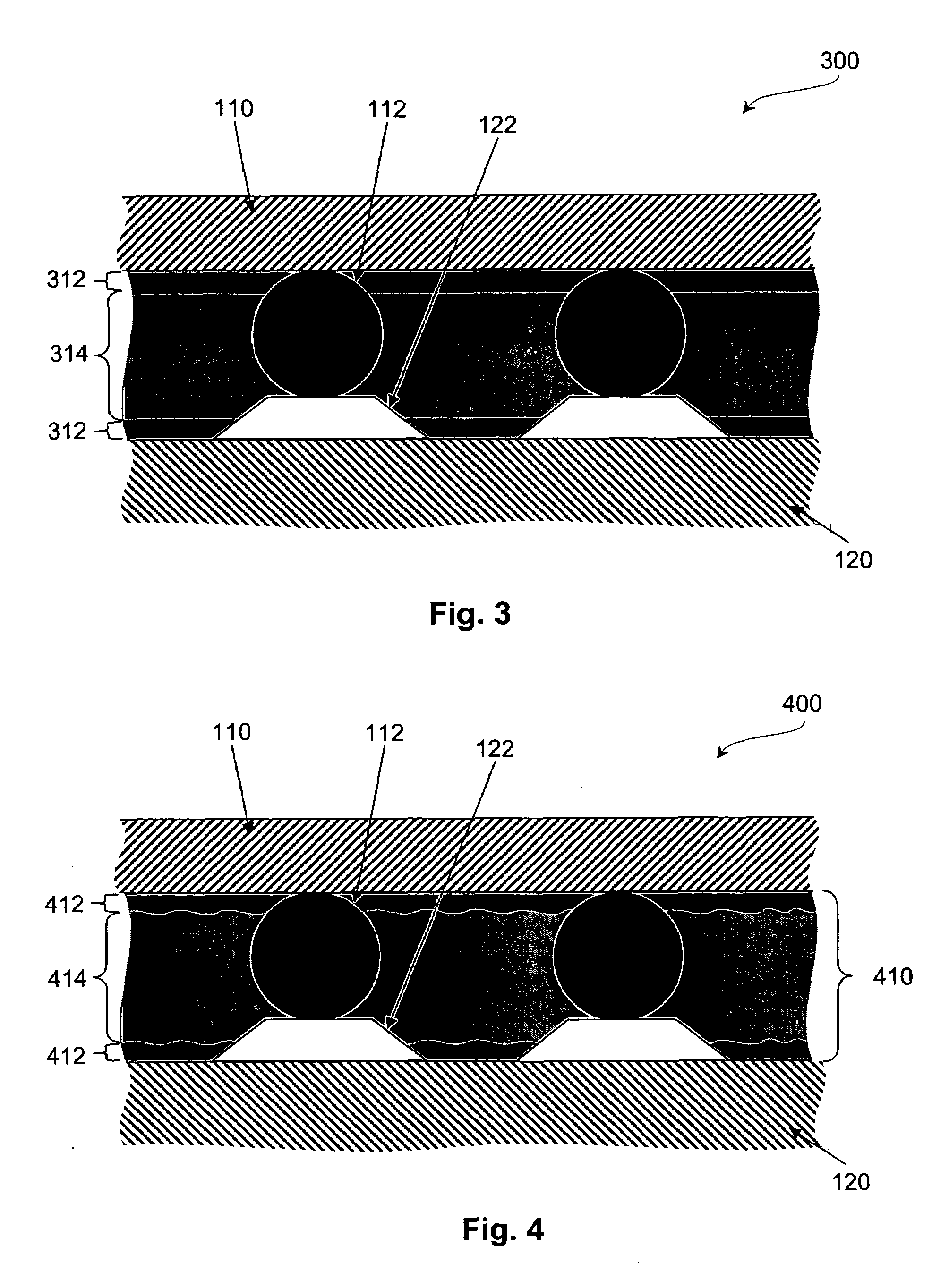
- An underfill material with multiple regions of different stiffness, where the underfill shell contacting the chip and substrate is stiffer than the bulk, providing support and minimizing warpage and shear, while the resilient bulk accommodates strain with lower Young's modulus.
Flexible underfill compositions for enhanced reliability
PatentInactiveUS9458283B2
Innovation
- Formulating underfill compositions using alternative epoxy structures such as silicone and glycol epoxies, combined with bisphenol and multifunctional epoxies, to enhance ductility and toughness, and reduce volatile outgassing, including the use of additives like SiO2 fillers.


Manufacturing Standards for Acoustic Underfill Applications
The establishment of comprehensive manufacturing standards for acoustic underfill applications represents a critical foundation for ensuring consistent performance and reliability in electronic assemblies. These standards must address the unique challenges posed by acoustic devices, where underfill materials directly impact sound transmission, vibration damping, and overall acoustic fidelity. Current industry practices often rely on general underfill specifications that inadequately address the specific requirements of acoustic components.
Manufacturing standards for acoustic underfill applications must encompass material property specifications that define acoustic transmission characteristics, including sound velocity, acoustic impedance, and damping coefficients. These parameters directly influence the acoustic performance of devices such as MEMS microphones, speakers, and ultrasonic sensors. The standards should establish minimum and maximum thresholds for these properties to ensure optimal acoustic coupling while maintaining mechanical protection.
Process control parameters constitute another essential component of these manufacturing standards. Temperature profiles during underfill dispensing and curing must be precisely controlled to prevent acoustic property degradation. The standards should specify ramp rates, peak temperatures, and dwell times that preserve the acoustic integrity of sensitive components. Additionally, dispensing pressure, flow rates, and void content limitations must be defined to ensure consistent acoustic transmission paths.
Quality assurance protocols within these standards should incorporate acoustic-specific testing methodologies. Traditional underfill testing focuses primarily on mechanical and thermal properties, but acoustic applications require frequency response analysis, acoustic coupling measurements, and vibration transmission testing. These protocols must establish acceptance criteria for acoustic performance metrics alongside conventional reliability parameters.
Environmental conditioning requirements represent a unique aspect of acoustic underfill standards. Acoustic devices often operate in varying humidity and temperature conditions that can affect underfill properties and, consequently, acoustic performance. The standards must define accelerated aging protocols that simulate real-world acoustic operating conditions, including exposure to acoustic stress cycles and environmental fluctuations.
Traceability and documentation requirements should ensure that acoustic underfill processes can be monitored and controlled throughout the manufacturing lifecycle. This includes batch tracking of acoustic-grade underfill materials, process parameter logging, and acoustic performance validation records. Such comprehensive documentation enables rapid identification and resolution of acoustic performance issues while supporting continuous improvement initiatives in acoustic underfill manufacturing processes.
Manufacturing standards for acoustic underfill applications must encompass material property specifications that define acoustic transmission characteristics, including sound velocity, acoustic impedance, and damping coefficients. These parameters directly influence the acoustic performance of devices such as MEMS microphones, speakers, and ultrasonic sensors. The standards should establish minimum and maximum thresholds for these properties to ensure optimal acoustic coupling while maintaining mechanical protection.
Process control parameters constitute another essential component of these manufacturing standards. Temperature profiles during underfill dispensing and curing must be precisely controlled to prevent acoustic property degradation. The standards should specify ramp rates, peak temperatures, and dwell times that preserve the acoustic integrity of sensitive components. Additionally, dispensing pressure, flow rates, and void content limitations must be defined to ensure consistent acoustic transmission paths.
Quality assurance protocols within these standards should incorporate acoustic-specific testing methodologies. Traditional underfill testing focuses primarily on mechanical and thermal properties, but acoustic applications require frequency response analysis, acoustic coupling measurements, and vibration transmission testing. These protocols must establish acceptance criteria for acoustic performance metrics alongside conventional reliability parameters.
Environmental conditioning requirements represent a unique aspect of acoustic underfill standards. Acoustic devices often operate in varying humidity and temperature conditions that can affect underfill properties and, consequently, acoustic performance. The standards must define accelerated aging protocols that simulate real-world acoustic operating conditions, including exposure to acoustic stress cycles and environmental fluctuations.
Traceability and documentation requirements should ensure that acoustic underfill processes can be monitored and controlled throughout the manufacturing lifecycle. This includes batch tracking of acoustic-grade underfill materials, process parameter logging, and acoustic performance validation records. Such comprehensive documentation enables rapid identification and resolution of acoustic performance issues while supporting continuous improvement initiatives in acoustic underfill manufacturing processes.
Reliability Testing Protocols for Reprofiled Underfill Systems
Establishing comprehensive reliability testing protocols for reprofiled underfill systems requires a systematic approach that addresses the unique challenges posed by acoustic performance requirements. The testing framework must encompass both traditional reliability metrics and specialized acoustic validation procedures to ensure long-term performance stability under various operational conditions.
The foundation of reliability testing begins with accelerated aging protocols that simulate extended operational lifespans. Temperature cycling tests should span from -40°C to 125°C with controlled ramp rates to evaluate thermal expansion coefficient mismatches between reprofiled underfill materials and substrate components. Humidity exposure testing at 85°C/85% relative humidity for extended periods validates moisture absorption characteristics and their impact on acoustic transmission properties.
Mechanical stress testing protocols must incorporate vibration analysis across frequency ranges relevant to acoustic applications. Sine sweep testing from 20 Hz to 20 kHz with varying acceleration levels helps identify resonant frequencies that could compromise acoustic fidelity. Additionally, shock testing protocols should evaluate impact resistance while monitoring changes in acoustic coupling efficiency between underfill and adjacent components.
Acoustic-specific reliability validation requires specialized measurement protocols that track key performance indicators over time. Impedance spectroscopy testing monitors electrical characteristics that correlate with acoustic transmission quality, while ultrasonic scanning techniques detect internal void formation or delamination that could affect sound propagation pathways.
Environmental stress screening protocols should combine multiple stressors simultaneously to replicate real-world conditions. Thermal shock combined with acoustic loading provides insights into performance degradation under operational stress combinations. Salt spray testing evaluates corrosion resistance in harsh environments where acoustic devices may be deployed.
Statistical analysis frameworks must incorporate Weibull distribution modeling to predict failure rates and establish confidence intervals for reliability projections. Accelerated life testing data requires careful extrapolation to normal operating conditions, with particular attention to activation energy calculations for temperature-dependent failure mechanisms specific to reprofiled underfill systems.
The foundation of reliability testing begins with accelerated aging protocols that simulate extended operational lifespans. Temperature cycling tests should span from -40°C to 125°C with controlled ramp rates to evaluate thermal expansion coefficient mismatches between reprofiled underfill materials and substrate components. Humidity exposure testing at 85°C/85% relative humidity for extended periods validates moisture absorption characteristics and their impact on acoustic transmission properties.
Mechanical stress testing protocols must incorporate vibration analysis across frequency ranges relevant to acoustic applications. Sine sweep testing from 20 Hz to 20 kHz with varying acceleration levels helps identify resonant frequencies that could compromise acoustic fidelity. Additionally, shock testing protocols should evaluate impact resistance while monitoring changes in acoustic coupling efficiency between underfill and adjacent components.
Acoustic-specific reliability validation requires specialized measurement protocols that track key performance indicators over time. Impedance spectroscopy testing monitors electrical characteristics that correlate with acoustic transmission quality, while ultrasonic scanning techniques detect internal void formation or delamination that could affect sound propagation pathways.
Environmental stress screening protocols should combine multiple stressors simultaneously to replicate real-world conditions. Thermal shock combined with acoustic loading provides insights into performance degradation under operational stress combinations. Salt spray testing evaluates corrosion resistance in harsh environments where acoustic devices may be deployed.
Statistical analysis frameworks must incorporate Weibull distribution modeling to predict failure rates and establish confidence intervals for reliability projections. Accelerated life testing data requires careful extrapolation to normal operating conditions, with particular attention to activation energy calculations for temperature-dependent failure mechanisms specific to reprofiled underfill systems.
Unlock deeper insights with PatSnap Eureka Quick Research — get a full tech report to explore trends and direct your research. Try now!
Generate Your Research Report Instantly with AI Agent
Supercharge your innovation with PatSnap Eureka AI Agent Platform!