

Digital Technology Vs VR: Immersive Experience Levels
FEB 25, 20268 MIN READ
Generate Your Research Report Instantly with AI Agent
Patsnap Eureka helps you evaluate technical feasibility & market potential.
Digital vs VR Immersion Technology Background and Goals
The evolution of immersive technologies has fundamentally transformed how humans interact with digital environments, creating a spectrum of engagement levels that range from traditional flat-screen interfaces to fully immersive virtual reality experiences. This technological progression represents a paradigm shift from passive content consumption to active participation within digitally constructed worlds, where users can manipulate, explore, and experience content in unprecedented ways.
Digital technology encompasses a broad range of interactive media solutions, including augmented reality overlays, mixed reality applications, 360-degree video content, and advanced display technologies. These solutions provide varying degrees of immersion through enhanced visual fidelity, spatial audio, haptic feedback, and gesture recognition systems. The immersive experience levels achieved through digital technology typically focus on enhancing existing reality rather than replacing it entirely, creating layered experiences that blend physical and digital elements.
Virtual reality technology, in contrast, aims to create completely synthetic environments that fully replace the user's sensory perception of the physical world. Through head-mounted displays, motion tracking systems, and specialized input devices, VR technology achieves immersion by isolating users from external stimuli and providing comprehensive sensory substitution. This approach enables unprecedented levels of presence and embodiment within virtual spaces, allowing users to feel genuinely transported to alternate realities.
The primary objective of comparing these technological approaches centers on understanding how different immersion methodologies impact user engagement, learning outcomes, entertainment value, and practical applications across various industries. This analysis seeks to establish measurable criteria for evaluating immersive experience quality, including presence metrics, user comfort levels, content accessibility, and long-term adoption potential.
Current research focuses on identifying optimal immersion levels for specific use cases, recognizing that maximum immersion may not always correlate with optimal user experience or practical utility. The goal extends beyond technical capability assessment to encompass user experience design principles, content creation workflows, and scalable deployment strategies that can effectively serve diverse market segments and application domains.
Digital technology encompasses a broad range of interactive media solutions, including augmented reality overlays, mixed reality applications, 360-degree video content, and advanced display technologies. These solutions provide varying degrees of immersion through enhanced visual fidelity, spatial audio, haptic feedback, and gesture recognition systems. The immersive experience levels achieved through digital technology typically focus on enhancing existing reality rather than replacing it entirely, creating layered experiences that blend physical and digital elements.
Virtual reality technology, in contrast, aims to create completely synthetic environments that fully replace the user's sensory perception of the physical world. Through head-mounted displays, motion tracking systems, and specialized input devices, VR technology achieves immersion by isolating users from external stimuli and providing comprehensive sensory substitution. This approach enables unprecedented levels of presence and embodiment within virtual spaces, allowing users to feel genuinely transported to alternate realities.
The primary objective of comparing these technological approaches centers on understanding how different immersion methodologies impact user engagement, learning outcomes, entertainment value, and practical applications across various industries. This analysis seeks to establish measurable criteria for evaluating immersive experience quality, including presence metrics, user comfort levels, content accessibility, and long-term adoption potential.
Current research focuses on identifying optimal immersion levels for specific use cases, recognizing that maximum immersion may not always correlate with optimal user experience or practical utility. The goal extends beyond technical capability assessment to encompass user experience design principles, content creation workflows, and scalable deployment strategies that can effectively serve diverse market segments and application domains.
Market Demand for Enhanced Immersive Digital Experiences
The global market for enhanced immersive digital experiences is experiencing unprecedented growth driven by evolving consumer expectations and technological convergence. Traditional digital platforms are increasingly challenged by user demands for more engaging, interactive content that transcends conventional screen-based interactions. This shift represents a fundamental transformation in how consumers perceive and interact with digital media across entertainment, education, retail, and professional training sectors.
Consumer behavior analysis reveals a growing preference for experiential content over passive consumption. Users now expect personalized, interactive experiences that respond to their actions and preferences in real-time. This demand is particularly pronounced among younger demographics who have grown up with interactive technologies and expect seamless integration between physical and digital environments. The rise of social media platforms incorporating augmented reality features demonstrates this trend toward more immersive social interactions.
Enterprise adoption of immersive technologies is accelerating across multiple industries. Healthcare organizations are implementing VR solutions for surgical training and patient therapy, while manufacturing companies utilize immersive technologies for equipment maintenance training and design visualization. Educational institutions are integrating these technologies to create engaging learning environments that improve knowledge retention and student engagement rates.
The retail sector represents a significant growth opportunity, with consumers increasingly expecting virtual try-on experiences, interactive product demonstrations, and immersive shopping environments. E-commerce platforms are investing heavily in technologies that bridge the gap between online and physical retail experiences, addressing the tactile limitations of traditional digital commerce.
Geographic market distribution shows strong demand concentration in developed economies, particularly North America, Europe, and Asia-Pacific regions. However, emerging markets are demonstrating rapid adoption rates as infrastructure improvements and device accessibility increase. Mobile-first markets are driving innovation in lightweight, accessible immersive experiences that don't require specialized hardware.
Market research indicates that content quality and accessibility remain primary factors influencing adoption rates. Users prioritize seamless, intuitive experiences over technical complexity, suggesting that market success depends on balancing technological sophistication with user-friendly implementation. The demand for cross-platform compatibility and device-agnostic solutions continues to shape development priorities across the industry.
Consumer behavior analysis reveals a growing preference for experiential content over passive consumption. Users now expect personalized, interactive experiences that respond to their actions and preferences in real-time. This demand is particularly pronounced among younger demographics who have grown up with interactive technologies and expect seamless integration between physical and digital environments. The rise of social media platforms incorporating augmented reality features demonstrates this trend toward more immersive social interactions.
Enterprise adoption of immersive technologies is accelerating across multiple industries. Healthcare organizations are implementing VR solutions for surgical training and patient therapy, while manufacturing companies utilize immersive technologies for equipment maintenance training and design visualization. Educational institutions are integrating these technologies to create engaging learning environments that improve knowledge retention and student engagement rates.
The retail sector represents a significant growth opportunity, with consumers increasingly expecting virtual try-on experiences, interactive product demonstrations, and immersive shopping environments. E-commerce platforms are investing heavily in technologies that bridge the gap between online and physical retail experiences, addressing the tactile limitations of traditional digital commerce.
Geographic market distribution shows strong demand concentration in developed economies, particularly North America, Europe, and Asia-Pacific regions. However, emerging markets are demonstrating rapid adoption rates as infrastructure improvements and device accessibility increase. Mobile-first markets are driving innovation in lightweight, accessible immersive experiences that don't require specialized hardware.
Market research indicates that content quality and accessibility remain primary factors influencing adoption rates. Users prioritize seamless, intuitive experiences over technical complexity, suggesting that market success depends on balancing technological sophistication with user-friendly implementation. The demand for cross-platform compatibility and device-agnostic solutions continues to shape development priorities across the industry.
Current State and Challenges of VR Immersion Technologies
Virtual Reality immersion technologies have reached a critical juncture where hardware capabilities are advancing rapidly, yet significant gaps remain between current achievements and true immersive experiences. Contemporary VR systems primarily rely on visual and auditory stimulation through head-mounted displays with resolutions ranging from 2160x1200 to 5760x2880 pixels, coupled with spatial audio processing. Leading platforms including Meta Quest Pro, HTC Vive Pro 2, and Varjo Aero represent the current state-of-the-art, offering refresh rates up to 120Hz and field-of-view angles between 110-130 degrees.
The technological landscape encompasses multiple tracking methodologies, with inside-out tracking becoming predominant due to its convenience and cost-effectiveness. Six degrees of freedom (6DOF) motion tracking has become standard, enabling users to move naturally within virtual environments. However, haptic feedback remains largely limited to basic vibrotactile responses through handheld controllers, with full-body haptic suits still in experimental phases.
Motion sickness and visual discomfort represent persistent challenges affecting approximately 25-40% of users during extended VR sessions. Latency issues, though reduced to 20-25 milliseconds in premium systems, continue to impact presence and immersion quality. The vergence-accommodation conflict, arising from fixed focal distances in current display technologies, causes eye strain and limits prolonged usage.
Processing power requirements pose substantial barriers to widespread adoption. High-fidelity VR experiences demand significant computational resources, with recommended specifications including RTX 3070 or equivalent graphics cards for optimal performance. This hardware dependency restricts accessibility and increases total cost of ownership for consumers and enterprises.
Content creation workflows remain complex and resource-intensive, requiring specialized expertise in 3D modeling, spatial audio design, and interaction programming. The lack of standardized development frameworks across different VR platforms creates fragmentation, limiting content portability and increasing development costs.
Wireless transmission of high-bandwidth VR data presents ongoing technical challenges. Current wireless solutions introduce additional latency and compression artifacts, while battery life constraints limit untethered usage to 2-3 hours for most devices. The integration of emerging technologies such as eye tracking and facial expression recognition shows promise but remains inconsistent across platforms, hindering the development of truly responsive virtual environments that adapt to user behavior and emotional states.
The technological landscape encompasses multiple tracking methodologies, with inside-out tracking becoming predominant due to its convenience and cost-effectiveness. Six degrees of freedom (6DOF) motion tracking has become standard, enabling users to move naturally within virtual environments. However, haptic feedback remains largely limited to basic vibrotactile responses through handheld controllers, with full-body haptic suits still in experimental phases.
Motion sickness and visual discomfort represent persistent challenges affecting approximately 25-40% of users during extended VR sessions. Latency issues, though reduced to 20-25 milliseconds in premium systems, continue to impact presence and immersion quality. The vergence-accommodation conflict, arising from fixed focal distances in current display technologies, causes eye strain and limits prolonged usage.
Processing power requirements pose substantial barriers to widespread adoption. High-fidelity VR experiences demand significant computational resources, with recommended specifications including RTX 3070 or equivalent graphics cards for optimal performance. This hardware dependency restricts accessibility and increases total cost of ownership for consumers and enterprises.
Content creation workflows remain complex and resource-intensive, requiring specialized expertise in 3D modeling, spatial audio design, and interaction programming. The lack of standardized development frameworks across different VR platforms creates fragmentation, limiting content portability and increasing development costs.
Wireless transmission of high-bandwidth VR data presents ongoing technical challenges. Current wireless solutions introduce additional latency and compression artifacts, while battery life constraints limit untethered usage to 2-3 hours for most devices. The integration of emerging technologies such as eye tracking and facial expression recognition shows promise but remains inconsistent across platforms, hindering the development of truly responsive virtual environments that adapt to user behavior and emotional states.
Current Immersive Experience Enhancement Solutions
01 VR hardware and display systems for immersive experiences
Virtual reality immersive experiences rely on specialized hardware components including head-mounted displays, stereoscopic rendering systems, and high-resolution visual output devices. These systems create three-dimensional visual environments that enhance user perception and engagement. Advanced display technologies incorporate optical systems, lens configurations, and screen technologies that work together to generate realistic depth perception and wide field-of-view presentations essential for creating convincing virtual environments.- VR hardware and display systems for immersive experiences: Virtual reality immersive experiences rely on specialized hardware components including head-mounted displays, stereoscopic rendering systems, and high-resolution visual output devices. These systems create three-dimensional visual environments that enhance user perception and engagement. Advanced display technologies incorporate optical systems, lens configurations, and screen arrangements to maximize field of view and visual fidelity, thereby increasing the level of immersion in virtual environments.
- Interaction and control mechanisms in VR environments: Immersive virtual reality systems incorporate various interaction technologies that allow users to manipulate and control virtual objects and navigate digital spaces. These mechanisms include gesture recognition, motion tracking, haptic feedback devices, and controller interfaces. The integration of natural user interfaces and intuitive control schemes significantly impacts the depth of immersion by enabling seamless interaction between users and virtual content.
- Spatial audio and multi-sensory integration: Enhanced immersion levels in virtual reality are achieved through the integration of spatial audio systems and multi-sensory feedback mechanisms. Three-dimensional sound positioning, directional audio cues, and synchronized sensory stimulation create a more convincing virtual environment. These technologies work in conjunction with visual systems to provide users with a comprehensive sensory experience that mimics real-world perception.
- Content rendering and real-time processing technologies: The quality of immersive experiences depends heavily on real-time rendering capabilities and computational processing power. Advanced rendering engines, graphics processing algorithms, and optimization techniques enable the creation of detailed virtual environments with minimal latency. These technologies ensure smooth frame rates, realistic lighting effects, and dynamic content generation that maintain user immersion without causing discomfort or breaking presence.
- Application platforms and experience design frameworks: Digital platforms and software frameworks provide the foundation for creating and delivering immersive VR experiences across various domains including education, entertainment, training, and simulation. These systems incorporate user experience design principles, content management tools, and distribution mechanisms. The architecture of these platforms determines how effectively immersive content can be created, customized, and deployed to end users.
02 Interaction and control mechanisms in VR environments
Digital technologies enable various interaction methods for users to engage with virtual reality content, including gesture recognition, motion tracking, haptic feedback systems, and controller-based inputs. These mechanisms allow users to manipulate virtual objects, navigate through digital spaces, and receive sensory feedback that enhances the sense of presence. The integration of multiple input modalities creates more natural and intuitive user experiences within immersive virtual environments.Expand Specific Solutions03 Content generation and rendering technologies for VR
Creating immersive virtual reality experiences requires sophisticated content generation pipelines and real-time rendering technologies. These include three-dimensional modeling systems, texture mapping, lighting simulation, and dynamic scene generation capabilities. Advanced rendering engines process complex visual data to maintain high frame rates while delivering photorealistic or stylized graphics that respond to user actions and environmental changes in real-time.Expand Specific Solutions04 Spatial audio and multi-sensory integration
Enhancing immersion levels in virtual reality involves integrating spatial audio systems that provide directional sound cues and acoustic environment simulation. Multi-sensory technologies combine visual, auditory, and tactile feedback to create cohesive experiences. These systems track user head position and orientation to dynamically adjust audio output, creating realistic soundscapes that correspond to virtual environments and enhance the overall sense of presence and immersion.Expand Specific Solutions05 VR application platforms and experience optimization
Digital platforms for virtual reality applications provide frameworks for developing, deploying, and optimizing immersive experiences across different use cases including education, entertainment, training, and simulation. These platforms incorporate performance optimization techniques, user experience design principles, and adaptive systems that adjust content complexity based on hardware capabilities. Experience level assessment and personalization features enable tailored immersive experiences that match user preferences and technical requirements.Expand Specific Solutions
Major Players in Digital and VR Immersion Industry
The digital technology versus VR immersive experience landscape represents a rapidly evolving market transitioning from early adoption to mainstream integration. The industry demonstrates substantial growth potential with market valuations reaching billions globally, driven by increasing demand for enhanced user engagement across entertainment, healthcare, and enterprise sectors. Technology maturity varies significantly among key players, with established giants like Apple, Samsung Electronics, Microsoft Technology Licensing, and Sony Group leading hardware innovation and ecosystem development. Telecommunications leaders including Huawei Technologies, Nokia Technologies, and Verizon Patent & Licensing focus on infrastructure enablement, while specialized companies like CTRL-Labs and Kagenova pioneer breakthrough interface technologies. Chinese manufacturers BOE Technology Group and LG Electronics advance display technologies crucial for immersive experiences. The competitive landscape shows convergence between traditional tech companies and VR specialists, indicating technology maturation and broader market acceptance of immersive digital experiences.
Samsung Electronics Co., Ltd.
Technical Solution: Samsung has developed multi-faceted approaches to immersive experiences through their display technology innovations and VR hardware solutions. Their QLED and MicroLED display technologies provide enhanced color accuracy and brightness levels that significantly improve both traditional digital experiences and VR applications. Samsung's Gear VR platform, developed in partnership with Oculus, demonstrated early mobile VR capabilities, while their current focus includes high-resolution displays for next-generation headsets. The company's semiconductor division produces advanced processors and memory solutions optimized for immersive computing applications. Samsung's display innovations include curved screens, ultra-wide monitors, and prototype flexible displays that can adapt to different viewing scenarios, creating variable immersion levels depending on content and user preferences.
Strengths: Leading display technology, strong manufacturing capabilities, diverse product portfolio spanning mobile to enterprise solutions. Weaknesses: Discontinued consumer VR hardware, fragmented software ecosystem, heavy reliance on partnerships for complete solutions.
Microsoft Technology Licensing LLC
Technical Solution: Microsoft has developed comprehensive mixed reality solutions through HoloLens technology, combining digital overlays with real-world environments to create varying levels of immersive experiences. Their approach utilizes advanced spatial mapping, hand tracking, and eye tracking technologies to seamlessly blend digital content with physical spaces. The HoloLens 2 features improved field of view, enhanced comfort, and precise interaction capabilities that allow users to manipulate digital objects naturally. Microsoft's mixed reality platform supports enterprise applications, training simulations, and collaborative workspaces, offering scalable immersion levels from simple AR overlays to fully immersive virtual environments. Their technology stack includes Azure cloud integration for real-time data processing and AI-powered spatial understanding.
Strengths: Industry-leading enterprise adoption, robust development ecosystem, strong cloud integration. Weaknesses: Higher cost barrier, limited consumer market penetration compared to pure VR solutions.
Core Technologies in VR Immersion Level Optimization
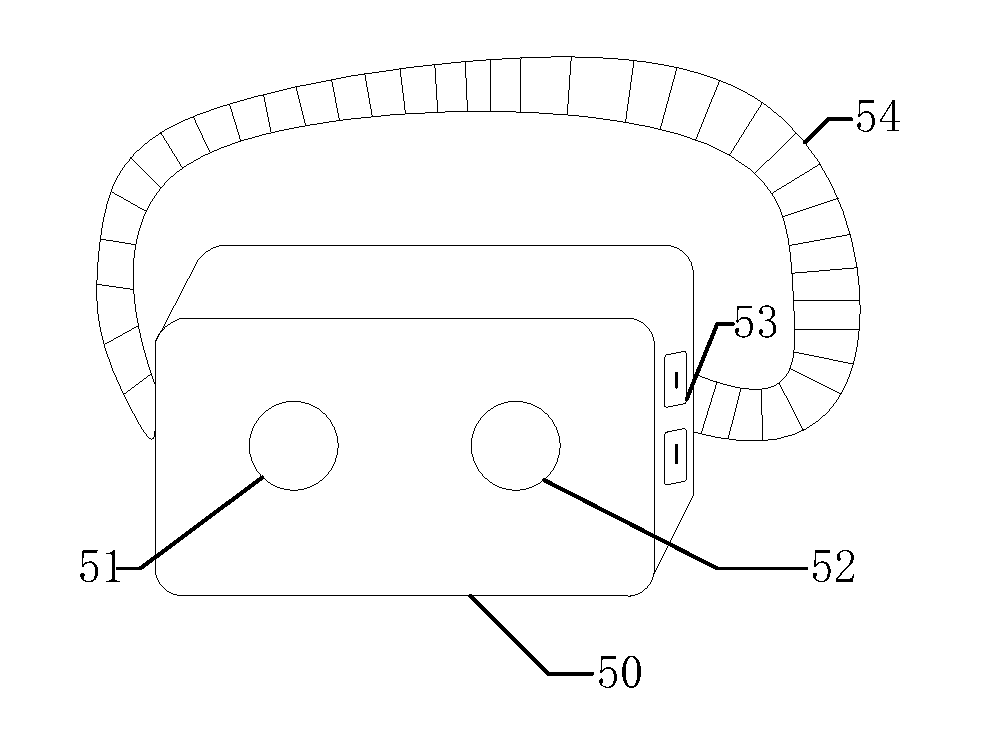
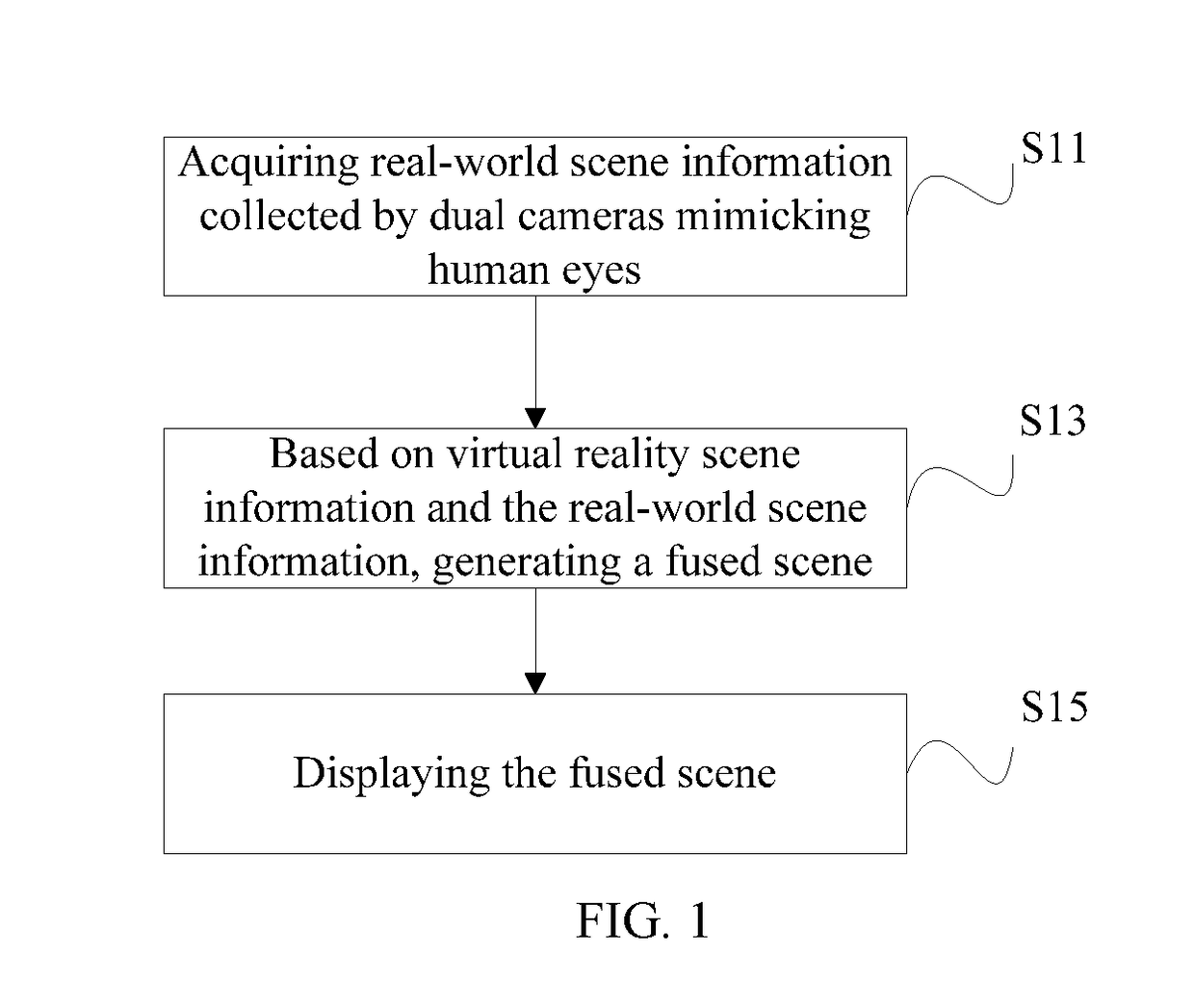
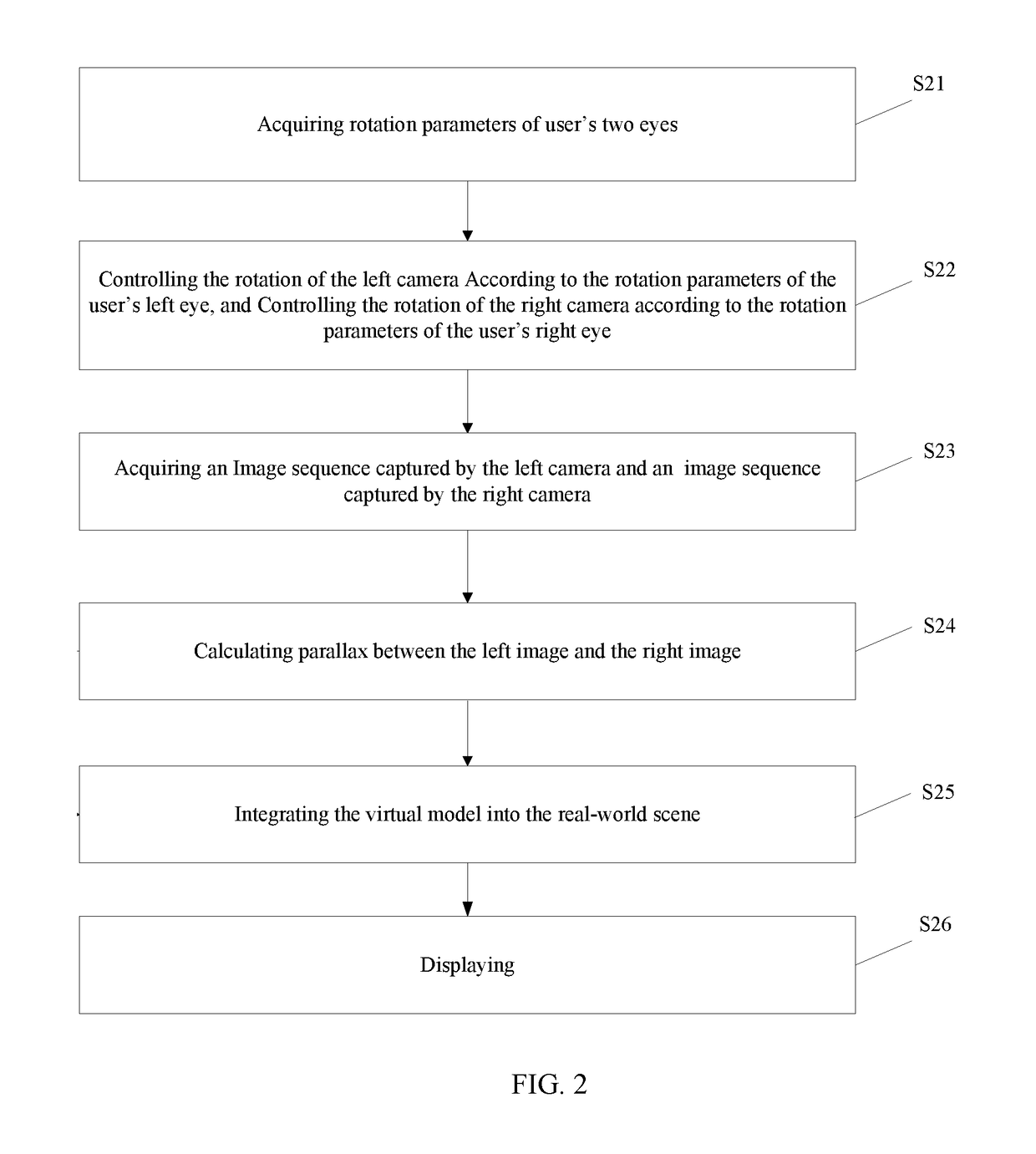
Method, apparatus, and smart wearable device for fusing augmented reality and virtual reality
PatentInactiveUS20170301137A1
Innovation
- A method and apparatus that utilize dual cameras mimicking human eyes to acquire real-world scene information in real-time, combine it with VR scene information, and display a fused scene, enhancing human-computer interaction and user experience by integrating real-world and virtual environments.

System for providing multi-directional and multi-person walking in virtual reality environments
PatentActiveUS20170336860A1
Innovation
- A modular floor system composed of active tiles that use vibrating surfaces with adjustable friction to move users independently in any direction, utilizing piezo-electric or ultrasonic transducers to control friction and movement, allowing multiple users to walk freely without collisions by predicting their paths and adjusting tile movements accordingly.


User Experience Standards for Immersive Technologies
The establishment of comprehensive user experience standards for immersive technologies represents a critical framework for evaluating and optimizing digital interactions across varying levels of immersion. These standards serve as benchmarks that define quality thresholds, performance metrics, and usability criteria essential for creating meaningful and effective immersive experiences.
Current industry standards primarily focus on technical specifications such as latency requirements, resolution thresholds, and refresh rates. For virtual reality applications, standards typically mandate sub-20 millisecond motion-to-photon latency to prevent motion sickness, while requiring minimum 90Hz refresh rates and 1080x1200 resolution per eye. However, these technical metrics represent only foundational elements of comprehensive user experience evaluation.
Emerging standards frameworks are expanding beyond technical parameters to encompass cognitive load assessment, spatial awareness metrics, and emotional engagement indicators. The IEEE Virtual Reality Society has proposed multi-dimensional evaluation criteria that include presence measurement scales, comfort assessment protocols, and interaction efficiency benchmarks. These frameworks recognize that immersive experience quality cannot be adequately captured through hardware specifications alone.
Standardization efforts are increasingly addressing cross-platform compatibility and accessibility requirements. Universal design principles are being integrated into immersive technology standards, ensuring experiences remain inclusive across diverse user populations with varying physical capabilities and technological literacy levels. This includes establishing guidelines for alternative input methods, adjustable interface scaling, and adaptive content presentation.
The development of standardized testing methodologies represents another crucial advancement in user experience evaluation. Controlled testing environments, standardized user study protocols, and validated measurement instruments are being established to ensure consistent and reliable assessment of immersive experiences across different platforms and applications.
Industry collaboration through organizations such as the Khronos Group and the Immersive Technology Alliance is driving the creation of unified standards that promote interoperability while maintaining high-quality user experiences. These collaborative efforts aim to establish common frameworks that enable seamless transitions between different immersive platforms and technologies, ultimately enhancing overall user satisfaction and adoption rates.
Current industry standards primarily focus on technical specifications such as latency requirements, resolution thresholds, and refresh rates. For virtual reality applications, standards typically mandate sub-20 millisecond motion-to-photon latency to prevent motion sickness, while requiring minimum 90Hz refresh rates and 1080x1200 resolution per eye. However, these technical metrics represent only foundational elements of comprehensive user experience evaluation.
Emerging standards frameworks are expanding beyond technical parameters to encompass cognitive load assessment, spatial awareness metrics, and emotional engagement indicators. The IEEE Virtual Reality Society has proposed multi-dimensional evaluation criteria that include presence measurement scales, comfort assessment protocols, and interaction efficiency benchmarks. These frameworks recognize that immersive experience quality cannot be adequately captured through hardware specifications alone.
Standardization efforts are increasingly addressing cross-platform compatibility and accessibility requirements. Universal design principles are being integrated into immersive technology standards, ensuring experiences remain inclusive across diverse user populations with varying physical capabilities and technological literacy levels. This includes establishing guidelines for alternative input methods, adjustable interface scaling, and adaptive content presentation.
The development of standardized testing methodologies represents another crucial advancement in user experience evaluation. Controlled testing environments, standardized user study protocols, and validated measurement instruments are being established to ensure consistent and reliable assessment of immersive experiences across different platforms and applications.
Industry collaboration through organizations such as the Khronos Group and the Immersive Technology Alliance is driving the creation of unified standards that promote interoperability while maintaining high-quality user experiences. These collaborative efforts aim to establish common frameworks that enable seamless transitions between different immersive platforms and technologies, ultimately enhancing overall user satisfaction and adoption rates.
Hardware Requirements for Multi-Level Immersion
The hardware requirements for achieving multi-level immersion in digital and VR technologies vary significantly based on the desired experience depth and user interaction complexity. Entry-level immersion typically requires basic computing power with standard processors, integrated graphics cards, and conventional display systems. These configurations support simple interactive experiences and basic 3D rendering capabilities suitable for educational applications and lightweight entertainment content.
Mid-tier immersion demands substantially enhanced hardware specifications including dedicated graphics processing units with at least 8GB VRAM, high-refresh-rate displays supporting 90Hz or higher, and advanced tracking systems. These systems enable smooth motion rendering, reduced latency, and improved visual fidelity essential for professional training simulations and complex gaming environments. Memory requirements typically exceed 16GB RAM to handle sophisticated rendering pipelines and real-time data processing.
High-end immersive experiences necessitate cutting-edge hardware configurations featuring enterprise-grade GPUs, ultra-high-resolution displays with 4K per eye capability, and precision tracking systems with sub-millimeter accuracy. These setups require robust cooling solutions, high-bandwidth data transmission capabilities, and specialized input devices including haptic feedback systems and gesture recognition sensors.
Processing power scaling becomes critical as immersion levels increase, with computational demands growing exponentially rather than linearly. Advanced physics simulations, real-time ray tracing, and complex AI-driven interactions require distributed computing architectures and specialized accelerators. Network infrastructure also plays a crucial role, particularly for cloud-based rendering solutions and multi-user collaborative environments.
Storage requirements vary dramatically across immersion levels, from basic solid-state drives for entry-level systems to high-speed NVMe arrays for professional applications. Content streaming capabilities and local caching mechanisms become essential for maintaining consistent performance across different usage scenarios and user access patterns.
Mid-tier immersion demands substantially enhanced hardware specifications including dedicated graphics processing units with at least 8GB VRAM, high-refresh-rate displays supporting 90Hz or higher, and advanced tracking systems. These systems enable smooth motion rendering, reduced latency, and improved visual fidelity essential for professional training simulations and complex gaming environments. Memory requirements typically exceed 16GB RAM to handle sophisticated rendering pipelines and real-time data processing.
High-end immersive experiences necessitate cutting-edge hardware configurations featuring enterprise-grade GPUs, ultra-high-resolution displays with 4K per eye capability, and precision tracking systems with sub-millimeter accuracy. These setups require robust cooling solutions, high-bandwidth data transmission capabilities, and specialized input devices including haptic feedback systems and gesture recognition sensors.
Processing power scaling becomes critical as immersion levels increase, with computational demands growing exponentially rather than linearly. Advanced physics simulations, real-time ray tracing, and complex AI-driven interactions require distributed computing architectures and specialized accelerators. Network infrastructure also plays a crucial role, particularly for cloud-based rendering solutions and multi-user collaborative environments.
Storage requirements vary dramatically across immersion levels, from basic solid-state drives for entry-level systems to high-speed NVMe arrays for professional applications. Content streaming capabilities and local caching mechanisms become essential for maintaining consistent performance across different usage scenarios and user access patterns.
Unlock deeper insights with Patsnap Eureka Quick Research — get a full tech report to explore trends and direct your research. Try now!
Generate Your Research Report Instantly with AI Agent
Supercharge your innovation with Patsnap Eureka AI Agent Platform!