

Electrolyte compatibility with lithium-sulfur cathodes
FEB 14, 20268 MIN READ
Generate Your Research Report Instantly with AI Agent
PatSnap Eureka helps you evaluate technical feasibility & market potential.
Lithium-Sulfur Battery Electrolyte Development Background and Objectives
Lithium-sulfur (Li-S) battery technology has emerged as one of the most promising next-generation energy storage solutions, driven by the urgent demand for high-energy-density systems in electric vehicles, portable electronics, and grid-scale applications. The theoretical specific energy of Li-S batteries reaches 2600 Wh/kg, approximately five times higher than conventional lithium-ion batteries, while sulfur offers advantages of natural abundance, low cost, and environmental benignity. However, the commercialization of Li-S batteries has been significantly hindered by fundamental challenges at the cathode-electrolyte interface.
The evolution of Li-S battery research has progressed through distinct phases since the 1960s. Early investigations focused on basic electrochemical mechanisms, while modern research emphasizes the critical role of electrolyte systems in addressing polysulfide dissolution and shuttle effects. The incompatibility between conventional carbonate-based electrolytes and sulfur cathodes necessitated the exploration of ether-based solvents, ionic liquids, and solid-state electrolytes. Recent developments have shifted toward designing multifunctional electrolyte formulations that simultaneously suppress polysulfide migration, stabilize lithium metal anodes, and maintain high ionic conductivity across wide temperature ranges.
The primary objective of current electrolyte development is to achieve comprehensive compatibility with lithium-sulfur cathodes through molecular-level design and interfacial engineering. This encompasses several technical targets: minimizing polysulfide solubility to prevent capacity fade, forming stable cathode electrolyte interphases to enhance cycling stability, enabling rapid lithium-ion transport to improve rate capability, and maintaining electrochemical stability within the operating voltage window of 1.5-3.0V. Additionally, practical considerations such as temperature tolerance, safety characteristics, and scalable manufacturing processes must be integrated into electrolyte design strategies.
Achieving these objectives requires interdisciplinary approaches combining electrochemistry, materials science, and computational modeling. The ultimate goal is to develop electrolyte systems that enable Li-S batteries to deliver over 500 Wh/kg at the cell level with cycle life exceeding 1000 cycles, thereby bridging the gap between laboratory demonstrations and commercial viability for transformative energy storage applications.
The evolution of Li-S battery research has progressed through distinct phases since the 1960s. Early investigations focused on basic electrochemical mechanisms, while modern research emphasizes the critical role of electrolyte systems in addressing polysulfide dissolution and shuttle effects. The incompatibility between conventional carbonate-based electrolytes and sulfur cathodes necessitated the exploration of ether-based solvents, ionic liquids, and solid-state electrolytes. Recent developments have shifted toward designing multifunctional electrolyte formulations that simultaneously suppress polysulfide migration, stabilize lithium metal anodes, and maintain high ionic conductivity across wide temperature ranges.
The primary objective of current electrolyte development is to achieve comprehensive compatibility with lithium-sulfur cathodes through molecular-level design and interfacial engineering. This encompasses several technical targets: minimizing polysulfide solubility to prevent capacity fade, forming stable cathode electrolyte interphases to enhance cycling stability, enabling rapid lithium-ion transport to improve rate capability, and maintaining electrochemical stability within the operating voltage window of 1.5-3.0V. Additionally, practical considerations such as temperature tolerance, safety characteristics, and scalable manufacturing processes must be integrated into electrolyte design strategies.
Achieving these objectives requires interdisciplinary approaches combining electrochemistry, materials science, and computational modeling. The ultimate goal is to develop electrolyte systems that enable Li-S batteries to deliver over 500 Wh/kg at the cell level with cycle life exceeding 1000 cycles, thereby bridging the gap between laboratory demonstrations and commercial viability for transformative energy storage applications.
Market Demand for High-Energy Li-S Battery Systems
The global energy storage market is undergoing a transformative shift driven by escalating demands for higher energy density solutions across multiple sectors. Electric vehicles represent the most significant growth driver, where manufacturers are pursuing battery systems capable of delivering extended driving ranges beyond 500 kilometers on a single charge. Current lithium-ion technology approaches theoretical limits, creating substantial market pull for next-generation chemistries. Lithium-sulfur batteries, with theoretical energy densities exceeding 2,600 Wh/kg compared to conventional lithium-ion systems at approximately 250 Wh/kg, have emerged as a compelling alternative to address this performance gap.
Consumer electronics manufacturers face similar constraints as devices become increasingly power-hungry while form factors shrink. Smartphones, laptops, and wearable devices require batteries that occupy minimal space yet provide extended operational periods. The market increasingly values lightweight, high-capacity solutions that can enable thinner device profiles without compromising functionality. This demand creates substantial commercial opportunities for lithium-sulfur technology once critical technical barriers are overcome.
Aerospace and defense applications present another critical market segment where weight reduction directly translates to operational advantages and cost savings. Unmanned aerial vehicles, satellites, and military equipment require energy storage systems with exceptional gravimetric energy density. These specialized applications often justify premium pricing, making them attractive early adoption markets for emerging lithium-sulfur technologies despite current limitations.
Grid-scale energy storage represents a longer-term but potentially massive market opportunity. As renewable energy penetration increases, utilities require cost-effective, high-capacity storage solutions to manage intermittency. While lithium-sulfur systems currently face cycle life challenges, successful resolution of electrolyte compatibility issues could position this chemistry as a viable candidate for stationary storage applications where energy density advantages translate to reduced installation footprints and infrastructure costs.
The convergence of these market drivers has intensified research and development investments from both established battery manufacturers and emerging technology companies. However, widespread commercialization remains contingent upon resolving fundamental technical challenges, particularly electrolyte stability and polysulfide dissolution, which directly impact cycle life and practical energy density. Market readiness depends critically on achieving breakthrough solutions in electrolyte chemistry that can unlock the theoretical advantages of lithium-sulfur systems.
Consumer electronics manufacturers face similar constraints as devices become increasingly power-hungry while form factors shrink. Smartphones, laptops, and wearable devices require batteries that occupy minimal space yet provide extended operational periods. The market increasingly values lightweight, high-capacity solutions that can enable thinner device profiles without compromising functionality. This demand creates substantial commercial opportunities for lithium-sulfur technology once critical technical barriers are overcome.
Aerospace and defense applications present another critical market segment where weight reduction directly translates to operational advantages and cost savings. Unmanned aerial vehicles, satellites, and military equipment require energy storage systems with exceptional gravimetric energy density. These specialized applications often justify premium pricing, making them attractive early adoption markets for emerging lithium-sulfur technologies despite current limitations.
Grid-scale energy storage represents a longer-term but potentially massive market opportunity. As renewable energy penetration increases, utilities require cost-effective, high-capacity storage solutions to manage intermittency. While lithium-sulfur systems currently face cycle life challenges, successful resolution of electrolyte compatibility issues could position this chemistry as a viable candidate for stationary storage applications where energy density advantages translate to reduced installation footprints and infrastructure costs.
The convergence of these market drivers has intensified research and development investments from both established battery manufacturers and emerging technology companies. However, widespread commercialization remains contingent upon resolving fundamental technical challenges, particularly electrolyte stability and polysulfide dissolution, which directly impact cycle life and practical energy density. Market readiness depends critically on achieving breakthrough solutions in electrolyte chemistry that can unlock the theoretical advantages of lithium-sulfur systems.
Current Electrolyte Compatibility Issues and Technical Barriers
Lithium-sulfur batteries face significant electrolyte compatibility challenges that impede their commercial viability. The primary issue stems from the dissolution of intermediate polysulfides (Li2Sx, 4≤x≤8) formed during discharge processes into conventional ether-based electrolytes. This phenomenon, known as the polysulfide shuttle effect, causes active material loss, capacity fading, and severe self-discharge. The dissolved polysulfides migrate to the lithium anode, where they undergo parasitic reduction reactions, leading to irreversible capacity degradation and poor coulombic efficiency.
Current electrolyte systems predominantly utilize lithium bis(trifluoromethanesulfonyl)imide (LiTFSI) salts in dioxolane (DOL) and dimethoxyethane (DME) solvents. However, these formulations exhibit limited ability to suppress polysulfide dissolution, with solubility reaching 0.5-2 M depending on sulfur loading and electrolyte composition. The high polysulfide solubility directly correlates with accelerated capacity decay, typically exceeding 0.5% per cycle in practical applications.
Another critical barrier involves electrolyte decomposition at both electrodes. At the cathode side, nucleophilic polysulfides attack electrolyte components, generating thioether species and sulfur-containing degradation products that increase cell impedance. Simultaneously, the highly reactive lithium metal anode consumes electrolyte through continuous solid electrolyte interphase (SEI) formation, exacerbated by polysulfide crossover. This dual-side degradation necessitates excessive electrolyte quantities, compromising energy density and increasing costs.
The narrow electrochemical stability window of ether electrolytes presents additional constraints. While ethers provide adequate oxidative stability up to 4.5V versus Li/Li+, their reductive stability remains marginal, particularly under polysulfide-rich environments. Furthermore, conventional electrolytes demonstrate poor compatibility with high-loading sulfur cathodes (>5 mg/cm²), where insufficient electrolyte wetting and ion transport limitations create concentration polarization and uneven sulfur utilization.
Temperature sensitivity compounds these issues, as electrolyte viscosity increases significantly below 0°C, drastically reducing ionic conductivity and power capability. Conversely, elevated temperatures above 60°C accelerate polysulfide dissolution and shuttle kinetics, intensifying capacity fade. These thermal constraints severely limit the operational envelope for lithium-sulfur systems in practical applications.
Current electrolyte systems predominantly utilize lithium bis(trifluoromethanesulfonyl)imide (LiTFSI) salts in dioxolane (DOL) and dimethoxyethane (DME) solvents. However, these formulations exhibit limited ability to suppress polysulfide dissolution, with solubility reaching 0.5-2 M depending on sulfur loading and electrolyte composition. The high polysulfide solubility directly correlates with accelerated capacity decay, typically exceeding 0.5% per cycle in practical applications.
Another critical barrier involves electrolyte decomposition at both electrodes. At the cathode side, nucleophilic polysulfides attack electrolyte components, generating thioether species and sulfur-containing degradation products that increase cell impedance. Simultaneously, the highly reactive lithium metal anode consumes electrolyte through continuous solid electrolyte interphase (SEI) formation, exacerbated by polysulfide crossover. This dual-side degradation necessitates excessive electrolyte quantities, compromising energy density and increasing costs.
The narrow electrochemical stability window of ether electrolytes presents additional constraints. While ethers provide adequate oxidative stability up to 4.5V versus Li/Li+, their reductive stability remains marginal, particularly under polysulfide-rich environments. Furthermore, conventional electrolytes demonstrate poor compatibility with high-loading sulfur cathodes (>5 mg/cm²), where insufficient electrolyte wetting and ion transport limitations create concentration polarization and uneven sulfur utilization.
Temperature sensitivity compounds these issues, as electrolyte viscosity increases significantly below 0°C, drastically reducing ionic conductivity and power capability. Conversely, elevated temperatures above 60°C accelerate polysulfide dissolution and shuttle kinetics, intensifying capacity fade. These thermal constraints severely limit the operational envelope for lithium-sulfur systems in practical applications.
Current Electrolyte Solutions for Li-S Cathodes
01 Electrolyte formulation for lithium-ion batteries
Development of electrolyte compositions specifically designed for lithium-ion battery systems to ensure compatibility with electrode materials and enhance battery performance. These formulations focus on optimizing ionic conductivity, electrochemical stability, and preventing unwanted side reactions between the electrolyte and battery components. The electrolyte compositions may include various solvents, lithium salts, and additives to achieve desired electrochemical properties and long-term stability.- Electrolyte formulation for lithium-ion batteries: Development of electrolyte compositions specifically designed for lithium-ion battery systems to ensure compatibility with electrode materials and enhance battery performance. These formulations focus on optimizing ionic conductivity, electrochemical stability, and preventing unwanted side reactions between the electrolyte and battery components. The electrolyte compositions may include various solvents, lithium salts, and additives to achieve desired electrochemical properties and long-term stability.
- Electrolyte additives for improved compatibility: Use of specific additives in electrolyte formulations to enhance compatibility with various battery components and improve overall performance. These additives can help form stable solid electrolyte interphase layers, prevent electrolyte decomposition, and protect electrode materials from degradation. The additives may include film-forming agents, stabilizers, and functional compounds that improve the interface between electrolyte and electrodes.
- Non-aqueous electrolyte systems: Development of non-aqueous electrolyte systems that provide better compatibility with high-voltage cathode materials and metallic anodes. These systems utilize organic solvents and specialized salt compositions to achieve wide electrochemical windows and prevent unwanted reactions. The formulations are designed to maintain stability across various operating temperatures and voltage ranges while ensuring compatibility with different electrode chemistries.
- Solid-state and gel electrolytes: Implementation of solid-state or gel-type electrolytes to address compatibility issues associated with liquid electrolytes. These electrolyte systems offer improved safety, reduced leakage risks, and better compatibility with various electrode materials. The formulations may include polymer matrices, ceramic materials, or hybrid compositions that provide adequate ionic conductivity while maintaining mechanical stability and interfacial compatibility.
- Electrolyte compatibility testing and evaluation methods: Methods and systems for evaluating electrolyte compatibility with battery components through various testing protocols. These approaches assess electrochemical stability, interfacial resistance, cycling performance, and long-term compatibility under different operating conditions. Testing methods may include impedance spectroscopy, cyclic voltammetry, and accelerated aging tests to ensure optimal electrolyte-electrode compatibility and predict battery lifetime.
02 Electrolyte additives for improved compatibility
Use of specific additives in electrolyte formulations to enhance compatibility with various battery components and improve overall performance. These additives can help form stable solid electrolyte interphase layers, prevent electrolyte decomposition, and protect electrode materials from degradation. The additives may include film-forming agents, stabilizers, and functional compounds that improve the interface between electrolyte and electrodes.Expand Specific Solutions03 Non-aqueous electrolyte systems
Development of non-aqueous electrolyte systems that provide better compatibility with high-voltage cathode materials and metallic anodes. These systems utilize organic solvents and specialized salt compositions to achieve wide electrochemical windows and prevent unwanted reactions. The formulations are designed to maintain stability across various operating temperatures and voltage ranges while ensuring good ionic transport properties.Expand Specific Solutions04 Solid-state and gel electrolytes
Implementation of solid-state or gel-type electrolytes to address compatibility issues associated with liquid electrolytes. These alternative electrolyte forms offer improved safety, reduced leakage risks, and better compatibility with various electrode materials. The solid or gel matrices can be composed of polymers, ceramics, or composite materials that provide adequate ionic conductivity while maintaining mechanical stability and interfacial contact with electrodes.Expand Specific Solutions05 Electrolyte compatibility testing and characterization
Methods and systems for evaluating electrolyte compatibility with battery components through various testing protocols and analytical techniques. These approaches assess electrochemical stability, interfacial resistance, cycling performance, and long-term degradation behavior. Testing methodologies include electrochemical impedance spectroscopy, cyclic voltammetry, and accelerated aging tests to ensure electrolyte formulations meet compatibility requirements for specific battery applications.Expand Specific Solutions
Major Players in Li-S Battery Electrolyte Development
The electrolyte compatibility with lithium-sulfur cathodes represents a rapidly evolving technological domain currently transitioning from laboratory research to early commercialization stages. The market demonstrates substantial growth potential driven by the promise of energy densities exceeding 500 Wh/kg, significantly surpassing conventional lithium-ion systems. Technology maturity varies considerably across players, with specialized developers like Sion Power Corp. and PolyPlus Battery Co. leading commercialization efforts through proprietary protected electrode technologies, while established battery manufacturers including Samsung SDI, LG Energy Solution, and LG Chem are actively advancing their research portfolios. Academic institutions such as Central South University, MIT, and Ulsan National Institute of Science & Technology are pioneering fundamental electrolyte chemistry innovations, while automotive giants like Toyota Motor Corp. and GM Global Technology Operations are integrating these advancements into next-generation electric vehicle platforms, collectively positioning lithium-sulfur technology as a transformative energy storage solution.
Sion Power Corp.
Technical Solution: Sion Power has developed proprietary electrolyte formulations specifically designed for lithium-sulfur battery systems. Their approach focuses on utilizing highly stable ether-based electrolytes with specialized additives including lithium nitrate (LiNO3) to form protective layers on the lithium anode surface, effectively suppressing polysulfide shuttle effects. The company employs advanced electrolyte engineering that incorporates fluorinated solvents and ionic liquid components to enhance electrochemical stability windows and improve sulfur utilization efficiency. Their electrolyte systems demonstrate compatibility with high-loading sulfur cathodes (>5 mg/cm²) while maintaining cycle stability over 200 cycles. Sion Power's technology also integrates protective interlayers between electrolyte and electrodes to minimize parasitic reactions and extend battery lifespan in practical applications.
Strengths: Proven commercial-scale production capability with extensive patent portfolio; demonstrated high energy density (>500 Wh/kg at cell level); excellent polysulfide suppression mechanisms. Weaknesses: Ether-based electrolytes show limited oxidation stability; relatively high cost of specialized additives; sensitivity to moisture and oxygen requiring stringent manufacturing conditions.
PolyPlus Battery Co., Inc.
Technical Solution: PolyPlus Battery Company has developed unique protected lithium electrode (PLE) technology combined with compatible electrolyte systems for lithium-sulfur applications. Their approach utilizes solid electrolyte membranes (typically lithium-conducting glass ceramics or polymer electrolytes) that physically separate the lithium anode from the catholyte containing dissolved polysulfides. This architecture allows the use of aqueous or non-aqueous catholyte solutions optimized specifically for sulfur cathode chemistry without concerns about lithium anode compatibility. PolyPlus employs catholyte formulations with high polysulfide solubility and conductivity, enabling high sulfur utilization rates. Their electrolyte system design decouples anode and cathode electrolyte optimization, allowing independent tuning of each side for maximum performance. The protected anode architecture eliminates polysulfide shuttle effects entirely, addressing one of the fundamental challenges in Li-S battery development.
Strengths: Revolutionary architecture eliminates polysulfide shuttle mechanism completely; enables use of aqueous catholytes with superior safety profiles; flexible catholyte chemistry optimization. Weaknesses: Solid electrolyte membrane adds weight, volume, and interfacial resistance; complex cell architecture increases manufacturing complexity and cost; scalability challenges for large-format cells.
Key Innovations in Polysulfide Shuttle Suppression
Electrolyte for lithium-sulfur battery and lithium-sulfur battery comprising the same
PatentPendingUS20260005315A1
Innovation
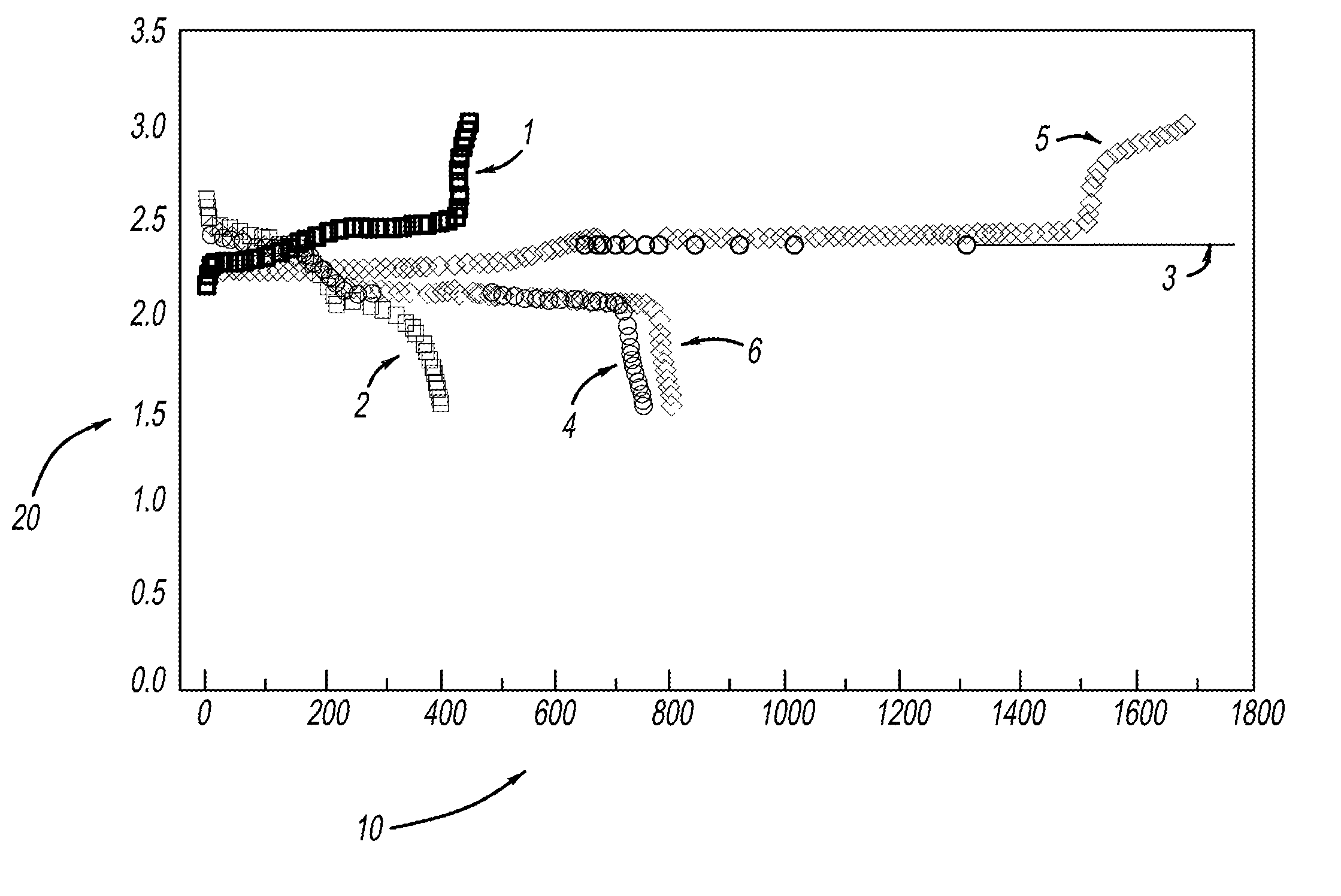
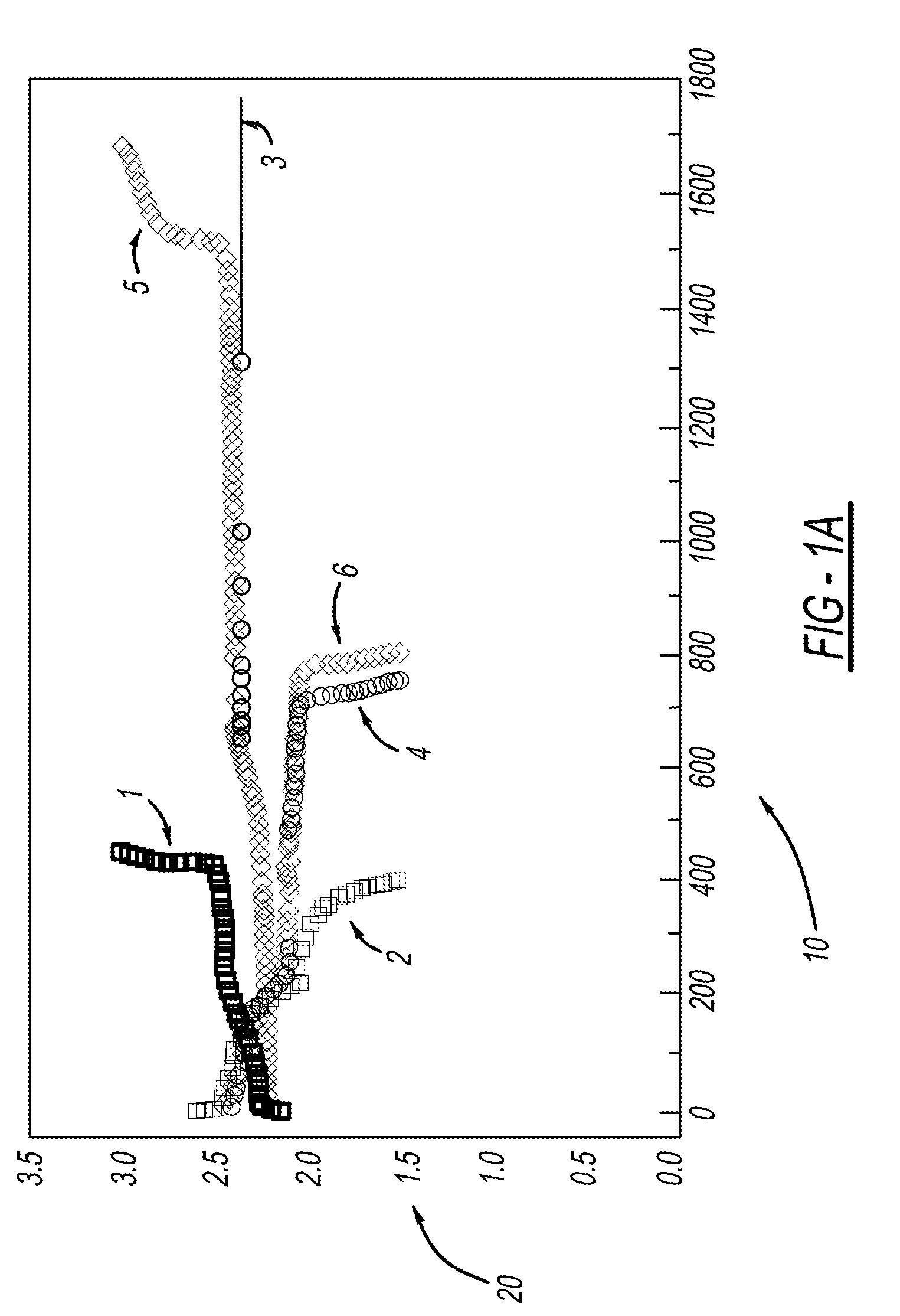
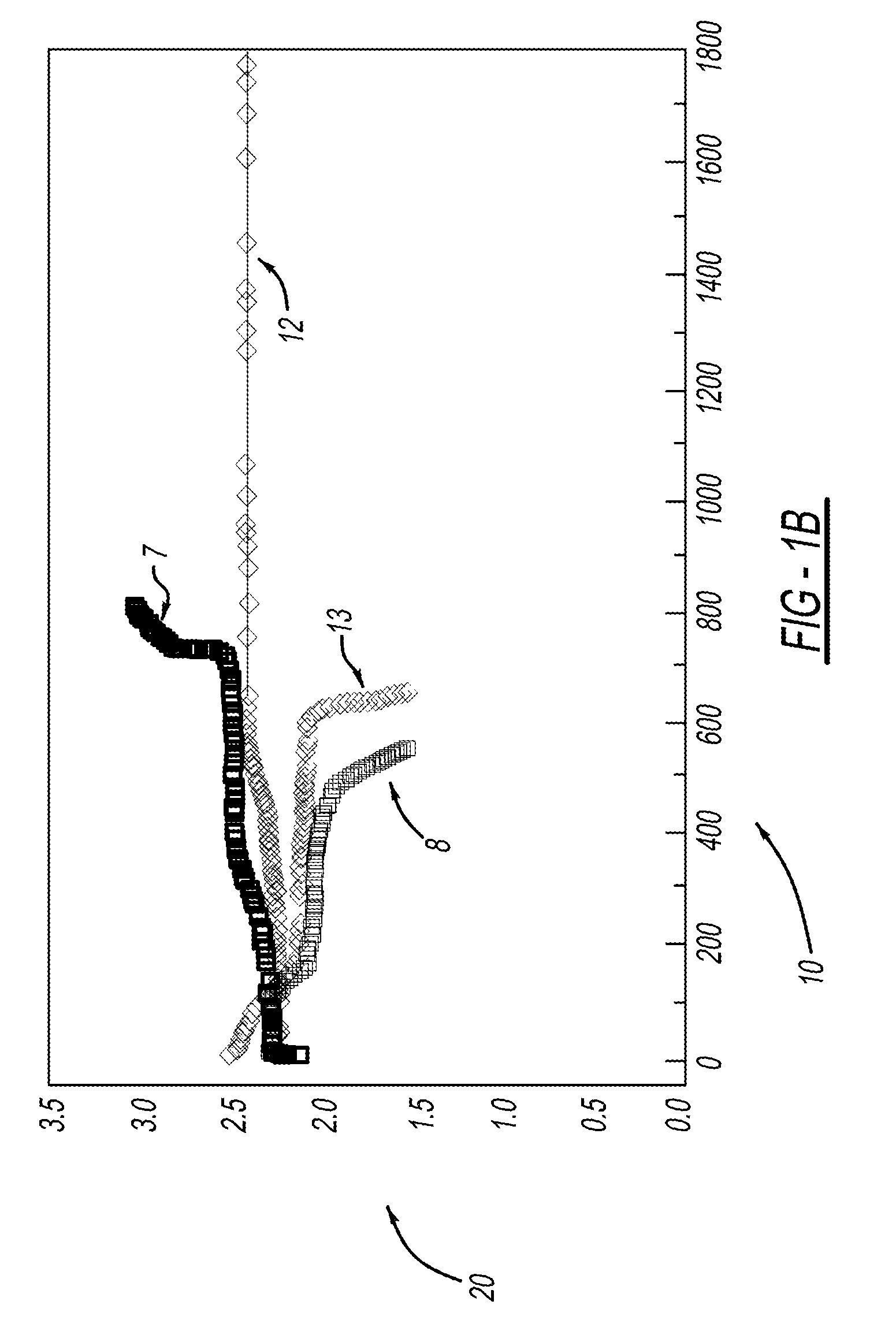
- The electrolyte for the lithium-sulfur battery includes a nonaqueous solvent with a combination of ether-based solvents, specifically cyclic and acyclic ethers, and additives such as trioxane to suppress polysulfide leakage, using a composition that includes 2-methylfuran and dimethoxyethane, with a cyclic ether content of 20 vol % or less and acyclic ether content of 80 vol % or more, and a trioxane content of 5 wt % to 45 wt %, to enhance the battery's life characteristics.


Electrolyte additives for lithium sulfur rechargeable batteries
PatentActiveUS9160036B2
Innovation
- Incorporating lithium oxalate borate compounds as electrolyte additives that form a solid electrolyte interphase by preferentially opening a five-membered ring structure at the anode or cathode, mitigating polysulfide migration and reaction with lithium.

Safety Standards for Li-S Battery Electrolytes
The safety standards for lithium-sulfur battery electrolytes represent a critical framework that governs the development, testing, and commercialization of Li-S energy storage systems. Currently, the regulatory landscape for Li-S battery electrolytes remains fragmented, as existing standards primarily address conventional lithium-ion technologies and do not fully account for the unique chemical characteristics of sulfur cathodes and their interaction with electrolyte components. International organizations such as the International Electrotechnical Commission and Underwriters Laboratories are gradually incorporating Li-S specific requirements into their battery safety protocols, focusing on parameters including thermal stability, flammability thresholds, and polysulfide leakage prevention.
The establishment of comprehensive safety standards must address several electrolyte-specific concerns unique to Li-S systems. Thermal runaway behavior in Li-S batteries differs significantly from lithium-ion counterparts due to the exothermic reactions between lithium polysulfides and electrolyte solvents at elevated temperatures. Standards must define acceptable temperature ranges, heat generation rates, and self-extinguishing properties for electrolyte formulations. Additionally, the volatility of ether-based solvents commonly used in Li-S systems necessitates stringent vapor pressure limits and containment requirements to prevent fire hazards during normal operation and abuse conditions.
Chemical compatibility testing protocols form another essential component of safety standardization. These protocols must evaluate electrolyte stability against polysulfide dissolution, shuttle effect mitigation, and long-term material degradation. Standardized accelerated aging tests under various stress conditions help predict electrolyte performance over extended operational lifetimes. Furthermore, environmental safety considerations require standards for electrolyte toxicity assessment, disposal procedures, and recycling protocols, particularly given the sulfur content and potential formation of hazardous decomposition products.
Certification processes for Li-S battery electrolytes increasingly demand comprehensive documentation of material composition, manufacturing quality control, and performance validation under standardized test conditions. Harmonization efforts between regional regulatory bodies aim to create unified global standards that facilitate international market access while ensuring consistent safety benchmarks across different jurisdictions.
The establishment of comprehensive safety standards must address several electrolyte-specific concerns unique to Li-S systems. Thermal runaway behavior in Li-S batteries differs significantly from lithium-ion counterparts due to the exothermic reactions between lithium polysulfides and electrolyte solvents at elevated temperatures. Standards must define acceptable temperature ranges, heat generation rates, and self-extinguishing properties for electrolyte formulations. Additionally, the volatility of ether-based solvents commonly used in Li-S systems necessitates stringent vapor pressure limits and containment requirements to prevent fire hazards during normal operation and abuse conditions.
Chemical compatibility testing protocols form another essential component of safety standardization. These protocols must evaluate electrolyte stability against polysulfide dissolution, shuttle effect mitigation, and long-term material degradation. Standardized accelerated aging tests under various stress conditions help predict electrolyte performance over extended operational lifetimes. Furthermore, environmental safety considerations require standards for electrolyte toxicity assessment, disposal procedures, and recycling protocols, particularly given the sulfur content and potential formation of hazardous decomposition products.
Certification processes for Li-S battery electrolytes increasingly demand comprehensive documentation of material composition, manufacturing quality control, and performance validation under standardized test conditions. Harmonization efforts between regional regulatory bodies aim to create unified global standards that facilitate international market access while ensuring consistent safety benchmarks across different jurisdictions.
Environmental Impact of Li-S Electrolyte Materials
The environmental implications of electrolyte materials used in lithium-sulfur battery systems have emerged as a critical consideration in the pursuit of sustainable energy storage solutions. While Li-S batteries promise higher energy density and utilize abundant sulfur resources, the environmental footprint of their electrolyte components warrants comprehensive evaluation. Traditional ether-based electrolytes, particularly dioxolane and dimethoxyethane solvents, present moderate environmental concerns due to their synthetic production processes and potential volatility. These organic solvents require energy-intensive manufacturing procedures and may pose disposal challenges at end-of-life stages.
The lithium salts employed in Li-S electrolytes, such as lithium bis(trifluoromethanesulfonyl)imide and lithium nitrate additives, introduce additional environmental considerations. The production of fluorinated salts involves complex chemical synthesis routes that generate hazardous byproducts and require careful waste management protocols. Furthermore, the persistence of fluorinated compounds in natural ecosystems raises concerns about long-term environmental accumulation and potential toxicity to aquatic organisms.
Emerging ionic liquid-based electrolytes present a mixed environmental profile. While their negligible vapor pressure reduces atmospheric emissions during manufacturing and operation, their biodegradability remains limited, and synthesis processes often involve toxic precursors. The energy requirements for ionic liquid production can be substantial, potentially offsetting some environmental benefits compared to conventional organic electrolytes.
Recent research efforts have focused on developing bio-derived and more environmentally benign electrolyte formulations. Natural ether derivatives and sustainable solvent alternatives show promise in reducing the ecological footprint of Li-S systems. Additionally, the implementation of closed-loop recycling processes for electrolyte recovery could significantly mitigate environmental impacts. The development of solid-state and quasi-solid electrolytes may further address environmental concerns by eliminating volatile organic components entirely, though their manufacturing processes require careful environmental assessment to ensure genuine sustainability improvements across the entire lifecycle.
The lithium salts employed in Li-S electrolytes, such as lithium bis(trifluoromethanesulfonyl)imide and lithium nitrate additives, introduce additional environmental considerations. The production of fluorinated salts involves complex chemical synthesis routes that generate hazardous byproducts and require careful waste management protocols. Furthermore, the persistence of fluorinated compounds in natural ecosystems raises concerns about long-term environmental accumulation and potential toxicity to aquatic organisms.
Emerging ionic liquid-based electrolytes present a mixed environmental profile. While their negligible vapor pressure reduces atmospheric emissions during manufacturing and operation, their biodegradability remains limited, and synthesis processes often involve toxic precursors. The energy requirements for ionic liquid production can be substantial, potentially offsetting some environmental benefits compared to conventional organic electrolytes.
Recent research efforts have focused on developing bio-derived and more environmentally benign electrolyte formulations. Natural ether derivatives and sustainable solvent alternatives show promise in reducing the ecological footprint of Li-S systems. Additionally, the implementation of closed-loop recycling processes for electrolyte recovery could significantly mitigate environmental impacts. The development of solid-state and quasi-solid electrolytes may further address environmental concerns by eliminating volatile organic components entirely, though their manufacturing processes require careful environmental assessment to ensure genuine sustainability improvements across the entire lifecycle.
Unlock deeper insights with PatSnap Eureka Quick Research — get a full tech report to explore trends and direct your research. Try now!
Generate Your Research Report Instantly with AI Agent
Supercharge your innovation with PatSnap Eureka AI Agent Platform!