

Energy density optimization in solid-state sodium-ion battery systems
FEB 11, 20269 MIN READ
Generate Your Research Report Instantly with AI Agent
PatSnap Eureka helps you evaluate technical feasibility & market potential.
Solid-State Sodium-Ion Battery Energy Density Background and Objectives
Solid-state sodium-ion batteries represent an emerging energy storage technology that addresses critical challenges in the global transition toward sustainable energy systems. Unlike conventional lithium-ion batteries, sodium-ion systems leverage the abundance and widespread availability of sodium resources, offering significant cost advantages and reduced geopolitical supply chain risks. The integration of solid-state electrolytes further enhances safety profiles by eliminating flammable liquid electrolytes, while potentially enabling higher operating voltages and improved thermal stability.
The evolution of battery technology has consistently pursued higher energy density as a primary objective, driven by demands from electric vehicles, grid-scale energy storage, and portable electronics sectors. Current liquid-based sodium-ion batteries typically achieve energy densities ranging from 100 to 160 Wh/kg, substantially lower than their lithium-ion counterparts. This performance gap primarily stems from sodium's larger ionic radius, lower electrochemical potential, and the inherent limitations of conventional electrode materials and cell architectures.
Solid-state configurations present unique opportunities to overcome these limitations through several mechanisms. The elimination of inactive separator components and the potential for lithium-metal-equivalent sodium-metal anodes could theoretically boost energy density by 30-50% compared to conventional designs. Additionally, solid electrolytes enable the use of high-voltage cathode materials previously incompatible with liquid electrolytes, further expanding the energy density envelope.
The primary objective of energy density optimization in solid-state sodium-ion systems encompasses multiple technical dimensions. First, developing cathode materials with higher specific capacities and operating voltages while maintaining structural stability during sodium intercalation. Second, engineering solid electrolytes that combine high ionic conductivity, wide electrochemical windows, and robust interfacial compatibility. Third, advancing anode technologies beyond conventional hard carbon to sodium metal or high-capacity alloy systems.
Achieving competitive energy densities above 200 Wh/kg at the cell level represents a critical milestone for commercial viability, particularly in applications where sodium-ion technology's inherent advantages in cost and safety can offset performance differentials with lithium-ion systems. This target necessitates systematic optimization across materials science, interface engineering, and cell architecture design.
The evolution of battery technology has consistently pursued higher energy density as a primary objective, driven by demands from electric vehicles, grid-scale energy storage, and portable electronics sectors. Current liquid-based sodium-ion batteries typically achieve energy densities ranging from 100 to 160 Wh/kg, substantially lower than their lithium-ion counterparts. This performance gap primarily stems from sodium's larger ionic radius, lower electrochemical potential, and the inherent limitations of conventional electrode materials and cell architectures.
Solid-state configurations present unique opportunities to overcome these limitations through several mechanisms. The elimination of inactive separator components and the potential for lithium-metal-equivalent sodium-metal anodes could theoretically boost energy density by 30-50% compared to conventional designs. Additionally, solid electrolytes enable the use of high-voltage cathode materials previously incompatible with liquid electrolytes, further expanding the energy density envelope.
The primary objective of energy density optimization in solid-state sodium-ion systems encompasses multiple technical dimensions. First, developing cathode materials with higher specific capacities and operating voltages while maintaining structural stability during sodium intercalation. Second, engineering solid electrolytes that combine high ionic conductivity, wide electrochemical windows, and robust interfacial compatibility. Third, advancing anode technologies beyond conventional hard carbon to sodium metal or high-capacity alloy systems.
Achieving competitive energy densities above 200 Wh/kg at the cell level represents a critical milestone for commercial viability, particularly in applications where sodium-ion technology's inherent advantages in cost and safety can offset performance differentials with lithium-ion systems. This target necessitates systematic optimization across materials science, interface engineering, and cell architecture design.
Market Demand Analysis for Sodium-Ion Energy Storage Systems
The global energy storage market is experiencing unprecedented growth driven by the accelerating transition toward renewable energy sources and the urgent need for grid stabilization solutions. Sodium-ion battery technology has emerged as a compelling alternative to lithium-ion systems, particularly in stationary energy storage applications where cost-effectiveness and resource availability are paramount considerations. The demand for sodium-ion energy storage systems is primarily concentrated in utility-scale renewable energy integration, commercial and industrial backup power, and residential energy storage markets.
Grid-scale energy storage represents the most significant demand driver for sodium-ion technology. As wind and solar installations continue expanding globally, utilities and independent power producers require economically viable storage solutions to manage intermittency and ensure grid reliability. Sodium-ion systems offer distinct advantages in this segment due to lower material costs and enhanced safety characteristics compared to lithium-ion alternatives. The technology's ability to operate effectively across wider temperature ranges without thermal management systems further reduces total cost of ownership.
The commercial and industrial sector demonstrates growing interest in sodium-ion energy storage for peak shaving, demand charge management, and backup power applications. Facilities with high energy consumption patterns seek cost-effective solutions to reduce electricity expenses and ensure operational continuity. The inherent safety profile of solid-state sodium-ion systems, particularly their reduced fire risk, makes them attractive for deployment in populated areas and sensitive environments where safety regulations are stringent.
Emerging markets in regions with abundant sodium resources show particularly strong demand potential. Countries seeking energy independence and reduced reliance on imported lithium are actively supporting sodium-ion technology development through policy incentives and research funding. The technology's compatibility with existing manufacturing infrastructure accelerates market adoption by lowering barriers to entry for battery producers.
However, current market penetration remains limited by energy density constraints. Applications requiring compact form factors or weight-sensitive installations continue favoring lithium-ion solutions despite higher costs. The optimization of energy density in solid-state sodium-ion systems directly addresses this market limitation, potentially expanding addressable market segments to include electric mobility support infrastructure and distributed energy resources where space efficiency becomes increasingly critical for commercial viability.
Grid-scale energy storage represents the most significant demand driver for sodium-ion technology. As wind and solar installations continue expanding globally, utilities and independent power producers require economically viable storage solutions to manage intermittency and ensure grid reliability. Sodium-ion systems offer distinct advantages in this segment due to lower material costs and enhanced safety characteristics compared to lithium-ion alternatives. The technology's ability to operate effectively across wider temperature ranges without thermal management systems further reduces total cost of ownership.
The commercial and industrial sector demonstrates growing interest in sodium-ion energy storage for peak shaving, demand charge management, and backup power applications. Facilities with high energy consumption patterns seek cost-effective solutions to reduce electricity expenses and ensure operational continuity. The inherent safety profile of solid-state sodium-ion systems, particularly their reduced fire risk, makes them attractive for deployment in populated areas and sensitive environments where safety regulations are stringent.
Emerging markets in regions with abundant sodium resources show particularly strong demand potential. Countries seeking energy independence and reduced reliance on imported lithium are actively supporting sodium-ion technology development through policy incentives and research funding. The technology's compatibility with existing manufacturing infrastructure accelerates market adoption by lowering barriers to entry for battery producers.
However, current market penetration remains limited by energy density constraints. Applications requiring compact form factors or weight-sensitive installations continue favoring lithium-ion solutions despite higher costs. The optimization of energy density in solid-state sodium-ion systems directly addresses this market limitation, potentially expanding addressable market segments to include electric mobility support infrastructure and distributed energy resources where space efficiency becomes increasingly critical for commercial viability.
Current Status and Challenges in Solid-State Sodium Battery Energy Density
Solid-state sodium-ion batteries represent a promising alternative to lithium-ion systems, offering advantages in resource abundance, cost-effectiveness, and safety. However, current energy density levels remain significantly lower than their lithium counterparts, typically ranging between 150-250 Wh/kg at the cell level, compared to over 300 Wh/kg for advanced lithium-ion batteries. This gap primarily stems from the larger ionic radius of sodium ions, lower operating voltages of sodium-based cathode materials, and challenges in achieving high active material loading while maintaining structural integrity.
The development of high-energy-density solid-state sodium batteries faces multiple technical barriers. Solid electrolytes, while eliminating flammability concerns, introduce substantial interfacial resistance between electrodes and electrolytes, limiting rate capability and overall energy utilization. Sodium-based solid electrolytes such as NASICON-type materials and sulfide-based conductors exhibit ionic conductivities approaching 10^-3 S/cm, yet interfacial compatibility issues persist. The volumetric expansion during sodium insertion and extraction cycles causes mechanical degradation at solid-solid interfaces, further compromising performance stability.
Cathode material selection presents another critical challenge. Layered transition metal oxides, Prussian blue analogues, and polyanionic compounds each offer distinct trade-offs between capacity, voltage, and cycling stability. Achieving theoretical capacities above 150 mAh/g while maintaining structural stability during repeated sodium intercalation remains problematic. The lower redox potential of sodium compared to lithium inherently limits cell voltage, directly impacting energy density calculations.
Anode development encounters similar constraints. Hard carbon materials, the most mature sodium-ion anode option, deliver capacities around 300 mAh/g but suffer from low initial coulombic efficiency and significant irreversible capacity loss. Metallic sodium anodes could theoretically maximize energy density, but dendrite formation and interfacial instability in solid-state configurations have not been adequately resolved. The absence of effective artificial solid electrolyte interphase engineering strategies further complicates anode optimization efforts.
Manufacturing scalability and cost considerations add practical dimensions to these technical challenges. Achieving high electrode density without compromising ion transport pathways requires precise control over microstructure and porosity. The integration of solid electrolyte layers with sufficient ionic conductivity while minimizing inactive mass remains a manufacturing bottleneck that directly affects volumetric and gravimetric energy density outcomes in commercial applications.
The development of high-energy-density solid-state sodium batteries faces multiple technical barriers. Solid electrolytes, while eliminating flammability concerns, introduce substantial interfacial resistance between electrodes and electrolytes, limiting rate capability and overall energy utilization. Sodium-based solid electrolytes such as NASICON-type materials and sulfide-based conductors exhibit ionic conductivities approaching 10^-3 S/cm, yet interfacial compatibility issues persist. The volumetric expansion during sodium insertion and extraction cycles causes mechanical degradation at solid-solid interfaces, further compromising performance stability.
Cathode material selection presents another critical challenge. Layered transition metal oxides, Prussian blue analogues, and polyanionic compounds each offer distinct trade-offs between capacity, voltage, and cycling stability. Achieving theoretical capacities above 150 mAh/g while maintaining structural stability during repeated sodium intercalation remains problematic. The lower redox potential of sodium compared to lithium inherently limits cell voltage, directly impacting energy density calculations.
Anode development encounters similar constraints. Hard carbon materials, the most mature sodium-ion anode option, deliver capacities around 300 mAh/g but suffer from low initial coulombic efficiency and significant irreversible capacity loss. Metallic sodium anodes could theoretically maximize energy density, but dendrite formation and interfacial instability in solid-state configurations have not been adequately resolved. The absence of effective artificial solid electrolyte interphase engineering strategies further complicates anode optimization efforts.
Manufacturing scalability and cost considerations add practical dimensions to these technical challenges. Achieving high electrode density without compromising ion transport pathways requires precise control over microstructure and porosity. The integration of solid electrolyte layers with sufficient ionic conductivity while minimizing inactive mass remains a manufacturing bottleneck that directly affects volumetric and gravimetric energy density outcomes in commercial applications.
Current Technical Solutions for Energy Density Optimization
01 High-capacity cathode materials for sodium-ion batteries
Development of advanced cathode materials with improved sodium storage capacity is crucial for enhancing energy density in solid-state sodium-ion batteries. These materials include layered oxides, polyanionic compounds, and Prussian blue analogues that can accommodate more sodium ions during charge-discharge cycles. The optimization of crystal structure, particle morphology, and surface modification of cathode materials contributes to higher specific capacity and better cycling stability, thereby increasing overall energy density.- High-capacity cathode materials for sodium-ion batteries: Development of advanced cathode materials with improved sodium storage capacity is crucial for enhancing energy density in solid-state sodium-ion batteries. These materials include layered oxides, polyanionic compounds, and Prussian blue analogues that can accommodate more sodium ions during charge-discharge cycles. The optimization of crystal structure, particle morphology, and surface modification of cathode materials contributes to higher specific capacity and better cycling stability, thereby increasing the overall energy density of the battery system.
- Solid electrolyte composition and ionic conductivity enhancement: The solid electrolyte is a key component that determines the performance of solid-state sodium-ion batteries. Various solid electrolyte materials such as sulfide-based, oxide-based, and polymer-based electrolytes have been developed to achieve high ionic conductivity at room temperature. Optimization of electrolyte composition, doping strategies, and interface engineering between electrolyte and electrodes can significantly improve sodium-ion transport kinetics, reduce internal resistance, and enable higher energy density while maintaining safety advantages of solid-state configurations.
- Anode material optimization for increased energy storage: Advanced anode materials play a critical role in determining the energy density of solid-state sodium-ion batteries. Hard carbon, metal alloys, and conversion-type materials offer different sodium storage mechanisms with varying capacities. The development of nanostructured anode materials, surface coating techniques, and composite structures can enhance sodium insertion/extraction kinetics, increase reversible capacity, and improve the first-cycle efficiency, all contributing to higher overall energy density of the battery system.
- Interface engineering and contact optimization: The solid-solid interfaces between electrodes and electrolyte in solid-state sodium-ion batteries present unique challenges that affect energy density. Poor interfacial contact can lead to high resistance and limited active material utilization. Various strategies including buffer layer introduction, interface modification with conductive additives, and optimization of electrode-electrolyte contact through pressure control or interlayer design can reduce interfacial resistance, improve charge transfer efficiency, and enable better utilization of electrode materials for enhanced energy density.
- Battery structure design and packaging optimization: The overall battery architecture and packaging design significantly impact the volumetric and gravimetric energy density of solid-state sodium-ion batteries. Thin-film electrode fabrication, bipolar stacking configurations, and optimized current collector designs can reduce inactive components and maximize the proportion of active materials. Advanced packaging techniques that minimize dead volume while maintaining mechanical integrity and preventing moisture ingress are essential for achieving high energy density in practical solid-state sodium-ion battery applications.
02 Solid electrolyte materials with high ionic conductivity
The selection and development of solid electrolyte materials with high sodium-ion conductivity is essential for improving energy density in solid-state batteries. Various solid electrolytes including sulfide-based, oxide-based, and polymer-based materials are being investigated to achieve high ionic conductivity at room temperature while maintaining good electrochemical stability. Enhanced ionic transport properties reduce internal resistance and enable better utilization of electrode materials, contributing to higher energy density.Expand Specific Solutions03 Anode materials with high sodium storage capacity
Advanced anode materials play a critical role in determining the energy density of solid-state sodium-ion batteries. Materials such as hard carbon, metal alloys, and conversion-type compounds offer high theoretical capacities for sodium storage. The development of nanostructured anodes and composite materials helps to improve sodium insertion kinetics and structural stability during cycling, leading to enhanced energy density and longer cycle life.Expand Specific Solutions04 Interface engineering between electrodes and solid electrolytes
Optimizing the interface between electrode materials and solid electrolytes is critical for achieving high energy density in solid-state sodium-ion batteries. Interface engineering techniques include surface coating, buffer layer introduction, and interface modification to reduce interfacial resistance and improve sodium-ion transport across boundaries. Effective interface management prevents side reactions, reduces polarization, and enables better contact between components, thereby maximizing the utilization of active materials and increasing energy density.Expand Specific Solutions05 Battery structure and packaging optimization
The overall battery architecture and packaging design significantly impact the volumetric and gravimetric energy density of solid-state sodium-ion batteries. Optimization strategies include reducing inactive components, improving electrode loading density, minimizing dead volume, and developing compact cell configurations. Advanced manufacturing techniques and innovative packaging solutions help to maximize the proportion of active materials within the battery, leading to higher practical energy density for commercial applications.Expand Specific Solutions
Major Players in Solid-State Sodium Battery Development
The solid-state sodium-ion battery energy density optimization field represents an emerging technology sector at the early commercialization stage, with market potential driven by cost advantages over lithium-ion systems and abundant sodium resources. The competitive landscape features diverse players spanning automotive giants like BYD, Honda, Toyota, and BMW exploring alternative battery chemistries; established battery manufacturers including Contemporary Amperex Technology (CATL), Murata Manufacturing, and TDK advancing solid-state architectures; materials and component specialists such as Shenzhen Capchem and Sumitomo Electric developing enabling technologies; and research institutions like Northwestern Polytechnical University, University of Jinan, and Kyoto University pushing fundamental breakthroughs. Technology maturity varies significantly, with companies like CATL and BYD demonstrating pilot-scale capabilities while others remain in laboratory development phases. The sector exhibits moderate consolidation with established lithium-ion leaders leveraging existing infrastructure alongside specialized startups targeting niche applications, indicating a transitional competitive dynamic as sodium-ion solid-state technology progresses toward commercial viability.
BYD Co., Ltd.
Technical Solution: BYD has invested significantly in solid-state sodium-ion battery development with emphasis on energy density enhancement through layered oxide cathode materials and sulfide-based solid electrolytes. Their technology platform achieves energy densities around 140-160 Wh/kg by optimizing particle size distribution and employing advanced cell architecture designs[7][9]. BYD's approach includes proprietary electrolyte formulations that enhance sodium-ion mobility while maintaining structural stability during cycling. The company utilizes computational materials science to predict and optimize crystal structures for maximum sodium storage capacity[8][10]. Their manufacturing process incorporates precision coating and calendering techniques to achieve high electrode packing density without compromising ionic pathways[11].
Strengths: Vertical integration from materials to cell production; extensive experience in battery commercialization and cost management[7][9]. Weaknesses: Lower ionic conductivity compared to liquid electrolyte systems; challenges in scaling solid electrolyte production[10][11].
Murata Manufacturing Co. Ltd.
Technical Solution: Murata has developed compact solid-state sodium-ion battery solutions targeting energy density optimization for small-scale applications and IoT devices. Their technology utilizes ceramic-based solid electrolytes with sodium superionic conductor (NASICON) structures, achieving ionic conductivities of 1-5 mS/cm at room temperature[17][19]. The company's approach emphasizes miniaturization and high volumetric energy density through advanced thin-film fabrication techniques and multilayer cell architectures. Murata's solid-state sodium-ion cells incorporate optimized cathode materials with high theoretical capacities and engineered interfaces to minimize polarization losses[18][20]. Their manufacturing leverages expertise in ceramic processing and precision assembly to produce reliable, high-performance cells with energy densities reaching 120-140 Wh/kg[21].
Strengths: Advanced ceramic processing capabilities; expertise in miniaturized battery systems and high-volume manufacturing[17][19]. Weaknesses: Limited scalability to large-format cells; lower absolute energy density compared to leading lithium-ion technologies[20][21].
Core Technologies in High Energy Density Solid Electrolytes
All-solid-state battery using sodium ion intercalation cathode with li/na exchanging layer
PatentWO2017102011A1
Innovation
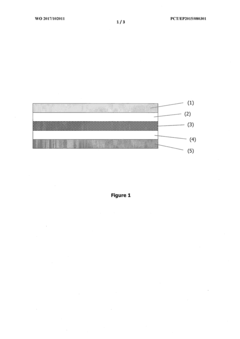
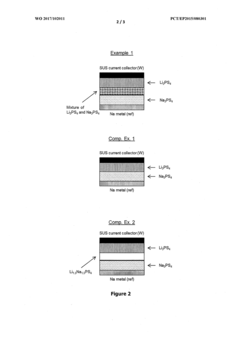
- An all-solid-state battery configuration is developed with a Li/Na exchanging layer, comprising a physical mixture of sulfide-based sodium-containing and lithium-containing solid electrolyte materials, enhancing ion exchange and increasing battery voltage through a Li/Na hybrid system.

All-solid-state sodium-ion secondary battery
PatentWO2023120497A1
Innovation
- The development of an all-solid-state sodium ion secondary battery with a specific capacity ratio of the negative electrode to the positive electrode layer, utilizing a sodium ion conductive oxide solid electrolyte and a positive electrode active material with crystallized glass containing crystals, and incorporating metallic sodium deposition within the negative electrode layer to enhance safety and efficiency.


Material Supply Chain and Resource Sustainability Analysis
The material supply chain for solid-state sodium-ion batteries presents distinct advantages over lithium-based systems, primarily due to sodium's exceptional abundance and widespread geographical distribution. Sodium ranks as the sixth most abundant element in Earth's crust and can be extracted from seawater and mineral deposits across virtually all continents, eliminating the geopolitical concentration risks associated with lithium resources. This fundamental difference positions sodium-ion technology as a strategically resilient alternative for large-scale energy storage deployment.
Current supply chain analysis reveals that key materials for solid-state sodium-ion batteries, including sodium precursors, solid electrolyte components, and electrode materials, demonstrate significantly lower extraction costs and environmental impact compared to lithium counterparts. The production of sodium carbonate and sodium hydroxide, essential precursors for battery manufacturing, utilizes mature industrial processes with established global infrastructure. However, specialized materials such as NASICON-type electrolytes and beta-alumina require specific raw materials like zirconium and aluminum oxides, which necessitate careful supply chain management to ensure consistent quality and availability.
Resource sustainability considerations extend beyond raw material abundance to encompass the entire lifecycle of battery systems. Solid-state sodium-ion batteries offer enhanced recyclability potential due to the non-toxic nature of sodium compounds and the simpler chemical composition of solid electrolytes. The absence of liquid electrolytes reduces hazardous waste generation during end-of-life processing, while the recovery of sodium and other materials can be achieved through less energy-intensive processes compared to lithium battery recycling.
The environmental footprint of sodium extraction and processing demonstrates favorable metrics, with lower water consumption and reduced carbon emissions per kilogram of active material. Furthermore, the development of bio-derived carbon materials for anodes and the exploration of earth-abundant transition metals for cathodes strengthen the sustainability profile of these systems, aligning with global circular economy objectives and reducing dependency on critical mineral supply chains.
Current supply chain analysis reveals that key materials for solid-state sodium-ion batteries, including sodium precursors, solid electrolyte components, and electrode materials, demonstrate significantly lower extraction costs and environmental impact compared to lithium counterparts. The production of sodium carbonate and sodium hydroxide, essential precursors for battery manufacturing, utilizes mature industrial processes with established global infrastructure. However, specialized materials such as NASICON-type electrolytes and beta-alumina require specific raw materials like zirconium and aluminum oxides, which necessitate careful supply chain management to ensure consistent quality and availability.
Resource sustainability considerations extend beyond raw material abundance to encompass the entire lifecycle of battery systems. Solid-state sodium-ion batteries offer enhanced recyclability potential due to the non-toxic nature of sodium compounds and the simpler chemical composition of solid electrolytes. The absence of liquid electrolytes reduces hazardous waste generation during end-of-life processing, while the recovery of sodium and other materials can be achieved through less energy-intensive processes compared to lithium battery recycling.
The environmental footprint of sodium extraction and processing demonstrates favorable metrics, with lower water consumption and reduced carbon emissions per kilogram of active material. Furthermore, the development of bio-derived carbon materials for anodes and the exploration of earth-abundant transition metals for cathodes strengthen the sustainability profile of these systems, aligning with global circular economy objectives and reducing dependency on critical mineral supply chains.
Safety Standards and Performance Testing Protocols
The establishment of comprehensive safety standards and rigorous performance testing protocols represents a critical foundation for the commercial viability of solid-state sodium-ion battery systems with optimized energy density. As these advanced energy storage devices transition from laboratory development to industrial-scale production, standardized evaluation frameworks become essential to ensure consistent quality, reliability, and safety across different manufacturers and application scenarios. Current regulatory landscapes for sodium-ion batteries remain fragmented, with most existing standards derived from lithium-ion battery frameworks that may not adequately address the unique characteristics of sodium-based chemistries and solid-state architectures.
Safety evaluation protocols must encompass multiple dimensions specific to high-energy-density solid-state sodium-ion systems. Thermal stability testing requires modified methodologies that account for the different thermal runaway characteristics of sodium chemistries compared to lithium counterparts. Mechanical integrity assessments become particularly crucial given the brittle nature of many solid electrolytes and the volumetric changes during sodium insertion and extraction. Electrochemical stability windows, interfacial degradation mechanisms, and dendrite formation propensities under various operating conditions demand specialized testing procedures that reflect the operational realities of optimized energy density configurations.
Performance testing protocols should establish standardized metrics for evaluating energy density achievements while maintaining safety margins. Cycle life testing under realistic charge-discharge profiles, rate capability assessments at different temperature ranges, and calendar aging studies provide essential data for comparing different technological approaches. Standardized measurement conditions for energy density calculations, including voltage cutoffs, current rates, and temperature specifications, enable meaningful comparisons across research institutions and commercial entities. Additionally, protocols must address the unique challenges of solid-state configurations, such as interfacial contact maintenance and pressure requirements during operation.
International harmonization efforts are emerging to create unified testing frameworks that balance innovation encouragement with safety assurance. Collaborative initiatives between industry consortia, academic institutions, and regulatory bodies aim to develop testing protocols that can accommodate the diverse material combinations and architectural designs being explored for energy density optimization. These evolving standards will ultimately determine the pathway for solid-state sodium-ion batteries to achieve market acceptance while maintaining the highest safety and performance benchmarks.
Safety evaluation protocols must encompass multiple dimensions specific to high-energy-density solid-state sodium-ion systems. Thermal stability testing requires modified methodologies that account for the different thermal runaway characteristics of sodium chemistries compared to lithium counterparts. Mechanical integrity assessments become particularly crucial given the brittle nature of many solid electrolytes and the volumetric changes during sodium insertion and extraction. Electrochemical stability windows, interfacial degradation mechanisms, and dendrite formation propensities under various operating conditions demand specialized testing procedures that reflect the operational realities of optimized energy density configurations.
Performance testing protocols should establish standardized metrics for evaluating energy density achievements while maintaining safety margins. Cycle life testing under realistic charge-discharge profiles, rate capability assessments at different temperature ranges, and calendar aging studies provide essential data for comparing different technological approaches. Standardized measurement conditions for energy density calculations, including voltage cutoffs, current rates, and temperature specifications, enable meaningful comparisons across research institutions and commercial entities. Additionally, protocols must address the unique challenges of solid-state configurations, such as interfacial contact maintenance and pressure requirements during operation.
International harmonization efforts are emerging to create unified testing frameworks that balance innovation encouragement with safety assurance. Collaborative initiatives between industry consortia, academic institutions, and regulatory bodies aim to develop testing protocols that can accommodate the diverse material combinations and architectural designs being explored for energy density optimization. These evolving standards will ultimately determine the pathway for solid-state sodium-ion batteries to achieve market acceptance while maintaining the highest safety and performance benchmarks.
Unlock deeper insights with PatSnap Eureka Quick Research — get a full tech report to explore trends and direct your research. Try now!
Generate Your Research Report Instantly with AI Agent
Supercharge your innovation with PatSnap Eureka AI Agent Platform!