

Enhancing CF4 Reaction Time in Dry Etching Processes
MAR 20, 20268 MIN READ
Generate Your Research Report Instantly with AI Agent
PatSnap Eureka helps you evaluate technical feasibility & market potential.
CF4 Dry Etching Background and Technical Objectives
Carbon tetrafluoride (CF4) has emerged as one of the most critical process gases in semiconductor manufacturing, particularly in plasma-based dry etching applications. Since the 1980s, CF4 has been extensively utilized for etching silicon dioxide, silicon nitride, and various metal films due to its exceptional chemical stability, high selectivity, and ability to generate highly reactive fluorine radicals under plasma conditions. The evolution of CF4-based etching processes has been closely intertwined with the semiconductor industry's relentless pursuit of smaller feature sizes and higher device densities.
The historical development of CF4 dry etching can be traced back to the transition from wet chemical etching to plasma-enhanced dry etching processes. Early implementations focused primarily on achieving anisotropic etching profiles necessary for maintaining critical dimensions in integrated circuit fabrication. As device geometries continued to shrink from micrometer to nanometer scales, the demands on etching precision, uniformity, and process control have intensified dramatically.
Contemporary semiconductor manufacturing faces unprecedented challenges in etching processes, particularly regarding throughput optimization and cost reduction. The reaction time of CF4 in dry etching processes has become a critical bottleneck, directly impacting manufacturing efficiency and economic viability. Extended reaction times not only reduce wafer throughput but also increase energy consumption, equipment utilization costs, and overall production expenses.
The primary technical objective centers on significantly reducing CF4 reaction time while maintaining or improving etching quality parameters. This encompasses achieving faster etch rates without compromising critical aspects such as selectivity ratios, sidewall profile control, and surface roughness. Additionally, the enhancement must ensure consistent performance across varying substrate materials and device structures.
Secondary objectives include optimizing plasma chemistry to maximize CF4 utilization efficiency, minimizing byproduct formation that could contaminate chamber environments, and developing process conditions that extend equipment maintenance intervals. The ultimate goal involves establishing a robust, scalable solution that can be readily integrated into existing manufacturing workflows while providing measurable improvements in both technical performance and economic metrics for next-generation semiconductor device production.
The historical development of CF4 dry etching can be traced back to the transition from wet chemical etching to plasma-enhanced dry etching processes. Early implementations focused primarily on achieving anisotropic etching profiles necessary for maintaining critical dimensions in integrated circuit fabrication. As device geometries continued to shrink from micrometer to nanometer scales, the demands on etching precision, uniformity, and process control have intensified dramatically.
Contemporary semiconductor manufacturing faces unprecedented challenges in etching processes, particularly regarding throughput optimization and cost reduction. The reaction time of CF4 in dry etching processes has become a critical bottleneck, directly impacting manufacturing efficiency and economic viability. Extended reaction times not only reduce wafer throughput but also increase energy consumption, equipment utilization costs, and overall production expenses.
The primary technical objective centers on significantly reducing CF4 reaction time while maintaining or improving etching quality parameters. This encompasses achieving faster etch rates without compromising critical aspects such as selectivity ratios, sidewall profile control, and surface roughness. Additionally, the enhancement must ensure consistent performance across varying substrate materials and device structures.
Secondary objectives include optimizing plasma chemistry to maximize CF4 utilization efficiency, minimizing byproduct formation that could contaminate chamber environments, and developing process conditions that extend equipment maintenance intervals. The ultimate goal involves establishing a robust, scalable solution that can be readily integrated into existing manufacturing workflows while providing measurable improvements in both technical performance and economic metrics for next-generation semiconductor device production.
Market Demand for Enhanced CF4 Etching Performance
The semiconductor manufacturing industry faces mounting pressure to enhance CF4 etching performance as device geometries continue to shrink and manufacturing complexity increases. Advanced semiconductor nodes below 7nm require unprecedented precision in dry etching processes, driving demand for optimized CF4 reaction kinetics that can deliver superior etch rates while maintaining critical dimension control and selectivity.
Memory manufacturers, particularly those producing DRAM and NAND flash devices, represent a significant portion of the market demand for enhanced CF4 etching capabilities. These manufacturers require faster processing times to improve throughput and reduce manufacturing costs per wafer. The transition to 3D NAND architectures with increasing layer counts has intensified the need for efficient CF4 etching processes that can handle deep, high-aspect-ratio features without compromising structural integrity.
Logic device manufacturers are equally driving demand for improved CF4 reaction times as they push toward advanced nodes including 5nm and 3nm processes. The complexity of multi-patterning techniques and the need for precise gate and interconnect formation require etching processes that can achieve rapid material removal while maintaining atomic-level precision. Enhanced CF4 performance directly translates to improved manufacturing economics and competitive positioning in the logic semiconductor market.
The compound semiconductor sector, encompassing GaN, SiC, and other wide-bandgap materials, presents an emerging market segment with specific CF4 etching requirements. These materials demand optimized plasma chemistry and reaction kinetics to achieve effective etching without inducing material damage or contamination. The growing adoption of compound semiconductors in power electronics and RF applications is expanding the addressable market for enhanced CF4 etching solutions.
Fab productivity considerations are increasingly influencing market demand patterns. Equipment utilization rates and overall equipment effectiveness metrics directly correlate with etching process efficiency. Manufacturers seek CF4 etching enhancements that can reduce cycle times, minimize chamber seasoning requirements, and extend maintenance intervals. These operational improvements translate to significant cost savings and improved return on capital investments.
The market demand is further amplified by the industry's transition toward more sustainable manufacturing practices. Enhanced CF4 reaction efficiency can reduce overall fluorocarbon consumption and minimize greenhouse gas emissions, aligning with environmental regulations and corporate sustainability initiatives while maintaining process performance standards.
Memory manufacturers, particularly those producing DRAM and NAND flash devices, represent a significant portion of the market demand for enhanced CF4 etching capabilities. These manufacturers require faster processing times to improve throughput and reduce manufacturing costs per wafer. The transition to 3D NAND architectures with increasing layer counts has intensified the need for efficient CF4 etching processes that can handle deep, high-aspect-ratio features without compromising structural integrity.
Logic device manufacturers are equally driving demand for improved CF4 reaction times as they push toward advanced nodes including 5nm and 3nm processes. The complexity of multi-patterning techniques and the need for precise gate and interconnect formation require etching processes that can achieve rapid material removal while maintaining atomic-level precision. Enhanced CF4 performance directly translates to improved manufacturing economics and competitive positioning in the logic semiconductor market.
The compound semiconductor sector, encompassing GaN, SiC, and other wide-bandgap materials, presents an emerging market segment with specific CF4 etching requirements. These materials demand optimized plasma chemistry and reaction kinetics to achieve effective etching without inducing material damage or contamination. The growing adoption of compound semiconductors in power electronics and RF applications is expanding the addressable market for enhanced CF4 etching solutions.
Fab productivity considerations are increasingly influencing market demand patterns. Equipment utilization rates and overall equipment effectiveness metrics directly correlate with etching process efficiency. Manufacturers seek CF4 etching enhancements that can reduce cycle times, minimize chamber seasoning requirements, and extend maintenance intervals. These operational improvements translate to significant cost savings and improved return on capital investments.
The market demand is further amplified by the industry's transition toward more sustainable manufacturing practices. Enhanced CF4 reaction efficiency can reduce overall fluorocarbon consumption and minimize greenhouse gas emissions, aligning with environmental regulations and corporate sustainability initiatives while maintaining process performance standards.
Current CF4 Reaction Kinetics Challenges and Limitations
CF4-based dry etching processes face significant kinetic limitations that directly impact reaction efficiency and process throughput. The primary challenge stems from the relatively slow dissociation rate of CF4 molecules under standard plasma conditions. CF4 exhibits exceptional chemical stability due to its strong C-F bonds (bond energy ~485 kJ/mol), requiring substantial energy input to achieve effective fragmentation into reactive fluorine radicals and carbon-containing species.
The electron impact dissociation of CF4 typically occurs at threshold energies exceeding 12-15 eV, which demands high-energy plasma environments. However, maintaining such conditions often leads to non-selective etching and substrate damage, creating a fundamental trade-off between reaction speed and process control. Current plasma systems struggle to optimize this balance, particularly in applications requiring precise feature dimensions and minimal sidewall damage.
Temperature-dependent reaction kinetics present another critical limitation. While elevated substrate temperatures can enhance CF4 dissociation rates, they simultaneously increase the volatility of etch byproducts, potentially leading to redeposition issues and compromised etch profiles. The Arrhenius behavior of CF4 reactions shows activation energies that vary significantly with plasma conditions, making predictive modeling challenging.
Surface reaction mechanisms introduce additional complexity. The formation of fluorocarbon polymer layers during CF4 etching creates a dynamic equilibrium between deposition and etching processes. These polymer films can passivate reactive sites, effectively reducing the available surface area for continued etching reactions. The thickness and composition of these layers depend heavily on the CF4 fragmentation efficiency and local fluorine-to-carbon ratios.
Mass transport limitations become pronounced in high-aspect-ratio structures where CF4 molecules and their dissociation products must diffuse through narrow channels. The mean free path of reactive species and their sticking coefficients on feature sidewalls significantly influence the overall reaction kinetics, often resulting in aspect-ratio-dependent etch rates.
Current diagnostic capabilities for real-time monitoring of CF4 reaction kinetics remain inadequate. Optical emission spectroscopy and mass spectrometry provide limited temporal resolution for tracking rapid kinetic changes, hindering the development of closed-loop process control systems that could optimize reaction conditions dynamically.
The electron impact dissociation of CF4 typically occurs at threshold energies exceeding 12-15 eV, which demands high-energy plasma environments. However, maintaining such conditions often leads to non-selective etching and substrate damage, creating a fundamental trade-off between reaction speed and process control. Current plasma systems struggle to optimize this balance, particularly in applications requiring precise feature dimensions and minimal sidewall damage.
Temperature-dependent reaction kinetics present another critical limitation. While elevated substrate temperatures can enhance CF4 dissociation rates, they simultaneously increase the volatility of etch byproducts, potentially leading to redeposition issues and compromised etch profiles. The Arrhenius behavior of CF4 reactions shows activation energies that vary significantly with plasma conditions, making predictive modeling challenging.
Surface reaction mechanisms introduce additional complexity. The formation of fluorocarbon polymer layers during CF4 etching creates a dynamic equilibrium between deposition and etching processes. These polymer films can passivate reactive sites, effectively reducing the available surface area for continued etching reactions. The thickness and composition of these layers depend heavily on the CF4 fragmentation efficiency and local fluorine-to-carbon ratios.
Mass transport limitations become pronounced in high-aspect-ratio structures where CF4 molecules and their dissociation products must diffuse through narrow channels. The mean free path of reactive species and their sticking coefficients on feature sidewalls significantly influence the overall reaction kinetics, often resulting in aspect-ratio-dependent etch rates.
Current diagnostic capabilities for real-time monitoring of CF4 reaction kinetics remain inadequate. Optical emission spectroscopy and mass spectrometry provide limited temporal resolution for tracking rapid kinetic changes, hindering the development of closed-loop process control systems that could optimize reaction conditions dynamically.
Existing CF4 Reaction Time Enhancement Solutions
01 CF4 plasma etching process optimization
Optimizing CF4 plasma etching processes involves controlling reaction time parameters to achieve desired etching rates and selectivity. The reaction time directly affects the etching depth and surface quality of semiconductor materials. Process parameters such as gas flow rate, pressure, and power are adjusted in conjunction with reaction time to optimize etching performance. Proper control of CF4 reaction time ensures uniform etching across wafer surfaces and minimizes damage to underlying layers.- CF4 plasma etching reaction time optimization: The reaction time for CF4 plasma etching processes can be optimized to achieve desired etching rates and surface characteristics. Controlling the exposure duration of substrates to CF4 plasma is critical for semiconductor manufacturing and material processing. The reaction time typically ranges from several seconds to several minutes depending on the material being etched and the desired depth. Proper timing ensures uniform etching while preventing over-etching or damage to underlying layers.
- CF4 gas flow rate and reaction duration control: The relationship between CF4 gas flow rate and reaction time is essential for process control in chemical vapor deposition and etching applications. Higher flow rates may reduce required reaction times while maintaining process quality. The duration of CF4 exposure must be balanced with flow parameters to achieve optimal results in thin film deposition and surface treatment processes. Automated control systems can adjust both parameters dynamically based on real-time monitoring.
- Temperature-dependent CF4 reaction kinetics: The reaction time of CF4-based processes is significantly influenced by temperature conditions. Elevated temperatures can accelerate reaction rates, thereby reducing the required processing time. The activation energy and reaction mechanisms of CF4 vary with temperature, affecting both the speed and quality of the process. Temperature control systems must be integrated with timing controls to optimize overall process efficiency and product quality.
- CF4 chamber pressure and residence time correlation: The chamber pressure during CF4 processing directly affects the effective reaction time and process outcomes. Lower pressures may require longer reaction times to achieve equivalent results compared to higher pressure conditions. The residence time of CF4 molecules in the reaction chamber must be carefully controlled to ensure complete reactions and uniform treatment. Pressure and time parameters are often optimized together to maximize throughput while maintaining quality standards.
- Multi-step CF4 reaction time sequences: Complex processing applications may employ multiple CF4 reaction stages with varying durations for each step. Sequential processing with different reaction times allows for precise control over material properties and surface characteristics. The timing of each stage can be independently optimized to achieve specific intermediate and final results. Multi-step approaches are particularly useful in advanced semiconductor fabrication and surface modification applications where layered or gradient structures are required.
02 CF4 chamber cleaning applications
CF4 is widely used in chamber cleaning processes where reaction time is critical for effective removal of residues and deposits. The cleaning efficiency depends on optimizing the exposure time to ensure complete removal of contaminants while preventing damage to chamber components. Reaction time parameters are adjusted based on the type and amount of deposits to be removed. Extended reaction times may be required for heavily contaminated chambers, while shorter times are sufficient for routine maintenance cleaning.Expand Specific Solutions03 CF4 reaction time in thin film deposition
In thin film deposition processes using CF4, reaction time controls the thickness and properties of deposited films. The duration of CF4 exposure affects film composition, density, and adhesion characteristics. Precise timing is essential to achieve target film specifications and uniformity across substrates. Reaction time is coordinated with temperature and pressure conditions to optimize deposition rates and film quality.Expand Specific Solutions04 CF4 gas flow and reaction kinetics
The relationship between CF4 gas flow rates and reaction time is crucial for process control in semiconductor manufacturing. Reaction kinetics are influenced by the residence time of CF4 molecules in the reaction chamber. Optimizing flow rates in relation to reaction time ensures complete chemical reactions and efficient utilization of process gases. Dynamic adjustment of flow rates during different phases of the reaction cycle can improve process outcomes and reduce gas consumption.Expand Specific Solutions05 CF4 reaction time monitoring and control systems
Advanced monitoring and control systems are employed to precisely manage CF4 reaction times in manufacturing processes. Real-time sensors and feedback mechanisms enable dynamic adjustment of reaction parameters to maintain optimal conditions. Automated control systems can compensate for variations in process conditions by adjusting reaction times accordingly. Integration of monitoring systems with process equipment allows for improved repeatability and yield in CF4-based processes.Expand Specific Solutions
Key Players in CF4 Dry Etching Equipment Industry
The CF4 reaction time enhancement in dry etching processes represents a mature yet evolving segment within the semiconductor manufacturing industry. The market demonstrates significant scale, driven by increasing demand for advanced semiconductor fabrication capabilities across automotive, mobile, and computing applications. Technology maturity varies considerably among key players, with established foundries like Taiwan Semiconductor Manufacturing Co., SMIC-Beijing, and United Microelectronics Corp. leading in process optimization and implementation. Equipment manufacturers including Tokyo Electron Ltd., Beijing NAURA Microelectronics, and Wonik QnC Corp. are advancing specialized etching systems and components. Chemical suppliers such as DAIKIN INDUSTRIES and Central Glass Co. contribute critical CF4 and related materials. The competitive landscape spans from mature multinational corporations to emerging regional players, indicating a dynamic ecosystem where technological advancement in plasma etching efficiency remains crucial for maintaining competitive positioning in semiconductor manufacturing.
SMIC-Beijing
Technical Solution: SMIC has developed CF4 etching process enhancements focusing on plasma density optimization and gas residence time reduction. Their approach involves modified chamber geometries with improved gas injection systems to achieve better CF4 distribution and faster surface reactions. The company implements advanced power coupling techniques and optimized electrode configurations to increase plasma density, thereby accelerating CF4 dissociation and improving etch rates. Their process includes pre-treatment steps and surface conditioning methods to reduce reaction activation energy and enhance CF4 reactivity with target materials. Integration of real-time endpoint detection systems allows for precise process control and optimization of CF4 reaction timing.
Strengths: Cost-effective solutions with good process flexibility for various applications. Weaknesses: Technology gap compared to leading equipment manufacturers and limited advanced process capabilities.
Tokyo Electron Ltd.
Technical Solution: Tokyo Electron has developed advanced plasma etching systems with optimized CF4 gas delivery mechanisms and real-time process monitoring capabilities. Their systems feature precise gas flow control with multi-zone temperature management to enhance CF4 dissociation rates. The company's proprietary plasma source technology enables uniform CF4 distribution across wafer surfaces, reducing reaction time through improved ion bombardment energy control. Their etching chambers incorporate advanced pumping systems and gas residence time optimization to maximize CF4 utilization efficiency. The integration of in-situ monitoring allows for real-time adjustment of process parameters to maintain optimal CF4 reaction kinetics throughout the etching cycle.
Strengths: Industry-leading plasma control technology and comprehensive process monitoring systems. Weaknesses: High equipment costs and complex maintenance requirements for advanced systems.
Core Innovations in CF4 Plasma Chemistry Optimization
Dry Etching Agent and Dry Etching Method Using the Same
PatentActiveUS20140242803A1
Innovation
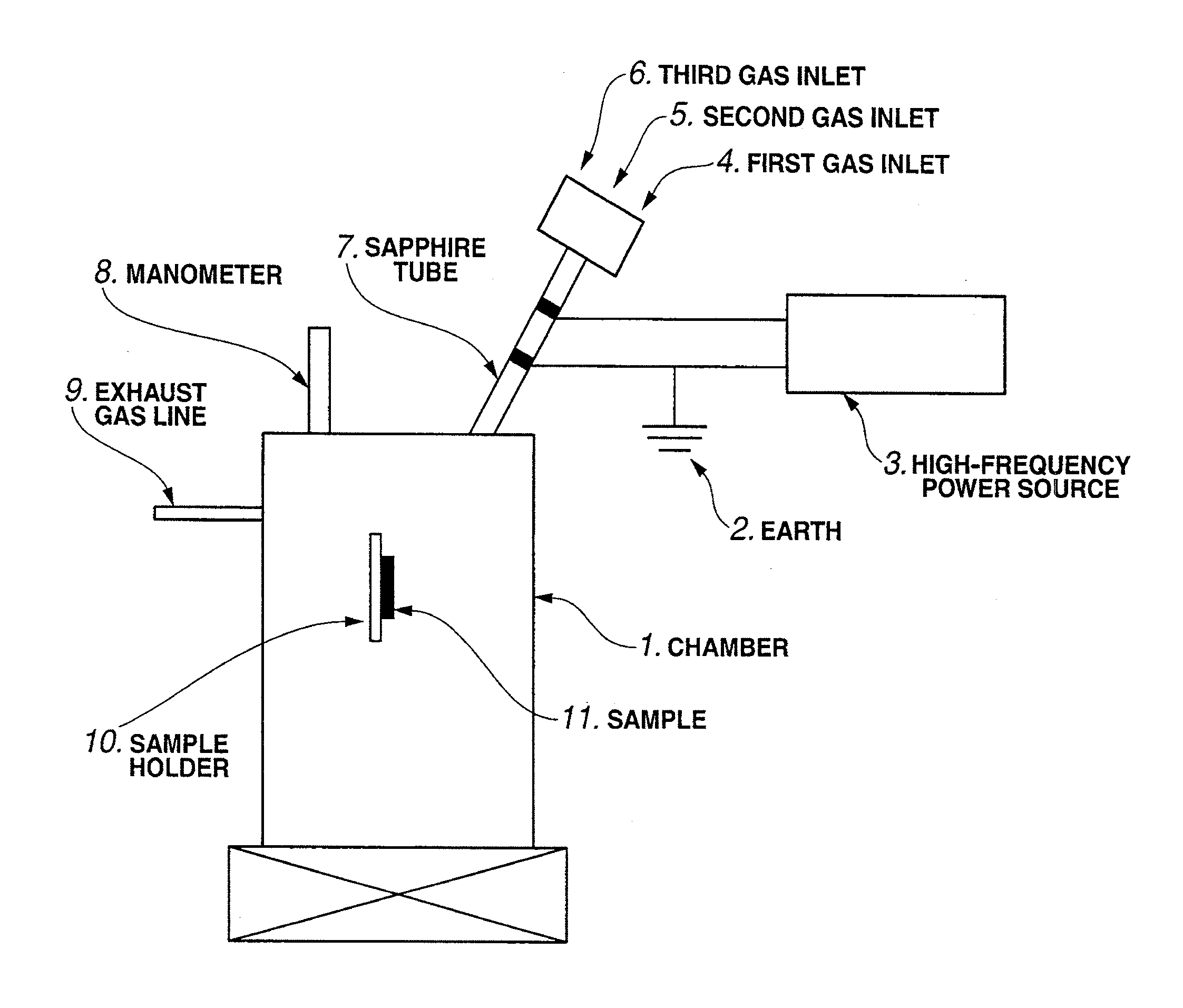
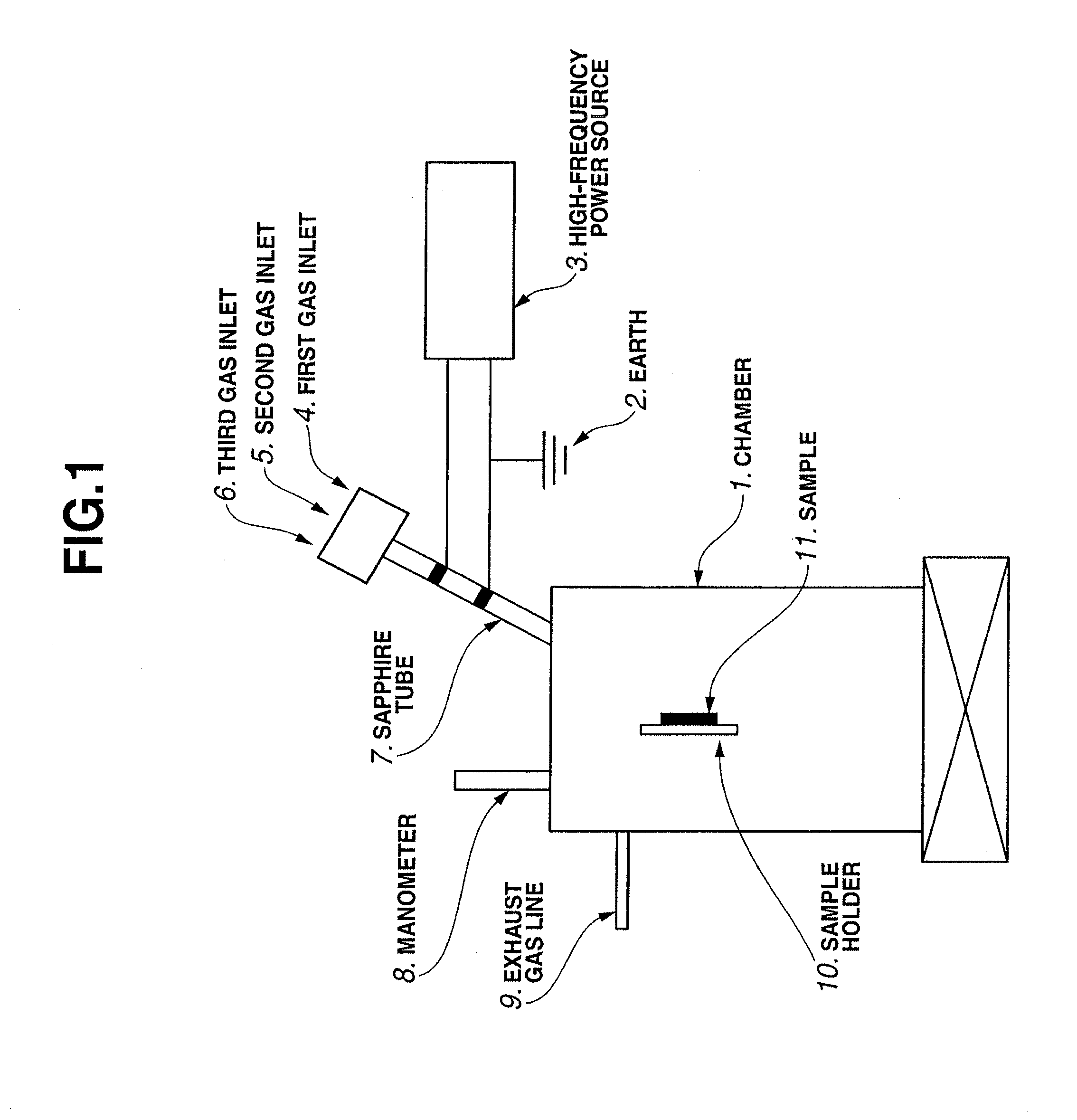
- A dry etching agent comprising a fluorinated propyne (CF3C≡CX) combined with oxygen-containing, halogen, or inert gases, which generates a plasma for selective etching of silicon materials, offering a wide process window and high etching efficiency without requiring special equipment.
Method of dry etching
PatentInactiveUS5296095A
Innovation
- A dry etching method using a principal gas containing C, S, or C1 elements with an additive gas containing two or more H elements, ensuring a step coverage of 20% or more, and employing gases like CH2F2, CH3F, or CH3Br with CF4, to achieve a soluble deposit with low F content for precise submicron etching.


Environmental Regulations for CF4 Emissions Control
The semiconductor industry faces increasingly stringent environmental regulations regarding CF4 emissions, driven by the compound's high global warming potential of approximately 7,390 times that of CO2. CF4 is classified as a persistent greenhouse gas with an atmospheric lifetime exceeding 50,000 years, making its emission control a critical environmental priority for dry etching facilities worldwide.
Current regulatory frameworks vary significantly across regions, with the European Union leading through the F-Gas Regulation (EU) 517/2014, which mandates strict reporting requirements and phase-down schedules for fluorinated gases including CF4. The regulation requires semiconductor manufacturers to implement comprehensive monitoring systems and report annual emissions data to national authorities. Similar initiatives are emerging in Asia-Pacific regions, with Japan and South Korea implementing comparable monitoring and reduction mandates.
The United States Environmental Protection Agency has established CF4 emission reporting requirements under the Greenhouse Gas Reporting Program, specifically targeting facilities that emit more than 25,000 metric tons of CO2 equivalent annually. This threshold captures most major semiconductor manufacturing operations, requiring detailed process-level emission tracking and annual compliance reporting. State-level regulations in California and other jurisdictions impose additional constraints through cap-and-trade programs.
Compliance strategies for CF4 emission control typically involve three primary approaches: process optimization to reduce CF4 consumption, implementation of abatement technologies, and adoption of alternative chemistries. Advanced plasma abatement systems can achieve destruction efficiencies exceeding 95% for CF4, though these systems require significant capital investment and ongoing operational costs. Process optimization through enhanced reaction time control offers a dual benefit of improved environmental compliance and operational efficiency.
Emerging regulatory trends indicate a shift toward more comprehensive lifecycle assessments and mandatory emission reduction targets. The semiconductor industry anticipates stricter regulations by 2025, with potential carbon pricing mechanisms that could significantly impact operational costs. Companies are increasingly investing in real-time emission monitoring systems and predictive analytics to ensure proactive compliance management while optimizing process parameters for both performance and environmental objectives.
Current regulatory frameworks vary significantly across regions, with the European Union leading through the F-Gas Regulation (EU) 517/2014, which mandates strict reporting requirements and phase-down schedules for fluorinated gases including CF4. The regulation requires semiconductor manufacturers to implement comprehensive monitoring systems and report annual emissions data to national authorities. Similar initiatives are emerging in Asia-Pacific regions, with Japan and South Korea implementing comparable monitoring and reduction mandates.
The United States Environmental Protection Agency has established CF4 emission reporting requirements under the Greenhouse Gas Reporting Program, specifically targeting facilities that emit more than 25,000 metric tons of CO2 equivalent annually. This threshold captures most major semiconductor manufacturing operations, requiring detailed process-level emission tracking and annual compliance reporting. State-level regulations in California and other jurisdictions impose additional constraints through cap-and-trade programs.
Compliance strategies for CF4 emission control typically involve three primary approaches: process optimization to reduce CF4 consumption, implementation of abatement technologies, and adoption of alternative chemistries. Advanced plasma abatement systems can achieve destruction efficiencies exceeding 95% for CF4, though these systems require significant capital investment and ongoing operational costs. Process optimization through enhanced reaction time control offers a dual benefit of improved environmental compliance and operational efficiency.
Emerging regulatory trends indicate a shift toward more comprehensive lifecycle assessments and mandatory emission reduction targets. The semiconductor industry anticipates stricter regulations by 2025, with potential carbon pricing mechanisms that could significantly impact operational costs. Companies are increasingly investing in real-time emission monitoring systems and predictive analytics to ensure proactive compliance management while optimizing process parameters for both performance and environmental objectives.
Process Safety Considerations in CF4 Handling Systems
CF4 handling systems in dry etching processes require comprehensive safety protocols due to the inherent hazards associated with fluorinated compounds. The primary safety concerns stem from CF4's chemical properties, including its potential for toxic byproduct formation, high-pressure storage requirements, and the corrosive nature of fluorine-containing species generated during plasma reactions.
Gas delivery infrastructure must incorporate multiple safety barriers to prevent accidental releases and exposure incidents. Primary containment systems should feature double-walled piping with leak detection capabilities, emergency shut-off valves positioned at strategic locations, and pressure relief systems designed to handle sudden pressure excursions. Secondary containment measures include ventilated gas cabinets with dedicated exhaust systems and real-time atmospheric monitoring for CF4 and potential decomposition products.
Personnel protection protocols are critical given CF4's displacement properties and potential for creating oxygen-deficient atmospheres. Workspace design must ensure adequate ventilation rates exceeding industry standards, with emergency breathing apparatus readily accessible in areas where CF4 concentrations may accumulate. Training programs should emphasize recognition of exposure symptoms and proper emergency response procedures, including evacuation protocols and first aid measures specific to fluorinated compound exposure.
Waste gas management presents unique challenges requiring specialized abatement systems. Thermal destruction units operating at temperatures exceeding 1000°C are necessary to decompose CF4 and prevent atmospheric release of this potent greenhouse gas. Scrubber systems must be designed to handle hydrogen fluoride and other corrosive byproducts generated during the abatement process, with appropriate materials selection and regular maintenance schedules to ensure continued effectiveness.
Emergency response planning must address scenarios ranging from minor leaks to catastrophic system failures. Automated detection systems should trigger immediate process shutdowns and facility notifications when CF4 concentrations exceed predetermined thresholds. Coordination with local emergency services requires specialized training due to the unique hazards associated with fluorinated compounds and the potential for equipment damage from hydrogen fluoride exposure during firefighting operations.
Gas delivery infrastructure must incorporate multiple safety barriers to prevent accidental releases and exposure incidents. Primary containment systems should feature double-walled piping with leak detection capabilities, emergency shut-off valves positioned at strategic locations, and pressure relief systems designed to handle sudden pressure excursions. Secondary containment measures include ventilated gas cabinets with dedicated exhaust systems and real-time atmospheric monitoring for CF4 and potential decomposition products.
Personnel protection protocols are critical given CF4's displacement properties and potential for creating oxygen-deficient atmospheres. Workspace design must ensure adequate ventilation rates exceeding industry standards, with emergency breathing apparatus readily accessible in areas where CF4 concentrations may accumulate. Training programs should emphasize recognition of exposure symptoms and proper emergency response procedures, including evacuation protocols and first aid measures specific to fluorinated compound exposure.
Waste gas management presents unique challenges requiring specialized abatement systems. Thermal destruction units operating at temperatures exceeding 1000°C are necessary to decompose CF4 and prevent atmospheric release of this potent greenhouse gas. Scrubber systems must be designed to handle hydrogen fluoride and other corrosive byproducts generated during the abatement process, with appropriate materials selection and regular maintenance schedules to ensure continued effectiveness.
Emergency response planning must address scenarios ranging from minor leaks to catastrophic system failures. Automated detection systems should trigger immediate process shutdowns and facility notifications when CF4 concentrations exceed predetermined thresholds. Coordination with local emergency services requires specialized training due to the unique hazards associated with fluorinated compounds and the potential for equipment damage from hydrogen fluoride exposure during firefighting operations.
Unlock deeper insights with PatSnap Eureka Quick Research — get a full tech report to explore trends and direct your research. Try now!
Generate Your Research Report Instantly with AI Agent
Supercharge your innovation with PatSnap Eureka AI Agent Platform!