Enhancing Engine Systems Using Isothermal Expansion
MAR 9, 20269 MIN READ
Generate Your Research Report Instantly with AI Agent
PatSnap Eureka helps you evaluate technical feasibility & market potential.
Isothermal Engine Technology Background and Objectives
Isothermal expansion represents a thermodynamic process where gas expansion occurs at constant temperature, maintaining thermal equilibrium throughout the cycle. This principle has garnered significant attention in engine technology development as traditional internal combustion engines typically operate under adiabatic conditions, resulting in substantial energy losses through heat dissipation. The concept of isothermal expansion in engine systems emerged from the fundamental understanding that maintaining constant temperature during gas expansion could theoretically achieve maximum work extraction from fuel combustion.
The historical development of isothermal engine concepts traces back to early thermodynamic studies in the 19th century, where researchers recognized the theoretical advantages of isothermal processes over conventional adiabatic expansion. However, practical implementation remained challenging due to the requirement for perfect heat transfer during rapid expansion cycles. Modern advances in materials science, heat exchanger technology, and computational fluid dynamics have renewed interest in developing practical isothermal engine systems.
Current technological evolution in this field focuses on achieving near-isothermal conditions through innovative heat management strategies. Advanced heat exchanger designs, including micro-channel heat exchangers and phase-change materials, enable rapid heat transfer during expansion cycles. Additionally, variable compression ratio systems and advanced engine control algorithms contribute to optimizing thermal management in real-time operating conditions.
The primary objective of isothermal expansion technology in engine systems centers on maximizing thermal efficiency while reducing emissions and fuel consumption. Theoretical calculations indicate that isothermal engines could achieve efficiency improvements of 15-25% compared to conventional engines under optimal conditions. This efficiency gain translates directly to reduced fuel consumption and lower carbon dioxide emissions, addressing critical environmental concerns in transportation and power generation sectors.
Secondary objectives include enhancing engine durability through reduced thermal stress and temperature fluctuations. Isothermal operation minimizes thermal cycling effects on engine components, potentially extending service life and reducing maintenance requirements. Furthermore, the technology aims to enable multi-fuel compatibility by optimizing combustion characteristics across different fuel types through precise thermal control.
The ultimate goal encompasses developing commercially viable isothermal engine systems that can be integrated into existing automotive and industrial applications without requiring extensive infrastructure modifications, thereby facilitating widespread adoption of this advanced propulsion technology.
The historical development of isothermal engine concepts traces back to early thermodynamic studies in the 19th century, where researchers recognized the theoretical advantages of isothermal processes over conventional adiabatic expansion. However, practical implementation remained challenging due to the requirement for perfect heat transfer during rapid expansion cycles. Modern advances in materials science, heat exchanger technology, and computational fluid dynamics have renewed interest in developing practical isothermal engine systems.
Current technological evolution in this field focuses on achieving near-isothermal conditions through innovative heat management strategies. Advanced heat exchanger designs, including micro-channel heat exchangers and phase-change materials, enable rapid heat transfer during expansion cycles. Additionally, variable compression ratio systems and advanced engine control algorithms contribute to optimizing thermal management in real-time operating conditions.
The primary objective of isothermal expansion technology in engine systems centers on maximizing thermal efficiency while reducing emissions and fuel consumption. Theoretical calculations indicate that isothermal engines could achieve efficiency improvements of 15-25% compared to conventional engines under optimal conditions. This efficiency gain translates directly to reduced fuel consumption and lower carbon dioxide emissions, addressing critical environmental concerns in transportation and power generation sectors.
Secondary objectives include enhancing engine durability through reduced thermal stress and temperature fluctuations. Isothermal operation minimizes thermal cycling effects on engine components, potentially extending service life and reducing maintenance requirements. Furthermore, the technology aims to enable multi-fuel compatibility by optimizing combustion characteristics across different fuel types through precise thermal control.
The ultimate goal encompasses developing commercially viable isothermal engine systems that can be integrated into existing automotive and industrial applications without requiring extensive infrastructure modifications, thereby facilitating widespread adoption of this advanced propulsion technology.
Market Demand for Enhanced Engine Efficiency Systems
The global automotive industry faces unprecedented pressure to improve fuel efficiency and reduce emissions, driving substantial market demand for enhanced engine efficiency systems. Regulatory frameworks worldwide, including the European Union's stringent CO2 emission standards and the Corporate Average Fuel Economy (CAFE) standards in the United States, mandate continuous improvements in vehicle fuel economy. These regulations create a compelling business case for advanced engine technologies that can deliver measurable efficiency gains.
Commercial vehicle operators represent a particularly lucrative market segment for isothermal expansion technologies. Fleet operators in logistics, shipping, and public transportation sectors prioritize fuel cost reduction as a primary operational concern. The potential for isothermal expansion systems to improve thermal efficiency directly translates to reduced fuel consumption, offering immediate return on investment for these operators.
The passenger vehicle market demonstrates growing consumer awareness of fuel economy benefits, particularly in regions with high fuel prices. Premium automotive manufacturers increasingly position advanced engine technologies as differentiating features, creating market opportunities for sophisticated thermal management systems. Electric vehicle adoption, while growing, still leaves substantial market space for internal combustion engine improvements in hybrid and conventional powertrains.
Industrial applications beyond automotive present significant market potential for isothermal expansion technologies. Stationary power generation, marine propulsion systems, and heavy machinery sectors all require improved fuel efficiency to meet operational cost targets and environmental compliance requirements. These applications often involve longer operational cycles and higher fuel consumption volumes, amplifying the economic benefits of efficiency improvements.
Market research indicates strong correlation between fuel price volatility and investment in engine efficiency technologies. Economic uncertainty and supply chain disruptions have heightened focus on fuel security and cost predictability, driving demand for technologies that reduce overall fuel dependency. Government incentives and research funding programs further stimulate market development for advanced thermal management solutions.
The aftermarket segment presents additional opportunities for isothermal expansion systems designed for retrofit applications. Existing vehicle fleets and industrial equipment represent substantial installed bases that could benefit from efficiency upgrades without complete system replacement.
Commercial vehicle operators represent a particularly lucrative market segment for isothermal expansion technologies. Fleet operators in logistics, shipping, and public transportation sectors prioritize fuel cost reduction as a primary operational concern. The potential for isothermal expansion systems to improve thermal efficiency directly translates to reduced fuel consumption, offering immediate return on investment for these operators.
The passenger vehicle market demonstrates growing consumer awareness of fuel economy benefits, particularly in regions with high fuel prices. Premium automotive manufacturers increasingly position advanced engine technologies as differentiating features, creating market opportunities for sophisticated thermal management systems. Electric vehicle adoption, while growing, still leaves substantial market space for internal combustion engine improvements in hybrid and conventional powertrains.
Industrial applications beyond automotive present significant market potential for isothermal expansion technologies. Stationary power generation, marine propulsion systems, and heavy machinery sectors all require improved fuel efficiency to meet operational cost targets and environmental compliance requirements. These applications often involve longer operational cycles and higher fuel consumption volumes, amplifying the economic benefits of efficiency improvements.
Market research indicates strong correlation between fuel price volatility and investment in engine efficiency technologies. Economic uncertainty and supply chain disruptions have heightened focus on fuel security and cost predictability, driving demand for technologies that reduce overall fuel dependency. Government incentives and research funding programs further stimulate market development for advanced thermal management solutions.
The aftermarket segment presents additional opportunities for isothermal expansion systems designed for retrofit applications. Existing vehicle fleets and industrial equipment represent substantial installed bases that could benefit from efficiency upgrades without complete system replacement.
Current State of Isothermal Expansion Engine Technologies
Isothermal expansion engine technologies represent a specialized segment within the broader thermodynamic engine landscape, characterized by their ability to maintain constant temperature during the expansion process. Currently, these systems exist primarily in research and development phases, with limited commercial deployment due to inherent technical complexities and manufacturing challenges.
The fundamental principle underlying isothermal expansion engines involves maintaining thermal equilibrium during gas expansion, theoretically achieving maximum thermodynamic efficiency. However, practical implementations face significant obstacles in achieving true isothermal conditions due to finite heat transfer rates and material limitations. Current prototypes typically operate in quasi-isothermal modes, where temperature variations are minimized but not entirely eliminated.
Leading research institutions and automotive manufacturers have developed various approaches to approximate isothermal expansion. These include enhanced heat exchanger designs integrated within cylinder walls, variable compression ratio mechanisms, and advanced control systems that modulate expansion rates based on real-time temperature monitoring. The most promising configurations utilize micro-channel heat exchangers and phase-change materials to facilitate rapid heat transfer during expansion cycles.
Contemporary isothermal expansion engines demonstrate efficiency improvements of 15-25% compared to conventional internal combustion engines under laboratory conditions. However, these gains diminish significantly in real-world applications due to parasitic losses from auxiliary systems required for temperature control. The technology currently suffers from increased complexity, higher manufacturing costs, and reliability concerns related to sophisticated thermal management systems.
Recent developments focus on hybrid approaches that combine isothermal expansion principles with existing engine architectures. These solutions aim to capture efficiency benefits while maintaining practical feasibility for mass production. Advanced materials research, particularly in thermal interface materials and rapid heat transfer surfaces, continues to address fundamental limitations in achieving near-isothermal conditions within acceptable timeframes for automotive applications.
The current technological maturity level remains at Technology Readiness Level 4-5, indicating successful laboratory demonstrations but requiring substantial development before commercial viability. Key challenges include durability of thermal management components, cost-effective manufacturing processes, and integration with existing powertrain systems while maintaining acceptable performance characteristics for consumer applications.
The fundamental principle underlying isothermal expansion engines involves maintaining thermal equilibrium during gas expansion, theoretically achieving maximum thermodynamic efficiency. However, practical implementations face significant obstacles in achieving true isothermal conditions due to finite heat transfer rates and material limitations. Current prototypes typically operate in quasi-isothermal modes, where temperature variations are minimized but not entirely eliminated.
Leading research institutions and automotive manufacturers have developed various approaches to approximate isothermal expansion. These include enhanced heat exchanger designs integrated within cylinder walls, variable compression ratio mechanisms, and advanced control systems that modulate expansion rates based on real-time temperature monitoring. The most promising configurations utilize micro-channel heat exchangers and phase-change materials to facilitate rapid heat transfer during expansion cycles.
Contemporary isothermal expansion engines demonstrate efficiency improvements of 15-25% compared to conventional internal combustion engines under laboratory conditions. However, these gains diminish significantly in real-world applications due to parasitic losses from auxiliary systems required for temperature control. The technology currently suffers from increased complexity, higher manufacturing costs, and reliability concerns related to sophisticated thermal management systems.
Recent developments focus on hybrid approaches that combine isothermal expansion principles with existing engine architectures. These solutions aim to capture efficiency benefits while maintaining practical feasibility for mass production. Advanced materials research, particularly in thermal interface materials and rapid heat transfer surfaces, continues to address fundamental limitations in achieving near-isothermal conditions within acceptable timeframes for automotive applications.
The current technological maturity level remains at Technology Readiness Level 4-5, indicating successful laboratory demonstrations but requiring substantial development before commercial viability. Key challenges include durability of thermal management components, cost-effective manufacturing processes, and integration with existing powertrain systems while maintaining acceptable performance characteristics for consumer applications.
Existing Isothermal Expansion Implementation Solutions
01 Engine control systems and optimization methods
Advanced engine control systems utilize electronic control units and sensors to monitor and optimize engine parameters in real-time. These systems can adjust fuel injection timing, air-fuel ratios, and ignition timing to maximize engine performance while maintaining efficiency. The control algorithms process data from various sensors to make dynamic adjustments that improve power output, reduce emissions, and enhance overall engine responsiveness across different operating conditions.- Engine control systems and optimization methods: Advanced engine control systems utilize sophisticated algorithms and electronic control units to optimize engine performance parameters such as fuel injection timing, air-fuel ratio, and ignition timing. These systems continuously monitor engine operating conditions and adjust parameters in real-time to maximize power output, fuel efficiency, and reduce emissions. The control systems may incorporate feedback mechanisms and predictive models to adapt to varying operating conditions and maintain optimal engine performance across different load and speed ranges.
- Turbocharging and forced induction technologies: Forced induction systems enhance engine performance by increasing the density of air entering the combustion chamber, allowing for more fuel to be burned and generating greater power output. These systems include turbochargers and superchargers that compress intake air, improving volumetric efficiency and specific power output. Advanced designs incorporate variable geometry mechanisms, wastegate controls, and intercooling systems to optimize boost pressure across the engine operating range while managing thermal loads and preventing knock.
- Fuel injection and combustion optimization: Modern fuel injection systems employ high-pressure direct injection technology to precisely control fuel delivery timing, quantity, and spray pattern. These systems enable multiple injection events per combustion cycle, including pilot, main, and post injections, to optimize combustion efficiency, reduce emissions, and improve power output. Advanced injector designs and control strategies allow for better fuel atomization, mixture preparation, and combustion phasing, resulting in enhanced thermal efficiency and reduced fuel consumption.
- Engine thermal management systems: Thermal management systems regulate engine operating temperatures to maintain optimal performance and efficiency. These systems include advanced cooling circuits, variable flow pumps, electronically controlled thermostats, and heat recovery mechanisms. Proper thermal management ensures components operate within ideal temperature ranges, reduces warm-up time, minimizes thermal stress, and improves overall engine efficiency. Integration of cooling system controls with engine management systems allows for dynamic adjustment based on operating conditions.
- Variable valve timing and actuation mechanisms: Variable valve timing systems adjust the timing and duration of valve opening and closing events to optimize engine breathing characteristics across different operating conditions. These mechanisms include cam phasing systems, variable lift systems, and fully variable valve actuation technologies. By controlling valve events independently, these systems improve volumetric efficiency, enhance low-end torque, increase high-speed power output, reduce pumping losses, and enable advanced combustion strategies such as cylinder deactivation and internal exhaust gas recirculation.
02 Fuel injection and combustion enhancement technologies
Modern fuel injection systems employ precise control mechanisms to optimize fuel delivery and combustion processes. These technologies include direct injection systems, variable injection timing, and advanced atomization techniques that improve fuel-air mixing. Enhanced combustion strategies lead to more complete fuel burning, resulting in increased power output, improved fuel economy, and reduced harmful emissions. The systems can adapt to varying engine loads and speeds to maintain optimal performance.Expand Specific Solutions03 Turbocharging and forced induction systems
Forced induction technologies utilize turbochargers or superchargers to increase air density entering the engine, allowing for greater fuel combustion and power generation. These systems include variable geometry turbochargers, twin-scroll designs, and intercooling mechanisms that manage intake air temperature. The implementation of forced induction significantly boosts engine power output without proportionally increasing engine displacement, improving power-to-weight ratios and overall performance metrics.Expand Specific Solutions04 Engine thermal management and cooling systems
Sophisticated thermal management systems regulate engine operating temperatures to maintain optimal performance conditions. These systems incorporate advanced coolant circulation, variable-speed cooling fans, and intelligent thermostat controls that respond to engine load and ambient conditions. Proper thermal management prevents overheating, reduces thermal stress on engine components, and maintains consistent performance by keeping the engine within its ideal temperature range during various operating scenarios.Expand Specific Solutions05 Engine monitoring and diagnostic systems
Comprehensive monitoring systems track multiple engine parameters including temperature, pressure, vibration, and emissions to assess engine health and performance. These diagnostic systems use sensor networks and data analysis algorithms to detect anomalies, predict maintenance needs, and optimize engine operation. Real-time monitoring enables proactive maintenance scheduling, prevents catastrophic failures, and ensures sustained peak performance by identifying and addressing issues before they impact engine operation.Expand Specific Solutions
Key Players in Advanced Engine System Development
The isothermal expansion engine technology sector represents an emerging market in the early development stage, characterized by significant innovation potential but limited commercial deployment. The market remains relatively small with fragmented participation across energy storage, automotive, and industrial applications. Technology maturity varies considerably among key players, with established automotive giants like Ford Global Technologies LLC, Mercedes-Benz Group AG, Honda Motor Co., Ltd., and GM Global Technology Operations LLC leveraging their extensive R&D capabilities to integrate isothermal processes into conventional engine systems. Energy-focused companies such as SustainX, Inc., Hydrostor, Inc., and LiquidPiston, Inc. are pioneering specialized isothermal expansion applications for grid-scale storage and advanced combustion engines. Industrial technology leaders including ABB Ltd., Robert Bosch GmbH, and GE Vernova, Inc. are exploring broader system integration opportunities. Academic institutions like Harbin Institute of Technology and Dresden University of Technology contribute fundamental research, while emerging players such as Beijing SinoHytec Co., Ltd. focus on fuel cell integration, indicating a competitive landscape with diverse technological approaches and varying maturity levels across different application domains.
SustainX, Inc.
Technical Solution: SustainX developed isothermal compressed air energy storage technology that focuses on maintaining constant temperature during both compression and expansion phases. Their system uses advanced heat exchangers and foam-based heat transfer enhancement to achieve near-isothermal expansion of compressed air. The technology employs a unique approach where compressed air is stored in above-ground vessels and expanded through specially designed cylinders with integrated heat exchange systems. During expansion, the system maintains isothermal conditions by continuously adding heat to prevent temperature drop, thereby maximizing the work output and overall system efficiency. The isothermal expansion process allows for significantly higher energy recovery rates compared to conventional adiabatic systems, achieving theoretical efficiencies approaching 90% under ideal conditions.
Strengths: High theoretical efficiency, modular scalable design, reduced infrastructure requirements compared to underground storage. Weaknesses: Company faced financial difficulties and ceased operations, technology requires complex heat management, limited commercial validation.
LiquidPiston, Inc.
Technical Solution: LiquidPiston has developed the X-Engine, a rotary engine that utilizes the High Efficiency Hybrid Cycle (HEHC) which incorporates isothermal compression and expansion processes. The engine achieves near-isothermal expansion through optimized heat transfer during the expansion stroke, maintaining relatively constant temperature while the gas expands. This approach significantly improves thermal efficiency compared to traditional Otto cycle engines. The X-Engine's unique geometry allows for extended expansion time and enhanced heat exchange with the chamber walls, promoting isothermal conditions. The company reports achieving up to 20% improvement in fuel efficiency through this isothermal expansion enhancement, making it particularly suitable for portable power generation and automotive applications where compact size and high efficiency are critical.
Strengths: Innovative rotary design enables true isothermal processes, compact form factor, high power-to-weight ratio. Weaknesses: Limited commercial deployment, potential sealing challenges in rotary engines, requires specialized manufacturing processes.
Core Patents in Isothermal Engine Enhancement
Thermal engine utilizing isothermal piston timing for automatic, self-regulating, speed control
PatentActiveUS7584613B1
Innovation
- The Crow Thermodynamic Cycle employs isentropic compression, isothermal expansion, isentropic expansion, and constant pressure cooling and contraction, utilizing a heat exchanger to transfer external heat energy, with automatic modulation of engine speed and piston timing to ensure isothermal expansion and adaptability across a wide range of operating conditions, eliminating the need for a cold heat exchanger and allowing standard poppet-style valves.
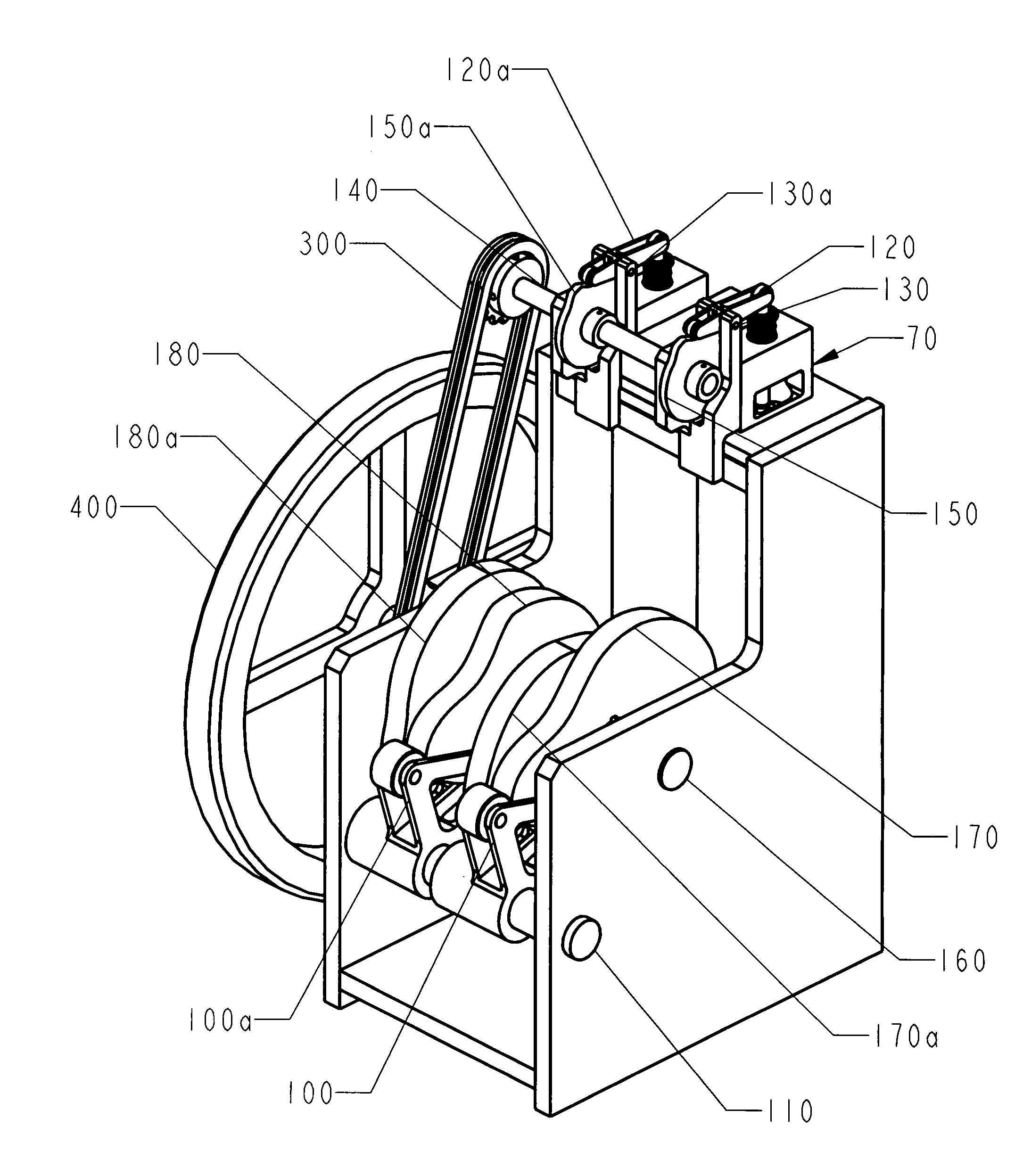
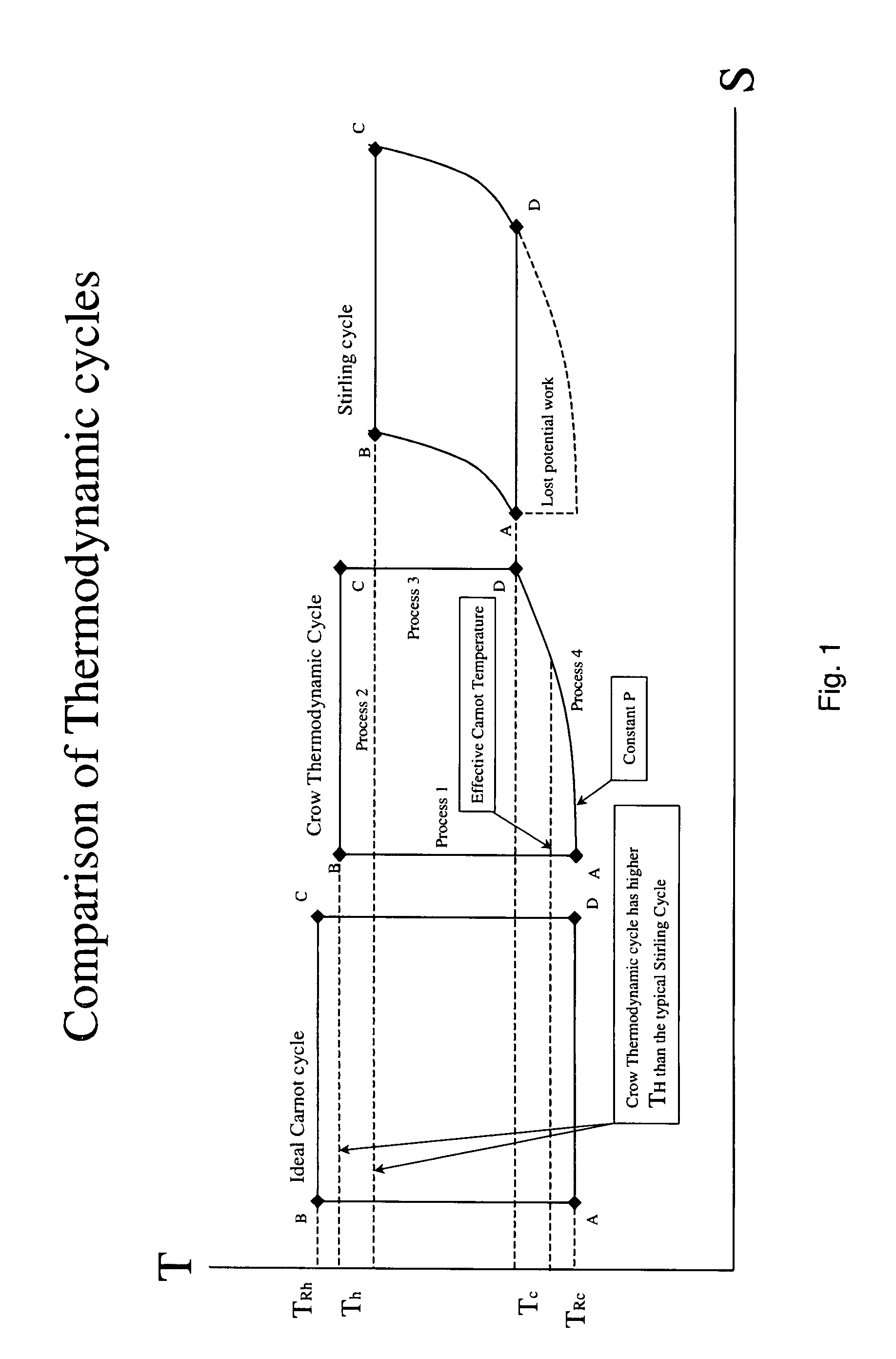
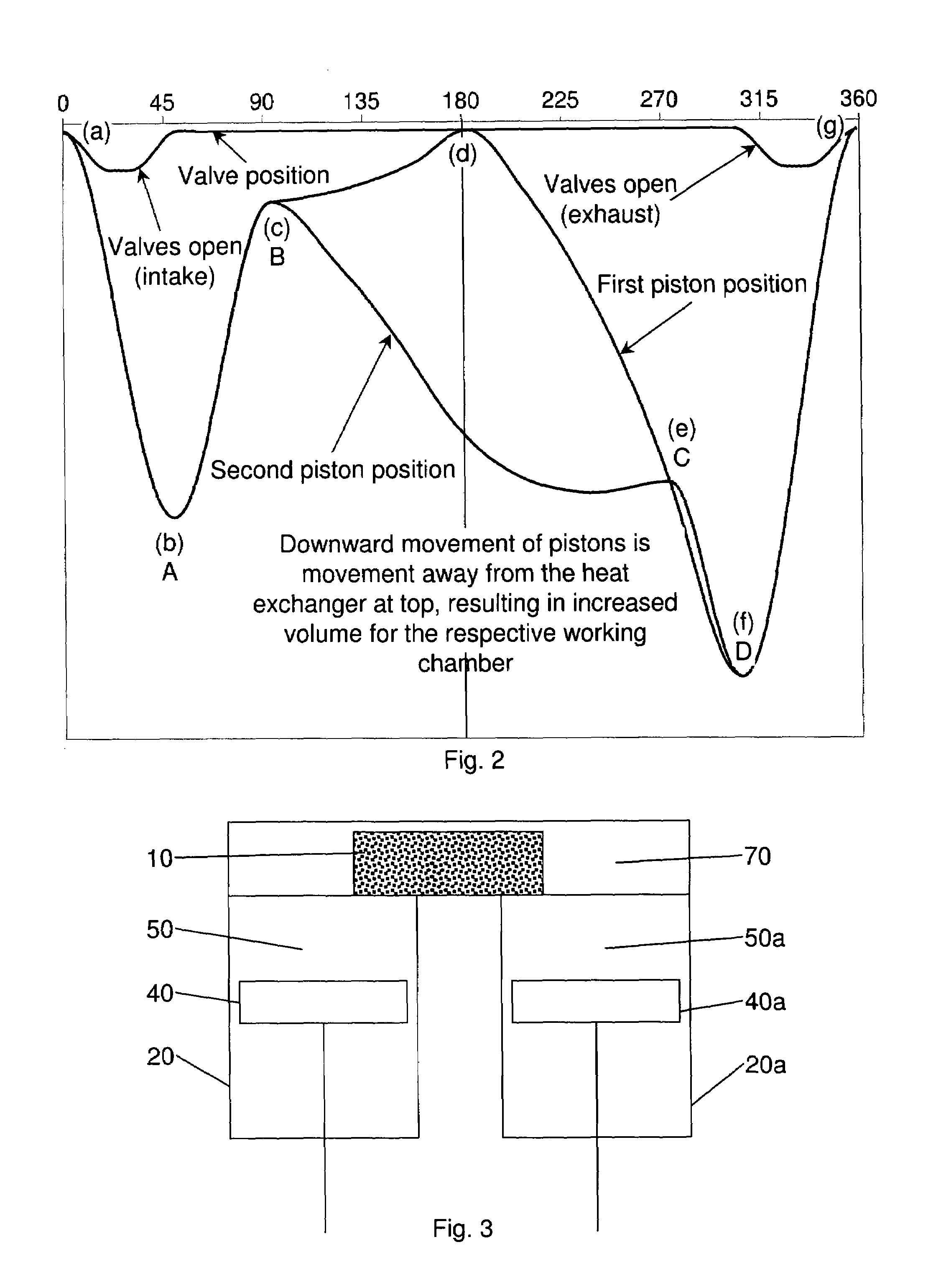

Heat engine
PatentPendingUS20250215813A1
Innovation
- A heat engine system that utilizes a mix of gas and fluid, where the fluid, with higher thermal capacity, maintains the gas at a constant temperature during expansion, allowing for isothermal processes, thereby increasing efficiency and reducing engine size.


Environmental Regulations for Engine Efficiency Standards
Environmental regulations governing engine efficiency standards have become increasingly stringent worldwide, driven by mounting concerns over climate change and air quality deterioration. The regulatory landscape encompasses multiple jurisdictions, each establishing specific performance benchmarks that directly impact the development and implementation of isothermal expansion technologies in engine systems.
The European Union's Euro 7 emission standards, scheduled for implementation in 2025, represent one of the most comprehensive regulatory frameworks affecting engine efficiency requirements. These standards mandate significant reductions in nitrogen oxides, particulate matter, and carbon dioxide emissions, creating substantial pressure for manufacturers to adopt advanced thermodynamic processes like isothermal expansion to meet compliance thresholds.
In the United States, the Corporate Average Fuel Economy (CAFE) standards require automakers to achieve fleet-wide fuel efficiency targets of 40.5 miles per gallon by 2026. These regulations directly incentivize the integration of isothermal expansion technologies, as they offer potential efficiency gains of 15-20% compared to conventional adiabatic processes, making them attractive solutions for regulatory compliance.
China's National VI emission standards and the dual-credit policy for new energy vehicles have established parallel regulatory pressures that favor advanced engine technologies. The regulations specifically encourage research and development of high-efficiency internal combustion engines, positioning isothermal expansion as a viable pathway for meeting both emission and efficiency requirements.
Regulatory bodies are increasingly focusing on real-world driving emissions rather than laboratory conditions, necessitating engine technologies that maintain consistent performance across varied operating conditions. Isothermal expansion systems demonstrate particular advantages in this context, as they can maintain optimal efficiency across broader temperature and load ranges compared to traditional engine cycles.
The regulatory trend toward lifecycle carbon assessments is also influencing technology adoption decisions. Isothermal expansion technologies must demonstrate not only operational efficiency improvements but also favorable environmental impacts throughout their manufacturing, deployment, and end-of-life phases to align with emerging regulatory frameworks focused on comprehensive environmental stewardship.
The European Union's Euro 7 emission standards, scheduled for implementation in 2025, represent one of the most comprehensive regulatory frameworks affecting engine efficiency requirements. These standards mandate significant reductions in nitrogen oxides, particulate matter, and carbon dioxide emissions, creating substantial pressure for manufacturers to adopt advanced thermodynamic processes like isothermal expansion to meet compliance thresholds.
In the United States, the Corporate Average Fuel Economy (CAFE) standards require automakers to achieve fleet-wide fuel efficiency targets of 40.5 miles per gallon by 2026. These regulations directly incentivize the integration of isothermal expansion technologies, as they offer potential efficiency gains of 15-20% compared to conventional adiabatic processes, making them attractive solutions for regulatory compliance.
China's National VI emission standards and the dual-credit policy for new energy vehicles have established parallel regulatory pressures that favor advanced engine technologies. The regulations specifically encourage research and development of high-efficiency internal combustion engines, positioning isothermal expansion as a viable pathway for meeting both emission and efficiency requirements.
Regulatory bodies are increasingly focusing on real-world driving emissions rather than laboratory conditions, necessitating engine technologies that maintain consistent performance across varied operating conditions. Isothermal expansion systems demonstrate particular advantages in this context, as they can maintain optimal efficiency across broader temperature and load ranges compared to traditional engine cycles.
The regulatory trend toward lifecycle carbon assessments is also influencing technology adoption decisions. Isothermal expansion technologies must demonstrate not only operational efficiency improvements but also favorable environmental impacts throughout their manufacturing, deployment, and end-of-life phases to align with emerging regulatory frameworks focused on comprehensive environmental stewardship.
Heat Management Challenges in Isothermal Systems
Heat management represents one of the most critical engineering challenges in isothermal expansion systems for engine applications. The fundamental difficulty lies in maintaining constant temperature conditions while simultaneously managing the substantial heat exchange requirements that isothermal processes demand. Unlike adiabatic systems where heat transfer is minimized, isothermal expansion requires continuous heat input or removal to maintain temperature equilibrium, creating complex thermal management scenarios.
The primary challenge stems from the inherent contradiction between achieving true isothermal conditions and practical engineering constraints. Real-world isothermal systems must operate within finite time frames, yet perfect isothermal expansion theoretically requires infinitely slow processes to allow complete thermal equilibration. This creates a fundamental trade-off between system efficiency and operational speed, forcing engineers to develop compromise solutions that balance thermal management effectiveness with practical performance requirements.
Heat transfer limitations pose significant obstacles in isothermal engine systems. The rate of heat exchange between the working fluid and thermal reservoirs becomes a bottleneck, particularly in high-frequency engine operations. Conventional heat exchangers often lack sufficient surface area or thermal conductivity to maintain isothermal conditions during rapid expansion cycles. This limitation becomes more pronounced as engine speeds increase, leading to temperature variations that reduce theoretical efficiency gains.
Thermal inertia presents another substantial challenge, as engine components possess inherent thermal mass that resists rapid temperature changes. Cylinder walls, pistons, and heat exchange surfaces cannot instantaneously adjust to maintain isothermal conditions, creating temperature gradients and thermal lag effects. These phenomena result in non-uniform heat distribution and compromise the isothermal expansion process, particularly during transient operating conditions.
Advanced heat management solutions are emerging to address these challenges, including enhanced heat exchanger designs with increased surface area-to-volume ratios, phase change materials for thermal buffering, and active thermal control systems. However, these solutions introduce additional complexity, weight, and cost considerations that must be carefully evaluated against performance benefits in practical engine applications.
The primary challenge stems from the inherent contradiction between achieving true isothermal conditions and practical engineering constraints. Real-world isothermal systems must operate within finite time frames, yet perfect isothermal expansion theoretically requires infinitely slow processes to allow complete thermal equilibration. This creates a fundamental trade-off between system efficiency and operational speed, forcing engineers to develop compromise solutions that balance thermal management effectiveness with practical performance requirements.
Heat transfer limitations pose significant obstacles in isothermal engine systems. The rate of heat exchange between the working fluid and thermal reservoirs becomes a bottleneck, particularly in high-frequency engine operations. Conventional heat exchangers often lack sufficient surface area or thermal conductivity to maintain isothermal conditions during rapid expansion cycles. This limitation becomes more pronounced as engine speeds increase, leading to temperature variations that reduce theoretical efficiency gains.
Thermal inertia presents another substantial challenge, as engine components possess inherent thermal mass that resists rapid temperature changes. Cylinder walls, pistons, and heat exchange surfaces cannot instantaneously adjust to maintain isothermal conditions, creating temperature gradients and thermal lag effects. These phenomena result in non-uniform heat distribution and compromise the isothermal expansion process, particularly during transient operating conditions.
Advanced heat management solutions are emerging to address these challenges, including enhanced heat exchanger designs with increased surface area-to-volume ratios, phase change materials for thermal buffering, and active thermal control systems. However, these solutions introduce additional complexity, weight, and cost considerations that must be carefully evaluated against performance benefits in practical engine applications.
Unlock deeper insights with PatSnap Eureka Quick Research — get a full tech report to explore trends and direct your research. Try now!
Generate Your Research Report Instantly with AI Agent
Supercharge your innovation with PatSnap Eureka AI Agent Platform!