

Evaluate Crankcase Flow for Lubrication Enhancement
MAR 13, 20269 MIN READ
Generate Your Research Report Instantly with AI Agent
PatSnap Eureka helps you evaluate technical feasibility & market potential.
Crankcase Flow Technology Background and Enhancement Goals
Crankcase flow technology has evolved significantly since the early days of internal combustion engines, driven by the fundamental need to manage gas dynamics within engine crankcases effectively. The technology encompasses the study and optimization of air and gas movement patterns within the crankcase cavity, which directly impacts lubrication system performance, engine efficiency, and emissions control. Historical development began with basic ventilation systems in the 1920s and progressed through positive crankcase ventilation (PCV) systems in the 1960s, eventually advancing to sophisticated computational fluid dynamics modeling and active flow management systems in modern engines.
The primary technological objective centers on achieving optimal crankcase pressure management while enhancing lubricant distribution and circulation efficiency. This involves maintaining slightly negative crankcase pressure to prevent oil leakage while ensuring adequate oil film formation on critical engine components. Advanced crankcase flow systems aim to minimize oil consumption, reduce blow-by gas recirculation, and optimize oil separator performance through precise flow control mechanisms.
Contemporary enhancement goals focus on integrating smart flow management technologies that adapt to varying engine operating conditions. These systems target improved oil film stability under high-load conditions, enhanced oil return pathways from cylinder heads, and optimized oil mist distribution throughout the crankcase volume. The technology seeks to achieve measurable improvements in bearing lubrication effectiveness, reduced friction losses, and extended oil service intervals.
Emerging technological targets include the development of variable geometry crankcase ventilation systems, advanced oil-air separation technologies, and real-time flow monitoring capabilities. These innovations aim to provide dynamic response to changing engine demands while maintaining optimal lubrication performance across diverse operating scenarios. The integration of predictive algorithms and sensor-based feedback systems represents the next frontier in crankcase flow optimization, promising significant advances in engine reliability and performance efficiency.
The primary technological objective centers on achieving optimal crankcase pressure management while enhancing lubricant distribution and circulation efficiency. This involves maintaining slightly negative crankcase pressure to prevent oil leakage while ensuring adequate oil film formation on critical engine components. Advanced crankcase flow systems aim to minimize oil consumption, reduce blow-by gas recirculation, and optimize oil separator performance through precise flow control mechanisms.
Contemporary enhancement goals focus on integrating smart flow management technologies that adapt to varying engine operating conditions. These systems target improved oil film stability under high-load conditions, enhanced oil return pathways from cylinder heads, and optimized oil mist distribution throughout the crankcase volume. The technology seeks to achieve measurable improvements in bearing lubrication effectiveness, reduced friction losses, and extended oil service intervals.
Emerging technological targets include the development of variable geometry crankcase ventilation systems, advanced oil-air separation technologies, and real-time flow monitoring capabilities. These innovations aim to provide dynamic response to changing engine demands while maintaining optimal lubrication performance across diverse operating scenarios. The integration of predictive algorithms and sensor-based feedback systems represents the next frontier in crankcase flow optimization, promising significant advances in engine reliability and performance efficiency.
Market Demand for Advanced Engine Lubrication Systems
The global automotive industry is experiencing unprecedented demand for advanced engine lubrication systems, driven by increasingly stringent emission regulations and fuel efficiency standards. Modern engines operate under extreme conditions with higher temperatures, pressures, and rotational speeds, necessitating sophisticated lubrication technologies that can maintain optimal performance while reducing environmental impact. This market transformation is particularly evident in the growing adoption of turbocharged engines, hybrid powertrains, and high-performance applications where traditional lubrication approaches prove inadequate.
Commercial vehicle manufacturers represent a significant market segment demanding enhanced crankcase flow management solutions. Fleet operators prioritize extended maintenance intervals and improved fuel economy, creating substantial demand for lubrication systems that can maintain consistent oil circulation and temperature control across diverse operating conditions. The heavy-duty trucking sector specifically requires robust crankcase ventilation systems capable of handling increased blow-by gases while maintaining optimal lubrication distribution throughout extended duty cycles.
The passenger vehicle market demonstrates growing consumer awareness of engine longevity and performance optimization. Premium automotive brands increasingly differentiate their offerings through advanced lubrication technologies, including sophisticated crankcase flow management systems that enhance engine responsiveness and reduce maintenance requirements. This trend extends to the rapidly expanding electric vehicle market, where hybrid powertrains still require efficient lubrication systems for internal combustion components.
Regulatory pressures continue intensifying market demand for innovative lubrication solutions. Emission control standards worldwide mandate reduced oil consumption and improved crankcase ventilation efficiency, compelling manufacturers to invest in advanced flow evaluation technologies. These regulations particularly impact the development of positive crankcase ventilation systems and oil separator technologies that minimize hydrocarbon emissions while maintaining optimal lubrication performance.
The aftermarket segment presents substantial opportunities for advanced lubrication enhancement technologies. Performance enthusiasts and racing applications demand specialized crankcase flow solutions that maximize lubrication efficiency under extreme operating conditions. This market segment drives innovation in oil circulation optimization, temperature management, and pressure regulation systems that can be retrofitted to existing engines for enhanced performance and reliability.
Commercial vehicle manufacturers represent a significant market segment demanding enhanced crankcase flow management solutions. Fleet operators prioritize extended maintenance intervals and improved fuel economy, creating substantial demand for lubrication systems that can maintain consistent oil circulation and temperature control across diverse operating conditions. The heavy-duty trucking sector specifically requires robust crankcase ventilation systems capable of handling increased blow-by gases while maintaining optimal lubrication distribution throughout extended duty cycles.
The passenger vehicle market demonstrates growing consumer awareness of engine longevity and performance optimization. Premium automotive brands increasingly differentiate their offerings through advanced lubrication technologies, including sophisticated crankcase flow management systems that enhance engine responsiveness and reduce maintenance requirements. This trend extends to the rapidly expanding electric vehicle market, where hybrid powertrains still require efficient lubrication systems for internal combustion components.
Regulatory pressures continue intensifying market demand for innovative lubrication solutions. Emission control standards worldwide mandate reduced oil consumption and improved crankcase ventilation efficiency, compelling manufacturers to invest in advanced flow evaluation technologies. These regulations particularly impact the development of positive crankcase ventilation systems and oil separator technologies that minimize hydrocarbon emissions while maintaining optimal lubrication performance.
The aftermarket segment presents substantial opportunities for advanced lubrication enhancement technologies. Performance enthusiasts and racing applications demand specialized crankcase flow solutions that maximize lubrication efficiency under extreme operating conditions. This market segment drives innovation in oil circulation optimization, temperature management, and pressure regulation systems that can be retrofitted to existing engines for enhanced performance and reliability.
Current Crankcase Flow Analysis Methods and Technical Challenges
Current crankcase flow analysis predominantly relies on computational fluid dynamics (CFD) modeling combined with experimental validation techniques. CFD simulations utilize Reynolds-Averaged Navier-Stokes (RANS) equations and Large Eddy Simulation (LES) approaches to predict flow patterns, pressure distributions, and oil mist behavior within the crankcase environment. These numerical methods enable detailed visualization of complex three-dimensional flow structures around rotating crankshafts and connecting rods.
Experimental methodologies include particle image velocimetry (PIV) for flow field measurement, pressure transducers for monitoring crankcase pressure variations, and laser-induced fluorescence (LIF) techniques for oil distribution analysis. Hot-wire anemometry and pressure-sensitive paint technologies provide additional insights into transient flow characteristics during engine operation cycles.
The primary technical challenge lies in accurately modeling the multiphase nature of crankcase flows, where air, oil droplets, and vapor coexist in highly turbulent conditions. Traditional single-phase CFD approaches fail to capture the complex interactions between oil atomization, droplet coalescence, and wall film formation that significantly impact lubrication effectiveness.
Computational limitations present another significant obstacle, as high-fidelity simulations require extensive mesh refinement and temporal resolution to resolve the rapid pressure fluctuations caused by piston motion. Current modeling approaches struggle to balance computational efficiency with accuracy, particularly when simulating full engine operating cycles across varying speed and load conditions.
Measurement accessibility poses substantial experimental challenges, as the enclosed crankcase environment limits direct observation of flow phenomena. Optical access modifications for experimental studies often alter the actual flow conditions, creating discrepancies between measured and real-world performance characteristics.
Scale effects and geometric complexity further complicate analysis efforts. Modern engine designs incorporate intricate baffle systems, oil separators, and ventilation passages that create highly three-dimensional flow patterns difficult to characterize using simplified analytical models. The interaction between these components and the primary crankcase flow significantly influences oil distribution and lubrication performance.
Validation of numerical models remains problematic due to limited experimental data availability for complex geometries and operating conditions. Existing validation datasets often focus on simplified configurations that inadequately represent the complexity of production engine crankcase designs, limiting the reliability of predictive models for lubrication enhancement applications.
Experimental methodologies include particle image velocimetry (PIV) for flow field measurement, pressure transducers for monitoring crankcase pressure variations, and laser-induced fluorescence (LIF) techniques for oil distribution analysis. Hot-wire anemometry and pressure-sensitive paint technologies provide additional insights into transient flow characteristics during engine operation cycles.
The primary technical challenge lies in accurately modeling the multiphase nature of crankcase flows, where air, oil droplets, and vapor coexist in highly turbulent conditions. Traditional single-phase CFD approaches fail to capture the complex interactions between oil atomization, droplet coalescence, and wall film formation that significantly impact lubrication effectiveness.
Computational limitations present another significant obstacle, as high-fidelity simulations require extensive mesh refinement and temporal resolution to resolve the rapid pressure fluctuations caused by piston motion. Current modeling approaches struggle to balance computational efficiency with accuracy, particularly when simulating full engine operating cycles across varying speed and load conditions.
Measurement accessibility poses substantial experimental challenges, as the enclosed crankcase environment limits direct observation of flow phenomena. Optical access modifications for experimental studies often alter the actual flow conditions, creating discrepancies between measured and real-world performance characteristics.
Scale effects and geometric complexity further complicate analysis efforts. Modern engine designs incorporate intricate baffle systems, oil separators, and ventilation passages that create highly three-dimensional flow patterns difficult to characterize using simplified analytical models. The interaction between these components and the primary crankcase flow significantly influences oil distribution and lubrication performance.
Validation of numerical models remains problematic due to limited experimental data availability for complex geometries and operating conditions. Existing validation datasets often focus on simplified configurations that inadequately represent the complexity of production engine crankcase designs, limiting the reliability of predictive models for lubrication enhancement applications.
Existing Crankcase Flow Evaluation and Optimization Solutions
01 Crankcase ventilation system design optimization
Enhanced crankcase lubrication can be achieved through optimized ventilation system designs that control oil mist separation and gas flow patterns. These systems incorporate specialized baffles, separators, and flow channels to reduce oil consumption while maintaining proper crankcase pressure. The ventilation arrangements help prevent oil carryover and ensure efficient oil return to the sump, thereby improving overall lubrication effectiveness.- Crankcase ventilation system design optimization: Enhanced crankcase lubrication can be achieved through optimized ventilation system designs that control oil mist separation and gas flow patterns. These systems incorporate specialized baffles, separators, and flow channels to reduce oil consumption while maintaining proper crankcase pressure. The designs focus on improving oil return paths and minimizing oil carryover into the ventilation system, thereby enhancing overall lubrication efficiency.
- Oil delivery and distribution mechanisms: Improved lubrication flow can be accomplished through advanced oil delivery mechanisms including targeted spray nozzles, distribution channels, and metering systems. These mechanisms ensure precise oil delivery to critical engine components such as cylinder walls, bearings, and piston assemblies. The systems are designed to optimize oil flow rates and distribution patterns based on engine operating conditions.
- Crankcase structure and baffle configurations: Structural modifications to the crankcase including specialized baffle arrangements and internal geometry can significantly enhance lubrication flow. These designs incorporate strategically positioned baffles and channels that direct oil flow, reduce turbulence, and promote efficient oil return to the sump. The configurations help maintain consistent oil supply while minimizing aeration and foaming.
- Oil circulation and scavenging systems: Enhanced oil circulation systems utilize pumps, scavenge passages, and return circuits to improve lubrication flow throughout the crankcase. These systems actively manage oil movement, ensuring adequate supply to all lubrication points while efficiently returning oil to the reservoir. The designs often incorporate multiple circulation paths and pressure regulation features to maintain optimal flow under varying operating conditions.
- Crankcase pressure management and oil control: Effective pressure management systems regulate crankcase internal pressure to optimize lubrication flow and reduce oil leakage. These systems employ pressure relief valves, controlled ventilation, and sealing technologies to maintain appropriate pressure levels. By managing pressure differentials, these solutions improve oil retention, reduce emissions, and enhance the effectiveness of the lubrication system.
02 Oil delivery and distribution mechanisms
Improved lubrication flow can be accomplished through advanced oil delivery systems that ensure optimal distribution to critical engine components. These mechanisms include specialized oil passages, jets, and spray nozzles that direct lubricant to specific areas requiring enhanced cooling and lubrication. The systems may incorporate variable flow control and pressure regulation to adapt to different operating conditions.Expand Specific Solutions03 Crankcase structure and baffle configurations
Enhanced lubrication flow is achieved through specialized crankcase structural designs featuring strategically positioned baffles and partitions. These configurations manage oil splash patterns, reduce windage losses, and guide lubricant flow to ensure adequate coverage of moving parts. The structural elements help maintain oil supply under various engine orientations and operating speeds.Expand Specific Solutions04 Oil pump and pressure management systems
Crankcase lubrication enhancement is realized through advanced oil pump designs and pressure control systems that maintain optimal flow rates and pressures throughout the engine. These systems may include variable displacement pumps, pressure relief valves, and flow regulators that adjust lubrication delivery based on engine speed and load conditions, ensuring consistent protection while minimizing parasitic losses.Expand Specific Solutions05 Oil filtration and conditioning systems
Improved crankcase lubrication flow is supported by integrated filtration and oil conditioning systems that maintain lubricant quality and cleanliness. These systems incorporate filters, coalescers, and separation devices that remove contaminants and maintain proper oil viscosity. Enhanced filtration ensures consistent flow characteristics and protects critical components from wear while extending oil service life.Expand Specific Solutions
Key Players in Engine Lubrication and Flow Analysis Industry
The crankcase flow evaluation for lubrication enhancement represents a mature technology sector within the established automotive and industrial engine markets, valued at billions globally. The industry demonstrates advanced technical maturity through specialized players like Afton Chemical Corp., Infineum International Ltd., and The Lubrizol Corp., who develop sophisticated petroleum additives and lubrication solutions. Major automotive manufacturers including Honda Motor Co., BMW AG, Volkswagen AG, Ford Global Technologies LLC, and GM Global Technology Operations LLC integrate these technologies into their engine systems. Component specialists such as MAHLE International GmbH and Vitesco Technologies GmbH provide engineered solutions, while industrial equipment manufacturers like Kubota Corp., Husqvarna AB, and Cummins Filtration IP Inc. implement these systems across diverse applications, indicating widespread technological adoption and market penetration.
MAHLE International GmbH
Technical Solution: MAHLE develops advanced crankcase ventilation systems with integrated oil separation technology that utilizes cyclonic separation and coalescence filtration to enhance lubrication efficiency. Their PCV (Positive Crankcase Ventilation) systems incorporate multi-stage oil mist separation with efficiency rates exceeding 99.5%, reducing oil consumption by up to 15% while maintaining optimal crankcase pressure control. The system features adaptive flow regulation based on engine operating conditions, ensuring consistent lubrication performance across varying load and speed conditions. MAHLE's technology integrates smart sensors for real-time monitoring of crankcase pressure and oil vapor concentration, enabling predictive maintenance and optimized lubrication enhancement.
Strengths: Industry-leading oil separation efficiency, comprehensive system integration, advanced sensor technology. Weaknesses: Higher initial cost, complex maintenance requirements for multi-stage systems.
GM Global Technology Operations LLC
Technical Solution: GM implements variable crankcase ventilation systems that dynamically adjust flow rates based on engine load and operating conditions to optimize lubrication distribution. Their technology employs electronically controlled PCV valves with integrated pressure sensors that maintain optimal crankcase vacuum levels between 5-15 mbar, enhancing oil circulation and reducing windage losses by approximately 8-12%. The system incorporates advanced oil-air separation chambers with helical flow paths that achieve separation efficiencies above 98%, while integrated heating elements prevent ice formation in cold conditions. GM's approach includes predictive algorithms that anticipate lubrication needs based on driving patterns and engine parameters.
Strengths: Dynamic flow control, integrated electronics, predictive maintenance capabilities. Weaknesses: Dependency on electronic systems, potential reliability concerns in harsh environments.
Core Patents in Crankcase Flow Dynamics and Lubrication Tech
Lubricating system for internal combustion engine
PatentInactiveUS20040108166A1
Innovation
- The lubricating system incorporates an overflow oil passage that directs lubricating oil flowing over the partition wall of the integrated lubricating oil tank back to the recovery pump suction port, preventing oil stirring and ensuring immediate oil distribution to the bottom of the crankcase, with the tank and overflow passage designed to minimize turbulent flow and bubble formation.


Lubrication system for internal combustion engine
PatentActiveUS20160230622A1
Innovation
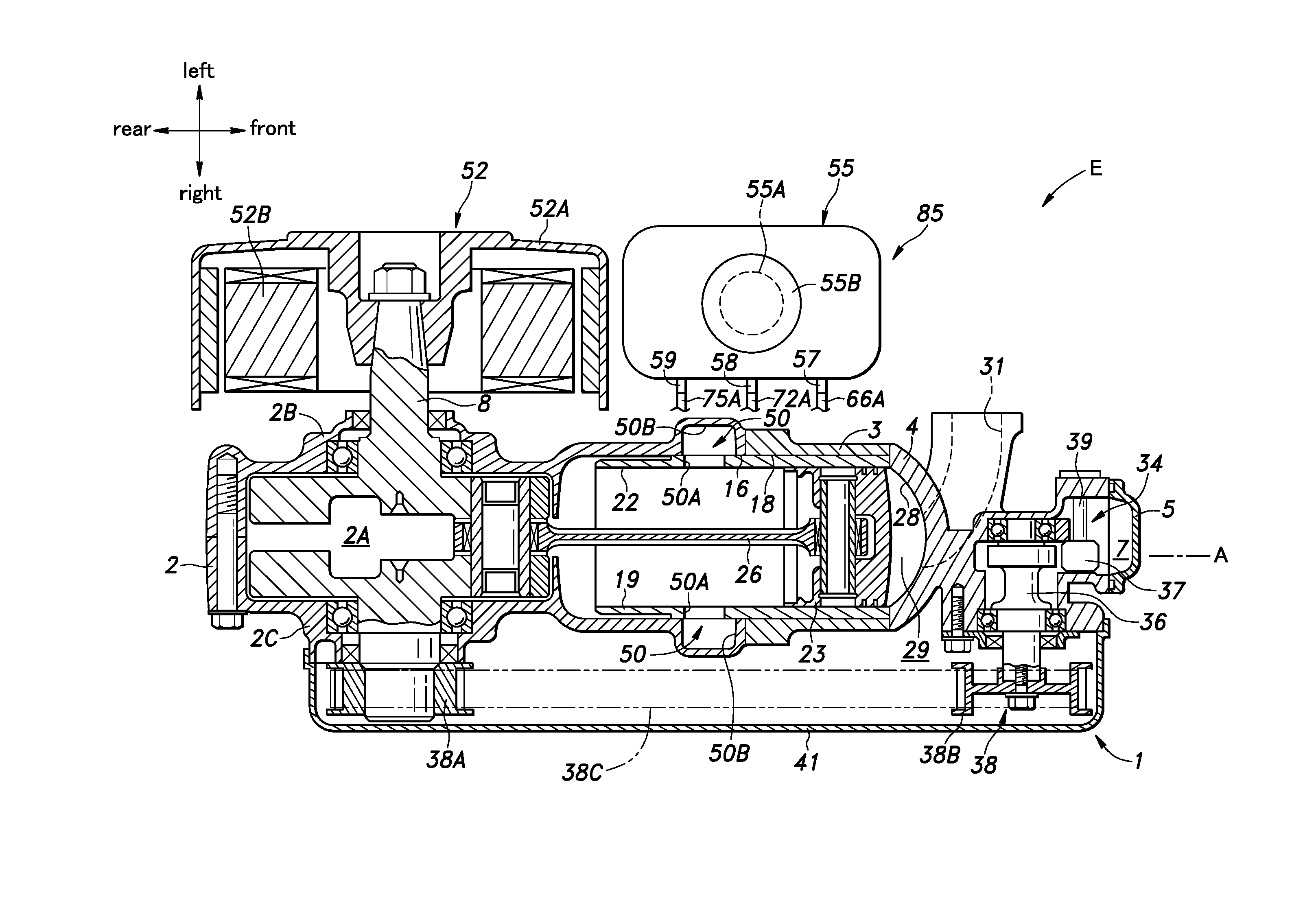
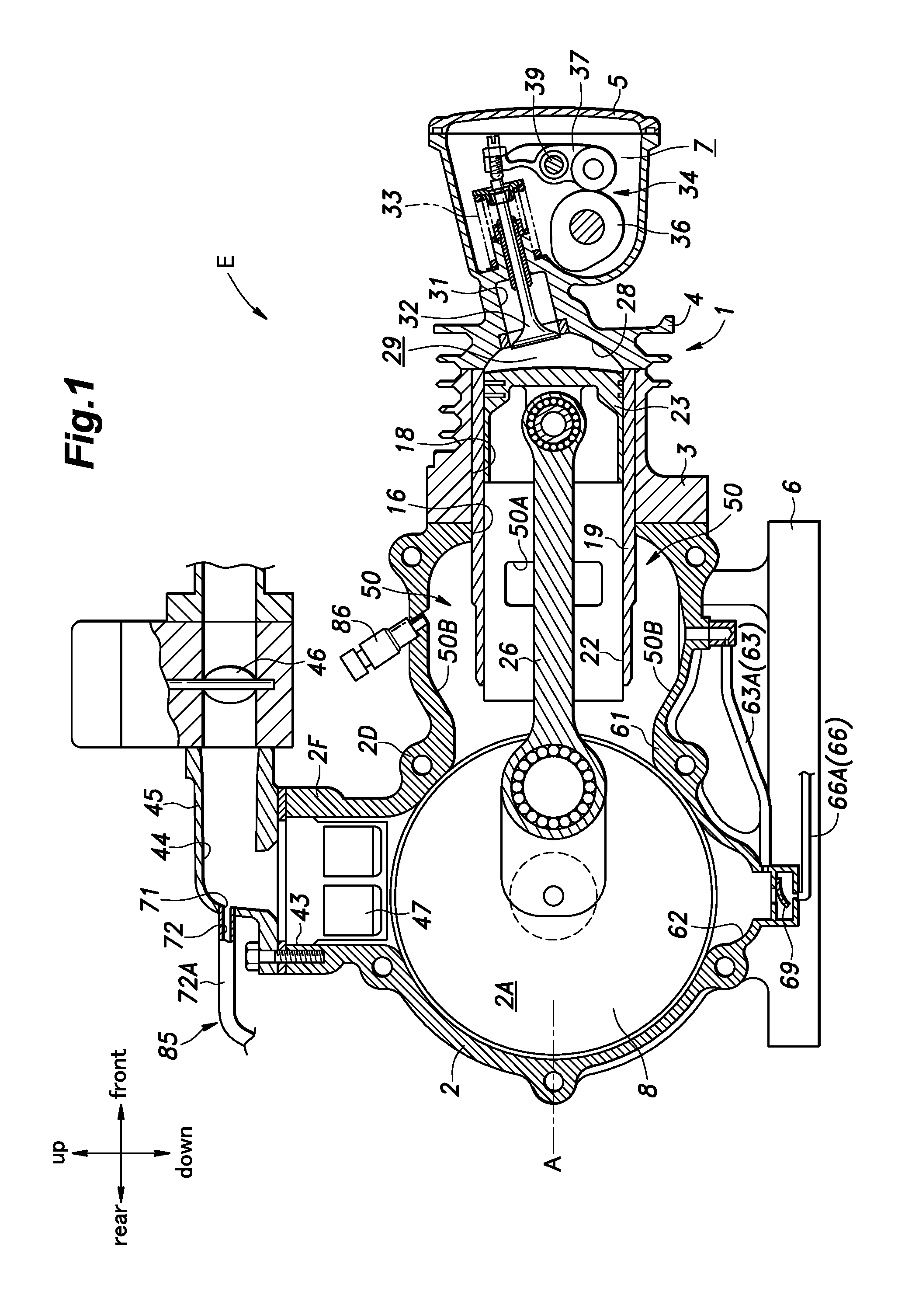
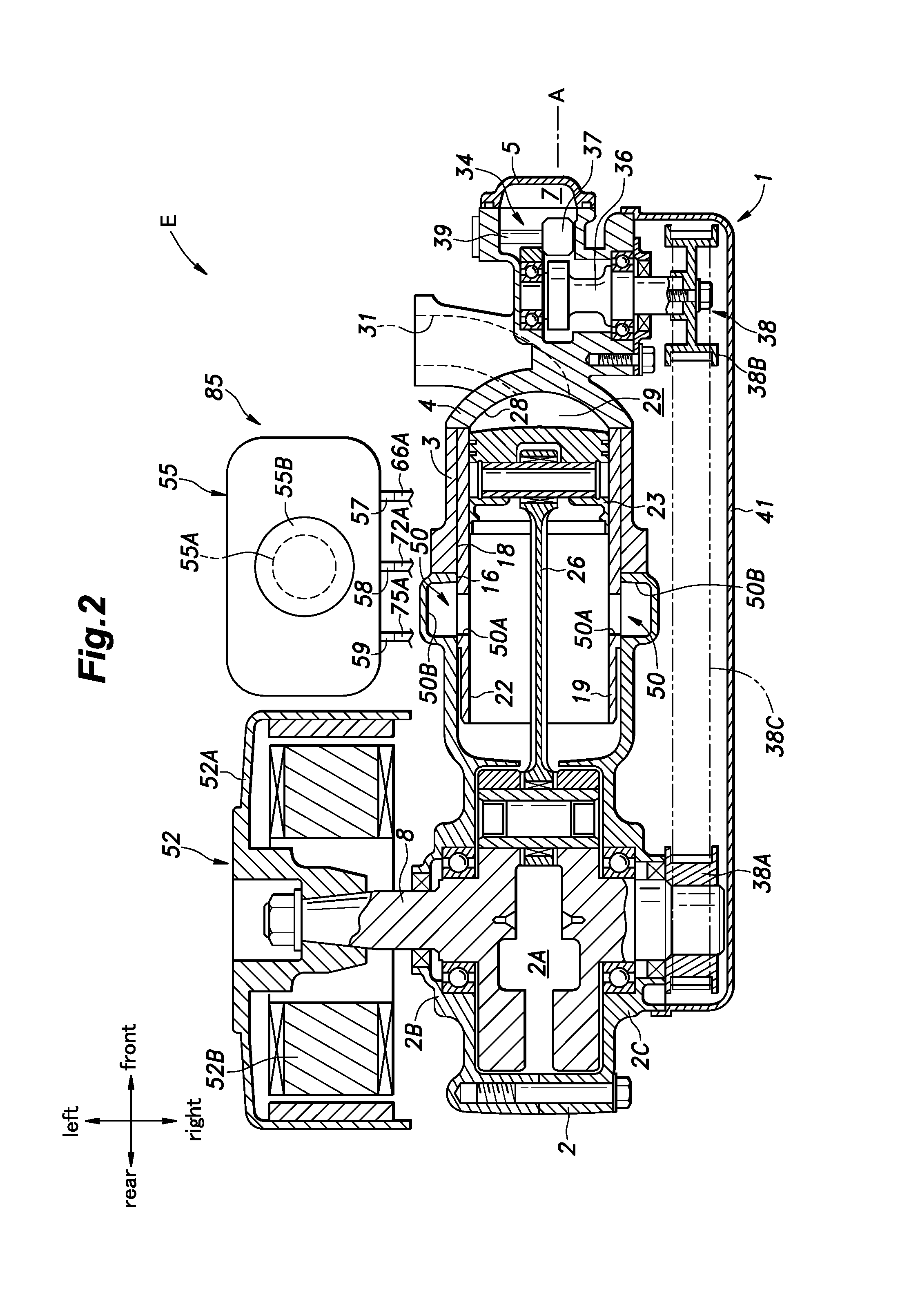
- A lubrication system that utilizes pressure pulsations in the crankcase chamber to recover and supply lubricating oil in mist form without a pump, using check valves and passages to manage oil flow and mixing with intake air, allowing for efficient lubrication and oil recovery with a simple structure.

Environmental Regulations for Engine Emission Control Systems
Environmental regulations governing engine emission control systems have become increasingly stringent worldwide, directly impacting crankcase ventilation design and lubrication system optimization. The regulatory landscape encompasses multiple jurisdictions, each establishing specific requirements that influence how crankcase flow evaluation must be conducted to ensure compliance while maintaining lubrication effectiveness.
The United States Environmental Protection Agency (EPA) enforces comprehensive regulations under the Clean Air Act, particularly focusing on volatile organic compound (VOC) emissions from crankcase systems. These regulations mandate that crankcase gases cannot be vented directly to the atmosphere, requiring closed-loop positive crankcase ventilation (PCV) systems. The evaluation of crankcase flow patterns becomes critical to ensure adequate oil vapor capture while maintaining proper lubrication circulation throughout the engine.
European Union regulations, codified in the Euro emission standards, impose similar restrictions with additional emphasis on particulate matter control. The latest Euro 7 standards introduce more rigorous testing protocols for crankcase emissions, requiring detailed flow analysis to demonstrate compliance. These regulations specifically address oil consumption rates and vapor management, making crankcase flow evaluation essential for optimizing lubrication systems while meeting emission targets.
California Air Resources Board (CARB) regulations often exceed federal EPA requirements, establishing precedents that influence global automotive design. CARB's Low Emission Vehicle (LEV) program includes specific provisions for crankcase emission control, requiring manufacturers to demonstrate that lubrication enhancement measures do not compromise emission performance. This necessitates comprehensive flow evaluation to balance lubrication efficiency with regulatory compliance.
International regulations, including those from Transport Canada, Japan's Ministry of Land, Infrastructure, Transport and Tourism, and China's Ministry of Ecology and Environment, create a complex regulatory matrix. Each jurisdiction may have unique testing procedures and emission limits, requiring crankcase flow evaluation methodologies that can accommodate multiple regulatory frameworks simultaneously.
The regulatory trend toward real driving emissions (RDE) testing adds complexity to crankcase flow evaluation requirements. Unlike laboratory-based testing, RDE protocols assess emission performance under actual operating conditions, making it crucial to evaluate crankcase flow patterns across diverse operational scenarios. This regulatory shift demands more sophisticated lubrication enhancement strategies that maintain effectiveness under variable real-world conditions while ensuring consistent emission control performance.
The United States Environmental Protection Agency (EPA) enforces comprehensive regulations under the Clean Air Act, particularly focusing on volatile organic compound (VOC) emissions from crankcase systems. These regulations mandate that crankcase gases cannot be vented directly to the atmosphere, requiring closed-loop positive crankcase ventilation (PCV) systems. The evaluation of crankcase flow patterns becomes critical to ensure adequate oil vapor capture while maintaining proper lubrication circulation throughout the engine.
European Union regulations, codified in the Euro emission standards, impose similar restrictions with additional emphasis on particulate matter control. The latest Euro 7 standards introduce more rigorous testing protocols for crankcase emissions, requiring detailed flow analysis to demonstrate compliance. These regulations specifically address oil consumption rates and vapor management, making crankcase flow evaluation essential for optimizing lubrication systems while meeting emission targets.
California Air Resources Board (CARB) regulations often exceed federal EPA requirements, establishing precedents that influence global automotive design. CARB's Low Emission Vehicle (LEV) program includes specific provisions for crankcase emission control, requiring manufacturers to demonstrate that lubrication enhancement measures do not compromise emission performance. This necessitates comprehensive flow evaluation to balance lubrication efficiency with regulatory compliance.
International regulations, including those from Transport Canada, Japan's Ministry of Land, Infrastructure, Transport and Tourism, and China's Ministry of Ecology and Environment, create a complex regulatory matrix. Each jurisdiction may have unique testing procedures and emission limits, requiring crankcase flow evaluation methodologies that can accommodate multiple regulatory frameworks simultaneously.
The regulatory trend toward real driving emissions (RDE) testing adds complexity to crankcase flow evaluation requirements. Unlike laboratory-based testing, RDE protocols assess emission performance under actual operating conditions, making it crucial to evaluate crankcase flow patterns across diverse operational scenarios. This regulatory shift demands more sophisticated lubrication enhancement strategies that maintain effectiveness under variable real-world conditions while ensuring consistent emission control performance.
Cost-Benefit Analysis of Crankcase Flow Optimization Technologies
The economic evaluation of crankcase flow optimization technologies reveals a complex landscape of investment requirements and potential returns. Initial capital expenditures for advanced crankcase ventilation systems typically range from $50,000 to $200,000 per engine platform, depending on the complexity of the flow management solution. These costs encompass specialized hardware components, computational fluid dynamics modeling, and extensive testing protocols required for validation.
Implementation costs extend beyond hardware acquisition to include engineering development, manufacturing process modifications, and quality assurance systems. Advanced crankcase flow optimization technologies often require precision-manufactured components such as variable geometry ventilation valves, integrated pressure sensors, and sophisticated control algorithms. The manufacturing complexity translates to approximately 15-25% higher production costs compared to conventional crankcase systems.
Operational benefits demonstrate significant long-term value propositions. Enhanced crankcase flow management delivers measurable improvements in oil consumption reduction, typically achieving 8-15% decreases in lubricant usage over engine lifecycle. This translates to substantial cost savings, particularly in commercial vehicle applications where annual oil consumption can exceed 200 liters per vehicle. Additionally, improved oil quality retention extends drain intervals by 20-30%, further reducing operational expenses.
Maintenance cost reductions represent another critical benefit stream. Optimized crankcase flow systems demonstrate 25-40% reduction in oil-related component failures, including decreased carbon deposit formation and reduced seal degradation. These improvements translate to lower warranty claims and extended component service life, generating significant value for both manufacturers and end users.
The payback period for crankcase flow optimization investments typically ranges from 18 to 36 months, depending on application intensity and fuel efficiency gains. Fleet operators report additional benefits through reduced environmental compliance costs and improved vehicle uptime. Regulatory compliance advantages become increasingly valuable as emission standards tighten globally, with optimized crankcase systems contributing to overall emission reduction strategies and potentially avoiding costly retrofits or penalties.
Implementation costs extend beyond hardware acquisition to include engineering development, manufacturing process modifications, and quality assurance systems. Advanced crankcase flow optimization technologies often require precision-manufactured components such as variable geometry ventilation valves, integrated pressure sensors, and sophisticated control algorithms. The manufacturing complexity translates to approximately 15-25% higher production costs compared to conventional crankcase systems.
Operational benefits demonstrate significant long-term value propositions. Enhanced crankcase flow management delivers measurable improvements in oil consumption reduction, typically achieving 8-15% decreases in lubricant usage over engine lifecycle. This translates to substantial cost savings, particularly in commercial vehicle applications where annual oil consumption can exceed 200 liters per vehicle. Additionally, improved oil quality retention extends drain intervals by 20-30%, further reducing operational expenses.
Maintenance cost reductions represent another critical benefit stream. Optimized crankcase flow systems demonstrate 25-40% reduction in oil-related component failures, including decreased carbon deposit formation and reduced seal degradation. These improvements translate to lower warranty claims and extended component service life, generating significant value for both manufacturers and end users.
The payback period for crankcase flow optimization investments typically ranges from 18 to 36 months, depending on application intensity and fuel efficiency gains. Fleet operators report additional benefits through reduced environmental compliance costs and improved vehicle uptime. Regulatory compliance advantages become increasingly valuable as emission standards tighten globally, with optimized crankcase systems contributing to overall emission reduction strategies and potentially avoiding costly retrofits or penalties.
Unlock deeper insights with PatSnap Eureka Quick Research — get a full tech report to explore trends and direct your research. Try now!
Generate Your Research Report Instantly with AI Agent
Supercharge your innovation with PatSnap Eureka AI Agent Platform!