

Utilize Crankcase Diagnostics for Predictive Maintenance
MAR 13, 20269 MIN READ
Generate Your Research Report Instantly with AI Agent
PatSnap Eureka helps you evaluate technical feasibility & market potential.
Crankcase Diagnostics Technology Background and Objectives
Crankcase diagnostics technology has emerged as a critical component in the evolution of predictive maintenance strategies for internal combustion engines across automotive, marine, and industrial applications. The crankcase, serving as the engine's oil reservoir and housing for the crankshaft, represents a vital monitoring point where multiple engine health indicators converge. Traditional maintenance approaches relied heavily on scheduled intervals and reactive repairs, often resulting in unexpected failures, excessive downtime, and suboptimal resource utilization.
The technological foundation of crankcase diagnostics encompasses multiple sensing modalities and analytical techniques. Oil analysis has historically formed the cornerstone of crankcase monitoring, involving periodic sampling and laboratory testing to assess lubricant degradation, contamination levels, and wear particle concentrations. However, recent advances have introduced real-time monitoring capabilities through embedded sensors that continuously track parameters such as oil temperature, pressure, viscosity, and dielectric properties.
Modern crankcase diagnostic systems integrate sophisticated sensor networks with advanced data analytics platforms. These systems monitor critical parameters including oil quality indicators, metal wear particles, combustion byproducts, coolant contamination, and fuel dilution. Vibration analysis techniques applied to crankcase monitoring can detect bearing wear, piston ring deterioration, and other mechanical anomalies before they progress to catastrophic failures.
The primary objective of implementing crankcase diagnostics for predictive maintenance centers on transitioning from time-based maintenance schedules to condition-based maintenance strategies. This transformation aims to optimize equipment availability while minimizing maintenance costs and extending component lifecycles. By establishing baseline operating parameters and continuously monitoring deviations, organizations can predict impending failures with sufficient lead time to plan maintenance activities strategically.
Advanced crankcase diagnostic systems target early detection of engine degradation patterns, enabling maintenance teams to address issues during planned downtime rather than experiencing unexpected failures. The technology seeks to provide actionable insights that support data-driven decision-making processes, ultimately improving operational efficiency and reducing total cost of ownership across diverse industrial applications.
The technological foundation of crankcase diagnostics encompasses multiple sensing modalities and analytical techniques. Oil analysis has historically formed the cornerstone of crankcase monitoring, involving periodic sampling and laboratory testing to assess lubricant degradation, contamination levels, and wear particle concentrations. However, recent advances have introduced real-time monitoring capabilities through embedded sensors that continuously track parameters such as oil temperature, pressure, viscosity, and dielectric properties.
Modern crankcase diagnostic systems integrate sophisticated sensor networks with advanced data analytics platforms. These systems monitor critical parameters including oil quality indicators, metal wear particles, combustion byproducts, coolant contamination, and fuel dilution. Vibration analysis techniques applied to crankcase monitoring can detect bearing wear, piston ring deterioration, and other mechanical anomalies before they progress to catastrophic failures.
The primary objective of implementing crankcase diagnostics for predictive maintenance centers on transitioning from time-based maintenance schedules to condition-based maintenance strategies. This transformation aims to optimize equipment availability while minimizing maintenance costs and extending component lifecycles. By establishing baseline operating parameters and continuously monitoring deviations, organizations can predict impending failures with sufficient lead time to plan maintenance activities strategically.
Advanced crankcase diagnostic systems target early detection of engine degradation patterns, enabling maintenance teams to address issues during planned downtime rather than experiencing unexpected failures. The technology seeks to provide actionable insights that support data-driven decision-making processes, ultimately improving operational efficiency and reducing total cost of ownership across diverse industrial applications.
Market Demand for Predictive Maintenance Solutions
The global predictive maintenance market has experienced substantial growth driven by increasing industrial automation and the need for operational efficiency. Manufacturing industries, particularly automotive, aerospace, and heavy machinery sectors, represent the largest consumer segments for crankcase diagnostic solutions. These industries face mounting pressure to minimize unplanned downtime, which can cost manufacturers thousands of dollars per hour in lost production.
Traditional reactive maintenance approaches are becoming increasingly inadequate as equipment complexity grows and operational demands intensify. Organizations are shifting toward condition-based maintenance strategies, creating significant demand for advanced diagnostic technologies that can monitor critical engine components like crankcases in real-time.
The automotive industry demonstrates particularly strong demand for crankcase diagnostic solutions, especially in commercial vehicle fleets and heavy-duty applications. Fleet operators require comprehensive monitoring systems to optimize vehicle availability and reduce maintenance costs. Similarly, the marine industry shows growing interest in predictive maintenance solutions for large diesel engines, where crankcase monitoring can prevent catastrophic failures in remote oceanic environments.
Industrial equipment manufacturers are increasingly integrating predictive maintenance capabilities into their offerings as a competitive differentiator. This trend has created substantial demand for crankcase diagnostic technologies that can be embedded into original equipment designs or retrofitted to existing machinery.
The emergence of Industry 4.0 initiatives has accelerated adoption rates across manufacturing sectors. Companies are investing heavily in smart factory technologies, with predictive maintenance serving as a cornerstone of digital transformation strategies. This industrial digitization trend has expanded the addressable market for crankcase diagnostic solutions beyond traditional maintenance departments to include operations, engineering, and executive leadership teams.
Energy sector applications, including power generation and oil and gas operations, represent another significant demand driver. These industries operate critical equipment in challenging environments where unexpected failures can have severe safety and environmental consequences. Crankcase diagnostics provide essential early warning capabilities for large reciprocating engines and compressors used in these applications.
The growing emphasis on sustainability and environmental compliance has further increased market demand. Organizations seek predictive maintenance solutions that can optimize equipment performance while reducing emissions and energy consumption, making crankcase diagnostics an attractive investment for achieving both operational and environmental objectives.
Traditional reactive maintenance approaches are becoming increasingly inadequate as equipment complexity grows and operational demands intensify. Organizations are shifting toward condition-based maintenance strategies, creating significant demand for advanced diagnostic technologies that can monitor critical engine components like crankcases in real-time.
The automotive industry demonstrates particularly strong demand for crankcase diagnostic solutions, especially in commercial vehicle fleets and heavy-duty applications. Fleet operators require comprehensive monitoring systems to optimize vehicle availability and reduce maintenance costs. Similarly, the marine industry shows growing interest in predictive maintenance solutions for large diesel engines, where crankcase monitoring can prevent catastrophic failures in remote oceanic environments.
Industrial equipment manufacturers are increasingly integrating predictive maintenance capabilities into their offerings as a competitive differentiator. This trend has created substantial demand for crankcase diagnostic technologies that can be embedded into original equipment designs or retrofitted to existing machinery.
The emergence of Industry 4.0 initiatives has accelerated adoption rates across manufacturing sectors. Companies are investing heavily in smart factory technologies, with predictive maintenance serving as a cornerstone of digital transformation strategies. This industrial digitization trend has expanded the addressable market for crankcase diagnostic solutions beyond traditional maintenance departments to include operations, engineering, and executive leadership teams.
Energy sector applications, including power generation and oil and gas operations, represent another significant demand driver. These industries operate critical equipment in challenging environments where unexpected failures can have severe safety and environmental consequences. Crankcase diagnostics provide essential early warning capabilities for large reciprocating engines and compressors used in these applications.
The growing emphasis on sustainability and environmental compliance has further increased market demand. Organizations seek predictive maintenance solutions that can optimize equipment performance while reducing emissions and energy consumption, making crankcase diagnostics an attractive investment for achieving both operational and environmental objectives.
Current State of Crankcase Monitoring Technologies
Crankcase monitoring technologies have evolved significantly over the past decade, driven by the increasing demand for predictive maintenance solutions in industrial machinery and automotive applications. Traditional approaches primarily relied on periodic oil sampling and basic vibration monitoring, but modern systems now incorporate sophisticated sensor networks and advanced analytics capabilities.
Contemporary crankcase diagnostic systems predominantly utilize multi-parameter sensing approaches. Oil condition monitoring sensors measure viscosity, contamination levels, metal particle content, and chemical composition changes in real-time. These sensors employ various detection principles including capacitive sensing for dielectric properties, optical spectroscopy for contamination analysis, and magnetic field detection for metallic debris identification.
Vibration analysis remains a cornerstone technology, with accelerometers and velocity sensors strategically positioned to detect bearing wear, misalignment, and internal component degradation. Modern systems integrate wireless sensor networks that enable continuous monitoring without extensive wiring infrastructure, significantly reducing installation complexity and maintenance overhead.
Temperature and pressure monitoring technologies have advanced beyond simple threshold detection. Current systems employ distributed temperature sensing using fiber optic cables and high-precision pressure transducers that can detect minute pressure variations indicative of seal degradation or internal leakage. These measurements are often combined with acoustic emission monitoring to identify early-stage failure mechanisms.
Data acquisition and processing capabilities represent a major technological advancement. Edge computing devices now enable real-time signal processing and preliminary analysis at the sensor level, reducing data transmission requirements and enabling faster response times. Machine learning algorithms are increasingly integrated into monitoring systems, allowing for pattern recognition and anomaly detection that surpasses traditional rule-based approaches.
Wireless communication protocols have standardized around industrial IoT frameworks, with technologies like LoRaWAN, Zigbee, and cellular connectivity enabling remote monitoring capabilities. Cloud-based analytics platforms provide centralized data management and advanced predictive modeling, allowing maintenance teams to monitor multiple assets across distributed facilities.
Despite these technological advances, current systems face limitations in harsh operating environments, sensor drift over extended periods, and the challenge of distinguishing between normal operational variations and genuine fault conditions. Integration complexity and the need for specialized expertise in data interpretation remain significant barriers to widespread adoption across smaller industrial operations.
Contemporary crankcase diagnostic systems predominantly utilize multi-parameter sensing approaches. Oil condition monitoring sensors measure viscosity, contamination levels, metal particle content, and chemical composition changes in real-time. These sensors employ various detection principles including capacitive sensing for dielectric properties, optical spectroscopy for contamination analysis, and magnetic field detection for metallic debris identification.
Vibration analysis remains a cornerstone technology, with accelerometers and velocity sensors strategically positioned to detect bearing wear, misalignment, and internal component degradation. Modern systems integrate wireless sensor networks that enable continuous monitoring without extensive wiring infrastructure, significantly reducing installation complexity and maintenance overhead.
Temperature and pressure monitoring technologies have advanced beyond simple threshold detection. Current systems employ distributed temperature sensing using fiber optic cables and high-precision pressure transducers that can detect minute pressure variations indicative of seal degradation or internal leakage. These measurements are often combined with acoustic emission monitoring to identify early-stage failure mechanisms.
Data acquisition and processing capabilities represent a major technological advancement. Edge computing devices now enable real-time signal processing and preliminary analysis at the sensor level, reducing data transmission requirements and enabling faster response times. Machine learning algorithms are increasingly integrated into monitoring systems, allowing for pattern recognition and anomaly detection that surpasses traditional rule-based approaches.
Wireless communication protocols have standardized around industrial IoT frameworks, with technologies like LoRaWAN, Zigbee, and cellular connectivity enabling remote monitoring capabilities. Cloud-based analytics platforms provide centralized data management and advanced predictive modeling, allowing maintenance teams to monitor multiple assets across distributed facilities.
Despite these technological advances, current systems face limitations in harsh operating environments, sensor drift over extended periods, and the challenge of distinguishing between normal operational variations and genuine fault conditions. Integration complexity and the need for specialized expertise in data interpretation remain significant barriers to widespread adoption across smaller industrial operations.
Existing Crankcase Condition Monitoring Solutions
01 Sensor-based monitoring systems for crankcase condition assessment
Implementation of various sensors to continuously monitor crankcase parameters such as temperature, pressure, vibration, and oil quality. These monitoring systems collect real-time data to detect anomalies and predict potential failures before they occur. The sensor data is processed to identify patterns indicating wear, contamination, or mechanical degradation, enabling proactive maintenance scheduling.- Sensor-based monitoring systems for crankcase condition assessment: Implementation of various sensors to continuously monitor crankcase parameters such as temperature, pressure, vibration, and oil quality. These monitoring systems collect real-time data to detect anomalies and assess the operational condition of the crankcase. The sensor data is processed to identify patterns that indicate potential failures or degradation, enabling early detection of issues before they lead to catastrophic failures.
- Data analytics and machine learning algorithms for predictive failure analysis: Application of advanced data analytics and machine learning techniques to analyze historical and real-time crankcase operational data. These algorithms identify trends, correlations, and predictive patterns that indicate impending failures or maintenance needs. The system learns from accumulated data to improve prediction accuracy over time, enabling proactive maintenance scheduling based on actual component condition rather than fixed intervals.
- Oil analysis and contamination detection methods: Techniques for analyzing crankcase oil properties to detect contamination, degradation, and wear particles. These methods include spectroscopic analysis, particle counting, and chemical composition assessment to determine oil condition and identify abnormal wear patterns. The analysis results provide insights into internal component health and help predict when maintenance interventions are necessary to prevent damage.
- Remote monitoring and diagnostic communication systems: Integration of wireless communication technologies and cloud-based platforms for remote crankcase diagnostics and monitoring. These systems enable continuous data transmission from equipment to centralized monitoring stations, allowing for real-time assessment and expert analysis regardless of physical location. The remote capabilities facilitate fleet-wide monitoring and enable predictive maintenance strategies across multiple assets simultaneously.
- Integrated maintenance scheduling and alert systems: Development of automated systems that generate maintenance alerts and schedule recommendations based on predictive diagnostic results. These systems integrate diagnostic data with maintenance management platforms to optimize service intervals and resource allocation. The alert mechanisms provide timely notifications to maintenance personnel when predetermined thresholds are exceeded or when predictive models indicate increased failure probability, enabling just-in-time maintenance interventions.
02 Data analytics and machine learning algorithms for failure prediction
Application of advanced data analytics and machine learning techniques to analyze historical and real-time crankcase operational data. These algorithms identify trends, correlations, and predictive indicators that signal impending failures. The system learns from past maintenance records and operational patterns to improve prediction accuracy over time, reducing unexpected downtime and optimizing maintenance intervals.Expand Specific Solutions03 Oil analysis and contamination detection methods
Techniques for analyzing crankcase oil properties to detect contamination, degradation, and wear particles. These methods include spectroscopic analysis, particle counting, and chemical testing to assess oil condition and identify the presence of metal particles or other contaminants. Early detection of oil degradation enables timely oil changes and prevents damage to engine components.Expand Specific Solutions04 Vibration analysis and acoustic monitoring for mechanical fault detection
Utilization of vibration sensors and acoustic monitoring equipment to detect abnormal mechanical behavior in crankcase components. These systems analyze frequency patterns, amplitude changes, and acoustic signatures to identify bearing wear, misalignment, or other mechanical issues. The diagnostic approach enables early detection of mechanical faults before they lead to catastrophic failures.Expand Specific Solutions05 Integrated diagnostic platforms with remote monitoring capabilities
Development of comprehensive diagnostic platforms that integrate multiple monitoring technologies and provide remote access to crankcase health data. These systems combine sensor inputs, data processing, and cloud-based analytics to enable centralized monitoring of multiple engines or equipment. Remote diagnostic capabilities allow maintenance teams to assess equipment condition from any location and coordinate maintenance activities efficiently.Expand Specific Solutions
Key Players in Crankcase Diagnostics Industry
The crankcase diagnostics for predictive maintenance market is experiencing rapid growth, driven by increasing demand for vehicle reliability and operational efficiency across automotive and industrial sectors. The industry is transitioning from reactive to predictive maintenance strategies, with market expansion fueled by IoT integration and advanced sensor technologies. Key players demonstrate varying levels of technological maturity, with established automotive giants like Ford Global Technologies LLC, Volkswagen AG, and Honda Motor Co. leading traditional diagnostic approaches, while technology leaders such as Robert Bosch GmbH, Siemens AG, and Honeywell International Technologies Ltd. are advancing smart diagnostic solutions. Industrial equipment manufacturers including Caterpillar SARL and Komatsu Industries Corp. are integrating sophisticated monitoring systems, while emerging players like Rivian Holdings LLC are incorporating next-generation diagnostic capabilities into electric vehicle platforms, indicating a competitive landscape spanning from mature implementations to cutting-edge innovations.
Robert Bosch GmbH
Technical Solution: Bosch has developed comprehensive crankcase diagnostic systems that integrate multiple sensor technologies including pressure sensors, temperature monitoring, and vibration analysis to enable predictive maintenance capabilities. Their solution utilizes advanced signal processing algorithms to detect early signs of engine wear, oil degradation, and potential failures through continuous monitoring of crankcase conditions. The system employs machine learning models trained on extensive engine operation data to predict maintenance needs up to several hundred operating hours in advance, significantly reducing unplanned downtime and maintenance costs for commercial vehicle fleets.
Strengths: Market-leading sensor technology and extensive automotive industry experience. Weaknesses: High implementation costs for retrofit applications.
Siemens AG
Technical Solution: Siemens offers industrial-grade crankcase monitoring solutions through their MindSphere IoT platform, focusing on large industrial engines and power generation applications. Their diagnostic system combines real-time data acquisition from crankcase pressure, temperature, and oil quality sensors with cloud-based analytics to provide predictive maintenance insights. The solution features advanced pattern recognition algorithms that can identify anomalous crankcase behavior patterns indicative of impending component failures, enabling maintenance teams to schedule interventions during planned downtime windows rather than responding to emergency breakdowns.
Strengths: Robust industrial IoT platform integration and scalable cloud analytics. Weaknesses: Limited focus on automotive applications compared to industrial sectors.
Core Innovations in Crankcase Predictive Analytics
Predictive maintenance of automotive transmission
PatentActiveUS12518570B2
Innovation
- Implementing an artificial neural network (ANN) to analyze sensor data from automotive transmissions, classifying normal and abnormal patterns, and generating alerts or controlling vehicle systems for safe operation, with remote training and updates for improved detection.


Robust predictive maintenance method for machinery using measured vibration data and estimated sound data
PatentPendingUS20240264045A1
Innovation
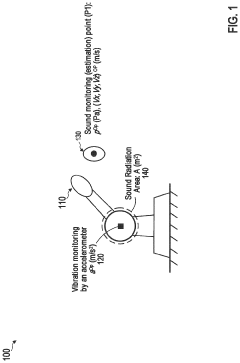
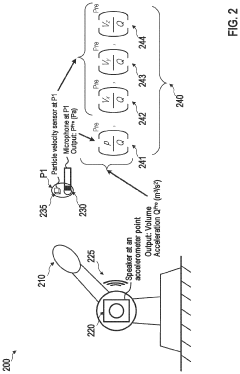
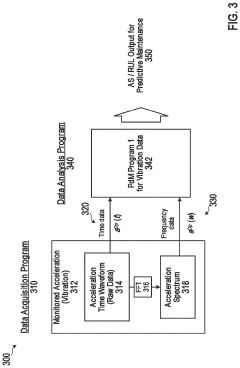
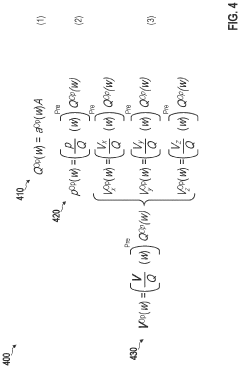
- The method involves estimating sound data from measured vibration data using a pre-measured acoustic transfer function, which is calculated during quiet times, allowing for reduced microphone usage and improved noise reduction by leveraging the lower noise levels in vibration data.
Environmental Regulations for Engine Emissions
Environmental regulations governing engine emissions have become increasingly stringent worldwide, creating a complex regulatory landscape that directly impacts the implementation of crankcase diagnostic systems for predictive maintenance. The regulatory framework encompasses multiple jurisdictions with varying requirements, enforcement mechanisms, and compliance timelines that manufacturers must navigate when developing diagnostic technologies.
The European Union's Euro VI standards represent some of the most comprehensive emission regulations globally, mandating strict limits on nitrogen oxides, particulate matter, and hydrocarbon emissions. These regulations require advanced monitoring systems that can detect emission-related component degradation before it leads to regulatory non-compliance. Similarly, the United States Environmental Protection Agency's Tier 4 standards for non-road engines and the California Air Resources Board's regulations establish parallel requirements that influence diagnostic system design and implementation strategies.
Crankcase ventilation systems fall under specific regulatory scrutiny due to their role in controlling blow-by gases and preventing uncontrolled emissions. Current regulations require closed crankcase ventilation systems that route gases back through the combustion process, creating opportunities for diagnostic monitoring of system integrity and performance. The regulatory framework mandates that any diagnostic system must not only detect malfunctions but also ensure continued compliance throughout the engine's operational life.
Recent regulatory developments have introduced real-time emission monitoring requirements, particularly for heavy-duty applications and industrial engines. These regulations necessitate continuous monitoring capabilities that align perfectly with predictive maintenance objectives, as they require early detection of component degradation that could lead to emission exceedances. The integration of crankcase diagnostics into these monitoring systems provides a pathway for meeting both regulatory compliance and maintenance optimization goals.
Compliance challenges arise from the need to balance diagnostic sensitivity with false alarm prevention, as regulatory frameworks often specify maximum allowable detection thresholds and response times. The regulatory environment continues evolving toward more stringent requirements, with upcoming standards expected to further reduce allowable emission levels and expand monitoring requirements to additional engine components and operating conditions.
The European Union's Euro VI standards represent some of the most comprehensive emission regulations globally, mandating strict limits on nitrogen oxides, particulate matter, and hydrocarbon emissions. These regulations require advanced monitoring systems that can detect emission-related component degradation before it leads to regulatory non-compliance. Similarly, the United States Environmental Protection Agency's Tier 4 standards for non-road engines and the California Air Resources Board's regulations establish parallel requirements that influence diagnostic system design and implementation strategies.
Crankcase ventilation systems fall under specific regulatory scrutiny due to their role in controlling blow-by gases and preventing uncontrolled emissions. Current regulations require closed crankcase ventilation systems that route gases back through the combustion process, creating opportunities for diagnostic monitoring of system integrity and performance. The regulatory framework mandates that any diagnostic system must not only detect malfunctions but also ensure continued compliance throughout the engine's operational life.
Recent regulatory developments have introduced real-time emission monitoring requirements, particularly for heavy-duty applications and industrial engines. These regulations necessitate continuous monitoring capabilities that align perfectly with predictive maintenance objectives, as they require early detection of component degradation that could lead to emission exceedances. The integration of crankcase diagnostics into these monitoring systems provides a pathway for meeting both regulatory compliance and maintenance optimization goals.
Compliance challenges arise from the need to balance diagnostic sensitivity with false alarm prevention, as regulatory frameworks often specify maximum allowable detection thresholds and response times. The regulatory environment continues evolving toward more stringent requirements, with upcoming standards expected to further reduce allowable emission levels and expand monitoring requirements to additional engine components and operating conditions.
Cost-Benefit Analysis of Predictive Maintenance ROI
The implementation of crankcase diagnostics for predictive maintenance presents a compelling financial proposition when evaluated through comprehensive cost-benefit analysis. Initial investment costs typically range from $50,000 to $200,000 per facility, encompassing sensor installation, data acquisition systems, and analytical software platforms. However, the return on investment becomes evident within 12-18 months through reduced unplanned downtime and optimized maintenance scheduling.
Direct cost savings emerge from multiple operational improvements. Unplanned equipment failures, which can cost $100,000-$500,000 per incident in heavy industrial applications, are reduced by 60-80% through early detection capabilities. Maintenance labor costs decrease by 25-35% as technicians transition from reactive repairs to scheduled interventions during planned downtime windows. Parts inventory costs are optimized through predictive ordering, reducing carrying costs by 20-30% while ensuring critical components are available when needed.
Indirect benefits significantly amplify the financial returns. Production continuity improvements translate to revenue protection, particularly valuable in continuous process industries where downtime costs can exceed $1 million per day. Energy efficiency gains of 5-15% result from maintaining optimal engine operating conditions, while extended equipment lifespan reduces capital replacement frequency by 20-40%.
Risk mitigation provides substantial value through reduced insurance premiums and regulatory compliance costs. Environmental incident prevention, achieved through early detection of oil leaks or combustion anomalies, avoids potential fines ranging from $10,000 to $1 million depending on severity and jurisdiction.
Quantitative analysis across multiple industrial implementations demonstrates average ROI of 300-500% over three years. The technology's scalability enables progressive deployment, allowing organizations to validate benefits on critical assets before full-scale implementation. Advanced analytics capabilities continue improving over time, creating compounding returns as machine learning algorithms refine predictive accuracy and expand diagnostic capabilities beyond initial parameters.
Direct cost savings emerge from multiple operational improvements. Unplanned equipment failures, which can cost $100,000-$500,000 per incident in heavy industrial applications, are reduced by 60-80% through early detection capabilities. Maintenance labor costs decrease by 25-35% as technicians transition from reactive repairs to scheduled interventions during planned downtime windows. Parts inventory costs are optimized through predictive ordering, reducing carrying costs by 20-30% while ensuring critical components are available when needed.
Indirect benefits significantly amplify the financial returns. Production continuity improvements translate to revenue protection, particularly valuable in continuous process industries where downtime costs can exceed $1 million per day. Energy efficiency gains of 5-15% result from maintaining optimal engine operating conditions, while extended equipment lifespan reduces capital replacement frequency by 20-40%.
Risk mitigation provides substantial value through reduced insurance premiums and regulatory compliance costs. Environmental incident prevention, achieved through early detection of oil leaks or combustion anomalies, avoids potential fines ranging from $10,000 to $1 million depending on severity and jurisdiction.
Quantitative analysis across multiple industrial implementations demonstrates average ROI of 300-500% over three years. The technology's scalability enables progressive deployment, allowing organizations to validate benefits on critical assets before full-scale implementation. Advanced analytics capabilities continue improving over time, creating compounding returns as machine learning algorithms refine predictive accuracy and expand diagnostic capabilities beyond initial parameters.
Unlock deeper insights with PatSnap Eureka Quick Research — get a full tech report to explore trends and direct your research. Try now!
Generate Your Research Report Instantly with AI Agent
Supercharge your innovation with PatSnap Eureka AI Agent Platform!