
Evaluate Lithium Battery Reliability for Medical Device Use
FEB 12, 20269 MIN READ
Generate Your Research Report Instantly with AI Agent
Patsnap Eureka helps you evaluate technical feasibility & market potential.
Lithium Battery Medical Application Background and Objectives
Lithium-ion batteries have revolutionized portable power solutions across multiple industries, with medical devices representing one of the most critical application domains. The integration of lithium battery technology into medical equipment began in the late 1990s, driven by the demand for compact, lightweight, and high-energy-density power sources. Early applications focused on portable diagnostic devices and patient monitoring systems, but the scope has expanded dramatically to include implantable devices, surgical instruments, emergency medical equipment, and life-sustaining apparatus.
The evolution of lithium battery technology in medical contexts has been shaped by stringent regulatory requirements and the unique operational demands of healthcare environments. Unlike consumer electronics, medical devices require exceptional reliability, predictable performance degradation patterns, and fail-safe mechanisms. The technology has progressed from basic lithium-ion chemistries to specialized formulations optimized for medical applications, including lithium iron phosphate and lithium polymer variants that offer enhanced safety profiles and extended operational lifespans.
Current market dynamics reflect an accelerating adoption curve, with the global medical battery market projected to experience substantial growth through 2030. This expansion is fueled by aging populations, increasing prevalence of chronic diseases requiring continuous monitoring, and the proliferation of home healthcare solutions. The COVID-19 pandemic further accelerated demand for portable and remote medical devices, intensifying focus on battery reliability and performance consistency.
The primary objective of evaluating lithium battery reliability for medical device use centers on establishing comprehensive assessment frameworks that address multiple critical dimensions. These include cycle life performance under varied operational conditions, thermal stability across clinical temperature ranges, capacity retention over extended storage periods, and failure mode prediction capabilities. Additionally, objectives encompass developing standardized testing protocols that simulate real-world medical environments, establishing safety margins that account for worst-case scenarios, and creating predictive maintenance models that enable proactive device management.
Achieving these objectives requires bridging the gap between battery manufacturer specifications and actual clinical performance requirements, while ensuring compliance with international medical device standards including ISO 13485 and IEC 60601 series regulations.
The evolution of lithium battery technology in medical contexts has been shaped by stringent regulatory requirements and the unique operational demands of healthcare environments. Unlike consumer electronics, medical devices require exceptional reliability, predictable performance degradation patterns, and fail-safe mechanisms. The technology has progressed from basic lithium-ion chemistries to specialized formulations optimized for medical applications, including lithium iron phosphate and lithium polymer variants that offer enhanced safety profiles and extended operational lifespans.
Current market dynamics reflect an accelerating adoption curve, with the global medical battery market projected to experience substantial growth through 2030. This expansion is fueled by aging populations, increasing prevalence of chronic diseases requiring continuous monitoring, and the proliferation of home healthcare solutions. The COVID-19 pandemic further accelerated demand for portable and remote medical devices, intensifying focus on battery reliability and performance consistency.
The primary objective of evaluating lithium battery reliability for medical device use centers on establishing comprehensive assessment frameworks that address multiple critical dimensions. These include cycle life performance under varied operational conditions, thermal stability across clinical temperature ranges, capacity retention over extended storage periods, and failure mode prediction capabilities. Additionally, objectives encompass developing standardized testing protocols that simulate real-world medical environments, establishing safety margins that account for worst-case scenarios, and creating predictive maintenance models that enable proactive device management.
Achieving these objectives requires bridging the gap between battery manufacturer specifications and actual clinical performance requirements, while ensuring compliance with international medical device standards including ISO 13485 and IEC 60601 series regulations.
Medical Device Power Demand Analysis
Medical devices span a broad spectrum of power requirements, ranging from ultra-low-power wearable sensors to high-demand portable diagnostic equipment and life-sustaining therapeutic systems. Understanding these diverse power demands is essential for evaluating lithium battery suitability and ensuring reliable operation across clinical environments.
Wearable and implantable medical devices typically operate at the lower end of the power spectrum. Continuous glucose monitors, fitness trackers with medical-grade sensors, and certain cardiac rhythm management devices consume minimal power, often measured in microwatts to milliwatts. These devices prioritize extended operational lifetimes, frequently requiring batteries to function reliably for months or even years without replacement. The emphasis here lies on energy density and stable voltage output over prolonged discharge cycles.
Portable diagnostic equipment represents a mid-range power category. Devices such as handheld ultrasound scanners, portable ECG monitors, and pulse oximeters demand moderate power levels, typically ranging from several watts to tens of watts. These systems require batteries capable of supporting intermittent high-current pulses during active scanning or data transmission while maintaining sufficient capacity for multiple patient examinations per charge cycle. Thermal management becomes increasingly relevant in this category, as power dissipation can affect both battery performance and device accuracy.
High-power medical devices present the most demanding requirements. Portable ventilators, infusion pumps operating in critical care settings, and mobile defibrillators require substantial and consistent power delivery. These applications often involve continuous operation under variable load conditions, necessitating batteries with high discharge rates and robust thermal stability. Power interruption in these devices carries immediate clinical consequences, making reliability paramount.
Emerging telemedicine platforms and connected health systems introduce additional complexity through wireless communication requirements. Bluetooth, Wi-Fi, and cellular connectivity modules impose periodic power surges that batteries must accommodate without voltage sag or premature capacity degradation. The duty cycle variability inherent in these communication protocols demands batteries with excellent pulse discharge characteristics and rapid recovery capabilities.
Environmental conditions further influence power demand profiles. Operating room equipment may face temperature fluctuations, while emergency medical devices must perform reliably across extreme ambient conditions. These environmental factors directly impact battery internal resistance, available capacity, and safe operating windows, necessitating careful matching between device power profiles and battery specifications to ensure consistent clinical performance.
Wearable and implantable medical devices typically operate at the lower end of the power spectrum. Continuous glucose monitors, fitness trackers with medical-grade sensors, and certain cardiac rhythm management devices consume minimal power, often measured in microwatts to milliwatts. These devices prioritize extended operational lifetimes, frequently requiring batteries to function reliably for months or even years without replacement. The emphasis here lies on energy density and stable voltage output over prolonged discharge cycles.
Portable diagnostic equipment represents a mid-range power category. Devices such as handheld ultrasound scanners, portable ECG monitors, and pulse oximeters demand moderate power levels, typically ranging from several watts to tens of watts. These systems require batteries capable of supporting intermittent high-current pulses during active scanning or data transmission while maintaining sufficient capacity for multiple patient examinations per charge cycle. Thermal management becomes increasingly relevant in this category, as power dissipation can affect both battery performance and device accuracy.
High-power medical devices present the most demanding requirements. Portable ventilators, infusion pumps operating in critical care settings, and mobile defibrillators require substantial and consistent power delivery. These applications often involve continuous operation under variable load conditions, necessitating batteries with high discharge rates and robust thermal stability. Power interruption in these devices carries immediate clinical consequences, making reliability paramount.
Emerging telemedicine platforms and connected health systems introduce additional complexity through wireless communication requirements. Bluetooth, Wi-Fi, and cellular connectivity modules impose periodic power surges that batteries must accommodate without voltage sag or premature capacity degradation. The duty cycle variability inherent in these communication protocols demands batteries with excellent pulse discharge characteristics and rapid recovery capabilities.
Environmental conditions further influence power demand profiles. Operating room equipment may face temperature fluctuations, while emergency medical devices must perform reliably across extreme ambient conditions. These environmental factors directly impact battery internal resistance, available capacity, and safe operating windows, necessitating careful matching between device power profiles and battery specifications to ensure consistent clinical performance.
Lithium Battery Reliability Status and Challenges
Lithium batteries have become the predominant power source for portable medical devices due to their high energy density, lightweight characteristics, and extended operational lifespan. However, the medical device industry faces unique reliability challenges that distinguish it from consumer electronics applications. Medical devices demand exceptional performance consistency, as battery failures can directly impact patient safety and treatment efficacy. Current lithium battery technologies, including lithium-ion and lithium-polymer variants, demonstrate varying degrees of reliability depending on their chemical compositions, manufacturing processes, and operational environments.
The primary technical challenges confronting lithium battery reliability in medical applications center on performance degradation over time, capacity fade, and potential safety hazards. Capacity loss typically occurs through electrode material degradation, electrolyte decomposition, and solid electrolyte interphase layer growth. These mechanisms accelerate under conditions common in medical settings, including temperature fluctuations, irregular discharge patterns, and extended storage periods. Medical devices often experience intermittent usage patterns that differ significantly from continuous discharge scenarios, creating stress conditions that conventional battery management systems may not adequately address.
Safety concerns represent another critical dimension of reliability challenges. Thermal runaway events, though statistically rare, pose unacceptable risks in medical contexts where device failure could endanger patient health. Internal short circuits, dendrite formation, and separator degradation constitute the primary failure modes leading to safety incidents. Regulatory bodies worldwide have established stringent testing protocols and performance standards, yet these requirements continue evolving as new failure mechanisms emerge and battery technologies advance.
Geographic and regulatory variations further complicate the reliability landscape. North American and European markets maintain rigorous certification requirements through FDA and CE marking processes, while emerging markets may apply different standards. Manufacturing quality control remains inconsistent across global supply chains, with premium medical-grade cells commanding significant price premiums over commercial alternatives. The industry currently lacks universally accepted accelerated aging protocols that accurately predict long-term reliability under diverse clinical conditions, creating uncertainty in device lifecycle planning and warranty determinations.
The primary technical challenges confronting lithium battery reliability in medical applications center on performance degradation over time, capacity fade, and potential safety hazards. Capacity loss typically occurs through electrode material degradation, electrolyte decomposition, and solid electrolyte interphase layer growth. These mechanisms accelerate under conditions common in medical settings, including temperature fluctuations, irregular discharge patterns, and extended storage periods. Medical devices often experience intermittent usage patterns that differ significantly from continuous discharge scenarios, creating stress conditions that conventional battery management systems may not adequately address.
Safety concerns represent another critical dimension of reliability challenges. Thermal runaway events, though statistically rare, pose unacceptable risks in medical contexts where device failure could endanger patient health. Internal short circuits, dendrite formation, and separator degradation constitute the primary failure modes leading to safety incidents. Regulatory bodies worldwide have established stringent testing protocols and performance standards, yet these requirements continue evolving as new failure mechanisms emerge and battery technologies advance.
Geographic and regulatory variations further complicate the reliability landscape. North American and European markets maintain rigorous certification requirements through FDA and CE marking processes, while emerging markets may apply different standards. Manufacturing quality control remains inconsistent across global supply chains, with premium medical-grade cells commanding significant price premiums over commercial alternatives. The industry currently lacks universally accepted accelerated aging protocols that accurately predict long-term reliability under diverse clinical conditions, creating uncertainty in device lifecycle planning and warranty determinations.
Current Lithium Battery Solutions for Medical Devices
01 Battery management systems for monitoring and control
Advanced battery management systems (BMS) are employed to monitor critical parameters such as voltage, current, temperature, and state of charge in lithium batteries. These systems utilize sophisticated algorithms and sensors to detect anomalies, prevent overcharging or over-discharging, and balance cell voltages. By implementing intelligent control strategies, the BMS can predict potential failures, optimize charging cycles, and extend battery lifespan, thereby significantly enhancing overall reliability and safety of lithium battery systems.- Battery management systems for monitoring and control: Advanced battery management systems (BMS) are essential for enhancing lithium battery reliability. These systems continuously monitor critical parameters such as voltage, current, temperature, and state of charge to prevent overcharging, over-discharging, and thermal runaway. The BMS employs sophisticated algorithms to balance cells, predict remaining useful life, and provide early warning of potential failures. Integration of smart sensors and communication protocols enables real-time data collection and analysis, allowing for proactive maintenance and optimization of battery performance throughout its lifecycle.
- Thermal management and safety mechanisms: Effective thermal management is crucial for maintaining lithium battery reliability and preventing safety hazards. Various cooling systems including liquid cooling, phase change materials, and heat pipe technologies are employed to maintain optimal operating temperatures. Safety mechanisms such as pressure relief valves, thermal fuses, current interrupt devices, and flame-retardant separators are integrated to prevent catastrophic failures. Advanced designs incorporate multi-layer protection systems that can detect abnormal conditions and automatically disconnect the battery to prevent thermal runaway and fire hazards.
- Electrode and electrolyte material optimization: The selection and optimization of electrode and electrolyte materials significantly impact lithium battery reliability and longevity. Advanced cathode materials with improved structural stability reduce capacity fade and extend cycle life. Novel anode materials and surface coatings minimize lithium plating and dendrite formation. Electrolyte formulations with enhanced thermal stability and wider electrochemical windows improve safety margins. Solid-state electrolytes and protective interface layers are developed to eliminate leakage risks and enhance mechanical robustness, contributing to overall battery reliability under various operating conditions.
- Cell design and manufacturing quality control: Robust cell design and stringent manufacturing quality control processes are fundamental to ensuring lithium battery reliability. Optimized cell architectures with uniform current distribution and mechanical reinforcement prevent internal short circuits and structural degradation. Advanced manufacturing techniques including precision electrode coating, controlled atmosphere assembly, and automated inspection systems minimize defects. Quality control protocols encompassing electrical testing, X-ray inspection, and accelerated aging tests identify potential failure modes before deployment. Standardized manufacturing processes ensure consistency and reproducibility across production batches.
- Diagnostic and prognostic health monitoring: Advanced diagnostic and prognostic techniques enable continuous health monitoring and prediction of lithium battery reliability. Impedance spectroscopy, capacity fade analysis, and internal resistance measurements provide insights into battery degradation mechanisms. Machine learning algorithms process historical data to predict remaining useful life and identify early signs of failure. Non-invasive diagnostic methods detect internal defects without disassembly. Prognostic health management systems integrate multiple sensing modalities and analytical models to enable predictive maintenance strategies, reducing unexpected failures and optimizing replacement schedules for improved overall system reliability.
02 Thermal management and safety mechanisms
Effective thermal management is crucial for lithium battery reliability, involving the use of cooling systems, heat dissipation structures, and temperature sensors to maintain optimal operating temperatures. Safety mechanisms include thermal cutoff devices, pressure relief valves, and flame-retardant materials that prevent thermal runaway and catastrophic failures. These protective features work together to detect abnormal temperature rises, isolate faulty cells, and prevent propagation of thermal events, ensuring safe operation under various conditions including extreme temperatures and high-power applications.Expand Specific Solutions03 Advanced electrode materials and cell design
The reliability of lithium batteries is enhanced through the development of advanced electrode materials with improved structural stability, higher capacity retention, and better cycling performance. Innovations in cell design include optimized separator materials, electrolyte formulations with enhanced ionic conductivity, and electrode architectures that minimize degradation mechanisms. These improvements address issues such as dendrite formation, capacity fade, and impedance growth, resulting in batteries with longer cycle life and more consistent performance over extended periods of operation.Expand Specific Solutions04 Manufacturing quality control and testing methods
Rigorous quality control processes during manufacturing are essential for ensuring lithium battery reliability. This includes precise control of material purity, electrode coating uniformity, cell assembly procedures, and formation processes. Comprehensive testing protocols encompass electrical performance testing, accelerated aging tests, safety testing under abuse conditions, and non-destructive inspection techniques. These quality assurance measures identify defects early in production, ensure consistency across battery batches, and validate that batteries meet stringent reliability standards before deployment in critical applications.Expand Specific Solutions05 Diagnostic systems and predictive maintenance
Advanced diagnostic systems utilize data analytics, machine learning algorithms, and real-time monitoring to assess battery health and predict remaining useful life. These systems analyze historical performance data, impedance spectroscopy results, and degradation patterns to identify early warning signs of potential failures. Predictive maintenance strategies enable proactive replacement or servicing of batteries before critical failures occur, reducing downtime and improving system reliability. Integration of cloud-based platforms allows for remote monitoring and fleet-wide analysis, optimizing maintenance schedules and operational efficiency.Expand Specific Solutions
Major Players in Medical Battery Market
The lithium battery reliability landscape for medical device applications represents a mature yet evolving sector at the intersection of established medical technology and advancing energy storage solutions. The market is characterized by stringent regulatory requirements and growing demand driven by implantable device proliferation. Key players span three distinct categories: established medical device manufacturers like Medtronic, Pacesetter, and LivaNova USA bringing deep clinical expertise; leading battery technology specialists including LG Energy Solution, Contemporary Amperex Technology (CATL), and Samsung Electronics offering advanced lithium-ion innovations; and specialized providers such as Quallion and Leviticus Cardio developing application-specific solutions. Research institutions like CNRS and CEA contribute fundamental reliability research, while automotive sector players including Toyota and SAIC Volkswagen drive parallel advancements in battery safety and longevity standards. This convergence of medical precision engineering with cutting-edge electrochemical technology positions the sector for continued innovation in power density, cycle life, and fail-safe mechanisms critical for life-sustaining medical applications.
Medtronic, Inc.
Technical Solution: Medtronic has developed comprehensive lithium battery reliability evaluation systems specifically for implantable medical devices such as pacemakers and neurostimulators. Their approach includes accelerated life testing protocols under various physiological conditions, real-time battery impedance monitoring algorithms, and predictive analytics for end-of-life estimation. The company implements multi-layer safety mechanisms including hermetic sealing technologies, thermal management systems, and voltage regulation circuits to ensure consistent performance over 7-10 year device lifespans. Their battery management systems incorporate sophisticated algorithms for state-of-charge estimation and failure prediction, enabling proactive patient monitoring and timely device replacement scheduling.
Strengths: Extensive clinical validation data spanning decades, proven track record in implantable device battery safety, comprehensive regulatory compliance expertise. Weaknesses: Conservative design approaches may limit energy density optimization, higher costs associated with medical-grade qualification processes.
LG Energy Solution Ltd.
Technical Solution: LG Energy Solution has developed advanced battery reliability testing methodologies that can be adapted for medical device applications. Their evaluation framework includes comprehensive safety testing protocols covering thermal runaway prevention, mechanical abuse tolerance, and long-term cycling stability assessment. The company employs advanced diagnostic techniques such as electrochemical impedance spectroscopy, differential thermal analysis, and in-situ monitoring systems to characterize battery degradation mechanisms. Their quality control systems incorporate statistical process control methods and failure mode effects analysis to ensure consistent manufacturing quality. LG's battery management system technologies feature precise state-of-health estimation algorithms and multi-level protection circuits suitable for critical medical applications.
Strengths: World-class manufacturing capabilities, extensive R&D resources, advanced battery chemistry expertise enabling high energy density solutions. Weaknesses: Primary focus on consumer and automotive markets may require significant adaptation for medical device regulatory requirements and biocompatibility standards.
Core Technologies for Battery Reliability Enhancement
Medical device having lithium-ion battery
PatentInactiveUS20060093913A1
Innovation
- A lithium-ion battery design featuring a positive electrode with materials like LiCoO2 and a negative electrode with lithium titanate on an aluminum current collector, which allows cycling to near-zero voltage conditions without significant capacity loss, using an electrolyte such as a lithium salt in a polymeric material and a separator to maintain stability and prevent corrosion.


System to improve safety and reliability of a lithium-ion (li-ion) battery pack
PatentWO2020120780A1
Innovation
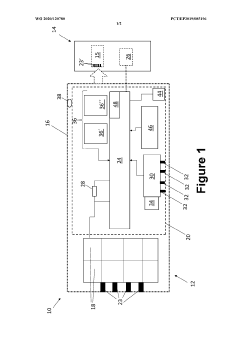
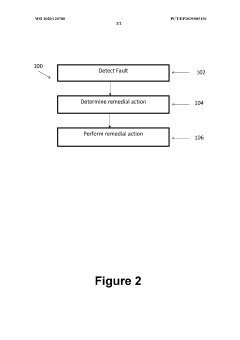
- Incorporating shock sensors and gas sensors into the battery management system to detect impending failures such as impacts or gas leaks, with the system capable of performing remediation actions like shutting down the battery pack or alerting medical personnel, and optionally transmitting data wirelessly for remote monitoring.
Medical Device Battery Safety Standards and Regulations
The regulatory landscape governing lithium battery use in medical devices is characterized by stringent safety requirements designed to protect patient welfare and ensure device reliability. International standards organizations and national regulatory bodies have established comprehensive frameworks that manufacturers must navigate to achieve market authorization. These frameworks address battery performance, safety testing protocols, and quality management systems specific to medical applications.
The International Electrotechnical Commission (IEC) provides foundational standards through IEC 60601-1, which establishes general requirements for basic safety and essential performance of medical electrical equipment, including battery-powered systems. This standard mandates rigorous testing for electrical safety, electromagnetic compatibility, and mechanical integrity. Additionally, IEC 62133 specifically addresses safety requirements for portable sealed secondary lithium cells and batteries, covering aspects such as thermal stability, overcharge protection, and short-circuit resistance that are critical for medical device applications.
In the United States, the Food and Drug Administration (FDA) enforces regulatory oversight through premarket notification (510k) and premarket approval (PMA) pathways. The FDA requires comprehensive documentation demonstrating battery safety, including failure mode and effects analysis (FMEA), accelerated aging studies, and validation of battery management systems. Manufacturers must also comply with ISO 13485 quality management standards, ensuring consistent production processes and traceability throughout the battery lifecycle.
The European Union's Medical Device Regulation (MDR 2017/745) imposes additional requirements for conformity assessment and post-market surveillance. Under this framework, lithium batteries must undergo rigorous evaluation by notified bodies, with particular emphasis on risk management according to ISO 14971 standards. The regulation mandates detailed technical documentation covering battery chemistry selection, protection circuitry design, and long-term stability data.
Emerging standards continue to evolve in response to technological advancements and incident reporting. UL 2054 and UL 1642 provide supplementary safety criteria for battery cells and packs, while IEC 62368-1 addresses audio-visual and information technology equipment that may incorporate medical functionalities. Compliance with these multifaceted regulatory requirements represents a fundamental prerequisite for market entry and sustained commercial viability in the medical device sector.
The International Electrotechnical Commission (IEC) provides foundational standards through IEC 60601-1, which establishes general requirements for basic safety and essential performance of medical electrical equipment, including battery-powered systems. This standard mandates rigorous testing for electrical safety, electromagnetic compatibility, and mechanical integrity. Additionally, IEC 62133 specifically addresses safety requirements for portable sealed secondary lithium cells and batteries, covering aspects such as thermal stability, overcharge protection, and short-circuit resistance that are critical for medical device applications.
In the United States, the Food and Drug Administration (FDA) enforces regulatory oversight through premarket notification (510k) and premarket approval (PMA) pathways. The FDA requires comprehensive documentation demonstrating battery safety, including failure mode and effects analysis (FMEA), accelerated aging studies, and validation of battery management systems. Manufacturers must also comply with ISO 13485 quality management standards, ensuring consistent production processes and traceability throughout the battery lifecycle.
The European Union's Medical Device Regulation (MDR 2017/745) imposes additional requirements for conformity assessment and post-market surveillance. Under this framework, lithium batteries must undergo rigorous evaluation by notified bodies, with particular emphasis on risk management according to ISO 14971 standards. The regulation mandates detailed technical documentation covering battery chemistry selection, protection circuitry design, and long-term stability data.
Emerging standards continue to evolve in response to technological advancements and incident reporting. UL 2054 and UL 1642 provide supplementary safety criteria for battery cells and packs, while IEC 62368-1 addresses audio-visual and information technology equipment that may incorporate medical functionalities. Compliance with these multifaceted regulatory requirements represents a fundamental prerequisite for market entry and sustained commercial viability in the medical device sector.
Battery Lifecycle Management and Failure Prediction Methods
Effective battery lifecycle management is fundamental to ensuring the reliability of lithium batteries in medical devices, where operational continuity directly impacts patient safety and treatment outcomes. Lifecycle management encompasses systematic monitoring of battery performance from initial deployment through end-of-life, incorporating real-time data collection, performance trending, and predictive maintenance protocols. Advanced battery management systems integrate state-of-health algorithms that track capacity fade, internal resistance growth, and voltage degradation patterns to establish comprehensive performance baselines and detect anomalous behavior before critical failures occur.
Failure prediction methods have evolved significantly with the integration of machine learning algorithms and physics-based modeling approaches. Data-driven techniques utilize historical performance data, operational parameters, and environmental conditions to train predictive models capable of forecasting remaining useful life with increasing accuracy. These models analyze complex interactions between charge-discharge cycles, temperature exposure, and aging mechanisms to identify early warning indicators of impending failure. Hybrid approaches combining electrochemical impedance spectroscopy with artificial neural networks demonstrate particular promise in detecting subtle degradation signatures that precede catastrophic failures.
Implementation of prognostic health management systems enables proactive intervention strategies, allowing medical facilities to schedule battery replacements during planned maintenance windows rather than responding to unexpected failures. Cloud-based monitoring platforms facilitate centralized oversight of distributed medical device fleets, aggregating performance data to refine prediction algorithms and identify systemic issues across device populations. These systems incorporate adaptive thresholds that account for device-specific usage patterns and environmental variations, reducing false alarms while maintaining high sensitivity to genuine degradation trends.
The integration of digital twin technology represents an emerging frontier in battery lifecycle management, creating virtual replicas that simulate battery behavior under various operational scenarios. These digital models enable accelerated aging studies and failure mode analysis without physical testing, supporting more robust prediction algorithms. Regulatory frameworks increasingly recognize the value of predictive maintenance approaches, with recent guidance documents acknowledging lifecycle management systems as acceptable risk mitigation strategies for battery-powered medical devices.
Failure prediction methods have evolved significantly with the integration of machine learning algorithms and physics-based modeling approaches. Data-driven techniques utilize historical performance data, operational parameters, and environmental conditions to train predictive models capable of forecasting remaining useful life with increasing accuracy. These models analyze complex interactions between charge-discharge cycles, temperature exposure, and aging mechanisms to identify early warning indicators of impending failure. Hybrid approaches combining electrochemical impedance spectroscopy with artificial neural networks demonstrate particular promise in detecting subtle degradation signatures that precede catastrophic failures.
Implementation of prognostic health management systems enables proactive intervention strategies, allowing medical facilities to schedule battery replacements during planned maintenance windows rather than responding to unexpected failures. Cloud-based monitoring platforms facilitate centralized oversight of distributed medical device fleets, aggregating performance data to refine prediction algorithms and identify systemic issues across device populations. These systems incorporate adaptive thresholds that account for device-specific usage patterns and environmental variations, reducing false alarms while maintaining high sensitivity to genuine degradation trends.
The integration of digital twin technology represents an emerging frontier in battery lifecycle management, creating virtual replicas that simulate battery behavior under various operational scenarios. These digital models enable accelerated aging studies and failure mode analysis without physical testing, supporting more robust prediction algorithms. Regulatory frameworks increasingly recognize the value of predictive maintenance approaches, with recent guidance documents acknowledging lifecycle management systems as acceptable risk mitigation strategies for battery-powered medical devices.
Unlock deeper insights with Patsnap Eureka Quick Research — get a full tech report to explore trends and direct your research. Try now!
Generate Your Research Report Instantly with AI Agent
Supercharge your innovation with Patsnap Eureka AI Agent Platform!