
Quantify Lithium Battery Output in High-Drain Applications
FEB 25, 20269 MIN READ
Generate Your Research Report Instantly with AI Agent
Patsnap Eureka helps you evaluate technical feasibility & market potential.
Lithium Battery High-Drain Tech Background and Goals
Lithium-ion batteries have evolved from niche energy storage solutions into ubiquitous power sources across consumer electronics, electric vehicles, and industrial applications since their commercialization in the early 1990s. The technology has undergone continuous refinement in electrode materials, electrolyte formulations, and cell architectures to meet increasingly demanding performance requirements. High-drain applications, characterized by discharge rates exceeding 1C and often reaching 10C or higher, represent a critical frontier where battery performance directly impacts system functionality and user experience.
The emergence of power-intensive devices such as electric power tools, drones, high-performance electric vehicles, and grid-scale energy storage systems has created unprecedented demands on lithium battery output capabilities. These applications require not only high instantaneous power delivery but also sustained performance under thermal and electrical stress conditions. The challenge lies in accurately quantifying battery output metrics including peak power, sustained discharge capacity, voltage stability, and thermal behavior under real-world high-drain scenarios.
Traditional battery characterization methods often rely on standardized testing protocols that may not adequately capture the dynamic nature of high-drain applications. The gap between laboratory measurements and actual field performance has prompted the need for more sophisticated quantification approaches. Understanding the interplay between internal resistance, electrode kinetics, thermal management, and state-of-charge variations becomes essential for predicting battery behavior under extreme discharge conditions.
The primary technical goal is to establish comprehensive methodologies for quantifying lithium battery output in high-drain contexts, encompassing both instantaneous and time-averaged performance metrics. This involves developing measurement frameworks that account for voltage sag, capacity fade acceleration, thermal runaway risks, and cycle life degradation specific to high-rate discharge scenarios. Secondary objectives include creating predictive models that correlate battery design parameters with high-drain performance outcomes, enabling optimization of cell chemistry and architecture for specific application requirements.
Achieving these goals requires integration of electrochemical modeling, advanced diagnostic techniques, and real-time monitoring systems. The ultimate aim is to provide manufacturers and system designers with reliable tools to specify, test, and validate lithium batteries for high-drain applications, ensuring safety, performance consistency, and longevity in demanding operational environments.
The emergence of power-intensive devices such as electric power tools, drones, high-performance electric vehicles, and grid-scale energy storage systems has created unprecedented demands on lithium battery output capabilities. These applications require not only high instantaneous power delivery but also sustained performance under thermal and electrical stress conditions. The challenge lies in accurately quantifying battery output metrics including peak power, sustained discharge capacity, voltage stability, and thermal behavior under real-world high-drain scenarios.
Traditional battery characterization methods often rely on standardized testing protocols that may not adequately capture the dynamic nature of high-drain applications. The gap between laboratory measurements and actual field performance has prompted the need for more sophisticated quantification approaches. Understanding the interplay between internal resistance, electrode kinetics, thermal management, and state-of-charge variations becomes essential for predicting battery behavior under extreme discharge conditions.
The primary technical goal is to establish comprehensive methodologies for quantifying lithium battery output in high-drain contexts, encompassing both instantaneous and time-averaged performance metrics. This involves developing measurement frameworks that account for voltage sag, capacity fade acceleration, thermal runaway risks, and cycle life degradation specific to high-rate discharge scenarios. Secondary objectives include creating predictive models that correlate battery design parameters with high-drain performance outcomes, enabling optimization of cell chemistry and architecture for specific application requirements.
Achieving these goals requires integration of electrochemical modeling, advanced diagnostic techniques, and real-time monitoring systems. The ultimate aim is to provide manufacturers and system designers with reliable tools to specify, test, and validate lithium batteries for high-drain applications, ensuring safety, performance consistency, and longevity in demanding operational environments.
Market Demand for High-Drain Battery Applications
The market demand for high-drain battery applications has experienced substantial growth driven by the rapid expansion of consumer electronics, electric vehicles, and power tools sectors. High-drain devices require batteries capable of delivering sustained high current output while maintaining voltage stability and thermal management. This demand profile differs fundamentally from traditional low-drain applications, creating distinct market segments with specific performance requirements.
Consumer electronics represent a significant demand driver, particularly in the gaming device and professional photography equipment markets. Handheld gaming consoles, high-performance smartphones, and professional camera systems require batteries that can support intensive processing loads and rapid data transmission without compromising operational duration. The proliferation of augmented reality devices and wearable technology further amplifies this demand, as these applications combine high computational requirements with compact form factors.
The electric vehicle sector constitutes the largest and fastest-growing market segment for high-drain battery applications. Automotive manufacturers increasingly prioritize fast-charging capabilities and acceleration performance, both of which depend on batteries capable of handling extreme discharge and charge rates. The transition from hybrid to fully electric powertrains intensifies performance requirements, particularly for sports and commercial vehicle segments where power delivery characteristics directly impact market competitiveness.
Power tool manufacturers have shifted predominantly toward cordless platforms, creating sustained demand for batteries that can deliver power comparable to corded alternatives. Professional-grade tools used in construction and manufacturing require consistent high-current output across extended duty cycles. This market segment values both peak power delivery and cycle life, as battery replacement costs significantly impact total ownership economics.
Emerging applications in drone technology, electric aviation, and grid-scale energy storage systems represent nascent but rapidly developing market opportunities. These applications impose extreme performance requirements, often operating at the theoretical limits of current lithium battery technology. The quantification of battery output in these demanding contexts becomes critical for product development, safety certification, and market differentiation. Accurate performance measurement methodologies directly influence product design decisions and market positioning strategies across all these segments.
Consumer electronics represent a significant demand driver, particularly in the gaming device and professional photography equipment markets. Handheld gaming consoles, high-performance smartphones, and professional camera systems require batteries that can support intensive processing loads and rapid data transmission without compromising operational duration. The proliferation of augmented reality devices and wearable technology further amplifies this demand, as these applications combine high computational requirements with compact form factors.
The electric vehicle sector constitutes the largest and fastest-growing market segment for high-drain battery applications. Automotive manufacturers increasingly prioritize fast-charging capabilities and acceleration performance, both of which depend on batteries capable of handling extreme discharge and charge rates. The transition from hybrid to fully electric powertrains intensifies performance requirements, particularly for sports and commercial vehicle segments where power delivery characteristics directly impact market competitiveness.
Power tool manufacturers have shifted predominantly toward cordless platforms, creating sustained demand for batteries that can deliver power comparable to corded alternatives. Professional-grade tools used in construction and manufacturing require consistent high-current output across extended duty cycles. This market segment values both peak power delivery and cycle life, as battery replacement costs significantly impact total ownership economics.
Emerging applications in drone technology, electric aviation, and grid-scale energy storage systems represent nascent but rapidly developing market opportunities. These applications impose extreme performance requirements, often operating at the theoretical limits of current lithium battery technology. The quantification of battery output in these demanding contexts becomes critical for product development, safety certification, and market differentiation. Accurate performance measurement methodologies directly influence product design decisions and market positioning strategies across all these segments.
Current State and Challenges in High-Drain Battery Output
The quantification of lithium battery output in high-drain applications remains a critical challenge in the energy storage industry. Current measurement methodologies primarily rely on standardized discharge tests conducted under controlled laboratory conditions, yet these approaches often fail to capture the dynamic performance variations encountered in real-world high-drain scenarios. The gap between laboratory testing and actual application performance creates significant uncertainty in battery specification and system design.
Existing measurement standards, such as those defined by IEC and IEEE, provide frameworks for capacity and power testing but lack comprehensive protocols specifically tailored for high-drain conditions. These standards typically employ constant current discharge profiles that do not adequately simulate the pulsed or variable load patterns characteristic of applications like power tools, electric vehicles during acceleration, and high-performance drones. Consequently, manufacturers and system integrators struggle to accurately predict battery behavior under actual operating conditions.
Temperature management presents another substantial challenge in quantifying high-drain output. Elevated discharge rates generate significant heat, which directly impacts internal resistance, voltage stability, and overall deliverable capacity. Current measurement systems often inadequately account for thermal effects, leading to discrepancies between rated specifications and field performance. The lack of standardized thermal profiling during high-drain testing further complicates cross-manufacturer comparisons and performance validation.
State-of-charge estimation during high-drain operation remains problematic due to voltage depression phenomena and rapid capacity depletion. Traditional coulomb counting and voltage-based methods exhibit reduced accuracy under high current loads, where IR drops and polarization effects become pronounced. Advanced battery management systems attempt to compensate through complex algorithms, but the absence of universally accepted quantification metrics hinders systematic performance evaluation and comparison.
The geographical distribution of advanced testing capabilities reveals significant disparities. Leading research institutions and manufacturers in North America, Europe, and East Asia possess sophisticated equipment for high-drain characterization, while emerging markets often lack access to precision measurement infrastructure. This technological divide affects the global standardization of battery performance metrics and creates barriers to market entry for new manufacturers seeking to validate their high-drain battery technologies.
Existing measurement standards, such as those defined by IEC and IEEE, provide frameworks for capacity and power testing but lack comprehensive protocols specifically tailored for high-drain conditions. These standards typically employ constant current discharge profiles that do not adequately simulate the pulsed or variable load patterns characteristic of applications like power tools, electric vehicles during acceleration, and high-performance drones. Consequently, manufacturers and system integrators struggle to accurately predict battery behavior under actual operating conditions.
Temperature management presents another substantial challenge in quantifying high-drain output. Elevated discharge rates generate significant heat, which directly impacts internal resistance, voltage stability, and overall deliverable capacity. Current measurement systems often inadequately account for thermal effects, leading to discrepancies between rated specifications and field performance. The lack of standardized thermal profiling during high-drain testing further complicates cross-manufacturer comparisons and performance validation.
State-of-charge estimation during high-drain operation remains problematic due to voltage depression phenomena and rapid capacity depletion. Traditional coulomb counting and voltage-based methods exhibit reduced accuracy under high current loads, where IR drops and polarization effects become pronounced. Advanced battery management systems attempt to compensate through complex algorithms, but the absence of universally accepted quantification metrics hinders systematic performance evaluation and comparison.
The geographical distribution of advanced testing capabilities reveals significant disparities. Leading research institutions and manufacturers in North America, Europe, and East Asia possess sophisticated equipment for high-drain characterization, while emerging markets often lack access to precision measurement infrastructure. This technological divide affects the global standardization of battery performance metrics and creates barriers to market entry for new manufacturers seeking to validate their high-drain battery technologies.
Current Quantification Methods for High-Drain Output
01 Battery management systems for output control
Advanced battery management systems (BMS) are employed to monitor and control lithium battery output parameters. These systems regulate voltage, current, and power delivery to optimize performance and ensure safe operation. The BMS can include circuitry for detecting output conditions, managing charge and discharge cycles, and protecting against overload situations. Integration of intelligent control algorithms enables dynamic adjustment of output characteristics based on real-time battery status and load requirements.- Battery management systems for output control: Advanced battery management systems (BMS) are employed to monitor and control lithium battery output parameters. These systems regulate voltage, current, and power delivery to optimize performance and safety. The BMS can include circuitry for detecting battery state, controlling charging and discharging processes, and managing output terminals to ensure stable power delivery under various load conditions.
- Output terminal and connector configurations: Specialized terminal designs and connector configurations are utilized to enhance lithium battery output efficiency and reliability. These designs focus on reducing contact resistance, improving current distribution, and ensuring secure electrical connections. The configurations may include multiple output terminals, optimized contact materials, and structural arrangements that facilitate efficient power transfer while maintaining safety standards.
- Power conversion and output regulation circuits: Power conversion circuits and voltage regulation mechanisms are integrated to control and stabilize lithium battery output. These circuits can include DC-DC converters, voltage regulators, and power conditioning systems that transform battery voltage to desired output levels. The regulation systems ensure consistent power delivery across varying load demands and battery charge states, improving overall system efficiency and protecting connected devices.
- Multi-cell battery pack output architecture: Battery pack designs incorporating multiple lithium cells in series or parallel configurations to achieve desired output characteristics. These architectures include cell balancing systems, interconnection methods, and output distribution networks that optimize total power delivery. The designs address issues of cell matching, thermal management, and coordinated discharge to maximize pack-level output performance and longevity.
- Output monitoring and protection mechanisms: Safety and monitoring systems designed to protect lithium battery output under abnormal conditions. These mechanisms include overcurrent protection, short circuit detection, thermal monitoring, and output disconnect features. The protection systems can automatically adjust or interrupt output when detecting potentially dangerous conditions such as excessive current draw, overheating, or voltage anomalies, ensuring safe operation throughout the battery lifecycle.
02 Output terminal and connector configurations
Specialized terminal and connector designs are implemented to enhance lithium battery output efficiency and reliability. These configurations include optimized contact structures, improved electrical connections, and enhanced current-carrying capabilities. The designs focus on minimizing resistance, reducing heat generation, and ensuring stable power delivery. Various terminal arrangements and connector types are developed to accommodate different application requirements and facilitate easy integration with external devices.Expand Specific Solutions03 Power output optimization through cell configuration
The arrangement and configuration of battery cells significantly impact overall output performance. Multiple cells can be connected in series or parallel configurations to achieve desired voltage and current output levels. Advanced cell arrangement strategies consider factors such as thermal management, electrical balance, and mechanical stability. Optimized cell configurations enable higher power density, improved efficiency, and extended operational life while maintaining consistent output characteristics.Expand Specific Solutions04 Output voltage regulation and conversion
Voltage regulation and conversion technologies are essential for maintaining stable lithium battery output across varying load conditions. These systems employ DC-DC converters, voltage regulators, and power conditioning circuits to ensure consistent output voltage levels. The technologies address voltage fluctuations during discharge, compensate for battery aging effects, and provide multiple output voltage options. Advanced regulation methods improve energy efficiency and enable compatibility with diverse electronic devices and applications.Expand Specific Solutions05 High-power output capability enhancement
Technologies for enhancing high-power output capabilities focus on improving current delivery and peak power performance. These include advanced electrode materials, optimized electrolyte formulations, and improved internal cell structures that reduce internal resistance. Enhanced cooling systems and thermal management solutions support sustained high-power output without compromising safety or longevity. The developments enable lithium batteries to meet demanding power requirements in applications such as electric vehicles and power tools.Expand Specific Solutions
Key Players in High-Drain Lithium Battery Industry
The lithium battery market for high-drain applications is experiencing rapid growth, driven by increasing demand from electric vehicles, power tools, and energy storage systems. The competitive landscape features established automotive manufacturers like Toyota, Nissan, and Hyundai integrating battery technology into their EV strategies, alongside dedicated battery specialists such as LG Energy Solution, LG Chem, and Hefei Guoxuan High-Tech Power Energy leading in production capacity and innovation. Technology maturity varies significantly across players, with LG Energy Solution and Vehicle Energy Japan demonstrating advanced manufacturing capabilities, while emerging Chinese companies like Shanghai Mek Sheng Energy Technology and Zhejiang New Era Zhongneng focus on battery management systems and recycling solutions. Industrial conglomerates including Siemens, Murata Manufacturing, and Sony Group contribute specialized components and power management technologies, indicating a maturing ecosystem where vertical integration and technological diversification are becoming critical competitive advantages in addressing high-drain performance requirements.
LG Energy Solution Ltd.
Technical Solution: LG Energy Solution has developed advanced high-power lithium-ion battery cells specifically designed for high-drain applications such as electric vehicles and power tools. Their technology focuses on optimized cathode materials using high-nickel NCM (Nickel-Cobalt-Manganese) chemistry that enables sustained discharge rates of 5-10C while maintaining thermal stability. The company implements advanced thermal management systems and proprietary electrolyte formulations to handle peak power demands exceeding 200kW in automotive applications. Their battery management systems (BMS) incorporate real-time monitoring of voltage, current, and temperature parameters to quantify output performance, with sophisticated algorithms that predict power availability under various load conditions and optimize cell balancing during high-drain scenarios.
Strengths: Industry-leading energy density (>270Wh/kg), proven track record in EV applications with major automakers, robust thermal management capabilities. Weaknesses: Higher cost compared to LFP alternatives, performance degradation under extreme temperature conditions, complex manufacturing requirements.
Hefei Guoxuan High-Tech Power Energy Co., Ltd.
Technical Solution: Guoxuan High-Tech specializes in lithium iron phosphate (LFP) battery technology optimized for high-drain industrial and commercial applications. Their approach emphasizes safety and longevity in high-power scenarios, with cells capable of continuous discharge rates up to 3C and pulse rates reaching 5C. The company has developed proprietary carbon coating techniques for cathode materials that enhance conductivity and reduce internal resistance, enabling better power output quantification. Their battery systems integrate advanced coulomb counting and impedance spectroscopy methods to accurately measure available capacity under high-drain conditions, with real-time state-of-charge (SOC) and state-of-health (SOH) estimation algorithms specifically calibrated for demanding discharge profiles in electric buses and energy storage systems.
Strengths: Excellent cycle life (>4000 cycles), superior safety profile with minimal thermal runaway risk, cost-effective solution for commercial applications. Weaknesses: Lower energy density compared to NCM chemistry (~160Wh/kg), reduced performance in cold weather conditions, limited peak power capability.
Core Technologies in Battery Output Measurement
Method and device for estimating discharge power of secondary battery
PatentWO2016052900A1
Innovation
- A method that sets discharge boundary conditions including upper and lower current limits, measures discharge end voltages at various currents to create an I-V profile, determines the maximum discharge current and final voltage, and estimates discharge output considering the state of charge, using lookup tables for resistance and temperature adjustments.


Method and system for identifying third-order model parameters of lithium battery based on likelihood function
PatentActiveUS20210325467A1
Innovation
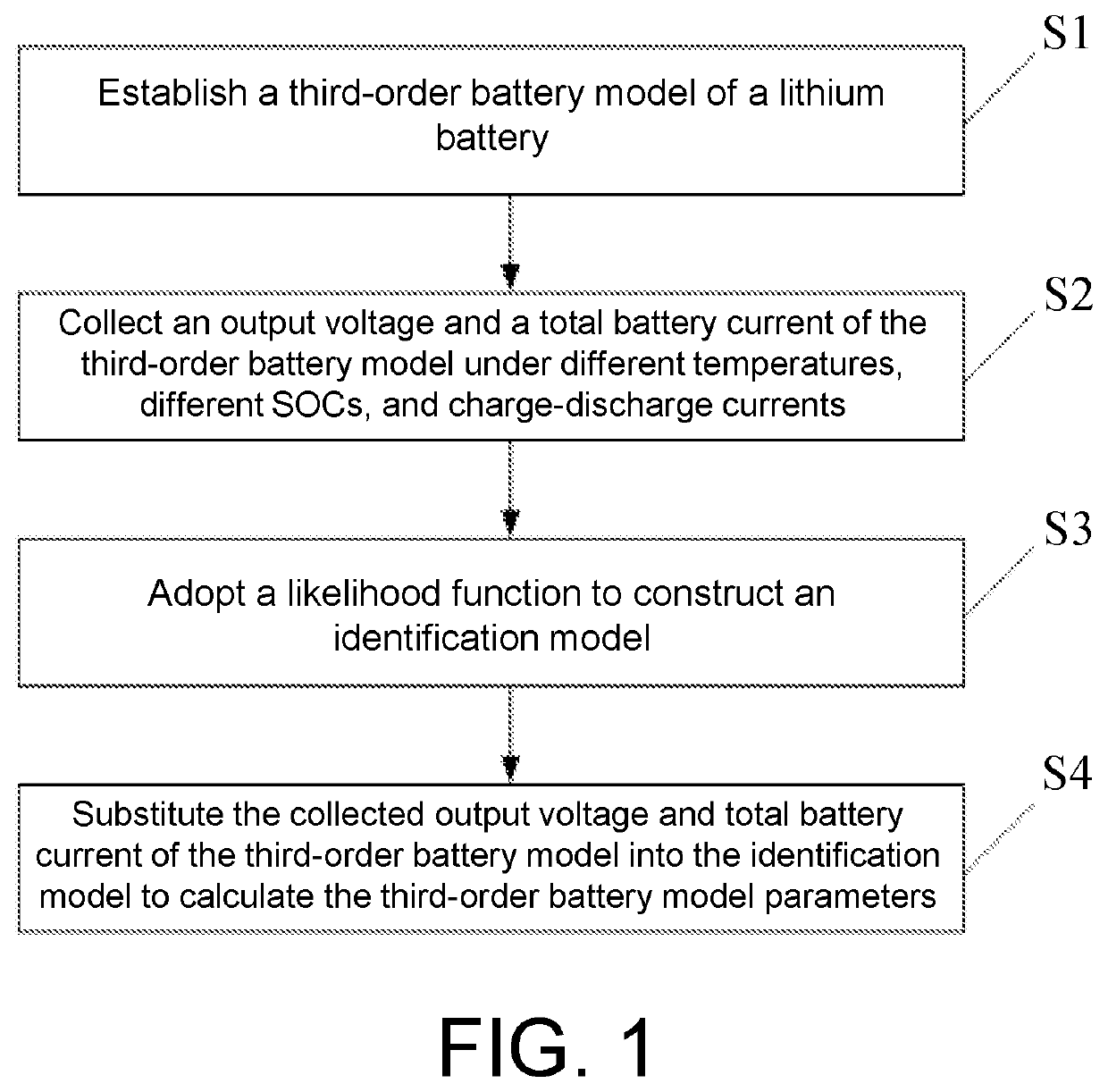
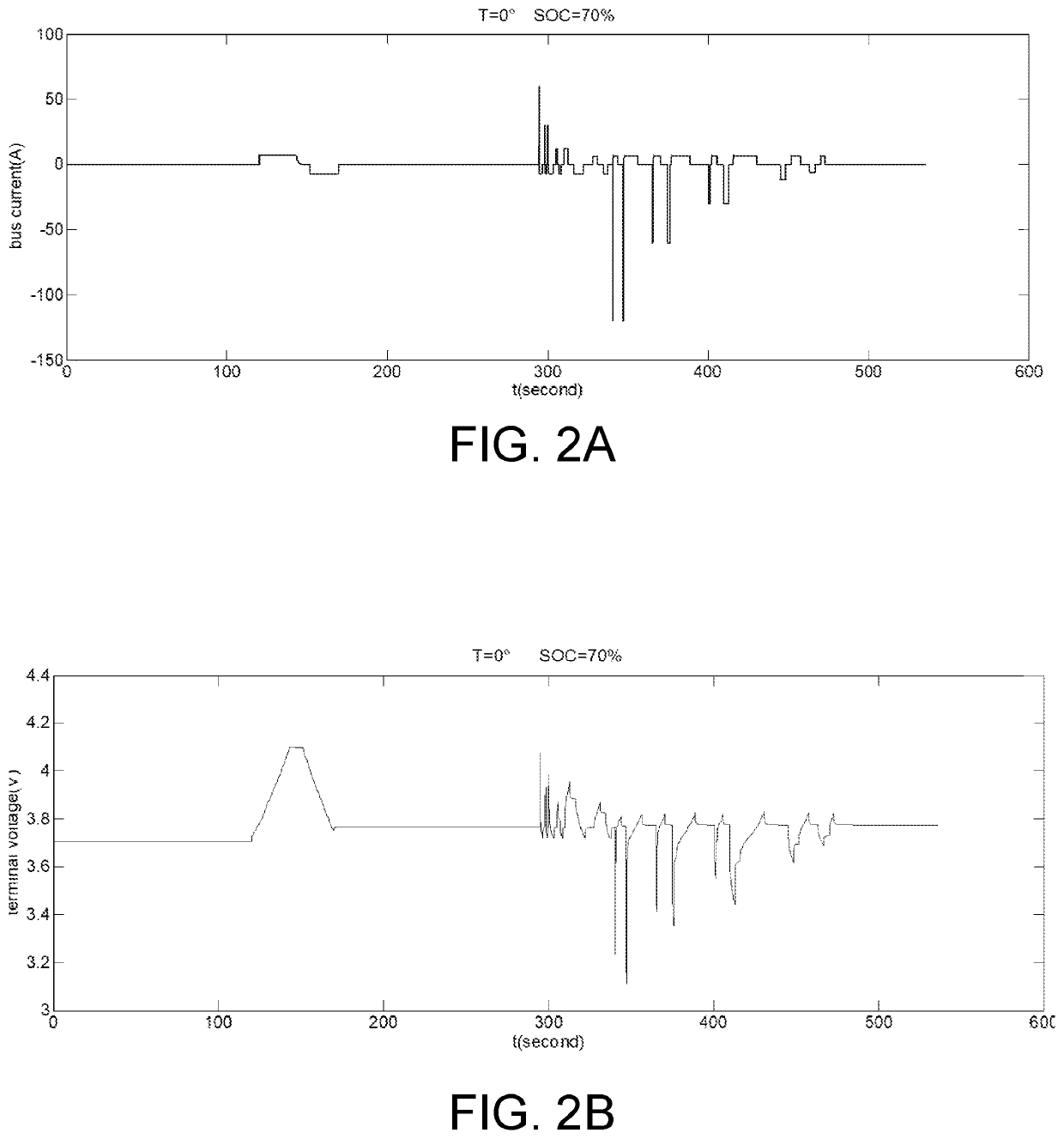
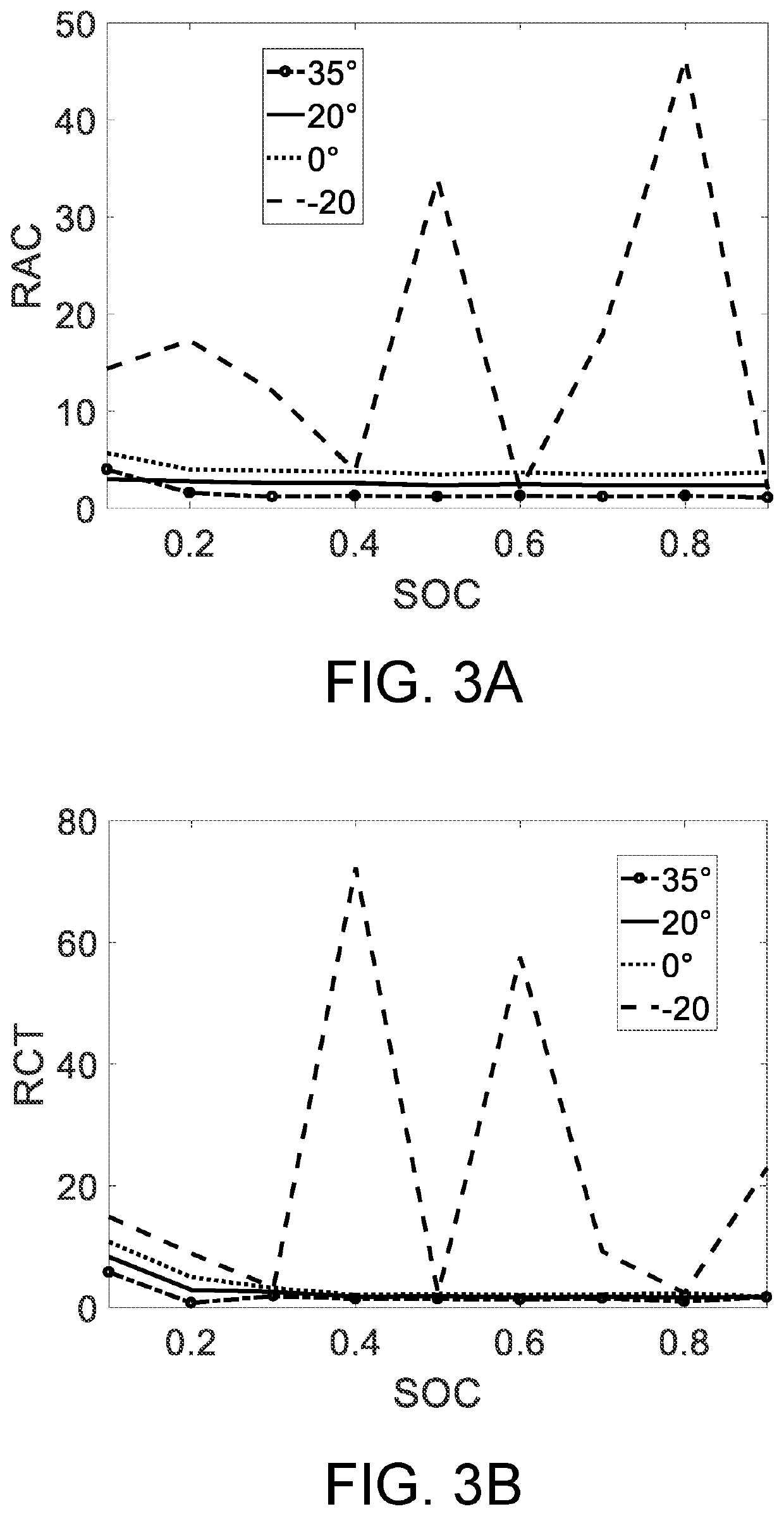
- A method and system that utilize a likelihood function to identify third-order model parameters of lithium batteries by collecting data on output voltage and total battery current under various temperatures and charge-discharge conditions, applying maximum likelihood estimation to calculate relevant parameters, including ohmic resistors, charge transfer components, and diffused capacitors and resistors.

Safety Standards and Testing Protocols
Safety standards and testing protocols for lithium batteries in high-drain applications have become increasingly stringent as power demands escalate across consumer electronics, electric vehicles, and industrial equipment. International regulatory frameworks, primarily governed by IEC 62133, UL 1642, and UN 38.3, establish baseline requirements for battery safety evaluation. These standards mandate comprehensive testing procedures including overcharge protection, short-circuit resistance, thermal stability assessment, and mechanical abuse tolerance. For high-drain scenarios specifically, additional protocols address sustained high-current discharge conditions, thermal runaway propagation, and cell-to-cell failure containment mechanisms.
Testing methodologies for quantifying battery output under high-drain conditions must simultaneously verify performance metrics and safety thresholds. Standard discharge rate testing typically involves C-rate evaluations ranging from 5C to 20C, measuring voltage stability, capacity retention, and temperature rise profiles. Advanced protocols incorporate pulse discharge testing to simulate real-world load variations, particularly relevant for power tools and electric vehicle acceleration scenarios. Thermal imaging and internal resistance monitoring during high-drain cycles provide critical data for identifying potential failure modes before catastrophic events occur.
Certification processes require batteries to demonstrate consistent performance across environmental extremes, including temperature cycling between -40°C and 85°C, altitude simulation, and vibration testing per ISO 16750 standards. High-drain applications introduce additional complexity as elevated current flows amplify thermal management challenges and accelerate degradation mechanisms. Testing protocols must therefore extend beyond single-cell evaluation to encompass pack-level behavior, including battery management system validation, thermal propagation barriers, and emergency disconnect functionality under maximum load conditions.
Emerging safety standards are evolving to address next-generation battery chemistries and ultra-high-drain applications exceeding 30C discharge rates. Organizations such as SAE International and the China Automotive Technology and Research Center are developing supplementary protocols specifically targeting fast-charging infrastructure and high-performance electric vehicle applications. These advanced standards emphasize predictive safety assessment through accelerated aging tests combined with real-time monitoring capabilities, ensuring that quantified output specifications remain valid throughout the battery's operational lifespan while maintaining safety margins under extreme usage patterns.
Testing methodologies for quantifying battery output under high-drain conditions must simultaneously verify performance metrics and safety thresholds. Standard discharge rate testing typically involves C-rate evaluations ranging from 5C to 20C, measuring voltage stability, capacity retention, and temperature rise profiles. Advanced protocols incorporate pulse discharge testing to simulate real-world load variations, particularly relevant for power tools and electric vehicle acceleration scenarios. Thermal imaging and internal resistance monitoring during high-drain cycles provide critical data for identifying potential failure modes before catastrophic events occur.
Certification processes require batteries to demonstrate consistent performance across environmental extremes, including temperature cycling between -40°C and 85°C, altitude simulation, and vibration testing per ISO 16750 standards. High-drain applications introduce additional complexity as elevated current flows amplify thermal management challenges and accelerate degradation mechanisms. Testing protocols must therefore extend beyond single-cell evaluation to encompass pack-level behavior, including battery management system validation, thermal propagation barriers, and emergency disconnect functionality under maximum load conditions.
Emerging safety standards are evolving to address next-generation battery chemistries and ultra-high-drain applications exceeding 30C discharge rates. Organizations such as SAE International and the China Automotive Technology and Research Center are developing supplementary protocols specifically targeting fast-charging infrastructure and high-performance electric vehicle applications. These advanced standards emphasize predictive safety assessment through accelerated aging tests combined with real-time monitoring capabilities, ensuring that quantified output specifications remain valid throughout the battery's operational lifespan while maintaining safety margins under extreme usage patterns.
Thermal Management in High-Drain Battery Systems
Thermal management represents a critical engineering challenge in high-drain lithium battery applications, where rapid discharge rates generate substantial heat that can compromise performance, safety, and longevity. When batteries operate under high-drain conditions, internal resistance causes significant energy dissipation as heat, with temperature rises potentially exceeding 20-30°C above ambient levels within minutes. This thermal accumulation directly impacts the battery's ability to deliver consistent power output, as elevated temperatures accelerate degradation mechanisms including electrolyte decomposition, separator breakdown, and lithium plating phenomena.
Effective thermal management systems must address both heat generation and dissipation challenges simultaneously. The primary heat sources include ohmic resistance from current collectors and electrodes, polarization resistance at electrode-electrolyte interfaces, and exothermic chemical reactions during discharge. Without adequate cooling mechanisms, localized hot spots can develop, creating temperature gradients exceeding 5°C across cell surfaces, which further exacerbates capacity fade and increases safety risks including thermal runaway scenarios.
Contemporary thermal management approaches encompass passive and active cooling strategies, each presenting distinct advantages for high-drain applications. Passive methods utilize phase change materials, heat spreaders, and enhanced natural convection designs to absorb and redistribute thermal energy without external power consumption. Active systems employ forced air cooling, liquid cooling channels, or refrigeration cycles to maintain optimal operating temperatures between 20-40°C, though at the cost of additional energy consumption and system complexity.
The quantification of battery output in high-drain scenarios becomes intrinsically linked to thermal management effectiveness, as temperature directly influences internal resistance, voltage depression, and available capacity. Advanced thermal management solutions enable sustained high-rate discharge by maintaining electrochemical reaction kinetics within optimal ranges, preventing premature voltage cutoff, and preserving the battery's power delivery capabilities throughout the discharge cycle. Integration of real-time temperature monitoring with adaptive thermal control systems represents an emerging frontier for maximizing output performance while ensuring operational safety margins.
Effective thermal management systems must address both heat generation and dissipation challenges simultaneously. The primary heat sources include ohmic resistance from current collectors and electrodes, polarization resistance at electrode-electrolyte interfaces, and exothermic chemical reactions during discharge. Without adequate cooling mechanisms, localized hot spots can develop, creating temperature gradients exceeding 5°C across cell surfaces, which further exacerbates capacity fade and increases safety risks including thermal runaway scenarios.
Contemporary thermal management approaches encompass passive and active cooling strategies, each presenting distinct advantages for high-drain applications. Passive methods utilize phase change materials, heat spreaders, and enhanced natural convection designs to absorb and redistribute thermal energy without external power consumption. Active systems employ forced air cooling, liquid cooling channels, or refrigeration cycles to maintain optimal operating temperatures between 20-40°C, though at the cost of additional energy consumption and system complexity.
The quantification of battery output in high-drain scenarios becomes intrinsically linked to thermal management effectiveness, as temperature directly influences internal resistance, voltage depression, and available capacity. Advanced thermal management solutions enable sustained high-rate discharge by maintaining electrochemical reaction kinetics within optimal ranges, preventing premature voltage cutoff, and preserving the battery's power delivery capabilities throughout the discharge cycle. Integration of real-time temperature monitoring with adaptive thermal control systems represents an emerging frontier for maximizing output performance while ensuring operational safety margins.
Unlock deeper insights with Patsnap Eureka Quick Research — get a full tech report to explore trends and direct your research. Try now!
Generate Your Research Report Instantly with AI Agent
Supercharge your innovation with Patsnap Eureka AI Agent Platform!