

Evaluating Advanced Usage Scenarios for Elemental Sulfur
MAR 31, 20269 MIN READ
Generate Your Research Report Instantly with AI Agent
Patsnap Eureka helps you evaluate technical feasibility & market potential.
Elemental Sulfur Applications Background and Objectives
Elemental sulfur, one of the most abundant chemical elements on Earth, has undergone a remarkable transformation from a simple industrial byproduct to a critical component in advanced technological applications. Historically utilized primarily in traditional sectors such as fertilizer production, rubber vulcanization, and chemical manufacturing, sulfur's unique physicochemical properties have positioned it as an increasingly valuable material in emerging high-tech industries.
The evolution of sulfur applications reflects broader technological advancement trends, particularly in energy storage, advanced materials science, and environmental remediation technologies. Modern industrial demands have shifted focus toward sustainable and high-performance materials, creating unprecedented opportunities for sulfur-based innovations. This transition represents a paradigm shift from conventional bulk chemical usage to sophisticated, engineered applications requiring precise material control and advanced processing techniques.
Contemporary research initiatives are driving sulfur toward revolutionary applications in next-generation lithium-sulfur batteries, where its high theoretical energy density offers potential solutions to current energy storage limitations. Additionally, sulfur's role in advanced polymer composites, concrete enhancement technologies, and specialized coating systems demonstrates its versatility across multiple industrial sectors. These developments indicate a fundamental expansion of sulfur's utility beyond traditional chemical processing.
The primary objective of evaluating advanced sulfur usage scenarios centers on identifying breakthrough applications that leverage sulfur's unique properties while addressing current technological gaps. Key focus areas include developing high-capacity energy storage solutions, creating sustainable construction materials, and establishing novel environmental remediation approaches. These objectives align with global sustainability goals and the increasing demand for environmentally responsible industrial processes.
Strategic research priorities encompass optimizing sulfur's electrochemical performance in battery applications, enhancing its mechanical properties in composite materials, and exploring its potential in carbon capture technologies. The ultimate goal involves establishing sulfur as a cornerstone material in next-generation industrial applications, transforming it from a commodity chemical to a high-value technological enabler.
Success metrics for these advanced applications include achieving superior performance characteristics compared to existing solutions, demonstrating economic viability at commercial scales, and ensuring environmental compatibility throughout the product lifecycle. These objectives collectively aim to unlock sulfur's full potential in addressing contemporary technological challenges while supporting sustainable industrial development.
The evolution of sulfur applications reflects broader technological advancement trends, particularly in energy storage, advanced materials science, and environmental remediation technologies. Modern industrial demands have shifted focus toward sustainable and high-performance materials, creating unprecedented opportunities for sulfur-based innovations. This transition represents a paradigm shift from conventional bulk chemical usage to sophisticated, engineered applications requiring precise material control and advanced processing techniques.
Contemporary research initiatives are driving sulfur toward revolutionary applications in next-generation lithium-sulfur batteries, where its high theoretical energy density offers potential solutions to current energy storage limitations. Additionally, sulfur's role in advanced polymer composites, concrete enhancement technologies, and specialized coating systems demonstrates its versatility across multiple industrial sectors. These developments indicate a fundamental expansion of sulfur's utility beyond traditional chemical processing.
The primary objective of evaluating advanced sulfur usage scenarios centers on identifying breakthrough applications that leverage sulfur's unique properties while addressing current technological gaps. Key focus areas include developing high-capacity energy storage solutions, creating sustainable construction materials, and establishing novel environmental remediation approaches. These objectives align with global sustainability goals and the increasing demand for environmentally responsible industrial processes.
Strategic research priorities encompass optimizing sulfur's electrochemical performance in battery applications, enhancing its mechanical properties in composite materials, and exploring its potential in carbon capture technologies. The ultimate goal involves establishing sulfur as a cornerstone material in next-generation industrial applications, transforming it from a commodity chemical to a high-value technological enabler.
Success metrics for these advanced applications include achieving superior performance characteristics compared to existing solutions, demonstrating economic viability at commercial scales, and ensuring environmental compatibility throughout the product lifecycle. These objectives collectively aim to unlock sulfur's full potential in addressing contemporary technological challenges while supporting sustainable industrial development.
Market Demand Analysis for Advanced Sulfur Applications
The global sulfur market is experiencing a fundamental transformation driven by evolving industrial applications and environmental regulations. Traditional sulfur consumption patterns, primarily dominated by sulfuric acid production for fertilizers, are being supplemented by emerging high-value applications that leverage elemental sulfur's unique chemical properties. This shift represents a significant opportunity for advanced sulfur utilization technologies.
Battery technology sector presents one of the most promising growth areas for elemental sulfur applications. Lithium-sulfur batteries are gaining substantial attention due to their theoretical energy density advantages over conventional lithium-ion systems. The automotive industry's transition toward electric vehicles is creating unprecedented demand for next-generation battery technologies, positioning sulfur as a critical material for future energy storage solutions.
Construction and infrastructure industries are increasingly adopting sulfur-based materials for specialized applications. Sulfur concrete and sulfur-modified asphalt demonstrate superior chemical resistance and durability compared to traditional materials. These applications are particularly valuable in harsh environmental conditions where conventional materials fail, creating niche markets with premium pricing potential.
Agricultural sector demand extends beyond traditional fertilizer applications toward advanced soil conditioning and plant nutrition products. Elemental sulfur's slow-release properties and pH modification capabilities are driving development of precision agriculture solutions. Organic farming practices and sustainable agriculture initiatives further amplify demand for elemental sulfur-based products.
Industrial processing applications continue expanding as manufacturers seek environmentally friendly alternatives to traditional chemical processes. Sulfur's role in rubber vulcanization, pharmaceutical synthesis, and specialty chemical production maintains steady demand while new applications in nanotechnology and advanced materials emerge.
Environmental remediation represents an emerging market segment where elemental sulfur serves as a reducing agent for contaminated soil and groundwater treatment. Regulatory pressures for environmental cleanup create sustained demand for sulfur-based remediation technologies, particularly in regions with legacy industrial contamination.
Regional demand patterns reflect varying industrial development stages and regulatory environments. Developing economies show strong growth in traditional applications, while developed markets increasingly focus on advanced, high-value sulfur applications that align with sustainability objectives and technological innovation priorities.
Battery technology sector presents one of the most promising growth areas for elemental sulfur applications. Lithium-sulfur batteries are gaining substantial attention due to their theoretical energy density advantages over conventional lithium-ion systems. The automotive industry's transition toward electric vehicles is creating unprecedented demand for next-generation battery technologies, positioning sulfur as a critical material for future energy storage solutions.
Construction and infrastructure industries are increasingly adopting sulfur-based materials for specialized applications. Sulfur concrete and sulfur-modified asphalt demonstrate superior chemical resistance and durability compared to traditional materials. These applications are particularly valuable in harsh environmental conditions where conventional materials fail, creating niche markets with premium pricing potential.
Agricultural sector demand extends beyond traditional fertilizer applications toward advanced soil conditioning and plant nutrition products. Elemental sulfur's slow-release properties and pH modification capabilities are driving development of precision agriculture solutions. Organic farming practices and sustainable agriculture initiatives further amplify demand for elemental sulfur-based products.
Industrial processing applications continue expanding as manufacturers seek environmentally friendly alternatives to traditional chemical processes. Sulfur's role in rubber vulcanization, pharmaceutical synthesis, and specialty chemical production maintains steady demand while new applications in nanotechnology and advanced materials emerge.
Environmental remediation represents an emerging market segment where elemental sulfur serves as a reducing agent for contaminated soil and groundwater treatment. Regulatory pressures for environmental cleanup create sustained demand for sulfur-based remediation technologies, particularly in regions with legacy industrial contamination.
Regional demand patterns reflect varying industrial development stages and regulatory environments. Developing economies show strong growth in traditional applications, while developed markets increasingly focus on advanced, high-value sulfur applications that align with sustainability objectives and technological innovation priorities.
Current Status and Challenges in Sulfur Utilization
The global sulfur market currently faces a complex landscape characterized by abundant supply yet limited high-value applications. Approximately 70 million tons of elemental sulfur are produced annually worldwide, with the majority derived as a byproduct from petroleum refining and natural gas processing operations. Traditional applications primarily focus on sulfuric acid production for fertilizers, accounting for nearly 60% of total consumption, while rubber vulcanization and chemical synthesis represent secondary markets.
Current utilization patterns reveal significant geographical disparities in sulfur processing capabilities. Developed regions such as North America and Europe have established sophisticated sulfur recovery and processing infrastructure, while emerging markets in Asia-Pacific demonstrate rapidly growing demand but face technological gaps in advanced processing methods. The Middle East, despite being a major sulfur producer, struggles with effective utilization strategies for excess sulfur stockpiles.
Technical challenges in sulfur utilization stem from its unique chemical properties and processing requirements. Elemental sulfur's tendency to form multiple allotropes at different temperatures creates handling and storage complications. The material's low thermal conductivity and tendency to undergo phase transitions present significant engineering challenges in industrial processing applications. Additionally, sulfur's corrosive nature when combined with moisture requires specialized materials and equipment, increasing operational costs.
Environmental considerations pose another layer of complexity in sulfur utilization. While sulfur recovery from fossil fuel processing helps reduce atmospheric emissions, the accumulation of excess sulfur creates disposal challenges. Traditional storage methods result in large sulfur blocks that can pose environmental risks if not properly managed. Regulatory frameworks across different regions vary significantly, creating compliance challenges for multinational operations.
Market dynamics reveal an oversupply situation in many regions, particularly where oil and gas processing activities generate substantial sulfur byproducts. This oversupply has led to depressed pricing and reduced economic incentives for developing innovative applications. The lack of established supply chains for specialized sulfur products further constrains market development for advanced applications.
Technological barriers include limited research and development investment in novel sulfur applications compared to other industrial materials. The absence of standardized processing protocols for emerging applications creates uncertainty for potential adopters. Furthermore, the integration of sulfur-based materials into existing manufacturing processes often requires significant modifications to equipment and procedures, presenting adoption barriers for industrial users.
Current utilization patterns reveal significant geographical disparities in sulfur processing capabilities. Developed regions such as North America and Europe have established sophisticated sulfur recovery and processing infrastructure, while emerging markets in Asia-Pacific demonstrate rapidly growing demand but face technological gaps in advanced processing methods. The Middle East, despite being a major sulfur producer, struggles with effective utilization strategies for excess sulfur stockpiles.
Technical challenges in sulfur utilization stem from its unique chemical properties and processing requirements. Elemental sulfur's tendency to form multiple allotropes at different temperatures creates handling and storage complications. The material's low thermal conductivity and tendency to undergo phase transitions present significant engineering challenges in industrial processing applications. Additionally, sulfur's corrosive nature when combined with moisture requires specialized materials and equipment, increasing operational costs.
Environmental considerations pose another layer of complexity in sulfur utilization. While sulfur recovery from fossil fuel processing helps reduce atmospheric emissions, the accumulation of excess sulfur creates disposal challenges. Traditional storage methods result in large sulfur blocks that can pose environmental risks if not properly managed. Regulatory frameworks across different regions vary significantly, creating compliance challenges for multinational operations.
Market dynamics reveal an oversupply situation in many regions, particularly where oil and gas processing activities generate substantial sulfur byproducts. This oversupply has led to depressed pricing and reduced economic incentives for developing innovative applications. The lack of established supply chains for specialized sulfur products further constrains market development for advanced applications.
Technological barriers include limited research and development investment in novel sulfur applications compared to other industrial materials. The absence of standardized processing protocols for emerging applications creates uncertainty for potential adopters. Furthermore, the integration of sulfur-based materials into existing manufacturing processes often requires significant modifications to equipment and procedures, presenting adoption barriers for industrial users.
Current Technical Solutions for Sulfur Value-Added Uses
01 Production and recovery of elemental sulfur from industrial processes
Methods and systems for producing and recovering elemental sulfur from various industrial processes, including gas streams, petroleum refining, and chemical manufacturing. These processes involve converting hydrogen sulfide and other sulfur-containing compounds into elemental sulfur through oxidation, condensation, and separation techniques. The recovered sulfur can be in molten, solid, or granular form depending on the specific process requirements.- Production and recovery of elemental sulfur from industrial processes: Methods and systems for producing and recovering elemental sulfur from various industrial processes, including gas streams, hydrocarbon processing, and refinery operations. These processes involve converting hydrogen sulfide and other sulfur-containing compounds into elemental sulfur through oxidation, condensation, and separation techniques. The recovered sulfur can be in molten, solid, or granular form depending on the specific process requirements.
- Sulfur modification and stabilization techniques: Technologies for modifying and stabilizing elemental sulfur to improve its physical and chemical properties. These methods include polymer modification, chemical treatment, and the addition of stabilizing agents to prevent crystallization, reduce dust formation, and enhance storage stability. The modified sulfur exhibits improved handling characteristics and extended shelf life for various applications.
- Elemental sulfur in agricultural applications: Use of elemental sulfur as a soil amendment and fertilizer component in agricultural practices. The sulfur can be applied in various forms including granular, powder, or coated formulations to provide essential nutrients for plant growth, adjust soil pH, and improve soil structure. These applications may involve controlled-release formulations and combination with other nutrients to enhance effectiveness.
- Sulfur-based compositions and materials: Development of compositions and materials incorporating elemental sulfur as a key component. These include sulfur concrete, sulfur-polymer composites, construction materials, and specialty chemical formulations. The sulfur-based materials offer unique properties such as chemical resistance, durability, and specific mechanical characteristics suitable for various industrial and construction applications.
- Sulfur handling, storage, and transportation methods: Systems and methods for safe handling, storage, and transportation of elemental sulfur in various forms. These technologies address challenges related to sulfur solidification, dust control, temperature management, and material flow. Solutions include specialized equipment designs, heating systems, and containment methods to ensure safe and efficient sulfur logistics throughout the supply chain.
02 Sulfur modification and stabilization techniques
Technologies for modifying and stabilizing elemental sulfur to improve its physical and chemical properties. These methods include polymer modification, crystal structure control, and the addition of stabilizing agents to prevent phase transitions and improve storage stability. The modified sulfur exhibits enhanced properties such as reduced viscosity, improved flowability, and better resistance to crystallization.Expand Specific Solutions03 Sulfur-based compositions and materials
Development of compositions and materials incorporating elemental sulfur as a key component. These include sulfur concrete, sulfur-polymer composites, construction materials, and specialty chemical formulations. The sulfur-based materials offer advantages such as chemical resistance, durability, and cost-effectiveness for various industrial and construction applications.Expand Specific Solutions04 Sulfur handling, storage, and transportation systems
Systems and methods for handling, storing, and transporting elemental sulfur in various forms. These technologies address challenges related to sulfur solidification, flow control, temperature management, and safe containment during storage and transport. Solutions include heated storage systems, degassing equipment, and specialized containers designed to maintain sulfur in optimal conditions.Expand Specific Solutions05 Agricultural and environmental applications of elemental sulfur
Applications of elemental sulfur in agriculture and environmental remediation. These include sulfur-based fertilizers, soil amendments, pesticide formulations, and environmental treatment processes. The sulfur products are designed to improve soil pH, provide essential nutrients to plants, control pests and diseases, and remediate contaminated sites through various chemical and biological mechanisms.Expand Specific Solutions
Major Players in Advanced Sulfur Application Industries
The elemental sulfur technology landscape represents a mature yet evolving market driven by diverse industrial applications spanning petroleum refining, chemical processing, and agricultural sectors. Major oil and gas companies including Saudi Arabian Oil Co., Shell, PetroChina, and China Petroleum & Chemical Corp. dominate upstream sulfur recovery operations, while specialized chemical manufacturers like Kuraray Co. and DuPont de Nemours focus on downstream processing technologies. The market demonstrates high technical maturity in traditional applications such as sulfuric acid production and petroleum desulfurization, with emerging opportunities in advanced materials and sustainable chemistry. Research institutions including Cornell University, Zhejiang University, and University of Science & Technology Beijing are driving innovation in novel sulfur utilization methods, while technology providers like Siemens AG and Fluor Technologies Corp. offer process optimization solutions, indicating a competitive landscape characterized by established industrial players seeking efficiency improvements and new application development.
Shell Internationale Research Maatschappij BV
Technical Solution: Shell has developed advanced sulfur recovery technologies including the Claus process optimization and tail gas treatment systems for enhanced elemental sulfur production from hydrogen sulfide streams. Their technology focuses on maximizing sulfur recovery efficiency (up to 99.9%) while minimizing environmental impact through selective catalytic reduction and thermal oxidation processes. The company has implemented modular sulfur recovery units that can handle varying gas compositions and flow rates, making them suitable for both large-scale refineries and smaller gas processing facilities. Shell's approach integrates advanced process control systems with real-time monitoring to optimize sulfur quality and production rates.
Strengths: Proven industrial-scale implementation, high recovery efficiency, robust process control systems. Weaknesses: High capital investment requirements, complex maintenance procedures for catalyst systems.
PetroChina Co., Ltd.
Technical Solution: PetroChina has developed comprehensive sulfur management technologies focusing on elemental sulfur production from sour gas processing and petroleum refining operations. Their technology portfolio includes enhanced Claus process configurations, sulfur degassing systems, and innovative sulfur forming techniques that produce high-purity elemental sulfur suitable for various industrial applications. The company has implemented advanced sulfur storage and handling systems that prevent sulfur solidification and enable efficient transportation. Their approach emphasizes integration with existing refinery infrastructure while maintaining strict quality control standards for sulfur products used in fertilizer production and chemical manufacturing.
Strengths: Large-scale production capacity, integrated refinery operations, cost-effective processing methods. Weaknesses: Limited technological innovation compared to Western competitors, environmental compliance challenges in some facilities.
Key Innovations in Elemental Sulfur Processing Patents
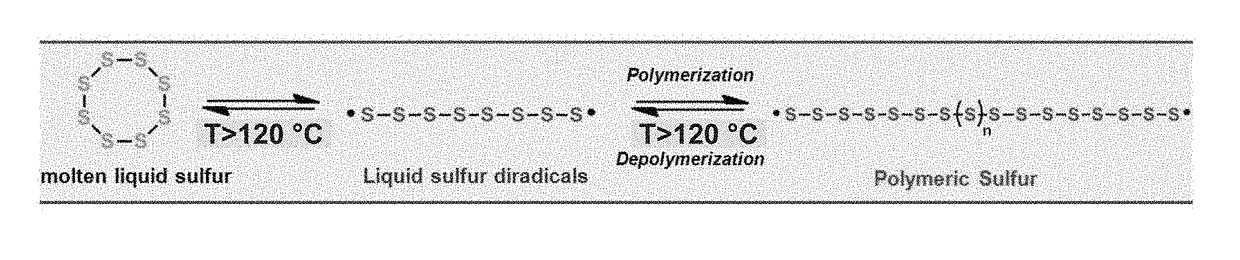
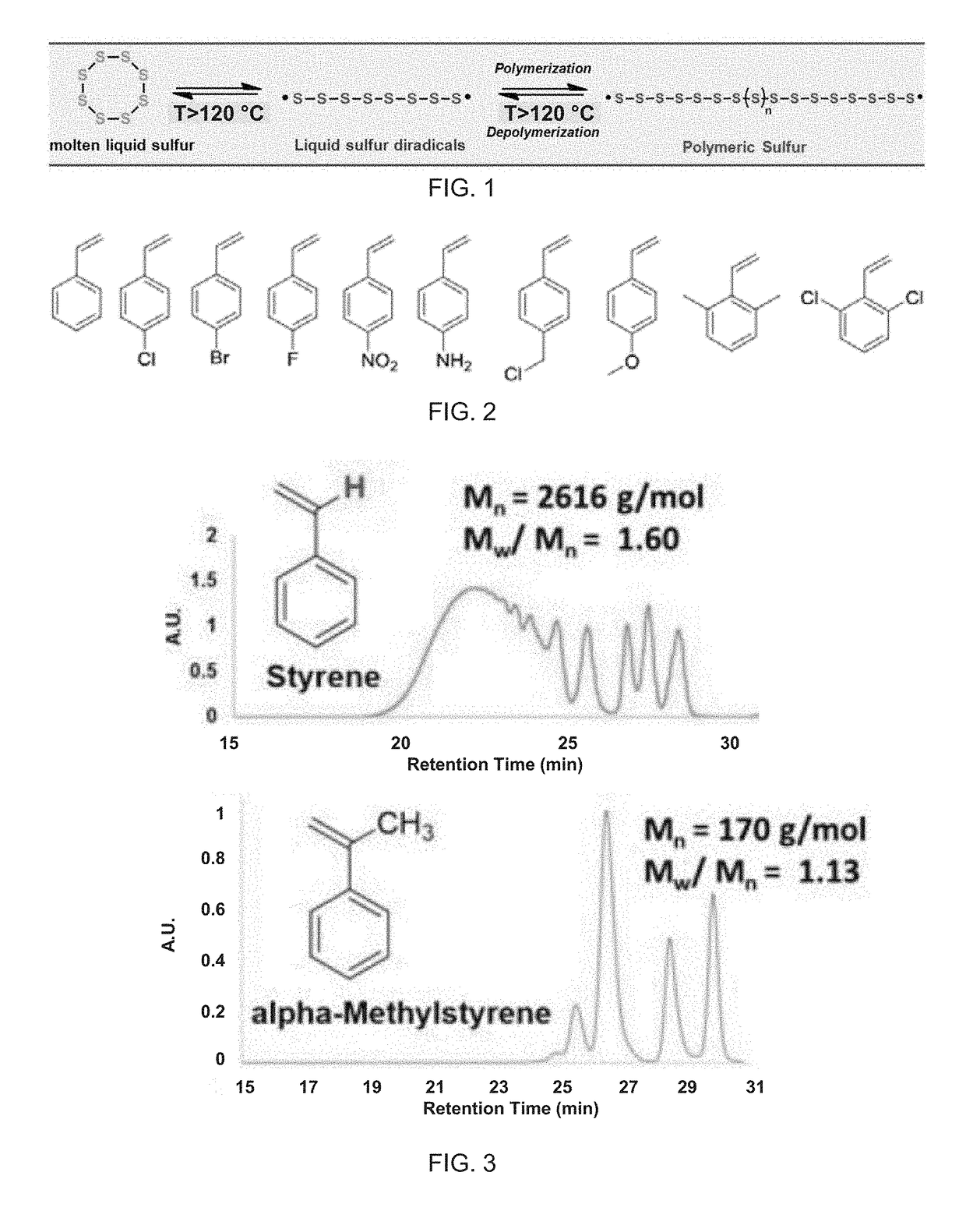
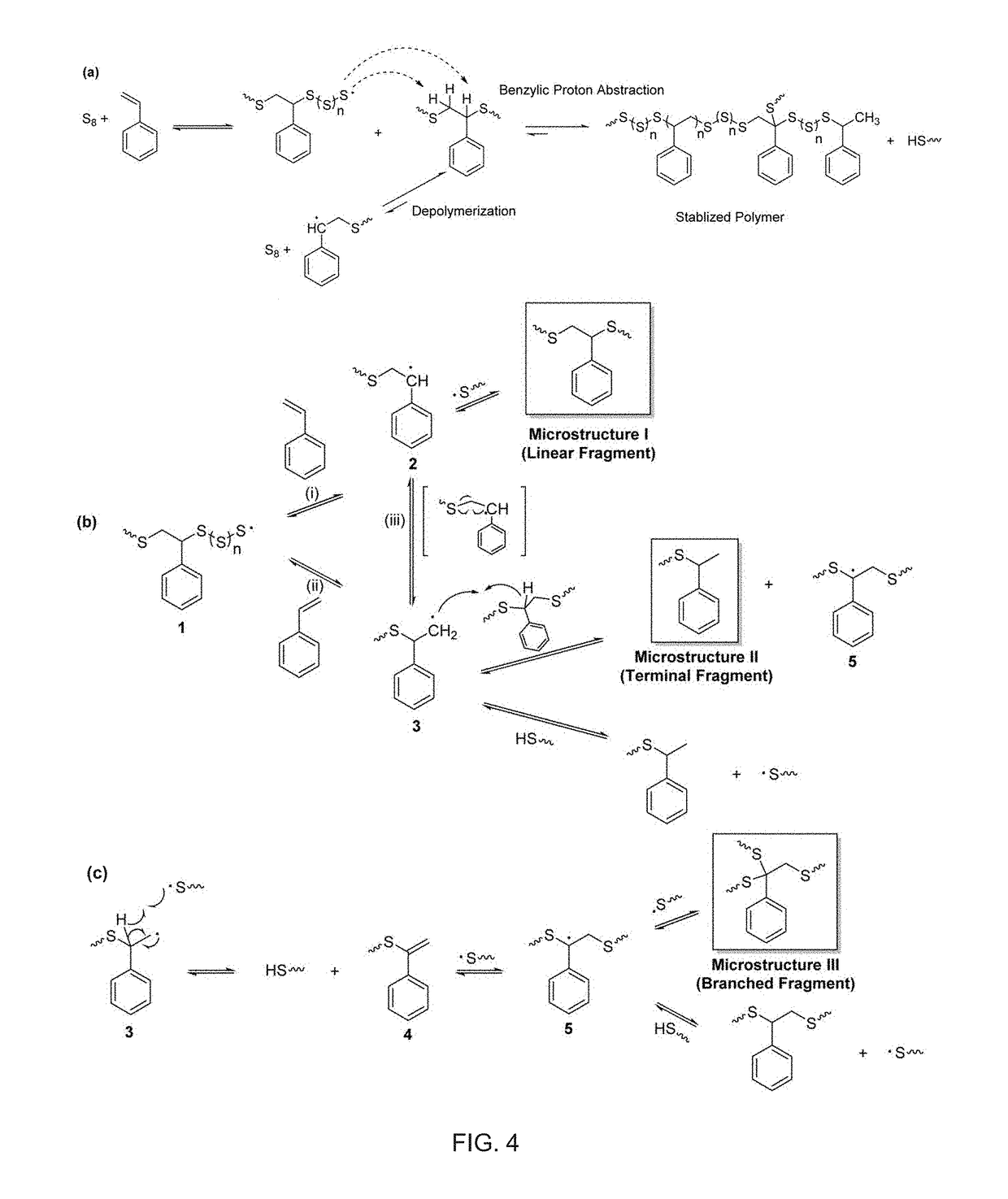
Copolymerization of elemental sulfur to synthesize high sulfur content polymeric materials
PatentInactiveUS20180208686A1
Innovation
- The development of sulfur copolymers using nucleophilic activators that promote polymerization with styrenic and other comonomers, enabling the formation of high molecular weight sulfur-styrenic polymers and chalcogenide-based copolymers with enhanced optical and thermochemical properties, suitable for battery applications and IR optical materials.

High sulfur content copolymers and composite materials and electrochemical cells and optical elements using them
PatentWO2013023216A1
Innovation
- Development of high sulfur content copolymers with ethylenically unsaturated, epoxide, and thiirane monomers, which are polymerized with sulfur to form materials with improved conductivity and stability, enabling the creation of sulfur cathode materials for enhanced electrochemical performance and optical applications.


Environmental Impact Assessment of Sulfur Applications
The environmental implications of elemental sulfur applications span multiple domains, requiring comprehensive assessment frameworks to evaluate both beneficial and adverse effects across different usage scenarios. Contemporary environmental impact evaluations must consider the complete lifecycle of sulfur applications, from extraction and processing to end-use applications and eventual environmental fate.
Agricultural sulfur applications present a complex environmental profile with both positive and negative implications. While sulfur serves as an essential macronutrient for plant growth and can improve soil pH in alkaline conditions, excessive application rates may lead to soil acidification and potential groundwater contamination. The environmental benefits include reduced reliance on synthetic fertilizers and enhanced crop sulfur content, particularly important in sulfur-deficient soils. However, volatilization of sulfur compounds can contribute to atmospheric sulfur dioxide emissions, necessitating careful application timing and methodology.
Industrial sulfur utilization in concrete and construction materials demonstrates generally favorable environmental characteristics compared to traditional alternatives. Sulfur concrete exhibits superior chemical resistance and durability, potentially extending infrastructure lifespan and reducing replacement frequency. The incorporation of waste sulfur from petroleum refining processes into construction materials provides dual environmental benefits through waste valorization and reduced demand for energy-intensive cement production.
Soil remediation applications of elemental sulfur show promising environmental outcomes, particularly in addressing heavy metal contamination and improving soil structure. The gradual oxidation of elemental sulfur creates acidic conditions that can mobilize certain contaminants for extraction while simultaneously improving soil porosity and water retention capacity. Long-term monitoring studies indicate minimal adverse effects when application rates are properly calibrated to site-specific conditions.
Atmospheric considerations remain critical in sulfur application assessment, as improper handling or excessive application can contribute to sulfur dioxide emissions and potential acid rain formation. Modern application techniques and controlled-release formulations significantly mitigate these risks while maintaining agronomic effectiveness.
Aquatic ecosystem impacts require particular attention, especially in regions with intensive sulfur applications. Runoff containing sulfur compounds can alter water chemistry and affect aquatic organism populations, though studies indicate that properly managed sulfur applications typically remain within acceptable environmental thresholds for most freshwater systems.
Agricultural sulfur applications present a complex environmental profile with both positive and negative implications. While sulfur serves as an essential macronutrient for plant growth and can improve soil pH in alkaline conditions, excessive application rates may lead to soil acidification and potential groundwater contamination. The environmental benefits include reduced reliance on synthetic fertilizers and enhanced crop sulfur content, particularly important in sulfur-deficient soils. However, volatilization of sulfur compounds can contribute to atmospheric sulfur dioxide emissions, necessitating careful application timing and methodology.
Industrial sulfur utilization in concrete and construction materials demonstrates generally favorable environmental characteristics compared to traditional alternatives. Sulfur concrete exhibits superior chemical resistance and durability, potentially extending infrastructure lifespan and reducing replacement frequency. The incorporation of waste sulfur from petroleum refining processes into construction materials provides dual environmental benefits through waste valorization and reduced demand for energy-intensive cement production.
Soil remediation applications of elemental sulfur show promising environmental outcomes, particularly in addressing heavy metal contamination and improving soil structure. The gradual oxidation of elemental sulfur creates acidic conditions that can mobilize certain contaminants for extraction while simultaneously improving soil porosity and water retention capacity. Long-term monitoring studies indicate minimal adverse effects when application rates are properly calibrated to site-specific conditions.
Atmospheric considerations remain critical in sulfur application assessment, as improper handling or excessive application can contribute to sulfur dioxide emissions and potential acid rain formation. Modern application techniques and controlled-release formulations significantly mitigate these risks while maintaining agronomic effectiveness.
Aquatic ecosystem impacts require particular attention, especially in regions with intensive sulfur applications. Runoff containing sulfur compounds can alter water chemistry and affect aquatic organism populations, though studies indicate that properly managed sulfur applications typically remain within acceptable environmental thresholds for most freshwater systems.
Safety and Regulatory Framework for Sulfur Processing
The safety and regulatory framework for sulfur processing represents a critical foundation for advancing elemental sulfur applications across industrial sectors. Current regulatory structures primarily focus on traditional sulfur handling and storage protocols, establishing baseline safety standards that govern transportation, workplace exposure limits, and environmental discharge parameters. These frameworks typically address sulfur dioxide emissions, hydrogen sulfide generation risks, and fire prevention measures during conventional processing operations.
Occupational safety regulations form the cornerstone of sulfur processing governance, with agencies like OSHA and international equivalents setting permissible exposure limits for sulfur compounds. Current standards mandate respiratory protection protocols, ventilation requirements, and emergency response procedures for sulfur-related incidents. However, these regulations often lag behind emerging processing technologies and advanced application scenarios, creating regulatory gaps that require proactive industry engagement.
Environmental compliance frameworks present both opportunities and challenges for advanced sulfur utilization. Existing air quality standards limit sulfur dioxide emissions, while water quality regulations control sulfate discharge levels. These constraints influence process design decisions and technology selection for innovative sulfur applications. The regulatory emphasis on emission reduction paradoxically supports sulfur recovery and utilization technologies that convert waste sulfur streams into valuable products.
International harmonization of sulfur processing standards remains fragmented, with varying approaches across different jurisdictions. European REACH regulations impose comprehensive chemical safety assessments, while North American frameworks emphasize performance-based standards. This regulatory diversity creates complexity for global sulfur processing operations and technology deployment strategies.
Emerging regulatory trends indicate increasing focus on circular economy principles and waste-to-resource conversion processes. These developments favor advanced sulfur utilization scenarios that demonstrate environmental benefits and resource efficiency. Regulatory bodies are beginning to recognize sulfur's potential in sustainable applications, leading to more supportive policy frameworks for innovative processing technologies.
The integration of digital monitoring and process control systems into regulatory compliance represents a significant evolution in sulfur processing oversight. Real-time emission monitoring, automated safety systems, and predictive maintenance protocols are becoming standard regulatory expectations, driving technological advancement in processing facility design and operation.
Occupational safety regulations form the cornerstone of sulfur processing governance, with agencies like OSHA and international equivalents setting permissible exposure limits for sulfur compounds. Current standards mandate respiratory protection protocols, ventilation requirements, and emergency response procedures for sulfur-related incidents. However, these regulations often lag behind emerging processing technologies and advanced application scenarios, creating regulatory gaps that require proactive industry engagement.
Environmental compliance frameworks present both opportunities and challenges for advanced sulfur utilization. Existing air quality standards limit sulfur dioxide emissions, while water quality regulations control sulfate discharge levels. These constraints influence process design decisions and technology selection for innovative sulfur applications. The regulatory emphasis on emission reduction paradoxically supports sulfur recovery and utilization technologies that convert waste sulfur streams into valuable products.
International harmonization of sulfur processing standards remains fragmented, with varying approaches across different jurisdictions. European REACH regulations impose comprehensive chemical safety assessments, while North American frameworks emphasize performance-based standards. This regulatory diversity creates complexity for global sulfur processing operations and technology deployment strategies.
Emerging regulatory trends indicate increasing focus on circular economy principles and waste-to-resource conversion processes. These developments favor advanced sulfur utilization scenarios that demonstrate environmental benefits and resource efficiency. Regulatory bodies are beginning to recognize sulfur's potential in sustainable applications, leading to more supportive policy frameworks for innovative processing technologies.
The integration of digital monitoring and process control systems into regulatory compliance represents a significant evolution in sulfur processing oversight. Real-time emission monitoring, automated safety systems, and predictive maintenance protocols are becoming standard regulatory expectations, driving technological advancement in processing facility design and operation.
Unlock deeper insights with Patsnap Eureka Quick Research — get a full tech report to explore trends and direct your research. Try now!
Generate Your Research Report Instantly with AI Agent
Supercharge your innovation with Patsnap Eureka AI Agent Platform!