

Evaluating Digital Solutions for Virtual Collaboration
FEB 24, 202610 MIN READ
Generate Your Research Report Instantly with AI Agent
PatSnap Eureka helps you evaluate technical feasibility & market potential.
Virtual Collaboration Technology Background and Objectives
Virtual collaboration technology has undergone a remarkable transformation over the past two decades, evolving from basic video conferencing systems to sophisticated digital ecosystems that enable seamless remote interaction. The foundational technologies emerged in the 1990s with early video calling solutions, but the real acceleration began in the 2000s with improved internet infrastructure and the development of cloud-based platforms. The COVID-19 pandemic served as a critical catalyst, accelerating adoption rates by nearly a decade and pushing the boundaries of what virtual collaboration could achieve.
The current technological landscape encompasses multiple interconnected domains including real-time communication protocols, cloud computing infrastructure, artificial intelligence integration, and immersive technologies. WebRTC protocols have standardized peer-to-peer communication, while advances in codec technology have dramatically improved audio and video quality even under bandwidth constraints. Machine learning algorithms now power features like automatic transcription, real-time translation, and intelligent meeting summarization, transforming passive communication tools into active productivity enhancers.
Contemporary virtual collaboration platforms integrate diverse functionalities beyond traditional video conferencing. These include persistent digital workspaces, collaborative document editing, virtual whiteboarding, screen sharing with annotation capabilities, and integration with enterprise software ecosystems. The emergence of spatial audio technology and 3D virtual environments represents the next evolutionary step, creating more natural and engaging remote interaction experiences.
The primary technological objectives center on achieving presence parity between virtual and physical collaboration environments. This involves minimizing latency to enable natural conversation flow, maximizing audio-visual fidelity to preserve non-verbal communication cues, and creating intuitive interfaces that reduce cognitive load. Advanced objectives include developing context-aware systems that can automatically optimize meeting environments based on participant behavior and content type.
Security and privacy considerations have become paramount objectives, driving the development of end-to-end encryption protocols, zero-trust architecture implementations, and compliance frameworks for regulated industries. The challenge lies in balancing security requirements with user experience and system performance, particularly in large-scale enterprise deployments.
Accessibility and inclusivity represent critical objectives, with technologies focusing on multi-language support, hearing and visual impairment accommodations, and cross-platform compatibility. The goal is creating universal access to collaboration tools regardless of technical expertise, physical capabilities, or geographic location.
Future objectives emphasize the integration of artificial intelligence to create predictive and adaptive collaboration environments. This includes developing systems that can anticipate user needs, automatically optimize technical parameters, and provide intelligent insights from collaboration data while maintaining privacy standards.
The current technological landscape encompasses multiple interconnected domains including real-time communication protocols, cloud computing infrastructure, artificial intelligence integration, and immersive technologies. WebRTC protocols have standardized peer-to-peer communication, while advances in codec technology have dramatically improved audio and video quality even under bandwidth constraints. Machine learning algorithms now power features like automatic transcription, real-time translation, and intelligent meeting summarization, transforming passive communication tools into active productivity enhancers.
Contemporary virtual collaboration platforms integrate diverse functionalities beyond traditional video conferencing. These include persistent digital workspaces, collaborative document editing, virtual whiteboarding, screen sharing with annotation capabilities, and integration with enterprise software ecosystems. The emergence of spatial audio technology and 3D virtual environments represents the next evolutionary step, creating more natural and engaging remote interaction experiences.
The primary technological objectives center on achieving presence parity between virtual and physical collaboration environments. This involves minimizing latency to enable natural conversation flow, maximizing audio-visual fidelity to preserve non-verbal communication cues, and creating intuitive interfaces that reduce cognitive load. Advanced objectives include developing context-aware systems that can automatically optimize meeting environments based on participant behavior and content type.
Security and privacy considerations have become paramount objectives, driving the development of end-to-end encryption protocols, zero-trust architecture implementations, and compliance frameworks for regulated industries. The challenge lies in balancing security requirements with user experience and system performance, particularly in large-scale enterprise deployments.
Accessibility and inclusivity represent critical objectives, with technologies focusing on multi-language support, hearing and visual impairment accommodations, and cross-platform compatibility. The goal is creating universal access to collaboration tools regardless of technical expertise, physical capabilities, or geographic location.
Future objectives emphasize the integration of artificial intelligence to create predictive and adaptive collaboration environments. This includes developing systems that can anticipate user needs, automatically optimize technical parameters, and provide intelligent insights from collaboration data while maintaining privacy standards.
Market Demand Analysis for Digital Collaboration Solutions
The global digital collaboration market has experienced unprecedented growth, driven by fundamental shifts in workplace dynamics and organizational structures. Remote work adoption has accelerated from a niche practice to a mainstream business model, creating substantial demand for comprehensive virtual collaboration platforms. Organizations across industries are seeking integrated solutions that can replicate and enhance traditional in-person collaboration experiences.
Enterprise demand centers on platforms offering seamless video conferencing, real-time document collaboration, and project management capabilities. Small to medium enterprises prioritize cost-effective solutions with intuitive interfaces, while large corporations require enterprise-grade security, scalability, and integration capabilities with existing IT infrastructure. The education sector has emerged as a significant market segment, demanding specialized features for virtual classrooms and student engagement tools.
Market segmentation reveals distinct requirements across vertical industries. Healthcare organizations need HIPAA-compliant collaboration tools for telemedicine and medical consultations. Financial services require high-security platforms with advanced encryption and regulatory compliance features. Manufacturing and engineering sectors demand solutions supporting complex visual collaboration, including 3D modeling and technical drawing sharing capabilities.
Geographic market distribution shows strong growth in North America and Europe, with Asia-Pacific regions experiencing rapid adoption rates. Emerging markets demonstrate increasing demand for mobile-first collaboration solutions, reflecting smartphone-centric technology adoption patterns in these regions.
The hybrid work model has created sustained long-term demand beyond pandemic-driven temporary solutions. Organizations are investing in permanent digital collaboration infrastructure, recognizing productivity benefits and cost savings from reduced physical office requirements. This shift represents a structural change in workplace operations rather than a temporary adaptation.
Market research indicates growing demand for AI-enhanced collaboration features, including automated meeting transcription, intelligent scheduling, and predictive analytics for team productivity optimization. Integration capabilities with cloud storage, customer relationship management systems, and enterprise resource planning platforms have become essential requirements rather than optional features.
The competitive landscape reflects diverse customer preferences, with some organizations favoring comprehensive all-in-one platforms while others prefer specialized best-of-breed solutions. This market fragmentation creates opportunities for both established technology giants and innovative startups targeting specific collaboration use cases or industry verticals.
Enterprise demand centers on platforms offering seamless video conferencing, real-time document collaboration, and project management capabilities. Small to medium enterprises prioritize cost-effective solutions with intuitive interfaces, while large corporations require enterprise-grade security, scalability, and integration capabilities with existing IT infrastructure. The education sector has emerged as a significant market segment, demanding specialized features for virtual classrooms and student engagement tools.
Market segmentation reveals distinct requirements across vertical industries. Healthcare organizations need HIPAA-compliant collaboration tools for telemedicine and medical consultations. Financial services require high-security platforms with advanced encryption and regulatory compliance features. Manufacturing and engineering sectors demand solutions supporting complex visual collaboration, including 3D modeling and technical drawing sharing capabilities.
Geographic market distribution shows strong growth in North America and Europe, with Asia-Pacific regions experiencing rapid adoption rates. Emerging markets demonstrate increasing demand for mobile-first collaboration solutions, reflecting smartphone-centric technology adoption patterns in these regions.
The hybrid work model has created sustained long-term demand beyond pandemic-driven temporary solutions. Organizations are investing in permanent digital collaboration infrastructure, recognizing productivity benefits and cost savings from reduced physical office requirements. This shift represents a structural change in workplace operations rather than a temporary adaptation.
Market research indicates growing demand for AI-enhanced collaboration features, including automated meeting transcription, intelligent scheduling, and predictive analytics for team productivity optimization. Integration capabilities with cloud storage, customer relationship management systems, and enterprise resource planning platforms have become essential requirements rather than optional features.
The competitive landscape reflects diverse customer preferences, with some organizations favoring comprehensive all-in-one platforms while others prefer specialized best-of-breed solutions. This market fragmentation creates opportunities for both established technology giants and innovative startups targeting specific collaboration use cases or industry verticals.
Current State and Challenges of Virtual Collaboration Tech
Virtual collaboration technology has experienced unprecedented growth, particularly accelerated by the global shift to remote work during 2020-2022. The current landscape encompasses a diverse ecosystem of platforms ranging from basic video conferencing tools like Zoom and Microsoft Teams to sophisticated immersive environments utilizing virtual and augmented reality technologies. Enterprise adoption has reached maturity levels, with over 85% of organizations now employing some form of digital collaboration solution as part of their standard operational framework.
The technological infrastructure supporting virtual collaboration has evolved significantly, incorporating advanced features such as real-time document collaboration, AI-powered meeting transcription, spatial audio processing, and cloud-based content sharing. Major platforms have integrated artificial intelligence capabilities to enhance user experience through automated scheduling, intelligent noise cancellation, and predictive bandwidth optimization. However, the rapid proliferation of solutions has created a fragmented market where interoperability remains a persistent challenge.
Current technical limitations present substantial barriers to seamless virtual collaboration. Latency issues continue to plague real-time interactions, particularly in global distributed teams where network infrastructure varies significantly across regions. Audio and video quality degradation under bandwidth constraints affects communication effectiveness, while security vulnerabilities in cloud-based platforms raise concerns about data privacy and corporate information protection. The digital divide further exacerbates these challenges, as organizations with limited technological resources struggle to implement robust collaboration solutions.
User experience challenges represent another critical dimension of current limitations. Screen fatigue and cognitive overload from prolonged virtual interactions have emerged as significant productivity impediments. The absence of natural non-verbal communication cues in digital environments reduces collaboration effectiveness, particularly for creative and strategic discussions requiring nuanced interpersonal dynamics. Additionally, the learning curve associated with adopting new collaboration tools creates resistance among certain user demographics, limiting organizational adoption rates.
Integration complexity poses ongoing challenges for enterprises seeking comprehensive collaboration solutions. Legacy system compatibility issues prevent seamless workflow integration, while the proliferation of specialized tools creates information silos that hinder organizational knowledge sharing. Scalability concerns arise when organizations attempt to expand their collaboration infrastructure to accommodate growing user bases or increased functional requirements.
Despite these challenges, emerging technologies show promise for addressing current limitations. Edge computing implementations are reducing latency issues, while 5G network deployment is improving bandwidth reliability. Advanced AI algorithms are enhancing real-time language translation and automated meeting summarization capabilities, potentially transforming cross-cultural collaboration dynamics.
The technological infrastructure supporting virtual collaboration has evolved significantly, incorporating advanced features such as real-time document collaboration, AI-powered meeting transcription, spatial audio processing, and cloud-based content sharing. Major platforms have integrated artificial intelligence capabilities to enhance user experience through automated scheduling, intelligent noise cancellation, and predictive bandwidth optimization. However, the rapid proliferation of solutions has created a fragmented market where interoperability remains a persistent challenge.
Current technical limitations present substantial barriers to seamless virtual collaboration. Latency issues continue to plague real-time interactions, particularly in global distributed teams where network infrastructure varies significantly across regions. Audio and video quality degradation under bandwidth constraints affects communication effectiveness, while security vulnerabilities in cloud-based platforms raise concerns about data privacy and corporate information protection. The digital divide further exacerbates these challenges, as organizations with limited technological resources struggle to implement robust collaboration solutions.
User experience challenges represent another critical dimension of current limitations. Screen fatigue and cognitive overload from prolonged virtual interactions have emerged as significant productivity impediments. The absence of natural non-verbal communication cues in digital environments reduces collaboration effectiveness, particularly for creative and strategic discussions requiring nuanced interpersonal dynamics. Additionally, the learning curve associated with adopting new collaboration tools creates resistance among certain user demographics, limiting organizational adoption rates.
Integration complexity poses ongoing challenges for enterprises seeking comprehensive collaboration solutions. Legacy system compatibility issues prevent seamless workflow integration, while the proliferation of specialized tools creates information silos that hinder organizational knowledge sharing. Scalability concerns arise when organizations attempt to expand their collaboration infrastructure to accommodate growing user bases or increased functional requirements.
Despite these challenges, emerging technologies show promise for addressing current limitations. Edge computing implementations are reducing latency issues, while 5G network deployment is improving bandwidth reliability. Advanced AI algorithms are enhancing real-time language translation and automated meeting summarization capabilities, potentially transforming cross-cultural collaboration dynamics.
Current Digital Solutions for Remote Team Collaboration
01 Digital transformation and enterprise solutions
Technologies and methods for implementing comprehensive digital transformation in enterprise environments, including system integration, process automation, and digital workflow management. These solutions enable organizations to modernize their operations through digital platforms and tools that streamline business processes and improve operational efficiency.- Digital transformation and enterprise solutions: Technologies and methods for implementing comprehensive digital transformation in enterprises, including system integration, process automation, and digital workflow management. These solutions enable organizations to modernize their operations through digital platforms and tools that streamline business processes and improve operational efficiency.
- Digital data processing and management systems: Systems and methods for processing, storing, and managing digital data across various platforms. These technologies encompass data analytics, information management, and digital content handling capabilities that allow organizations to efficiently organize and utilize their digital assets.
- Digital communication and networking solutions: Technologies related to digital communication infrastructure, networking protocols, and connectivity solutions. These innovations facilitate secure and efficient digital information exchange between systems, devices, and users across different platforms and networks.
- Digital interface and user experience technologies: Solutions focused on digital user interfaces, interaction design, and user experience optimization. These technologies include graphical user interfaces, digital display systems, and interactive platforms that enhance how users engage with digital products and services.
- Digital security and authentication systems: Technologies for ensuring digital security, including authentication mechanisms, access control systems, and data protection methods. These solutions provide secure digital environments through encryption, verification protocols, and security frameworks that protect digital assets and transactions.
02 Digital data processing and management systems
Systems and methods for processing, storing, and managing digital data across various platforms. These solutions encompass data architecture, database management, information retrieval, and data analytics capabilities that enable efficient handling of digital information in business and technical applications.Expand Specific Solutions03 Digital communication and networking technologies
Technologies related to digital communication protocols, network infrastructure, and connectivity solutions. These include methods for establishing secure digital connections, data transmission, and network management systems that facilitate digital information exchange between devices and systems.Expand Specific Solutions04 Digital interface and user experience design
Solutions focused on digital user interfaces, graphical design elements, and user experience optimization for digital platforms. These encompass visual design systems, interactive elements, and interface components that enhance user interaction with digital products and services.Expand Specific Solutions05 Digital security and authentication systems
Technologies for securing digital systems, protecting digital assets, and authenticating users in digital environments. These solutions include encryption methods, access control systems, digital identity verification, and security protocols that ensure the integrity and confidentiality of digital operations.Expand Specific Solutions
Major Players in Virtual Collaboration Software Market
The digital solutions for virtual collaboration market represents a rapidly evolving landscape in the growth stage, driven by accelerated remote work adoption and digital transformation initiatives. The market demonstrates substantial scale with established players like Microsoft Technology Licensing LLC, Zoom Communications Inc., and Cisco Technology Inc. dominating core video conferencing and communication platforms. Technology maturity varies significantly across segments, with basic video conferencing reaching maturity while advanced AI-powered collaboration tools from companies like IBM and specialized platforms from Bluescape Buyer LLC remain in development phases. Enterprise-focused solutions from Citrix Systems Inc., Atlassian Pty Ltd., and monday.com Ltd. show increasing sophistication in workflow integration. The competitive landscape includes diverse players spanning from telecommunications giants like Huawei Technologies and ZTE Corp. to specialized collaboration platforms like Asana Inc. and emerging security-focused solutions from Theta Lake Inc., indicating a fragmented but rapidly consolidating market with significant innovation potential.
Microsoft Technology Licensing LLC
Technical Solution: Microsoft Teams provides comprehensive virtual collaboration platform integrating video conferencing, file sharing, and real-time co-authoring capabilities. The solution leverages cloud-based infrastructure with AI-powered features including background noise suppression, live transcription, and intelligent meeting insights. Teams supports up to 10,000 participants in meetings and offers seamless integration with Office 365 suite, enabling collaborative document editing, project management through Planner, and workflow automation via Power Platform.
Strengths: Extensive ecosystem integration, enterprise-grade security, scalable infrastructure. Weaknesses: Complex licensing structure, resource-intensive application, steep learning curve for advanced features.
Cisco Technology, Inc.
Technical Solution: Cisco Webex delivers enterprise-grade virtual collaboration through cloud and hybrid deployment models. The platform features AI-powered noise removal, real-time language translation, and gesture recognition capabilities. Webex supports up to 100,000 attendees in events and includes advanced security features like end-to-end encryption and zero-trust architecture. The solution integrates collaborative tools including digital whiteboarding, file sharing, and persistent team spaces with workflow automation through APIs and third-party integrations.
Strengths: Enterprise security standards, robust API ecosystem, reliable infrastructure with 99.99% uptime. Weaknesses: Higher cost structure, complex setup for smaller organizations, interface complexity compared to consumer-focused alternatives.
Core Technologies in Advanced Virtual Collaboration
System and method for determining engagement in collaborative software applications
PatentPendingUS20240169383A1
Innovation
- A system and method that integrates gamification elements such as points, coins, boosts, badges, and leaderboards into collaborative software applications, calculating an engagement score based on participant interactions, providing instant feedback and actionable analytics to hosts and participants, and using a proprietary algorithm to quantify engagement across various environments.


Frictionless interface for virtual collaboration, communication and cloud computing
PatentActiveUS10747418B2
Innovation
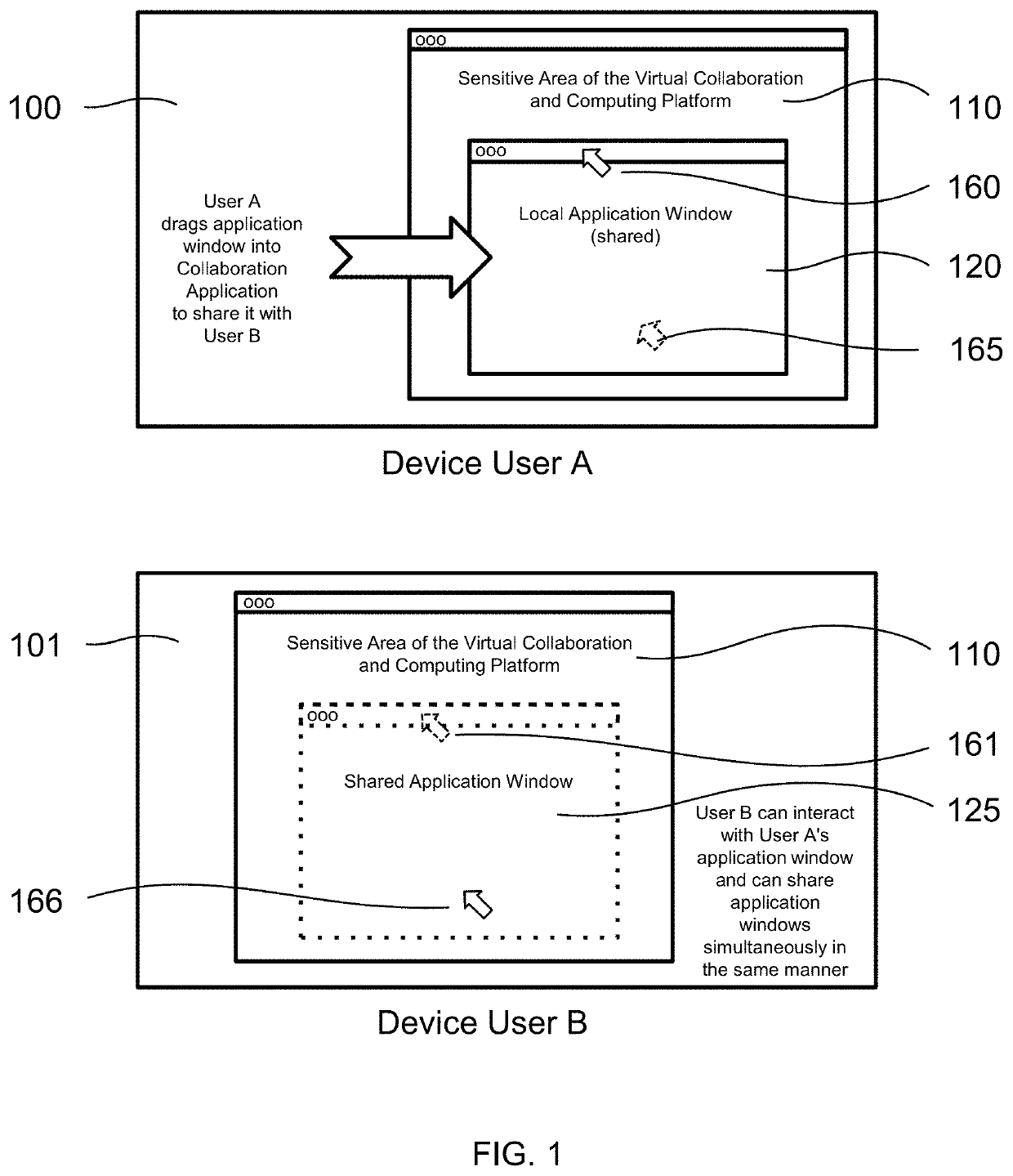
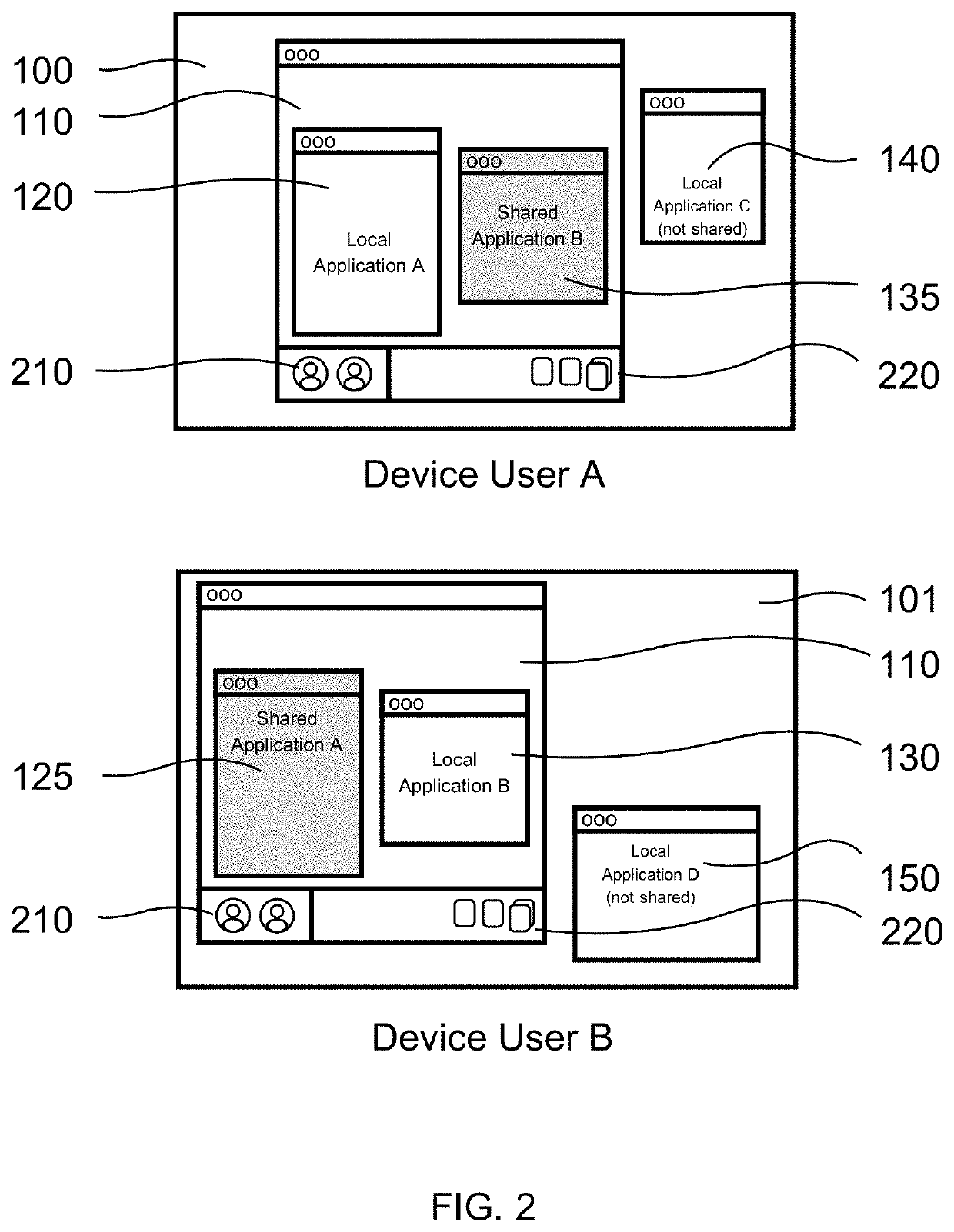
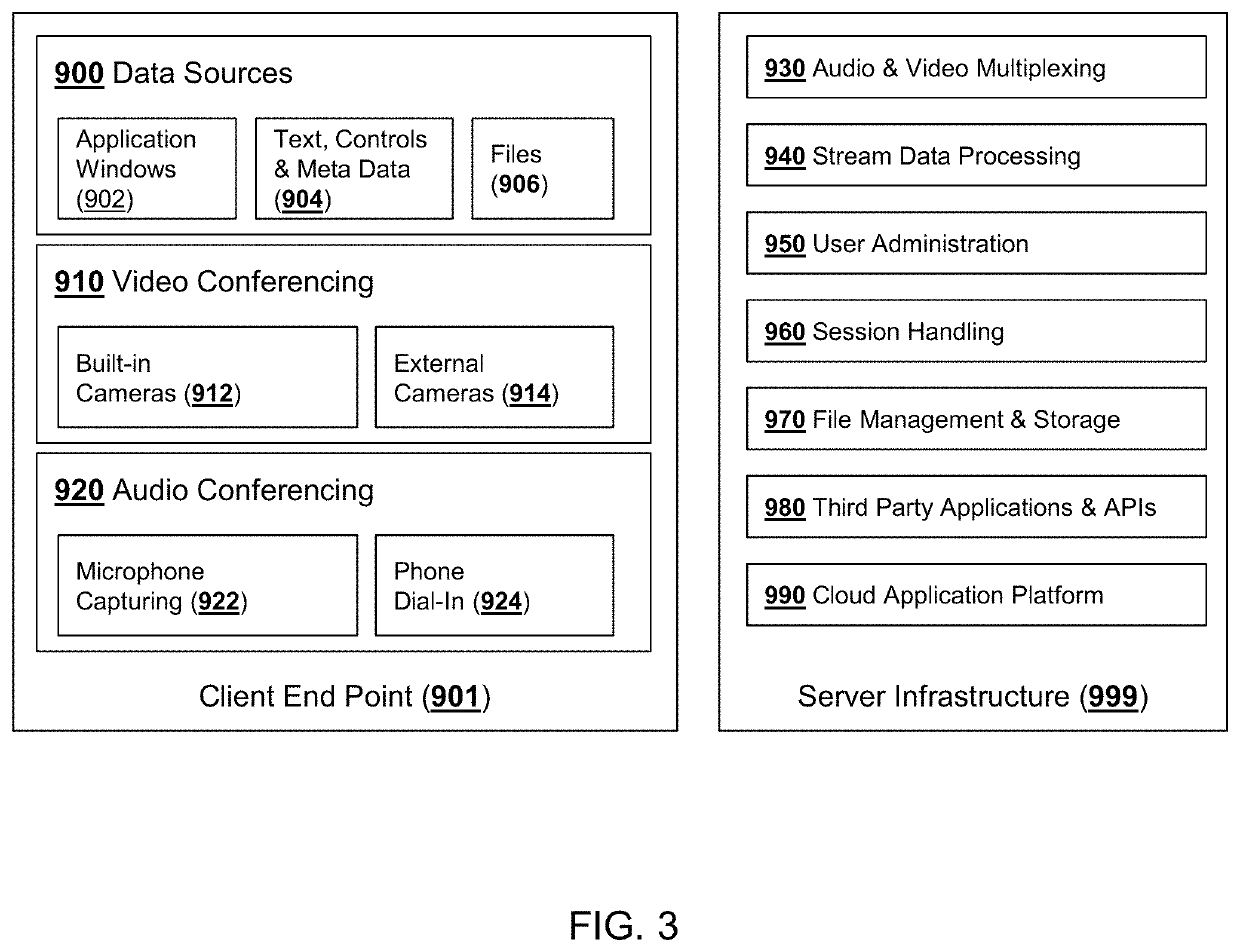
- A virtual collaboration and computing platform that automates session setup, reacts to user activity, and enables intuitive interaction through drag-and-drop sharing of various data types, using natural user interfaces like eye tracking and voice recognition, allowing multiple devices to share application windows on a joint canvas without the need for repeated setup steps and supporting device and operating system agnosticism.

Data Privacy and Security in Virtual Collaboration
Data privacy and security represent fundamental pillars in the architecture of virtual collaboration platforms, directly influencing organizational adoption rates and user trust levels. As enterprises increasingly migrate collaborative workflows to digital environments, the protection of sensitive information becomes paramount. Virtual collaboration systems handle vast amounts of confidential data, including proprietary documents, strategic communications, intellectual property, and personal employee information, making them attractive targets for cybercriminals and state-sponsored actors.
The regulatory landscape surrounding data protection has evolved significantly, with frameworks such as GDPR, CCPA, and emerging sector-specific regulations imposing stringent requirements on data handling practices. Organizations must ensure their virtual collaboration solutions comply with these regulations while maintaining operational efficiency. Non-compliance can result in substantial financial penalties, reputational damage, and legal liabilities that extend beyond immediate monetary costs.
Contemporary virtual collaboration platforms face multifaceted security challenges including unauthorized access attempts, data interception during transmission, endpoint vulnerabilities, and insider threats. The distributed nature of remote work amplifies these risks, as employees access corporate resources from various networks and devices with varying security postures. Advanced persistent threats and sophisticated social engineering attacks specifically target collaboration platforms to gain unauthorized access to organizational networks.
Encryption technologies form the cornerstone of secure virtual collaboration, with end-to-end encryption becoming the industry standard for protecting data in transit and at rest. Modern platforms implement advanced cryptographic protocols, including AES-256 encryption and perfect forward secrecy mechanisms. Multi-factor authentication systems, zero-trust architecture principles, and behavioral analytics enhance security frameworks by continuously verifying user identities and monitoring for anomalous activities.
Privacy-preserving technologies such as differential privacy, homomorphic encryption, and secure multi-party computation are emerging as critical components for protecting user data while enabling collaborative functionality. These technologies allow organizations to maintain analytical capabilities and collaborative features without compromising individual privacy rights or exposing sensitive information to unauthorized parties.
The integration of artificial intelligence and machine learning in security monitoring systems enables real-time threat detection and automated response mechanisms. These systems analyze communication patterns, file access behaviors, and network traffic to identify potential security incidents before they escalate into significant breaches, providing organizations with proactive defense capabilities against evolving cyber threats.
The regulatory landscape surrounding data protection has evolved significantly, with frameworks such as GDPR, CCPA, and emerging sector-specific regulations imposing stringent requirements on data handling practices. Organizations must ensure their virtual collaboration solutions comply with these regulations while maintaining operational efficiency. Non-compliance can result in substantial financial penalties, reputational damage, and legal liabilities that extend beyond immediate monetary costs.
Contemporary virtual collaboration platforms face multifaceted security challenges including unauthorized access attempts, data interception during transmission, endpoint vulnerabilities, and insider threats. The distributed nature of remote work amplifies these risks, as employees access corporate resources from various networks and devices with varying security postures. Advanced persistent threats and sophisticated social engineering attacks specifically target collaboration platforms to gain unauthorized access to organizational networks.
Encryption technologies form the cornerstone of secure virtual collaboration, with end-to-end encryption becoming the industry standard for protecting data in transit and at rest. Modern platforms implement advanced cryptographic protocols, including AES-256 encryption and perfect forward secrecy mechanisms. Multi-factor authentication systems, zero-trust architecture principles, and behavioral analytics enhance security frameworks by continuously verifying user identities and monitoring for anomalous activities.
Privacy-preserving technologies such as differential privacy, homomorphic encryption, and secure multi-party computation are emerging as critical components for protecting user data while enabling collaborative functionality. These technologies allow organizations to maintain analytical capabilities and collaborative features without compromising individual privacy rights or exposing sensitive information to unauthorized parties.
The integration of artificial intelligence and machine learning in security monitoring systems enables real-time threat detection and automated response mechanisms. These systems analyze communication patterns, file access behaviors, and network traffic to identify potential security incidents before they escalate into significant breaches, providing organizations with proactive defense capabilities against evolving cyber threats.
User Experience Design for Digital Collaboration Tools
User experience design has emerged as a critical differentiator in the digital collaboration tools landscape, fundamentally shaping how organizations adopt and derive value from virtual collaboration platforms. The design philosophy centers on creating intuitive, accessible, and engaging interfaces that minimize cognitive load while maximizing productivity and user satisfaction across diverse collaboration scenarios.
Contemporary UX design for collaboration tools prioritizes seamless onboarding experiences that reduce time-to-productivity for new users. This involves implementing progressive disclosure techniques, contextual help systems, and adaptive interfaces that learn from user behavior patterns. Leading platforms incorporate multi-modal interaction paradigms, supporting touch, voice, and gesture-based inputs to accommodate various device ecosystems and user preferences.
Cross-platform consistency represents a fundamental design challenge, requiring unified visual languages and interaction models across desktop, mobile, and web applications. Design systems must account for varying screen sizes, input methods, and performance constraints while maintaining feature parity and user familiarity. This consistency extends to notification systems, file sharing workflows, and meeting controls that users expect to function identically regardless of their chosen platform.
Accessibility considerations have become paramount in collaboration tool design, encompassing compliance with WCAG guidelines and support for assistive technologies. This includes implementing proper color contrast ratios, keyboard navigation support, screen reader compatibility, and closed captioning capabilities. Universal design principles ensure that collaboration tools remain inclusive for users with diverse abilities and technical proficiencies.
Personalization and customization capabilities enable users to tailor their collaboration environments to specific workflows and preferences. Advanced UX designs incorporate machine learning algorithms to suggest optimal layouts, frequently used features, and relevant content based on individual usage patterns. This adaptive approach reduces interface complexity while surfacing the most relevant tools and information for each user's unique collaboration style.
Real-time feedback mechanisms and micro-interactions provide essential visual and auditory cues that enhance user confidence and system transparency. These design elements communicate system status, confirm user actions, and provide immediate feedback during critical collaboration activities such as screen sharing, file uploads, and connection quality indicators.
Contemporary UX design for collaboration tools prioritizes seamless onboarding experiences that reduce time-to-productivity for new users. This involves implementing progressive disclosure techniques, contextual help systems, and adaptive interfaces that learn from user behavior patterns. Leading platforms incorporate multi-modal interaction paradigms, supporting touch, voice, and gesture-based inputs to accommodate various device ecosystems and user preferences.
Cross-platform consistency represents a fundamental design challenge, requiring unified visual languages and interaction models across desktop, mobile, and web applications. Design systems must account for varying screen sizes, input methods, and performance constraints while maintaining feature parity and user familiarity. This consistency extends to notification systems, file sharing workflows, and meeting controls that users expect to function identically regardless of their chosen platform.
Accessibility considerations have become paramount in collaboration tool design, encompassing compliance with WCAG guidelines and support for assistive technologies. This includes implementing proper color contrast ratios, keyboard navigation support, screen reader compatibility, and closed captioning capabilities. Universal design principles ensure that collaboration tools remain inclusive for users with diverse abilities and technical proficiencies.
Personalization and customization capabilities enable users to tailor their collaboration environments to specific workflows and preferences. Advanced UX designs incorporate machine learning algorithms to suggest optimal layouts, frequently used features, and relevant content based on individual usage patterns. This adaptive approach reduces interface complexity while surfacing the most relevant tools and information for each user's unique collaboration style.
Real-time feedback mechanisms and micro-interactions provide essential visual and auditory cues that enhance user confidence and system transparency. These design elements communicate system status, confirm user actions, and provide immediate feedback during critical collaboration activities such as screen sharing, file uploads, and connection quality indicators.
Unlock deeper insights with PatSnap Eureka Quick Research — get a full tech report to explore trends and direct your research. Try now!
Generate Your Research Report Instantly with AI Agent
Supercharge your innovation with PatSnap Eureka AI Agent Platform!