

Ferromagnetic Resonance in Consumer Electronics: Enhancing Performance
MAR 7, 20269 MIN READ
Generate Your Research Report Instantly with AI Agent
PatSnap Eureka helps you evaluate technical feasibility & market potential.
Ferromagnetic Resonance Background and Electronics Goals
Ferromagnetic resonance (FMR) represents a fundamental quantum mechanical phenomenon that occurs when ferromagnetic materials are subjected to an external magnetic field and electromagnetic radiation at specific frequencies. This resonance effect was first theoretically predicted in the 1940s and experimentally demonstrated shortly thereafter, marking the beginning of a rich field of research that would eventually find applications across numerous technological domains.
The underlying physics of FMR involves the precession of magnetic moments around an effective magnetic field, creating a resonant absorption of electromagnetic energy at characteristic frequencies. This phenomenon has evolved from a purely academic curiosity to a cornerstone technology enabling modern electronic devices. The historical development of FMR applications in electronics can be traced through several key phases, beginning with early microwave components in the 1950s, progressing through magnetic storage innovations in the 1980s, and culminating in today's sophisticated consumer electronics applications.
In contemporary consumer electronics, FMR technology serves multiple critical functions that directly impact device performance and user experience. The primary technological objectives center around enhancing signal processing capabilities, improving electromagnetic interference suppression, and enabling more efficient wireless communication systems. Modern smartphones, tablets, and wearable devices increasingly rely on FMR-based components to manage the complex electromagnetic environment created by multiple antennas, processors, and communication protocols operating simultaneously within compact form factors.
The evolution toward miniaturization and increased functionality in consumer electronics has created unprecedented demands for materials and components that can operate effectively across broad frequency ranges while maintaining stable performance characteristics. FMR technology addresses these challenges by providing tunable magnetic properties that can be precisely controlled through material composition and external field manipulation.
Current technological goals focus on developing FMR materials and devices that exhibit enhanced temperature stability, reduced power consumption, and improved integration compatibility with existing semiconductor manufacturing processes. The pursuit of these objectives drives research into novel magnetic materials, including engineered ferrites, magnetic thin films, and nanostructured composites that can deliver superior performance metrics compared to traditional solutions.
The strategic importance of FMR technology in consumer electronics continues to grow as devices become more sophisticated and interconnected. Future developments aim to leverage FMR principles for next-generation applications including advanced sensor systems, improved battery management, and enhanced wireless charging efficiency, positioning this technology as a key enabler for the continued evolution of consumer electronic devices.
The underlying physics of FMR involves the precession of magnetic moments around an effective magnetic field, creating a resonant absorption of electromagnetic energy at characteristic frequencies. This phenomenon has evolved from a purely academic curiosity to a cornerstone technology enabling modern electronic devices. The historical development of FMR applications in electronics can be traced through several key phases, beginning with early microwave components in the 1950s, progressing through magnetic storage innovations in the 1980s, and culminating in today's sophisticated consumer electronics applications.
In contemporary consumer electronics, FMR technology serves multiple critical functions that directly impact device performance and user experience. The primary technological objectives center around enhancing signal processing capabilities, improving electromagnetic interference suppression, and enabling more efficient wireless communication systems. Modern smartphones, tablets, and wearable devices increasingly rely on FMR-based components to manage the complex electromagnetic environment created by multiple antennas, processors, and communication protocols operating simultaneously within compact form factors.
The evolution toward miniaturization and increased functionality in consumer electronics has created unprecedented demands for materials and components that can operate effectively across broad frequency ranges while maintaining stable performance characteristics. FMR technology addresses these challenges by providing tunable magnetic properties that can be precisely controlled through material composition and external field manipulation.
Current technological goals focus on developing FMR materials and devices that exhibit enhanced temperature stability, reduced power consumption, and improved integration compatibility with existing semiconductor manufacturing processes. The pursuit of these objectives drives research into novel magnetic materials, including engineered ferrites, magnetic thin films, and nanostructured composites that can deliver superior performance metrics compared to traditional solutions.
The strategic importance of FMR technology in consumer electronics continues to grow as devices become more sophisticated and interconnected. Future developments aim to leverage FMR principles for next-generation applications including advanced sensor systems, improved battery management, and enhanced wireless charging efficiency, positioning this technology as a key enabler for the continued evolution of consumer electronic devices.
Market Demand for Enhanced Consumer Electronics Performance
The consumer electronics market is experiencing unprecedented demand for enhanced performance capabilities, driven by evolving user expectations and technological convergence. Modern consumers increasingly require devices that deliver superior functionality while maintaining compact form factors and energy efficiency. This demand spans across multiple product categories including smartphones, tablets, wearables, gaming devices, and IoT-enabled appliances.
Performance enhancement requirements in consumer electronics encompass several critical dimensions. Processing speed and computational efficiency remain paramount, as users demand seamless multitasking, real-time data processing, and instantaneous response times. Battery life optimization has become equally crucial, with consumers expecting extended operational periods without compromising device performance. Additionally, wireless connectivity performance, including data transfer rates and signal stability, directly impacts user satisfaction and device adoption rates.
The proliferation of emerging technologies such as augmented reality, artificial intelligence, and 5G connectivity is amplifying performance demands. These applications require sophisticated signal processing capabilities, precise frequency control, and minimal electromagnetic interference. Consumer electronics manufacturers face increasing pressure to integrate advanced functionalities while addressing thermal management challenges and maintaining cost competitiveness.
Market research indicates strong consumer willingness to invest in devices offering demonstrable performance improvements. Premium device segments continue to expand, suggesting that performance enhancement features can command market premiums when properly implemented. The gaming and professional mobile device segments particularly exhibit robust demand for cutting-edge performance technologies.
Ferromagnetic resonance technology presents significant opportunities to address these market demands through enhanced signal processing, improved frequency stability, and reduced electromagnetic interference. The technology's potential applications in antenna optimization, signal filtering, and power management align directly with consumer priorities for better connectivity, longer battery life, and more reliable device operation.
The competitive landscape increasingly favors manufacturers who can deliver measurable performance improvements while maintaining product reliability and cost effectiveness. This market dynamic creates substantial opportunities for innovative technologies that can provide tangible performance benefits across multiple device categories and use cases.
Performance enhancement requirements in consumer electronics encompass several critical dimensions. Processing speed and computational efficiency remain paramount, as users demand seamless multitasking, real-time data processing, and instantaneous response times. Battery life optimization has become equally crucial, with consumers expecting extended operational periods without compromising device performance. Additionally, wireless connectivity performance, including data transfer rates and signal stability, directly impacts user satisfaction and device adoption rates.
The proliferation of emerging technologies such as augmented reality, artificial intelligence, and 5G connectivity is amplifying performance demands. These applications require sophisticated signal processing capabilities, precise frequency control, and minimal electromagnetic interference. Consumer electronics manufacturers face increasing pressure to integrate advanced functionalities while addressing thermal management challenges and maintaining cost competitiveness.
Market research indicates strong consumer willingness to invest in devices offering demonstrable performance improvements. Premium device segments continue to expand, suggesting that performance enhancement features can command market premiums when properly implemented. The gaming and professional mobile device segments particularly exhibit robust demand for cutting-edge performance technologies.
Ferromagnetic resonance technology presents significant opportunities to address these market demands through enhanced signal processing, improved frequency stability, and reduced electromagnetic interference. The technology's potential applications in antenna optimization, signal filtering, and power management align directly with consumer priorities for better connectivity, longer battery life, and more reliable device operation.
The competitive landscape increasingly favors manufacturers who can deliver measurable performance improvements while maintaining product reliability and cost effectiveness. This market dynamic creates substantial opportunities for innovative technologies that can provide tangible performance benefits across multiple device categories and use cases.
Current FMR State and Consumer Electronics Challenges
Ferromagnetic resonance technology has reached a mature stage in fundamental research, with well-established theoretical frameworks governing spin dynamics and magnetic field interactions. Current FMR systems demonstrate precise control over resonance frequencies ranging from gigahertz to terahertz bands, enabling applications in magnetic field sensing, material characterization, and high-frequency electronics. The technology leverages the precession of magnetic moments in ferromagnetic materials under applied magnetic fields, creating opportunities for enhanced signal processing and electromagnetic interference management.
Consumer electronics manufacturers face significant integration challenges when implementing FMR-based solutions. The primary obstacle lies in miniaturization requirements, as traditional FMR systems require substantial magnetic field generation apparatus that conflicts with compact device designs. Modern smartphones, tablets, and wearables demand components measuring less than 10mm in any dimension, while maintaining power consumption below 100mW for battery life preservation.
Thermal stability presents another critical challenge in consumer applications. FMR devices exhibit temperature-dependent performance characteristics, with resonance frequencies shifting by 0.1-0.5% per degree Celsius. Consumer electronics operate across temperature ranges from -20°C to 60°C, requiring sophisticated compensation mechanisms that increase system complexity and manufacturing costs. Current solutions involve temperature sensors and feedback control systems, adding approximately 15-20% to component costs.
Manufacturing scalability remains a significant barrier to widespread FMR adoption. Existing fabrication processes rely on specialized magnetic materials and precise lithographic techniques that are incompatible with high-volume semiconductor manufacturing. The yield rates for FMR components typically range between 60-75%, compared to 95%+ for conventional silicon-based electronics, resulting in higher per-unit costs that limit market penetration.
Signal-to-noise ratio optimization represents an ongoing technical challenge. Consumer environments introduce electromagnetic interference from WiFi, cellular networks, and power systems that can mask FMR signals. Current implementations require shielding solutions that add weight and volume to devices, contradicting miniaturization objectives. Advanced filtering techniques and differential measurement approaches show promise but require additional processing power and circuit complexity.
Cost competitiveness against established technologies poses market adoption challenges. While FMR offers superior performance in specific applications like magnetic field sensing and high-frequency filtering, the technology must compete with mature alternatives including Hall effect sensors, MEMS devices, and conventional RF components that benefit from decades of manufacturing optimization and economies of scale.
Consumer electronics manufacturers face significant integration challenges when implementing FMR-based solutions. The primary obstacle lies in miniaturization requirements, as traditional FMR systems require substantial magnetic field generation apparatus that conflicts with compact device designs. Modern smartphones, tablets, and wearables demand components measuring less than 10mm in any dimension, while maintaining power consumption below 100mW for battery life preservation.
Thermal stability presents another critical challenge in consumer applications. FMR devices exhibit temperature-dependent performance characteristics, with resonance frequencies shifting by 0.1-0.5% per degree Celsius. Consumer electronics operate across temperature ranges from -20°C to 60°C, requiring sophisticated compensation mechanisms that increase system complexity and manufacturing costs. Current solutions involve temperature sensors and feedback control systems, adding approximately 15-20% to component costs.
Manufacturing scalability remains a significant barrier to widespread FMR adoption. Existing fabrication processes rely on specialized magnetic materials and precise lithographic techniques that are incompatible with high-volume semiconductor manufacturing. The yield rates for FMR components typically range between 60-75%, compared to 95%+ for conventional silicon-based electronics, resulting in higher per-unit costs that limit market penetration.
Signal-to-noise ratio optimization represents an ongoing technical challenge. Consumer environments introduce electromagnetic interference from WiFi, cellular networks, and power systems that can mask FMR signals. Current implementations require shielding solutions that add weight and volume to devices, contradicting miniaturization objectives. Advanced filtering techniques and differential measurement approaches show promise but require additional processing power and circuit complexity.
Cost competitiveness against established technologies poses market adoption challenges. While FMR offers superior performance in specific applications like magnetic field sensing and high-frequency filtering, the technology must compete with mature alternatives including Hall effect sensors, MEMS devices, and conventional RF components that benefit from decades of manufacturing optimization and economies of scale.
Current FMR Solutions for Electronics Performance
01 Ferromagnetic resonance materials and composition optimization
Ferromagnetic resonance performance can be enhanced through careful selection and optimization of magnetic materials and their compositions. This includes the use of specific ferromagnetic alloys, rare earth elements, and composite materials with tailored magnetic properties. The composition and microstructure of these materials directly affect resonance frequency, linewidth, and absorption characteristics. Material processing techniques such as annealing, doping, and grain size control are employed to achieve desired ferromagnetic resonance characteristics.- Ferromagnetic resonance measurement apparatus and methods: Specialized apparatus and methods for measuring ferromagnetic resonance properties of materials, including devices with specific configurations for detecting and analyzing FMR signals. These systems typically incorporate magnetic field generators, microwave sources, and detection mechanisms to characterize the resonance behavior of ferromagnetic materials under various conditions.
- Magnetic materials with enhanced ferromagnetic resonance characteristics: Development of magnetic materials and compositions specifically designed to exhibit improved ferromagnetic resonance performance, including optimized magnetic anisotropy, reduced damping factors, and enhanced frequency response. These materials are engineered through specific compositional adjustments, doping strategies, or structural modifications to achieve superior FMR properties for various applications.
- Thin film and multilayer structures for FMR applications: Thin film structures and multilayer configurations designed to optimize ferromagnetic resonance performance, including magnetic tunnel junctions, spin valve structures, and engineered magnetic heterostructures. These structures utilize interface effects, exchange coupling, and layer thickness optimization to achieve desired resonance frequencies and linewidths for spintronic and microwave devices.
- Ferromagnetic resonance-based sensors and detection devices: Sensor systems and detection devices that utilize ferromagnetic resonance phenomena for sensing applications, including magnetic field sensors, material characterization tools, and quality control instruments. These devices exploit the sensitivity of FMR to external magnetic fields, material properties, and environmental conditions to provide accurate measurements and detection capabilities.
- High-frequency and microwave devices utilizing FMR: High-frequency electronic devices and microwave components that leverage ferromagnetic resonance effects, including filters, oscillators, isolators, and tunable devices. These applications exploit the frequency-dependent magnetic permeability and absorption characteristics near ferromagnetic resonance to achieve specific microwave functionalities, such as signal filtering, frequency selection, and impedance matching in communication systems.
02 Ferromagnetic resonance measurement and detection methods
Advanced measurement techniques and apparatus have been developed for characterizing ferromagnetic resonance performance. These methods include specialized resonance detection systems, frequency sweep techniques, and signal processing algorithms to accurately measure resonance parameters. The measurement systems often incorporate high-frequency generators, sensitive detectors, and controlled magnetic field sources to obtain precise resonance spectra and analyze magnetic properties of materials under various conditions.Expand Specific Solutions03 Ferromagnetic resonance devices and applications in electronics
Ferromagnetic resonance principles are applied in various electronic devices and components including filters, isolators, circulators, and tunable oscillators. These devices exploit the frequency-selective absorption and transmission properties of ferromagnetic materials under magnetic fields. Design considerations include impedance matching, insertion loss minimization, and bandwidth optimization. Applications span telecommunications, radar systems, and microwave circuits where precise frequency control and signal manipulation are required.Expand Specific Solutions04 Thin film and multilayer structures for ferromagnetic resonance
Thin film technologies and multilayer structures provide enhanced control over ferromagnetic resonance properties. These structures include magnetic thin films, exchange-coupled layers, and heterostructures with engineered interfaces. The layer thickness, interface quality, and stacking sequence significantly influence resonance frequency, damping, and anisotropy. Such structures are particularly important for high-frequency applications and spintronic devices where nanoscale magnetic control is essential.Expand Specific Solutions05 Temperature and field dependence of ferromagnetic resonance
The performance of ferromagnetic resonance systems is significantly affected by external parameters such as temperature and applied magnetic field strength. Understanding and controlling these dependencies is crucial for practical applications. Research focuses on characterizing resonance behavior across temperature ranges, optimizing field configurations, and developing compensation techniques. This includes studies on thermal stability, field uniformity requirements, and methods to maintain consistent performance under varying environmental conditions.Expand Specific Solutions
Key Players in FMR and Consumer Electronics Industry
The ferromagnetic resonance technology in consumer electronics is experiencing rapid growth driven by increasing demand for enhanced device performance and miniaturization. The market demonstrates significant expansion potential as manufacturers seek advanced magnetic materials for improved signal processing and energy efficiency. Technology maturity varies considerably across the competitive landscape, with established semiconductor giants like Intel Corp., Samsung Electronics, and TDK Corp. leading commercial applications, while Taiwan Semiconductor Manufacturing and STMicroelectronics drive manufacturing innovations. Research institutions including University of California, Cornell University, and École Polytechnique Fédérale de Lausanne contribute fundamental breakthroughs, particularly in materials science and device integration. Companies like Apple and Fujitsu are actively implementing these technologies in consumer products, while specialized firms such as Ferric Inc. and Toda Kogyo Corp. focus on magnetic materials development, indicating a maturing ecosystem with strong industrial-academic collaboration.
TDK Corp.
Technical Solution: TDK has developed advanced ferrite materials and multilayer chip inductors that leverage ferromagnetic resonance principles for high-frequency applications in consumer electronics. Their technology focuses on optimizing magnetic permeability and minimizing core losses at GHz frequencies, enabling efficient power management and signal processing in smartphones, tablets, and IoT devices. The company's ferrite cores are engineered with specific compositions to achieve desired resonance characteristics while maintaining thermal stability and miniaturization requirements for modern consumer electronics.
Strengths: Market-leading expertise in magnetic materials, extensive manufacturing capabilities, strong integration with consumer electronics supply chains. Weaknesses: Limited flexibility in customization for emerging applications, higher costs compared to commodity alternatives.
Intel Corp.
Technical Solution: Intel incorporates ferromagnetic resonance principles in their advanced processor architectures and memory technologies, particularly in magnetic tunnel junctions for non-volatile memory applications. Their research focuses on spin-transfer torque and voltage-controlled magnetic anisotropy to enhance data storage density and reduce power consumption in consumer devices. The technology enables faster switching speeds and improved endurance in embedded memory systems, contributing to enhanced performance in laptops, tablets, and mobile processors while reducing overall system power requirements.
Strengths: Leading semiconductor technology, strong R&D capabilities, extensive consumer electronics partnerships. Weaknesses: High development costs, complex integration challenges with existing silicon processes.
Core FMR Patents and Technical Innovations
Radio Frequency Device with Magnetic Element, Method for Making Such a Magnetic Element
PatentInactiveUS20080297292A1
Innovation
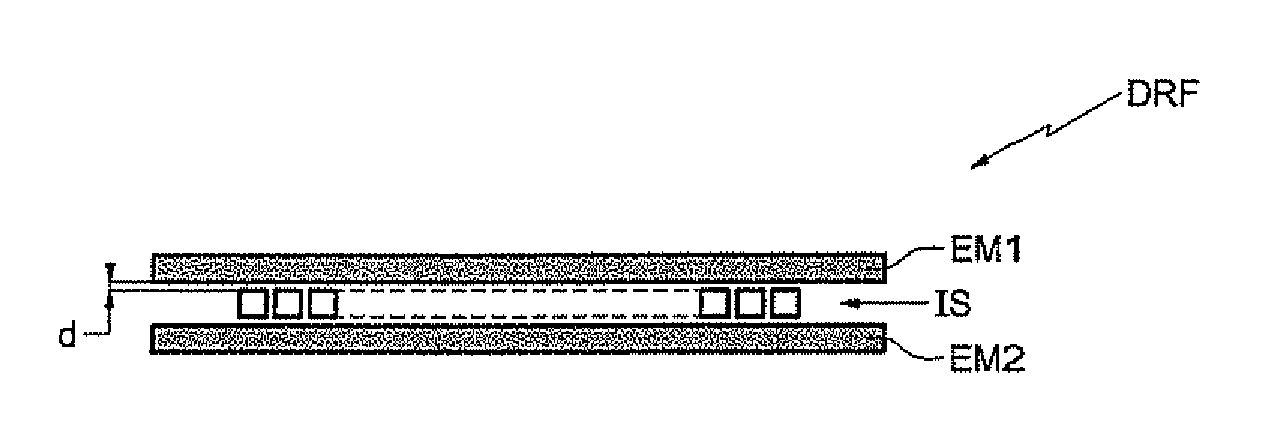
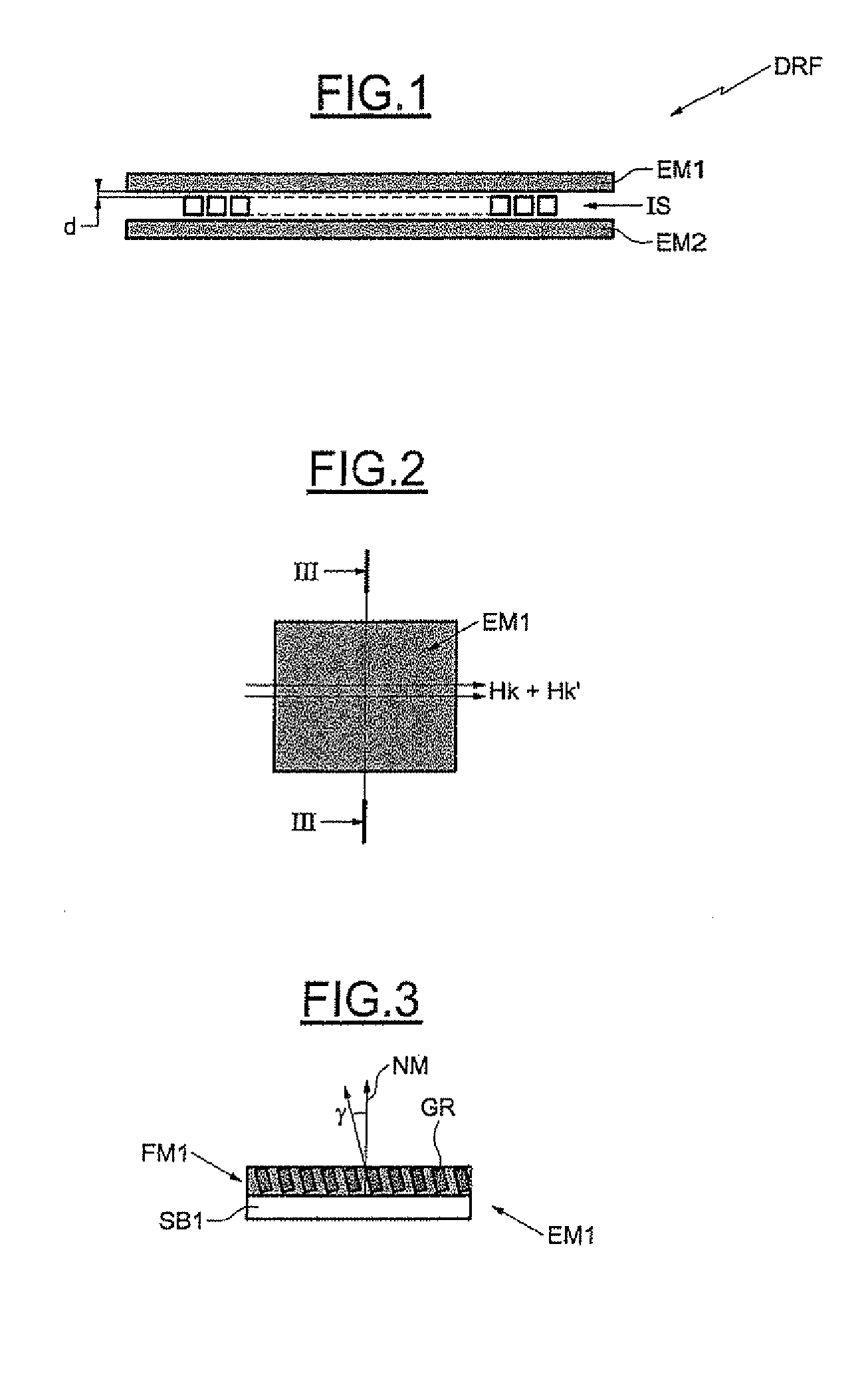
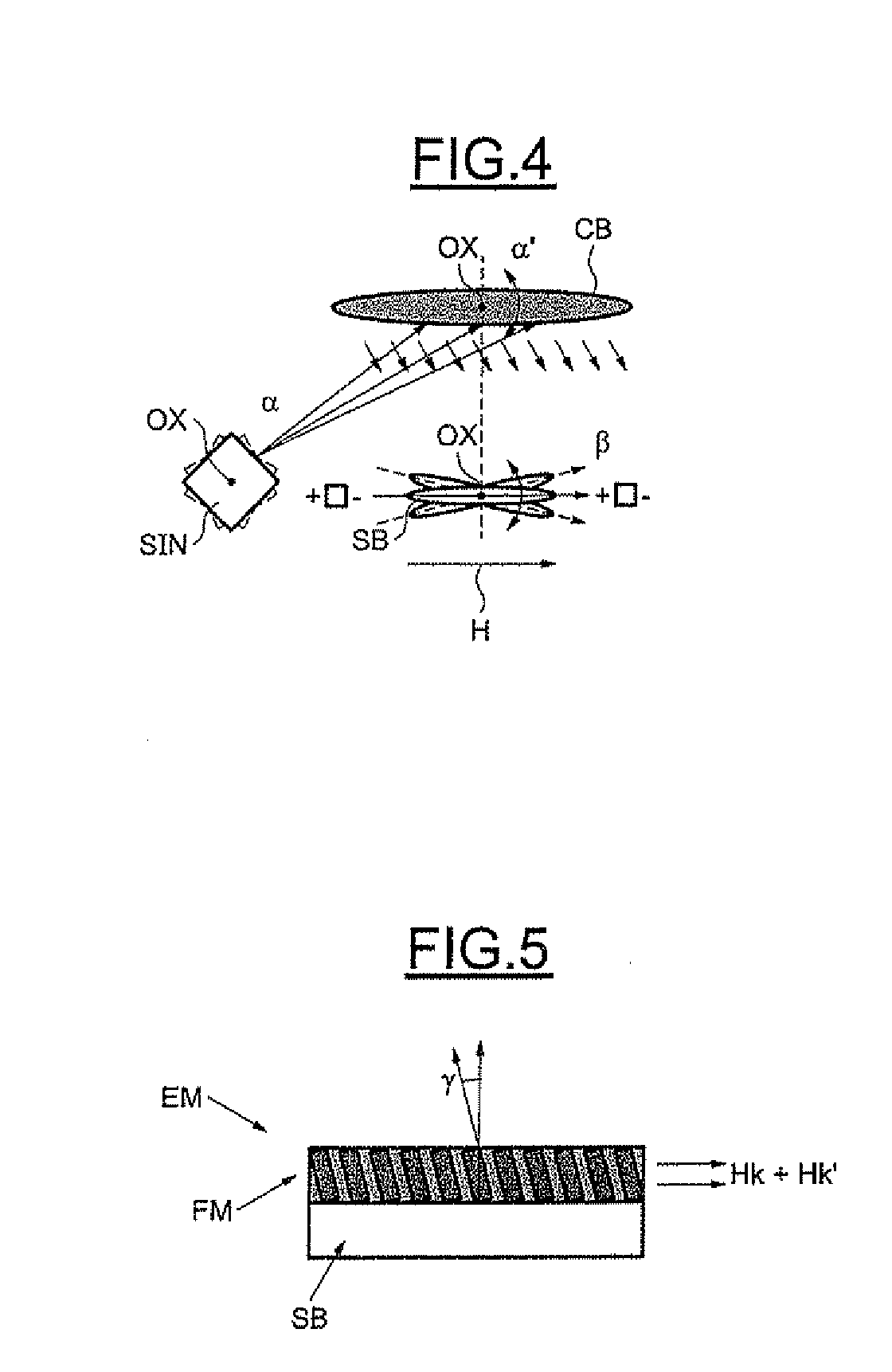
- The development of continuous magnetic elements with enhanced intrinsic anisotropy by growing magnetic films at a non-zero angle of incidence to the substrate, utilizing high-magnetization alloys like FeHfN or FeHfNO, which exhibit columnar textures, to increase ferromagnetic resonance frequency and maintain high permeability, allowing for improved magnetic flux closure and reduced leakage.

Magnetoresistance effect device and magnetoresistance effect module
PatentActiveUS20190237663A1
Innovation
- A magnetoresistance effect device comprising two circuit units with shared reference electric potential and DC application terminals, each unit including a magnetoresistance effect element with a magnetization fixed layer, a magnetization free layer, and a spacer layer, where the high-frequency magnetic field generated by one unit is applied to the other, enhancing the steepness characteristics by overlapping signal characteristics.


Electromagnetic Compatibility Standards and Regulations
The implementation of ferromagnetic resonance technologies in consumer electronics must comply with stringent electromagnetic compatibility standards established by international regulatory bodies. The Federal Communications Commission (FCC) in the United States, the European Telecommunications Standards Institute (ETSI), and similar organizations worldwide have developed comprehensive frameworks governing electromagnetic emissions and susceptibility requirements for electronic devices.
Current EMC standards such as CISPR 32 for multimedia equipment and IEC 61000 series for general electromagnetic compatibility requirements directly impact ferromagnetic resonance applications. These regulations specify emission limits across frequency ranges from 9 kHz to 400 GHz, with particular attention to spurious emissions that could interfere with wireless communication services. Ferromagnetic resonance devices operating in the gigahertz range must demonstrate compliance with radiated emission limits typically ranging from 30 to 37 dBμV/m at 3-meter distances.
The regulatory landscape continues evolving to address emerging technologies incorporating ferromagnetic materials. Recent amendments to EN 55032 and FCC Part 15 have introduced more stringent requirements for devices operating above 1 GHz, directly affecting ferromagnetic resonance implementations in smartphones, tablets, and wearable devices. These updates reflect growing concerns about spectrum congestion and interference with 5G networks and satellite communications.
Compliance testing procedures require specialized measurement techniques for ferromagnetic resonance devices. Standard test methods include conducted emissions testing using line impedance stabilization networks (LISN) and radiated emissions measurements in semi-anechoic chambers. However, ferromagnetic materials can significantly alter electromagnetic field distributions, necessitating modified test configurations and potentially custom measurement protocols.
International harmonization efforts through the International Electrotechnical Commission (IEC) aim to establish unified standards for ferromagnetic resonance applications. The ongoing development of IEC 62830 series specifically addresses magnetic materials in electronic applications, providing guidance for manufacturers seeking global market access while maintaining electromagnetic compatibility across diverse regulatory jurisdictions.
Current EMC standards such as CISPR 32 for multimedia equipment and IEC 61000 series for general electromagnetic compatibility requirements directly impact ferromagnetic resonance applications. These regulations specify emission limits across frequency ranges from 9 kHz to 400 GHz, with particular attention to spurious emissions that could interfere with wireless communication services. Ferromagnetic resonance devices operating in the gigahertz range must demonstrate compliance with radiated emission limits typically ranging from 30 to 37 dBμV/m at 3-meter distances.
The regulatory landscape continues evolving to address emerging technologies incorporating ferromagnetic materials. Recent amendments to EN 55032 and FCC Part 15 have introduced more stringent requirements for devices operating above 1 GHz, directly affecting ferromagnetic resonance implementations in smartphones, tablets, and wearable devices. These updates reflect growing concerns about spectrum congestion and interference with 5G networks and satellite communications.
Compliance testing procedures require specialized measurement techniques for ferromagnetic resonance devices. Standard test methods include conducted emissions testing using line impedance stabilization networks (LISN) and radiated emissions measurements in semi-anechoic chambers. However, ferromagnetic materials can significantly alter electromagnetic field distributions, necessitating modified test configurations and potentially custom measurement protocols.
International harmonization efforts through the International Electrotechnical Commission (IEC) aim to establish unified standards for ferromagnetic resonance applications. The ongoing development of IEC 62830 series specifically addresses magnetic materials in electronic applications, providing guidance for manufacturers seeking global market access while maintaining electromagnetic compatibility across diverse regulatory jurisdictions.
Miniaturization Challenges in FMR Device Integration
The integration of ferromagnetic resonance devices into consumer electronics faces significant miniaturization challenges that directly impact device performance and manufacturing feasibility. As consumer devices continue to shrink while demanding enhanced functionality, FMR components must achieve unprecedented size reductions without compromising their electromagnetic properties or operational efficiency.
Physical scaling limitations represent the most fundamental challenge in FMR device miniaturization. When device dimensions approach the nanoscale regime, quantum effects begin to dominate classical electromagnetic behavior, leading to altered resonance characteristics and reduced signal-to-noise ratios. The magnetic domain structure becomes increasingly unstable at smaller scales, causing unpredictable frequency responses and degraded performance consistency across production batches.
Thermal management emerges as a critical bottleneck in miniaturized FMR implementations. Reduced device volumes concentrate heat generation, creating localized hot spots that shift resonance frequencies and accelerate material degradation. The limited surface area available for heat dissipation in compact form factors exacerbates these thermal challenges, particularly in high-frequency applications where power densities are inherently elevated.
Manufacturing precision requirements escalate exponentially with miniaturization efforts. Tolerances that were acceptable in larger devices become prohibitively tight when scaled down, demanding advanced lithography techniques and specialized fabrication processes. The alignment accuracy between magnetic layers, substrate interfaces, and external coupling elements must maintain sub-nanometer precision to preserve device functionality, significantly increasing production costs and complexity.
Electromagnetic interference susceptibility intensifies as FMR devices shrink and operate in closer proximity to other electronic components. The reduced physical separation between circuit elements creates unwanted coupling effects that can destabilize resonance conditions and introduce spurious modes. Shielding effectiveness decreases proportionally with device size, making isolation increasingly difficult to achieve without compromising the overall system integration goals.
Material property variations become more pronounced at smaller scales, where surface effects dominate bulk characteristics. The surface-to-volume ratio increases dramatically in miniaturized devices, making material interfaces and boundary conditions critical factors in determining overall performance. These scaling effects often require entirely new material compositions or novel structural approaches to maintain desired FMR characteristics in compact implementations.
Physical scaling limitations represent the most fundamental challenge in FMR device miniaturization. When device dimensions approach the nanoscale regime, quantum effects begin to dominate classical electromagnetic behavior, leading to altered resonance characteristics and reduced signal-to-noise ratios. The magnetic domain structure becomes increasingly unstable at smaller scales, causing unpredictable frequency responses and degraded performance consistency across production batches.
Thermal management emerges as a critical bottleneck in miniaturized FMR implementations. Reduced device volumes concentrate heat generation, creating localized hot spots that shift resonance frequencies and accelerate material degradation. The limited surface area available for heat dissipation in compact form factors exacerbates these thermal challenges, particularly in high-frequency applications where power densities are inherently elevated.
Manufacturing precision requirements escalate exponentially with miniaturization efforts. Tolerances that were acceptable in larger devices become prohibitively tight when scaled down, demanding advanced lithography techniques and specialized fabrication processes. The alignment accuracy between magnetic layers, substrate interfaces, and external coupling elements must maintain sub-nanometer precision to preserve device functionality, significantly increasing production costs and complexity.
Electromagnetic interference susceptibility intensifies as FMR devices shrink and operate in closer proximity to other electronic components. The reduced physical separation between circuit elements creates unwanted coupling effects that can destabilize resonance conditions and introduce spurious modes. Shielding effectiveness decreases proportionally with device size, making isolation increasingly difficult to achieve without compromising the overall system integration goals.
Material property variations become more pronounced at smaller scales, where surface effects dominate bulk characteristics. The surface-to-volume ratio increases dramatically in miniaturized devices, making material interfaces and boundary conditions critical factors in determining overall performance. These scaling effects often require entirely new material compositions or novel structural approaches to maintain desired FMR characteristics in compact implementations.
Unlock deeper insights with PatSnap Eureka Quick Research — get a full tech report to explore trends and direct your research. Try now!
Generate Your Research Report Instantly with AI Agent
Supercharge your innovation with PatSnap Eureka AI Agent Platform!