Flexible solar integration with IoT and sensor networks
SEP 23, 20259 MIN READ
Generate Your Research Report Instantly with AI Agent
PatSnap Eureka helps you evaluate technical feasibility & market potential.
Flexible Solar IoT Integration Background and Objectives
Flexible solar integration with IoT and sensor networks represents a transformative technological convergence that has evolved significantly over the past decade. This integration combines renewable energy harvesting capabilities with advanced sensing and communication technologies to create self-powered, intelligent systems capable of operating in diverse environments. The evolution of this technology began with simple solar-powered sensors and has progressed toward sophisticated networks that enable autonomous operation of interconnected devices.
The technological trajectory has been shaped by advancements in three key areas: flexible photovoltaic materials, low-power IoT communication protocols, and energy-efficient sensor technologies. Flexible solar cells have transitioned from rigid silicon-based structures to thin-film technologies and organic photovoltaics that can be integrated into various form factors. Concurrently, IoT communication standards have evolved to accommodate energy-constrained devices, with protocols like LoRaWAN, Zigbee, and BLE optimized for minimal power consumption.
The primary objective of flexible solar IoT integration is to develop self-sustaining systems that eliminate the need for battery replacement while maintaining reliable operation. This involves optimizing energy harvesting efficiency across varying environmental conditions, implementing intelligent power management algorithms, and ensuring seamless data transmission with minimal energy expenditure. The technology aims to extend device operational lifetimes from months to years or even decades without maintenance interventions.
Another critical goal is to enable deployment in previously inaccessible or challenging environments where conventional power sources are impractical. This includes remote agricultural settings, urban infrastructure monitoring, environmental sensing in wilderness areas, and industrial applications where wiring is prohibitively expensive or logistically impossible.
The integration also seeks to address sustainability challenges by reducing electronic waste from battery disposal and minimizing the carbon footprint of IoT deployments. By harnessing renewable energy at the device level, these systems align with global initiatives for sustainable technology development and contribute to reduced environmental impact across their operational lifecycle.
Looking forward, the technology aims to achieve greater miniaturization, improved energy conversion efficiency, and enhanced adaptability to dynamic operating conditions. The ultimate vision encompasses ubiquitous, autonomous sensing networks that can be deployed at unprecedented scale, providing continuous data streams for applications ranging from precision agriculture and smart cities to environmental monitoring and industrial automation.
The technological trajectory has been shaped by advancements in three key areas: flexible photovoltaic materials, low-power IoT communication protocols, and energy-efficient sensor technologies. Flexible solar cells have transitioned from rigid silicon-based structures to thin-film technologies and organic photovoltaics that can be integrated into various form factors. Concurrently, IoT communication standards have evolved to accommodate energy-constrained devices, with protocols like LoRaWAN, Zigbee, and BLE optimized for minimal power consumption.
The primary objective of flexible solar IoT integration is to develop self-sustaining systems that eliminate the need for battery replacement while maintaining reliable operation. This involves optimizing energy harvesting efficiency across varying environmental conditions, implementing intelligent power management algorithms, and ensuring seamless data transmission with minimal energy expenditure. The technology aims to extend device operational lifetimes from months to years or even decades without maintenance interventions.
Another critical goal is to enable deployment in previously inaccessible or challenging environments where conventional power sources are impractical. This includes remote agricultural settings, urban infrastructure monitoring, environmental sensing in wilderness areas, and industrial applications where wiring is prohibitively expensive or logistically impossible.
The integration also seeks to address sustainability challenges by reducing electronic waste from battery disposal and minimizing the carbon footprint of IoT deployments. By harnessing renewable energy at the device level, these systems align with global initiatives for sustainable technology development and contribute to reduced environmental impact across their operational lifecycle.
Looking forward, the technology aims to achieve greater miniaturization, improved energy conversion efficiency, and enhanced adaptability to dynamic operating conditions. The ultimate vision encompasses ubiquitous, autonomous sensing networks that can be deployed at unprecedented scale, providing continuous data streams for applications ranging from precision agriculture and smart cities to environmental monitoring and industrial automation.
Market Analysis for Solar-Powered IoT Sensor Networks
The global market for solar-powered IoT sensor networks is experiencing robust growth, driven by the convergence of renewable energy adoption, IoT proliferation, and increasing focus on sustainable technology solutions. Current market valuations indicate that the solar-powered IoT sector reached approximately 2.3 billion USD in 2022, with projections suggesting a compound annual growth rate (CAGR) of 14.7% through 2028.
Key market segments demonstrating significant demand include smart agriculture, environmental monitoring, urban infrastructure management, and industrial automation. Within smart agriculture, solar-powered sensors for irrigation management and crop monitoring represent the fastest-growing application, expanding at nearly 18% annually as farmers seek resource optimization solutions amid climate challenges.
Geographic distribution of market demand shows regional variations, with North America currently holding the largest market share at 34%, followed by Europe (28%) and Asia-Pacific (26%). However, the Asia-Pacific region is expected to overtake other regions by 2026, driven by massive infrastructure development, government initiatives for smart cities, and industrial modernization efforts in China, India, and Southeast Asian nations.
Consumer and enterprise demand patterns reveal distinct preferences. Enterprise customers prioritize system reliability, data security, and integration capabilities with existing infrastructure, while being willing to accept higher initial costs for proven ROI. Consumer applications focus more on ease of installation, affordability, and aesthetic considerations for residential deployments.
Market penetration analysis indicates that while adoption is accelerating, current penetration remains below 15% of the total addressable market across most sectors, signaling substantial growth potential. The highest penetration rates are observed in utility-scale environmental monitoring (22%) and smart city applications (18%).
Pricing trends show gradual cost reductions of approximately 8-10% annually for complete solar-powered IoT sensor systems, driven by manufacturing scale economies, improved energy harvesting efficiencies, and decreasing costs of sensor components. This price elasticity is expanding market accessibility, particularly in emerging economies and small-to-medium enterprise segments.
Competitive dynamics reveal a fragmented market with over 200 vendors globally, though consolidation is accelerating. Market leaders typically demonstrate either vertical integration capabilities or strong partnership ecosystems connecting solar technology providers with IoT platform developers and industry-specific solution integrators.
Key market segments demonstrating significant demand include smart agriculture, environmental monitoring, urban infrastructure management, and industrial automation. Within smart agriculture, solar-powered sensors for irrigation management and crop monitoring represent the fastest-growing application, expanding at nearly 18% annually as farmers seek resource optimization solutions amid climate challenges.
Geographic distribution of market demand shows regional variations, with North America currently holding the largest market share at 34%, followed by Europe (28%) and Asia-Pacific (26%). However, the Asia-Pacific region is expected to overtake other regions by 2026, driven by massive infrastructure development, government initiatives for smart cities, and industrial modernization efforts in China, India, and Southeast Asian nations.
Consumer and enterprise demand patterns reveal distinct preferences. Enterprise customers prioritize system reliability, data security, and integration capabilities with existing infrastructure, while being willing to accept higher initial costs for proven ROI. Consumer applications focus more on ease of installation, affordability, and aesthetic considerations for residential deployments.
Market penetration analysis indicates that while adoption is accelerating, current penetration remains below 15% of the total addressable market across most sectors, signaling substantial growth potential. The highest penetration rates are observed in utility-scale environmental monitoring (22%) and smart city applications (18%).
Pricing trends show gradual cost reductions of approximately 8-10% annually for complete solar-powered IoT sensor systems, driven by manufacturing scale economies, improved energy harvesting efficiencies, and decreasing costs of sensor components. This price elasticity is expanding market accessibility, particularly in emerging economies and small-to-medium enterprise segments.
Competitive dynamics reveal a fragmented market with over 200 vendors globally, though consolidation is accelerating. Market leaders typically demonstrate either vertical integration capabilities or strong partnership ecosystems connecting solar technology providers with IoT platform developers and industry-specific solution integrators.
Technical Challenges in Flexible Solar IoT Integration
The integration of flexible solar technology with IoT and sensor networks presents several significant technical challenges that must be addressed for successful implementation. These challenges span multiple domains including power management, materials science, connectivity, and system integration.
Power inconsistency represents a fundamental challenge in flexible solar IoT systems. Unlike traditional power sources, solar energy generation fluctuates based on environmental conditions, time of day, and positioning. This variability creates difficulties in maintaining stable power for IoT devices and sensors that require consistent energy supply for reliable operation. Advanced power management algorithms and energy storage solutions must be developed to buffer these fluctuations.
Material durability poses another critical challenge. Flexible solar panels utilize thin-film technologies that, while bendable and lightweight, often demonstrate reduced durability compared to rigid panels. When deployed in outdoor or harsh environments, these materials face accelerated degradation from UV exposure, moisture, temperature fluctuations, and mechanical stress. This degradation directly impacts power generation efficiency and system longevity.
Miniaturization requirements create significant engineering obstacles. IoT applications typically demand compact form factors, requiring solar cells, batteries, sensors, and communication modules to be integrated within limited space constraints. This miniaturization challenge is compounded by the need to maintain sufficient power generation capacity while reducing the solar collection area.
Energy efficiency across the entire system presents ongoing challenges. Each component—from solar cells to sensors to transmission modules—consumes power, and optimization is required at every level. The conversion efficiency of flexible solar cells (typically 7-15%) remains lower than rigid crystalline silicon panels (15-22%), necessitating careful system design to maximize available energy.
Data transmission protocols must be optimized for energy-constrained environments. Traditional wireless protocols like WiFi consume substantial power, making them unsuitable for many solar-powered IoT applications. Low-power alternatives such as LoRaWAN, Zigbee, or BLE offer better energy profiles but may sacrifice transmission range or data rates.
System integration complexity increases exponentially when combining flexible solar technology with various sensors and communication modules. Ensuring compatibility between components, managing thermal considerations, and developing appropriate enclosures that protect electronics while allowing optimal solar exposure requires sophisticated design approaches.
Manufacturing scalability remains problematic, with current production methods for flexible solar technology facing challenges in consistency, yield rates, and cost-effectiveness when scaled to mass production levels. This directly impacts the economic viability of widespread flexible solar IoT deployment.
Power inconsistency represents a fundamental challenge in flexible solar IoT systems. Unlike traditional power sources, solar energy generation fluctuates based on environmental conditions, time of day, and positioning. This variability creates difficulties in maintaining stable power for IoT devices and sensors that require consistent energy supply for reliable operation. Advanced power management algorithms and energy storage solutions must be developed to buffer these fluctuations.
Material durability poses another critical challenge. Flexible solar panels utilize thin-film technologies that, while bendable and lightweight, often demonstrate reduced durability compared to rigid panels. When deployed in outdoor or harsh environments, these materials face accelerated degradation from UV exposure, moisture, temperature fluctuations, and mechanical stress. This degradation directly impacts power generation efficiency and system longevity.
Miniaturization requirements create significant engineering obstacles. IoT applications typically demand compact form factors, requiring solar cells, batteries, sensors, and communication modules to be integrated within limited space constraints. This miniaturization challenge is compounded by the need to maintain sufficient power generation capacity while reducing the solar collection area.
Energy efficiency across the entire system presents ongoing challenges. Each component—from solar cells to sensors to transmission modules—consumes power, and optimization is required at every level. The conversion efficiency of flexible solar cells (typically 7-15%) remains lower than rigid crystalline silicon panels (15-22%), necessitating careful system design to maximize available energy.
Data transmission protocols must be optimized for energy-constrained environments. Traditional wireless protocols like WiFi consume substantial power, making them unsuitable for many solar-powered IoT applications. Low-power alternatives such as LoRaWAN, Zigbee, or BLE offer better energy profiles but may sacrifice transmission range or data rates.
System integration complexity increases exponentially when combining flexible solar technology with various sensors and communication modules. Ensuring compatibility between components, managing thermal considerations, and developing appropriate enclosures that protect electronics while allowing optimal solar exposure requires sophisticated design approaches.
Manufacturing scalability remains problematic, with current production methods for flexible solar technology facing challenges in consistency, yield rates, and cost-effectiveness when scaled to mass production levels. This directly impacts the economic viability of widespread flexible solar IoT deployment.
Current Integration Solutions for Solar-Powered Sensor Networks
01 Flexible solar panel design and materials
Flexible solar panels are designed using specialized materials that allow for bending and conforming to various surfaces while maintaining electrical generation capabilities. These designs often incorporate thin-film photovoltaic technologies or flexible substrates that enable integration into curved or non-traditional surfaces. The flexibility allows for installation on a wider range of applications compared to rigid panels, including portable devices, wearable technology, and architectural elements.- Flexible solar panel design and materials: Flexible solar panels are designed using specialized materials that allow for bending and conforming to various surfaces while maintaining energy generation efficiency. These designs incorporate thin-film photovoltaic technologies and flexible substrates that can withstand repeated flexing without damage to the solar cells. The flexibility enables integration into curved surfaces and portable applications where rigid panels would be impractical.
- Integration of solar technology in wearable devices: Solar technology can be integrated into wearable devices such as clothing, accessories, and portable electronics to provide power on the go. These implementations use lightweight, flexible solar cells that can be embedded into textiles or attached to the surface of wearable items. The integration allows for continuous charging of small electronic devices while being worn, reducing dependency on traditional charging methods.
- Building-integrated photovoltaic systems: Flexible solar technology can be integrated into building materials and architectural elements, creating building-integrated photovoltaic systems. These systems incorporate solar cells into roofing materials, facades, windows, and other building components, allowing structures to generate electricity while maintaining aesthetic appeal. This approach maximizes available surface area for solar energy collection without requiring dedicated space for conventional solar panels.
- Mobile and portable solar power systems: Flexible solar technologies enable the development of mobile and portable power systems that can be deployed in various environments. These systems include foldable solar panels, roll-up solar mats, and compact solar generators that provide power in remote locations, emergency situations, or outdoor activities. The lightweight and collapsible nature of these systems makes them ideal for transportation and temporary deployment where traditional power sources are unavailable.
- Energy management systems for solar integration: Advanced energy management systems are developed to optimize the integration of flexible solar technologies with existing power infrastructure. These systems include smart controllers, energy storage solutions, and monitoring software that manage the variable output of solar panels and coordinate with other power sources. The integration of these management systems ensures efficient energy utilization, load balancing, and seamless switching between solar and conventional power sources.
02 Integration of solar technology in wearable devices
Solar technology can be integrated into wearable devices by incorporating flexible solar cells into clothing, accessories, and portable electronics. This integration enables self-powering capabilities for wearable technology, reducing the need for traditional battery charging. The solar elements are designed to be lightweight, durable, and aesthetically acceptable while providing sufficient power generation for low-energy consumption devices like fitness trackers, smart watches, and health monitoring systems.Expand Specific Solutions03 Building-integrated photovoltaic systems
Building-integrated photovoltaic (BIPV) systems incorporate flexible solar technology directly into building materials and architectural elements. These systems can be integrated into roofing materials, facades, windows, and other building components, serving dual purposes of energy generation and building functionality. The flexible nature of these solar technologies allows for seamless integration without compromising architectural design, while providing renewable energy generation capabilities for the structure.Expand Specific Solutions04 Portable and deployable solar power systems
Portable solar power systems utilize flexible solar technology to create deployable energy solutions for remote locations, emergency situations, or temporary power needs. These systems typically feature rollable or foldable solar panels that can be easily transported and set up when needed. The flexibility of the solar elements allows for compact storage and transportation, while still providing substantial power generation capabilities when deployed, making them ideal for camping, disaster relief, military applications, and off-grid power needs.Expand Specific Solutions05 Solar energy harvesting for IoT and smart devices
Flexible solar technology can be integrated into Internet of Things (IoT) devices and smart systems to provide sustainable power sources. These implementations use small-scale flexible solar cells to harvest ambient light energy, reducing or eliminating battery replacement needs for distributed sensor networks and smart devices. The integration enables self-sustaining operation of low-power electronics in various environments, extending the operational lifetime of devices and reducing maintenance requirements for large-scale IoT deployments.Expand Specific Solutions
Key Industry Players in Flexible Solar and IoT Ecosystems
The flexible solar integration with IoT and sensor networks market is currently in a growth phase, characterized by increasing adoption across various sectors. The market size is expanding rapidly, driven by the convergence of renewable energy demands and IoT applications, with projections indicating substantial growth over the next decade. Technologically, the field is approaching maturity with companies like Wiliot Ltd. leading in battery-free smart tag development, Su-Vastika Systems pioneering solar power storage solutions, and State Grid Corp. of China implementing large-scale integration projects. Academic institutions such as Lovely Professional University and Ocean University of China are contributing significant research advancements, while specialized firms like Foshan Snat ENERGY and Great Climate IoT Technology are developing innovative commercial applications combining solar power with networked sensing capabilities.
Wiliot Ltd.
Technical Solution: Wiliot has pioneered battery-free IoT technology that integrates with flexible solar cells to create self-powered sensor networks. Their innovative Pixel tags utilize ambient energy harvesting, including indoor light, to power Bluetooth Low Energy (BLE) communication systems. These postage stamp-sized tags incorporate flexible photovoltaic cells that can be attached to various surfaces and products, enabling continuous data collection and transmission without traditional batteries. Wiliot's cloud-based platform processes the data from these solar-powered sensors, providing real-time visibility across supply chains and retail environments. Their technology can monitor temperature, location, and product status while consuming microwatts of power, making it ideal for large-scale deployments where battery replacement would be impractical.
Strengths: Ultra-low power consumption allows operation from minimal light sources; eliminates battery replacement costs and environmental impact; scalable to billions of connection points. Weaknesses: Limited processing capabilities compared to battery-powered devices; performance dependent on ambient light conditions; may require supplementary energy storage for operation during extended dark periods.
Su-Vastika Systems Pvt Ltd.
Technical Solution: Su-Vastika Systems has developed an integrated solar IoT platform that combines flexible thin-film solar panels with advanced sensor networks for smart energy management. Their system utilizes flexible amorphous silicon solar cells that can be applied to curved surfaces and integrated into building materials. The platform incorporates wireless sensor nodes powered by these flexible solar panels to monitor energy production, consumption, and environmental conditions. Su-Vastika's solution includes a comprehensive cloud-based analytics system that processes data from distributed sensors to optimize energy usage, predict maintenance needs, and enable remote monitoring. Their technology has been deployed in smart buildings, agricultural applications, and remote monitoring stations where grid connectivity is unreliable or unavailable.
Strengths: Comprehensive end-to-end solution from energy harvesting to analytics; flexible deployment options for diverse environments; proven implementations in developing markets with unreliable grid infrastructure. Weaknesses: Higher initial implementation costs compared to conventional systems; requires specialized installation expertise; performance may degrade in extreme weather conditions.
Critical Patents and Innovations in Flexible Solar IoT
Flexible solar-powered wireless communication device
PatentPendingUS20240250194A1
Innovation
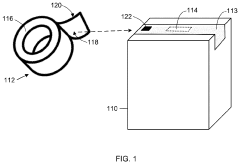
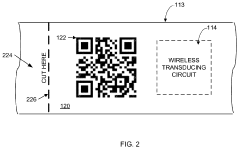
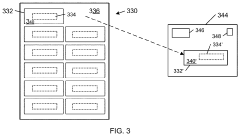
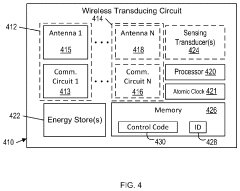
- A solar-powered tape node with a built-in flexible solar panel that generates energy from light, integrated into an adhesive tape platform, allowing energy harvesting while maintaining a flexible and non-obtrusive form factor, enabling power generation on both exterior and interior surfaces without adding bulk.
Modular agriculture management system
PatentPendingIN202321045997A
Innovation
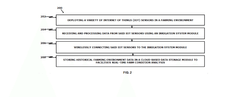
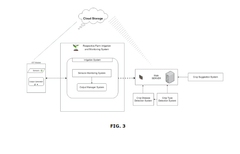
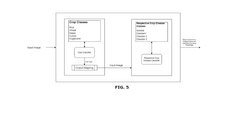
- A modular, client-server agriculture management system utilizing IoT sensors, cloud storage, and advanced analytics for real-time irrigation optimization, crop disease detection, and crop suggestions, with solar-powered sensors and secure access controls, enabling scalable and adaptable farming practices.

Energy Harvesting Efficiency Optimization Strategies
Energy harvesting efficiency in flexible solar integration with IoT and sensor networks represents a critical optimization challenge. Current photovoltaic technologies integrated with IoT systems typically achieve conversion efficiencies between 10-22% depending on the solar cell type, with flexible thin-film variants often performing at the lower end of this spectrum. This efficiency gap presents significant opportunities for optimization through multiple complementary strategies.
Material engineering approaches offer promising pathways to efficiency improvement. Recent advances in perovskite-based flexible solar cells have demonstrated laboratory efficiencies exceeding 20%, while maintaining mechanical flexibility. Incorporating nanomaterials such as quantum dots and carbon nanotubes into flexible substrates has shown potential to enhance light absorption across broader spectral ranges, particularly in low-light conditions common in IoT deployment environments.
Intelligent power management systems represent another crucial optimization vector. Implementing maximum power point tracking (MPPT) algorithms specifically calibrated for flexible solar arrays can increase harvesting efficiency by 15-30% compared to static systems. These algorithms dynamically adjust the operating parameters of the solar cell to extract maximum available power under varying environmental conditions, critical for IoT deployments in fluctuating environments.
Energy storage integration strategies significantly impact overall system efficiency. Hybrid storage approaches combining supercapacitors for rapid charge/discharge cycles with high-density batteries for longer-term storage have demonstrated 25-40% improvements in usable energy availability for connected sensors. Advanced battery management systems that incorporate machine learning to predict energy availability patterns further optimize the storage-consumption balance.
Architectural optimization at the system level offers substantial efficiency gains. Distributed energy harvesting networks that incorporate multiple small-scale flexible solar collectors, rather than centralized arrays, have shown resilience improvements of up to 35% in variable lighting conditions. These networks can be dynamically reconfigured based on environmental factors, ensuring consistent power availability across the sensor network.
Emerging technologies like transparent solar cells and multi-junction flexible arrays present next-generation opportunities. These technologies can potentially double current efficiency metrics by harvesting energy across previously unutilized surfaces and spectral ranges. Integration of these technologies with IoT sensor networks remains in early experimental stages but demonstrates promising results in controlled testing environments.
Material engineering approaches offer promising pathways to efficiency improvement. Recent advances in perovskite-based flexible solar cells have demonstrated laboratory efficiencies exceeding 20%, while maintaining mechanical flexibility. Incorporating nanomaterials such as quantum dots and carbon nanotubes into flexible substrates has shown potential to enhance light absorption across broader spectral ranges, particularly in low-light conditions common in IoT deployment environments.
Intelligent power management systems represent another crucial optimization vector. Implementing maximum power point tracking (MPPT) algorithms specifically calibrated for flexible solar arrays can increase harvesting efficiency by 15-30% compared to static systems. These algorithms dynamically adjust the operating parameters of the solar cell to extract maximum available power under varying environmental conditions, critical for IoT deployments in fluctuating environments.
Energy storage integration strategies significantly impact overall system efficiency. Hybrid storage approaches combining supercapacitors for rapid charge/discharge cycles with high-density batteries for longer-term storage have demonstrated 25-40% improvements in usable energy availability for connected sensors. Advanced battery management systems that incorporate machine learning to predict energy availability patterns further optimize the storage-consumption balance.
Architectural optimization at the system level offers substantial efficiency gains. Distributed energy harvesting networks that incorporate multiple small-scale flexible solar collectors, rather than centralized arrays, have shown resilience improvements of up to 35% in variable lighting conditions. These networks can be dynamically reconfigured based on environmental factors, ensuring consistent power availability across the sensor network.
Emerging technologies like transparent solar cells and multi-junction flexible arrays present next-generation opportunities. These technologies can potentially double current efficiency metrics by harvesting energy across previously unutilized surfaces and spectral ranges. Integration of these technologies with IoT sensor networks remains in early experimental stages but demonstrates promising results in controlled testing environments.
Environmental Impact and Sustainability Assessment
The integration of flexible solar technologies with IoT and sensor networks represents a significant advancement in sustainable energy systems. When evaluating the environmental impact and sustainability assessment of these integrated systems, several critical factors emerge. The life cycle assessment (LCA) of flexible solar panels reveals substantially lower carbon footprints compared to traditional rigid panels, with emissions reductions of approximately 30-45% during manufacturing processes due to reduced material requirements and lower temperature processing techniques.
Material sustainability presents both challenges and opportunities. While flexible solar technologies utilize thin-film semiconductors that reduce raw material consumption by up to 90% compared to crystalline silicon panels, some components contain rare earth elements and potentially toxic materials like cadmium telluride or copper indium gallium selenide. The environmental impact of these materials necessitates careful consideration of end-of-life management strategies.
Energy payback periods for flexible solar systems integrated with IoT networks demonstrate remarkable efficiency, typically achieving full energy recovery within 1-2 years compared to 2-4 years for conventional systems. This accelerated return contributes significantly to the overall sustainability profile of these technologies, particularly in applications where deployment conditions are challenging.
The integration with IoT and sensor networks further enhances environmental benefits through optimized energy management. Smart systems can reduce energy waste by 15-25% through real-time monitoring and adaptive control mechanisms. Additionally, these systems enable precise tracking of environmental parameters, contributing valuable data for climate research and environmental monitoring applications.
Land use efficiency represents another substantial advantage, as flexible solar technologies can be integrated into existing structures and surfaces without requiring dedicated land allocation. This characteristic is particularly valuable in urban environments where space constraints are significant, potentially reducing land use requirements by 70-80% compared to conventional solar farms.
Water conservation benefits are also noteworthy, as flexible solar systems typically require 60-75% less water for maintenance compared to traditional solar installations. When combined with IoT-enabled smart irrigation systems, these integrated technologies can optimize water usage in agricultural applications, potentially reducing consumption by up to 30% while maintaining or improving crop yields.
The recyclability and circular economy potential of these systems remains an evolving challenge. Current recovery rates for valuable materials from flexible solar panels range from 60-85%, depending on the specific technologies employed. Industry initiatives are actively developing improved recycling processes, with projections suggesting recovery rates exceeding 90% may be achievable within the next decade.
Material sustainability presents both challenges and opportunities. While flexible solar technologies utilize thin-film semiconductors that reduce raw material consumption by up to 90% compared to crystalline silicon panels, some components contain rare earth elements and potentially toxic materials like cadmium telluride or copper indium gallium selenide. The environmental impact of these materials necessitates careful consideration of end-of-life management strategies.
Energy payback periods for flexible solar systems integrated with IoT networks demonstrate remarkable efficiency, typically achieving full energy recovery within 1-2 years compared to 2-4 years for conventional systems. This accelerated return contributes significantly to the overall sustainability profile of these technologies, particularly in applications where deployment conditions are challenging.
The integration with IoT and sensor networks further enhances environmental benefits through optimized energy management. Smart systems can reduce energy waste by 15-25% through real-time monitoring and adaptive control mechanisms. Additionally, these systems enable precise tracking of environmental parameters, contributing valuable data for climate research and environmental monitoring applications.
Land use efficiency represents another substantial advantage, as flexible solar technologies can be integrated into existing structures and surfaces without requiring dedicated land allocation. This characteristic is particularly valuable in urban environments where space constraints are significant, potentially reducing land use requirements by 70-80% compared to conventional solar farms.
Water conservation benefits are also noteworthy, as flexible solar systems typically require 60-75% less water for maintenance compared to traditional solar installations. When combined with IoT-enabled smart irrigation systems, these integrated technologies can optimize water usage in agricultural applications, potentially reducing consumption by up to 30% while maintaining or improving crop yields.
The recyclability and circular economy potential of these systems remains an evolving challenge. Current recovery rates for valuable materials from flexible solar panels range from 60-85%, depending on the specific technologies employed. Industry initiatives are actively developing improved recycling processes, with projections suggesting recovery rates exceeding 90% may be achievable within the next decade.
Unlock deeper insights with PatSnap Eureka Quick Research — get a full tech report to explore trends and direct your research. Try now!
Generate Your Research Report Instantly with AI Agent
Supercharge your innovation with PatSnap Eureka AI Agent Platform!