

Frame Generation vs Scene Generation: Impact on User Experience
MAR 30, 20269 MIN READ
Generate Your Research Report Instantly with AI Agent
Patsnap Eureka helps you evaluate technical feasibility & market potential.
Frame vs Scene Generation Tech Background and Goals
Frame generation and scene generation represent two fundamentally different approaches to creating visual content in real-time graphics applications, each with distinct technological foundations and evolutionary trajectories. Frame generation emerged from the need to enhance visual fluidity in gaming and interactive media, focusing on interpolating intermediate frames between rendered frames to achieve higher perceived frame rates. This technology gained prominence with the advent of AI-driven upscaling techniques and temporal interpolation algorithms.
Scene generation, conversely, evolved from computer graphics rendering pipelines and procedural content creation methodologies. It encompasses the real-time creation of entire visual environments, objects, and scenarios through algorithmic processes, neural networks, or hybrid approaches. The technology draws from decades of research in procedural generation, ray tracing, and more recently, generative AI models capable of creating coherent visual scenes.
The historical development of these technologies reflects different industry priorities and technological capabilities. Frame generation initially addressed hardware limitations where computational resources were insufficient to render at desired frame rates natively. Early implementations relied on motion vector analysis and temporal reprojection techniques. The introduction of machine learning accelerated this field significantly, with neural networks now capable of generating perceptually convincing intermediate frames.
Scene generation technology evolved alongside advances in procedural algorithms and computational geometry. Early implementations focused on terrain generation and basic environmental elements. The integration of AI and deep learning has revolutionized this domain, enabling the creation of complex, contextually appropriate scenes that respond dynamically to user inputs and environmental conditions.
Current technological objectives center on achieving seamless user experiences while maintaining computational efficiency. For frame generation, goals include minimizing latency, reducing artifacts, and preserving visual fidelity across diverse content types. Scene generation aims to create immersive, contextually relevant environments that adapt to user behavior and preferences while maintaining visual coherence and narrative consistency.
The convergence of these technologies represents a significant opportunity for enhancing user experience through complementary strengths. Frame generation excels at improving perceived performance and visual smoothness, while scene generation offers dynamic content creation and environmental adaptability. Understanding their distinct characteristics and potential synergies is crucial for developing next-generation interactive experiences that leverage both approaches effectively.
Scene generation, conversely, evolved from computer graphics rendering pipelines and procedural content creation methodologies. It encompasses the real-time creation of entire visual environments, objects, and scenarios through algorithmic processes, neural networks, or hybrid approaches. The technology draws from decades of research in procedural generation, ray tracing, and more recently, generative AI models capable of creating coherent visual scenes.
The historical development of these technologies reflects different industry priorities and technological capabilities. Frame generation initially addressed hardware limitations where computational resources were insufficient to render at desired frame rates natively. Early implementations relied on motion vector analysis and temporal reprojection techniques. The introduction of machine learning accelerated this field significantly, with neural networks now capable of generating perceptually convincing intermediate frames.
Scene generation technology evolved alongside advances in procedural algorithms and computational geometry. Early implementations focused on terrain generation and basic environmental elements. The integration of AI and deep learning has revolutionized this domain, enabling the creation of complex, contextually appropriate scenes that respond dynamically to user inputs and environmental conditions.
Current technological objectives center on achieving seamless user experiences while maintaining computational efficiency. For frame generation, goals include minimizing latency, reducing artifacts, and preserving visual fidelity across diverse content types. Scene generation aims to create immersive, contextually relevant environments that adapt to user behavior and preferences while maintaining visual coherence and narrative consistency.
The convergence of these technologies represents a significant opportunity for enhancing user experience through complementary strengths. Frame generation excels at improving perceived performance and visual smoothness, while scene generation offers dynamic content creation and environmental adaptability. Understanding their distinct characteristics and potential synergies is crucial for developing next-generation interactive experiences that leverage both approaches effectively.
Market Demand for Enhanced Gaming Visual Experience
The gaming industry has witnessed unprecedented growth in demand for enhanced visual experiences, driven by evolving consumer expectations and technological capabilities. Modern gamers increasingly prioritize visual fidelity, smooth performance, and immersive experiences as core factors in their purchasing decisions. This shift has created substantial market pressure for developers and hardware manufacturers to deliver superior visual technologies that can meet these elevated standards.
Frame generation and scene generation technologies have emerged as critical solutions addressing distinct aspects of visual enhancement demand. The market shows strong appetite for frame generation technologies, particularly among competitive gaming segments where high refresh rates and low latency are paramount. These technologies appeal to esports enthusiasts and performance-focused gamers who prioritize fluid motion and responsive gameplay over absolute visual quality.
Conversely, scene generation technologies target the growing segment of gamers seeking photorealistic visuals and cinematic experiences. This market segment includes single-player adventure enthusiasts, content creators, and users of high-end gaming systems who value visual authenticity and detailed environments. The demand spans across multiple gaming platforms, from PC gaming rigs to next-generation consoles.
The market demonstrates clear segmentation based on use cases and user preferences. Competitive gaming communities drive demand for frame generation solutions that can deliver consistent high frame rates without compromising input responsiveness. Meanwhile, the content creation and streaming markets fuel interest in scene generation technologies that produce visually stunning footage for audiences.
Regional market variations also influence demand patterns. Developed gaming markets show stronger preference for premium visual technologies, while emerging markets often prioritize performance optimization over cutting-edge visual features. This geographic distribution creates diverse market opportunities for both technological approaches.
The convergence of virtual reality, augmented reality, and traditional gaming platforms further expands market potential. These emerging platforms require sophisticated visual processing capabilities that can benefit from both frame and scene generation technologies, creating new market segments and application scenarios that drive continued demand growth.
Frame generation and scene generation technologies have emerged as critical solutions addressing distinct aspects of visual enhancement demand. The market shows strong appetite for frame generation technologies, particularly among competitive gaming segments where high refresh rates and low latency are paramount. These technologies appeal to esports enthusiasts and performance-focused gamers who prioritize fluid motion and responsive gameplay over absolute visual quality.
Conversely, scene generation technologies target the growing segment of gamers seeking photorealistic visuals and cinematic experiences. This market segment includes single-player adventure enthusiasts, content creators, and users of high-end gaming systems who value visual authenticity and detailed environments. The demand spans across multiple gaming platforms, from PC gaming rigs to next-generation consoles.
The market demonstrates clear segmentation based on use cases and user preferences. Competitive gaming communities drive demand for frame generation solutions that can deliver consistent high frame rates without compromising input responsiveness. Meanwhile, the content creation and streaming markets fuel interest in scene generation technologies that produce visually stunning footage for audiences.
Regional market variations also influence demand patterns. Developed gaming markets show stronger preference for premium visual technologies, while emerging markets often prioritize performance optimization over cutting-edge visual features. This geographic distribution creates diverse market opportunities for both technological approaches.
The convergence of virtual reality, augmented reality, and traditional gaming platforms further expands market potential. These emerging platforms require sophisticated visual processing capabilities that can benefit from both frame and scene generation technologies, creating new market segments and application scenarios that drive continued demand growth.
Current State of Frame and Scene Generation Technologies
Frame generation and scene generation technologies represent two distinct paradigms in real-time graphics rendering, each addressing different aspects of visual content creation and user experience optimization. Currently, these technologies operate at different stages of the rendering pipeline and serve complementary yet sometimes competing roles in modern graphics systems.
Frame generation technology primarily focuses on interpolating or extrapolating frames between traditionally rendered frames to increase perceived frame rates. Leading implementations include NVIDIA's DLSS Frame Generation, AMD's Fluid Motion Frames, and Intel's XeSS frame interpolation. These solutions utilize AI-driven motion vector analysis and temporal upsampling to create intermediate frames, effectively doubling or tripling the displayed frame rate without proportionally increasing computational rendering load.
Scene generation technologies encompass a broader spectrum of approaches, including procedural content generation, neural radiance fields (NeRFs), and AI-assisted scene synthesis. Current implementations range from real-time procedural generation systems used in games like No Man's Sky to emerging neural rendering techniques that can generate photorealistic scenes from minimal input data. Companies like Unity, Unreal Engine, and specialized firms such as Inworld AI are developing sophisticated scene generation pipelines.
The technological maturity varies significantly between these domains. Frame generation has achieved commercial deployment across consumer graphics hardware, with NVIDIA's RTX 40-series and AMD's RX 7000-series GPUs featuring dedicated hardware acceleration. These systems demonstrate measurable performance improvements in gaming scenarios, typically achieving 60-120% frame rate increases with acceptable visual quality trade-offs.
Scene generation remains more experimental, with most implementations confined to research environments or specialized applications. However, recent advances in diffusion models and transformer architectures have accelerated development. Real-time scene generation capabilities are emerging through techniques like Gaussian splatting and neural implicit representations, though computational requirements remain substantial.
Integration challenges persist as both technologies compete for limited computational resources while potentially offering synergistic benefits. Current graphics pipelines struggle to optimize the balance between frame generation's immediate performance gains and scene generation's content creation capabilities, particularly in resource-constrained environments where user experience optimization becomes critical for adoption and commercial viability.
Frame generation technology primarily focuses on interpolating or extrapolating frames between traditionally rendered frames to increase perceived frame rates. Leading implementations include NVIDIA's DLSS Frame Generation, AMD's Fluid Motion Frames, and Intel's XeSS frame interpolation. These solutions utilize AI-driven motion vector analysis and temporal upsampling to create intermediate frames, effectively doubling or tripling the displayed frame rate without proportionally increasing computational rendering load.
Scene generation technologies encompass a broader spectrum of approaches, including procedural content generation, neural radiance fields (NeRFs), and AI-assisted scene synthesis. Current implementations range from real-time procedural generation systems used in games like No Man's Sky to emerging neural rendering techniques that can generate photorealistic scenes from minimal input data. Companies like Unity, Unreal Engine, and specialized firms such as Inworld AI are developing sophisticated scene generation pipelines.
The technological maturity varies significantly between these domains. Frame generation has achieved commercial deployment across consumer graphics hardware, with NVIDIA's RTX 40-series and AMD's RX 7000-series GPUs featuring dedicated hardware acceleration. These systems demonstrate measurable performance improvements in gaming scenarios, typically achieving 60-120% frame rate increases with acceptable visual quality trade-offs.
Scene generation remains more experimental, with most implementations confined to research environments or specialized applications. However, recent advances in diffusion models and transformer architectures have accelerated development. Real-time scene generation capabilities are emerging through techniques like Gaussian splatting and neural implicit representations, though computational requirements remain substantial.
Integration challenges persist as both technologies compete for limited computational resources while potentially offering synergistic benefits. Current graphics pipelines struggle to optimize the balance between frame generation's immediate performance gains and scene generation's content creation capabilities, particularly in resource-constrained environments where user experience optimization becomes critical for adoption and commercial viability.
Existing Frame and Scene Generation Solutions
01 Frame generation techniques for enhanced visual quality
Technologies for generating intermediate frames between existing frames to improve visual smoothness and fluidity in video content. These techniques utilize motion prediction, interpolation algorithms, and temporal analysis to create additional frames that enhance the perceived frame rate and reduce motion blur. The methods can be applied in real-time rendering scenarios to provide smoother visual transitions and improved motion clarity.- Frame generation techniques for enhanced visual quality: Technologies for generating intermediate frames between existing frames to improve visual smoothness and fluidity in video content. These techniques utilize motion estimation, interpolation algorithms, and predictive modeling to create additional frames that enhance the overall viewing experience. The methods can be applied to various display systems including gaming, video playback, and real-time rendering applications to achieve higher perceived frame rates and reduced motion blur.
- Scene generation and rendering optimization: Methods for generating and rendering complex scenes efficiently by utilizing advanced rendering pipelines, scene graph management, and resource optimization techniques. These approaches focus on improving the quality and performance of scene generation through techniques such as level-of-detail management, culling algorithms, and dynamic scene composition. The technologies enable real-time generation of immersive environments while maintaining optimal performance across different hardware configurations.
- User interface design for frame and scene control: Interface solutions that provide users with intuitive controls for managing frame generation and scene parameters. These designs incorporate visual feedback mechanisms, interactive controls, and customizable settings that allow users to adjust quality, performance, and visual preferences. The interfaces are optimized for various input methods and display configurations to ensure accessibility and ease of use across different platforms and devices.
- Adaptive frame rate and quality management: Systems that dynamically adjust frame generation rates and scene quality based on system performance, user preferences, and content requirements. These technologies employ machine learning algorithms, performance monitoring, and predictive analytics to optimize the balance between visual quality and system resources. The adaptive mechanisms ensure consistent user experience across varying hardware capabilities and usage scenarios while maximizing visual fidelity when resources permit.
- Multi-platform scene generation frameworks: Comprehensive frameworks that enable consistent scene generation and frame rendering across multiple platforms and devices. These solutions provide unified APIs, cross-platform compatibility layers, and standardized rendering pipelines that ensure consistent user experience regardless of the underlying hardware or operating system. The frameworks support various rendering backends and can adapt to different performance characteristics while maintaining visual consistency and feature parity.
02 Scene generation and rendering optimization
Methods for generating and optimizing virtual scenes to improve rendering performance and visual fidelity. These approaches include scene composition techniques, asset management systems, and procedural generation methods that enable efficient creation of complex environments. The technologies focus on balancing visual quality with computational efficiency to deliver optimal user experiences across different hardware configurations.Expand Specific Solutions03 User interface design for frame and scene control
Interface solutions that enable users to interact with and control frame generation and scene rendering parameters. These designs provide intuitive controls for adjusting visual settings, monitoring performance metrics, and customizing the viewing experience. The interfaces may include visual indicators, sliders, and preset configurations that allow users to optimize their experience based on preferences and system capabilities.Expand Specific Solutions04 Adaptive frame rate management systems
Systems that dynamically adjust frame generation rates based on content complexity, system resources, and user preferences. These technologies monitor performance metrics and automatically optimize frame generation parameters to maintain consistent user experience. The adaptive mechanisms can predict resource requirements and adjust rendering strategies to prevent performance degradation while maximizing visual quality.Expand Specific Solutions05 Integration of frame generation with scene rendering pipelines
Architectural approaches for seamlessly integrating frame generation capabilities into existing scene rendering workflows. These solutions coordinate between frame synthesis processes and scene rendering operations to ensure temporal consistency and visual coherence. The integration methods address synchronization challenges, resource allocation, and data flow management to deliver unified rendering experiences that combine both generated frames and rendered scenes effectively.Expand Specific Solutions
Key Players in GPU and Game Engine Industry
The frame generation versus scene generation technology landscape represents an emerging market segment within the broader graphics processing and visual computing industry, currently in its early-to-mid development stage. Market adoption is accelerating driven by gaming, AR/VR, and real-time visualization demands. Technology maturity varies significantly across players, with established leaders like NVIDIA Corp. and Intel Corp. leveraging advanced GPU architectures, while Meta Platforms Technologies LLC and Magic Leap Inc. focus on immersive experience optimization. Gaming specialists including Sony Interactive Entertainment LLC and Activision Publishing Inc. drive application-specific innovations. Chinese technology giants Tencent Technology, Huawei Technologies, and Beijing Zitiao Network Technology contribute regional market dynamics. The competitive landscape shows fragmentation between hardware accelerators, software optimization approaches, and platform-specific implementations, indicating the technology remains in active development phases with substantial differentiation opportunities across user experience metrics.
Meta Platforms Technologies LLC
Technical Solution: Meta's approach focuses on scene generation for VR/AR environments, utilizing advanced computer vision and AI to create immersive virtual scenes that adapt to user interactions and environmental context. Their technology emphasizes real-time scene reconstruction and generation to support metaverse applications, where users need seamless transitions between virtual environments. Meta's solution incorporates spatial computing, hand tracking, and eye tracking data to generate contextually appropriate scenes that respond to user behavior. The company's research extends to neural rendering techniques that can generate photorealistic scenes from minimal input data, enabling more efficient content creation for virtual worlds. Their technology prioritizes user presence and immersion over pure frame rate optimization, focusing on creating believable virtual environments that enhance social interaction and productivity applications.
Strengths: Strong VR/AR ecosystem integration, advanced spatial computing capabilities, focus on user experience and immersion. Weaknesses: Limited to Meta's hardware ecosystem, high computational requirements for scene generation, still developing market adoption for metaverse applications.
Adobe, Inc.
Technical Solution: Adobe's technology focuses on AI-driven scene generation for creative applications, leveraging their Sensei AI platform to generate and manipulate visual content in real-time. Their approach emphasizes content creation workflows where users can generate complex scenes from simple inputs or modify existing scenes dynamically. Adobe's solution integrates generative AI models that can create photorealistic scenes, textures, and environments based on text prompts or reference images. The technology is optimized for creative professionals who need to rapidly prototype and iterate on visual content. Their scene generation capabilities extend to video content, where they can generate consistent scenes across multiple frames while maintaining temporal coherence. Adobe's focus is on empowering creators with tools that enhance productivity and creative expression rather than optimizing for real-time gaming performance.
Strengths: Industry-leading creative software integration, powerful AI-driven content generation, strong professional user base. Weaknesses: Primarily focused on content creation rather than real-time applications, requires subscription-based software access, may have higher learning curve for implementation.
Core Innovations in AI-Driven Visual Generation
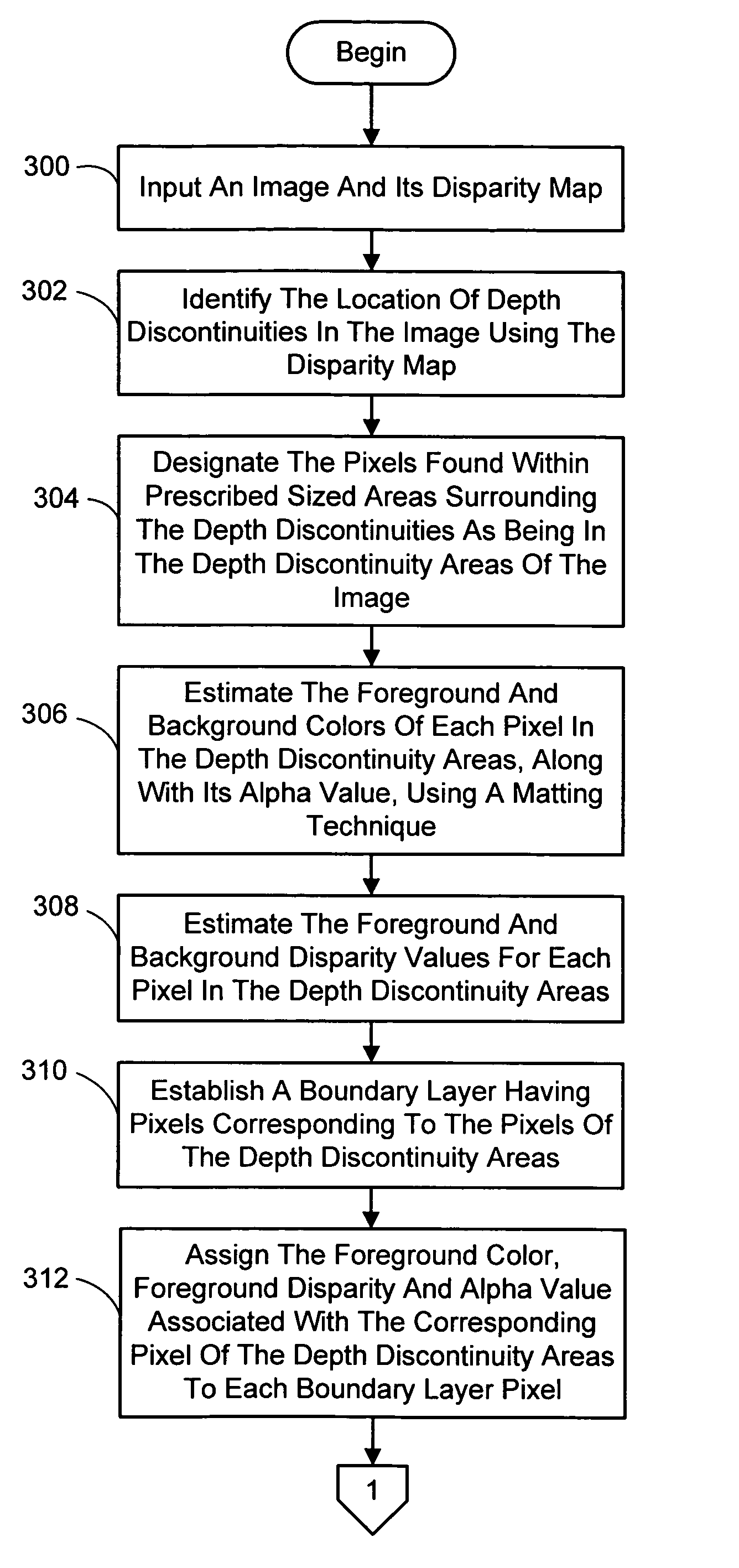
System and process for generating a two-layer, 3D representation of a scene
PatentInactiveUS7015926B2
Innovation
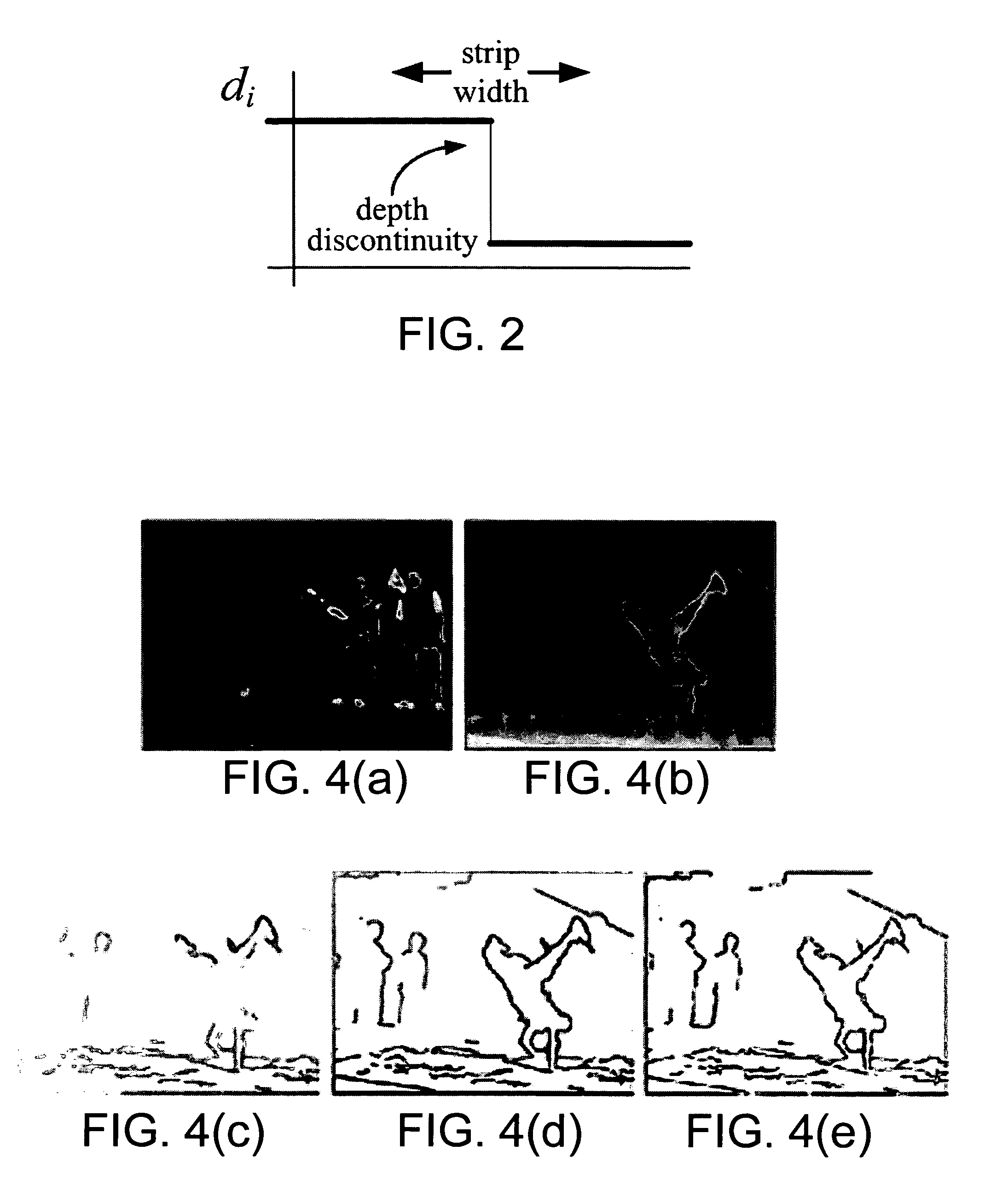
- A two-layer, 3D representation of digital images is generated, where a main layer contains background colors and disparities for non-depth discontinuity areas, and a boundary layer includes foreground colors, disparities, and alpha values for depth discontinuity areas, using disparity maps and matting techniques to separate foreground and background contributions.

Generation super sampling
PatentWO2025136476A1
Innovation
- A computer graphics system that operates at a real fixed frame rate and generates one or more synthetic frames using algorithmic frame generation or neural network models, trained with machine learning algorithms, to predict synthetic frames based on prior real frames and motion vectors.


Performance Standards for Real-time Generation Systems
Real-time generation systems require stringent performance standards to ensure optimal user experience across both frame generation and scene generation applications. The fundamental performance baseline demands consistent frame rates of at least 60 FPS for interactive applications, with latency thresholds not exceeding 20 milliseconds from input to visual output. These standards become increasingly critical when comparing frame generation techniques, which interpolate between existing frames, against scene generation methods that create entirely new visual content.
Frame generation systems typically operate under less demanding computational requirements, allowing for performance targets of 120-240 FPS in optimal conditions. The interpolation algorithms must maintain temporal consistency while minimizing artifacts such as ghosting or motion blur. Quality metrics include structural similarity index measurements exceeding 0.95 and peak signal-to-noise ratios above 40 dB to ensure visual fidelity remains acceptable during rapid motion sequences.
Scene generation systems face more complex performance challenges due to their computational intensity. Real-time scene generation must achieve stable 60 FPS while maintaining visual quality standards comparable to pre-rendered content. Memory bandwidth utilization should remain below 80% to prevent bottlenecks, while GPU compute utilization targets optimal 85-95% efficiency. Thermal management becomes crucial, with operating temperatures maintained below 83°C to prevent performance throttling.
Quality assurance standards encompass both objective and subjective metrics. Objective measurements include frame time consistency with variance below 2 milliseconds, input lag measurements under 16.67 milliseconds for 60 FPS targets, and power consumption efficiency ratings. Subjective quality standards require user acceptance rates above 85% in controlled testing environments, with particular attention to motion smoothness, visual artifact detection, and overall immersion quality.
Scalability requirements mandate that performance standards adapt across different hardware configurations, from mobile processors to high-end desktop systems. The standards must accommodate dynamic quality adjustment mechanisms that maintain minimum performance thresholds while maximizing visual quality within hardware constraints.
Frame generation systems typically operate under less demanding computational requirements, allowing for performance targets of 120-240 FPS in optimal conditions. The interpolation algorithms must maintain temporal consistency while minimizing artifacts such as ghosting or motion blur. Quality metrics include structural similarity index measurements exceeding 0.95 and peak signal-to-noise ratios above 40 dB to ensure visual fidelity remains acceptable during rapid motion sequences.
Scene generation systems face more complex performance challenges due to their computational intensity. Real-time scene generation must achieve stable 60 FPS while maintaining visual quality standards comparable to pre-rendered content. Memory bandwidth utilization should remain below 80% to prevent bottlenecks, while GPU compute utilization targets optimal 85-95% efficiency. Thermal management becomes crucial, with operating temperatures maintained below 83°C to prevent performance throttling.
Quality assurance standards encompass both objective and subjective metrics. Objective measurements include frame time consistency with variance below 2 milliseconds, input lag measurements under 16.67 milliseconds for 60 FPS targets, and power consumption efficiency ratings. Subjective quality standards require user acceptance rates above 85% in controlled testing environments, with particular attention to motion smoothness, visual artifact detection, and overall immersion quality.
Scalability requirements mandate that performance standards adapt across different hardware configurations, from mobile processors to high-end desktop systems. The standards must accommodate dynamic quality adjustment mechanisms that maintain minimum performance thresholds while maximizing visual quality within hardware constraints.
User Experience Metrics and Evaluation Frameworks
Evaluating the user experience impact of frame generation versus scene generation requires comprehensive metrics and robust evaluation frameworks that capture both quantitative performance indicators and qualitative perceptual assessments. The complexity of these rendering approaches necessitates multi-dimensional measurement systems that can accurately reflect real-world user interactions and preferences.
Performance-based metrics form the foundation of technical evaluation, encompassing frame rate consistency, latency measurements, and computational efficiency indicators. Frame generation techniques typically excel in maintaining high refresh rates and reducing input lag, while scene generation approaches may demonstrate superior visual fidelity at the cost of processing overhead. Critical measurements include frame time variance, GPU utilization patterns, and memory bandwidth consumption across different hardware configurations.
Visual quality assessment requires sophisticated perceptual metrics beyond traditional PSNR and SSIM calculations. Advanced evaluation frameworks incorporate structural similarity indices, temporal coherence measurements, and artifact detection algorithms specifically designed for real-time rendering scenarios. These metrics must account for motion blur handling, edge preservation, and temporal stability differences between generation methodologies.
User-centric evaluation frameworks emphasize subjective experience through controlled testing environments and standardized assessment protocols. Double-blind comparative studies, preference ranking systems, and task-based performance evaluations provide insights into actual user perception differences. These frameworks typically incorporate eye-tracking data, reaction time measurements, and cognitive load assessments to quantify the practical impact of each rendering approach.
Standardized benchmarking protocols ensure consistent evaluation across different implementations and hardware platforms. Industry-accepted frameworks like those developed by graphics consortiums provide reproducible testing methodologies that account for varying content types, interaction patterns, and display technologies. These protocols establish baseline comparisons and enable meaningful performance characterization across diverse application scenarios.
The integration of real-time feedback mechanisms and adaptive quality assessment represents an emerging evaluation paradigm. Dynamic metric collection during actual usage sessions provides authentic user experience data that laboratory testing cannot fully capture, enabling more accurate assessment of long-term user satisfaction and preference patterns between frame and scene generation approaches.
Performance-based metrics form the foundation of technical evaluation, encompassing frame rate consistency, latency measurements, and computational efficiency indicators. Frame generation techniques typically excel in maintaining high refresh rates and reducing input lag, while scene generation approaches may demonstrate superior visual fidelity at the cost of processing overhead. Critical measurements include frame time variance, GPU utilization patterns, and memory bandwidth consumption across different hardware configurations.
Visual quality assessment requires sophisticated perceptual metrics beyond traditional PSNR and SSIM calculations. Advanced evaluation frameworks incorporate structural similarity indices, temporal coherence measurements, and artifact detection algorithms specifically designed for real-time rendering scenarios. These metrics must account for motion blur handling, edge preservation, and temporal stability differences between generation methodologies.
User-centric evaluation frameworks emphasize subjective experience through controlled testing environments and standardized assessment protocols. Double-blind comparative studies, preference ranking systems, and task-based performance evaluations provide insights into actual user perception differences. These frameworks typically incorporate eye-tracking data, reaction time measurements, and cognitive load assessments to quantify the practical impact of each rendering approach.
Standardized benchmarking protocols ensure consistent evaluation across different implementations and hardware platforms. Industry-accepted frameworks like those developed by graphics consortiums provide reproducible testing methodologies that account for varying content types, interaction patterns, and display technologies. These protocols establish baseline comparisons and enable meaningful performance characterization across diverse application scenarios.
The integration of real-time feedback mechanisms and adaptive quality assessment represents an emerging evaluation paradigm. Dynamic metric collection during actual usage sessions provides authentic user experience data that laboratory testing cannot fully capture, enabling more accurate assessment of long-term user satisfaction and preference patterns between frame and scene generation approaches.
Unlock deeper insights with Patsnap Eureka Quick Research — get a full tech report to explore trends and direct your research. Try now!
Generate Your Research Report Instantly with AI Agent
Supercharge your innovation with Patsnap Eureka AI Agent Platform!