

Optimizing Scene Generation for Cloud-Based Applications
MAR 30, 20269 MIN READ
Generate Your Research Report Instantly with AI Agent
Patsnap Eureka helps you evaluate technical feasibility & market potential.
Cloud Scene Generation Background and Objectives
Cloud-based scene generation has emerged as a transformative technology paradigm that leverages distributed computing infrastructure to create, render, and deliver complex virtual environments. This field encompasses the development of sophisticated algorithms and systems capable of generating realistic 3D scenes, environments, and interactive content through cloud computing platforms, enabling scalable and accessible content creation across diverse applications.
The evolution of cloud scene generation traces back to the convergence of several technological streams. Early developments in computer graphics and 3D rendering established foundational principles for scene creation, while the advent of cloud computing infrastructure provided the computational scalability necessary for complex scene generation tasks. The integration of machine learning and artificial intelligence has further accelerated this evolution, introducing procedural generation techniques and intelligent content creation capabilities.
Current technological trends indicate a shift toward real-time, adaptive scene generation systems that can dynamically respond to user interactions and environmental parameters. The incorporation of advanced rendering techniques, including ray tracing and global illumination, has elevated the quality standards for cloud-generated scenes. Additionally, the integration of virtual reality and augmented reality technologies has expanded the application scope, demanding more sophisticated and responsive scene generation capabilities.
The primary technical objectives center on achieving optimal performance balance between computational efficiency and visual fidelity. Key goals include minimizing latency in scene generation processes, maximizing resource utilization across distributed cloud infrastructure, and ensuring consistent quality delivery regardless of client device capabilities. Advanced optimization targets encompass intelligent load balancing, predictive content caching, and adaptive quality scaling based on network conditions and user requirements.
Strategic objectives focus on democratizing access to high-quality scene generation capabilities, enabling smaller organizations and individual developers to leverage enterprise-grade content creation tools. The technology aims to establish seamless integration frameworks that support cross-platform compatibility and interoperability with existing development ecosystems. Long-term objectives include developing autonomous scene generation systems capable of creating contextually appropriate environments with minimal human intervention, ultimately transforming how digital content is conceived, created, and consumed across industries.
The evolution of cloud scene generation traces back to the convergence of several technological streams. Early developments in computer graphics and 3D rendering established foundational principles for scene creation, while the advent of cloud computing infrastructure provided the computational scalability necessary for complex scene generation tasks. The integration of machine learning and artificial intelligence has further accelerated this evolution, introducing procedural generation techniques and intelligent content creation capabilities.
Current technological trends indicate a shift toward real-time, adaptive scene generation systems that can dynamically respond to user interactions and environmental parameters. The incorporation of advanced rendering techniques, including ray tracing and global illumination, has elevated the quality standards for cloud-generated scenes. Additionally, the integration of virtual reality and augmented reality technologies has expanded the application scope, demanding more sophisticated and responsive scene generation capabilities.
The primary technical objectives center on achieving optimal performance balance between computational efficiency and visual fidelity. Key goals include minimizing latency in scene generation processes, maximizing resource utilization across distributed cloud infrastructure, and ensuring consistent quality delivery regardless of client device capabilities. Advanced optimization targets encompass intelligent load balancing, predictive content caching, and adaptive quality scaling based on network conditions and user requirements.
Strategic objectives focus on democratizing access to high-quality scene generation capabilities, enabling smaller organizations and individual developers to leverage enterprise-grade content creation tools. The technology aims to establish seamless integration frameworks that support cross-platform compatibility and interoperability with existing development ecosystems. Long-term objectives include developing autonomous scene generation systems capable of creating contextually appropriate environments with minimal human intervention, ultimately transforming how digital content is conceived, created, and consumed across industries.
Market Demand for Cloud-Based Scene Generation
The market demand for cloud-based scene generation has experienced unprecedented growth driven by the convergence of multiple technological and business factors. Digital transformation initiatives across industries have created substantial demand for immersive content creation capabilities that can be accessed remotely and scaled dynamically. Organizations are increasingly seeking solutions that eliminate the need for expensive local hardware while providing professional-grade scene generation capabilities.
Gaming and entertainment sectors represent the largest demand drivers, with studios requiring flexible rendering resources to handle varying project loads. The shift toward remote work has intensified this need, as distributed teams require collaborative platforms for real-time scene development and visualization. Cloud-based solutions enable seamless collaboration across geographical boundaries while maintaining consistent performance standards.
Enterprise applications have emerged as a significant growth segment, particularly in architecture, engineering, and construction industries. These sectors demand high-fidelity visualization capabilities for client presentations, design reviews, and virtual walkthroughs. The ability to generate complex scenes without substantial upfront infrastructure investment has made cloud-based solutions increasingly attractive to mid-market companies.
The metaverse and virtual reality markets have created additional demand vectors, with companies requiring scalable scene generation for virtual environments, digital twins, and immersive experiences. Educational institutions and training organizations are adopting cloud-based scene generation for simulation-based learning, driving demand in the education technology sector.
Market dynamics indicate strong preference for subscription-based models that offer predictable costs and automatic scaling capabilities. Users increasingly value solutions that provide real-time collaboration features, version control, and integration with existing creative workflows. The demand pattern shows clear preference for platforms that can handle both simple prototyping and complex production-grade scene generation within unified environments.
Geographic demand distribution reveals strong adoption in North America and Europe, with rapidly growing interest in Asia-Pacific markets. The increasing availability of high-speed internet infrastructure and edge computing capabilities continues to expand the addressable market for cloud-based scene generation solutions.
Gaming and entertainment sectors represent the largest demand drivers, with studios requiring flexible rendering resources to handle varying project loads. The shift toward remote work has intensified this need, as distributed teams require collaborative platforms for real-time scene development and visualization. Cloud-based solutions enable seamless collaboration across geographical boundaries while maintaining consistent performance standards.
Enterprise applications have emerged as a significant growth segment, particularly in architecture, engineering, and construction industries. These sectors demand high-fidelity visualization capabilities for client presentations, design reviews, and virtual walkthroughs. The ability to generate complex scenes without substantial upfront infrastructure investment has made cloud-based solutions increasingly attractive to mid-market companies.
The metaverse and virtual reality markets have created additional demand vectors, with companies requiring scalable scene generation for virtual environments, digital twins, and immersive experiences. Educational institutions and training organizations are adopting cloud-based scene generation for simulation-based learning, driving demand in the education technology sector.
Market dynamics indicate strong preference for subscription-based models that offer predictable costs and automatic scaling capabilities. Users increasingly value solutions that provide real-time collaboration features, version control, and integration with existing creative workflows. The demand pattern shows clear preference for platforms that can handle both simple prototyping and complex production-grade scene generation within unified environments.
Geographic demand distribution reveals strong adoption in North America and Europe, with rapidly growing interest in Asia-Pacific markets. The increasing availability of high-speed internet infrastructure and edge computing capabilities continues to expand the addressable market for cloud-based scene generation solutions.
Current State and Challenges of Cloud Scene Rendering
Cloud-based scene rendering has emerged as a transformative approach to address the computational limitations of client devices while delivering high-quality visual experiences. Current implementations primarily rely on server-side GPU clusters that process complex 3D scenes and stream rendered frames to end-user devices. Major cloud service providers including Amazon Web Services, Microsoft Azure, and Google Cloud Platform have developed specialized rendering services that leverage distributed computing architectures to handle multiple concurrent rendering requests.
The technology landscape is dominated by several key approaches. Real-time streaming solutions utilize powerful server-side graphics processing units to render scenes at high frame rates, compressing and transmitting the visual output to client applications. Hybrid rendering architectures distribute computational workloads between cloud servers and client devices, optimizing for bandwidth efficiency and latency reduction. Progressive rendering techniques enable incremental scene updates, allowing users to interact with partially rendered content while background processing continues.
Despite significant technological advances, cloud scene rendering faces substantial technical barriers that limit widespread adoption. Network latency remains the most critical challenge, as interactive applications require sub-20 millisecond response times to maintain user engagement. Current internet infrastructure often introduces 50-150 milliseconds of round-trip delay, creating noticeable lag between user inputs and visual feedback. Bandwidth constraints further complicate the delivery of high-resolution content, particularly for applications requiring 4K or higher resolution outputs.
Computational resource allocation presents another significant obstacle. Dynamic scene complexity variations create unpredictable server load patterns, making efficient resource provisioning extremely difficult. Peak demand periods can overwhelm available GPU capacity, while underutilization during low-traffic periods results in substantial operational costs. Current load balancing algorithms struggle to predict rendering workload requirements accurately, leading to either resource waste or performance degradation.
Quality consistency across diverse network conditions and device capabilities remains problematic. Adaptive streaming protocols attempt to adjust rendering parameters based on real-time network performance, but these adjustments often result in visible quality fluctuations that negatively impact user experience. Compression artifacts introduced during video encoding can significantly degrade visual fidelity, particularly for applications requiring precise color reproduction or fine detail preservation.
Geographically, cloud rendering infrastructure is concentrated in major data center regions, primarily in North America, Europe, and East Asia. This distribution creates significant performance disparities for users in underserved regions, where increased physical distance to rendering servers exacerbates latency issues and reduces service quality.
The technology landscape is dominated by several key approaches. Real-time streaming solutions utilize powerful server-side graphics processing units to render scenes at high frame rates, compressing and transmitting the visual output to client applications. Hybrid rendering architectures distribute computational workloads between cloud servers and client devices, optimizing for bandwidth efficiency and latency reduction. Progressive rendering techniques enable incremental scene updates, allowing users to interact with partially rendered content while background processing continues.
Despite significant technological advances, cloud scene rendering faces substantial technical barriers that limit widespread adoption. Network latency remains the most critical challenge, as interactive applications require sub-20 millisecond response times to maintain user engagement. Current internet infrastructure often introduces 50-150 milliseconds of round-trip delay, creating noticeable lag between user inputs and visual feedback. Bandwidth constraints further complicate the delivery of high-resolution content, particularly for applications requiring 4K or higher resolution outputs.
Computational resource allocation presents another significant obstacle. Dynamic scene complexity variations create unpredictable server load patterns, making efficient resource provisioning extremely difficult. Peak demand periods can overwhelm available GPU capacity, while underutilization during low-traffic periods results in substantial operational costs. Current load balancing algorithms struggle to predict rendering workload requirements accurately, leading to either resource waste or performance degradation.
Quality consistency across diverse network conditions and device capabilities remains problematic. Adaptive streaming protocols attempt to adjust rendering parameters based on real-time network performance, but these adjustments often result in visible quality fluctuations that negatively impact user experience. Compression artifacts introduced during video encoding can significantly degrade visual fidelity, particularly for applications requiring precise color reproduction or fine detail preservation.
Geographically, cloud rendering infrastructure is concentrated in major data center regions, primarily in North America, Europe, and East Asia. This distribution creates significant performance disparities for users in underserved regions, where increased physical distance to rendering servers exacerbates latency issues and reduces service quality.
Current Cloud Scene Generation Solutions
01 AI-based procedural scene generation methods
Techniques utilizing artificial intelligence and machine learning algorithms to automatically generate virtual scenes and environments. These methods employ neural networks, deep learning models, and generative algorithms to create realistic and diverse scenes based on training data and input parameters. The procedural generation approach enables efficient creation of complex virtual environments with minimal manual intervention.- AI-based procedural scene generation methods: Techniques utilizing artificial intelligence and machine learning algorithms to automatically generate virtual scenes and environments. These methods employ neural networks, deep learning models, and generative algorithms to create realistic and diverse scenes based on training data and input parameters. The systems can generate complex 3D environments, landscapes, and spatial arrangements with minimal manual intervention.
- Real-time dynamic scene rendering and adaptation: Systems and methods for generating and rendering scenes in real-time based on user interactions, environmental conditions, or contextual information. These approaches enable dynamic modification of scene elements, lighting conditions, object placement, and environmental parameters during runtime. The technology supports adaptive scene generation that responds to changing requirements and user behaviors.
- Multi-modal scene generation from various input sources: Techniques for creating scenes by processing and integrating multiple types of input data including text descriptions, images, sketches, audio, or sensor data. These methods employ cross-modal learning and fusion algorithms to interpret diverse input formats and generate corresponding visual scenes. The systems can translate abstract concepts or descriptions into concrete visual representations.
- Scene composition and layout optimization: Methods for automatically arranging and organizing scene elements to achieve optimal spatial composition, aesthetic quality, and functional requirements. These techniques consider factors such as object relationships, spatial constraints, visual balance, and design principles. The systems can generate multiple layout variations and select or recommend the most suitable arrangements based on predefined criteria.
- Interactive scene editing and refinement tools: User interface systems and methods that enable interactive modification, refinement, and customization of generated scenes. These tools provide intuitive controls for adjusting scene parameters, modifying individual elements, and fine-tuning visual attributes. The technology supports iterative design workflows where users can progressively refine automatically generated scenes to meet specific requirements.
02 3D scene reconstruction and modeling
Methods for reconstructing three-dimensional scenes from various input sources such as images, point clouds, or sensor data. These techniques involve processing spatial information, depth estimation, and geometric modeling to create accurate 3D representations of real-world or virtual environments. The reconstruction process may include texture mapping, surface modeling, and optimization algorithms to enhance scene quality.Expand Specific Solutions03 Interactive scene editing and manipulation
Systems and methods enabling users to interactively modify, edit, and manipulate generated scenes in real-time. These approaches provide tools and interfaces for adjusting scene elements, objects, lighting, and environmental parameters. The interactive capabilities allow for dynamic scene customization and support various applications including gaming, virtual reality, and content creation.Expand Specific Solutions04 Scene generation from semantic descriptions
Techniques for generating scenes based on textual descriptions, semantic labels, or high-level specifications. These methods interpret natural language inputs or semantic information to create corresponding visual scenes that match the described content. The generation process involves understanding contextual relationships, spatial arrangements, and object attributes to produce coherent scene layouts.Expand Specific Solutions05 Multi-modal scene synthesis and rendering
Approaches for synthesizing scenes using multiple data modalities and rendering techniques. These methods combine different types of input data such as images, sketches, depth maps, and semantic information to generate comprehensive scene representations. The synthesis process incorporates advanced rendering algorithms, lighting models, and material properties to produce photorealistic or stylized scene outputs.Expand Specific Solutions
Key Players in Cloud Graphics and Scene Generation
The cloud-based scene generation market is experiencing rapid growth, driven by increasing demand for immersive digital experiences across gaming, automotive, and enterprise applications. The industry is in an expansion phase with significant market potential, particularly in metaverse and digital twin applications. Technology maturity varies considerably among key players. NVIDIA leads with advanced GPU computing and Omniverse platform capabilities, while gaming giants like Sony Interactive Entertainment and Activision Publishing leverage established content creation pipelines. Enterprise players including Siemens, Adobe, and Salesforce integrate scene generation into industrial and creative workflows. Emerging specialists like Synthetic Dimension focus on spatial digitization solutions. Chinese companies such as Tencent, Huawei, and BOE Technology contribute through gaming platforms, cloud infrastructure, and display technologies respectively. The competitive landscape shows a mix of hardware accelerators, software platforms, and specialized service providers, indicating a maturing but still fragmented ecosystem with significant innovation opportunities.
NVIDIA Corp.
Technical Solution: NVIDIA leverages its Omniverse platform for cloud-based scene generation, utilizing RTX GPUs with real-time ray tracing capabilities and AI-accelerated rendering. The platform supports collaborative 3D content creation with USD (Universal Scene Description) format, enabling scalable cloud rendering services. Their CloudXR technology streams high-fidelity XR content from cloud to edge devices, while NVIDIA's A100 and H100 GPUs provide up to 600GB/s memory bandwidth for complex scene processing. The company integrates DLSS (Deep Learning Super Sampling) technology to enhance rendering performance by up to 4x while maintaining visual quality in cloud environments.
Strengths: Industry-leading GPU architecture, comprehensive cloud rendering ecosystem, strong AI integration. Weaknesses: High infrastructure costs, vendor lock-in concerns, complex deployment requirements.
Tencent Technology (Shenzhen) Co., Ltd.
Technical Solution: Tencent implements cloud-based scene generation through its Tencent Cloud Game Matrix platform, utilizing distributed rendering clusters and intelligent resource allocation algorithms. The company employs adaptive bitrate streaming technology and edge computing nodes to optimize scene delivery with latency reduction up to 50ms. Their proprietary scene optimization engine uses machine learning algorithms to predict user behavior and pre-load relevant scene elements, achieving 30% faster loading times. Tencent integrates 5G network capabilities with cloud rendering services, supporting real-time multiplayer environments and dynamic scene updates across mobile and PC platforms.
Strengths: Extensive cloud infrastructure in Asia, strong mobile optimization, integrated social gaming ecosystem. Weaknesses: Limited global presence, dependency on Chinese market regulations, less advanced GPU technology compared to specialized vendors.
Core Technologies in Cloud Scene Optimization
Computing resource request-driven adaptive cloud rendering method for three-dimensional scene
PatentActiveCN110717968A
Innovation
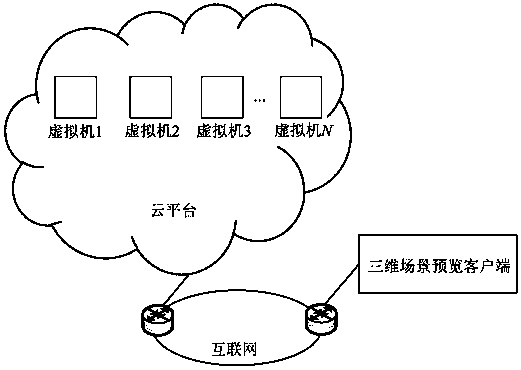
- By applying for multiple virtual machines on the cloud platform, they are used for direct illumination and indirect illumination rendering, and the indirect illumination results are merged to obtain global illumination results. The rendering process is optimized using ray tracing technology and path tracing technology to ensure rendering quality and speed. balance.
Workload allocation and processing in cloud-based coding of HDR video
PatentWO2022011194A1
Innovation
- A cloud-based system is implemented where a dispatcher node segments input video into scenes and allocates them to computing nodes using a scene-to-segment assignment process, employing a random initial assignment followed by refinement to achieve a uniform workload, and generates scene-based reshaping metadata to reduce overhead while maintaining video quality.


Cloud Infrastructure Requirements and Scalability
Cloud-based scene generation applications demand robust infrastructure architectures capable of handling computationally intensive rendering workloads while maintaining consistent performance across varying demand patterns. The fundamental infrastructure requirements center on high-performance computing resources, including GPU-accelerated instances with substantial memory capacity and parallel processing capabilities. Modern cloud providers offer specialized instance types optimized for graphics workloads, featuring NVIDIA Tesla or AMD Instinct accelerators that can efficiently process complex geometric calculations and texture rendering operations.
Storage infrastructure represents another critical component, requiring high-throughput, low-latency access to scene assets, textures, and intermediate rendering data. Distributed storage systems with solid-state drive arrays and content delivery networks ensure rapid asset retrieval and minimize bottlenecks during scene assembly processes. Network bandwidth requirements are particularly demanding, as scene generation applications must transfer large datasets between processing nodes and deliver rendered content to end users with minimal latency.
Scalability considerations encompass both horizontal and vertical scaling strategies to accommodate fluctuating computational demands. Auto-scaling mechanisms must respond dynamically to rendering queue depths and processing complexity, automatically provisioning additional compute instances during peak demand periods. Container orchestration platforms enable efficient resource allocation and workload distribution across multiple nodes, ensuring optimal utilization of available infrastructure capacity.
Load balancing algorithms specifically designed for rendering workloads distribute scene generation tasks based on computational complexity rather than simple request counts. This approach prevents resource contention and ensures consistent rendering performance across all active sessions. Geographic distribution of processing nodes reduces latency for global user bases while providing redundancy for mission-critical applications.
Memory management strategies must address the substantial RAM requirements of complex scene generation, implementing intelligent caching mechanisms that retain frequently accessed assets while efficiently managing memory allocation across concurrent rendering processes. Database systems supporting rapid metadata queries enable quick scene asset discovery and dependency resolution, critical for maintaining responsive user experiences in interactive applications.
Storage infrastructure represents another critical component, requiring high-throughput, low-latency access to scene assets, textures, and intermediate rendering data. Distributed storage systems with solid-state drive arrays and content delivery networks ensure rapid asset retrieval and minimize bottlenecks during scene assembly processes. Network bandwidth requirements are particularly demanding, as scene generation applications must transfer large datasets between processing nodes and deliver rendered content to end users with minimal latency.
Scalability considerations encompass both horizontal and vertical scaling strategies to accommodate fluctuating computational demands. Auto-scaling mechanisms must respond dynamically to rendering queue depths and processing complexity, automatically provisioning additional compute instances during peak demand periods. Container orchestration platforms enable efficient resource allocation and workload distribution across multiple nodes, ensuring optimal utilization of available infrastructure capacity.
Load balancing algorithms specifically designed for rendering workloads distribute scene generation tasks based on computational complexity rather than simple request counts. This approach prevents resource contention and ensures consistent rendering performance across all active sessions. Geographic distribution of processing nodes reduces latency for global user bases while providing redundancy for mission-critical applications.
Memory management strategies must address the substantial RAM requirements of complex scene generation, implementing intelligent caching mechanisms that retain frequently accessed assets while efficiently managing memory allocation across concurrent rendering processes. Database systems supporting rapid metadata queries enable quick scene asset discovery and dependency resolution, critical for maintaining responsive user experiences in interactive applications.
Performance Metrics and Quality Assessment
Performance evaluation of cloud-based scene generation systems requires a comprehensive framework that addresses both quantitative metrics and qualitative assessment criteria. The complexity of these applications demands multi-dimensional evaluation approaches that can accurately capture system efficiency, output quality, and user experience across diverse deployment scenarios.
Computational performance metrics form the foundation of system evaluation, with rendering throughput measured in frames per second serving as a primary indicator. Latency measurements encompass end-to-end response times, including network transmission delays, server processing time, and client-side rendering completion. Memory utilization patterns, both on cloud infrastructure and client devices, provide insights into resource efficiency and scalability potential.
Quality assessment methodologies must address visual fidelity through objective measurements such as peak signal-to-noise ratio, structural similarity index, and perceptual quality metrics. These quantitative measures are complemented by subjective evaluation protocols involving user studies and expert assessments to capture perceptual quality aspects that automated metrics may overlook.
Scalability metrics evaluate system behavior under varying load conditions, measuring concurrent user capacity, resource allocation efficiency, and performance degradation patterns. Network bandwidth utilization and compression effectiveness become critical factors in determining overall system viability across different connectivity scenarios.
Real-time performance indicators include frame consistency metrics, temporal stability measurements, and adaptive quality mechanisms that respond to changing network conditions. These metrics ensure smooth user experiences while maintaining acceptable visual quality standards.
Cost-effectiveness evaluation incorporates cloud resource consumption patterns, energy efficiency metrics, and operational expense analysis. These economic performance indicators help determine the commercial viability of different optimization strategies and deployment configurations.
Reliability and availability metrics assess system robustness through uptime measurements, error recovery capabilities, and fault tolerance mechanisms. Quality of service guarantees and service level agreement compliance form essential components of enterprise-grade cloud applications.
Computational performance metrics form the foundation of system evaluation, with rendering throughput measured in frames per second serving as a primary indicator. Latency measurements encompass end-to-end response times, including network transmission delays, server processing time, and client-side rendering completion. Memory utilization patterns, both on cloud infrastructure and client devices, provide insights into resource efficiency and scalability potential.
Quality assessment methodologies must address visual fidelity through objective measurements such as peak signal-to-noise ratio, structural similarity index, and perceptual quality metrics. These quantitative measures are complemented by subjective evaluation protocols involving user studies and expert assessments to capture perceptual quality aspects that automated metrics may overlook.
Scalability metrics evaluate system behavior under varying load conditions, measuring concurrent user capacity, resource allocation efficiency, and performance degradation patterns. Network bandwidth utilization and compression effectiveness become critical factors in determining overall system viability across different connectivity scenarios.
Real-time performance indicators include frame consistency metrics, temporal stability measurements, and adaptive quality mechanisms that respond to changing network conditions. These metrics ensure smooth user experiences while maintaining acceptable visual quality standards.
Cost-effectiveness evaluation incorporates cloud resource consumption patterns, energy efficiency metrics, and operational expense analysis. These economic performance indicators help determine the commercial viability of different optimization strategies and deployment configurations.
Reliability and availability metrics assess system robustness through uptime measurements, error recovery capabilities, and fault tolerance mechanisms. Quality of service guarantees and service level agreement compliance form essential components of enterprise-grade cloud applications.
Unlock deeper insights with Patsnap Eureka Quick Research — get a full tech report to explore trends and direct your research. Try now!
Generate Your Research Report Instantly with AI Agent
Supercharge your innovation with Patsnap Eureka AI Agent Platform!