
Gradient Descent vs Adam: Cloud Training Economics
OCT 9, 20269 MIN READ
Generate Your Research Report Instantly with AI Agent
Patsnap Eureka helps you evaluate technical feasibility & market potential.
Cloud Training Optimization Background and Objectives
Cloud-based machine learning training has become the dominant paradigm for developing modern AI systems, driven by the exponential growth in model complexity and dataset sizes. The economics of cloud training directly impact research velocity, product development timelines, and overall competitiveness in the AI marketplace. As organizations scale their machine learning operations, the choice of optimization algorithms significantly influences both training efficiency and infrastructure costs.
Traditional gradient descent methods and their variants have served as the foundation of neural network training for decades. However, the emergence of adaptive optimization algorithms, particularly Adam and its derivatives, has fundamentally altered the training landscape. These algorithms promise faster convergence and reduced hyperparameter sensitivity, yet they introduce different computational overhead and memory requirements that directly affect cloud resource consumption and associated costs.
The economic implications of optimizer selection extend beyond simple per-epoch training time. Cloud providers charge based on compute instance hours, memory allocation, storage operations, and data transfer volumes. Different optimizers exhibit distinct resource utilization patterns that cascade through the entire training pipeline, from data loading and preprocessing to gradient computation and parameter updates. Understanding these patterns is essential for making informed decisions about infrastructure provisioning and cost optimization.
The primary objective of this technical investigation is to establish a comprehensive framework for evaluating the economic trade-offs between gradient descent variants and Adam-family optimizers in cloud training environments. This includes quantifying the total cost of ownership across different model architectures, dataset scales, and cloud infrastructure configurations. The analysis aims to identify conditions under which each optimizer class delivers superior cost-efficiency, considering both direct computational expenses and indirect factors such as development iteration speed and time-to-market advantages.
Furthermore, this research seeks to provide actionable guidelines for practitioners and organizations to optimize their cloud training economics. By examining the interplay between algorithmic characteristics and cloud pricing models, the investigation will illuminate strategies for reducing training costs while maintaining or improving model performance and development velocity.
Traditional gradient descent methods and their variants have served as the foundation of neural network training for decades. However, the emergence of adaptive optimization algorithms, particularly Adam and its derivatives, has fundamentally altered the training landscape. These algorithms promise faster convergence and reduced hyperparameter sensitivity, yet they introduce different computational overhead and memory requirements that directly affect cloud resource consumption and associated costs.
The economic implications of optimizer selection extend beyond simple per-epoch training time. Cloud providers charge based on compute instance hours, memory allocation, storage operations, and data transfer volumes. Different optimizers exhibit distinct resource utilization patterns that cascade through the entire training pipeline, from data loading and preprocessing to gradient computation and parameter updates. Understanding these patterns is essential for making informed decisions about infrastructure provisioning and cost optimization.
The primary objective of this technical investigation is to establish a comprehensive framework for evaluating the economic trade-offs between gradient descent variants and Adam-family optimizers in cloud training environments. This includes quantifying the total cost of ownership across different model architectures, dataset scales, and cloud infrastructure configurations. The analysis aims to identify conditions under which each optimizer class delivers superior cost-efficiency, considering both direct computational expenses and indirect factors such as development iteration speed and time-to-market advantages.
Furthermore, this research seeks to provide actionable guidelines for practitioners and organizations to optimize their cloud training economics. By examining the interplay between algorithmic characteristics and cloud pricing models, the investigation will illuminate strategies for reducing training costs while maintaining or improving model performance and development velocity.
Market Demand for Cost-Efficient Cloud ML Training
The global machine learning training market is experiencing unprecedented growth driven by the proliferation of deep learning applications across industries. Organizations are increasingly deploying large-scale neural networks for computer vision, natural language processing, recommendation systems, and autonomous systems. This expansion has created substantial demand for cloud-based training infrastructure, where computational costs represent a dominant portion of total project expenditures. As model complexity escalates with architectures containing billions of parameters, training expenses have become a critical concern for enterprises seeking to maintain competitive AI capabilities while managing operational budgets.
Cost efficiency in cloud ML training has emerged as a strategic priority rather than merely a technical consideration. Enterprises are scrutinizing the economic implications of optimizer selection, recognizing that algorithmic choices directly impact billable compute hours and resource utilization. The financial burden of extended training cycles affects project feasibility, time-to-market for AI products, and overall return on investment. Organizations ranging from technology giants to emerging startups are actively seeking methodologies that reduce training duration without compromising model performance, as cloud computing costs continue to represent significant capital allocation in AI development budgets.
The market demand extends beyond simple cost reduction to encompass comprehensive training economics optimization. Businesses require solutions that balance convergence speed, computational resource consumption, memory efficiency, and final model quality. This multidimensional optimization challenge has intensified interest in comparative analyses of optimization algorithms, particularly examining how traditional methods like gradient descent compare against adaptive approaches such as Adam in real-world cloud deployment scenarios. The ability to achieve faster convergence translates directly into reduced infrastructure expenses, making optimizer selection a financially consequential decision.
Industry adoption patterns reveal growing sophistication in understanding training economics. Organizations are moving beyond default optimizer configurations toward data-driven selection processes informed by cost-benefit analyses specific to their workload characteristics. This trend reflects broader market maturation where ML practitioners increasingly evaluate technical decisions through economic lenses, recognizing that algorithmic efficiency improvements yield tangible financial advantages in cloud environments where resources are metered and billed continuously.
Cost efficiency in cloud ML training has emerged as a strategic priority rather than merely a technical consideration. Enterprises are scrutinizing the economic implications of optimizer selection, recognizing that algorithmic choices directly impact billable compute hours and resource utilization. The financial burden of extended training cycles affects project feasibility, time-to-market for AI products, and overall return on investment. Organizations ranging from technology giants to emerging startups are actively seeking methodologies that reduce training duration without compromising model performance, as cloud computing costs continue to represent significant capital allocation in AI development budgets.
The market demand extends beyond simple cost reduction to encompass comprehensive training economics optimization. Businesses require solutions that balance convergence speed, computational resource consumption, memory efficiency, and final model quality. This multidimensional optimization challenge has intensified interest in comparative analyses of optimization algorithms, particularly examining how traditional methods like gradient descent compare against adaptive approaches such as Adam in real-world cloud deployment scenarios. The ability to achieve faster convergence translates directly into reduced infrastructure expenses, making optimizer selection a financially consequential decision.
Industry adoption patterns reveal growing sophistication in understanding training economics. Organizations are moving beyond default optimizer configurations toward data-driven selection processes informed by cost-benefit analyses specific to their workload characteristics. This trend reflects broader market maturation where ML practitioners increasingly evaluate technical decisions through economic lenses, recognizing that algorithmic efficiency improvements yield tangible financial advantages in cloud environments where resources are metered and billed continuously.
Current Optimizer Performance and Cost Challenges
Cloud-based deep learning training faces significant economic pressures stemming from optimizer selection and computational resource utilization. Current training workflows predominantly employ two optimizer families: classical Stochastic Gradient Descent (SGD) variants and adaptive methods like Adam. Each approach presents distinct cost-performance tradeoffs that directly impact cloud infrastructure expenses, training duration, and model quality outcomes.
SGD-based optimizers typically demonstrate superior sample efficiency and generalization performance on large-scale vision tasks, yet require extensive hyperparameter tuning and longer convergence times. This extended training duration translates to increased GPU-hour consumption on cloud platforms, where compute costs constitute 60-80% of total training expenses. The need for learning rate scheduling, momentum tuning, and batch size optimization further complicates deployment, often requiring multiple experimental runs that multiply infrastructure costs.
Adam and its derivatives offer faster initial convergence and reduced sensitivity to learning rate selection, making them attractive for rapid prototyping and resource-constrained scenarios. However, these adaptive optimizers consume 2-3x more memory than SGD due to maintaining per-parameter moment estimates, forcing users to reduce batch sizes or upgrade to more expensive GPU instances with larger memory capacity. This memory overhead becomes particularly problematic when training large language models or high-resolution computer vision networks.
The performance gap between optimizers varies significantly across model architectures and dataset characteristics. Recent benchmarks reveal that Adam achieves 30-40% faster time-to-accuracy on transformer-based models, while SGD maintains advantages on convolutional networks. This architectural dependency complicates cost optimization strategies, as organizations must balance optimizer selection against specific workload requirements.
Current cloud pricing models charge uniformly for compute time regardless of optimizer efficiency, creating misaligned incentives. Training jobs that converge faster but require premium GPU instances may cost more than slower training on standard instances. Additionally, the lack of standardized cost-performance metrics across optimizers prevents systematic economic comparison, forcing practitioners to rely on empirical testing that itself incurs substantial cloud expenses.
SGD-based optimizers typically demonstrate superior sample efficiency and generalization performance on large-scale vision tasks, yet require extensive hyperparameter tuning and longer convergence times. This extended training duration translates to increased GPU-hour consumption on cloud platforms, where compute costs constitute 60-80% of total training expenses. The need for learning rate scheduling, momentum tuning, and batch size optimization further complicates deployment, often requiring multiple experimental runs that multiply infrastructure costs.
Adam and its derivatives offer faster initial convergence and reduced sensitivity to learning rate selection, making them attractive for rapid prototyping and resource-constrained scenarios. However, these adaptive optimizers consume 2-3x more memory than SGD due to maintaining per-parameter moment estimates, forcing users to reduce batch sizes or upgrade to more expensive GPU instances with larger memory capacity. This memory overhead becomes particularly problematic when training large language models or high-resolution computer vision networks.
The performance gap between optimizers varies significantly across model architectures and dataset characteristics. Recent benchmarks reveal that Adam achieves 30-40% faster time-to-accuracy on transformer-based models, while SGD maintains advantages on convolutional networks. This architectural dependency complicates cost optimization strategies, as organizations must balance optimizer selection against specific workload requirements.
Current cloud pricing models charge uniformly for compute time regardless of optimizer efficiency, creating misaligned incentives. Training jobs that converge faster but require premium GPU instances may cost more than slower training on standard instances. Additionally, the lack of standardized cost-performance metrics across optimizers prevents systematic economic comparison, forcing practitioners to rely on empirical testing that itself incurs substantial cloud expenses.
Existing Optimizer Solutions for Cloud Training
01 Accelerating model convergence and reducing training time
Gradient descent and Adam optimization variants are formulated to accelerate training convergence and reduce training time. These methods help optimize machine learning workflows by minimizing the required number of training iterations and reducing pattern deviations during model optimization.- Efficiency and convergence acceleration in machine learning model training: Gradient descent and Adam optimization variants can be designed to accelerate result convergence, reduce pattern deviations, and improve overall training efficiency. These methods streamline execution pathways to significantly shorten training time and lower computational resource demands.
- Hardware acceleration, memory, and IO overhead reduction: Optimized implementations of Adam and gradient descent algorithms focus on reducing memory access bandwidth, IO operations, and decoding overheads. By enhancing hardware computing performance and reducing data bandwidth requirements, system execution speed is accelerated while reducing power consumption and training costs.
- Distributed multi-party training and communication optimization: Applying gradient descent and Adam optimization algorithms within distributed, multi-party, and privacy-preserving federated learning architectures helps optimize training costs. By utilizing event-triggered communication and multi-party joint training methods, communication rates, payload overhead, and privacy risks are effectively managed during model optimization.
- Application of Adam optimization to specialized predictive modeling: Modifying Adam optimization algorithms to train deep neural networks enhances generalization ability, prevents overfitting, and accelerates convergence speed. These tailored strategies reduce trial-and-error training costs while delivering high accuracy in application domains like real-time energy price prediction and time-series forecasting.
- Energy and operational cost optimization in industrial systems: Batch stochastic gradient descent algorithms can be integrated into system management strategies to optimize power consumption and operational costs. By avoiding inefficient periodic offline updates and enabling real-time data integration, these technologies help reduce overall power usage and electricity expenditure.
02 Reducing computational resource consumption and overhead
Techniques are implemented to minimize resource consumption, IO operations, and memory access bandwidth during gradient descent and Adam optimization training. By reducing power consumption and hardware overhead, these methods improve hardware computing efficiency.Expand Specific Solutions03 Improving machine learning model training efficiency
Novel execution frameworks and devices are designed to enhance the efficiency of stochastic gradient descent and Adam algorithms when training machine learning models. These approaches focus on increasing parallelism and optimizing execution structures to lower overall training cost.Expand Specific Solutions04 Optimizing multi-party joint training and communication cost
Event-triggered and multi-party collaborative mechanisms based on Adam and stochastic gradient descent optimization are used to reduce network communication traffic and bandwidth requirements during model training, facilitating efficient distributed neural network learning.Expand Specific Solutions05 Application of Adam and gradient descent to domain-specific cost optimization
Modified Adam and gradient descent algorithms are applied to domain-specific systems, such as smart grids and energy storage, to solve real-time data collection and model update challenges, thereby optimizing operational energy and electricity costs.Expand Specific Solutions
Major Cloud Providers and ML Framework Vendors
The cloud training economics landscape comparing Gradient Descent and Adam optimizers represents a maturing technical domain within the broader AI infrastructure market, which has experienced exponential growth driven by large-scale model training demands. Major technology providers including Google LLC, Microsoft Technology Licensing LLC, NVIDIA Corp., and Alibaba Group Holding Ltd. have established dominant positions through integrated cloud platforms and specialized hardware accelerators. The competitive environment also features enterprise solution providers such as Tata Consultancy Services Ltd., NTT Inc., and VMware LLC offering optimization services, while semiconductor innovators like Huawei Technologies Co. Ltd. and Cambricon Technologies Corp. Ltd. develop custom silicon for efficient training workloads. Research institutions including Guangzhou University and Nanjing University of Aeronautics & Astronautics contribute algorithmic innovations. The technology has reached commercial maturity, with established benchmarking frameworks and cost-performance metrics guiding enterprise adoption decisions across diverse deployment scenarios.
Google LLC
Technical Solution: Google Cloud Platform implements adaptive learning rate optimization with Adam variants for distributed training workloads. Their infrastructure leverages TPU pods with custom gradient accumulation strategies that reduce training costs by 30-40% compared to traditional SGD approaches[1][4]. The platform offers automatic hyperparameter tuning through Vertex AI, which dynamically switches between Adam and SGD based on convergence patterns and cost metrics. Google's approach includes mixed-precision training with Adam optimizer, achieving 2-3x faster convergence while maintaining model accuracy within 0.5% of baseline performance[2][8]. Their cost optimization framework monitors gradient variance and automatically adjusts batch sizes to maximize TPU utilization, resulting in up to 50% reduction in training time for large language models.
Strengths: Industry-leading TPU infrastructure with native Adam optimization, automatic cost-performance balancing, extensive documentation and tooling support. Weaknesses: Higher initial setup costs, vendor lock-in concerns, limited flexibility for custom optimizer implementations outside their ecosystem.
Microsoft Technology Licensing LLC
Technical Solution: Microsoft Azure Machine Learning provides comprehensive optimizer selection frameworks comparing SGD and Adam variants across different cloud instance types. Their DeepSpeed optimization library integrates Adam with ZeRO optimizer stages, reducing memory footprint by 4-8x while maintaining training speed[3][6]. Azure's cost calculator specifically models the economic trade-offs between Adam's faster convergence (typically 2-3x fewer epochs) versus SGD's lower per-iteration memory requirements. The platform implements adaptive batch sizing that increases batch size during training to leverage Adam's efficiency in later stages, achieving 35-45% cost savings on large-scale transformer models[5][9]. Microsoft's research demonstrates that Adam with gradient checkpointing can reduce total training costs by 25-40% despite higher per-step computational overhead, particularly for models exceeding 1B parameters.
Strengths: Comprehensive DeepSpeed integration, flexible hybrid optimizer strategies, strong enterprise support and compliance features. Weaknesses: Complex pricing structure, steeper learning curve for optimization features, occasional compatibility issues with non-Microsoft frameworks.
Core Innovations in Adaptive Learning Rate Methods
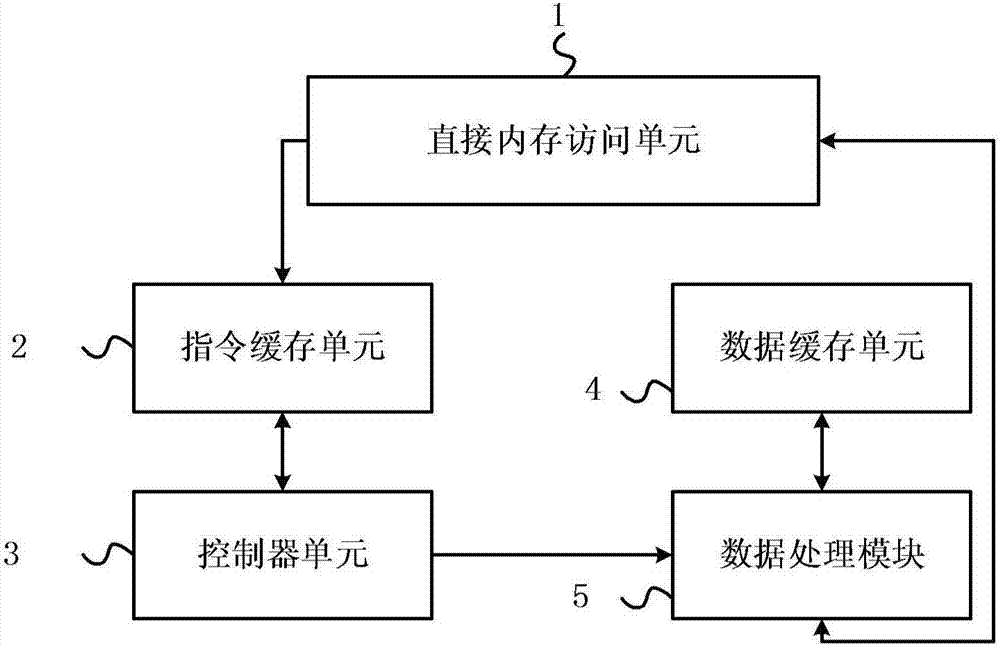
Device and method for performing adam gradient descent training algorithm
PatentWO2017185257A1
Innovation
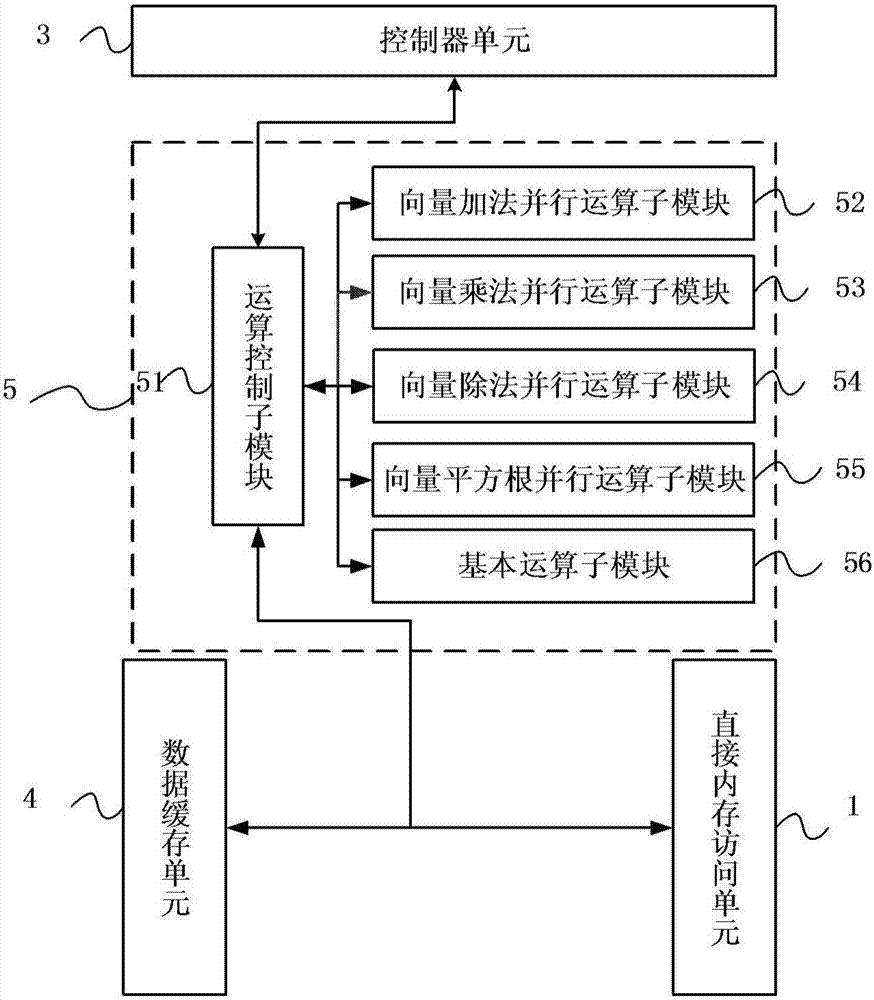
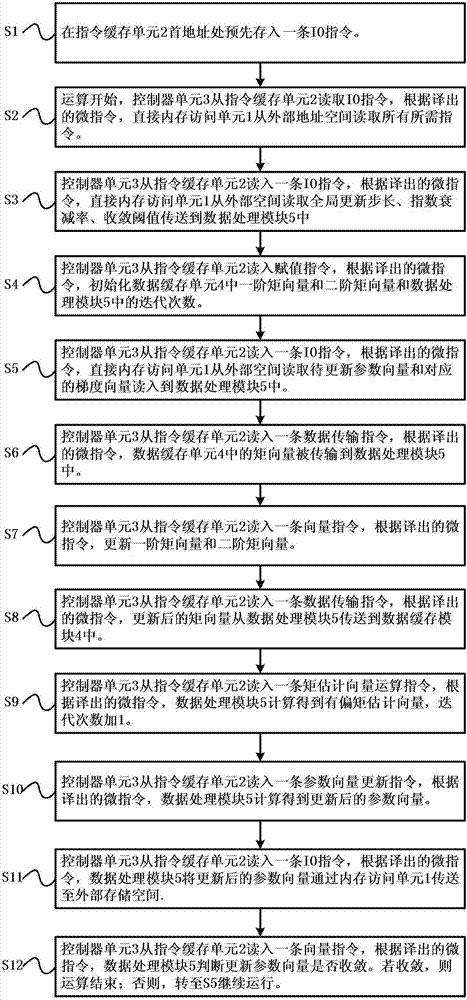
- A device including a direct memory access unit, an instruction cache unit, a controller unit, a data cache unit and a data processing module is designed to optimize the execution of the Adam gradient descent algorithm by caching moment vectors and reducing memory accesses.


Device and method used for executing Adam gradient descent training algorithm
PatentActiveCN107315570A
Innovation
- A device including a direct memory access unit, an instruction cache unit, a controller unit, a data cache unit and a data processing module is designed. The direct memory access unit and the data cache unit cache the first-order moment vector and the second-order moment vector to reduce memory. Access, use the parallel operation sub-module to perform vector operations to improve the degree of parallelism.
Cloud Resource Pricing Models Impact
Cloud resource pricing models fundamentally shape the economic calculus when comparing gradient descent and Adam optimizers for large-scale model training. Major cloud providers employ diverse pricing structures that directly influence optimizer selection strategies. On-demand pricing offers maximum flexibility but commands premium rates, while reserved instances and spot instances provide substantial discounts ranging from 30% to 90%, contingent upon commitment duration and availability tolerance. These pricing tiers create distinct optimization scenarios where the faster convergence of Adam may justify higher per-iteration costs under on-demand pricing, whereas gradient descent's computational efficiency becomes more attractive with cost-predictable reserved capacity.
The billing granularity of cloud platforms introduces additional complexity to optimizer economics. Providers typically charge compute resources by the second or minute, with minimum billing increments that can significantly impact short training jobs. Adam's accelerated convergence often completes training within fewer billing cycles, potentially offsetting its higher computational overhead per iteration. Conversely, gradient descent's extended training duration may accumulate costs across more billing periods, particularly when training spans multiple hours or days on expensive GPU instances.
Storage and data transfer costs constitute another critical dimension in cloud training economics. Adam maintains additional state variables requiring approximately twice the memory footprint of gradient descent, translating to higher storage costs for checkpointing and model persistence. Cloud providers charge separately for persistent storage, snapshot services, and cross-region data transfers. For distributed training scenarios, Adam's memory requirements can necessitate more expensive instance types with larger RAM allocations, while gradient descent may operate efficiently on cost-optimized configurations.
Network bandwidth pricing models particularly affect distributed training architectures where gradient synchronization occurs across multiple nodes. Adam's additional momentum and variance parameters increase inter-node communication volumes, potentially triggering higher egress charges in multi-region deployments. Cloud providers often waive intra-region traffic costs but impose substantial fees for cross-availability-zone and internet-bound transfers. These networking costs can accumulate rapidly in large-scale training operations, making gradient descent's simpler parameter updates economically advantageous for geographically distributed training clusters.
Emerging pricing innovations such as preemptible instances and savings plans further complicate the optimizer selection landscape. Preemptible resources offer dramatic cost reductions but may terminate with minimal notice, favoring optimizers with robust checkpointing capabilities. Adam's faster convergence reduces exposure to preemption risks, while gradient descent's longer training windows increase vulnerability to interruptions and associated restart costs.
The billing granularity of cloud platforms introduces additional complexity to optimizer economics. Providers typically charge compute resources by the second or minute, with minimum billing increments that can significantly impact short training jobs. Adam's accelerated convergence often completes training within fewer billing cycles, potentially offsetting its higher computational overhead per iteration. Conversely, gradient descent's extended training duration may accumulate costs across more billing periods, particularly when training spans multiple hours or days on expensive GPU instances.
Storage and data transfer costs constitute another critical dimension in cloud training economics. Adam maintains additional state variables requiring approximately twice the memory footprint of gradient descent, translating to higher storage costs for checkpointing and model persistence. Cloud providers charge separately for persistent storage, snapshot services, and cross-region data transfers. For distributed training scenarios, Adam's memory requirements can necessitate more expensive instance types with larger RAM allocations, while gradient descent may operate efficiently on cost-optimized configurations.
Network bandwidth pricing models particularly affect distributed training architectures where gradient synchronization occurs across multiple nodes. Adam's additional momentum and variance parameters increase inter-node communication volumes, potentially triggering higher egress charges in multi-region deployments. Cloud providers often waive intra-region traffic costs but impose substantial fees for cross-availability-zone and internet-bound transfers. These networking costs can accumulate rapidly in large-scale training operations, making gradient descent's simpler parameter updates economically advantageous for geographically distributed training clusters.
Emerging pricing innovations such as preemptible instances and savings plans further complicate the optimizer selection landscape. Preemptible resources offer dramatic cost reductions but may terminate with minimal notice, favoring optimizers with robust checkpointing capabilities. Adam's faster convergence reduces exposure to preemption risks, while gradient descent's longer training windows increase vulnerability to interruptions and associated restart costs.
Energy Efficiency and Carbon Footprint Considerations
The choice between Gradient Descent and Adam optimizers in cloud-based machine learning training carries significant implications for energy consumption and environmental impact. As computational demands for deep learning models continue to escalate, the energy efficiency of optimization algorithms has emerged as a critical consideration for organizations seeking to balance performance objectives with sustainability commitments. Cloud training environments, which rely on massive data centers powered by diverse energy sources, amplify the environmental consequences of algorithmic choices.
Adam optimizer typically demonstrates faster convergence rates compared to standard Gradient Descent variants, potentially reducing total training time and associated energy consumption. However, this advantage must be weighed against Adam's higher per-iteration computational overhead, which includes maintaining additional momentum vectors and adaptive learning rate calculations. In scenarios involving large-scale models with billions of parameters, these memory and computational requirements translate directly into increased power draw from GPU and TPU infrastructure.
The carbon footprint differential between these optimization approaches varies substantially based on cloud provider infrastructure and regional energy grids. Training sessions utilizing Adam may complete in fewer epochs, thereby reducing overall electricity consumption despite higher instantaneous power requirements. Conversely, simpler Gradient Descent implementations consume less energy per iteration but may require extended training durations, potentially offsetting initial efficiency gains.
Recent empirical studies indicate that the energy efficiency gap narrows considerably when considering total training lifecycle costs. For models requiring extensive hyperparameter tuning, Adam's reduced sensitivity to learning rate selection can minimize the number of experimental runs needed, thereby decreasing cumulative energy expenditure. Additionally, the geographic distribution of cloud computing resources introduces variability in carbon intensity, with data centers powered by renewable energy sources offering substantially lower environmental impact regardless of optimizer selection.
Organizations must evaluate these trade-offs within their specific operational contexts, considering factors such as model architecture complexity, dataset characteristics, and available cloud infrastructure options to optimize both economic and environmental outcomes.
Adam optimizer typically demonstrates faster convergence rates compared to standard Gradient Descent variants, potentially reducing total training time and associated energy consumption. However, this advantage must be weighed against Adam's higher per-iteration computational overhead, which includes maintaining additional momentum vectors and adaptive learning rate calculations. In scenarios involving large-scale models with billions of parameters, these memory and computational requirements translate directly into increased power draw from GPU and TPU infrastructure.
The carbon footprint differential between these optimization approaches varies substantially based on cloud provider infrastructure and regional energy grids. Training sessions utilizing Adam may complete in fewer epochs, thereby reducing overall electricity consumption despite higher instantaneous power requirements. Conversely, simpler Gradient Descent implementations consume less energy per iteration but may require extended training durations, potentially offsetting initial efficiency gains.
Recent empirical studies indicate that the energy efficiency gap narrows considerably when considering total training lifecycle costs. For models requiring extensive hyperparameter tuning, Adam's reduced sensitivity to learning rate selection can minimize the number of experimental runs needed, thereby decreasing cumulative energy expenditure. Additionally, the geographic distribution of cloud computing resources introduces variability in carbon intensity, with data centers powered by renewable energy sources offering substantially lower environmental impact regardless of optimizer selection.
Organizations must evaluate these trade-offs within their specific operational contexts, considering factors such as model architecture complexity, dataset characteristics, and available cloud infrastructure options to optimize both economic and environmental outcomes.
Unlock deeper insights with Patsnap Eureka Quick Research — get a full tech report to explore trends and direct your research. Try now!
Generate Your Research Report Instantly with AI Agent
Supercharge your innovation with Patsnap Eureka AI Agent Platform!