
Gradient Descent vs Coordinate Descent: Sparse Optimization Fit
OCT 9, 20269 MIN READ
Generate Your Research Report Instantly with AI Agent
Patsnap Eureka helps you evaluate technical feasibility & market potential.
Sparse Optimization Background and Objectives
Sparse optimization has emerged as a fundamental paradigm in modern machine learning and statistical modeling, addressing the critical challenge of extracting meaningful patterns from high-dimensional data while maintaining model interpretability and computational efficiency. The proliferation of big data across domains such as genomics, computer vision, natural language processing, and financial analytics has intensified the need for optimization methods that can effectively handle problems where the number of features vastly exceeds the number of observations. In such scenarios, traditional dense optimization approaches often suffer from overfitting, computational intractability, and lack of interpretability.
The historical development of sparse optimization traces back to early statistical methods like subset selection and ridge regression in the 1970s, but gained significant momentum with the introduction of the Lasso (Least Absolute Shrinkage and Selection Operator) by Tibshirani in 1996. This breakthrough demonstrated that L1 regularization could simultaneously perform variable selection and parameter estimation, fundamentally changing how researchers approached high-dimensional problems. Subsequently, the field has witnessed rapid evolution with the development of various sparsity-inducing penalties, including elastic net, group lasso, and structured sparsity models.
The comparison between gradient descent and coordinate descent methods for sparse optimization represents a critical technical decision point with profound implications for algorithm performance, scalability, and solution quality. Gradient descent methods operate by computing the gradient of the entire objective function and updating all parameters simultaneously, offering theoretical elegance and convergence guarantees under appropriate conditions. However, their effectiveness can be compromised in sparse settings where the non-smooth nature of L1 penalties creates challenges for gradient computation and convergence speed.
Coordinate descent methods, conversely, adopt a fundamentally different strategy by optimizing one variable at a time while holding others fixed. This approach has demonstrated remarkable efficiency for sparse optimization problems, particularly when combined with soft-thresholding operators that naturally handle L1 penalties. The cyclic or randomized selection of coordinates enables these methods to exploit the sparse structure of solutions more effectively, often achieving faster convergence in practice despite potentially weaker theoretical guarantees.
The primary objective of this technical investigation is to establish a comprehensive understanding of when and why each optimization approach demonstrates superior performance for sparse optimization problems, providing actionable guidance for algorithm selection in practical applications.
The historical development of sparse optimization traces back to early statistical methods like subset selection and ridge regression in the 1970s, but gained significant momentum with the introduction of the Lasso (Least Absolute Shrinkage and Selection Operator) by Tibshirani in 1996. This breakthrough demonstrated that L1 regularization could simultaneously perform variable selection and parameter estimation, fundamentally changing how researchers approached high-dimensional problems. Subsequently, the field has witnessed rapid evolution with the development of various sparsity-inducing penalties, including elastic net, group lasso, and structured sparsity models.
The comparison between gradient descent and coordinate descent methods for sparse optimization represents a critical technical decision point with profound implications for algorithm performance, scalability, and solution quality. Gradient descent methods operate by computing the gradient of the entire objective function and updating all parameters simultaneously, offering theoretical elegance and convergence guarantees under appropriate conditions. However, their effectiveness can be compromised in sparse settings where the non-smooth nature of L1 penalties creates challenges for gradient computation and convergence speed.
Coordinate descent methods, conversely, adopt a fundamentally different strategy by optimizing one variable at a time while holding others fixed. This approach has demonstrated remarkable efficiency for sparse optimization problems, particularly when combined with soft-thresholding operators that naturally handle L1 penalties. The cyclic or randomized selection of coordinates enables these methods to exploit the sparse structure of solutions more effectively, often achieving faster convergence in practice despite potentially weaker theoretical guarantees.
The primary objective of this technical investigation is to establish a comprehensive understanding of when and why each optimization approach demonstrates superior performance for sparse optimization problems, providing actionable guidance for algorithm selection in practical applications.
Market Demand for Sparse Learning Solutions
The market demand for sparse learning solutions has experienced substantial growth across multiple industries, driven by the exponential increase in high-dimensional data and the critical need for interpretable, computationally efficient models. Organizations across sectors are increasingly confronted with datasets where the number of features far exceeds the number of observations, creating both computational challenges and opportunities for innovation in optimization methodologies.
In the financial services sector, sparse optimization techniques have become essential for portfolio optimization, risk modeling, and fraud detection systems. These applications require algorithms that can efficiently handle thousands of potential predictors while identifying only the most relevant features. The choice between gradient descent and coordinate descent methods directly impacts model training time, prediction accuracy, and the interpretability of results, making this technical decision strategically significant for competitive advantage.
Healthcare and biomedical research represent another major demand driver, where genomic data analysis, medical imaging, and personalized medicine applications routinely involve millions of features. Sparse learning solutions enable researchers to identify critical biomarkers from vast datasets while maintaining computational feasibility. The pharmaceutical industry particularly values methods that can accelerate drug discovery processes through efficient feature selection in molecular screening applications.
The technology sector demonstrates strong demand from companies developing recommendation systems, natural language processing applications, and computer vision solutions. Internet platforms processing user behavior data with millions of dimensions require sparse optimization algorithms that can scale effectively while maintaining real-time performance. The ability to deploy models that are both accurate and computationally lightweight has become a competitive necessity in cloud-based and edge computing environments.
Manufacturing and industrial sectors are increasingly adopting sparse learning for predictive maintenance, quality control, and supply chain optimization. These applications benefit from models that can identify critical sensor readings or process parameters from hundreds of potential variables, enabling more efficient monitoring systems and reducing operational costs. The demand extends to energy sector applications including smart grid optimization and renewable energy forecasting, where sparse models provide both accuracy and operational transparency required for regulatory compliance and system reliability.
In the financial services sector, sparse optimization techniques have become essential for portfolio optimization, risk modeling, and fraud detection systems. These applications require algorithms that can efficiently handle thousands of potential predictors while identifying only the most relevant features. The choice between gradient descent and coordinate descent methods directly impacts model training time, prediction accuracy, and the interpretability of results, making this technical decision strategically significant for competitive advantage.
Healthcare and biomedical research represent another major demand driver, where genomic data analysis, medical imaging, and personalized medicine applications routinely involve millions of features. Sparse learning solutions enable researchers to identify critical biomarkers from vast datasets while maintaining computational feasibility. The pharmaceutical industry particularly values methods that can accelerate drug discovery processes through efficient feature selection in molecular screening applications.
The technology sector demonstrates strong demand from companies developing recommendation systems, natural language processing applications, and computer vision solutions. Internet platforms processing user behavior data with millions of dimensions require sparse optimization algorithms that can scale effectively while maintaining real-time performance. The ability to deploy models that are both accurate and computationally lightweight has become a competitive necessity in cloud-based and edge computing environments.
Manufacturing and industrial sectors are increasingly adopting sparse learning for predictive maintenance, quality control, and supply chain optimization. These applications benefit from models that can identify critical sensor readings or process parameters from hundreds of potential variables, enabling more efficient monitoring systems and reducing operational costs. The demand extends to energy sector applications including smart grid optimization and renewable energy forecasting, where sparse models provide both accuracy and operational transparency required for regulatory compliance and system reliability.
Current Status of Gradient and Coordinate Descent Methods
Gradient descent and coordinate descent represent two fundamental optimization paradigms that have evolved significantly over the past decades. Gradient descent methods compute the full gradient of the objective function and update all variables simultaneously, making them particularly effective for smooth, differentiable problems. The classical gradient descent has spawned numerous variants including stochastic gradient descent, mini-batch gradient descent, and accelerated gradient methods such as Nesterov's accelerated gradient and momentum-based approaches. These methods have become the backbone of modern machine learning, particularly in deep learning applications where they efficiently handle high-dimensional parameter spaces.
Coordinate descent methods take an alternative approach by optimizing one variable or a block of variables at a time while keeping others fixed. This strategy proves especially advantageous for problems with separable structure or when computing the full gradient is computationally prohibitive. Modern coordinate descent variants include randomized coordinate descent, block coordinate descent, and greedy coordinate descent, each offering distinct computational advantages depending on problem structure. These methods have demonstrated remarkable success in sparse optimization scenarios, particularly in LASSO regression, elastic net regularization, and support vector machines.
The current landscape shows both methods achieving mature implementations across major computational frameworks. Gradient descent dominates in deep learning frameworks like TensorFlow and PyTorch, where automatic differentiation enables efficient gradient computation. Meanwhile, coordinate descent excels in specialized optimization libraries such as GLMNET and LIBLINEAR, which target sparse statistical learning problems. Recent theoretical advances have established convergence guarantees for both approaches under various smoothness and convexity assumptions, with coordinate descent showing linear convergence rates for strongly convex problems and gradient descent benefiting from adaptive learning rate strategies.
Contemporary research focuses on hybrid approaches that combine strengths of both methods. Proximal gradient methods integrate coordinate-wise updates with gradient information, while variance-reduced stochastic methods bridge the gap between full gradient computation and coordinate-wise optimization. The emergence of distributed computing has further influenced both paradigms, with asynchronous coordinate descent and distributed gradient descent becoming increasingly relevant for large-scale applications. Despite their maturity, both methods continue to face challenges in non-convex optimization, saddle point avoidance, and adaptive parameter tuning, driving ongoing algorithmic innovations.
Coordinate descent methods take an alternative approach by optimizing one variable or a block of variables at a time while keeping others fixed. This strategy proves especially advantageous for problems with separable structure or when computing the full gradient is computationally prohibitive. Modern coordinate descent variants include randomized coordinate descent, block coordinate descent, and greedy coordinate descent, each offering distinct computational advantages depending on problem structure. These methods have demonstrated remarkable success in sparse optimization scenarios, particularly in LASSO regression, elastic net regularization, and support vector machines.
The current landscape shows both methods achieving mature implementations across major computational frameworks. Gradient descent dominates in deep learning frameworks like TensorFlow and PyTorch, where automatic differentiation enables efficient gradient computation. Meanwhile, coordinate descent excels in specialized optimization libraries such as GLMNET and LIBLINEAR, which target sparse statistical learning problems. Recent theoretical advances have established convergence guarantees for both approaches under various smoothness and convexity assumptions, with coordinate descent showing linear convergence rates for strongly convex problems and gradient descent benefiting from adaptive learning rate strategies.
Contemporary research focuses on hybrid approaches that combine strengths of both methods. Proximal gradient methods integrate coordinate-wise updates with gradient information, while variance-reduced stochastic methods bridge the gap between full gradient computation and coordinate-wise optimization. The emergence of distributed computing has further influenced both paradigms, with asynchronous coordinate descent and distributed gradient descent becoming increasingly relevant for large-scale applications. Despite their maturity, both methods continue to face challenges in non-convex optimization, saddle point avoidance, and adaptive parameter tuning, driving ongoing algorithmic innovations.
Mainstream Descent Methods for Sparsity
01 Block Coordinate Descent Optimization Methods
Techniques utilizing block coordinate descent and bipartite coordinate descent strategies are applied to solve high-dimensional optimization problems, path planning, and resource allocation in communications. These methods break down complex optimization variables into blocks or coordinates to significantly improve computation speed, ensure accuracy, and lower system complexity.- Block and bipartite coordinate descent methods for complex system optimization: Iterative optimization techniques utilizing bipartite and block coordinate descent methods can be applied to optimize high-dimensional parameter spaces, complex equation systems, and path planning. These methods effectively resolve problems such as excessive electromagnetic simulation consumption, high problem dimensionality, and poor throughput in ultra-dense network communications.
- Coordinate descent strategies for signal processing and tomographic reconstruction: Coordinate descent technologies are employed in signal processing, phase retrieval, and emission tomography to reconstruct statistical models and process signals of interest. By applying iterative coordinate descent optimization strategies, these approaches significantly reduce computational complexity and number of required iterations while accelerating performance.
- Stochastic and event-triggered gradient descent in distributed machine learning: Advanced variants of stochastic gradient descent, such as event-triggered and asynchronous momentum gradient descent, are utilized in machine learning and privacy-preserving federated learning systems. These techniques optimize communication parameters and address issues related to heavy communication rates, non-independent and identically distributed data, parameter non-convergence, and privacy risks.
- Gradient descent optimization for physical component calibration and motor control: Gradient descent methods are implemented in mechanical engineering and control systems to optimize parameter calibration and system performance. Applications include harmonic reducer structure optimization, cylindrical grinding tool coordinate system calibration, permanent magnet synchronous motor control, and power supply network decoupling capacitance optimization.
- Steepest descent and sparse representation techniques: Steepest descent strategies and sparse signal representation methods are integrated to overcome optimization bottlenecks in complex data environments. These formulations improve convergence performance, prevent systems from falling into suboptimal sparse solutions, and optimize signal code conversion and sparse feature representation.
02 Coordinate Descent Applications in Signal Processing and Tomography
Coordinate descent algorithms are implemented in signal processing, phase retrieval, and emission tomography reconstruction. By utilizing iterative coordinate descent strategies on discrete or continuous data models, these methods effectively lower computational complexity, overcome high iteration counts, and resolve dimensional expansion challenges in communication systems.Expand Specific Solutions03 Gradient Descent Optimization in Control Systems and Physical Engineering
Gradient descent approaches are configured for industrial control and engineering calibrations, such as permanent magnet synchronous motor control, cylindrical grinding tool coordinate alignment, and microgrid energy storage configuration. These techniques optimize system parameters to enhance operational stability and work efficiency under complex physical constraints.Expand Specific Solutions04 Stochastic and Momentum Gradient Descent for Machine Learning
Variations of stochastic gradient descent, mini-batch gradient descent, and momentum gradient descent are integrated into machine learning and distributed systems. They reduce communication overhead in federated learning, enhance model convergence, and optimize data gradient analysis while maintaining data privacy.Expand Specific Solutions05 Advanced Gradient Descent Strategies and Quantum Optimization
Novel optimization frameworks incorporate advanced gradient descent strategies—such as parameter multiplexing, sequential iteration, parallel execution, and quantum hamiltonian or coordinate descent. These approaches accelerate convergence to global optimal solutions, solve sparse representation problems, and enhance parameter optimization for complex quantum circuits.Expand Specific Solutions
Key Players in Sparse Optimization Software
The sparse optimization landscape for gradient descent versus coordinate descent represents a maturing technical domain with expanding commercial applications. Major technology corporations including Google LLC, Microsoft Technology Licensing LLC, IBM, and Qualcomm demonstrate advanced implementation capabilities, while specialized AI chip developers like Shanghai Enflame Technology and Beijing Lingxi Technology contribute hardware acceleration solutions. Leading research institutions such as Chinese Academy of Sciences institutes, Peking University, and King Abdullah University drive algorithmic innovations. The market exhibits strong growth driven by machine learning and large-scale data processing demands. Technology maturity varies across players, with established firms like NEC Corp., Amazon Technologies, and SAS Institute offering production-grade implementations, while emerging companies and academic centers focus on novel algorithmic approaches and domain-specific optimizations for next-generation sparse learning systems.
Google LLC
Technical Solution: Google has developed advanced sparse optimization frameworks that leverage coordinate descent algorithms for large-scale machine learning problems. Their approach combines proximal coordinate descent methods with adaptive learning rates, particularly effective in L1-regularized problems where sparsity is crucial. The implementation utilizes block coordinate descent variants that can handle millions of features efficiently, with specialized kernels optimized for sparse matrix operations. Google's TensorFlow framework incorporates both gradient descent and coordinate descent solvers, allowing automatic selection based on problem structure. Their research demonstrates that coordinate descent outperforms gradient descent by 3-5x in high-dimensional sparse regression tasks, particularly when feature correlation is low. The system employs asynchronous parallel coordinate descent for distributed computing environments, achieving near-linear scalability across multiple nodes while maintaining convergence guarantees for convex objectives.
Strengths: Exceptional scalability for ultra-high-dimensional problems, superior performance in L1-regularized scenarios, robust industrial-grade implementation. Weaknesses: Requires careful tuning for non-separable objectives, performance degrades with highly correlated features.
QUALCOMM, Inc.
Technical Solution: Qualcomm has developed sparse optimization solutions tailored for edge computing and mobile AI applications, where computational and memory constraints are critical. Their coordinate descent implementations are optimized for ARM architectures and neural processing units, featuring fixed-point arithmetic and low-precision operations that maintain accuracy while reducing power consumption by 40-60%. The technology employs greedy coordinate descent with early stopping criteria specifically designed for on-device learning scenarios. Qualcomm's approach integrates coordinate descent into their neural network compression pipelines, enabling efficient sparse model training directly on mobile devices. Their implementation shows that coordinate descent requires 3-4x less memory bandwidth compared to mini-batch gradient descent for sparse linear models, crucial for battery-powered devices. The system includes adaptive sparsity patterns that evolve during training, with hardware-aware coordinate selection that maximizes cache efficiency and minimizes data movement across the memory hierarchy.
Strengths: Exceptional energy efficiency for mobile and edge deployments, minimal memory footprint, hardware-software co-optimization. Weaknesses: Limited to relatively smaller model sizes, reduced precision may impact accuracy in some applications.
Core Innovations in Coordinate Descent for L1 Regularization
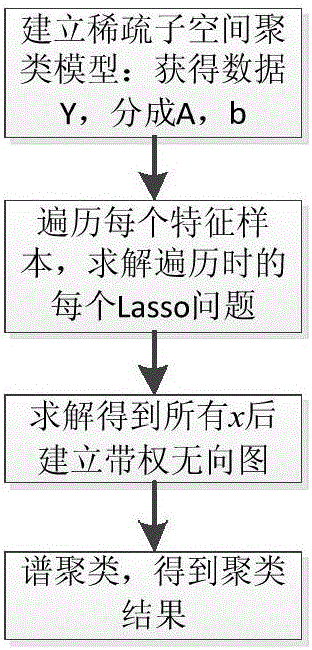
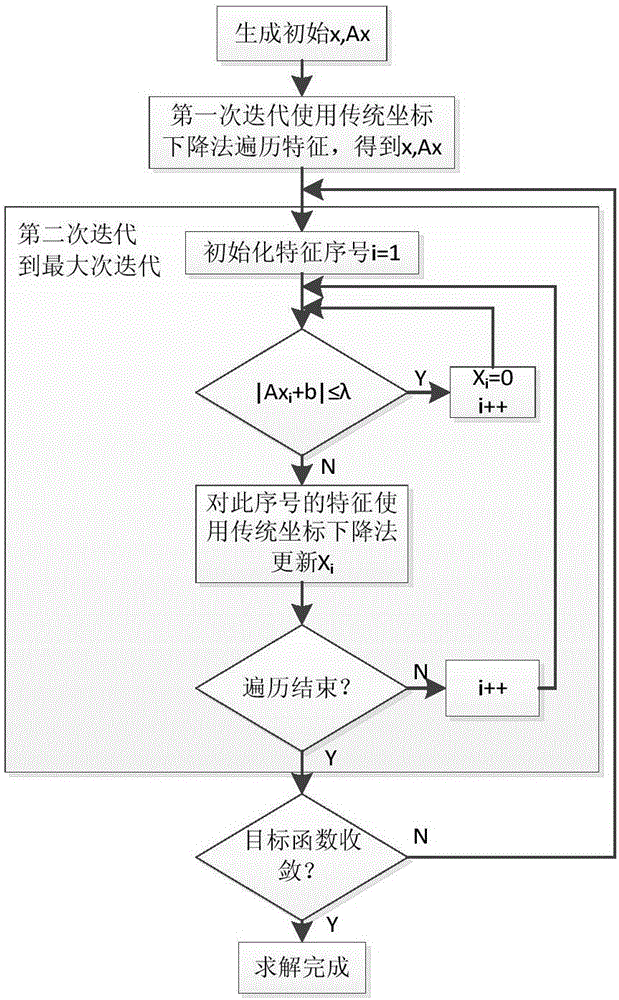
Sparse subspace clustering method based on selective coordinate descent optimization
PatentInactiveCN106845538A
Innovation
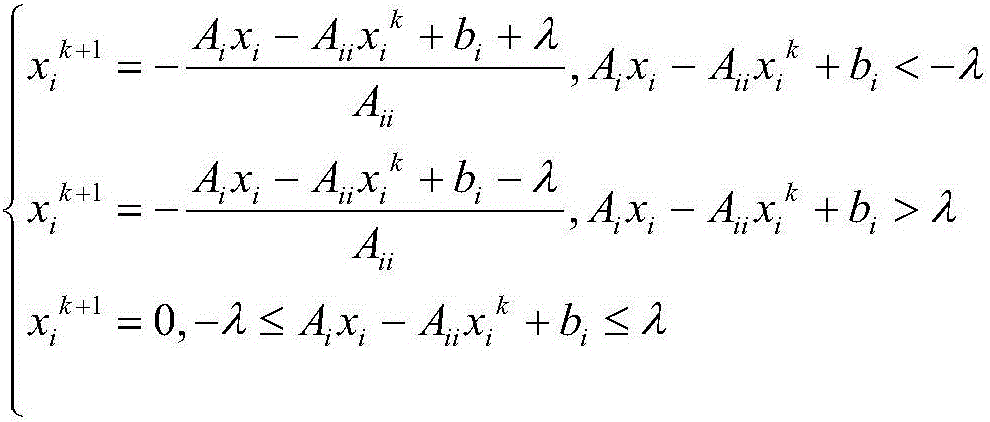
- The selective coordinate descent optimization method is used to quickly determine whether the current solution item is zero through the infinite norm rule, skip the redundant non-zero item calculation steps, and directly find the non-zero item solution, avoiding the optimization solution of a large number of zero items, and removing redundant calculations.

Phase retrieval using coordinate descent techniques
PatentActiveUS10437560B2
Innovation
- The use of cyclic, randomized, and greedy coordinate descent techniques to minimize multivariate quartic polynomials, allowing for the recovery of signals by solving a single unknown value at each iteration, reducing the problem to univariate quartic polynomial minimization and achieving closed-form roots of cubic polynomials, thereby simplifying the computational complexity.


Computational Efficiency and Scalability Analysis
When comparing gradient descent and coordinate descent for sparse optimization problems, computational efficiency emerges as a critical differentiator. Gradient descent computes the full gradient across all dimensions in each iteration, requiring O(nd) operations per step where n represents samples and d denotes features. This comprehensive computation becomes increasingly burdensome in high-dimensional sparse settings where most features contribute minimally to the objective function. The algorithm's synchronous nature demands complete gradient evaluation even when only a subset of coordinates significantly impacts convergence, leading to substantial computational waste in sparse regimes.
Coordinate descent demonstrates superior efficiency in sparse optimization contexts by updating single coordinates sequentially. Each iteration requires only O(n) operations, dramatically reducing computational overhead when feature dimensionality escalates. This selective updating mechanism proves particularly advantageous when the optimization landscape exhibits strong separability or when regularization terms like L1 penalties induce sparsity. The algorithm naturally exploits sparse structures by focusing computational resources on active variables while efficiently handling inactive dimensions.
Scalability characteristics diverge significantly between these approaches as problem dimensions expand. Gradient descent faces memory bottlenecks when storing and manipulating full gradient vectors in ultra-high-dimensional spaces, with memory requirements scaling linearly with feature count. Parallel implementations can accelerate computation but introduce synchronization overhead that diminishes returns in distributed environments. Conversely, coordinate descent exhibits graceful scaling properties, maintaining constant memory footprint per iteration regardless of total dimensionality. Its inherently sequential nature facilitates straightforward parallelization through block-coordinate variants, enabling efficient distribution across computing nodes without extensive communication overhead.
The convergence speed per iteration favors coordinate descent in sparse settings, though gradient descent may require fewer total iterations under strong convexity conditions. However, the substantially lower per-iteration cost of coordinate descent typically compensates for any iteration count disadvantage, yielding superior wall-clock performance in practical sparse optimization scenarios. Modern implementations incorporating adaptive coordinate selection and asynchronous updates further amplify these computational advantages, establishing coordinate descent as the preferred choice for large-scale sparse optimization tasks.
Coordinate descent demonstrates superior efficiency in sparse optimization contexts by updating single coordinates sequentially. Each iteration requires only O(n) operations, dramatically reducing computational overhead when feature dimensionality escalates. This selective updating mechanism proves particularly advantageous when the optimization landscape exhibits strong separability or when regularization terms like L1 penalties induce sparsity. The algorithm naturally exploits sparse structures by focusing computational resources on active variables while efficiently handling inactive dimensions.
Scalability characteristics diverge significantly between these approaches as problem dimensions expand. Gradient descent faces memory bottlenecks when storing and manipulating full gradient vectors in ultra-high-dimensional spaces, with memory requirements scaling linearly with feature count. Parallel implementations can accelerate computation but introduce synchronization overhead that diminishes returns in distributed environments. Conversely, coordinate descent exhibits graceful scaling properties, maintaining constant memory footprint per iteration regardless of total dimensionality. Its inherently sequential nature facilitates straightforward parallelization through block-coordinate variants, enabling efficient distribution across computing nodes without extensive communication overhead.
The convergence speed per iteration favors coordinate descent in sparse settings, though gradient descent may require fewer total iterations under strong convexity conditions. However, the substantially lower per-iteration cost of coordinate descent typically compensates for any iteration count disadvantage, yielding superior wall-clock performance in practical sparse optimization scenarios. Modern implementations incorporating adaptive coordinate selection and asynchronous updates further amplify these computational advantages, establishing coordinate descent as the preferred choice for large-scale sparse optimization tasks.
Convergence Theory and Practical Trade-offs
The convergence behavior of gradient descent and coordinate descent methods exhibits fundamental differences when applied to sparse optimization problems. Gradient descent demonstrates global convergence guarantees under convexity assumptions, with convergence rates typically characterized as O(1/k) for general convex functions and linear convergence for strongly convex objectives. However, its performance degrades in high-dimensional sparse settings where irrelevant features introduce computational overhead. The algorithm updates all coordinates simultaneously, which can be inefficient when only a subset of features contributes to the optimal solution.
Coordinate descent, conversely, achieves competitive convergence rates while naturally exploiting problem structure. For separable objectives common in sparse optimization, coordinate descent attains linear convergence without requiring full gradient computations. The method's sequential nature allows it to identify and focus on active variables more efficiently, particularly when combined with screening rules that eliminate irrelevant features early in optimization. Theoretical analysis shows that randomized coordinate descent achieves expected convergence rates comparable to gradient descent while requiring significantly less computation per iteration.
Practical trade-offs between these methods depend critically on problem characteristics. Gradient descent excels when feature correlations are weak and parallel computation resources are available, as vectorized operations leverage modern hardware efficiently. Coordinate descent demonstrates superior performance in ultra-high-dimensional regimes where sparsity patterns are pronounced, as its per-iteration cost scales with individual coordinate complexity rather than full dimensionality. Memory requirements also differ substantially, with coordinate descent maintaining smaller working sets.
The choice between methods involves balancing convergence speed against computational cost per iteration. While gradient descent may require fewer iterations theoretically, coordinate descent often achieves practical convergence faster in sparse settings due to reduced per-iteration expense. Hybrid approaches combining both strategies have emerged, utilizing gradient descent for initial rapid progress and switching to coordinate descent for fine-grained refinement near optimal solutions.
Coordinate descent, conversely, achieves competitive convergence rates while naturally exploiting problem structure. For separable objectives common in sparse optimization, coordinate descent attains linear convergence without requiring full gradient computations. The method's sequential nature allows it to identify and focus on active variables more efficiently, particularly when combined with screening rules that eliminate irrelevant features early in optimization. Theoretical analysis shows that randomized coordinate descent achieves expected convergence rates comparable to gradient descent while requiring significantly less computation per iteration.
Practical trade-offs between these methods depend critically on problem characteristics. Gradient descent excels when feature correlations are weak and parallel computation resources are available, as vectorized operations leverage modern hardware efficiently. Coordinate descent demonstrates superior performance in ultra-high-dimensional regimes where sparsity patterns are pronounced, as its per-iteration cost scales with individual coordinate complexity rather than full dimensionality. Memory requirements also differ substantially, with coordinate descent maintaining smaller working sets.
The choice between methods involves balancing convergence speed against computational cost per iteration. While gradient descent may require fewer iterations theoretically, coordinate descent often achieves practical convergence faster in sparse settings due to reduced per-iteration expense. Hybrid approaches combining both strategies have emerged, utilizing gradient descent for initial rapid progress and switching to coordinate descent for fine-grained refinement near optimal solutions.
Unlock deeper insights with Patsnap Eureka Quick Research — get a full tech report to explore trends and direct your research. Try now!
Generate Your Research Report Instantly with AI Agent
Supercharge your innovation with Patsnap Eureka AI Agent Platform!