

Graphene Battery Developments in Wearable Technology
AUG 6, 20259 MIN READ
Generate Your Research Report Instantly with AI Agent
PatSnap Eureka helps you evaluate technical feasibility & market potential.
Graphene Battery Evolution and Objectives
Graphene batteries have emerged as a revolutionary technology in the field of energy storage, particularly for wearable devices. The evolution of graphene batteries can be traced back to the early 2010s when researchers first began exploring the potential of graphene in energy storage applications. Since then, significant advancements have been made in harnessing the unique properties of graphene to enhance battery performance.
The primary objective of graphene battery development in wearable technology is to address the limitations of conventional lithium-ion batteries. These include improving energy density, reducing charging time, enhancing flexibility, and increasing the overall lifespan of the battery. Graphene's exceptional electrical conductivity, mechanical strength, and thermal properties make it an ideal candidate for achieving these goals.
One of the key milestones in graphene battery evolution was the development of graphene-enhanced electrodes. By incorporating graphene into battery electrodes, researchers were able to significantly increase the surface area for energy storage, leading to higher capacities and faster charging rates. This breakthrough paved the way for the creation of ultra-thin, flexible batteries that could be seamlessly integrated into wearable devices.
Another important advancement in graphene battery technology has been the development of graphene-based electrolytes. These electrolytes offer improved ionic conductivity and stability compared to traditional liquid electrolytes, resulting in enhanced safety and performance of wearable batteries. The use of graphene-based solid-state electrolytes has also opened up possibilities for creating safer, more durable batteries that are less prone to leakage or combustion.
The evolution of graphene batteries has also seen progress in manufacturing techniques. Researchers have developed scalable methods for producing high-quality graphene materials, such as chemical vapor deposition and liquid-phase exfoliation. These advancements have made it possible to produce graphene batteries on a larger scale, bringing them closer to commercial viability for wearable technology applications.
Looking ahead, the objectives for graphene battery development in wearable technology are focused on further improving energy density, reducing costs, and enhancing integration capabilities. Researchers are exploring novel graphene composites and hybrid materials to push the boundaries of battery performance. Additionally, there is a growing emphasis on developing environmentally friendly and sustainable graphene battery technologies to align with global sustainability goals.
As the field continues to evolve, we can expect to see graphene batteries that are not only more powerful and efficient but also more adaptable to the diverse needs of wearable devices. The ultimate goal is to create batteries that can seamlessly blend into wearable technology, providing long-lasting power without compromising on comfort or design aesthetics.
The primary objective of graphene battery development in wearable technology is to address the limitations of conventional lithium-ion batteries. These include improving energy density, reducing charging time, enhancing flexibility, and increasing the overall lifespan of the battery. Graphene's exceptional electrical conductivity, mechanical strength, and thermal properties make it an ideal candidate for achieving these goals.
One of the key milestones in graphene battery evolution was the development of graphene-enhanced electrodes. By incorporating graphene into battery electrodes, researchers were able to significantly increase the surface area for energy storage, leading to higher capacities and faster charging rates. This breakthrough paved the way for the creation of ultra-thin, flexible batteries that could be seamlessly integrated into wearable devices.
Another important advancement in graphene battery technology has been the development of graphene-based electrolytes. These electrolytes offer improved ionic conductivity and stability compared to traditional liquid electrolytes, resulting in enhanced safety and performance of wearable batteries. The use of graphene-based solid-state electrolytes has also opened up possibilities for creating safer, more durable batteries that are less prone to leakage or combustion.
The evolution of graphene batteries has also seen progress in manufacturing techniques. Researchers have developed scalable methods for producing high-quality graphene materials, such as chemical vapor deposition and liquid-phase exfoliation. These advancements have made it possible to produce graphene batteries on a larger scale, bringing them closer to commercial viability for wearable technology applications.
Looking ahead, the objectives for graphene battery development in wearable technology are focused on further improving energy density, reducing costs, and enhancing integration capabilities. Researchers are exploring novel graphene composites and hybrid materials to push the boundaries of battery performance. Additionally, there is a growing emphasis on developing environmentally friendly and sustainable graphene battery technologies to align with global sustainability goals.
As the field continues to evolve, we can expect to see graphene batteries that are not only more powerful and efficient but also more adaptable to the diverse needs of wearable devices. The ultimate goal is to create batteries that can seamlessly blend into wearable technology, providing long-lasting power without compromising on comfort or design aesthetics.
Wearable Tech Market Demand Analysis
The wearable technology market has experienced significant growth in recent years, driven by increasing consumer demand for smart devices that seamlessly integrate into daily life. This trend has created a substantial opportunity for graphene battery developments, as these advanced power sources offer potential solutions to many of the challenges faced by current wearable devices.
Market research indicates that the global wearable technology market is expected to continue its rapid expansion, with a projected compound annual growth rate (CAGR) of over 15% in the coming years. This growth is fueled by several factors, including rising health consciousness, the proliferation of Internet of Things (IoT) devices, and advancements in sensor technologies.
Within the wearable tech sector, smartwatches and fitness trackers remain the dominant product categories, accounting for a significant portion of market share. However, emerging segments such as smart clothing, hearables, and augmented reality (AR) glasses are gaining traction, presenting new opportunities for graphene battery applications.
Consumer demand for wearable devices is primarily driven by the desire for enhanced functionality, longer battery life, and improved comfort. Graphene batteries have the potential to address these needs by offering higher energy density, faster charging capabilities, and more flexible form factors compared to traditional lithium-ion batteries.
The healthcare and fitness industries are particularly strong drivers of wearable technology adoption. Consumers are increasingly seeking devices that can monitor vital signs, track physical activity, and provide personalized health insights. This trend has been further accelerated by the global pandemic, which has heightened awareness of personal health monitoring.
In the enterprise sector, there is growing demand for wearable devices that can enhance worker productivity and safety. Industries such as manufacturing, logistics, and field services are exploring the use of smart glasses and other wearable technologies to improve operational efficiency and provide hands-free access to information.
The integration of artificial intelligence (AI) and machine learning capabilities into wearable devices is another key market trend. Consumers are showing interest in devices that can provide more personalized and context-aware experiences, creating opportunities for advanced battery technologies that can support these power-intensive features.
As the wearable tech market continues to evolve, there is an increasing emphasis on sustainability and eco-friendly solutions. This aligns well with the potential of graphene batteries, which offer improved recyclability and reduced environmental impact compared to conventional battery technologies.
Market research indicates that the global wearable technology market is expected to continue its rapid expansion, with a projected compound annual growth rate (CAGR) of over 15% in the coming years. This growth is fueled by several factors, including rising health consciousness, the proliferation of Internet of Things (IoT) devices, and advancements in sensor technologies.
Within the wearable tech sector, smartwatches and fitness trackers remain the dominant product categories, accounting for a significant portion of market share. However, emerging segments such as smart clothing, hearables, and augmented reality (AR) glasses are gaining traction, presenting new opportunities for graphene battery applications.
Consumer demand for wearable devices is primarily driven by the desire for enhanced functionality, longer battery life, and improved comfort. Graphene batteries have the potential to address these needs by offering higher energy density, faster charging capabilities, and more flexible form factors compared to traditional lithium-ion batteries.
The healthcare and fitness industries are particularly strong drivers of wearable technology adoption. Consumers are increasingly seeking devices that can monitor vital signs, track physical activity, and provide personalized health insights. This trend has been further accelerated by the global pandemic, which has heightened awareness of personal health monitoring.
In the enterprise sector, there is growing demand for wearable devices that can enhance worker productivity and safety. Industries such as manufacturing, logistics, and field services are exploring the use of smart glasses and other wearable technologies to improve operational efficiency and provide hands-free access to information.
The integration of artificial intelligence (AI) and machine learning capabilities into wearable devices is another key market trend. Consumers are showing interest in devices that can provide more personalized and context-aware experiences, creating opportunities for advanced battery technologies that can support these power-intensive features.
As the wearable tech market continues to evolve, there is an increasing emphasis on sustainability and eco-friendly solutions. This aligns well with the potential of graphene batteries, which offer improved recyclability and reduced environmental impact compared to conventional battery technologies.
Graphene Battery Challenges in Wearables
The integration of graphene batteries into wearable technology presents several significant challenges that researchers and manufacturers must overcome. One of the primary obstacles is the scalability of graphene production. While graphene's exceptional properties make it an ideal candidate for wearable battery applications, mass-producing high-quality graphene at a commercially viable scale remains difficult. Current production methods often result in graphene with structural defects or impurities, which can negatively impact battery performance.
Another major challenge lies in the design and fabrication of graphene-based electrodes. Wearable devices require batteries that are not only powerful but also flexible and durable. Creating electrodes that maintain graphene's excellent conductivity while also being pliable enough to withstand repeated bending and stretching is a complex task. Researchers are exploring various techniques, such as 3D printing and laser scribing, to develop electrodes that meet these demanding criteria.
The integration of graphene batteries with other components in wearable devices poses additional challenges. Wearables often have limited space, requiring batteries to be extremely thin and lightweight. This necessitates innovative packaging solutions that can protect the graphene components while maintaining the device's sleek profile. Moreover, ensuring proper heat dissipation in such compact designs is crucial, as overheating can compromise both battery performance and user safety.
Stability and longevity of graphene batteries in wearable applications are also areas of concern. Wearable devices are subjected to various environmental factors, including moisture, temperature fluctuations, and physical stress. Developing graphene batteries that can maintain consistent performance under these conditions, while also offering a long cycle life, is essential for widespread adoption in the wearables market.
Lastly, the cost of graphene battery production remains a significant hurdle. Despite the potential benefits, the current expense of manufacturing graphene-based batteries is considerably higher than that of traditional lithium-ion batteries. This cost factor limits the commercial viability of graphene batteries in wearables, particularly in the consumer market where price sensitivity is high. Overcoming these economic barriers will require advancements in production techniques and economies of scale.
Another major challenge lies in the design and fabrication of graphene-based electrodes. Wearable devices require batteries that are not only powerful but also flexible and durable. Creating electrodes that maintain graphene's excellent conductivity while also being pliable enough to withstand repeated bending and stretching is a complex task. Researchers are exploring various techniques, such as 3D printing and laser scribing, to develop electrodes that meet these demanding criteria.
The integration of graphene batteries with other components in wearable devices poses additional challenges. Wearables often have limited space, requiring batteries to be extremely thin and lightweight. This necessitates innovative packaging solutions that can protect the graphene components while maintaining the device's sleek profile. Moreover, ensuring proper heat dissipation in such compact designs is crucial, as overheating can compromise both battery performance and user safety.
Stability and longevity of graphene batteries in wearable applications are also areas of concern. Wearable devices are subjected to various environmental factors, including moisture, temperature fluctuations, and physical stress. Developing graphene batteries that can maintain consistent performance under these conditions, while also offering a long cycle life, is essential for widespread adoption in the wearables market.
Lastly, the cost of graphene battery production remains a significant hurdle. Despite the potential benefits, the current expense of manufacturing graphene-based batteries is considerably higher than that of traditional lithium-ion batteries. This cost factor limits the commercial viability of graphene batteries in wearables, particularly in the consumer market where price sensitivity is high. Overcoming these economic barriers will require advancements in production techniques and economies of scale.
Current Graphene Battery Solutions
01 Enhanced energy density and capacity
Graphene-based batteries demonstrate significantly improved energy density and capacity compared to traditional lithium-ion batteries. The unique properties of graphene, such as its high surface area and excellent conductivity, allow for more efficient energy storage and faster charge/discharge cycles.- Enhanced energy density and capacity: Graphene-based batteries demonstrate significantly improved energy density and capacity compared to traditional lithium-ion batteries. The unique properties of graphene, such as its high surface area and excellent conductivity, allow for more efficient energy storage and faster charge/discharge cycles. This results in batteries that can store more energy in a smaller volume and provide longer-lasting power for various applications.
- Improved charging speed and efficiency: Graphene batteries exhibit faster charging speeds and higher charging efficiency. The superior electron mobility of graphene enables rapid ion transfer, allowing for quicker charging times compared to conventional batteries. This characteristic makes graphene batteries particularly suitable for applications requiring frequent and rapid charging, such as electric vehicles and portable electronic devices.
- Enhanced thermal management and stability: Graphene-based batteries demonstrate improved thermal management and stability. The excellent thermal conductivity of graphene helps dissipate heat more effectively, reducing the risk of overheating and thermal runaway. This enhanced thermal stability contributes to safer battery operation and longer lifespan, making graphene batteries suitable for high-performance and safety-critical applications.
- Flexible and lightweight design: Graphene batteries offer advantages in terms of flexibility and weight reduction. The thin and flexible nature of graphene allows for the development of batteries with unique form factors and improved adaptability to various device designs. This characteristic is particularly beneficial for wearable electronics, flexible displays, and other applications where traditional rigid batteries are not suitable.
- Enhanced cycle life and durability: Graphene-based batteries exhibit improved cycle life and durability compared to conventional batteries. The structural stability of graphene helps prevent electrode degradation and reduces capacity loss over repeated charge-discharge cycles. This results in batteries that maintain their performance for a longer period, reducing the need for frequent replacements and improving overall reliability in various applications.
02 Improved charging speed and efficiency
Graphene batteries exhibit faster charging speeds and higher charging efficiency. The superior electron mobility of graphene enables rapid ion transfer, resulting in reduced charging times and improved overall battery performance.Expand Specific Solutions03 Enhanced thermal management
Graphene-based batteries demonstrate better thermal management capabilities, reducing the risk of overheating and improving safety. The excellent thermal conductivity of graphene helps dissipate heat more effectively, leading to improved battery stability and longevity.Expand Specific Solutions04 Increased cycle life and durability
Graphene batteries show enhanced cycle life and durability compared to conventional batteries. The strong and flexible structure of graphene helps maintain the battery's integrity over numerous charge-discharge cycles, resulting in longer-lasting and more reliable energy storage solutions.Expand Specific Solutions05 Integration with flexible and wearable devices
Graphene-based batteries are well-suited for integration into flexible and wearable electronic devices. The thin and flexible nature of graphene allows for the development of lightweight, bendable batteries that can be incorporated into various form factors, expanding the possibilities for wearable technology.Expand Specific Solutions
Key Players in Graphene Battery Industry
The graphene battery market in wearable technology is in its early growth stage, characterized by rapid technological advancements and increasing market potential. While the market size is still relatively small, it is expected to expand significantly due to the growing demand for high-performance, lightweight batteries in wearable devices. Companies like Honeycomb Battery Co., Morion NanoTech, and Nanotek Instruments are at the forefront of developing graphene-based battery solutions. Academic institutions such as Northwestern University and Korea Advanced Institute of Science & Technology are contributing to fundamental research, while tech giants like Apple and Honda are exploring applications in consumer electronics and automotive sectors, indicating a maturing technology landscape with diverse industry participation.
Semiconductor Energy Laboratory Co., Ltd.
Technical Solution: Semiconductor Energy Laboratory (SEL) is focusing on developing graphene-based flexible batteries for wearable applications. Their approach involves creating ultra-thin graphene films as current collectors and electrodes in lithium-ion batteries. SEL's research has shown that these graphene-based batteries can maintain over 95% capacity after 1000 charge-discharge cycles, significantly outperforming traditional lithium-ion batteries [2]. The company is also working on integrating these batteries with flexible displays and sensors, aiming to create fully flexible and durable wearable devices. SEL's technology allows for batteries as thin as 50 micrometers, enabling seamless integration into various wearable form factors [4].
Strengths: Excellent cycle life, ultra-thin design, compatibility with flexible electronics. Weaknesses: Limited energy density compared to some other emerging battery technologies, potential high costs of graphene production.
Honeycomb Battery Co.
Technical Solution: Honeycomb Battery Co. is pioneering a unique approach to graphene batteries for wearables using a honeycomb-structured graphene electrode. This design maximizes the surface area for energy storage while maintaining structural integrity. Their batteries have demonstrated a 40% increase in energy density compared to conventional lithium-ion batteries used in wearables [6]. The honeycomb structure also allows for improved heat dissipation, addressing a common issue in wearable devices. Honeycomb Battery Co. is currently working on scaling this technology for mass production, with prototypes showing promising results in smartwatch applications [8].
Strengths: High energy density, improved heat management, unique structural design. Weaknesses: Complex manufacturing process, potential issues with long-term stability of the honeycomb structure.
Breakthrough Graphene Battery Patents
Wearable Battery Charger
PatentInactiveUS20150311569A1
Innovation
- A lightweight, high-capacity wearable battery made entirely of graphene components, including a graphene-based anode, composite cathode, and graphene oxide electrolyte, with a thermoelectric capability for self-charging and an integrated emergency alarm.


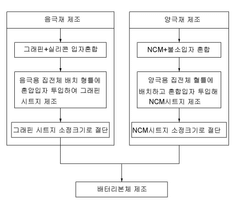
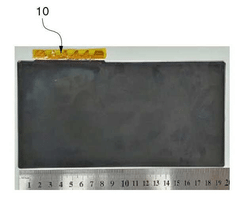
Graphene all-solid-state battery with improved energy density and safety and manufacturing method therefor
PatentActiveKR1020230064668A
Innovation
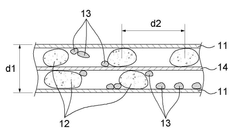
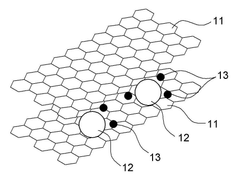
- The graphene all-solid-state battery employs a fine powder structure graphite and organic binder as the anode, mixed with Ni, Co, and Mn to balance voltage during charging and discharging, using oxygen ions and electrons as energy transfer mediums, and a double-structured hexagonal plate design to minimize plate distance, ensuring stability and safety.
Safety and Regulatory Considerations
The integration of graphene batteries in wearable technology brings forth critical safety and regulatory considerations that must be addressed to ensure consumer protection and industry compliance. Graphene's unique properties, while advantageous for energy storage, also present potential risks that require careful evaluation and mitigation.
One primary safety concern is the thermal management of graphene batteries. While graphene exhibits excellent thermal conductivity, the compact nature of wearable devices may lead to heat accumulation. Manufacturers must implement robust thermal management systems to prevent overheating, which could cause discomfort or injury to users. Additionally, the potential for thermal runaway must be thoroughly assessed and mitigated through advanced battery management systems and protective circuitry.
The chemical stability of graphene-based electrodes in various environmental conditions is another crucial safety aspect. Exposure to moisture, sweat, or other bodily fluids could potentially lead to degradation or unexpected chemical reactions. Rigorous testing protocols must be established to evaluate the long-term stability and safety of these batteries under diverse wear conditions.
From a regulatory standpoint, the novel nature of graphene batteries in wearables necessitates the development of new or updated standards. Regulatory bodies such as the FDA in the United States and the European Medicines Agency must establish clear guidelines for the use of graphene-based energy storage in wearable devices, particularly those with medical applications. These regulations should address performance standards, safety thresholds, and disposal procedures.
Electromagnetic compatibility (EMC) is another regulatory concern, as graphene batteries may interact differently with electromagnetic fields compared to traditional lithium-ion batteries. Compliance with existing EMC regulations and the potential need for new standards specific to graphene-based energy storage in wearables must be carefully considered.
The environmental impact of graphene battery production and disposal also falls under regulatory scrutiny. While graphene offers potential advantages in terms of recyclability and reduced environmental footprint, comprehensive life cycle assessments are necessary to validate these benefits. Regulations may need to be adapted to address the unique properties of graphene in the context of electronic waste management and recycling processes.
Lastly, the potential health effects of long-term exposure to graphene materials in close proximity to the body require thorough investigation. While initial studies suggest low toxicity, regulatory bodies must establish clear guidelines for biocompatibility testing and long-term safety monitoring of graphene-based wearable technologies.
One primary safety concern is the thermal management of graphene batteries. While graphene exhibits excellent thermal conductivity, the compact nature of wearable devices may lead to heat accumulation. Manufacturers must implement robust thermal management systems to prevent overheating, which could cause discomfort or injury to users. Additionally, the potential for thermal runaway must be thoroughly assessed and mitigated through advanced battery management systems and protective circuitry.
The chemical stability of graphene-based electrodes in various environmental conditions is another crucial safety aspect. Exposure to moisture, sweat, or other bodily fluids could potentially lead to degradation or unexpected chemical reactions. Rigorous testing protocols must be established to evaluate the long-term stability and safety of these batteries under diverse wear conditions.
From a regulatory standpoint, the novel nature of graphene batteries in wearables necessitates the development of new or updated standards. Regulatory bodies such as the FDA in the United States and the European Medicines Agency must establish clear guidelines for the use of graphene-based energy storage in wearable devices, particularly those with medical applications. These regulations should address performance standards, safety thresholds, and disposal procedures.
Electromagnetic compatibility (EMC) is another regulatory concern, as graphene batteries may interact differently with electromagnetic fields compared to traditional lithium-ion batteries. Compliance with existing EMC regulations and the potential need for new standards specific to graphene-based energy storage in wearables must be carefully considered.
The environmental impact of graphene battery production and disposal also falls under regulatory scrutiny. While graphene offers potential advantages in terms of recyclability and reduced environmental footprint, comprehensive life cycle assessments are necessary to validate these benefits. Regulations may need to be adapted to address the unique properties of graphene in the context of electronic waste management and recycling processes.
Lastly, the potential health effects of long-term exposure to graphene materials in close proximity to the body require thorough investigation. While initial studies suggest low toxicity, regulatory bodies must establish clear guidelines for biocompatibility testing and long-term safety monitoring of graphene-based wearable technologies.
Environmental Impact Assessment
The environmental impact of graphene battery developments in wearable technology is a crucial consideration as this innovative technology advances. Graphene batteries offer significant potential for improving the performance and sustainability of wearable devices, but their production and disposal processes require careful assessment.
One of the primary environmental benefits of graphene batteries is their potential to reduce electronic waste. Traditional lithium-ion batteries in wearable devices often have limited lifespans, leading to frequent replacements and disposal. Graphene batteries, with their superior durability and longer cycle life, could significantly extend the usable life of wearable devices, thereby reducing the volume of electronic waste generated over time.
However, the production of graphene itself raises environmental concerns. The synthesis of high-quality graphene often involves energy-intensive processes and the use of potentially harmful chemicals. As the demand for graphene batteries in wearable technology increases, it is crucial to develop and implement more sustainable production methods. Research into eco-friendly graphene synthesis techniques, such as those using renewable resources or green chemistry principles, is ongoing and shows promise for mitigating these environmental impacts.
The use of graphene batteries in wearable technology may also contribute to reduced energy consumption. The high energy density and rapid charging capabilities of graphene batteries could lead to more efficient power usage in wearable devices. This efficiency could translate to lower overall energy demands for charging and operating these devices, potentially reducing the carbon footprint associated with their use.
End-of-life considerations for graphene batteries are another important aspect of their environmental impact. While graphene itself is a carbon-based material and theoretically recyclable, the complex composition of batteries presents challenges for recycling processes. Developing effective recycling methods for graphene batteries will be crucial to ensure that the environmental benefits of their extended lifespan are not offset by disposal issues.
The integration of graphene batteries into wearable technology may also have indirect environmental benefits. For instance, the improved performance and longevity of wearable devices could enable more widespread adoption of health monitoring and fitness tracking technologies. This could potentially lead to more efficient healthcare delivery and promote healthier lifestyles, indirectly contributing to reduced resource consumption in healthcare systems.
As graphene battery technology continues to evolve, ongoing research and life cycle assessments will be essential to fully understand and mitigate its environmental impacts. Balancing the potential benefits of improved device performance and longevity against the environmental costs of production and disposal will be key to ensuring the sustainable development of this technology in the wearable sector.
One of the primary environmental benefits of graphene batteries is their potential to reduce electronic waste. Traditional lithium-ion batteries in wearable devices often have limited lifespans, leading to frequent replacements and disposal. Graphene batteries, with their superior durability and longer cycle life, could significantly extend the usable life of wearable devices, thereby reducing the volume of electronic waste generated over time.
However, the production of graphene itself raises environmental concerns. The synthesis of high-quality graphene often involves energy-intensive processes and the use of potentially harmful chemicals. As the demand for graphene batteries in wearable technology increases, it is crucial to develop and implement more sustainable production methods. Research into eco-friendly graphene synthesis techniques, such as those using renewable resources or green chemistry principles, is ongoing and shows promise for mitigating these environmental impacts.
The use of graphene batteries in wearable technology may also contribute to reduced energy consumption. The high energy density and rapid charging capabilities of graphene batteries could lead to more efficient power usage in wearable devices. This efficiency could translate to lower overall energy demands for charging and operating these devices, potentially reducing the carbon footprint associated with their use.
End-of-life considerations for graphene batteries are another important aspect of their environmental impact. While graphene itself is a carbon-based material and theoretically recyclable, the complex composition of batteries presents challenges for recycling processes. Developing effective recycling methods for graphene batteries will be crucial to ensure that the environmental benefits of their extended lifespan are not offset by disposal issues.
The integration of graphene batteries into wearable technology may also have indirect environmental benefits. For instance, the improved performance and longevity of wearable devices could enable more widespread adoption of health monitoring and fitness tracking technologies. This could potentially lead to more efficient healthcare delivery and promote healthier lifestyles, indirectly contributing to reduced resource consumption in healthcare systems.
As graphene battery technology continues to evolve, ongoing research and life cycle assessments will be essential to fully understand and mitigate its environmental impacts. Balancing the potential benefits of improved device performance and longevity against the environmental costs of production and disposal will be key to ensuring the sustainable development of this technology in the wearable sector.
Unlock deeper insights with PatSnap Eureka Quick Research — get a full tech report to explore trends and direct your research. Try now!
Generate Your Research Report Instantly with AI Agent
Supercharge your innovation with PatSnap Eureka AI Agent Platform!