Graphene Battery Technologies Rewriting Energy Efficiency Rules
AUG 6, 20259 MIN READ
Generate Your Research Report Instantly with AI Agent
PatSnap Eureka helps you evaluate technical feasibility & market potential.
Graphene Battery Evolution and Objectives
Graphene, a two-dimensional carbon allotrope, has revolutionized the field of energy storage since its discovery in 2004. The evolution of graphene battery technologies has been marked by rapid advancements and groundbreaking innovations, redefining the landscape of energy efficiency. Initially, researchers focused on harnessing graphene's exceptional electrical conductivity and high surface area to enhance the performance of traditional lithium-ion batteries.
As the potential of graphene became increasingly apparent, scientists began exploring its integration into various battery components. The development of graphene-based anodes marked a significant milestone, offering improved capacity and faster charging capabilities compared to conventional graphite anodes. Concurrently, efforts to incorporate graphene into cathodes and electrolytes gained momentum, aiming to address limitations in energy density and cycle life.
The evolution of graphene battery technologies has been driven by the pressing need for more efficient and sustainable energy storage solutions. With the global push towards renewable energy and electric vehicles, the demand for high-performance batteries has surged. Graphene's unique properties position it as a promising candidate to meet these evolving energy requirements, prompting intense research and development efforts worldwide.
One of the primary objectives in graphene battery research has been to achieve higher energy density without compromising safety or longevity. Scientists have been working tirelessly to optimize graphene's integration into battery structures, exploring various synthesis methods and composite materials to maximize its benefits. The goal is to create batteries that can store more energy in a smaller form factor, enabling longer-lasting and more compact devices.
Another crucial objective has been to enhance the charging speed of batteries. Graphene's excellent conductivity offers the potential for ultra-fast charging, which could revolutionize the adoption of electric vehicles and portable electronics. Researchers are striving to develop graphene-based batteries that can be charged in minutes rather than hours, without sacrificing battery life or safety.
Sustainability and environmental considerations have also shaped the evolution of graphene battery technologies. The aim is to create more eco-friendly batteries with reduced reliance on rare or toxic materials. Graphene's potential to improve the efficiency and lifespan of batteries aligns with these sustainability goals, potentially reducing the environmental impact of battery production and disposal.
As research progresses, the objectives of graphene battery technologies continue to expand. Scientists are now exploring the potential of graphene in next-generation battery chemistries, such as lithium-sulfur and solid-state batteries. These emerging technologies promise even greater improvements in energy density, safety, and longevity, with graphene playing a crucial role in overcoming existing limitations.
As the potential of graphene became increasingly apparent, scientists began exploring its integration into various battery components. The development of graphene-based anodes marked a significant milestone, offering improved capacity and faster charging capabilities compared to conventional graphite anodes. Concurrently, efforts to incorporate graphene into cathodes and electrolytes gained momentum, aiming to address limitations in energy density and cycle life.
The evolution of graphene battery technologies has been driven by the pressing need for more efficient and sustainable energy storage solutions. With the global push towards renewable energy and electric vehicles, the demand for high-performance batteries has surged. Graphene's unique properties position it as a promising candidate to meet these evolving energy requirements, prompting intense research and development efforts worldwide.
One of the primary objectives in graphene battery research has been to achieve higher energy density without compromising safety or longevity. Scientists have been working tirelessly to optimize graphene's integration into battery structures, exploring various synthesis methods and composite materials to maximize its benefits. The goal is to create batteries that can store more energy in a smaller form factor, enabling longer-lasting and more compact devices.
Another crucial objective has been to enhance the charging speed of batteries. Graphene's excellent conductivity offers the potential for ultra-fast charging, which could revolutionize the adoption of electric vehicles and portable electronics. Researchers are striving to develop graphene-based batteries that can be charged in minutes rather than hours, without sacrificing battery life or safety.
Sustainability and environmental considerations have also shaped the evolution of graphene battery technologies. The aim is to create more eco-friendly batteries with reduced reliance on rare or toxic materials. Graphene's potential to improve the efficiency and lifespan of batteries aligns with these sustainability goals, potentially reducing the environmental impact of battery production and disposal.
As research progresses, the objectives of graphene battery technologies continue to expand. Scientists are now exploring the potential of graphene in next-generation battery chemistries, such as lithium-sulfur and solid-state batteries. These emerging technologies promise even greater improvements in energy density, safety, and longevity, with graphene playing a crucial role in overcoming existing limitations.
Market Demand Analysis for High-Efficiency Energy Storage
The global energy storage market is experiencing unprecedented growth, driven by the increasing demand for high-efficiency energy storage solutions. This surge is primarily fueled by the rapid adoption of renewable energy sources, the electrification of transportation, and the growing need for grid stability. As traditional lithium-ion batteries approach their theoretical limits, there is a pressing need for more advanced energy storage technologies that can offer higher capacity, faster charging times, and improved safety profiles.
Graphene battery technologies are emerging as a promising solution to meet these evolving market demands. The unique properties of graphene, including its exceptional electrical conductivity, high surface area, and mechanical strength, make it an ideal material for enhancing battery performance. Market research indicates that the graphene battery market is expected to grow significantly in the coming years, with applications spanning from consumer electronics to electric vehicles and grid-scale energy storage.
In the consumer electronics sector, there is a strong demand for batteries that can provide longer-lasting power in smaller, lighter form factors. Graphene-enhanced batteries have the potential to meet this need by offering higher energy densities and faster charging capabilities. This aligns with the trend towards more powerful and portable devices, including smartphones, laptops, and wearables.
The electric vehicle (EV) market represents another significant driver for high-efficiency energy storage. As governments worldwide implement stricter emissions regulations and consumers become more environmentally conscious, the demand for EVs is soaring. Graphene batteries could address key challenges in EV adoption, such as range anxiety and charging times, by potentially offering greater energy density and ultra-fast charging capabilities.
In the renewable energy sector, the intermittent nature of solar and wind power generation necessitates advanced energy storage solutions to ensure grid stability and reliability. Graphene-based batteries could provide the high-capacity, long-duration storage needed to balance supply and demand in renewable energy systems. This market segment is expected to see substantial growth as countries strive to meet their clean energy targets and transition away from fossil fuels.
The industrial and aerospace sectors are also showing increasing interest in graphene battery technologies. These industries require high-performance energy storage solutions that can operate reliably under extreme conditions. Graphene's thermal and mechanical properties make it well-suited for these demanding applications, potentially opening up new market opportunities.
Graphene battery technologies are emerging as a promising solution to meet these evolving market demands. The unique properties of graphene, including its exceptional electrical conductivity, high surface area, and mechanical strength, make it an ideal material for enhancing battery performance. Market research indicates that the graphene battery market is expected to grow significantly in the coming years, with applications spanning from consumer electronics to electric vehicles and grid-scale energy storage.
In the consumer electronics sector, there is a strong demand for batteries that can provide longer-lasting power in smaller, lighter form factors. Graphene-enhanced batteries have the potential to meet this need by offering higher energy densities and faster charging capabilities. This aligns with the trend towards more powerful and portable devices, including smartphones, laptops, and wearables.
The electric vehicle (EV) market represents another significant driver for high-efficiency energy storage. As governments worldwide implement stricter emissions regulations and consumers become more environmentally conscious, the demand for EVs is soaring. Graphene batteries could address key challenges in EV adoption, such as range anxiety and charging times, by potentially offering greater energy density and ultra-fast charging capabilities.
In the renewable energy sector, the intermittent nature of solar and wind power generation necessitates advanced energy storage solutions to ensure grid stability and reliability. Graphene-based batteries could provide the high-capacity, long-duration storage needed to balance supply and demand in renewable energy systems. This market segment is expected to see substantial growth as countries strive to meet their clean energy targets and transition away from fossil fuels.
The industrial and aerospace sectors are also showing increasing interest in graphene battery technologies. These industries require high-performance energy storage solutions that can operate reliably under extreme conditions. Graphene's thermal and mechanical properties make it well-suited for these demanding applications, potentially opening up new market opportunities.
Current Challenges in Graphene Battery Development
Despite the promising potential of graphene batteries, several significant challenges currently hinder their widespread adoption and commercialization. One of the primary obstacles is the scalability of graphene production. While laboratory-scale synthesis of high-quality graphene is achievable, mass production with consistent quality and properties remains a formidable challenge. This limitation directly impacts the feasibility of large-scale graphene battery manufacturing.
Another critical issue is the integration of graphene into existing battery architectures. Graphene's unique properties, while advantageous, also present difficulties in terms of compatibility with traditional battery components. Researchers are grappling with optimizing the interface between graphene and other materials to maximize performance benefits without compromising stability or safety.
The long-term stability of graphene-based batteries is also a concern. While initial performance metrics are often impressive, maintaining these characteristics over extended charge-discharge cycles is crucial for practical applications. Degradation mechanisms specific to graphene electrodes, such as restacking of graphene sheets and potential chemical interactions with electrolytes, need to be thoroughly understood and mitigated.
Cost remains a significant barrier to commercialization. Although graphene prices have decreased in recent years, they are still substantially higher than conventional battery materials. This cost differential makes it challenging for graphene batteries to compete in price-sensitive markets, particularly in consumer electronics and automotive sectors.
Safety considerations pose another challenge. While graphene itself is not inherently unsafe, its use in high-energy-density batteries requires rigorous testing and validation to ensure compliance with stringent safety standards. Potential issues such as thermal runaway and electrolyte compatibility need to be thoroughly addressed.
Furthermore, the environmental impact of graphene production and disposal is an emerging concern. Sustainable manufacturing processes and end-of-life recycling strategies for graphene batteries are still in their infancy, requiring significant research and development to align with growing environmental regulations and consumer expectations.
Lastly, the regulatory landscape for graphene-based energy storage technologies is still evolving. Uncertainty in standards and certification processes can slow down the commercialization pathway, as manufacturers navigate complex approval processes for novel materials and technologies in the energy storage sector.
Another critical issue is the integration of graphene into existing battery architectures. Graphene's unique properties, while advantageous, also present difficulties in terms of compatibility with traditional battery components. Researchers are grappling with optimizing the interface between graphene and other materials to maximize performance benefits without compromising stability or safety.
The long-term stability of graphene-based batteries is also a concern. While initial performance metrics are often impressive, maintaining these characteristics over extended charge-discharge cycles is crucial for practical applications. Degradation mechanisms specific to graphene electrodes, such as restacking of graphene sheets and potential chemical interactions with electrolytes, need to be thoroughly understood and mitigated.
Cost remains a significant barrier to commercialization. Although graphene prices have decreased in recent years, they are still substantially higher than conventional battery materials. This cost differential makes it challenging for graphene batteries to compete in price-sensitive markets, particularly in consumer electronics and automotive sectors.
Safety considerations pose another challenge. While graphene itself is not inherently unsafe, its use in high-energy-density batteries requires rigorous testing and validation to ensure compliance with stringent safety standards. Potential issues such as thermal runaway and electrolyte compatibility need to be thoroughly addressed.
Furthermore, the environmental impact of graphene production and disposal is an emerging concern. Sustainable manufacturing processes and end-of-life recycling strategies for graphene batteries are still in their infancy, requiring significant research and development to align with growing environmental regulations and consumer expectations.
Lastly, the regulatory landscape for graphene-based energy storage technologies is still evolving. Uncertainty in standards and certification processes can slow down the commercialization pathway, as manufacturers navigate complex approval processes for novel materials and technologies in the energy storage sector.
Existing Graphene Battery Solutions
01 Graphene-based electrode materials
Graphene-based materials are used as electrodes in batteries to enhance energy efficiency. These materials offer high conductivity, large surface area, and excellent mechanical properties, leading to improved charge storage capacity and faster charge/discharge rates. The incorporation of graphene in electrodes can significantly boost the overall performance and energy efficiency of batteries.- Graphene-based electrode materials: Graphene-based materials are used as electrodes in batteries to enhance energy efficiency. These materials offer high conductivity, large surface area, and excellent mechanical properties, leading to improved charge storage capacity and faster charge/discharge rates. The incorporation of graphene in electrodes can significantly boost the overall performance and energy efficiency of batteries.
- Graphene-enhanced electrolytes: Graphene is utilized to improve electrolyte performance in batteries. By incorporating graphene or graphene oxide into the electrolyte, ionic conductivity can be increased, leading to better energy efficiency. These enhanced electrolytes can also contribute to improved stability and longer battery life, further optimizing overall energy efficiency.
- Graphene-based composite materials: Composite materials combining graphene with other substances are developed to enhance battery performance. These composites can include graphene mixed with metal oxides, polymers, or other carbon materials. The resulting materials often exhibit synergistic effects, leading to improved energy storage capacity, faster charging rates, and overall higher energy efficiency in battery applications.
- Graphene-enabled thermal management: Graphene's excellent thermal conductivity is utilized to enhance heat dissipation in batteries. By incorporating graphene into battery components or as a heat-spreading layer, thermal management is improved. This leads to more stable battery operation, reduced energy loss due to heat, and ultimately increased energy efficiency, especially in high-power applications.
- Graphene-based flexible and wearable batteries: Graphene is used to develop flexible and wearable battery technologies. Its unique properties allow for the creation of thin, lightweight, and bendable battery structures without compromising energy efficiency. These batteries can conform to various shapes and are particularly suitable for wearable electronics and other applications where traditional rigid batteries are impractical.
02 Graphene-enhanced electrolytes
Graphene is incorporated into battery electrolytes to improve ionic conductivity and overall energy efficiency. These graphene-enhanced electrolytes facilitate faster ion transport, reduce internal resistance, and enhance the battery's power output. This innovation leads to more efficient energy storage and utilization in graphene-based batteries.Expand Specific Solutions03 Graphene-based composite materials
Composite materials combining graphene with other substances are developed to optimize battery performance and energy efficiency. These composites can include graphene mixed with metal oxides, polymers, or other carbon materials. The resulting materials often exhibit synergistic effects, leading to improved capacity, cycling stability, and overall energy efficiency of the battery.Expand Specific Solutions04 Graphene-enabled thermal management
Graphene's excellent thermal conductivity is utilized to enhance heat dissipation in batteries, improving their energy efficiency. By incorporating graphene into battery components or as a heat-spreading layer, the thermal management of the battery is optimized. This leads to reduced energy loss due to heat generation and improved overall battery performance and efficiency.Expand Specific Solutions05 Graphene-based flexible and wearable batteries
Graphene is used to develop flexible and wearable batteries with high energy efficiency. The unique properties of graphene allow for the creation of thin, lightweight, and bendable battery structures without compromising on performance. These innovations enable efficient energy storage solutions for wearable electronics and flexible devices, maximizing energy utilization in compact form factors.Expand Specific Solutions
Key Players in Graphene Battery Industry
The graphene battery technology market is in a dynamic growth phase, characterized by intense competition and rapid innovation. The industry is witnessing significant investments from both academic institutions and private companies, indicating a growing market with substantial potential. While the technology is still evolving, it has attracted attention from major players across various sectors, including automotive, electronics, and energy storage. Companies like Toyota Motor Corp., Samsung Electronics, and NEC Corp. are actively involved in research and development, alongside specialized firms such as Global Graphene Group and Form Energy. The involvement of prestigious universities like King Abdullah University of Science & Technology and Zhejiang University further underscores the technology's promise. As the market matures, we can expect increased commercialization efforts and potential disruption in the energy storage sector.
Global Graphene Group, Inc.
Technical Solution: Global Graphene Group (G3) has developed a groundbreaking graphene-enhanced silicon anode technology for lithium-ion batteries. Their Si-G composite anode material combines silicon nanoparticles with graphene, addressing the volume expansion issues of silicon during charging cycles. This innovative approach has resulted in batteries with significantly higher energy density, up to 30% more than conventional lithium-ion batteries[1]. G3's technology also incorporates a unique graphene coating process that enhances the conductivity and stability of the anode, leading to improved cycle life and faster charging capabilities[3]. The company has successfully scaled up production of their graphene-silicon composite material, demonstrating its viability for commercial applications in electric vehicles and portable electronics[5].
Strengths: Higher energy density, improved cycle life, and faster charging. Scalable production process. Weaknesses: Potential higher production costs compared to traditional graphite anodes. Long-term stability in real-world applications still being validated.
Toyota Motor Corp.
Technical Solution: Toyota has been at the forefront of graphene battery research, focusing on solid-state battery technology incorporating graphene. Their approach involves using graphene as a conductive additive in solid electrolytes, which enhances ionic conductivity and reduces internal resistance[2]. Toyota's research has shown that graphene-enhanced solid-state batteries can potentially double the energy density of current lithium-ion batteries while significantly reducing charging times to under 10 minutes for electric vehicles[4]. The company has also developed a proprietary manufacturing process that allows for the uniform dispersion of graphene within the solid electrolyte, ensuring consistent performance across the battery cells[6]. Toyota aims to commercialize this technology by 2025, potentially revolutionizing the electric vehicle market[8].
Strengths: Potential for high energy density and ultra-fast charging. Improved safety due to solid-state design. Weaknesses: High production costs and challenges in scaling up manufacturing processes. Technology still in development phase.
Core Innovations in Graphene-Based Energy Storage
Graphene Solid State Battery
PatentPendingUS20230291000A1
Innovation
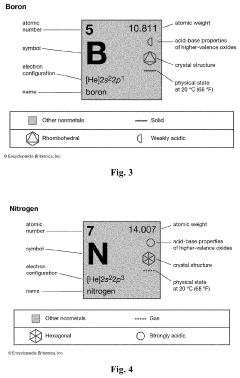
- A solid state Graphene battery is developed, comprising a 100 single layered Graphene casing, a 100 femtosecond laser induced confined microexplosion energy density enhanced Graphene Oxide Nickel-Copper nanocomposite anode and cathode, a Fluorinated Graphene electrolyte, and a Carboxyl neutralized Graphene quantum dot separator, utilizing Graphene produced from Carbon Dioxide using Copper Palladium alloys and Atmospheric Pressure Chemical Vapor Deposition.


Systems, methods and apparatus for improving rechargeable energy storage devices and integrated circuits
PatentActiveUS20230092765A1
Innovation
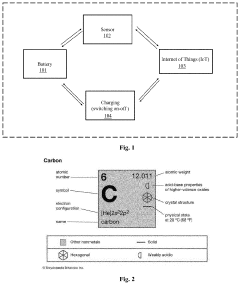
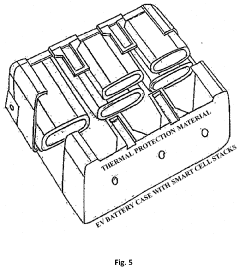
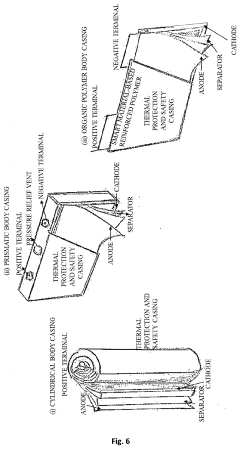
- The development of a smart rechargeable energy storage device using pure organic carbon-based graphene in a solid-state configuration, with graphene sheets forming the anode and cathode electrodes and serving as a separator, enabling faster charging, longer cycle life, and enhanced energy density, while eliminating safety hazards through self-healing and safer materials.
Environmental Impact of Graphene Battery Production
The production of graphene batteries presents both opportunities and challenges in terms of environmental impact. While these advanced energy storage devices promise significant improvements in energy efficiency and performance, their manufacturing processes require careful consideration of ecological consequences.
Graphene production, a key component in these batteries, typically involves chemical vapor deposition or exfoliation methods. These processes can be energy-intensive and may involve the use of potentially harmful chemicals. However, ongoing research is focused on developing more environmentally friendly production techniques, such as using renewable precursors or implementing closed-loop systems to minimize waste.
The extraction and processing of raw materials for graphene batteries, including graphite and various metals, can have substantial environmental implications. Mining operations may lead to habitat disruption, soil erosion, and water pollution. Nevertheless, the longevity and high performance of graphene batteries could potentially offset these initial environmental costs over their lifecycle.
Water usage is another critical factor in graphene battery production. The manufacturing process requires significant amounts of water for cooling and cleaning purposes. Implementing water recycling systems and adopting more efficient production methods can help mitigate this impact.
Energy consumption during production is a notable concern. However, the enhanced energy storage capabilities of graphene batteries may lead to overall energy savings in various applications, potentially outweighing the energy invested in their production. This highlights the importance of considering the full lifecycle impact rather than focusing solely on manufacturing.
Waste management in graphene battery production presents both challenges and opportunities. While some waste materials may be hazardous and require special handling, advancements in recycling technologies are making it increasingly feasible to recover and reuse valuable components, reducing the overall environmental footprint.
The potential for graphene batteries to enable more efficient renewable energy systems and electric vehicles could contribute significantly to reducing global carbon emissions. This indirect environmental benefit must be weighed against the immediate impacts of production.
As the technology matures, it is likely that more sustainable production methods will be developed, further improving the environmental profile of graphene batteries. Ongoing research into bio-based precursors, green chemistry approaches, and circular economy principles in battery manufacturing holds promise for minimizing ecological impacts while maximizing the benefits of this revolutionary energy storage technology.
Graphene production, a key component in these batteries, typically involves chemical vapor deposition or exfoliation methods. These processes can be energy-intensive and may involve the use of potentially harmful chemicals. However, ongoing research is focused on developing more environmentally friendly production techniques, such as using renewable precursors or implementing closed-loop systems to minimize waste.
The extraction and processing of raw materials for graphene batteries, including graphite and various metals, can have substantial environmental implications. Mining operations may lead to habitat disruption, soil erosion, and water pollution. Nevertheless, the longevity and high performance of graphene batteries could potentially offset these initial environmental costs over their lifecycle.
Water usage is another critical factor in graphene battery production. The manufacturing process requires significant amounts of water for cooling and cleaning purposes. Implementing water recycling systems and adopting more efficient production methods can help mitigate this impact.
Energy consumption during production is a notable concern. However, the enhanced energy storage capabilities of graphene batteries may lead to overall energy savings in various applications, potentially outweighing the energy invested in their production. This highlights the importance of considering the full lifecycle impact rather than focusing solely on manufacturing.
Waste management in graphene battery production presents both challenges and opportunities. While some waste materials may be hazardous and require special handling, advancements in recycling technologies are making it increasingly feasible to recover and reuse valuable components, reducing the overall environmental footprint.
The potential for graphene batteries to enable more efficient renewable energy systems and electric vehicles could contribute significantly to reducing global carbon emissions. This indirect environmental benefit must be weighed against the immediate impacts of production.
As the technology matures, it is likely that more sustainable production methods will be developed, further improving the environmental profile of graphene batteries. Ongoing research into bio-based precursors, green chemistry approaches, and circular economy principles in battery manufacturing holds promise for minimizing ecological impacts while maximizing the benefits of this revolutionary energy storage technology.
Scalability and Commercialization Prospects
The scalability and commercialization prospects for graphene battery technologies are promising, yet they face several challenges that need to be addressed before widespread adoption can be achieved. One of the primary hurdles is the cost-effective production of high-quality graphene at scale. While laboratory-scale production has shown remarkable results, translating these processes to industrial-scale manufacturing remains a significant challenge.
Current production methods, such as chemical vapor deposition (CVD) and liquid-phase exfoliation, are being optimized for large-scale production. However, maintaining consistent quality and purity of graphene across batches is crucial for ensuring the reliability and performance of graphene-based batteries. Innovations in production techniques, such as roll-to-roll manufacturing, are being explored to increase output while maintaining quality.
The integration of graphene into existing battery manufacturing processes presents another challenge. Adapting current production lines to incorporate graphene-based components requires significant investment and retooling. This transition may be gradual, with hybrid solutions incorporating graphene alongside traditional materials as an intermediate step towards full graphene battery systems.
Market acceptance and regulatory approval are critical factors in the commercialization of graphene batteries. Safety concerns, particularly regarding the long-term stability and potential environmental impact of graphene materials, need to be thoroughly addressed. Extensive testing and certification processes will be necessary to gain consumer trust and regulatory approval across different markets and applications.
Despite these challenges, the potential benefits of graphene batteries are driving significant investment and research efforts. The promise of higher energy density, faster charging times, and longer cycle life makes graphene batteries attractive for various applications, from consumer electronics to electric vehicles and grid-scale energy storage. As production scales up and costs decrease, the adoption of graphene battery technologies is expected to accelerate, potentially revolutionizing the energy storage landscape.
Collaborations between academic institutions, research labs, and industry players are crucial for overcoming technical barriers and accelerating commercialization. Government support through funding and policy initiatives can also play a vital role in fostering innovation and scaling up production. As the technology matures and production efficiencies improve, graphene batteries are poised to capture an increasing share of the global energy storage market, potentially redefining energy efficiency standards across multiple sectors.
Current production methods, such as chemical vapor deposition (CVD) and liquid-phase exfoliation, are being optimized for large-scale production. However, maintaining consistent quality and purity of graphene across batches is crucial for ensuring the reliability and performance of graphene-based batteries. Innovations in production techniques, such as roll-to-roll manufacturing, are being explored to increase output while maintaining quality.
The integration of graphene into existing battery manufacturing processes presents another challenge. Adapting current production lines to incorporate graphene-based components requires significant investment and retooling. This transition may be gradual, with hybrid solutions incorporating graphene alongside traditional materials as an intermediate step towards full graphene battery systems.
Market acceptance and regulatory approval are critical factors in the commercialization of graphene batteries. Safety concerns, particularly regarding the long-term stability and potential environmental impact of graphene materials, need to be thoroughly addressed. Extensive testing and certification processes will be necessary to gain consumer trust and regulatory approval across different markets and applications.
Despite these challenges, the potential benefits of graphene batteries are driving significant investment and research efforts. The promise of higher energy density, faster charging times, and longer cycle life makes graphene batteries attractive for various applications, from consumer electronics to electric vehicles and grid-scale energy storage. As production scales up and costs decrease, the adoption of graphene battery technologies is expected to accelerate, potentially revolutionizing the energy storage landscape.
Collaborations between academic institutions, research labs, and industry players are crucial for overcoming technical barriers and accelerating commercialization. Government support through funding and policy initiatives can also play a vital role in fostering innovation and scaling up production. As the technology matures and production efficiencies improve, graphene batteries are poised to capture an increasing share of the global energy storage market, potentially redefining energy efficiency standards across multiple sectors.
Unlock deeper insights with PatSnap Eureka Quick Research — get a full tech report to explore trends and direct your research. Try now!
Generate Your Research Report Instantly with AI Agent
Supercharge your innovation with PatSnap Eureka AI Agent Platform!