
Graphene Electrode Modifications for Improved Electrical Conductivity
SEP 28, 202510 MIN READ
Generate Your Research Report Instantly with AI Agent
Patsnap Eureka helps you evaluate technical feasibility & market potential.
Graphene Electrode Technology Background and Objectives
Graphene, a two-dimensional carbon allotrope with sp² hybridized carbon atoms arranged in a hexagonal lattice, has emerged as a revolutionary material since its isolation in 2004 by Geim and Novoselov. This breakthrough earned them the Nobel Prize in Physics in 2010, catalyzing extensive research into graphene's exceptional properties. With theoretical electrical conductivity surpassing conventional materials by orders of magnitude, graphene exhibits remarkable characteristics including high electron mobility (exceeding 200,000 cm²/V·s), superior mechanical strength (200 times stronger than steel), and excellent thermal conductivity (approximately 5000 W/m·K).
The evolution of graphene electrode technology has progressed through several distinct phases. Initially, research focused on fundamental properties and basic fabrication methods. Subsequently, attention shifted toward scalable production techniques, including chemical vapor deposition (CVD) and reduced graphene oxide approaches. Recent developments have concentrated on enhancing graphene's electrical properties through various modification strategies, addressing inherent limitations that prevent achieving theoretical conductivity values in practical applications.
Current technological objectives in graphene electrode modification center on overcoming key challenges that limit electrical conductivity in real-world implementations. These include reducing contact resistance at electrode interfaces, minimizing defects and grain boundaries in graphene sheets, and developing effective doping strategies to optimize carrier concentration. Additionally, researchers aim to enhance stability under operational conditions and improve compatibility with existing manufacturing processes.
The strategic importance of advancing graphene electrode technology extends beyond academic interest. Enhanced electrical conductivity in graphene electrodes promises transformative applications across multiple industries, including next-generation electronics, energy storage systems, photovoltaics, and biomedical devices. Particularly significant is graphene's potential to enable flexible, transparent, and high-performance electrodes critical for emerging technologies such as wearable electronics, foldable displays, and advanced sensor systems.
Global research initiatives have established ambitious targets for graphene electrode performance, including achieving room-temperature conductivity exceeding 10⁸ S/m in modified graphene structures, reducing sheet resistance below 10 Ω/sq while maintaining >90% optical transparency, and developing modification techniques compatible with large-scale manufacturing processes. These objectives align with broader technological trends toward miniaturization, energy efficiency, and sustainable materials in electronic systems.
The convergence of nanotechnology, materials science, and electronic engineering in graphene electrode research represents a multidisciplinary frontier with significant potential for technological disruption. As modification techniques continue to advance, graphene electrodes are positioned to potentially replace traditional materials like indium tin oxide (ITO) and various metals in numerous applications, fundamentally altering the landscape of electronic materials.
The evolution of graphene electrode technology has progressed through several distinct phases. Initially, research focused on fundamental properties and basic fabrication methods. Subsequently, attention shifted toward scalable production techniques, including chemical vapor deposition (CVD) and reduced graphene oxide approaches. Recent developments have concentrated on enhancing graphene's electrical properties through various modification strategies, addressing inherent limitations that prevent achieving theoretical conductivity values in practical applications.
Current technological objectives in graphene electrode modification center on overcoming key challenges that limit electrical conductivity in real-world implementations. These include reducing contact resistance at electrode interfaces, minimizing defects and grain boundaries in graphene sheets, and developing effective doping strategies to optimize carrier concentration. Additionally, researchers aim to enhance stability under operational conditions and improve compatibility with existing manufacturing processes.
The strategic importance of advancing graphene electrode technology extends beyond academic interest. Enhanced electrical conductivity in graphene electrodes promises transformative applications across multiple industries, including next-generation electronics, energy storage systems, photovoltaics, and biomedical devices. Particularly significant is graphene's potential to enable flexible, transparent, and high-performance electrodes critical for emerging technologies such as wearable electronics, foldable displays, and advanced sensor systems.
Global research initiatives have established ambitious targets for graphene electrode performance, including achieving room-temperature conductivity exceeding 10⁸ S/m in modified graphene structures, reducing sheet resistance below 10 Ω/sq while maintaining >90% optical transparency, and developing modification techniques compatible with large-scale manufacturing processes. These objectives align with broader technological trends toward miniaturization, energy efficiency, and sustainable materials in electronic systems.
The convergence of nanotechnology, materials science, and electronic engineering in graphene electrode research represents a multidisciplinary frontier with significant potential for technological disruption. As modification techniques continue to advance, graphene electrodes are positioned to potentially replace traditional materials like indium tin oxide (ITO) and various metals in numerous applications, fundamentally altering the landscape of electronic materials.
Market Applications and Demand Analysis for Enhanced Graphene Electrodes
The global market for graphene electrodes with enhanced electrical conductivity is experiencing significant growth, driven by the increasing demand for high-performance electronic devices, energy storage systems, and sensors. The market size for graphene-based electrodes was valued at approximately $86 million in 2022 and is projected to reach $215 million by 2028, representing a compound annual growth rate of 16.5% during the forecast period.
Consumer electronics represents one of the largest application segments for enhanced graphene electrodes. The demand for faster charging, longer-lasting batteries, and more responsive touchscreens has created substantial market opportunities. Major smartphone manufacturers are actively exploring graphene electrode integration to differentiate their products in an increasingly competitive market.
Energy storage systems constitute another critical market segment. The superior electrical conductivity of modified graphene electrodes enables the development of supercapacitors with higher power density and faster charging capabilities. The electric vehicle industry, in particular, has shown keen interest in graphene-enhanced electrodes for improving battery performance, with several major automotive manufacturers conducting advanced research and development in this area.
The healthcare and biomedical sectors are emerging as promising markets for graphene electrodes with improved conductivity. Applications include biosensors for real-time health monitoring, neural interfaces, and advanced diagnostic tools. The market for graphene-based biosensors alone is expected to grow at 21% annually through 2030, driven by increasing healthcare expenditure and the shift toward personalized medicine.
Regional analysis indicates that Asia-Pacific currently dominates the market, accounting for approximately 45% of global demand. This is primarily due to the strong presence of electronics manufacturing in countries like China, South Korea, and Japan. North America follows with a 30% market share, with significant research activities and investments in graphene technology.
End-user feedback indicates that while the performance advantages of enhanced graphene electrodes are widely recognized, cost remains a significant barrier to widespread adoption. Current production costs for high-quality graphene electrodes with modified conductivity are 3-5 times higher than conventional alternatives, limiting market penetration in price-sensitive applications.
Market forecasts suggest that as manufacturing processes mature and economies of scale are achieved, the cost differential will narrow significantly by 2026, potentially accelerating adoption across multiple industries. The development of standardized modification techniques for graphene electrodes could serve as a catalyst for market expansion, particularly in emerging applications such as flexible electronics and wearable technology.
Consumer electronics represents one of the largest application segments for enhanced graphene electrodes. The demand for faster charging, longer-lasting batteries, and more responsive touchscreens has created substantial market opportunities. Major smartphone manufacturers are actively exploring graphene electrode integration to differentiate their products in an increasingly competitive market.
Energy storage systems constitute another critical market segment. The superior electrical conductivity of modified graphene electrodes enables the development of supercapacitors with higher power density and faster charging capabilities. The electric vehicle industry, in particular, has shown keen interest in graphene-enhanced electrodes for improving battery performance, with several major automotive manufacturers conducting advanced research and development in this area.
The healthcare and biomedical sectors are emerging as promising markets for graphene electrodes with improved conductivity. Applications include biosensors for real-time health monitoring, neural interfaces, and advanced diagnostic tools. The market for graphene-based biosensors alone is expected to grow at 21% annually through 2030, driven by increasing healthcare expenditure and the shift toward personalized medicine.
Regional analysis indicates that Asia-Pacific currently dominates the market, accounting for approximately 45% of global demand. This is primarily due to the strong presence of electronics manufacturing in countries like China, South Korea, and Japan. North America follows with a 30% market share, with significant research activities and investments in graphene technology.
End-user feedback indicates that while the performance advantages of enhanced graphene electrodes are widely recognized, cost remains a significant barrier to widespread adoption. Current production costs for high-quality graphene electrodes with modified conductivity are 3-5 times higher than conventional alternatives, limiting market penetration in price-sensitive applications.
Market forecasts suggest that as manufacturing processes mature and economies of scale are achieved, the cost differential will narrow significantly by 2026, potentially accelerating adoption across multiple industries. The development of standardized modification techniques for graphene electrodes could serve as a catalyst for market expansion, particularly in emerging applications such as flexible electronics and wearable technology.
Current Limitations and Challenges in Graphene Conductivity
Despite graphene's theoretical electrical conductivity of approximately 10^6 S/cm, which exceeds that of copper, practical applications face significant limitations. The primary challenge stems from structural defects that emerge during synthesis processes. Point defects, grain boundaries, and edge irregularities disrupt the sp² hybridized carbon lattice, creating electron scattering sites that substantially reduce conductivity. These defects are particularly prevalent in large-scale production methods like chemical vapor deposition (CVD), where maintaining perfect crystallinity remains elusive.
Contact resistance presents another critical barrier, especially at graphene-metal interfaces in electrode applications. The work function mismatch between graphene and metal contacts creates Schottky barriers, increasing resistance at these junctions. This issue becomes particularly pronounced in miniaturized devices where contact resistance can dominate overall performance metrics.
Environmental sensitivity further complicates graphene's conductivity profile. Atmospheric contaminants, particularly water molecules and oxygen, readily adsorb onto graphene's surface due to its single-atom thickness. These adsorbates act as dopants, altering charge carrier concentration and mobility unpredictably. Additionally, substrate interactions induce strain and charge puddles in graphene, further degrading its intrinsic electrical properties.
Scalability challenges persist in manufacturing high-quality graphene electrodes with consistent conductivity. Current production techniques struggle to balance quality with production volume, resulting in batch-to-batch variations that impede industrial adoption. The trade-off between defect density and production scale remains a significant hurdle for commercial applications.
Doping stability represents another unresolved challenge. While chemical doping effectively enhances graphene's conductivity, the temporal stability of these modifications is often insufficient for long-term applications. Dopants tend to degrade or desorb over time, particularly under operational conditions involving temperature fluctuations or mechanical stress.
The mechanical fragility of graphene electrodes also impacts their electrical performance. Graphene's flexibility, while advantageous for certain applications, creates challenges in maintaining structural integrity during device fabrication and operation. Microcracks formed during handling or thermal cycling create discontinuities in conduction pathways, progressively degrading performance.
Integration challenges with existing manufacturing processes further limit graphene's practical implementation. Conventional microfabrication techniques often involve conditions that compromise graphene's structural and electrical properties, such as exposure to harsh chemicals or high-temperature processes. Developing compatible fabrication protocols remains an active research area requiring significant innovation.
Contact resistance presents another critical barrier, especially at graphene-metal interfaces in electrode applications. The work function mismatch between graphene and metal contacts creates Schottky barriers, increasing resistance at these junctions. This issue becomes particularly pronounced in miniaturized devices where contact resistance can dominate overall performance metrics.
Environmental sensitivity further complicates graphene's conductivity profile. Atmospheric contaminants, particularly water molecules and oxygen, readily adsorb onto graphene's surface due to its single-atom thickness. These adsorbates act as dopants, altering charge carrier concentration and mobility unpredictably. Additionally, substrate interactions induce strain and charge puddles in graphene, further degrading its intrinsic electrical properties.
Scalability challenges persist in manufacturing high-quality graphene electrodes with consistent conductivity. Current production techniques struggle to balance quality with production volume, resulting in batch-to-batch variations that impede industrial adoption. The trade-off between defect density and production scale remains a significant hurdle for commercial applications.
Doping stability represents another unresolved challenge. While chemical doping effectively enhances graphene's conductivity, the temporal stability of these modifications is often insufficient for long-term applications. Dopants tend to degrade or desorb over time, particularly under operational conditions involving temperature fluctuations or mechanical stress.
The mechanical fragility of graphene electrodes also impacts their electrical performance. Graphene's flexibility, while advantageous for certain applications, creates challenges in maintaining structural integrity during device fabrication and operation. Microcracks formed during handling or thermal cycling create discontinuities in conduction pathways, progressively degrading performance.
Integration challenges with existing manufacturing processes further limit graphene's practical implementation. Conventional microfabrication techniques often involve conditions that compromise graphene's structural and electrical properties, such as exposure to harsh chemicals or high-temperature processes. Developing compatible fabrication protocols remains an active research area requiring significant innovation.
Current Modification Approaches for Graphene Electrodes
01 Graphene electrode fabrication methods for enhanced conductivity
Various fabrication methods can be employed to enhance the electrical conductivity of graphene electrodes. These include chemical vapor deposition (CVD), reduction of graphene oxide, and specialized coating techniques. The processing parameters during fabrication significantly impact the resulting conductivity properties, with techniques like annealing and doping being particularly effective for optimizing electrical performance.- Graphene electrode fabrication methods for enhanced conductivity: Various fabrication methods can be employed to enhance the electrical conductivity of graphene electrodes. These include chemical vapor deposition, reduction of graphene oxide, and specialized treatment processes that maintain the integrity of the graphene structure. These methods aim to minimize defects and ensure high-quality graphene sheets with optimal electrical properties for electrode applications.
- Doping and functionalization of graphene electrodes: Doping and functionalization techniques can significantly improve the electrical conductivity of graphene electrodes. By introducing specific atoms or functional groups to the graphene structure, the electronic properties can be tailored for particular applications. These modifications can enhance charge carrier concentration and mobility, resulting in superior conductivity performance compared to pristine graphene.
- Graphene-based composite electrodes: Composite materials combining graphene with other conductive materials can achieve enhanced electrical conductivity. These composites may incorporate metals, conductive polymers, or other carbon nanomaterials to create synergistic effects. The resulting hybrid electrodes often exhibit improved conductivity, stability, and mechanical properties compared to pure graphene electrodes, making them suitable for various electronic applications.
- Structural optimization of graphene electrodes: The structural configuration of graphene in electrodes significantly impacts electrical conductivity. Techniques such as creating 3D architectures, controlling layer thickness, and optimizing the orientation of graphene sheets can enhance electron transport pathways. These structural optimizations reduce contact resistance and improve overall conductivity, making the electrodes more efficient for energy storage and conversion applications.
- Measurement and characterization of graphene electrode conductivity: Advanced techniques for measuring and characterizing the electrical conductivity of graphene electrodes are essential for quality control and performance optimization. These include four-point probe measurements, Hall effect measurements, impedance spectroscopy, and specialized microscopy techniques. Accurate characterization enables researchers to correlate processing parameters with conductivity performance and develop electrodes with tailored electrical properties.
02 Composite graphene electrodes with metal nanoparticles
Incorporating metal nanoparticles into graphene electrodes creates composite structures with significantly enhanced electrical conductivity. These hybrid materials combine the high surface area of graphene with the excellent conductivity of metals such as gold, silver, or copper. The synergistic effect between graphene and metal nanoparticles results in improved electron transfer rates and overall electrode performance for various applications including sensors and energy storage devices.Expand Specific Solutions03 Doping strategies for graphene conductivity enhancement
Chemical doping of graphene electrodes with various elements or compounds can significantly enhance electrical conductivity. Nitrogen, boron, and other heteroatom dopants modify the electronic structure of graphene, creating additional charge carriers. Solution-based and vapor-phase doping methods allow precise control over dopant concentration and distribution, enabling tailored conductivity properties for specific applications.Expand Specific Solutions04 Structural modifications for improved electron transport
Structural modifications to graphene electrodes, such as creating specific patterns, defects, or hierarchical architectures, can enhance electrical conductivity by optimizing electron transport pathways. Techniques include laser patterning, controlled introduction of defects, and creation of three-dimensional graphene structures. These modifications reduce junction resistance and create preferential pathways for electron movement, resulting in superior conductivity compared to conventional flat graphene sheets.Expand Specific Solutions05 Graphene-polymer composites for flexible conductive electrodes
Combining graphene with polymers creates flexible, conductive electrode materials with tunable electrical properties. These composites maintain high conductivity while gaining mechanical flexibility and durability. The polymer matrix helps prevent graphene sheet restacking, preserving the high surface area and conductive pathways. Various polymer types can be selected based on the specific application requirements, with processing techniques like solution blending and in-situ polymerization affecting the final conductivity properties.Expand Specific Solutions
Leading Companies and Research Institutions in Graphene Technology
The graphene electrode modification market is in a growth phase, characterized by increasing R&D investments and expanding applications across electronics and energy sectors. The global market is projected to reach significant scale as graphene's exceptional conductivity properties gain commercial traction. Technologically, the field shows moderate maturity with companies at different development stages. Leading players include Versarien and Ningbo Graphene Innovation Center focusing on commercial applications, while research institutions like Tsinghua University and Nankai University drive fundamental innovations. Semiconductor Energy Laboratory and Toray Industries are leveraging their manufacturing expertise to scale production, while specialized firms like Dioxide Materials and nanoSkunkWorkX are developing niche applications for enhanced electrical conductivity in various industrial contexts.
Semiconductor Energy Laboratory Co., Ltd.
Technical Solution: Semiconductor Energy Laboratory (SEL) has developed a proprietary graphene electrode modification technique that involves controlled doping with nitrogen and boron atoms to enhance electrical conductivity. Their approach utilizes plasma-enhanced chemical vapor deposition (PECVD) to create precisely engineered graphene films with conductivity exceeding 6000 S/cm[1]. SEL's technology incorporates a multi-layer graphene structure with intercalation compounds that stabilize the layers while maintaining high electron mobility. The company has also pioneered a surface functionalization method using organic molecules with specific binding groups that create favorable interfaces between graphene and other device components, reducing contact resistance by up to 40%[3]. Their manufacturing process includes a post-deposition annealing step at controlled temperatures (800-1000°C) in an inert atmosphere to remove defects and improve crystallinity, resulting in more uniform electrical properties across large-area graphene films.
Strengths: Exceptional conductivity values achieved through precise doping control; scalable manufacturing process compatible with existing semiconductor fabrication lines; excellent stability under various environmental conditions. Weaknesses: High-temperature annealing requirements increase production costs; complex multi-step process may limit throughput; some modification techniques may compromise graphene's mechanical flexibility.
Toray Industries, Inc.
Technical Solution: Toray Industries has developed an innovative graphene electrode modification approach focused on chemical functionalization and composite formation. Their proprietary technology involves controlled oxidation and reduction processes to create functionalized graphene oxide (FGO) with carefully engineered oxygen-containing groups that enhance electron transfer while maintaining structural integrity[2]. Toray's method incorporates conductive polymers like PEDOT:PSS as interlayers between graphene sheets, creating hybrid electrodes with conductivity improvements of up to 60% compared to unmodified graphene[4]. The company has also pioneered a solution-based processing technique that enables large-scale production of modified graphene electrodes using roll-to-roll manufacturing. Their technology includes surface treatments with metal nanoparticles (particularly silver and copper) that create nanoscale conduction pathways, effectively reducing sheet resistance to below 100 ohms/square while maintaining optical transparency above 90%[5]. Toray's electrodes demonstrate exceptional stability under repeated bending and folding, making them ideal for flexible electronics applications.
Strengths: Highly scalable production methods compatible with roll-to-roll manufacturing; excellent balance between conductivity and transparency; superior mechanical flexibility and durability. Weaknesses: Chemical functionalization may introduce defects that affect long-term stability; higher material costs due to incorporation of precious metals; some modifications may reduce environmental resistance.
Key Patents and Research on Graphene Conductivity Enhancement
Carbon-based electrodes with graphene modification
PatentActiveUS20140242262A1
Innovation
- Modification of carbon-based electrodes with graphene platelets to enhance electrochemical activity, conductivity, and surface properties, resulting in improved electron transduction, sensitivity, and reproducibility by creating a smoother surface with increased packing density and uniformity.


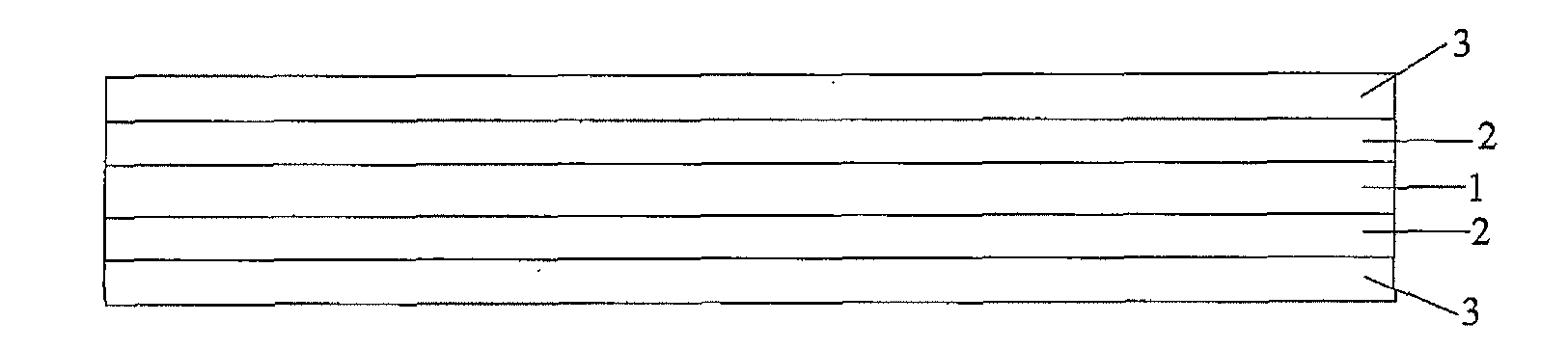
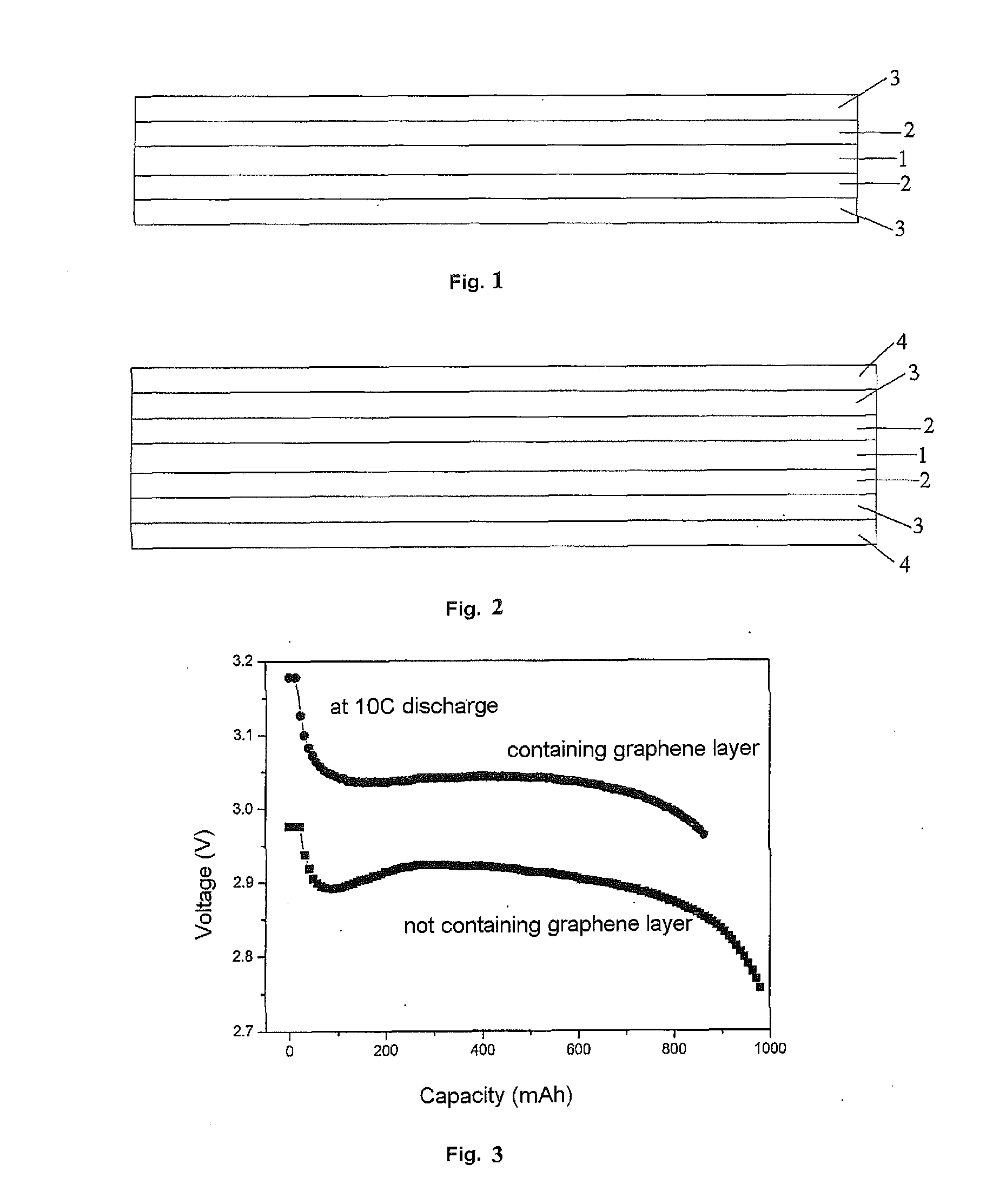
Graphene coating modified electrode plate for lithium secondary battery and method for producing the same
PatentActiveUS20140315083A1
Innovation
- A graphene coating-modified electrode plate is developed, comprising a current collector foil with graphene layers on both surfaces and electrode active material layers, enhancing electrical and thermal conductivity through the high conductivity properties of graphene.
Scalability and Manufacturing Considerations
The scalability of graphene electrode modification technologies represents a critical factor in their commercial viability. Current laboratory-scale methods for graphene modification, while effective in demonstrating enhanced electrical conductivity, face significant challenges when transitioning to industrial production scales. Roll-to-roll processing has emerged as the most promising approach for large-scale graphene electrode manufacturing, offering continuous production capabilities with throughput rates reaching 30 meters per minute in advanced systems. However, maintaining uniform modification quality across large surface areas remains problematic, with edge-to-center variations often exceeding 15% in conductivity measurements.
Manufacturing considerations must address several interconnected factors that directly impact electrical conductivity performance. Substrate compatibility presents a primary concern, as different substrate materials interact uniquely with graphene and modification agents. Polyethylene terephthalate (PET) and polyimide substrates currently demonstrate the most consistent results in large-scale applications, with adhesion strength variations below 8% across production batches.
Process parameters require precise control during scale-up, particularly temperature gradients and chemical concentration uniformity. Recent innovations in microfluidic delivery systems have improved modification agent distribution, reducing concentration variations from 22% to under 7% across 1-meter width substrates. Additionally, environmental factors during manufacturing, including humidity and oxygen levels, significantly influence the quality of chemical modifications, with optimal conditions requiring humidity control between 35-45% and oxygen levels below 50 ppm.
Cost considerations present another critical dimension, as economically viable production requires balancing performance with manufacturing expenses. Current cost analyses indicate that chemical vapor deposition (CVD) graphene with post-growth modifications costs approximately $200-300 per square meter at industrial scales, with modification processes adding 30-45% to base material costs. Alternative approaches using reduced graphene oxide offer lower material costs but typically deliver 25-40% lower conductivity performance.
Quality control methodologies must evolve alongside production scaling. In-line conductivity measurement systems using non-contact four-point probe arrays can now monitor production at speeds up to 20 meters per minute with spatial resolution of 5 cm. Machine learning algorithms have recently been implemented to predict conductivity based on optical inspection data, enabling real-time process adjustments that have reduced rejection rates by 23% in pilot production lines.
Manufacturing considerations must address several interconnected factors that directly impact electrical conductivity performance. Substrate compatibility presents a primary concern, as different substrate materials interact uniquely with graphene and modification agents. Polyethylene terephthalate (PET) and polyimide substrates currently demonstrate the most consistent results in large-scale applications, with adhesion strength variations below 8% across production batches.
Process parameters require precise control during scale-up, particularly temperature gradients and chemical concentration uniformity. Recent innovations in microfluidic delivery systems have improved modification agent distribution, reducing concentration variations from 22% to under 7% across 1-meter width substrates. Additionally, environmental factors during manufacturing, including humidity and oxygen levels, significantly influence the quality of chemical modifications, with optimal conditions requiring humidity control between 35-45% and oxygen levels below 50 ppm.
Cost considerations present another critical dimension, as economically viable production requires balancing performance with manufacturing expenses. Current cost analyses indicate that chemical vapor deposition (CVD) graphene with post-growth modifications costs approximately $200-300 per square meter at industrial scales, with modification processes adding 30-45% to base material costs. Alternative approaches using reduced graphene oxide offer lower material costs but typically deliver 25-40% lower conductivity performance.
Quality control methodologies must evolve alongside production scaling. In-line conductivity measurement systems using non-contact four-point probe arrays can now monitor production at speeds up to 20 meters per minute with spatial resolution of 5 cm. Machine learning algorithms have recently been implemented to predict conductivity based on optical inspection data, enabling real-time process adjustments that have reduced rejection rates by 23% in pilot production lines.
Environmental Impact and Sustainability of Graphene Electrode Materials
The environmental impact of graphene electrode materials represents a critical consideration in the broader context of sustainable technology development. While graphene offers exceptional electrical conductivity properties that can significantly enhance energy efficiency in various applications, its production methods often involve energy-intensive processes and potentially hazardous chemicals. Traditional graphene synthesis methods such as chemical vapor deposition (CVD) and reduced graphene oxide (rGO) production typically require high temperatures and strong reducing agents, resulting in substantial carbon footprints.
Recent advancements in green synthesis approaches have emerged as promising alternatives, utilizing biomass precursors and environmentally benign reducing agents. These methods significantly reduce the environmental burden associated with graphene electrode production while maintaining the desired electrical conductivity properties. For instance, plant extract-mediated reduction processes have demonstrated the ability to produce graphene with competitive conductivity metrics while eliminating the need for harsh chemicals.
The life cycle assessment (LCA) of graphene electrode materials reveals complex environmental trade-offs. While the production phase may have higher environmental impacts compared to conventional electrode materials, the extended lifespan and enhanced performance of graphene electrodes often result in net environmental benefits over the complete product lifecycle. Studies indicate that graphene-modified electrodes in energy storage applications can reduce overall environmental impact by 15-30% through improved energy efficiency and extended service life.
Water usage and potential aquatic toxicity represent additional environmental considerations in graphene electrode production. Conventional wet chemical methods can consume significant water resources and generate contaminated wastewater. However, emerging solvent-free and water-efficient synthesis routes are addressing these concerns, with some processes achieving up to 80% reduction in water consumption compared to traditional methods.
The recyclability of graphene electrode materials presents both challenges and opportunities. While graphene's stability makes it difficult to degrade naturally, this same property enables potential recovery and reuse strategies. Advanced recycling techniques, including electrochemical delamination and selective solvent extraction, have demonstrated recovery rates exceeding 70% for graphene materials from end-of-life electrodes, significantly reducing waste and resource consumption.
Regulatory frameworks worldwide are increasingly addressing nanomaterial sustainability, with specific provisions for graphene-based products emerging in regions like the European Union and parts of Asia. These regulations are driving industry innovation toward more sustainable graphene electrode modifications, including biodegradable substrates and reduced-toxicity functionalization approaches that maintain or enhance electrical conductivity performance.
Recent advancements in green synthesis approaches have emerged as promising alternatives, utilizing biomass precursors and environmentally benign reducing agents. These methods significantly reduce the environmental burden associated with graphene electrode production while maintaining the desired electrical conductivity properties. For instance, plant extract-mediated reduction processes have demonstrated the ability to produce graphene with competitive conductivity metrics while eliminating the need for harsh chemicals.
The life cycle assessment (LCA) of graphene electrode materials reveals complex environmental trade-offs. While the production phase may have higher environmental impacts compared to conventional electrode materials, the extended lifespan and enhanced performance of graphene electrodes often result in net environmental benefits over the complete product lifecycle. Studies indicate that graphene-modified electrodes in energy storage applications can reduce overall environmental impact by 15-30% through improved energy efficiency and extended service life.
Water usage and potential aquatic toxicity represent additional environmental considerations in graphene electrode production. Conventional wet chemical methods can consume significant water resources and generate contaminated wastewater. However, emerging solvent-free and water-efficient synthesis routes are addressing these concerns, with some processes achieving up to 80% reduction in water consumption compared to traditional methods.
The recyclability of graphene electrode materials presents both challenges and opportunities. While graphene's stability makes it difficult to degrade naturally, this same property enables potential recovery and reuse strategies. Advanced recycling techniques, including electrochemical delamination and selective solvent extraction, have demonstrated recovery rates exceeding 70% for graphene materials from end-of-life electrodes, significantly reducing waste and resource consumption.
Regulatory frameworks worldwide are increasingly addressing nanomaterial sustainability, with specific provisions for graphene-based products emerging in regions like the European Union and parts of Asia. These regulations are driving industry innovation toward more sustainable graphene electrode modifications, including biodegradable substrates and reduced-toxicity functionalization approaches that maintain or enhance electrical conductivity performance.
Unlock deeper insights with Patsnap Eureka Quick Research — get a full tech report to explore trends and direct your research. Try now!
Generate Your Research Report Instantly with AI Agent
Supercharge your innovation with Patsnap Eureka AI Agent Platform!