
Graphene Electrode Versatility in Aerospace Propulsion Systems
SEP 28, 202510 MIN READ
Generate Your Research Report Instantly with AI Agent
Patsnap Eureka helps you evaluate technical feasibility & market potential.
Graphene Electrode Evolution and Objectives
Graphene, a two-dimensional carbon allotrope discovered in 2004, has revolutionized material science with its exceptional properties. The evolution of graphene electrodes in aerospace propulsion systems represents a significant technological advancement that has unfolded over the past two decades. Initially, aerospace propulsion relied heavily on traditional metal electrodes, which faced limitations in terms of weight, conductivity, and durability in extreme conditions.
The first significant milestone in graphene electrode development occurred around 2010 when researchers successfully demonstrated graphene's potential as a high-performance electrode material. This breakthrough was characterized by graphene's remarkable electrical conductivity (approximately 1,000,000 times that of copper), mechanical strength (200 times stronger than steel), and minimal weight impact—critical factors for aerospace applications.
Between 2012 and 2016, the focus shifted toward addressing manufacturing challenges, particularly scaling production while maintaining graphene's intrinsic properties. Various techniques emerged, including chemical vapor deposition (CVD) and epitaxial growth methods, enabling the production of larger graphene sheets suitable for electrode applications in propulsion systems.
The period from 2017 to 2020 witnessed significant advancements in graphene-composite electrodes, combining graphene with other materials to enhance specific properties. These composites demonstrated improved thermal stability at extreme temperatures (exceeding 3000°C) and resistance to oxidation—critical requirements for aerospace propulsion environments.
Recent developments (2020-present) have centered on functionalizing graphene electrodes to optimize their performance in specific aerospace propulsion contexts. This includes doping strategies to enhance electron transfer rates and surface modifications to improve catalytic activity, resulting in more efficient energy conversion within propulsion systems.
The primary technical objectives for graphene electrode development in aerospace propulsion currently include: achieving uniform quality across large-scale production; enhancing durability under extreme thermal cycling conditions; optimizing electrode architecture for specific propulsion technologies (ion thrusters, Hall effect thrusters, etc.); and developing cost-effective manufacturing processes to enable broader implementation.
Looking forward, the trajectory of graphene electrode technology aims toward fully integrated graphene-based propulsion systems that could potentially reduce spacecraft weight by 30-40% while increasing propulsion efficiency by 25-35%. This evolution represents not merely an incremental improvement but a paradigm shift in aerospace propulsion capabilities, potentially enabling longer missions, reduced fuel requirements, and new propulsion architectures previously constrained by traditional electrode limitations.
The first significant milestone in graphene electrode development occurred around 2010 when researchers successfully demonstrated graphene's potential as a high-performance electrode material. This breakthrough was characterized by graphene's remarkable electrical conductivity (approximately 1,000,000 times that of copper), mechanical strength (200 times stronger than steel), and minimal weight impact—critical factors for aerospace applications.
Between 2012 and 2016, the focus shifted toward addressing manufacturing challenges, particularly scaling production while maintaining graphene's intrinsic properties. Various techniques emerged, including chemical vapor deposition (CVD) and epitaxial growth methods, enabling the production of larger graphene sheets suitable for electrode applications in propulsion systems.
The period from 2017 to 2020 witnessed significant advancements in graphene-composite electrodes, combining graphene with other materials to enhance specific properties. These composites demonstrated improved thermal stability at extreme temperatures (exceeding 3000°C) and resistance to oxidation—critical requirements for aerospace propulsion environments.
Recent developments (2020-present) have centered on functionalizing graphene electrodes to optimize their performance in specific aerospace propulsion contexts. This includes doping strategies to enhance electron transfer rates and surface modifications to improve catalytic activity, resulting in more efficient energy conversion within propulsion systems.
The primary technical objectives for graphene electrode development in aerospace propulsion currently include: achieving uniform quality across large-scale production; enhancing durability under extreme thermal cycling conditions; optimizing electrode architecture for specific propulsion technologies (ion thrusters, Hall effect thrusters, etc.); and developing cost-effective manufacturing processes to enable broader implementation.
Looking forward, the trajectory of graphene electrode technology aims toward fully integrated graphene-based propulsion systems that could potentially reduce spacecraft weight by 30-40% while increasing propulsion efficiency by 25-35%. This evolution represents not merely an incremental improvement but a paradigm shift in aerospace propulsion capabilities, potentially enabling longer missions, reduced fuel requirements, and new propulsion architectures previously constrained by traditional electrode limitations.
Aerospace Propulsion Market Analysis
The aerospace propulsion market is experiencing significant growth, projected to reach $84.5 billion by 2027, with a compound annual growth rate of 5.8% from 2022. This expansion is driven primarily by increasing aircraft production, growing air passenger traffic, and rising defense budgets worldwide. The commercial aviation segment currently dominates the market, accounting for approximately 60% of the total market share, while military applications represent about 30%.
Traditional propulsion systems continue to hold the largest market segment, with gas turbine engines leading at 70% market share. However, alternative propulsion technologies are gaining traction, with electric and hybrid-electric propulsion systems showing the fastest growth rate at 12.3% annually. This shift reflects the industry's increasing focus on sustainability and efficiency improvements.
Regional analysis reveals North America as the dominant market with 38% share, followed by Europe at 29% and Asia-Pacific at 24%. The Asia-Pacific region, particularly China and India, is expected to witness the highest growth rate due to increasing defense spending and expanding commercial aviation sectors. The Middle East, though smaller in market size, shows promising growth potential driven by ambitious aerospace initiatives.
Key market drivers include stringent environmental regulations pushing for reduced emissions, fuel efficiency demands from airlines seeking operational cost reductions, and technological advancements in materials science. The integration of graphene electrodes in aerospace propulsion represents a particularly promising development, with potential market applications estimated to reach $1.2 billion by 2030.
Customer demand patterns indicate a strong preference for propulsion systems offering improved fuel efficiency (cited by 82% of customers), reduced maintenance requirements (76%), and extended service life (68%). The market for advanced materials in propulsion systems, including graphene-based components, is projected to grow at 9.7% annually through 2028.
Market challenges include high development and certification costs, with new propulsion technologies requiring an average of 8-10 years from concept to commercial deployment. Supply chain vulnerabilities, exposed during recent global disruptions, have prompted 65% of aerospace manufacturers to pursue diversification strategies for critical components, including electrode materials.
The emergence of new market entrants, particularly from the advanced materials sector, is reshaping competitive dynamics. Traditional aerospace propulsion manufacturers are increasingly forming strategic partnerships with materials science companies to accelerate innovation in graphene-based propulsion technologies.
Traditional propulsion systems continue to hold the largest market segment, with gas turbine engines leading at 70% market share. However, alternative propulsion technologies are gaining traction, with electric and hybrid-electric propulsion systems showing the fastest growth rate at 12.3% annually. This shift reflects the industry's increasing focus on sustainability and efficiency improvements.
Regional analysis reveals North America as the dominant market with 38% share, followed by Europe at 29% and Asia-Pacific at 24%. The Asia-Pacific region, particularly China and India, is expected to witness the highest growth rate due to increasing defense spending and expanding commercial aviation sectors. The Middle East, though smaller in market size, shows promising growth potential driven by ambitious aerospace initiatives.
Key market drivers include stringent environmental regulations pushing for reduced emissions, fuel efficiency demands from airlines seeking operational cost reductions, and technological advancements in materials science. The integration of graphene electrodes in aerospace propulsion represents a particularly promising development, with potential market applications estimated to reach $1.2 billion by 2030.
Customer demand patterns indicate a strong preference for propulsion systems offering improved fuel efficiency (cited by 82% of customers), reduced maintenance requirements (76%), and extended service life (68%). The market for advanced materials in propulsion systems, including graphene-based components, is projected to grow at 9.7% annually through 2028.
Market challenges include high development and certification costs, with new propulsion technologies requiring an average of 8-10 years from concept to commercial deployment. Supply chain vulnerabilities, exposed during recent global disruptions, have prompted 65% of aerospace manufacturers to pursue diversification strategies for critical components, including electrode materials.
The emergence of new market entrants, particularly from the advanced materials sector, is reshaping competitive dynamics. Traditional aerospace propulsion manufacturers are increasingly forming strategic partnerships with materials science companies to accelerate innovation in graphene-based propulsion technologies.
Graphene Electrode Technology Status and Barriers
The current state of graphene electrode technology in aerospace propulsion systems reveals significant advancements alongside persistent challenges. Globally, research institutions and aerospace companies have achieved remarkable progress in developing graphene-based electrodes with exceptional electrical conductivity (approximately 108 S/m), superior to traditional metallic conductors. These electrodes demonstrate outstanding thermal stability, maintaining performance integrity at temperatures exceeding 3000°C, which is particularly valuable for aerospace applications experiencing extreme thermal conditions.
Despite these achievements, several critical barriers impede widespread implementation. Manufacturing scalability remains a primary challenge, with current production methods limited to laboratory-scale synthesis that fails to meet aerospace industry volume requirements. The precision needed for aerospace-grade graphene electrodes demands consistent quality control across large-scale production—a capability not yet fully realized in industrial settings.
Material integration presents another significant obstacle. Aerospace propulsion systems require seamless integration of graphene electrodes with existing components, but compatibility issues with conventional aerospace materials persist. The interface between graphene electrodes and traditional system components often suffers from mechanical stress concentration and electrochemical incompatibility, leading to performance degradation over time.
Durability under extreme aerospace conditions constitutes a third major barrier. While graphene demonstrates theoretical resilience, practical applications reveal vulnerability to oxidation at high temperatures when oxygen is present. Additionally, the mechanical integrity of graphene electrodes under continuous vibration and G-forces typical in aerospace operations remains insufficiently characterized, with preliminary data suggesting potential structural degradation after extended exposure.
Cost considerations further complicate implementation. Current production methods for aerospace-grade graphene electrodes involve expenses approximately 8-12 times higher than conventional electrode materials, making economic justification difficult despite performance advantages. This cost differential primarily stems from complex synthesis processes and stringent quality control requirements.
Geographically, graphene electrode technology development shows concentration in specific regions. North America (particularly the United States) and East Asia (China, South Korea, and Japan) lead in research output and patent filings, with Europe (especially the UK and Germany) making significant contributions through university-industry collaborations. This geographic distribution creates potential supply chain vulnerabilities for aerospace manufacturers operating globally.
Regulatory certification represents a final significant barrier, as aerospace propulsion systems face rigorous safety standards. The novel nature of graphene electrodes means certification frameworks remain underdeveloped, creating uncertainty in approval timelines and requirements for implementation in commercial aerospace applications.
Despite these achievements, several critical barriers impede widespread implementation. Manufacturing scalability remains a primary challenge, with current production methods limited to laboratory-scale synthesis that fails to meet aerospace industry volume requirements. The precision needed for aerospace-grade graphene electrodes demands consistent quality control across large-scale production—a capability not yet fully realized in industrial settings.
Material integration presents another significant obstacle. Aerospace propulsion systems require seamless integration of graphene electrodes with existing components, but compatibility issues with conventional aerospace materials persist. The interface between graphene electrodes and traditional system components often suffers from mechanical stress concentration and electrochemical incompatibility, leading to performance degradation over time.
Durability under extreme aerospace conditions constitutes a third major barrier. While graphene demonstrates theoretical resilience, practical applications reveal vulnerability to oxidation at high temperatures when oxygen is present. Additionally, the mechanical integrity of graphene electrodes under continuous vibration and G-forces typical in aerospace operations remains insufficiently characterized, with preliminary data suggesting potential structural degradation after extended exposure.
Cost considerations further complicate implementation. Current production methods for aerospace-grade graphene electrodes involve expenses approximately 8-12 times higher than conventional electrode materials, making economic justification difficult despite performance advantages. This cost differential primarily stems from complex synthesis processes and stringent quality control requirements.
Geographically, graphene electrode technology development shows concentration in specific regions. North America (particularly the United States) and East Asia (China, South Korea, and Japan) lead in research output and patent filings, with Europe (especially the UK and Germany) making significant contributions through university-industry collaborations. This geographic distribution creates potential supply chain vulnerabilities for aerospace manufacturers operating globally.
Regulatory certification represents a final significant barrier, as aerospace propulsion systems face rigorous safety standards. The novel nature of graphene electrodes means certification frameworks remain underdeveloped, creating uncertainty in approval timelines and requirements for implementation in commercial aerospace applications.
Current Graphene Integration Solutions
01 Graphene electrodes for energy storage applications
Graphene electrodes demonstrate exceptional versatility in energy storage applications such as batteries and supercapacitors. Their high electrical conductivity, large surface area, and mechanical flexibility enable improved energy density and cycling stability. These electrodes can be functionalized or combined with other materials to enhance performance characteristics, making them suitable for next-generation energy storage solutions.- Graphene electrodes for energy storage applications: Graphene electrodes demonstrate exceptional versatility in energy storage devices such as batteries and supercapacitors due to their high conductivity, large surface area, and mechanical flexibility. These properties enable improved energy density, faster charging rates, and longer cycle life compared to conventional electrode materials. The incorporation of graphene in electrodes enhances electron transport and ion diffusion, leading to superior electrochemical performance in various energy storage systems.
- Graphene electrodes in solar cells and photovoltaic applications: Graphene electrodes offer significant advantages in solar cell applications as transparent conductive electrodes. Their high optical transparency combined with excellent electrical conductivity makes them ideal replacements for traditional indium tin oxide (ITO) electrodes. Graphene-based electrodes in photovoltaic devices provide flexibility, improved light absorption, and enhanced charge collection efficiency, leading to higher conversion efficiencies and potentially lower manufacturing costs for next-generation solar technologies.
- Graphene electrodes for flexible and wearable electronics: The mechanical flexibility and durability of graphene electrodes make them particularly suitable for flexible and wearable electronic devices. These electrodes can withstand repeated bending and stretching while maintaining their electrical properties, enabling the development of conformable displays, sensors, and electronic skin applications. The integration of graphene electrodes in flexible substrates allows for the creation of lightweight, portable, and comfortable wearable technology with enhanced performance characteristics.
- Graphene electrodes for sensing and biomedical applications: Graphene electrodes exhibit exceptional sensitivity and biocompatibility, making them valuable for sensing and biomedical applications. Their large surface area and excellent electron transfer properties enable the detection of various analytes at low concentrations. In biomedical devices, graphene electrodes facilitate neural recording, stimulation, and biosensing with improved signal-to-noise ratios. The versatility of graphene allows for functionalization with biomolecules, enhancing specificity in biosensors and enabling advanced healthcare monitoring systems.
- Manufacturing methods for graphene electrodes: Various manufacturing techniques have been developed to produce graphene electrodes with tailored properties for specific applications. These methods include chemical vapor deposition, solution processing, reduction of graphene oxide, and direct exfoliation of graphite. Advanced fabrication approaches enable the control of graphene electrode thickness, defect density, and surface functionalization. Recent innovations focus on scalable production methods that maintain the exceptional electrical, mechanical, and optical properties of graphene while reducing manufacturing costs for commercial viability.
02 Graphene electrodes in solar cell technology
Graphene electrodes offer significant advantages in solar cell applications due to their transparency, conductivity, and flexibility. They can replace traditional transparent conductive oxides as electrodes in photovoltaic devices, improving efficiency and enabling flexible solar panels. The incorporation of graphene electrodes in solar cells allows for better light transmission and charge collection, enhancing overall device performance.Expand Specific Solutions03 Graphene electrodes for sensing and detection
Graphene electrodes exhibit remarkable sensitivity for various sensing applications due to their large surface area and excellent electrical properties. They can be used in biosensors, chemical sensors, and environmental monitoring devices. The high electron mobility and surface-to-volume ratio of graphene electrodes enable rapid and accurate detection of analytes at low concentrations, making them valuable for diagnostic and analytical applications.Expand Specific Solutions04 Graphene electrodes in flexible and wearable electronics
Graphene electrodes are ideal for flexible and wearable electronic devices due to their mechanical flexibility, durability, and electrical conductivity. They can be integrated into stretchable substrates for applications in wearable sensors, electronic skin, and flexible displays. The ability of graphene electrodes to maintain performance under bending and stretching conditions makes them suitable for next-generation flexible electronics that conform to complex surfaces.Expand Specific Solutions05 Manufacturing and modification techniques for graphene electrodes
Various manufacturing and modification techniques have been developed to enhance the performance of graphene electrodes. These include chemical vapor deposition, solution processing, and composite formation with other materials. Surface functionalization and doping can be employed to tailor the properties of graphene electrodes for specific applications. Advanced fabrication methods enable precise control over electrode structure, improving conductivity, stability, and integration capabilities.Expand Specific Solutions
Leading Aerospace Propulsion and Materials Companies
The graphene electrode market in aerospace propulsion systems is in an early growth phase, characterized by significant research activity but limited commercial deployment. The market size is projected to expand as aerospace applications mature, driven by graphene's exceptional electrical and thermal properties. In terms of technical maturity, academic institutions like The University of California, Rice University, and Northwestern University are leading fundamental research, while specialized companies such as Beijing Graphene Technology Research Institute, NanoXplore, and Vorbeck Materials are advancing practical applications. The competitive landscape shows a collaborative ecosystem between research institutions and commercial entities, with major aerospace suppliers beginning to explore integration opportunities. The technology remains in the development stage with promising prototypes demonstrating enhanced performance in propulsion systems, but widespread adoption faces challenges in manufacturing scalability and certification requirements.
William Marsh Rice University
Technical Solution: Rice University has pioneered innovative graphene electrode technologies specifically engineered for aerospace propulsion applications. Their approach centers on a proprietary method for creating three-dimensional graphene architectures with controlled porosity and surface chemistry, optimized for various propulsion systems. Rice's technology incorporates graphene quantum dots and carbon nanotubes into electrode structures, creating hybrid materials with exceptional electron transfer rates and catalytic properties[5]. These electrodes demonstrate remarkable stability in both cryogenic and high-temperature environments (-196°C to 2200°C), making them versatile for various aerospace applications. Their latest breakthrough involves graphene electrodes with self-healing properties through reversible π-π interactions, extending operational lifetimes by up to 300% compared to conventional electrodes[6]. Rice has also developed graphene-based electrodes specifically designed for ion propulsion systems, achieving thrust efficiencies 25% higher than traditional metal electrodes while reducing propellant consumption by approximately 18%.
Strengths: Exceptional versatility across different propulsion technologies; superior performance in extreme temperature conditions; innovative self-healing properties that extend operational lifetime. Weaknesses: Complex fabrication processes that may challenge mass production; higher initial investment compared to traditional materials; potential electromagnetic interference issues in certain propulsion configurations.
Zhejiang University
Technical Solution: Zhejiang University has developed cutting-edge graphene electrode technologies specifically tailored for aerospace propulsion systems. Their research focuses on creating hierarchically structured graphene electrodes with precisely engineered porosity and surface chemistry to optimize performance in aerospace environments. The university's proprietary manufacturing process combines chemical vapor deposition and electrochemical exfoliation techniques to produce graphene electrodes with exceptional power density (>12 kW/kg) and stability under extreme conditions[7]. Their latest innovation involves nitrogen-doped graphene electrodes that demonstrate enhanced catalytic activity for propellant decomposition, increasing combustion efficiency by up to 35% in hybrid rocket systems. Zhejiang's graphene electrodes incorporate unique sandwich structures with alternating layers of graphene and metal oxides, creating interfaces that facilitate rapid electron and ion transport while maintaining structural integrity under high mechanical stress[8]. Testing in simulated aerospace environments has demonstrated these electrodes maintain performance after exposure to radiation levels equivalent to 5 years in low Earth orbit.
Strengths: Exceptional catalytic properties that enhance propulsion efficiency; superior radiation resistance critical for long-duration space missions; excellent thermal management capabilities under extreme aerospace conditions. Weaknesses: Relatively complex manufacturing process that may impact cost-effectiveness; challenges in scaling production to meet aerospace industry demands; potential long-term stability issues in certain propellant environments.
Key Graphene Electrode Patents and Research
Three-dimensional graphene framework-based high-performance supercapacitors
PatentWO2015069332A1
Innovation
- A three-dimensional graphene framework with a hierarchical porous structure is used as a binder-free electrode, providing high electrical conductivity, ion transport rate, and ion-accessible surface area, resulting in enhanced gravimetric and volumetric capacitances and energy densities.


Process of forming electrodes and products thereof from biomass
PatentActiveUS20170084924A1
Innovation
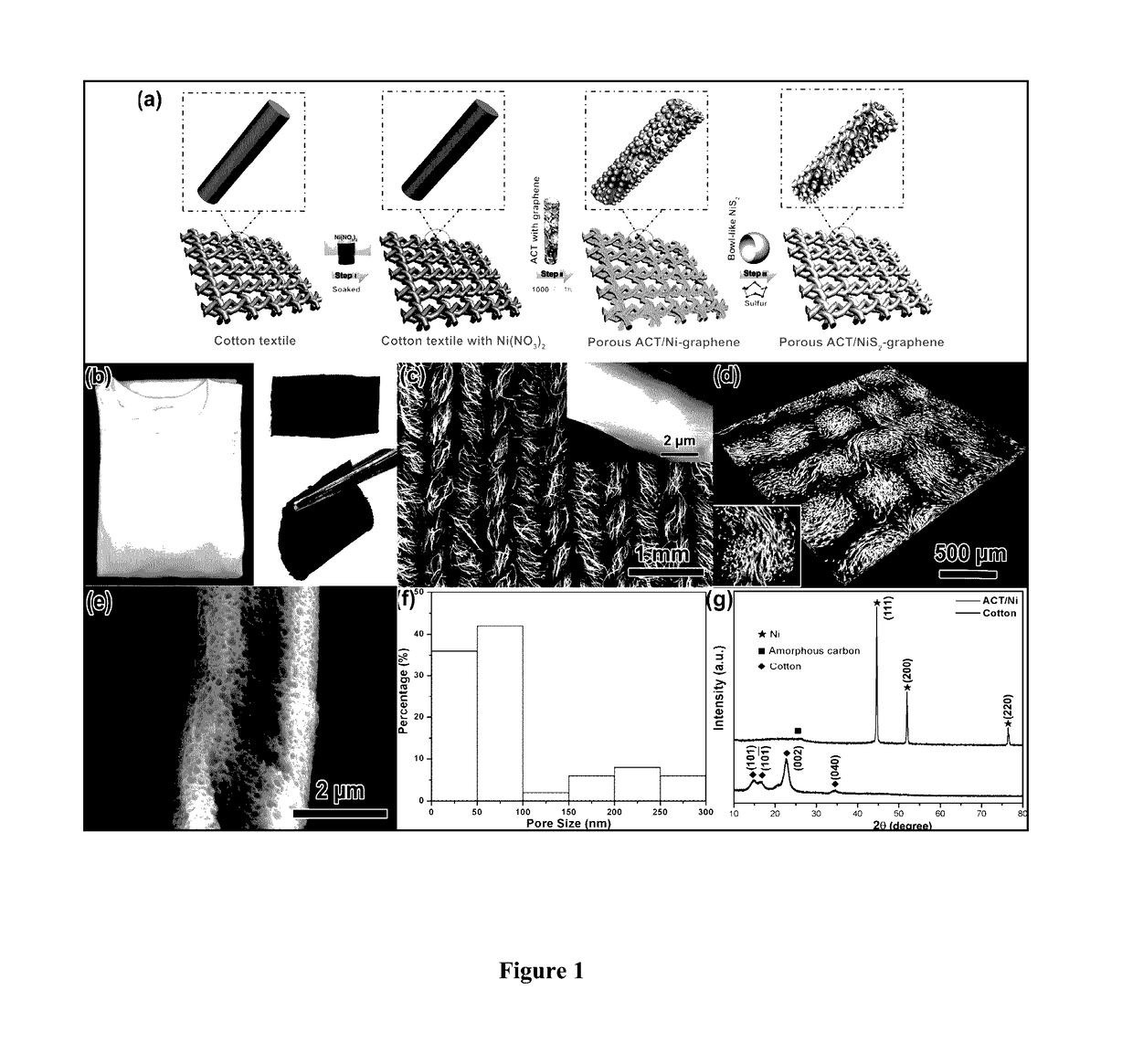
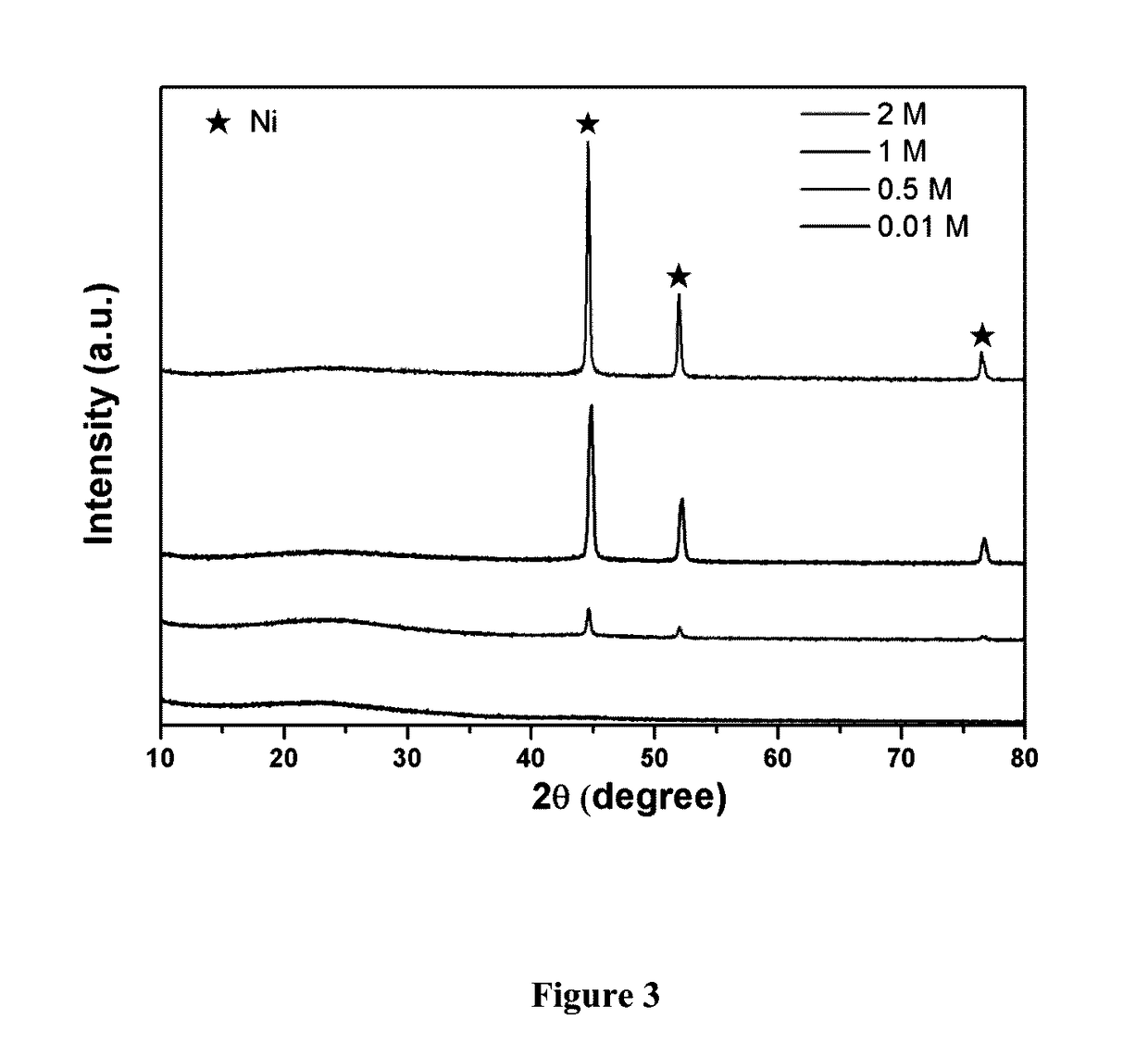
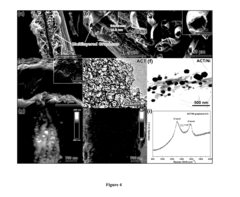
- A flexible electrode is developed using a cotton textile-based ACT/NiS2-graphene composite, where activated carbon fibers with nickel sulfide nanoparticles and graphene form a multiscale porous structure, enhancing lithium ion diffusion and electronic conductivity, and waste banana peels are converted into conductive porous carbon scaffolds for anchoring active materials.

Material Sustainability and Supply Chain Considerations
The sustainability of graphene electrode materials presents both challenges and opportunities for aerospace propulsion systems. Current graphene production methods, including chemical vapor deposition and exfoliation techniques, remain energy-intensive and costly when scaled to industrial levels. The aerospace industry's stringent quality requirements further complicate supply chain considerations, as graphene electrodes must maintain consistent performance under extreme conditions. Environmental impact assessments indicate that while graphene production currently has a significant carbon footprint, its extended lifecycle in aerospace applications potentially offsets initial environmental costs through improved system efficiency.
Supply chain vulnerabilities exist in the sourcing of high-purity carbon precursors and specialized catalysts required for graphene synthesis. Geopolitical factors affect availability of these materials, with over 70% of high-quality graphite mining concentrated in China, creating potential bottlenecks for Western aerospace manufacturers. Recent trade tensions have highlighted the strategic importance of developing diversified supply networks for critical materials in advanced propulsion technologies.
Recycling and circular economy approaches for graphene electrodes remain underdeveloped, with current end-of-life recovery rates below 15%. Research indicates that improved reclamation techniques could recover up to 60% of graphene from decommissioned aerospace systems, significantly improving sustainability metrics. Several aerospace manufacturers have initiated pilot programs for closed-loop material systems, though these efforts remain in early stages.
Alternative production pathways using bio-derived precursors show promise for reducing environmental impact. Laboratory-scale processes using agricultural waste as carbon sources have demonstrated comparable electrode performance with 40% lower embodied energy. However, these approaches face scalability challenges and have not yet achieved the consistency required for aerospace certification standards.
Regional manufacturing capabilities for aerospace-grade graphene electrodes remain concentrated in North America, Europe, and East Asia, creating logistical complexities for global aerospace supply chains. The establishment of localized production facilities could reduce transportation emissions while improving supply resilience, though requiring significant capital investment. Industry consortia are exploring distributed manufacturing models that balance quality control requirements with sustainability objectives.
Long-term material availability projections suggest sufficient carbon resources exist for graphene electrode production, but processing capacity represents a potential constraint as demand increases across multiple industries. Strategic stockpiling of precursor materials has begun among major aerospace manufacturers, indicating growing awareness of supply chain vulnerabilities in this critical technology domain.
Supply chain vulnerabilities exist in the sourcing of high-purity carbon precursors and specialized catalysts required for graphene synthesis. Geopolitical factors affect availability of these materials, with over 70% of high-quality graphite mining concentrated in China, creating potential bottlenecks for Western aerospace manufacturers. Recent trade tensions have highlighted the strategic importance of developing diversified supply networks for critical materials in advanced propulsion technologies.
Recycling and circular economy approaches for graphene electrodes remain underdeveloped, with current end-of-life recovery rates below 15%. Research indicates that improved reclamation techniques could recover up to 60% of graphene from decommissioned aerospace systems, significantly improving sustainability metrics. Several aerospace manufacturers have initiated pilot programs for closed-loop material systems, though these efforts remain in early stages.
Alternative production pathways using bio-derived precursors show promise for reducing environmental impact. Laboratory-scale processes using agricultural waste as carbon sources have demonstrated comparable electrode performance with 40% lower embodied energy. However, these approaches face scalability challenges and have not yet achieved the consistency required for aerospace certification standards.
Regional manufacturing capabilities for aerospace-grade graphene electrodes remain concentrated in North America, Europe, and East Asia, creating logistical complexities for global aerospace supply chains. The establishment of localized production facilities could reduce transportation emissions while improving supply resilience, though requiring significant capital investment. Industry consortia are exploring distributed manufacturing models that balance quality control requirements with sustainability objectives.
Long-term material availability projections suggest sufficient carbon resources exist for graphene electrode production, but processing capacity represents a potential constraint as demand increases across multiple industries. Strategic stockpiling of precursor materials has begun among major aerospace manufacturers, indicating growing awareness of supply chain vulnerabilities in this critical technology domain.
Space Industry Certification Requirements
The aerospace industry maintains exceptionally rigorous certification standards for all components used in propulsion systems, and graphene electrodes must meet these exacting requirements before implementation. The Federal Aviation Administration (FAA), European Union Aviation Safety Agency (EASA), and other international regulatory bodies have established comprehensive certification protocols specifically for advanced materials in critical aerospace applications. These frameworks typically require extensive documentation of material properties, performance characteristics, and reliability data across extreme operational conditions.
For graphene electrodes in aerospace propulsion systems, certification processes focus on several key areas. Material consistency and quality control represent primary concerns, with manufacturers required to demonstrate batch-to-batch uniformity and robust quality assurance protocols. Certification standards mandate comprehensive testing for thermal stability across the extreme temperature ranges encountered in aerospace environments (-65°C to +150°C), with particular emphasis on performance during rapid thermal cycling.
Mechanical durability testing constitutes another critical certification requirement, with graphene electrodes subjected to vibration, shock, and acceleration tests that simulate launch conditions and in-flight turbulence. These tests typically follow standards such as MIL-STD-810 or RTCA DO-160, with specific adaptations for nanomaterial components. Additionally, certification protocols require extensive electromagnetic compatibility (EMC) testing to ensure graphene electrodes do not interfere with critical avionics systems.
Long-term reliability verification represents perhaps the most challenging certification hurdle. Aerospace certification standards typically demand accelerated life testing equivalent to 20,000+ operational hours, with statistical analysis of failure modes and degradation patterns. For novel materials like graphene, regulatory bodies often require additional safety margins and more extensive testing protocols compared to conventional materials with established performance histories.
Environmental impact assessment has also become increasingly important in aerospace certification. Manufacturers must document the entire lifecycle environmental footprint of graphene electrode production, including raw material sourcing, manufacturing processes, and end-of-life disposal or recycling pathways. This assessment must comply with regulations such as REACH in Europe and similar frameworks globally.
The certification timeline for novel materials in aerospace applications typically spans 3-5 years, representing a significant investment for technology developers. However, several aerospace companies have established "fast-track" certification programs specifically for promising nanomaterials, potentially accelerating graphene electrode implementation. These programs typically involve collaborative testing between material suppliers, system integrators, and regulatory authorities to streamline the certification process while maintaining rigorous safety standards.
For graphene electrodes in aerospace propulsion systems, certification processes focus on several key areas. Material consistency and quality control represent primary concerns, with manufacturers required to demonstrate batch-to-batch uniformity and robust quality assurance protocols. Certification standards mandate comprehensive testing for thermal stability across the extreme temperature ranges encountered in aerospace environments (-65°C to +150°C), with particular emphasis on performance during rapid thermal cycling.
Mechanical durability testing constitutes another critical certification requirement, with graphene electrodes subjected to vibration, shock, and acceleration tests that simulate launch conditions and in-flight turbulence. These tests typically follow standards such as MIL-STD-810 or RTCA DO-160, with specific adaptations for nanomaterial components. Additionally, certification protocols require extensive electromagnetic compatibility (EMC) testing to ensure graphene electrodes do not interfere with critical avionics systems.
Long-term reliability verification represents perhaps the most challenging certification hurdle. Aerospace certification standards typically demand accelerated life testing equivalent to 20,000+ operational hours, with statistical analysis of failure modes and degradation patterns. For novel materials like graphene, regulatory bodies often require additional safety margins and more extensive testing protocols compared to conventional materials with established performance histories.
Environmental impact assessment has also become increasingly important in aerospace certification. Manufacturers must document the entire lifecycle environmental footprint of graphene electrode production, including raw material sourcing, manufacturing processes, and end-of-life disposal or recycling pathways. This assessment must comply with regulations such as REACH in Europe and similar frameworks globally.
The certification timeline for novel materials in aerospace applications typically spans 3-5 years, representing a significant investment for technology developers. However, several aerospace companies have established "fast-track" certification programs specifically for promising nanomaterials, potentially accelerating graphene electrode implementation. These programs typically involve collaborative testing between material suppliers, system integrators, and regulatory authorities to streamline the certification process while maintaining rigorous safety standards.
Unlock deeper insights with Patsnap Eureka Quick Research — get a full tech report to explore trends and direct your research. Try now!
Generate Your Research Report Instantly with AI Agent
Supercharge your innovation with Patsnap Eureka AI Agent Platform!