

Harmonic Drives vs Planetary Gears: Accuracy Analysis
APR 27, 20268 MIN READ
Generate Your Research Report Instantly with AI Agent
PatSnap Eureka helps you evaluate technical feasibility & market potential.
Harmonic Drive vs Planetary Gear Technology Background and Goals
Precision motion control systems have undergone significant evolution since the mid-20th century, driven by increasing demands for accuracy in robotics, aerospace, and manufacturing applications. The development of gear reduction technologies has been central to this advancement, with harmonic drives and planetary gears emerging as two dominant solutions for high-precision applications.
Harmonic drive technology, invented by C.W. Musser in 1957, revolutionized precision gear systems through its unique flexible spline design. This technology utilizes elastic deformation principles to achieve gear reduction, fundamentally differing from traditional rigid gear mechanisms. The system consists of three main components: a wave generator, flexspline, and circular spline, working together to produce exceptionally high gear ratios in compact configurations.
Planetary gear systems, with origins tracing back to ancient astronomical instruments, have evolved into sophisticated precision mechanisms. Modern planetary gears employ multiple gear stages arranged around a central sun gear, distributing load across several planet gears. This configuration has been refined through advanced materials science and manufacturing precision to meet contemporary accuracy requirements.
The technological evolution has been shaped by specific industry demands for positioning accuracy, repeatability, and backlash minimization. Robotics applications require sub-arc-minute precision for complex manipulation tasks, while semiconductor manufacturing equipment demands even higher accuracy levels for wafer positioning and lithography processes.
Current technological objectives focus on achieving positioning accuracies below 10 arc-seconds while maintaining high torque density and operational reliability. The pursuit of zero-backlash operation has become increasingly critical as automation systems require bidirectional precision without mechanical play. Additionally, the integration of smart sensing technologies aims to provide real-time feedback on gear system performance and predictive maintenance capabilities.
The convergence of advanced materials, precision manufacturing techniques, and digital control systems continues to push the boundaries of what both harmonic drives and planetary gears can achieve. Understanding the fundamental differences in their accuracy characteristics becomes essential for optimal system selection and performance optimization in next-generation precision applications.
Harmonic drive technology, invented by C.W. Musser in 1957, revolutionized precision gear systems through its unique flexible spline design. This technology utilizes elastic deformation principles to achieve gear reduction, fundamentally differing from traditional rigid gear mechanisms. The system consists of three main components: a wave generator, flexspline, and circular spline, working together to produce exceptionally high gear ratios in compact configurations.
Planetary gear systems, with origins tracing back to ancient astronomical instruments, have evolved into sophisticated precision mechanisms. Modern planetary gears employ multiple gear stages arranged around a central sun gear, distributing load across several planet gears. This configuration has been refined through advanced materials science and manufacturing precision to meet contemporary accuracy requirements.
The technological evolution has been shaped by specific industry demands for positioning accuracy, repeatability, and backlash minimization. Robotics applications require sub-arc-minute precision for complex manipulation tasks, while semiconductor manufacturing equipment demands even higher accuracy levels for wafer positioning and lithography processes.
Current technological objectives focus on achieving positioning accuracies below 10 arc-seconds while maintaining high torque density and operational reliability. The pursuit of zero-backlash operation has become increasingly critical as automation systems require bidirectional precision without mechanical play. Additionally, the integration of smart sensing technologies aims to provide real-time feedback on gear system performance and predictive maintenance capabilities.
The convergence of advanced materials, precision manufacturing techniques, and digital control systems continues to push the boundaries of what both harmonic drives and planetary gears can achieve. Understanding the fundamental differences in their accuracy characteristics becomes essential for optimal system selection and performance optimization in next-generation precision applications.
Market Demand Analysis for High-Precision Gear Systems
The global market for high-precision gear systems is experiencing unprecedented growth driven by the increasing demand for accuracy and reliability across multiple industrial sectors. Manufacturing automation, robotics, aerospace, and precision instrumentation industries are the primary drivers of this expansion, as these sectors require gear systems capable of delivering exceptional positional accuracy and minimal backlash.
Industrial robotics represents the largest market segment for high-precision gear systems, particularly in applications requiring precise motion control and repeatability. The automotive industry's shift toward electric vehicles and advanced manufacturing processes has created substantial demand for gear systems that can handle high torque loads while maintaining precise positioning capabilities. Similarly, the aerospace sector requires gear systems that can operate reliably under extreme conditions while delivering consistent performance.
The semiconductor manufacturing industry has emerged as a significant growth driver, where ultra-precise positioning systems are essential for wafer handling, lithography equipment, and inspection systems. Medical device manufacturing also contributes to market demand, particularly for surgical robots, diagnostic equipment, and precision manufacturing tools where accuracy directly impacts patient safety and treatment outcomes.
Market analysis reveals a clear preference shift toward gear systems offering superior accuracy characteristics, with end-users increasingly willing to invest in premium solutions that deliver enhanced performance. The demand for gear systems with arc-second level accuracy has grown substantially, driven by applications in telescope positioning, satellite tracking systems, and high-end machine tools.
Emerging applications in renewable energy, particularly wind turbine pitch control systems and solar tracking mechanisms, are creating new market opportunities for high-precision gear systems. The growing emphasis on energy efficiency and precise control in these applications has elevated the importance of gear system accuracy and reliability.
Regional market dynamics show strong growth in Asia-Pacific manufacturing hubs, where precision manufacturing capabilities are expanding rapidly. European markets demonstrate consistent demand driven by advanced automation and Industry 4.0 initiatives, while North American markets focus on high-value applications in aerospace and defense sectors.
The market trend indicates increasing integration of smart monitoring capabilities and predictive maintenance features, reflecting the growing importance of system reliability and operational efficiency in precision applications.
Industrial robotics represents the largest market segment for high-precision gear systems, particularly in applications requiring precise motion control and repeatability. The automotive industry's shift toward electric vehicles and advanced manufacturing processes has created substantial demand for gear systems that can handle high torque loads while maintaining precise positioning capabilities. Similarly, the aerospace sector requires gear systems that can operate reliably under extreme conditions while delivering consistent performance.
The semiconductor manufacturing industry has emerged as a significant growth driver, where ultra-precise positioning systems are essential for wafer handling, lithography equipment, and inspection systems. Medical device manufacturing also contributes to market demand, particularly for surgical robots, diagnostic equipment, and precision manufacturing tools where accuracy directly impacts patient safety and treatment outcomes.
Market analysis reveals a clear preference shift toward gear systems offering superior accuracy characteristics, with end-users increasingly willing to invest in premium solutions that deliver enhanced performance. The demand for gear systems with arc-second level accuracy has grown substantially, driven by applications in telescope positioning, satellite tracking systems, and high-end machine tools.
Emerging applications in renewable energy, particularly wind turbine pitch control systems and solar tracking mechanisms, are creating new market opportunities for high-precision gear systems. The growing emphasis on energy efficiency and precise control in these applications has elevated the importance of gear system accuracy and reliability.
Regional market dynamics show strong growth in Asia-Pacific manufacturing hubs, where precision manufacturing capabilities are expanding rapidly. European markets demonstrate consistent demand driven by advanced automation and Industry 4.0 initiatives, while North American markets focus on high-value applications in aerospace and defense sectors.
The market trend indicates increasing integration of smart monitoring capabilities and predictive maintenance features, reflecting the growing importance of system reliability and operational efficiency in precision applications.
Current State and Challenges in Gear Accuracy Technologies
The contemporary landscape of gear accuracy technologies presents a complex interplay between traditional planetary gear systems and emerging harmonic drive solutions, each facing distinct technical challenges in precision manufacturing and operational performance. Current accuracy standards in high-precision applications demand positioning errors below 10 arcseconds, creating significant engineering challenges for both gear technologies.
Planetary gear systems currently struggle with cumulative error propagation across multiple gear stages, where manufacturing tolerances compound through the gear train. The primary challenge lies in maintaining consistent tooth profile accuracy across all planetary elements while managing thermal expansion effects during operation. Modern planetary systems achieve accuracy levels of 3-5 arcminutes under optimal conditions, but face limitations in backlash elimination and long-term stability.
Harmonic drive technology confronts different accuracy challenges, primarily centered on flexspline fatigue and wave generator eccentricity control. The flexible nature of the flexspline, while enabling zero-backlash operation, introduces complexities in maintaining consistent tooth engagement geometry. Current harmonic drives achieve sub-arcminute accuracy but face challenges in repeatability over extended operational cycles due to material stress variations.
Manufacturing precision represents a critical bottleneck for both technologies. Planetary gears require extremely tight tolerances on tooth spacing and profile geometry across multiple components, demanding advanced gear cutting and finishing processes. The challenge intensifies with larger gear ratios where small manufacturing errors amplify significantly. Current manufacturing capabilities struggle to consistently achieve the required precision at economically viable production volumes.
Harmonic drives face unique manufacturing challenges in flexspline production, where the controlled flexibility must be balanced with structural integrity. The wave generator bearing systems require exceptional precision to maintain consistent elliptical deformation, with current manufacturing processes struggling to achieve the required geometric accuracy consistently.
Thermal management emerges as a significant challenge affecting accuracy in both systems. Planetary gears experience differential thermal expansion between housing and gear elements, leading to changing mesh characteristics and accuracy degradation. Harmonic drives face thermal challenges in maintaining consistent flexspline properties and wave generator geometry under varying temperature conditions.
Dynamic accuracy presents another critical challenge area. Both systems must maintain precision under varying load conditions, with planetary gears facing challenges in load distribution among planetary elements and harmonic drives confronting issues with dynamic flexspline deformation patterns. Current solutions inadequately address these dynamic accuracy requirements in high-performance applications.
Planetary gear systems currently struggle with cumulative error propagation across multiple gear stages, where manufacturing tolerances compound through the gear train. The primary challenge lies in maintaining consistent tooth profile accuracy across all planetary elements while managing thermal expansion effects during operation. Modern planetary systems achieve accuracy levels of 3-5 arcminutes under optimal conditions, but face limitations in backlash elimination and long-term stability.
Harmonic drive technology confronts different accuracy challenges, primarily centered on flexspline fatigue and wave generator eccentricity control. The flexible nature of the flexspline, while enabling zero-backlash operation, introduces complexities in maintaining consistent tooth engagement geometry. Current harmonic drives achieve sub-arcminute accuracy but face challenges in repeatability over extended operational cycles due to material stress variations.
Manufacturing precision represents a critical bottleneck for both technologies. Planetary gears require extremely tight tolerances on tooth spacing and profile geometry across multiple components, demanding advanced gear cutting and finishing processes. The challenge intensifies with larger gear ratios where small manufacturing errors amplify significantly. Current manufacturing capabilities struggle to consistently achieve the required precision at economically viable production volumes.
Harmonic drives face unique manufacturing challenges in flexspline production, where the controlled flexibility must be balanced with structural integrity. The wave generator bearing systems require exceptional precision to maintain consistent elliptical deformation, with current manufacturing processes struggling to achieve the required geometric accuracy consistently.
Thermal management emerges as a significant challenge affecting accuracy in both systems. Planetary gears experience differential thermal expansion between housing and gear elements, leading to changing mesh characteristics and accuracy degradation. Harmonic drives face thermal challenges in maintaining consistent flexspline properties and wave generator geometry under varying temperature conditions.
Dynamic accuracy presents another critical challenge area. Both systems must maintain precision under varying load conditions, with planetary gears facing challenges in load distribution among planetary elements and harmonic drives confronting issues with dynamic flexspline deformation patterns. Current solutions inadequately address these dynamic accuracy requirements in high-performance applications.
Current Technical Solutions for Gear Accuracy Enhancement
01 Precision manufacturing and tolerance control in harmonic drives
Advanced manufacturing techniques and strict tolerance control are essential for achieving high accuracy in harmonic drives. This includes precision machining of wave generators, flexsplines, and circular splines to minimize backlash and improve positioning accuracy. Material selection and heat treatment processes also play crucial roles in maintaining dimensional stability and reducing wear over time.- Harmonic drive gear reduction mechanisms for precision positioning: Harmonic drive systems utilize flexible spline technology to achieve high precision gear reduction ratios. These mechanisms employ wave generators and circular splines to create controlled deformation patterns that enable precise angular positioning with minimal backlash. The flexible nature of the spline allows for smooth engagement across multiple teeth simultaneously, resulting in superior accuracy compared to conventional gear systems.
- Planetary gear systems with enhanced accuracy control: Planetary gear configurations incorporate multiple planet gears orbiting around a central sun gear to distribute load and improve positioning accuracy. Advanced designs feature optimized tooth profiles and bearing arrangements to minimize cumulative pitch errors and reduce transmission irregularities. These systems achieve high accuracy through precise manufacturing tolerances and specialized gear tooth geometries.
- Error compensation and calibration methods: Sophisticated error compensation techniques are employed to correct systematic inaccuracies in both harmonic and planetary gear systems. These methods involve mathematical modeling of gear transmission errors, real-time feedback control systems, and adaptive calibration algorithms. Implementation includes sensor-based monitoring and computational correction of positioning deviations to maintain high accuracy performance.
- Manufacturing precision and quality control: Advanced manufacturing processes focus on achieving ultra-precise gear tooth profiles and surface finishes to maximize transmission accuracy. Quality control measures include specialized inspection techniques, dimensional verification protocols, and material property optimization. These manufacturing approaches ensure consistent gear performance and long-term accuracy retention through controlled production parameters.
- Integrated drive systems with feedback control: Modern drive systems combine harmonic or planetary gear mechanisms with sophisticated feedback control electronics to achieve exceptional positioning accuracy. These integrated solutions feature encoder feedback, servo control algorithms, and real-time position monitoring capabilities. The combination of mechanical precision and electronic control enables sub-arc-second positioning accuracy for demanding applications.
02 Planetary gear system optimization for enhanced accuracy
Optimization of planetary gear configurations involves careful design of gear ratios, tooth profiles, and bearing arrangements to minimize cumulative errors. Advanced tooth geometry modifications and surface treatments help reduce transmission errors and improve overall system accuracy. Load distribution among multiple planet gears is critical for maintaining consistent performance.Expand Specific Solutions03 Error compensation and feedback control systems
Implementation of sophisticated error compensation algorithms and real-time feedback control systems significantly improves the accuracy of both harmonic drives and planetary gears. These systems can detect and correct for various sources of error including thermal expansion, wear, and manufacturing tolerances through adaptive control strategies.Expand Specific Solutions04 Bearing and support structure design for accuracy improvement
Proper bearing selection and support structure design are fundamental to achieving high accuracy in gear systems. This includes the use of high-precision bearings, optimal preload settings, and rigid housing designs that minimize deflection under load. Cross-roller bearings and angular contact bearings are commonly employed to enhance rotational accuracy.Expand Specific Solutions05 Measurement and calibration techniques for gear accuracy assessment
Advanced measurement techniques and calibration procedures are essential for evaluating and maintaining gear accuracy. This includes the use of high-resolution encoders, laser interferometry, and coordinate measuring machines to assess positioning errors, backlash, and repeatability. Regular calibration protocols ensure consistent performance over the operational lifetime.Expand Specific Solutions
Core Technologies in Harmonic Drive Accuracy Innovation
Harmonic drive that improves transmission accuracy
PatentActiveUS20160281833A1
Innovation
- The harmonic drive features a wave generator with an axle bearing and elliptic wheel, where the outer peripheral edge's curvature is adjusted using parametric equations to increase the contact area between the wave generator and flexible external gear, optimizing the elliptic curve to enhance fretting wear resistance and transmission accuracy.


Harmonic drive gear assembly with asymmetrical wave generator and associated flexspline
PatentInactiveUS20070101820A1
Innovation
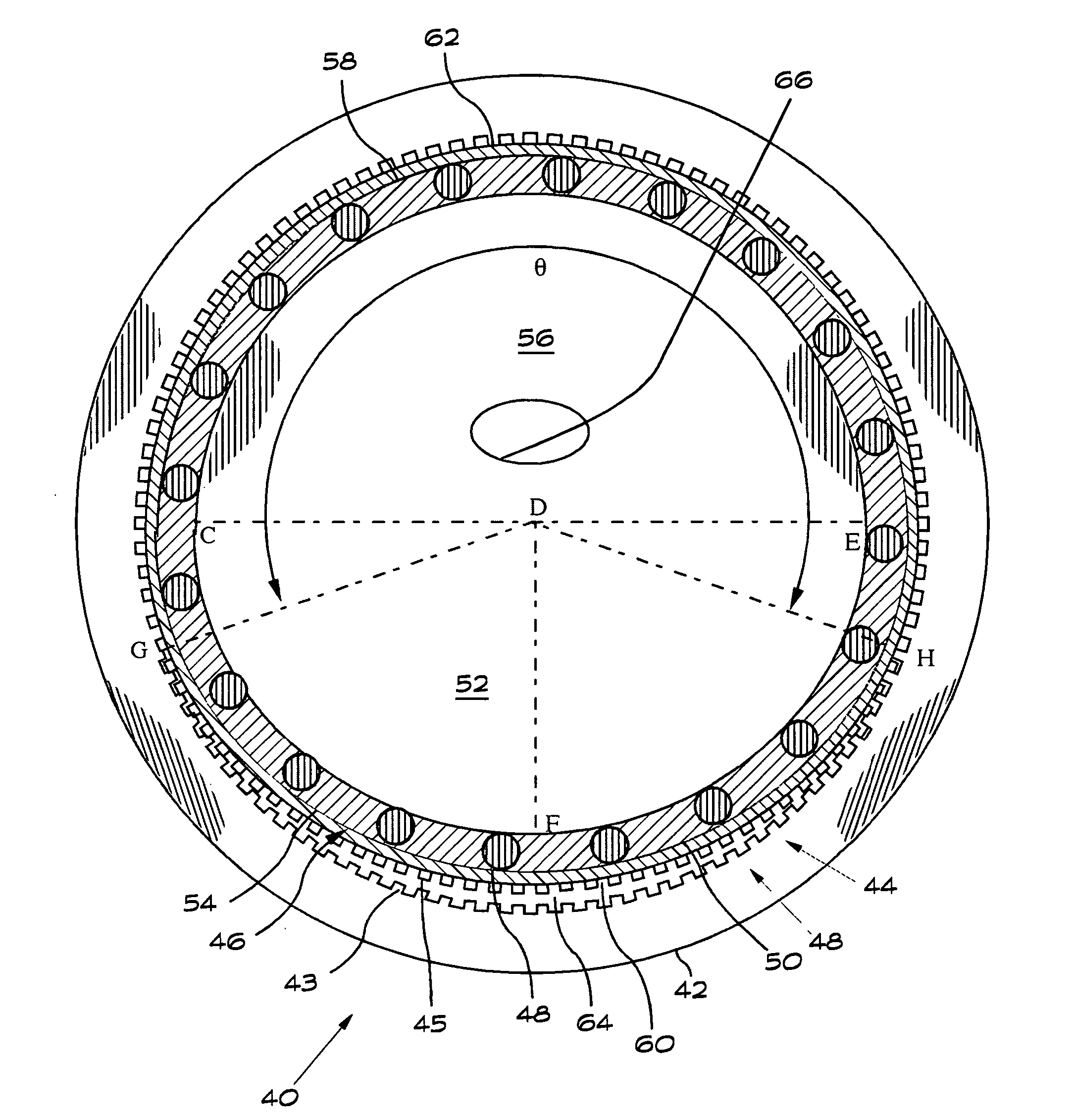
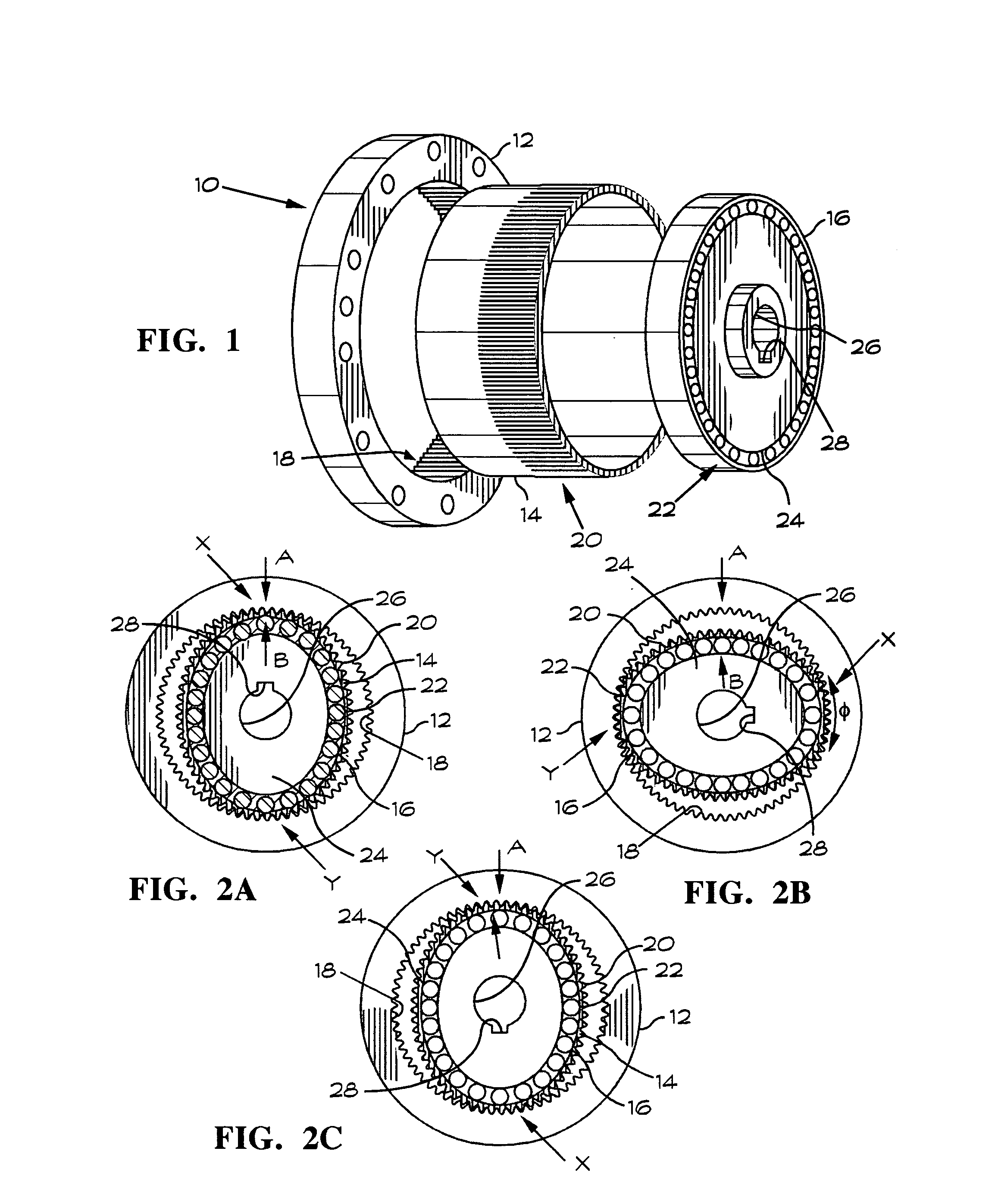
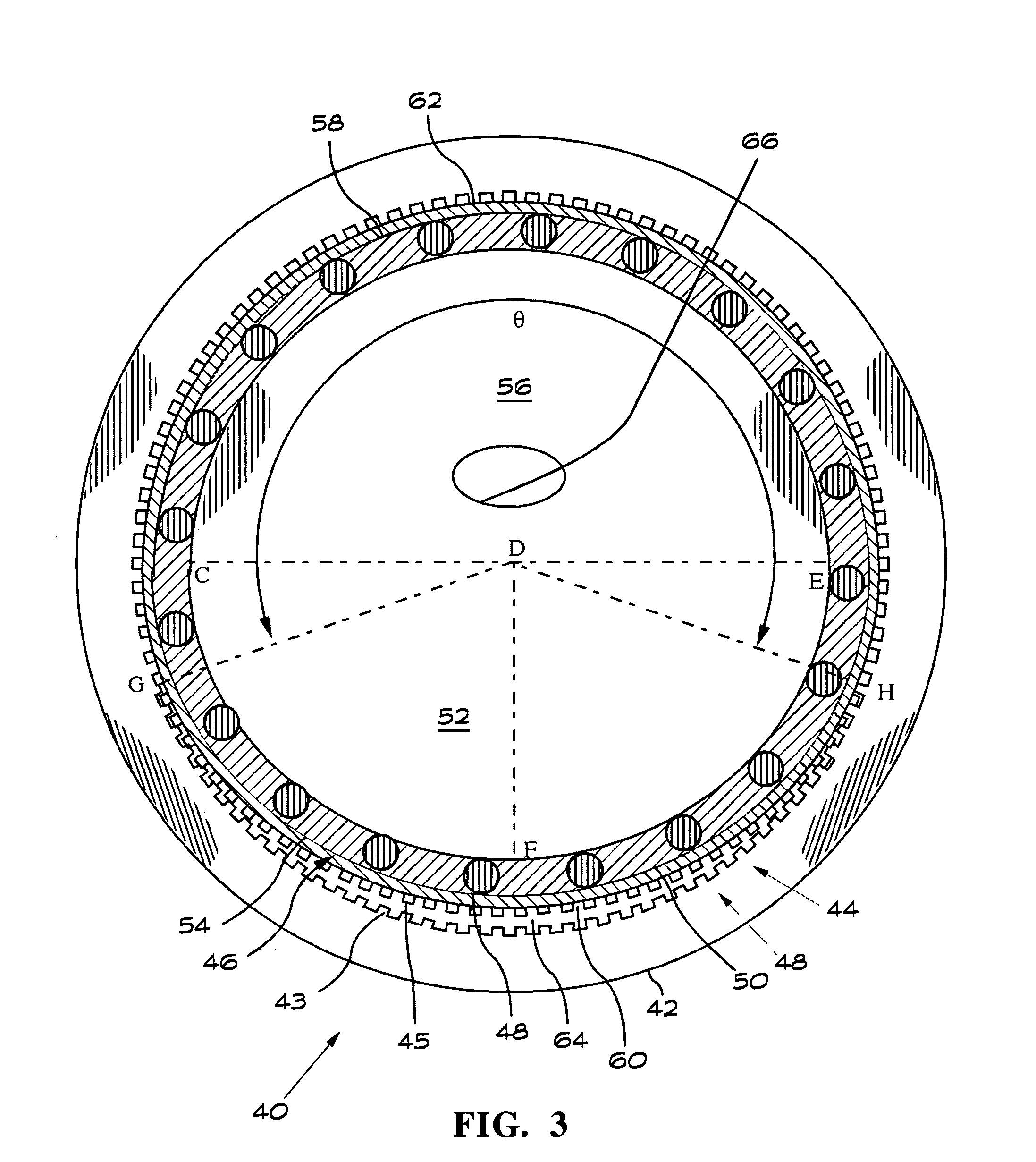
- A modified wave generator with a semi-ellipsoidal and semi-cylindrical design and a flexspline with one tooth fewer than the circular spline, featuring an asymmetrical cutout to maintain the center of gravity aligned with the circular spline's axis, reducing unwanted vibrations and enhancing torque capacity.

Manufacturing Standards and Quality Control Requirements
Manufacturing standards for harmonic drives and planetary gears differ significantly due to their distinct mechanical architectures and precision requirements. Harmonic drives typically adhere to standards such as ISO 6336 for gear calculation principles, while incorporating specialized tolerances defined in manufacturer-specific standards like Harmonic Drive Systems' HD standards. These components require extremely tight manufacturing tolerances, often within ±5 arc-seconds for angular positioning accuracy, necessitating advanced machining capabilities and specialized heat treatment processes.
Planetary gear systems generally follow established standards including AGMA 2001 and ISO 1328 for gear accuracy grades. The manufacturing tolerances for planetary gears are typically less stringent than harmonic drives, with accuracy grades ranging from DIN 4 to DIN 8 depending on application requirements. However, the complexity of manufacturing multiple planet gears with consistent quality presents unique challenges in maintaining uniform load distribution and minimizing backlash variations.
Quality control protocols for harmonic drives emphasize flexspline fatigue testing, wave generator eccentricity verification, and circular spline tooth profile accuracy measurement. Critical inspection points include strain wave generator bearing runout, flexspline wall thickness uniformity, and tooth engagement pattern analysis. Advanced metrology equipment such as coordinate measuring machines and laser interferometers are essential for validating sub-arc-minute accuracy specifications.
Planetary gear quality assurance focuses on gear tooth profile and lead accuracy, center distance precision, and assembly concentricity. Key inspection parameters include individual gear accuracy verification, carrier plate runout measurement, and sun gear positioning tolerance validation. Statistical process control methods are crucial for monitoring manufacturing consistency across multiple planet gears within each assembly.
Surface finish requirements differ substantially between the two technologies. Harmonic drives demand superior surface quality on flexspline teeth, typically Ra 0.4 μm or better, to minimize wear and maintain accuracy over extended operational cycles. Planetary gears require consistent surface finishes across all meshing components, generally Ra 0.8 to 1.6 μm, with particular attention to load-bearing surfaces and contact patterns.
Traceability and documentation standards mandate comprehensive material certification, heat treatment records, and dimensional inspection reports for both technologies. However, harmonic drives require additional fatigue life validation data and stress analysis documentation due to their cyclic flexing operation mode.
Planetary gear systems generally follow established standards including AGMA 2001 and ISO 1328 for gear accuracy grades. The manufacturing tolerances for planetary gears are typically less stringent than harmonic drives, with accuracy grades ranging from DIN 4 to DIN 8 depending on application requirements. However, the complexity of manufacturing multiple planet gears with consistent quality presents unique challenges in maintaining uniform load distribution and minimizing backlash variations.
Quality control protocols for harmonic drives emphasize flexspline fatigue testing, wave generator eccentricity verification, and circular spline tooth profile accuracy measurement. Critical inspection points include strain wave generator bearing runout, flexspline wall thickness uniformity, and tooth engagement pattern analysis. Advanced metrology equipment such as coordinate measuring machines and laser interferometers are essential for validating sub-arc-minute accuracy specifications.
Planetary gear quality assurance focuses on gear tooth profile and lead accuracy, center distance precision, and assembly concentricity. Key inspection parameters include individual gear accuracy verification, carrier plate runout measurement, and sun gear positioning tolerance validation. Statistical process control methods are crucial for monitoring manufacturing consistency across multiple planet gears within each assembly.
Surface finish requirements differ substantially between the two technologies. Harmonic drives demand superior surface quality on flexspline teeth, typically Ra 0.4 μm or better, to minimize wear and maintain accuracy over extended operational cycles. Planetary gears require consistent surface finishes across all meshing components, generally Ra 0.8 to 1.6 μm, with particular attention to load-bearing surfaces and contact patterns.
Traceability and documentation standards mandate comprehensive material certification, heat treatment records, and dimensional inspection reports for both technologies. However, harmonic drives require additional fatigue life validation data and stress analysis documentation due to their cyclic flexing operation mode.
Cost-Performance Trade-offs in Precision Gear Selection
The selection of precision gear systems involves a complex balance between cost considerations and performance requirements, where harmonic drives and planetary gears represent two distinct approaches to achieving high-precision motion control. This trade-off analysis becomes particularly critical in applications demanding exceptional accuracy, as the initial investment must be weighed against long-term operational benefits and system performance capabilities.
Harmonic drives typically command a premium price point, often costing 2-3 times more than comparable planetary gear systems. This higher initial investment stems from their sophisticated manufacturing processes, specialized materials, and precise assembly requirements. The unique flexspline design and wave generator components require advanced machining capabilities and stringent quality control measures, contributing to elevated production costs.
Planetary gear systems offer a more cost-effective entry point for precision applications, with established manufacturing processes and widespread supplier availability driving competitive pricing. The modular design of planetary systems allows for standardized components and economies of scale, resulting in lower per-unit costs. However, achieving comparable accuracy levels to harmonic drives may require additional components such as precision bearings, tighter manufacturing tolerances, or supplementary feedback systems.
Performance considerations reveal distinct advantages for each technology. Harmonic drives deliver superior accuracy with typical positioning errors below 1 arcminute, zero backlash operation, and exceptional repeatability. These characteristics translate to reduced system complexity, elimination of backlash compensation algorithms, and improved overall system performance in critical applications.
Planetary gears, while exhibiting inherent backlash and slightly lower accuracy, provide robust performance in high-torque applications and offer superior shock load resistance. The distributed load sharing among multiple planet gears enhances durability and extends operational life under demanding conditions.
The total cost of ownership analysis must incorporate maintenance requirements, operational lifespan, and system integration complexity. Harmonic drives typically require less frequent maintenance due to fewer moving parts and reduced wear patterns, while planetary systems may necessitate more regular servicing but offer easier field replacement of individual components.
Application-specific requirements ultimately determine the optimal cost-performance balance, with factors such as required accuracy, operational environment, duty cycle, and system criticality influencing the selection criteria for precision gear systems.
Harmonic drives typically command a premium price point, often costing 2-3 times more than comparable planetary gear systems. This higher initial investment stems from their sophisticated manufacturing processes, specialized materials, and precise assembly requirements. The unique flexspline design and wave generator components require advanced machining capabilities and stringent quality control measures, contributing to elevated production costs.
Planetary gear systems offer a more cost-effective entry point for precision applications, with established manufacturing processes and widespread supplier availability driving competitive pricing. The modular design of planetary systems allows for standardized components and economies of scale, resulting in lower per-unit costs. However, achieving comparable accuracy levels to harmonic drives may require additional components such as precision bearings, tighter manufacturing tolerances, or supplementary feedback systems.
Performance considerations reveal distinct advantages for each technology. Harmonic drives deliver superior accuracy with typical positioning errors below 1 arcminute, zero backlash operation, and exceptional repeatability. These characteristics translate to reduced system complexity, elimination of backlash compensation algorithms, and improved overall system performance in critical applications.
Planetary gears, while exhibiting inherent backlash and slightly lower accuracy, provide robust performance in high-torque applications and offer superior shock load resistance. The distributed load sharing among multiple planet gears enhances durability and extends operational life under demanding conditions.
The total cost of ownership analysis must incorporate maintenance requirements, operational lifespan, and system integration complexity. Harmonic drives typically require less frequent maintenance due to fewer moving parts and reduced wear patterns, while planetary systems may necessitate more regular servicing but offer easier field replacement of individual components.
Application-specific requirements ultimately determine the optimal cost-performance balance, with factors such as required accuracy, operational environment, duty cycle, and system criticality influencing the selection criteria for precision gear systems.
Unlock deeper insights with PatSnap Eureka Quick Research — get a full tech report to explore trends and direct your research. Try now!
Generate Your Research Report Instantly with AI Agent
Supercharge your innovation with PatSnap Eureka AI Agent Platform!