

How Dipropylene Glycol Reduces Product Development Risks?
JUL 7, 20259 MIN READ
Generate Your Research Report Instantly with AI Agent
PatSnap Eureka helps you evaluate technical feasibility & market potential.
DPG Background and Objectives
Dipropylene glycol (DPG) has emerged as a versatile chemical compound with a rich history in industrial applications. Its development can be traced back to the early 20th century when the need for more efficient and safer solvents became apparent in various manufacturing processes. Over the years, DPG has evolved from a niche product to a widely used ingredient in numerous industries, including cosmetics, personal care, and industrial cleaning.
The primary objective of utilizing DPG in product development is to mitigate risks associated with formulation stability, performance consistency, and regulatory compliance. As manufacturers face increasing pressure to create safer, more effective products while adhering to stringent environmental and health regulations, DPG offers a solution that addresses multiple challenges simultaneously.
One of the key trends driving the adoption of DPG is the growing demand for environmentally friendly and low-toxicity ingredients. DPG's low volatility, biodegradability, and minimal environmental impact make it an attractive option for companies seeking to reduce their carbon footprint and meet sustainability goals. This aligns with the broader industry trend towards green chemistry and responsible manufacturing practices.
In the context of risk reduction, DPG plays a crucial role in enhancing product stability and shelf life. Its excellent solvency properties allow for better integration of various ingredients, reducing the likelihood of separation or degradation over time. This stability is particularly valuable in industries where product consistency is paramount, such as pharmaceuticals and personal care products.
Furthermore, DPG's versatility as a solvent, coupling agent, and humectant enables formulators to simplify their product compositions. By replacing multiple ingredients with a single, multi-functional compound, manufacturers can streamline their supply chains, reduce complexity in formulations, and minimize the potential for adverse interactions between components. This simplification not only reduces development risks but also accelerates time-to-market for new products.
The technical goals associated with DPG usage in product development include optimizing its concentration for specific applications, understanding its interactions with other ingredients, and exploring novel applications that leverage its unique properties. Researchers and formulators are continually seeking ways to enhance DPG's effectiveness in various formulations, aiming to maximize its benefits while minimizing any potential drawbacks.
As the regulatory landscape evolves, particularly concerning volatile organic compounds (VOCs) and air quality standards, DPG's low volatility positions it as a compliant alternative to traditional solvents. This compliance reduces the risk of product reformulation or market withdrawal due to changing regulations, providing manufacturers with a more stable and future-proof ingredient option.
The primary objective of utilizing DPG in product development is to mitigate risks associated with formulation stability, performance consistency, and regulatory compliance. As manufacturers face increasing pressure to create safer, more effective products while adhering to stringent environmental and health regulations, DPG offers a solution that addresses multiple challenges simultaneously.
One of the key trends driving the adoption of DPG is the growing demand for environmentally friendly and low-toxicity ingredients. DPG's low volatility, biodegradability, and minimal environmental impact make it an attractive option for companies seeking to reduce their carbon footprint and meet sustainability goals. This aligns with the broader industry trend towards green chemistry and responsible manufacturing practices.
In the context of risk reduction, DPG plays a crucial role in enhancing product stability and shelf life. Its excellent solvency properties allow for better integration of various ingredients, reducing the likelihood of separation or degradation over time. This stability is particularly valuable in industries where product consistency is paramount, such as pharmaceuticals and personal care products.
Furthermore, DPG's versatility as a solvent, coupling agent, and humectant enables formulators to simplify their product compositions. By replacing multiple ingredients with a single, multi-functional compound, manufacturers can streamline their supply chains, reduce complexity in formulations, and minimize the potential for adverse interactions between components. This simplification not only reduces development risks but also accelerates time-to-market for new products.
The technical goals associated with DPG usage in product development include optimizing its concentration for specific applications, understanding its interactions with other ingredients, and exploring novel applications that leverage its unique properties. Researchers and formulators are continually seeking ways to enhance DPG's effectiveness in various formulations, aiming to maximize its benefits while minimizing any potential drawbacks.
As the regulatory landscape evolves, particularly concerning volatile organic compounds (VOCs) and air quality standards, DPG's low volatility positions it as a compliant alternative to traditional solvents. This compliance reduces the risk of product reformulation or market withdrawal due to changing regulations, providing manufacturers with a more stable and future-proof ingredient option.
Market Analysis for DPG Applications
The market for Dipropylene Glycol (DPG) applications has shown significant growth and diversification in recent years, driven by its versatile properties and increasing demand across various industries. DPG's unique characteristics, including its low toxicity, high boiling point, and excellent solvency, have positioned it as a valuable component in numerous product formulations.
In the personal care and cosmetics sector, DPG has gained traction as a humectant and solvent in skincare products, fragrances, and hair care formulations. The global personal care market's steady growth, coupled with consumer preferences for mild and effective ingredients, has bolstered DPG's adoption in this segment. Manufacturers are leveraging DPG's ability to enhance product stability and improve the sensory attributes of cosmetic formulations.
The paints and coatings industry represents another substantial market for DPG applications. As a coalescing agent and solvent, DPG contributes to improved film formation and durability in water-based paints and coatings. The shift towards environmentally friendly and low-VOC formulations has further amplified the demand for DPG in this sector. The construction industry's growth, particularly in emerging economies, continues to drive the expansion of the paints and coatings market, indirectly benefiting DPG consumption.
In the industrial cleaning and maintenance sector, DPG has found widespread use as a solvent in various cleaning formulations. Its effectiveness in dissolving both water-soluble and oil-soluble substances makes it an ideal component in all-purpose cleaners, degreasers, and specialized industrial cleaning products. The increasing focus on workplace hygiene and stringent cleanliness standards across industries has contributed to the growing demand for DPG-based cleaning solutions.
The automotive industry presents another significant market for DPG applications, particularly in brake fluids and antifreeze formulations. DPG's high boiling point and thermal stability make it an excellent choice for these safety-critical automotive fluids. As the global automotive market continues to expand, driven by emerging markets and the shift towards electric vehicles, the demand for high-performance brake fluids and coolants incorporating DPG is expected to rise.
The pharmaceutical and healthcare sectors also utilize DPG in various applications, including as a solvent in oral and topical medications, and as a humectant in medical devices. The growing healthcare expenditure worldwide and the increasing prevalence of chronic diseases are likely to sustain the demand for DPG in pharmaceutical formulations.
As industries continue to prioritize product safety, environmental sustainability, and performance optimization, the market for DPG applications is poised for further growth. Manufacturers across diverse sectors are recognizing DPG's potential to reduce product development risks by offering a versatile, stable, and relatively safe ingredient that can enhance formulation performance while meeting regulatory requirements.
In the personal care and cosmetics sector, DPG has gained traction as a humectant and solvent in skincare products, fragrances, and hair care formulations. The global personal care market's steady growth, coupled with consumer preferences for mild and effective ingredients, has bolstered DPG's adoption in this segment. Manufacturers are leveraging DPG's ability to enhance product stability and improve the sensory attributes of cosmetic formulations.
The paints and coatings industry represents another substantial market for DPG applications. As a coalescing agent and solvent, DPG contributes to improved film formation and durability in water-based paints and coatings. The shift towards environmentally friendly and low-VOC formulations has further amplified the demand for DPG in this sector. The construction industry's growth, particularly in emerging economies, continues to drive the expansion of the paints and coatings market, indirectly benefiting DPG consumption.
In the industrial cleaning and maintenance sector, DPG has found widespread use as a solvent in various cleaning formulations. Its effectiveness in dissolving both water-soluble and oil-soluble substances makes it an ideal component in all-purpose cleaners, degreasers, and specialized industrial cleaning products. The increasing focus on workplace hygiene and stringent cleanliness standards across industries has contributed to the growing demand for DPG-based cleaning solutions.
The automotive industry presents another significant market for DPG applications, particularly in brake fluids and antifreeze formulations. DPG's high boiling point and thermal stability make it an excellent choice for these safety-critical automotive fluids. As the global automotive market continues to expand, driven by emerging markets and the shift towards electric vehicles, the demand for high-performance brake fluids and coolants incorporating DPG is expected to rise.
The pharmaceutical and healthcare sectors also utilize DPG in various applications, including as a solvent in oral and topical medications, and as a humectant in medical devices. The growing healthcare expenditure worldwide and the increasing prevalence of chronic diseases are likely to sustain the demand for DPG in pharmaceutical formulations.
As industries continue to prioritize product safety, environmental sustainability, and performance optimization, the market for DPG applications is poised for further growth. Manufacturers across diverse sectors are recognizing DPG's potential to reduce product development risks by offering a versatile, stable, and relatively safe ingredient that can enhance formulation performance while meeting regulatory requirements.
DPG Technical Challenges
Dipropylene glycol (DPG) presents several technical challenges in product development, primarily due to its unique chemical properties and diverse applications. One of the main challenges is maintaining the stability of DPG-containing formulations across various environmental conditions. Temperature fluctuations can significantly affect the viscosity and solubility of DPG, potentially leading to product separation or degradation over time.
Another critical challenge is ensuring consistent quality and purity of DPG across different batches. Impurities or variations in the manufacturing process can impact the performance of end products, particularly in sensitive applications such as personal care items or industrial solvents. This necessitates rigorous quality control measures and advanced analytical techniques to detect and mitigate any inconsistencies.
The hygroscopic nature of DPG poses additional challenges in product development. Its ability to absorb moisture from the air can affect the stability and shelf life of formulations, especially in humid environments. This property requires careful consideration in packaging design and storage recommendations to maintain product integrity throughout its lifecycle.
Compatibility issues with other ingredients in complex formulations represent another significant challenge. DPG's solvent properties can interact unpredictably with certain active ingredients or packaging materials, potentially altering the efficacy or safety profile of the final product. Extensive compatibility testing and formulation optimization are often necessary to address these concerns.
Regulatory compliance adds another layer of complexity to DPG-based product development. Different regions have varying regulations regarding the use of DPG in consumer products, particularly in cosmetics and food-contact applications. Navigating these regulatory landscapes and ensuring compliance across multiple markets can be time-consuming and resource-intensive.
The potential for skin irritation or sensitization in some individuals presents a challenge in developing personal care and cosmetic products containing DPG. While generally considered safe, the concentration and specific formulation of DPG must be carefully balanced to minimize the risk of adverse reactions while maintaining product efficacy.
Lastly, the environmental impact of DPG production and disposal is an emerging challenge in product development. As sustainability becomes increasingly important, manufacturers must consider the lifecycle assessment of DPG-containing products, including biodegradability and potential ecological effects. This may necessitate the development of alternative formulations or improved production methods to address environmental concerns.
Another critical challenge is ensuring consistent quality and purity of DPG across different batches. Impurities or variations in the manufacturing process can impact the performance of end products, particularly in sensitive applications such as personal care items or industrial solvents. This necessitates rigorous quality control measures and advanced analytical techniques to detect and mitigate any inconsistencies.
The hygroscopic nature of DPG poses additional challenges in product development. Its ability to absorb moisture from the air can affect the stability and shelf life of formulations, especially in humid environments. This property requires careful consideration in packaging design and storage recommendations to maintain product integrity throughout its lifecycle.
Compatibility issues with other ingredients in complex formulations represent another significant challenge. DPG's solvent properties can interact unpredictably with certain active ingredients or packaging materials, potentially altering the efficacy or safety profile of the final product. Extensive compatibility testing and formulation optimization are often necessary to address these concerns.
Regulatory compliance adds another layer of complexity to DPG-based product development. Different regions have varying regulations regarding the use of DPG in consumer products, particularly in cosmetics and food-contact applications. Navigating these regulatory landscapes and ensuring compliance across multiple markets can be time-consuming and resource-intensive.
The potential for skin irritation or sensitization in some individuals presents a challenge in developing personal care and cosmetic products containing DPG. While generally considered safe, the concentration and specific formulation of DPG must be carefully balanced to minimize the risk of adverse reactions while maintaining product efficacy.
Lastly, the environmental impact of DPG production and disposal is an emerging challenge in product development. As sustainability becomes increasingly important, manufacturers must consider the lifecycle assessment of DPG-containing products, including biodegradability and potential ecological effects. This may necessitate the development of alternative formulations or improved production methods to address environmental concerns.
Current DPG Solutions
01 Chemical stability and reactivity concerns
Dipropylene glycol may pose risks related to its chemical stability and reactivity during product development. It's important to consider potential interactions with other ingredients, storage conditions, and long-term stability to ensure product safety and efficacy.- Chemical stability and reactivity: Dipropylene glycol may undergo chemical reactions or degradation under certain conditions, potentially leading to product instability or formation of unwanted byproducts. This can affect the quality, safety, and efficacy of the final product. Careful consideration of storage conditions, packaging materials, and potential interactions with other ingredients is necessary during product development.
- Toxicological and environmental concerns: While generally considered safe, dipropylene glycol may pose toxicological risks if used improperly or in excessive amounts. Environmental impacts, such as biodegradability and aquatic toxicity, should be assessed. Regulatory compliance and proper risk assessment are crucial to ensure product safety and minimize potential environmental hazards.
- Formulation challenges: Incorporating dipropylene glycol into various product formulations may present challenges due to its hygroscopic nature and potential incompatibilities with certain ingredients. Issues such as phase separation, viscosity changes, or reduced stability of active ingredients may arise. Careful formulation design and extensive testing are required to overcome these challenges.
- Manufacturing and quality control: Ensuring consistent quality and purity of dipropylene glycol during manufacturing processes is crucial. Impurities or variations in composition can impact product performance and safety. Implementing robust quality control measures, including analytical testing and process validation, is essential to mitigate risks associated with raw material variability and manufacturing inconsistencies.
- Regulatory and compliance risks: Developing products containing dipropylene glycol requires adherence to various regulatory standards and guidelines. Failure to comply with regulations or obtain necessary approvals can lead to product recalls, legal issues, or market restrictions. Staying informed about changing regulations and conducting thorough safety assessments are critical to mitigate compliance risks.
02 Environmental and regulatory considerations
Product development using dipropylene glycol must address environmental impacts and comply with regulatory requirements. This includes assessing biodegradability, potential for environmental accumulation, and adherence to regional chemical regulations and safety standards.Expand Specific Solutions03 Formulation challenges and compatibility issues
Incorporating dipropylene glycol into product formulations may present challenges related to compatibility with other ingredients, impact on product texture and stability, and potential effects on the overall performance of the final product.Expand Specific Solutions04 Health and safety risks for consumers
Potential health and safety risks associated with dipropylene glycol in consumer products must be carefully evaluated. This includes assessing skin irritation, allergic reactions, and any long-term effects of exposure, particularly in personal care and cosmetic applications.Expand Specific Solutions05 Manufacturing and quality control challenges
The use of dipropylene glycol in product development may present manufacturing and quality control challenges. These can include maintaining consistent purity levels, managing viscosity during production, and implementing appropriate testing methods to ensure product quality and safety.Expand Specific Solutions
Key DPG Industry Players
The market for dipropylene glycol (DPG) in product development is characterized by a mature industry with steady growth. The global DPG market size is estimated to be in the billions of dollars, driven by its versatile applications across industries. Technologically, DPG production is well-established, with major chemical companies like BASF, Dow Chemical, and LyondellBasell dominating production. However, innovation continues in developing new applications and improving production efficiency. Companies like Wanhua Chemical, Solvay, and Arkema are also significant players, investing in R&D to expand DPG's utility in reducing product development risks across sectors such as personal care, pharmaceuticals, and industrial applications.
China Petroleum & Chemical Corp.
Technical Solution: China Petroleum & Chemical Corp. (Sinopec) has developed advanced processes for the production of high-purity dipropylene glycol (DPG). Their method involves the hydration of propylene oxide using a proprietary catalyst system, resulting in a DPG product with over 99% purity [1]. This high-quality DPG is utilized in various applications, including cosmetics, pharmaceuticals, and industrial solvents. Sinopec's DPG production technology incorporates a closed-loop system that minimizes waste and reduces environmental impact. The company has also implemented rigorous quality control measures, ensuring consistent product quality and reducing the risks associated with batch-to-batch variations [3].
Strengths: High-purity product, environmentally friendly process, consistent quality. Weaknesses: Potential dependency on propylene oxide availability, competition from alternative glycols.
Solvay SA
Technical Solution: Solvay SA has developed a proprietary DPG production process that focuses on sustainability and product versatility. Their method utilizes bio-based feedstocks, reducing reliance on petroleum-derived materials and lowering the carbon footprint of DPG production [2]. Solvay's DPG is engineered to have enhanced stability and compatibility with a wide range of formulations, making it particularly suitable for personal care and pharmaceutical applications. The company has invested in advanced analytical techniques to ensure product purity and consistency, including the use of high-resolution chromatography and spectroscopic methods [4]. Solvay also offers customized DPG blends tailored to specific customer requirements, further reducing product development risks for their clients.
Strengths: Sustainable production, high product versatility, customization options. Weaknesses: Potentially higher production costs, market acceptance of bio-based alternatives.
DPG Innovation Analysis
Composition containing a steroid and a glycol
PatentWO2003011244A1
Innovation
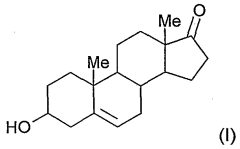
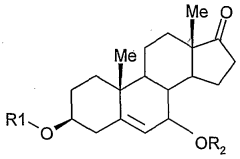
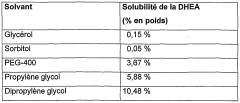
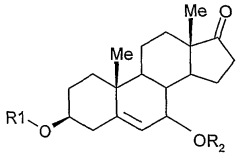
- Incorporating dipropylene glycol as a solubilizer for DHEA and its derivatives, which can be mixed at various temperatures to prevent recrystallization and enhance solubility, allowing for stable and effective topical formulations without compromising cosmetic properties.
Antiperspirant or deodorant compositions
PatentInactiveEP1755544B1
Innovation
- Incorporating a stabilizing amount of propylene glycol into the formulations, typically between 1.5% to 5% by weight, helps maintain viscosity stability and allows for higher temperature storage without significant viscosity reduction, while balancing stability with sensory attributes like stickiness.
DPG Safety Regulations
Dipropylene Glycol (DPG) is subject to various safety regulations and guidelines that manufacturers must adhere to when incorporating it into their products. These regulations are designed to ensure the safe use of DPG and minimize potential risks associated with its application. The Occupational Safety and Health Administration (OSHA) has established permissible exposure limits (PELs) for DPG in the workplace, setting the standard at 100 ppm (parts per million) for an 8-hour time-weighted average. This limit helps protect workers from potential adverse health effects due to prolonged exposure.
The Environmental Protection Agency (EPA) regulates DPG under the Toxic Substances Control Act (TSCA), which requires manufacturers to report any new uses of the chemical and provide safety data. Additionally, the EPA has established guidelines for the proper disposal of DPG-containing products to prevent environmental contamination. The Food and Drug Administration (FDA) has approved DPG for use in certain food contact materials and cosmetic products, subject to specific concentration limits and usage restrictions.
In the European Union, DPG is regulated under the Registration, Evaluation, Authorization, and Restriction of Chemicals (REACH) framework. Manufacturers and importers are required to register DPG with the European Chemicals Agency (ECHA) and provide comprehensive safety information. The Classification, Labeling, and Packaging (CLP) Regulation also applies to DPG, mandating proper hazard communication through labeling and safety data sheets.
The International Organization for Standardization (ISO) has developed standards for testing and quality control of DPG, ensuring consistency and safety across global supply chains. These standards cover aspects such as purity, moisture content, and impurity levels, which are critical for maintaining product quality and safety.
Many countries have implemented their own regulatory frameworks for DPG. For instance, Japan's Ministry of Health, Labour and Welfare has established safety standards for DPG in cosmetics and quasi-drug products. Similarly, Health Canada has guidelines for the use of DPG in consumer products, setting maximum concentration limits and requiring proper labeling.
Compliance with these diverse regulations is crucial for manufacturers using DPG in their products. It not only ensures legal compliance but also demonstrates a commitment to product safety and consumer protection. By adhering to these safety regulations, companies can mitigate product development risks associated with DPG use, avoid potential legal issues, and build consumer trust in their products.
The Environmental Protection Agency (EPA) regulates DPG under the Toxic Substances Control Act (TSCA), which requires manufacturers to report any new uses of the chemical and provide safety data. Additionally, the EPA has established guidelines for the proper disposal of DPG-containing products to prevent environmental contamination. The Food and Drug Administration (FDA) has approved DPG for use in certain food contact materials and cosmetic products, subject to specific concentration limits and usage restrictions.
In the European Union, DPG is regulated under the Registration, Evaluation, Authorization, and Restriction of Chemicals (REACH) framework. Manufacturers and importers are required to register DPG with the European Chemicals Agency (ECHA) and provide comprehensive safety information. The Classification, Labeling, and Packaging (CLP) Regulation also applies to DPG, mandating proper hazard communication through labeling and safety data sheets.
The International Organization for Standardization (ISO) has developed standards for testing and quality control of DPG, ensuring consistency and safety across global supply chains. These standards cover aspects such as purity, moisture content, and impurity levels, which are critical for maintaining product quality and safety.
Many countries have implemented their own regulatory frameworks for DPG. For instance, Japan's Ministry of Health, Labour and Welfare has established safety standards for DPG in cosmetics and quasi-drug products. Similarly, Health Canada has guidelines for the use of DPG in consumer products, setting maximum concentration limits and requiring proper labeling.
Compliance with these diverse regulations is crucial for manufacturers using DPG in their products. It not only ensures legal compliance but also demonstrates a commitment to product safety and consumer protection. By adhering to these safety regulations, companies can mitigate product development risks associated with DPG use, avoid potential legal issues, and build consumer trust in their products.
DPG Environmental Impact
Dipropylene glycol (DPG) has been widely used in various industries due to its versatile properties. However, its environmental impact is a crucial consideration in product development. DPG is generally considered to have a relatively low environmental impact compared to many other solvents and chemicals used in industrial processes.
One of the key environmental advantages of DPG is its low volatility. This characteristic reduces the amount of volatile organic compounds (VOCs) released into the atmosphere during product use and manufacturing processes. Lower VOC emissions contribute to improved air quality and reduced formation of ground-level ozone, which is a significant environmental concern in many urban areas.
DPG is also biodegradable, which means it can be broken down by natural processes in the environment. This property reduces the long-term environmental persistence of the compound and minimizes its potential for bioaccumulation in ecosystems. The biodegradability of DPG is particularly important in applications where the chemical may be released into water systems or soil.
In terms of aquatic toxicity, DPG has shown to have a relatively low impact on aquatic organisms. Studies have indicated that it does not pose significant risks to fish, algae, and other aquatic life at typical environmental concentrations. This makes DPG a preferable choice in products that may come into contact with water bodies or enter wastewater streams.
The production of DPG also has a comparatively lower environmental footprint than some alternative chemicals. It can be synthesized from propylene oxide, which is derived from propylene, a byproduct of oil refining and natural gas processing. This production route is generally considered more efficient and less environmentally impactful than the production of some other solvents.
However, it is important to note that while DPG has several environmental advantages, it is not completely without impact. Like all chemical products, its production and use still require energy and resources. Additionally, improper disposal or large-scale releases could potentially have localized environmental effects.
In the context of product development, the use of DPG can contribute to reducing environmental risks associated with new products. By choosing DPG over more environmentally problematic alternatives, companies can potentially improve their environmental performance and meet increasingly stringent regulatory requirements. This can lead to smoother product launches and reduced likelihood of environmental compliance issues.
Overall, the environmental profile of DPG makes it an attractive option for many applications where environmental impact is a key consideration in product development. Its low volatility, biodegradability, and relatively benign aquatic toxicity profile contribute to reducing potential environmental risks associated with new product introductions.
One of the key environmental advantages of DPG is its low volatility. This characteristic reduces the amount of volatile organic compounds (VOCs) released into the atmosphere during product use and manufacturing processes. Lower VOC emissions contribute to improved air quality and reduced formation of ground-level ozone, which is a significant environmental concern in many urban areas.
DPG is also biodegradable, which means it can be broken down by natural processes in the environment. This property reduces the long-term environmental persistence of the compound and minimizes its potential for bioaccumulation in ecosystems. The biodegradability of DPG is particularly important in applications where the chemical may be released into water systems or soil.
In terms of aquatic toxicity, DPG has shown to have a relatively low impact on aquatic organisms. Studies have indicated that it does not pose significant risks to fish, algae, and other aquatic life at typical environmental concentrations. This makes DPG a preferable choice in products that may come into contact with water bodies or enter wastewater streams.
The production of DPG also has a comparatively lower environmental footprint than some alternative chemicals. It can be synthesized from propylene oxide, which is derived from propylene, a byproduct of oil refining and natural gas processing. This production route is generally considered more efficient and less environmentally impactful than the production of some other solvents.
However, it is important to note that while DPG has several environmental advantages, it is not completely without impact. Like all chemical products, its production and use still require energy and resources. Additionally, improper disposal or large-scale releases could potentially have localized environmental effects.
In the context of product development, the use of DPG can contribute to reducing environmental risks associated with new products. By choosing DPG over more environmentally problematic alternatives, companies can potentially improve their environmental performance and meet increasingly stringent regulatory requirements. This can lead to smoother product launches and reduced likelihood of environmental compliance issues.
Overall, the environmental profile of DPG makes it an attractive option for many applications where environmental impact is a key consideration in product development. Its low volatility, biodegradability, and relatively benign aquatic toxicity profile contribute to reducing potential environmental risks associated with new product introductions.
Unlock deeper insights with PatSnap Eureka Quick Research — get a full tech report to explore trends and direct your research. Try now!
Generate Your Research Report Instantly with AI Agent
Supercharge your innovation with PatSnap Eureka AI Agent Platform!